Punctuation worksheets activities for Ages 4-9
3 filtered results
-
From - To
Discover engaging punctuation worksheets designed specifically for children aged 4-9! Our activities help young learners master essential punctuation skills in a fun and interactive way. Each worksheet features colorful illustrations and enjoyable exercises that promote understanding of periods, question marks, exclamation points, and commas. Tailored to enhance classroom learning or reinforce at-home practice, these resources encourage children to develop writing confidence while elevating their grammar knowledge. Whether your child is just beginning their punctuation journey or needs a little extra practice, our selection is perfect for nurturing a love for language. Explore our worksheets and watch your child flourish in writing!
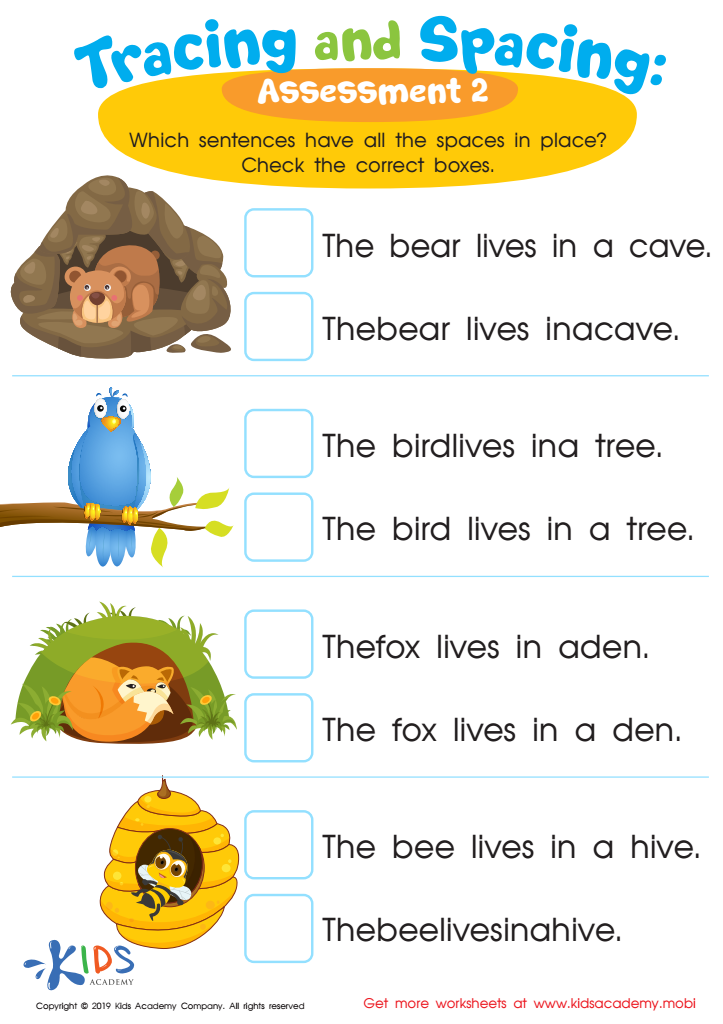
Tracing and Spacing: Assessment 2 Worksheet
 Assign to My Students
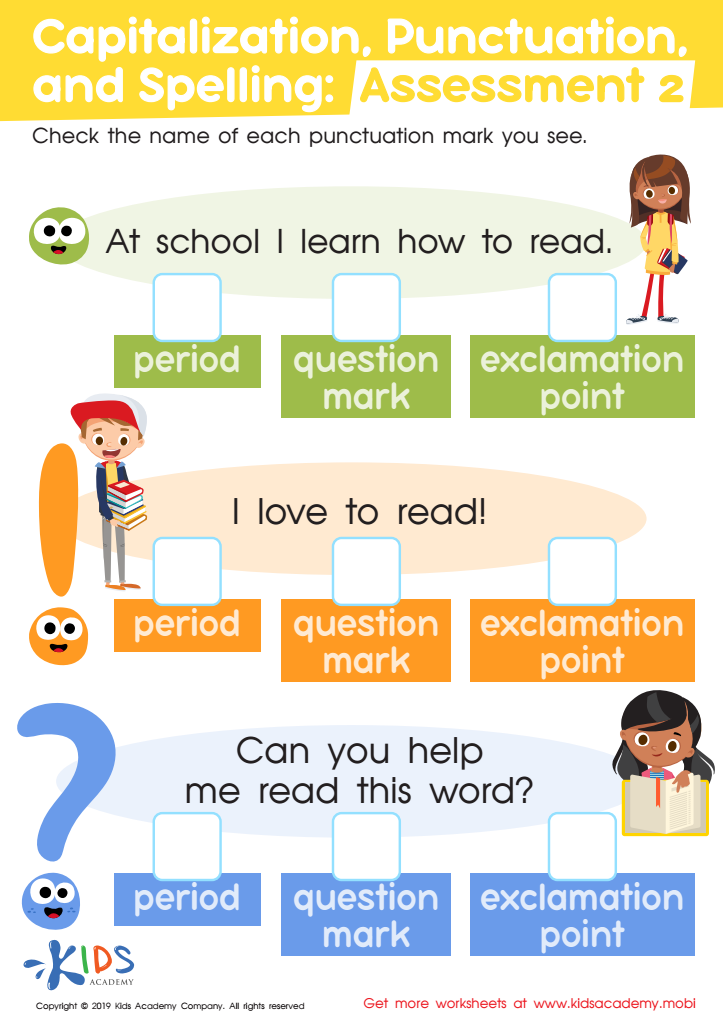
Capitalization. Punctuation. Spelling: Assessment 2 Worksheet
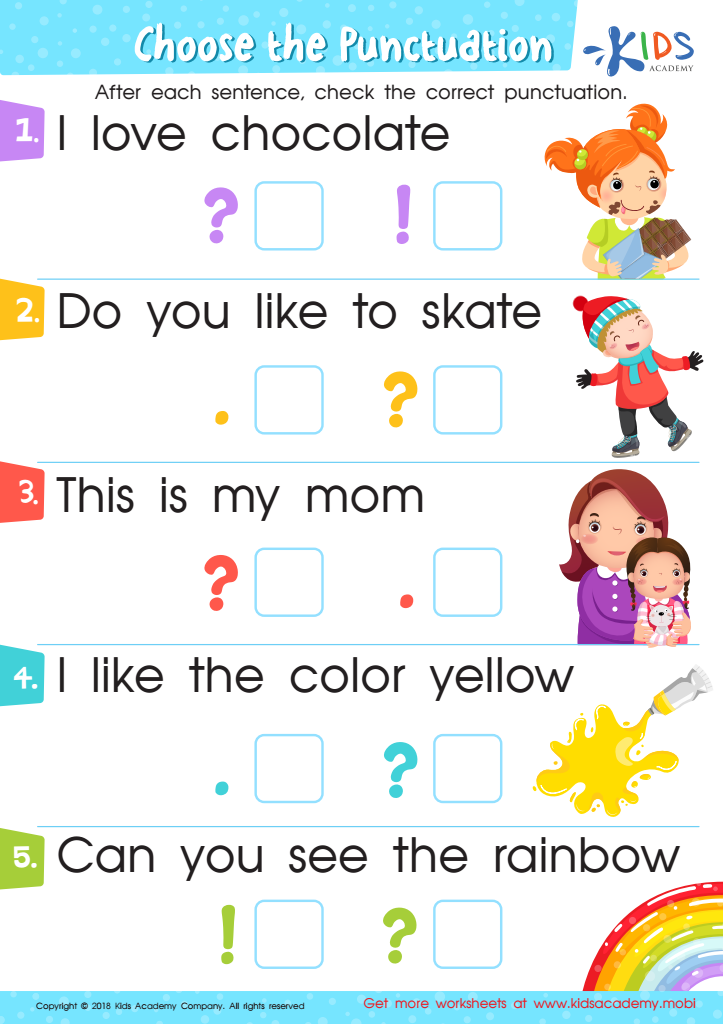
Choose the Punctuation: Assessment Worksheet







Parents and teachers should recognize the importance of punctuation activities for children aged 4-9 as they play a crucial role in developing foundational literacy skills. By engaging with punctuation, young learners begin to understand the structure and rhythm of written language, which is essential for effective reading and writing. These activities help children grasp the meaning behind commas, periods, question marks, and exclamation points, fostering comprehension and clarity.
Moreover, understanding punctuation aids in enhancing communication skills, allowing children to express their thoughts and feelings more accurately. Early exposure to punctuation not only boosts literacy but also encourages critical thinking and creativity, as children learn to craft their own sentences with appropriate punctuation.
In addition, punctuation activities can be fun and interactive, helping to maintain children's interest in learning. By making these lessons enjoyable through games and engaging exercises, teachers and parents can cultivate a positive attitude towards writing. Ultimately, integrating punctuation activities into early education sets the stage for lifelong language proficiency, contributing significantly to academic success and effective communication. Encouraging exploration and mastery of punctuation is an investment in a child's future literacy skills.








