Alphabet worksheets activities for Ages 5-7 - Page 2
25 filtered results
-
From - To
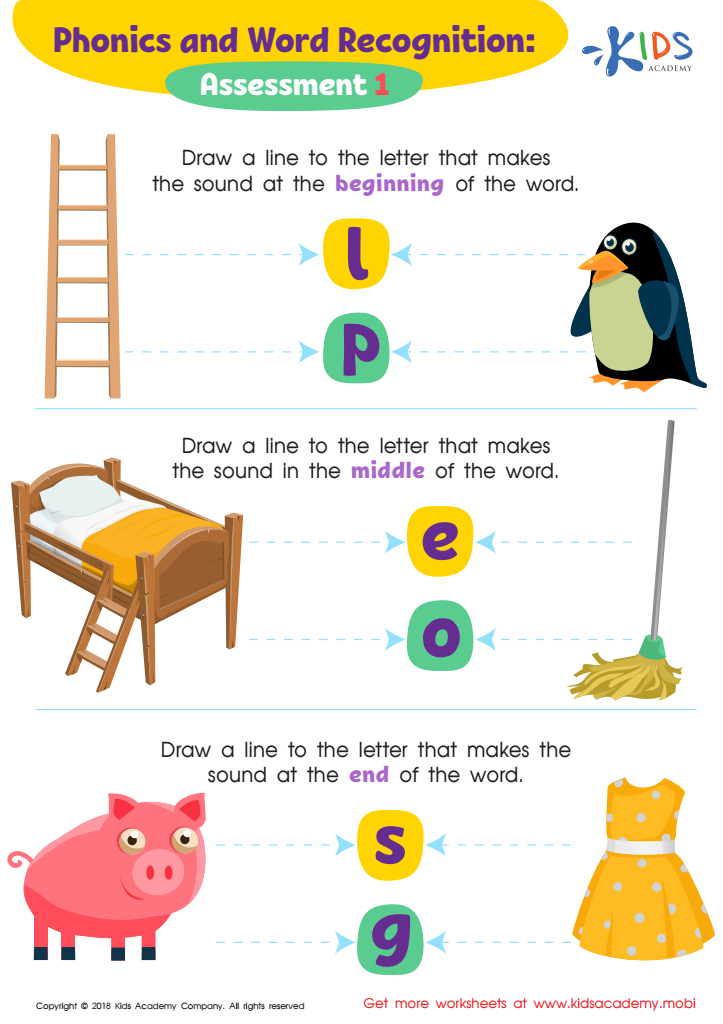
Phonics and Word Recognition: Assessment 1 ELA Worksheet
 Assign to My Students








Parents and teachers should prioritize alphabet activities for children aged 5-7 because they play a crucial role in early literacy development. At this age, children are in a critical period for developing foundational reading and writing skills. Engaging in alphabet activities helps children recognize letters, understand their sounds, and learn how to form words, which are essential skills for reading comprehension.
These activities often incorporate playful elements, making learning enjoyable and effective. Singing the alphabet song, using flashcards, and playing games with letters can capture children's interest, fostering a love for learning. Additionally, alphabet activities often promote fine motor skills through writing, cutting, and crafting.
Furthermore, by embedding literacy activities in everyday routines—like identifying letters on signs or creating letter-themed crafts—parents and teachers create a rich literacy environment that reinforces learning.
Moreover, early exposure to letter recognition can help to reduce future learning difficulties in reading, setting the stage for academic success. When parents and teachers show enthusiasm for these activities, they model positive attitudes towards learning, motivating children to become active participants in their education. Ensuring that children master the alphabet ultimately empowers them as confident readers and communicators.








