Basic Arithmetic Addition & Subtraction Worksheets for Ages 3-5 - Page 2
44 filtered results
-
From - To
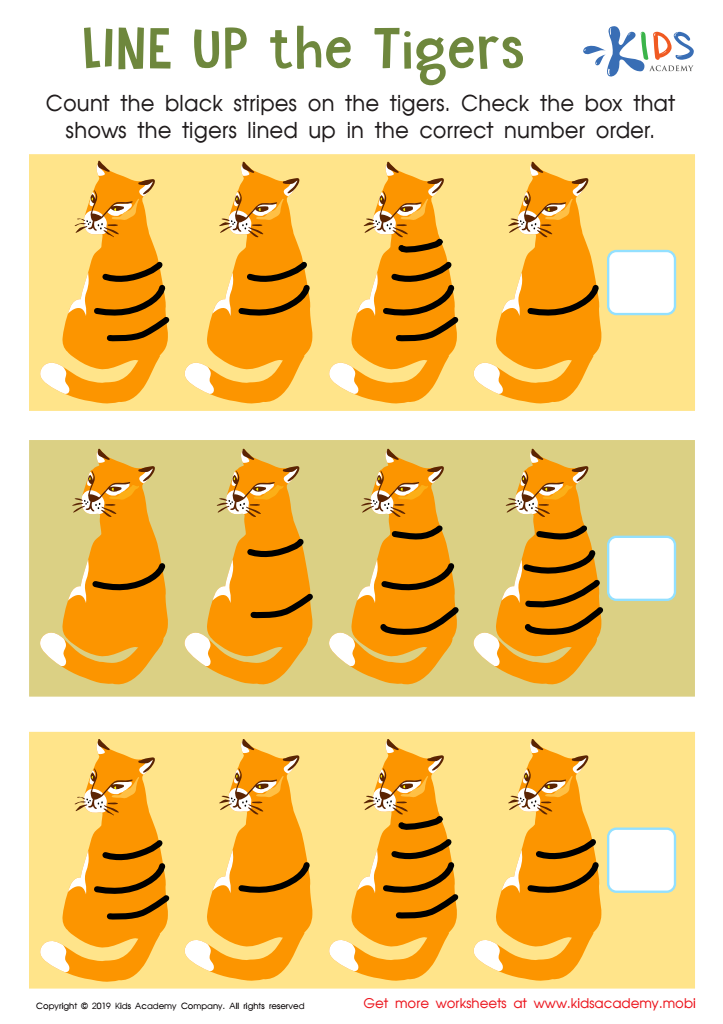
Line up the Tigers Worksheet
 Assign to My Students
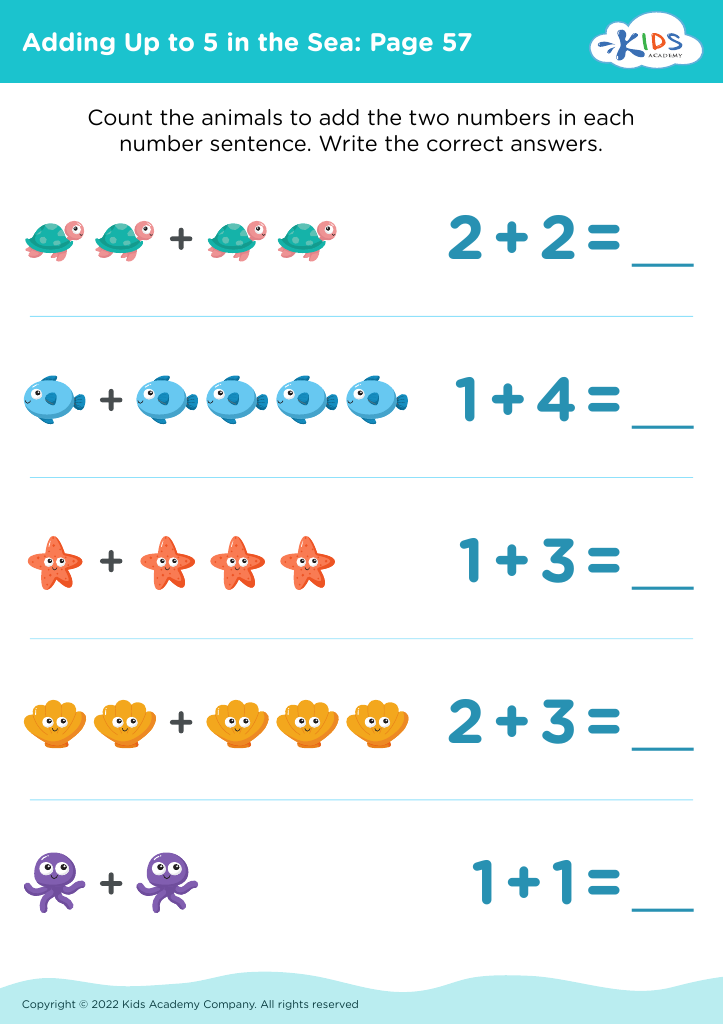
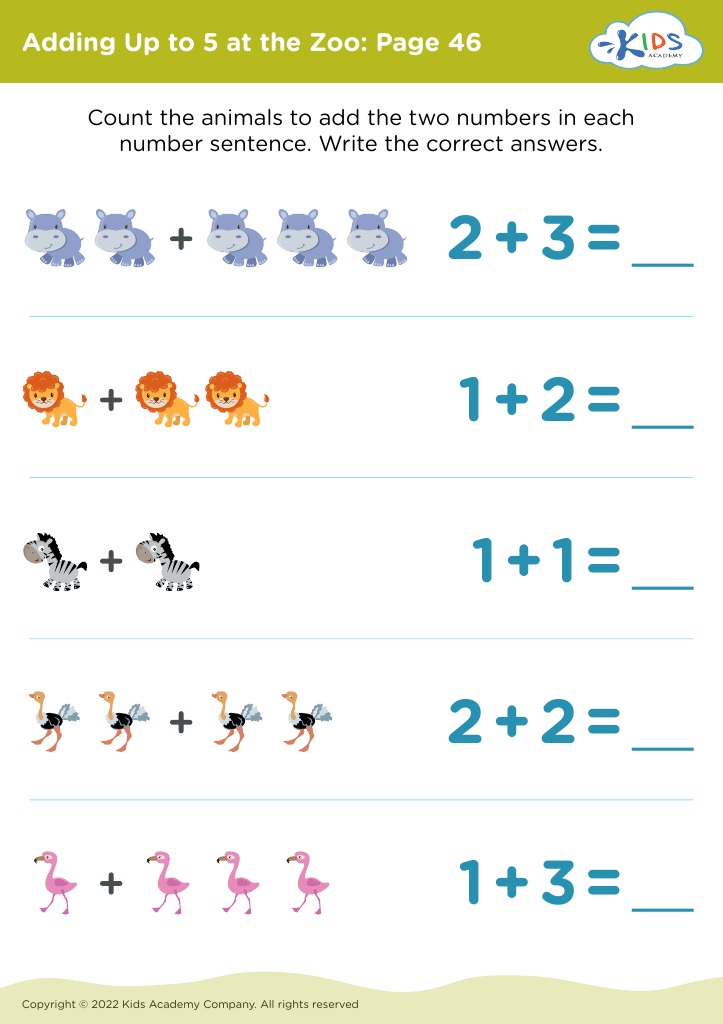
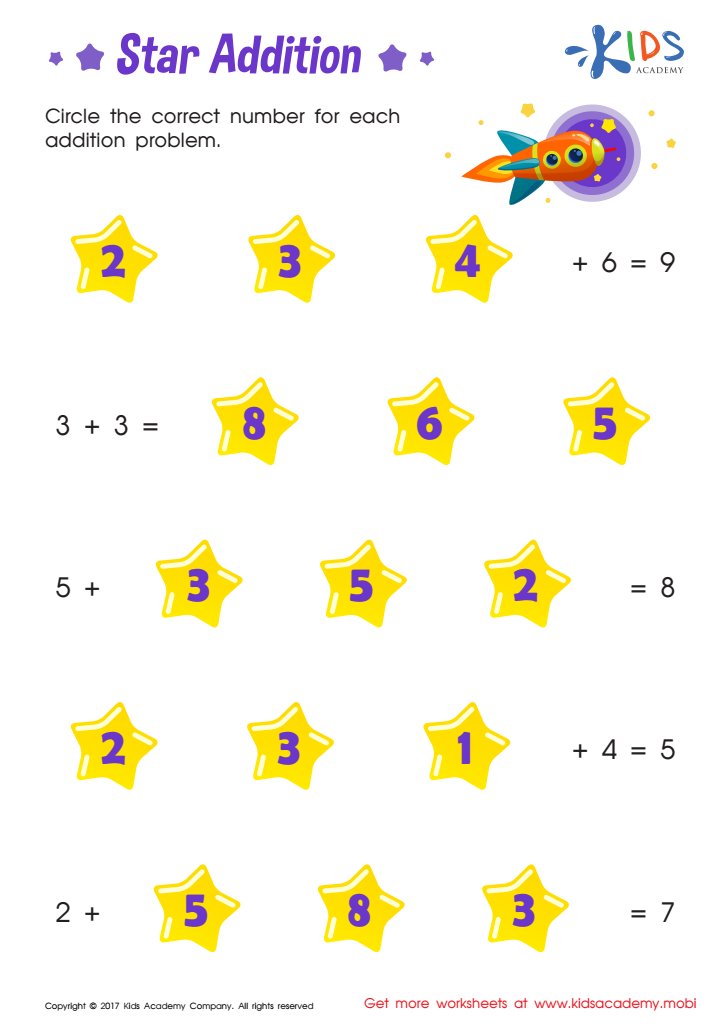
Star Addition Printable
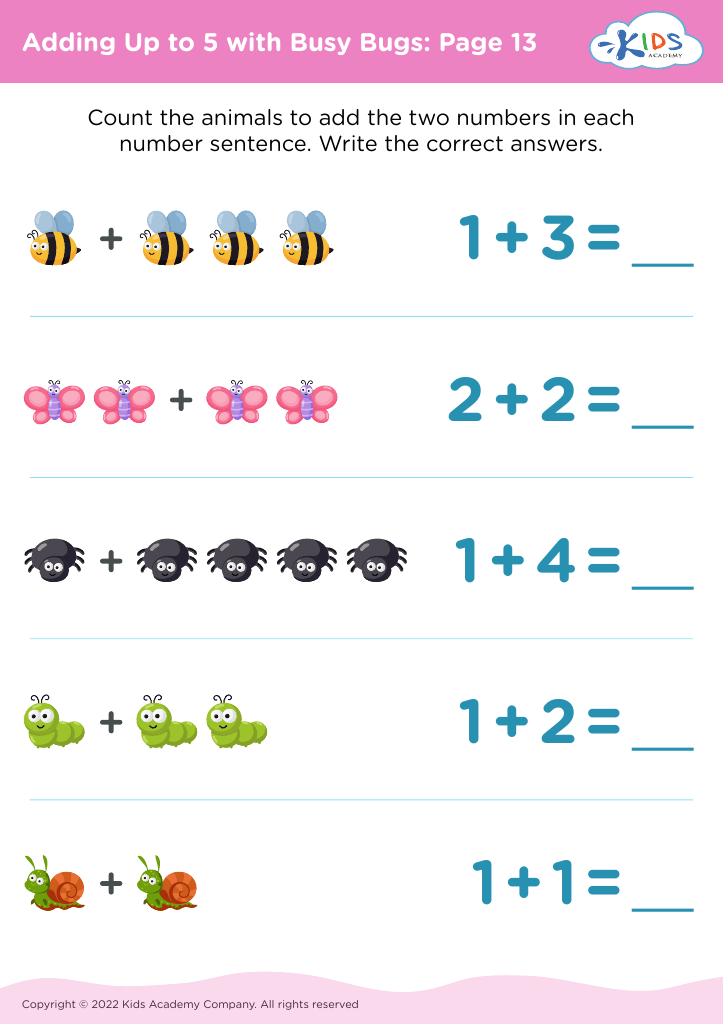
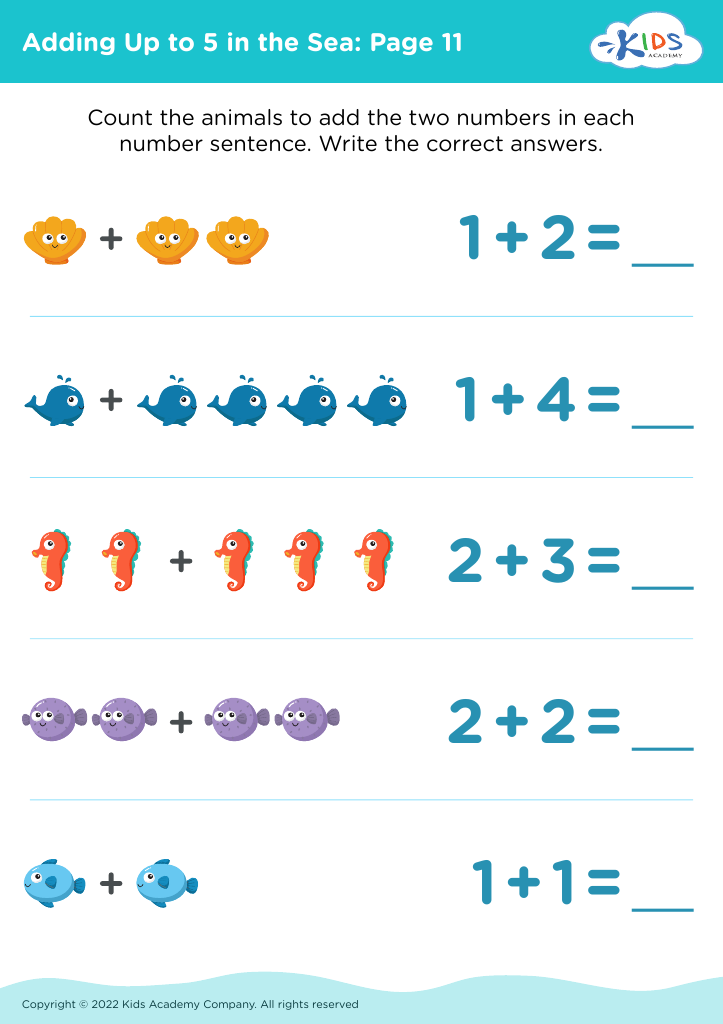
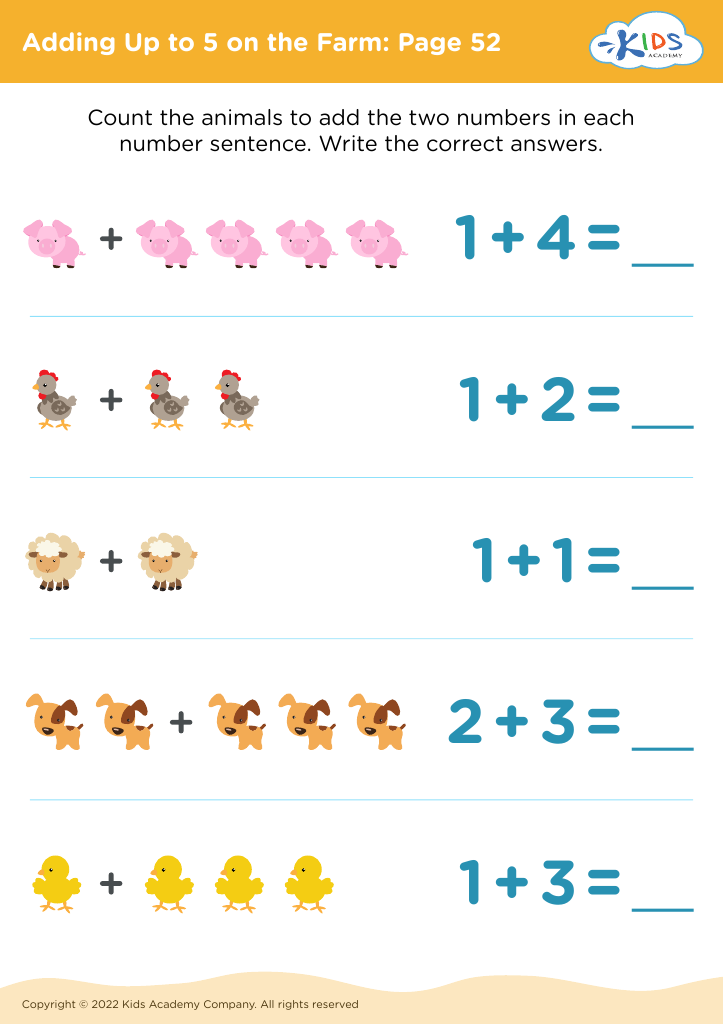
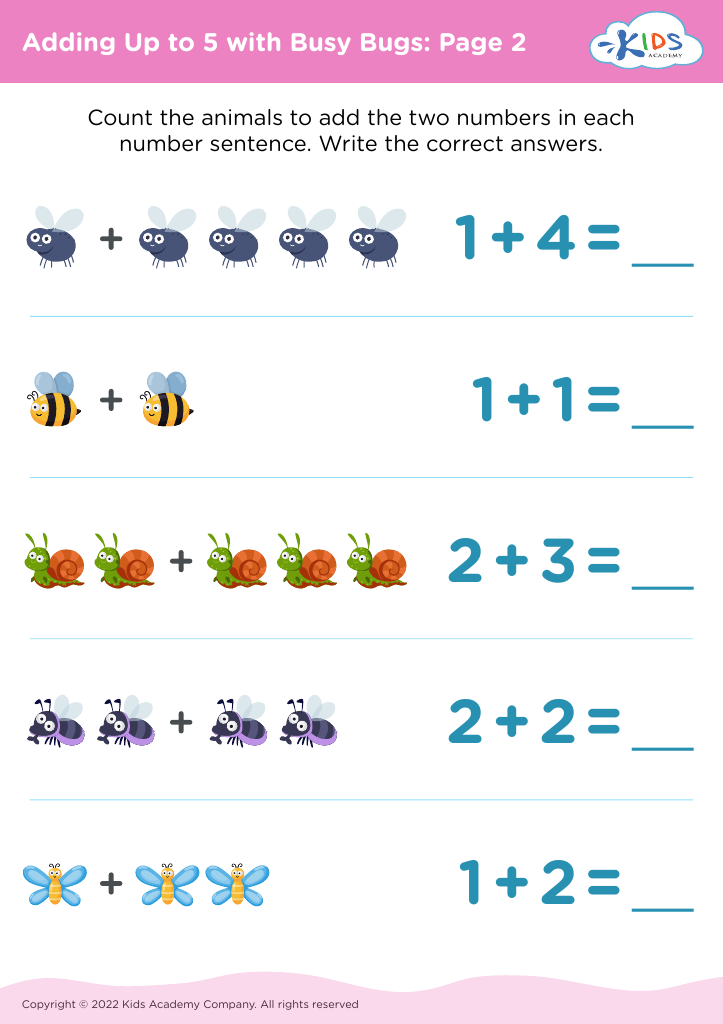
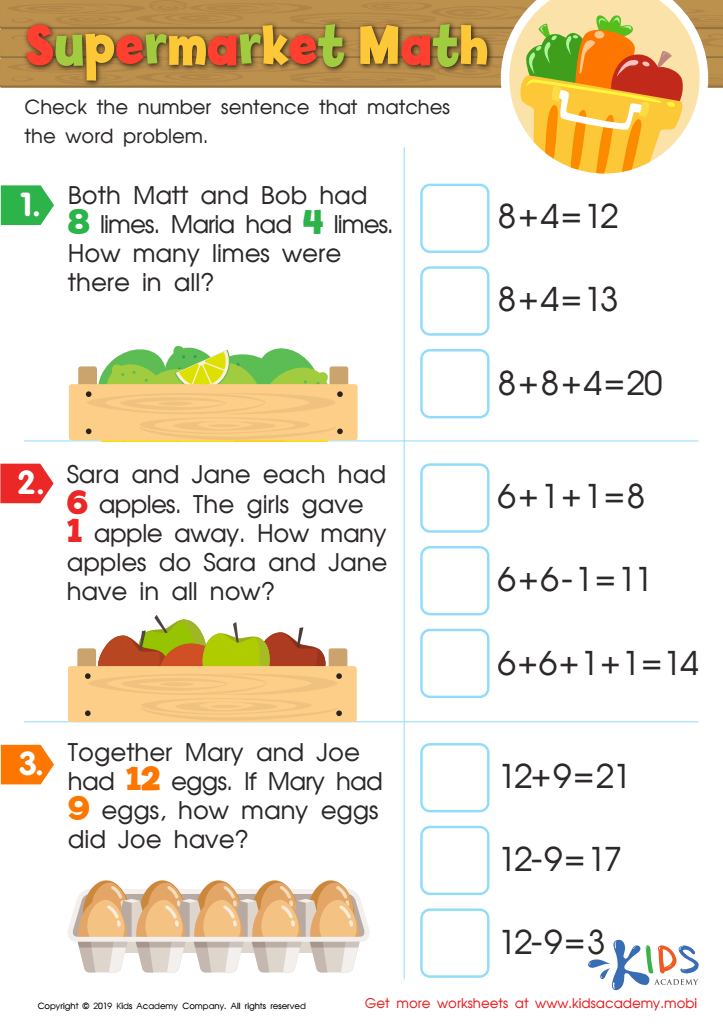
Supermarket Math Worksheet
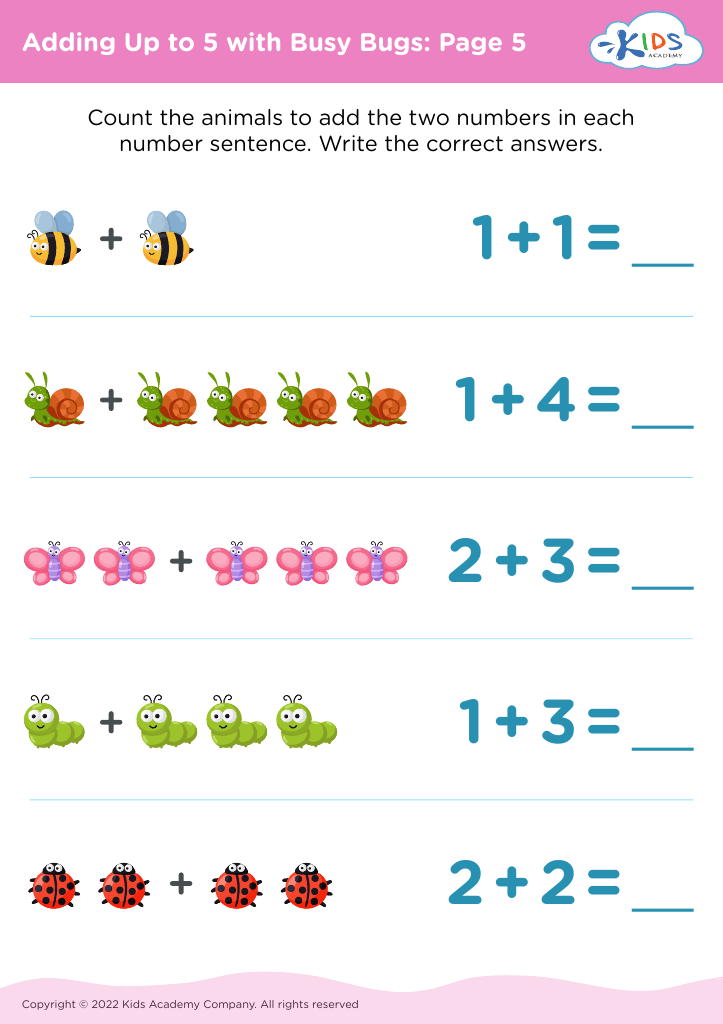
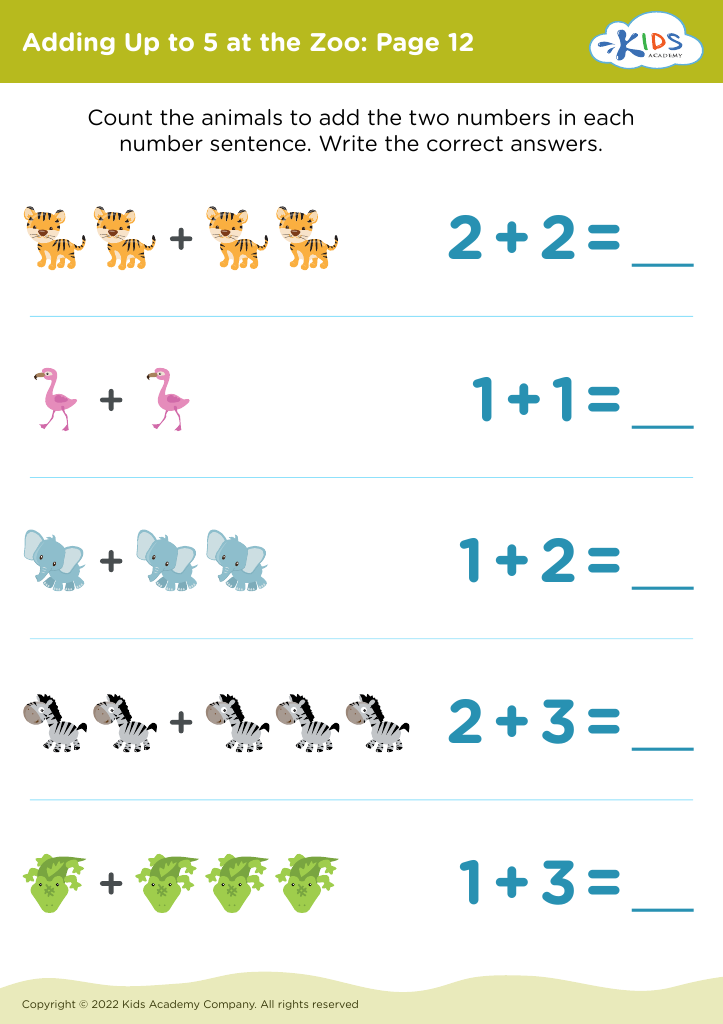
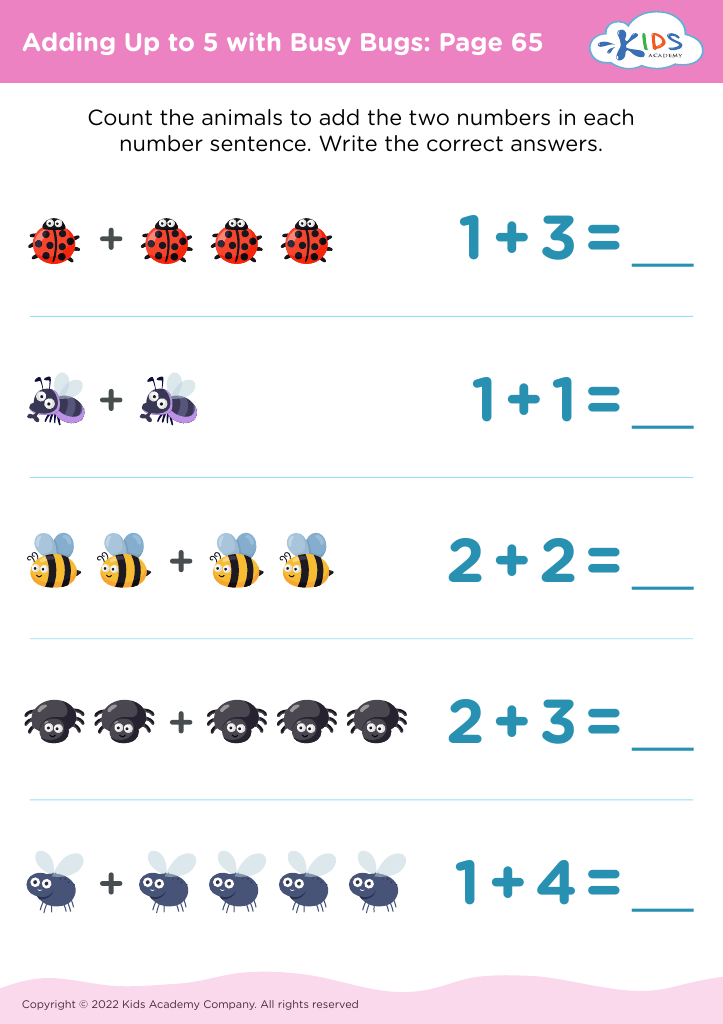
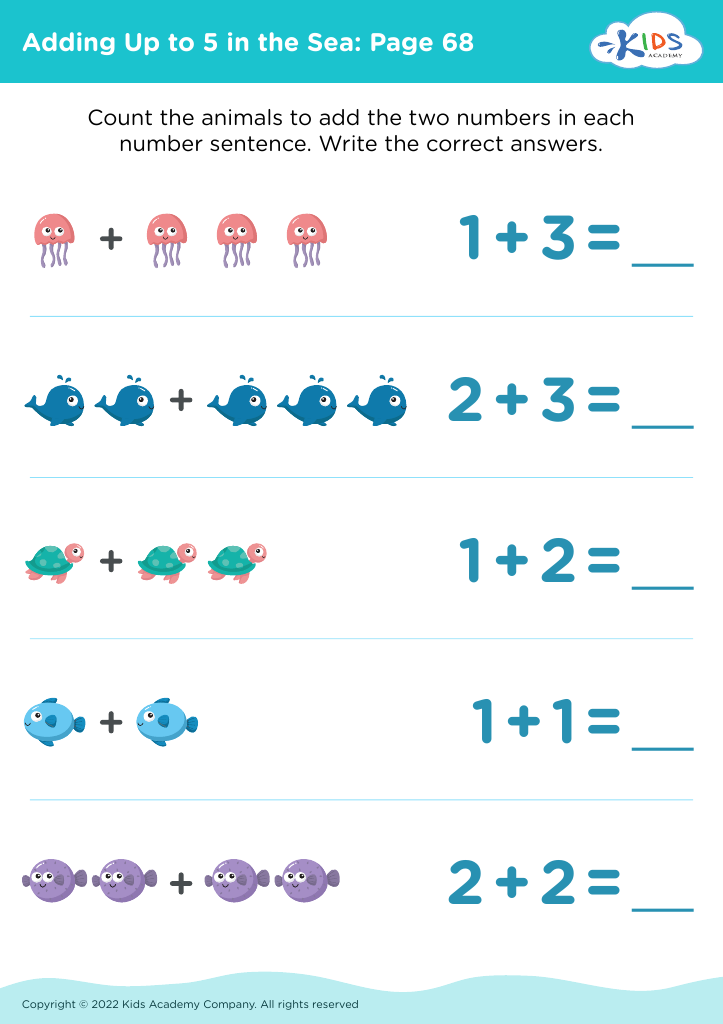
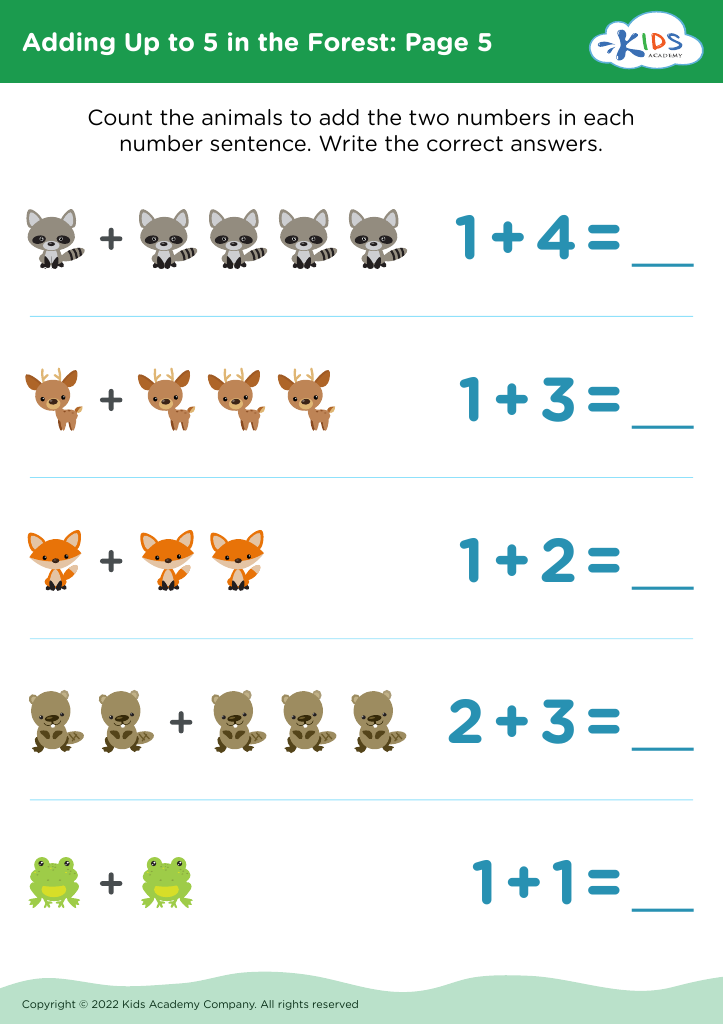
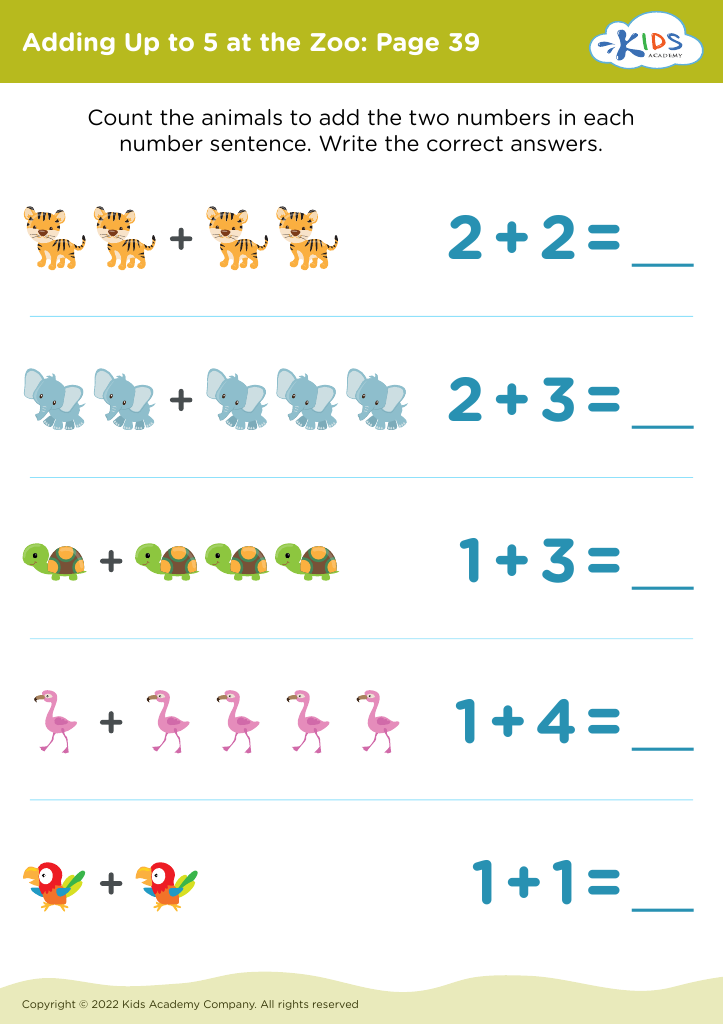
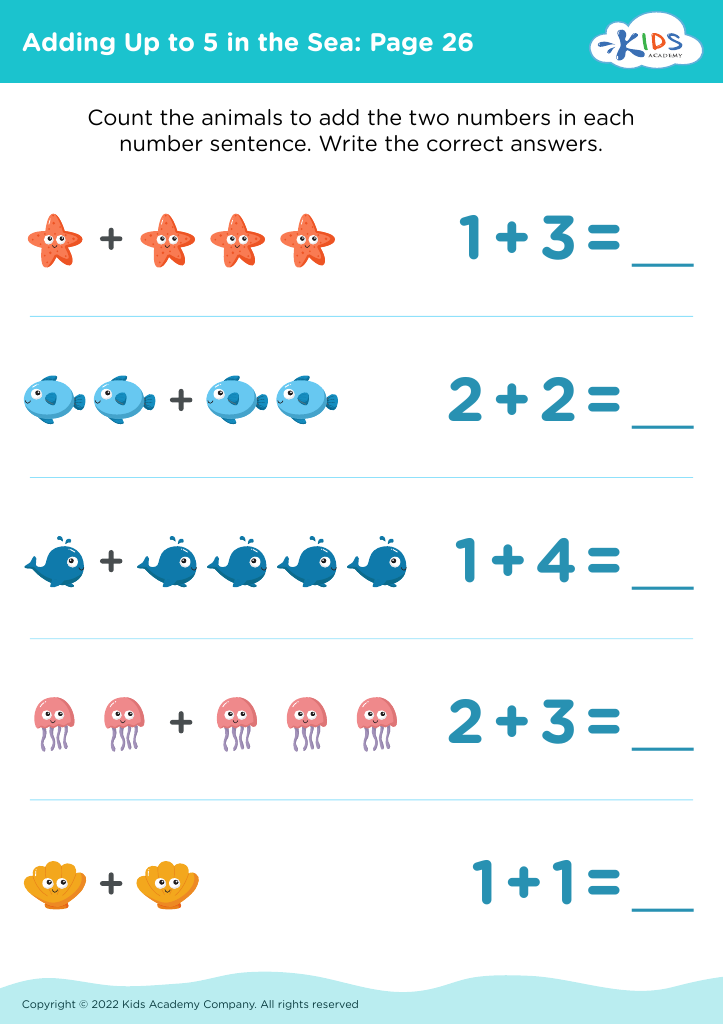
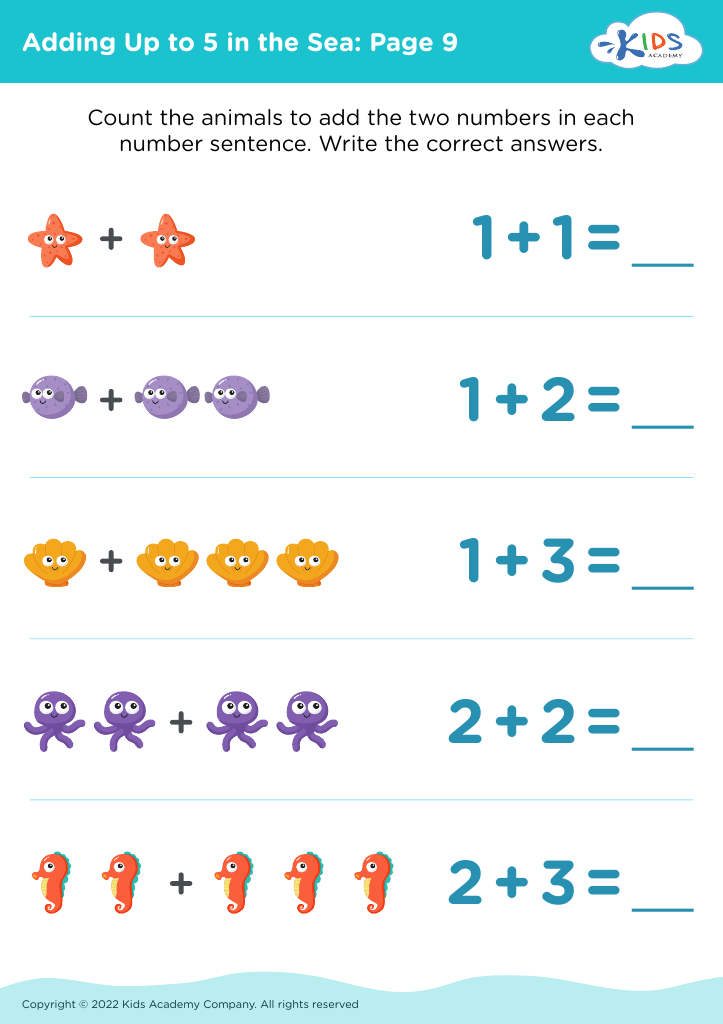








Parents and teachers should prioritize basic arithmetic addition and subtraction for ages 3-5 because these skills lay the essential groundwork for future academic success and everyday problem-solving abilities. Early mastery of these fundamental concepts nurtures cognitive development by enhancing logical thinking, numerical understanding, and memory. Engaging young children in arithmetic activities such as counting objects, simple games, or story-based problems fosters an environment that makes learning enjoyable and effective.
These early experiences with numbers help children develop confidence in their abilities and encourage them to approach more complex mathematical concepts with ease as they progress in school. Additionally, arithmetic skills are pervasive in daily life—from understanding time and managing money to measuring ingredients in a recipe. By instilling these basics at an early age, children are better prepared to navigate real-world situations competently.
Early arithmetic also improves concentration and enhances spatial-temporal reasoning, which is critical for the development of higher-order mathematical skills like geometry and algebra. Therefore, whether at home or in a classroom setting, focusing on addition and subtraction in early childhood equips kids with vital skills that serve as building blocks for a lifetime of numerical literacy and academic achievement.








