Shape Recognition Math Worksheets for Ages 3-5 - Page 2
45 filtered results
-
From - To
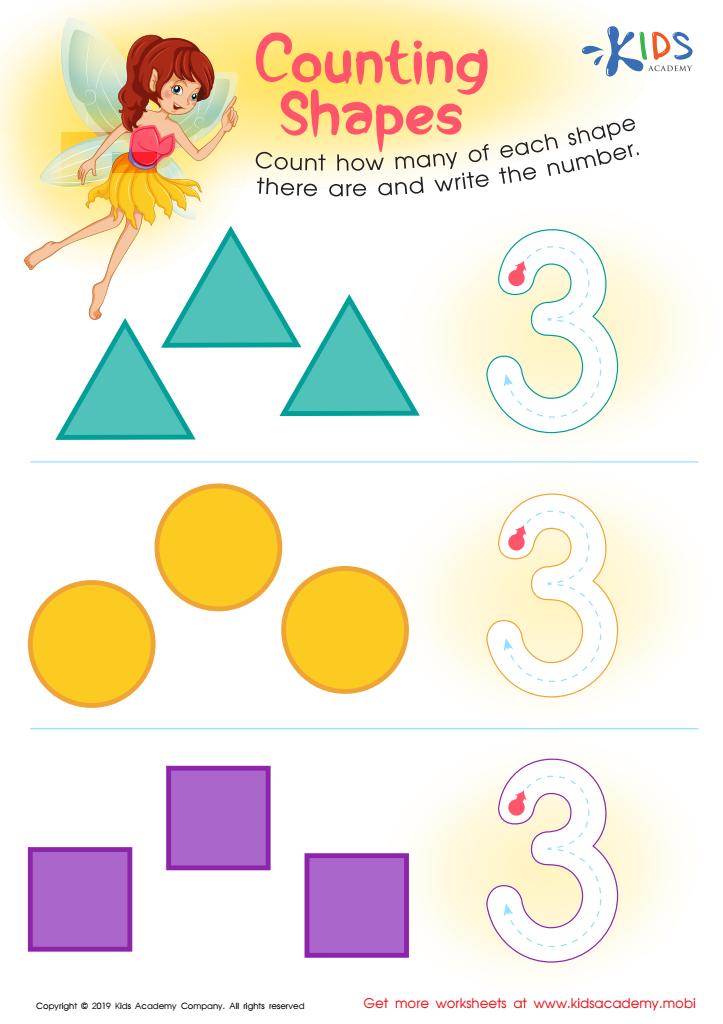
Counting Shapes Worksheet
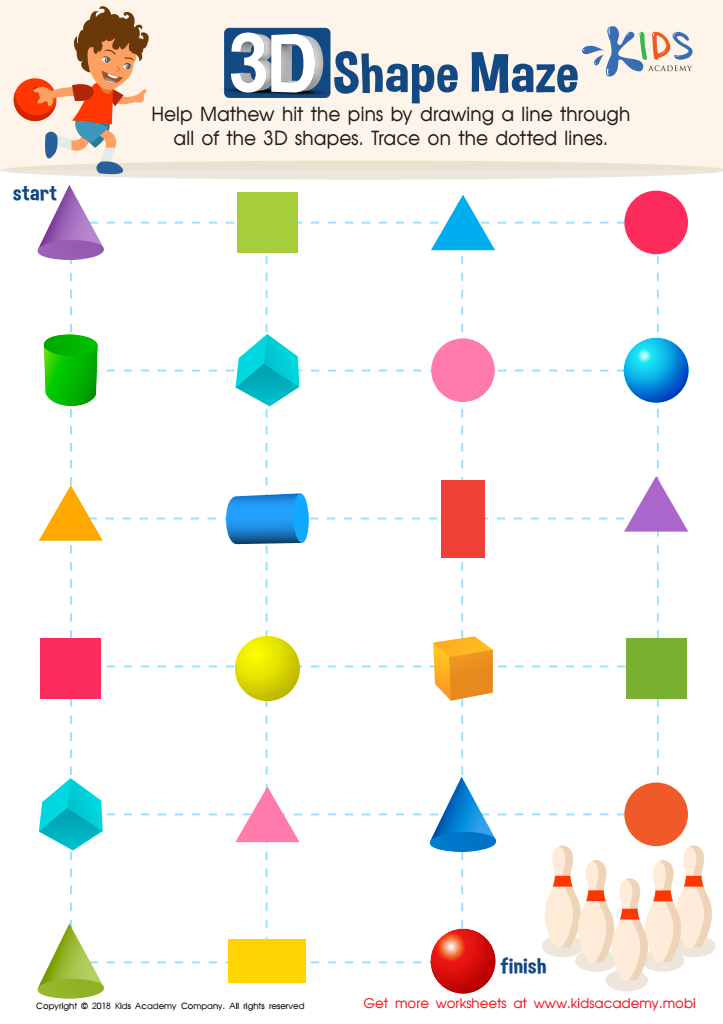
Shapes Maze Geometry Worksheet
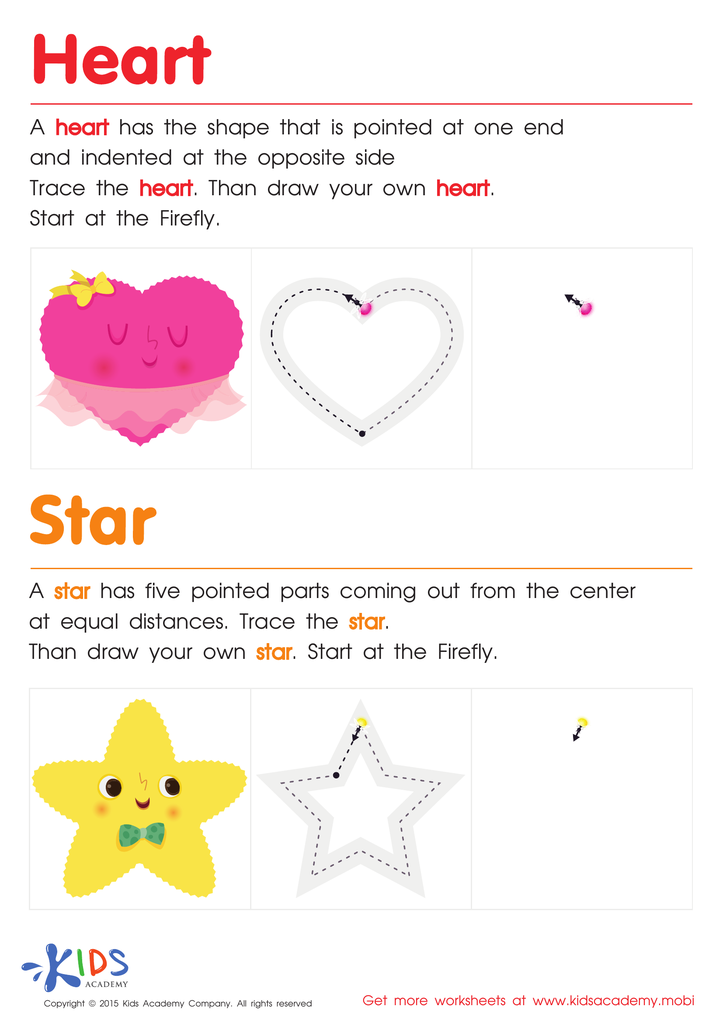
Let's Learn to Draw Hearts And Stars Printable
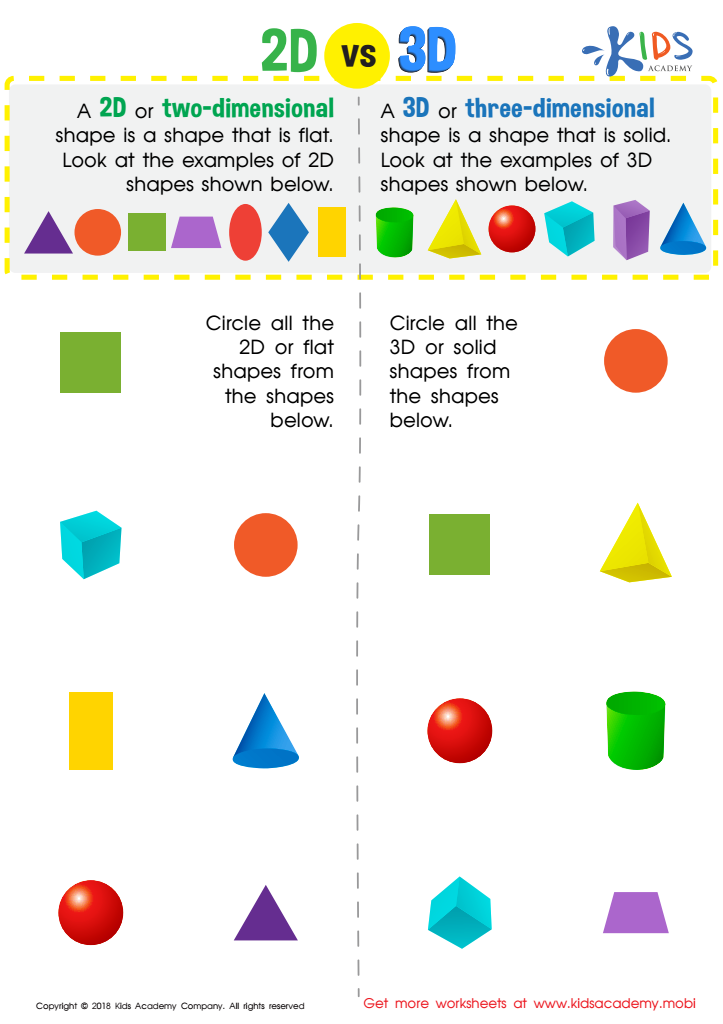
2D vs 3D Shapes Worksheet
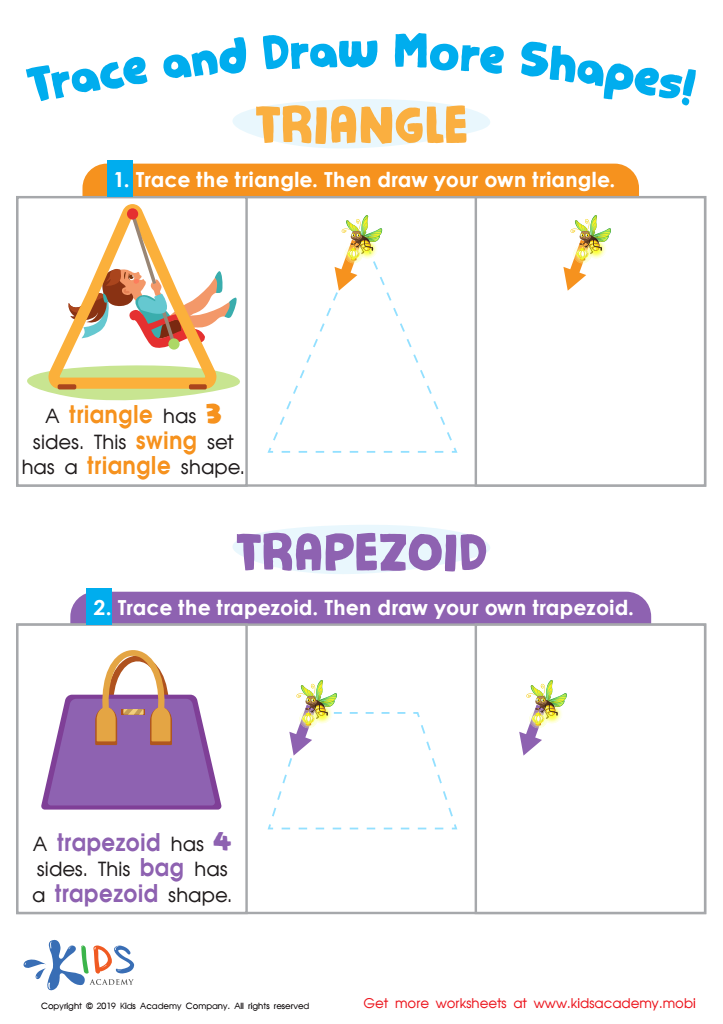
Trace and Draw More Shapes Worksheet
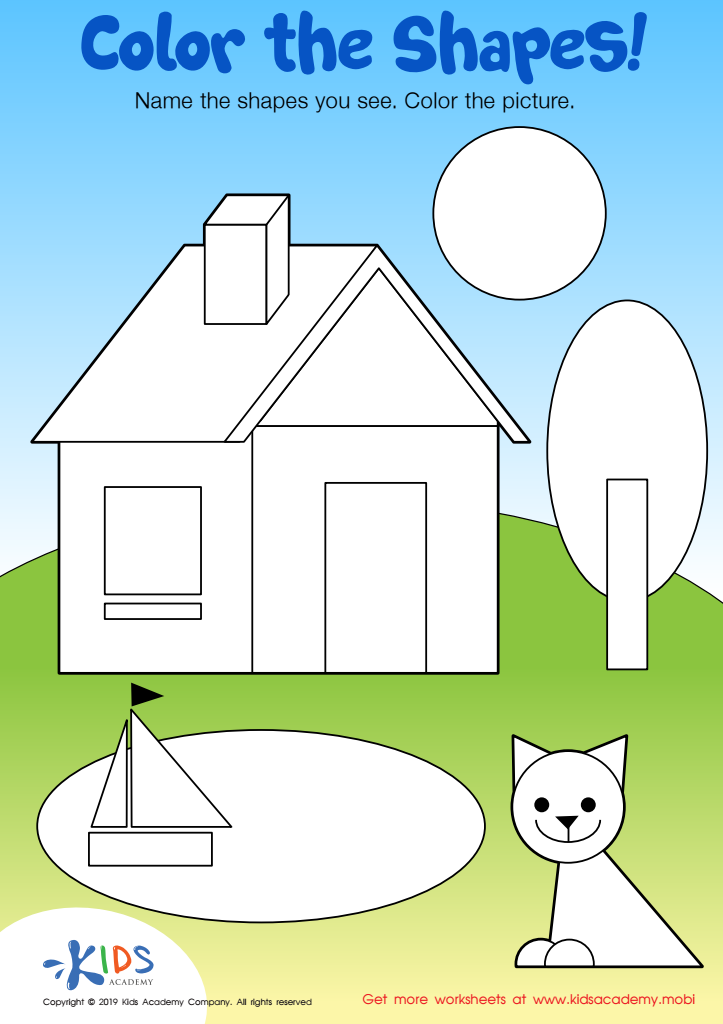
Color the Shapes Worksheet
 Assign to My Students
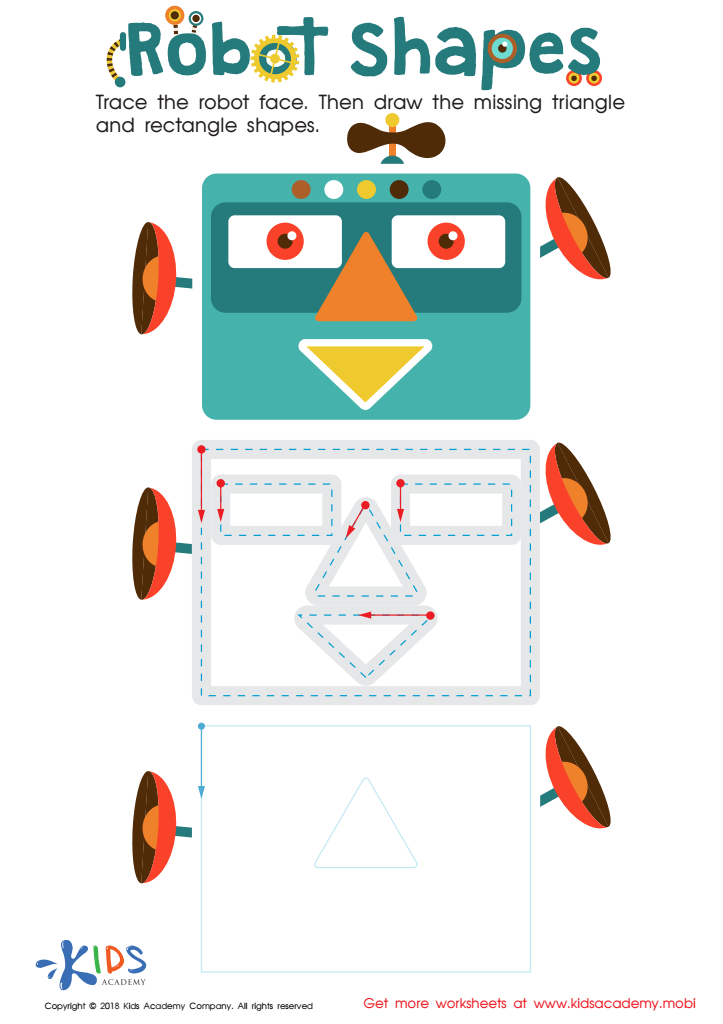
Robot Shapes Worksheet
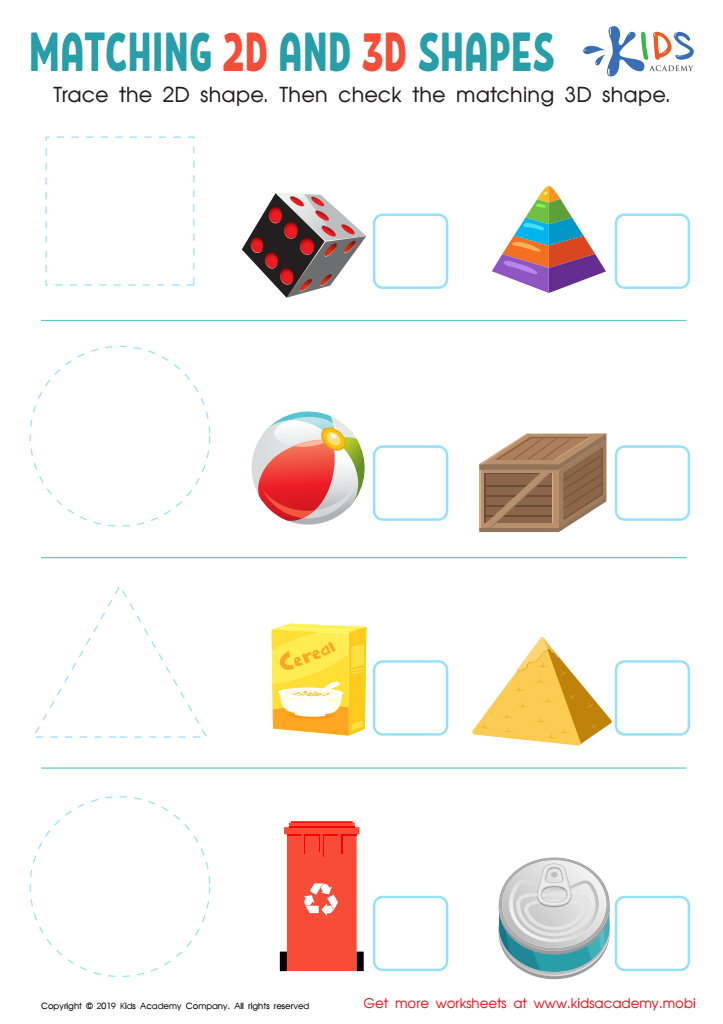
Matching 2D and 3D Shapes Worksheet
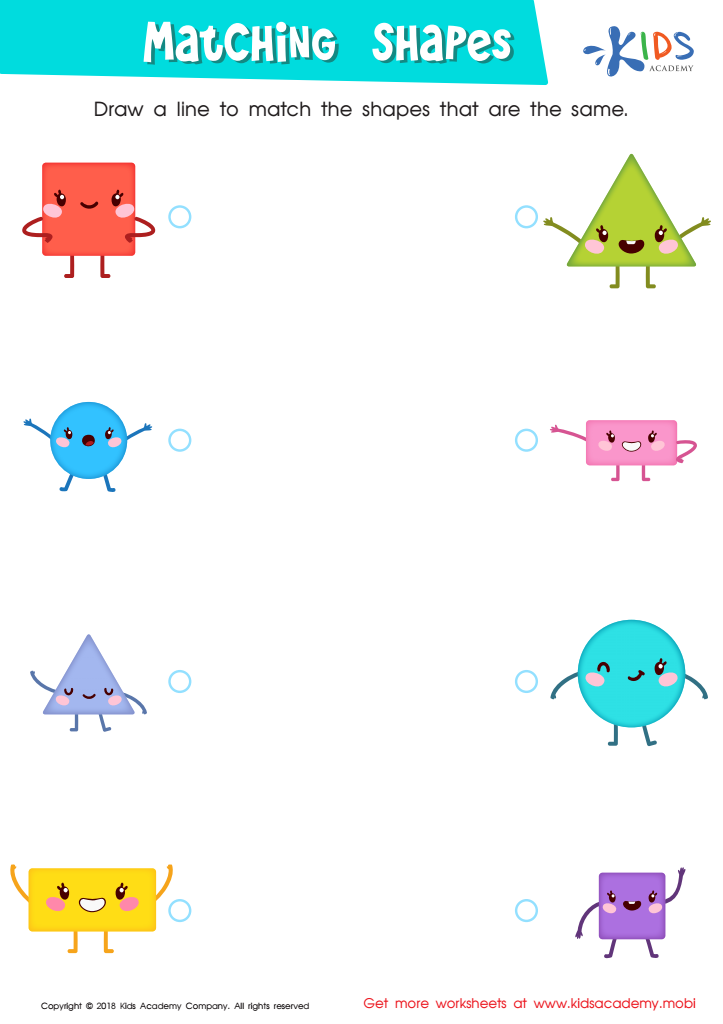
Matching Shapes Worksheet
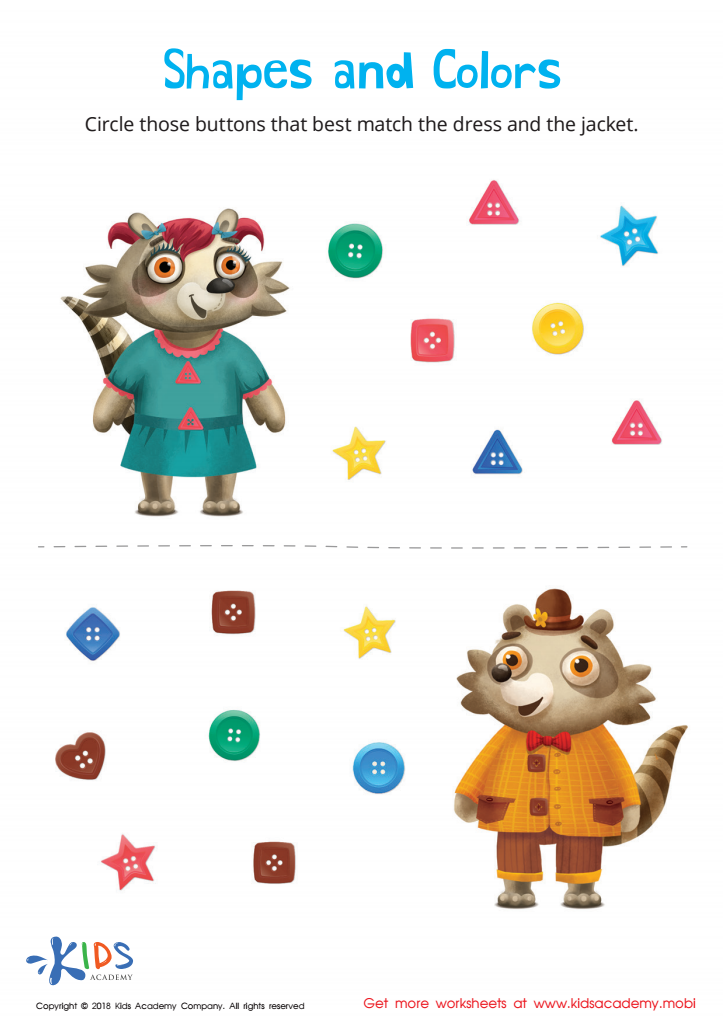
Shapes and Colors Worksheet
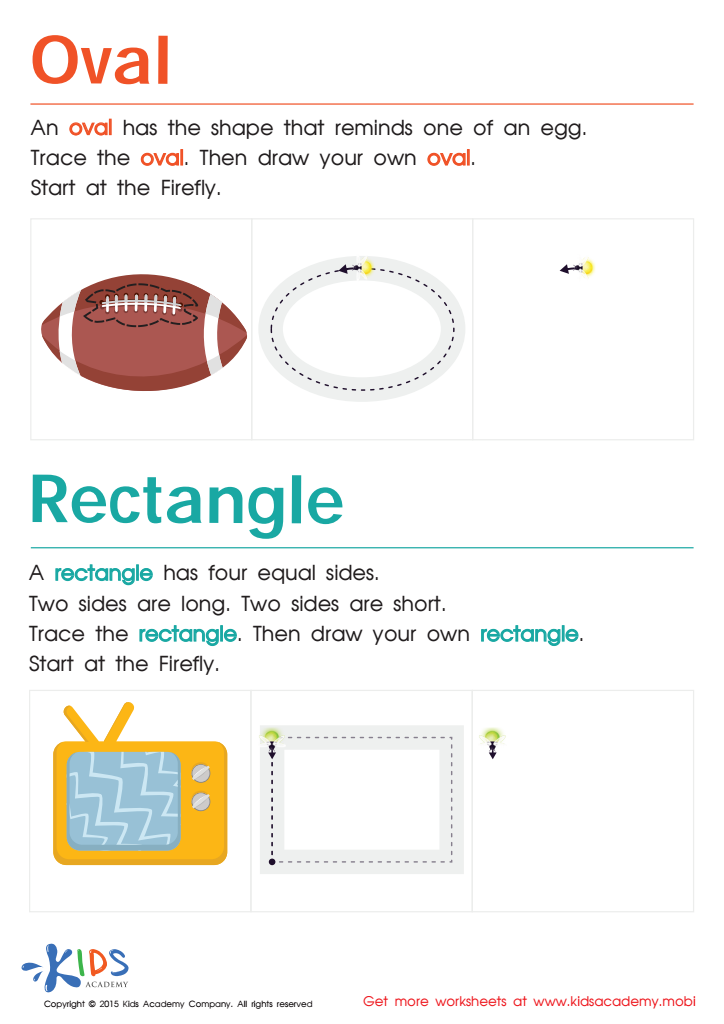
Easy Drawing of Ovals And Rectangles Worksheet
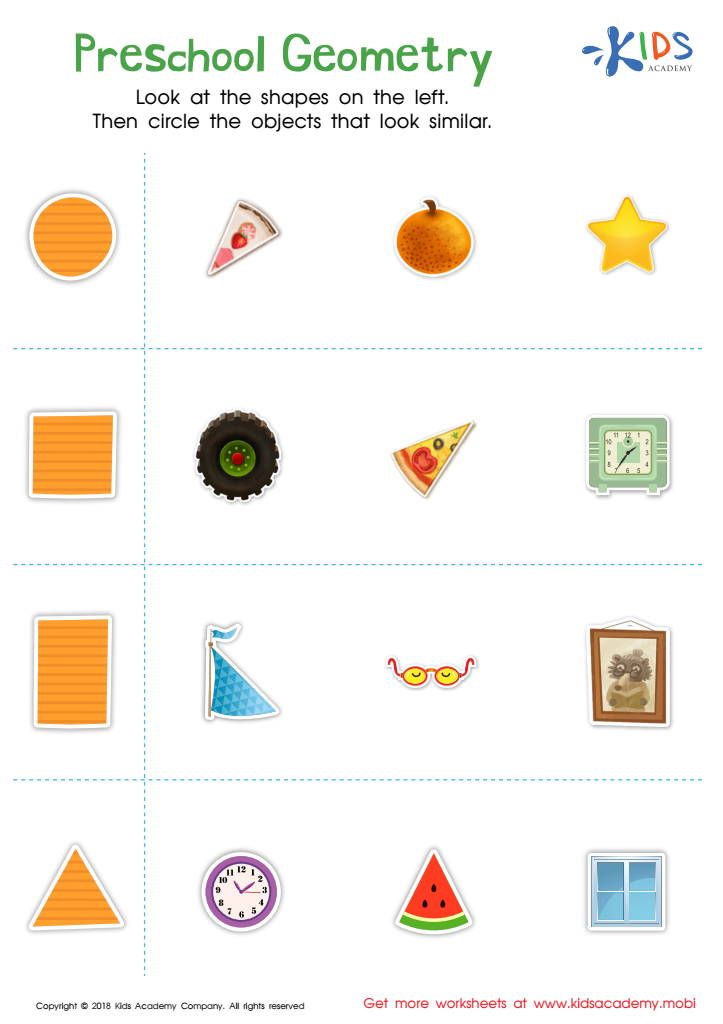
Preschool Geometry Worksheet
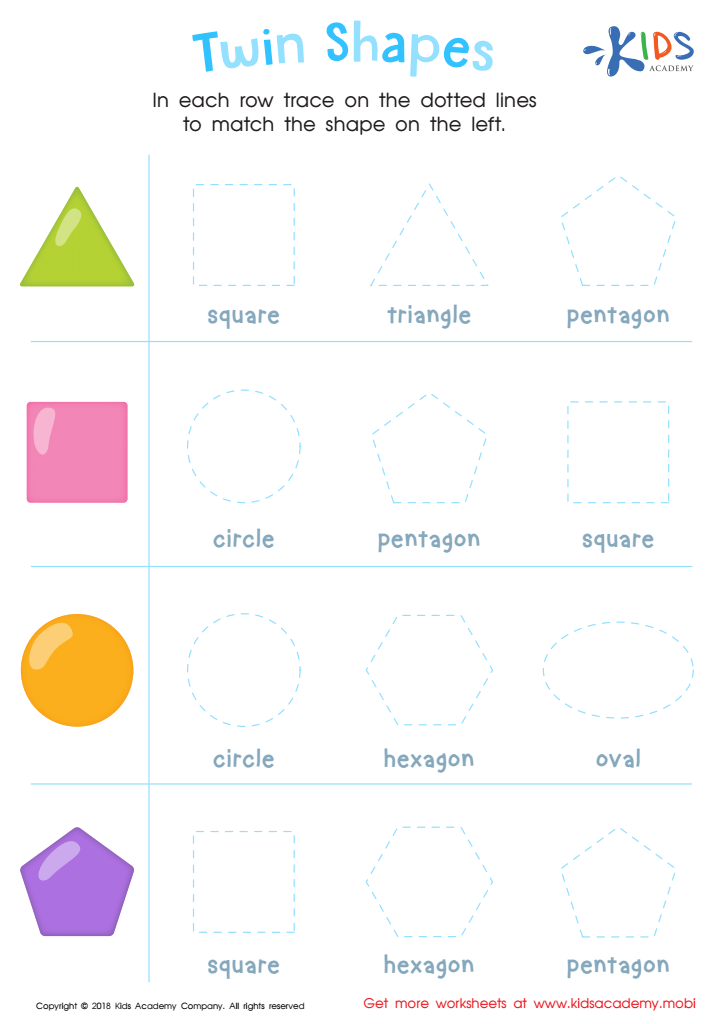
Twin Shapes Dot-to-Dot Worksheet
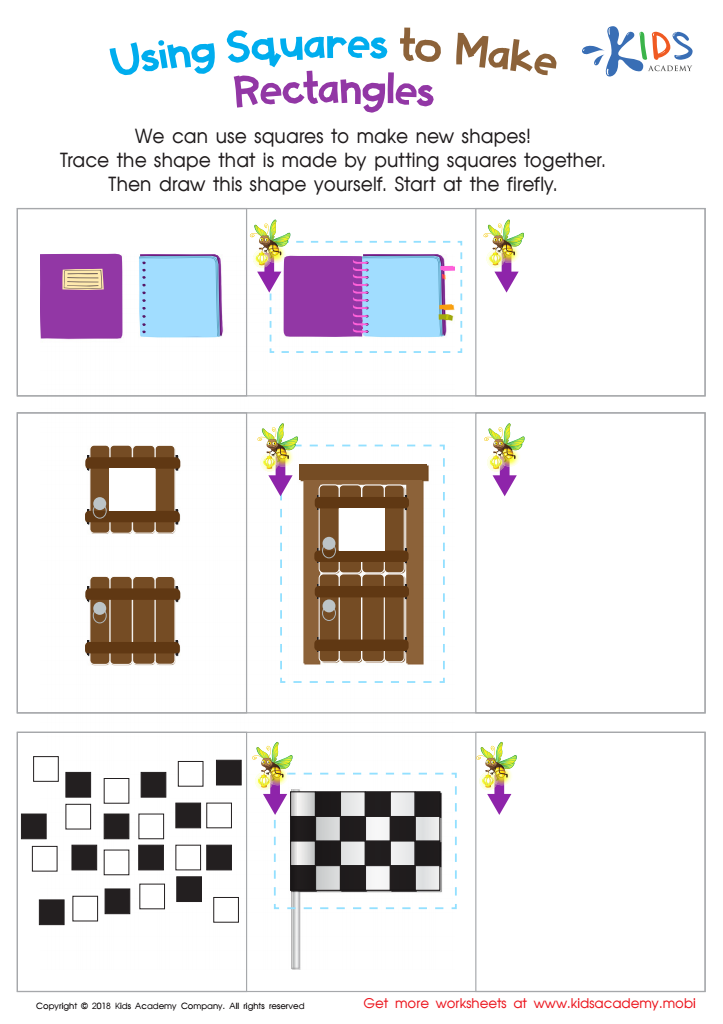
Using Squares to Make Rectangles Worksheet
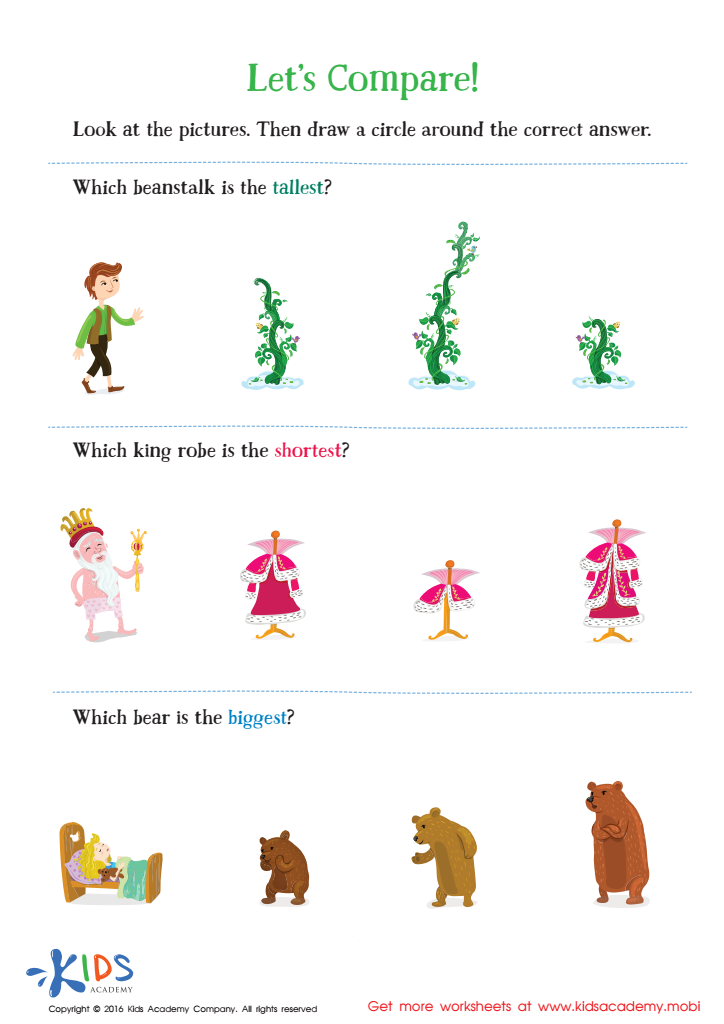
Fairy Tale Worksheet: Let's Compare
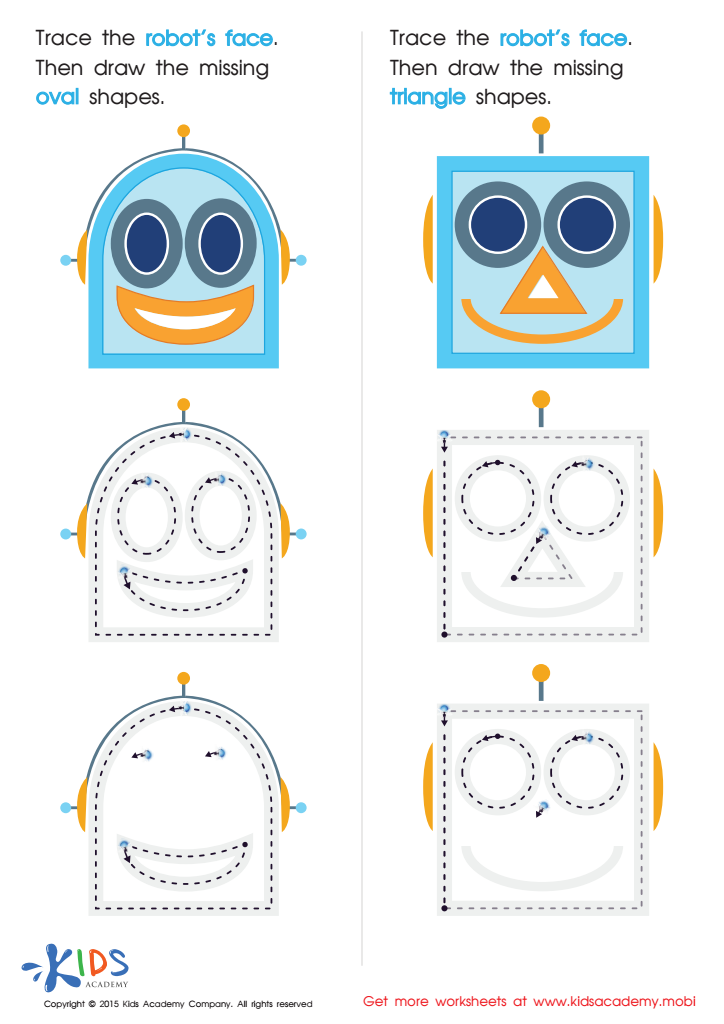
Drawing Ovals And Triangles with Fun Printable
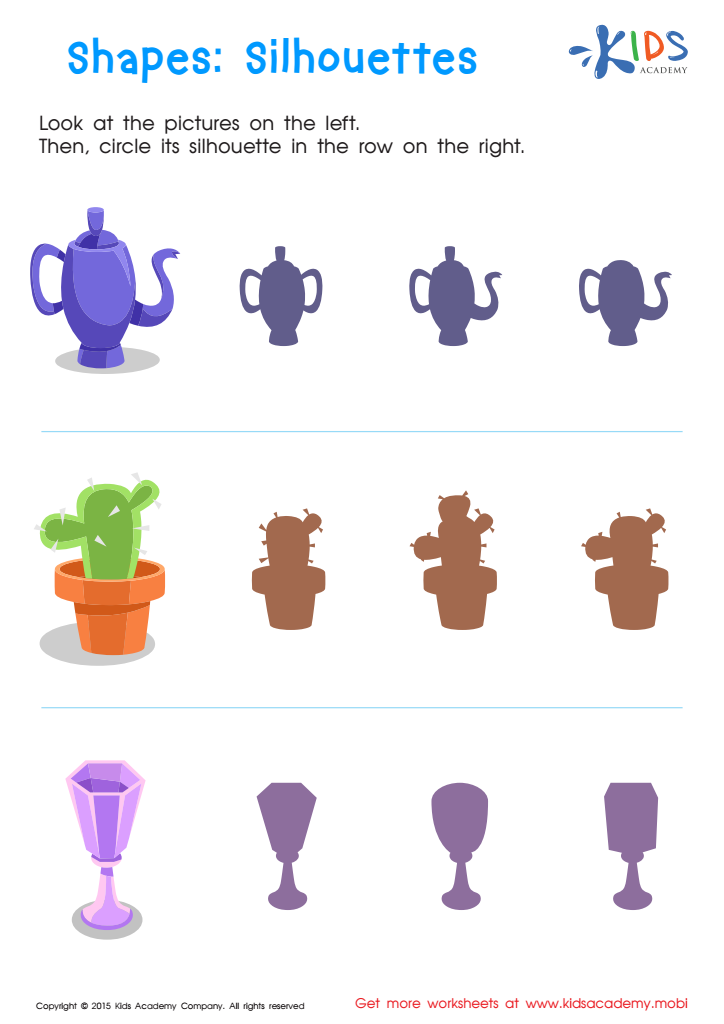
Silhouettes – Shapes Worksheet
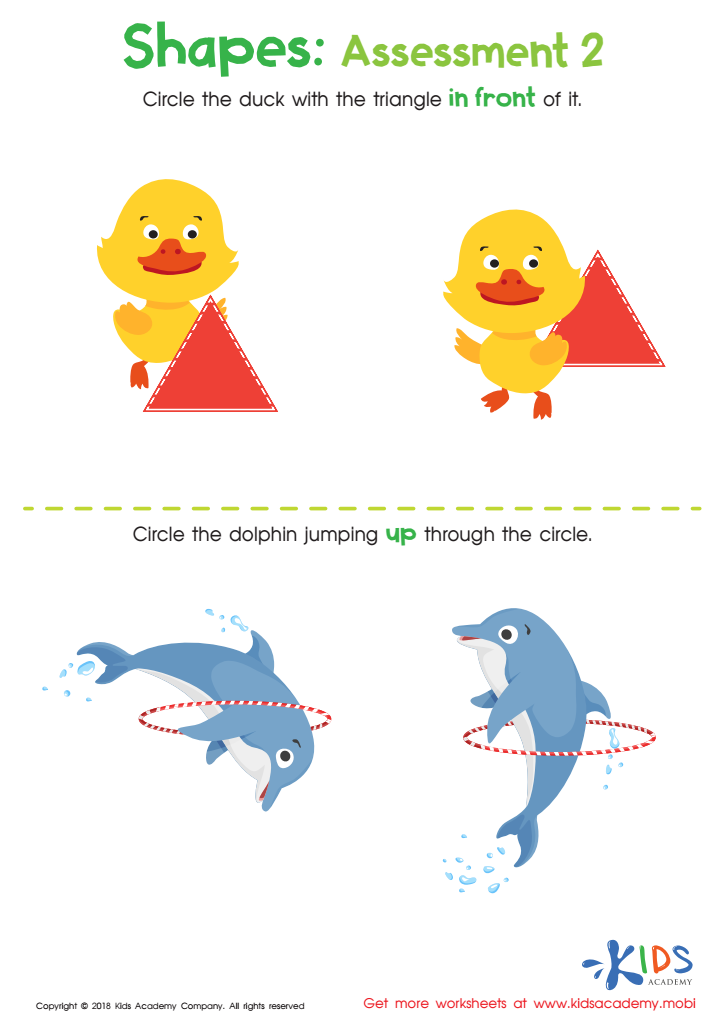
Geometry – Assessment 2 Worksheet
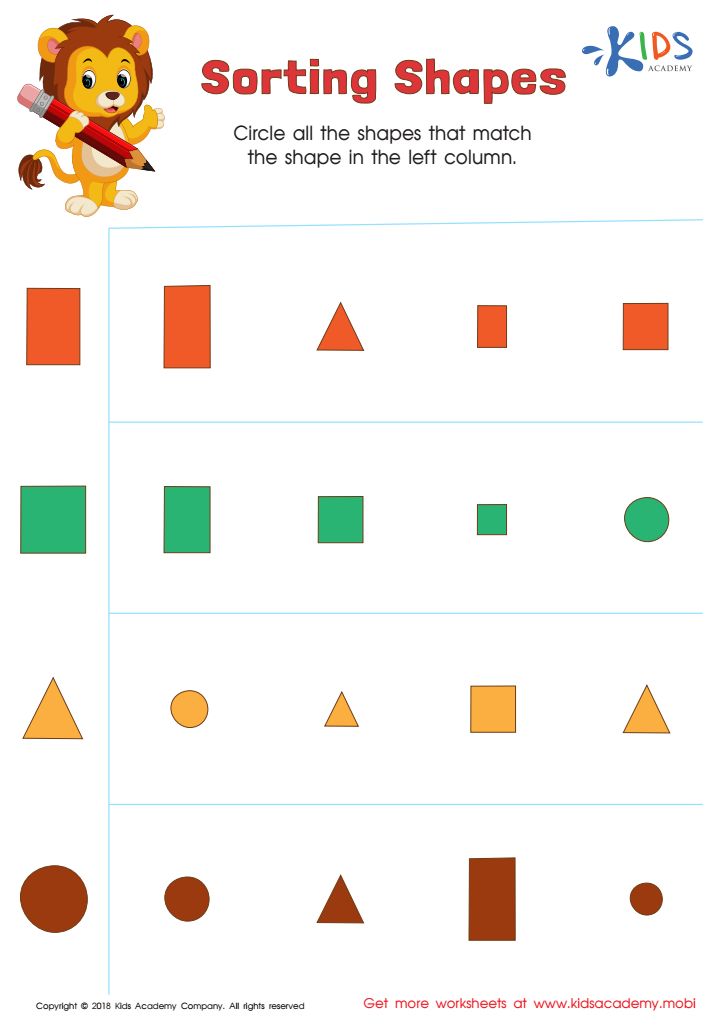
Sorting Shapes - Part 2 Worksheet
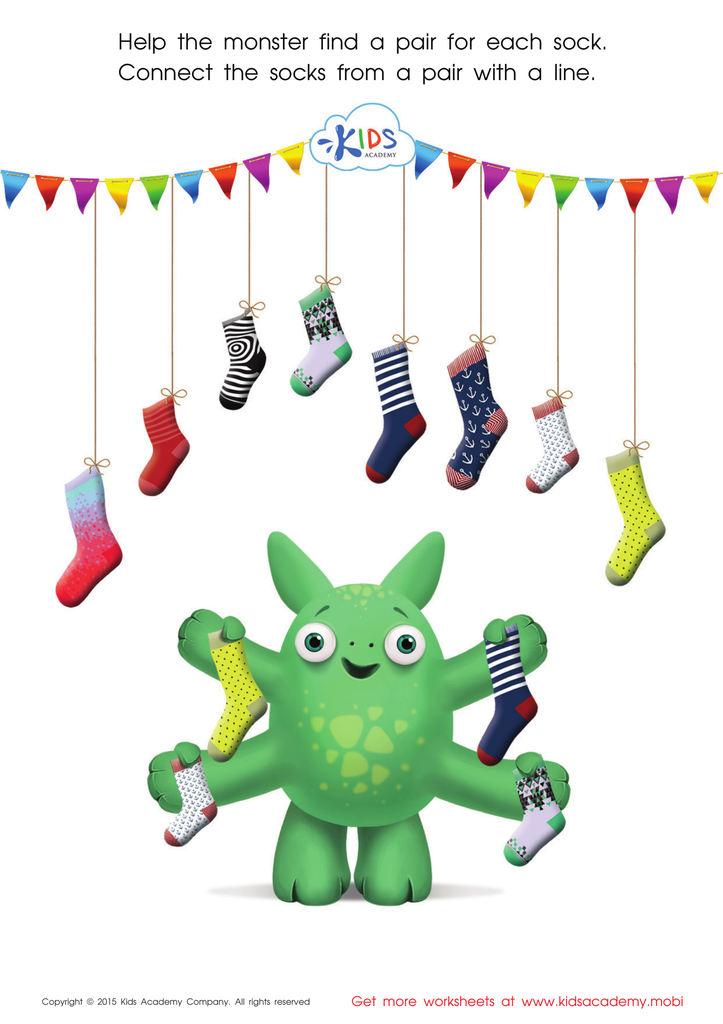
Math Matching Pairs Game: Monsterв's Socks Worksheet
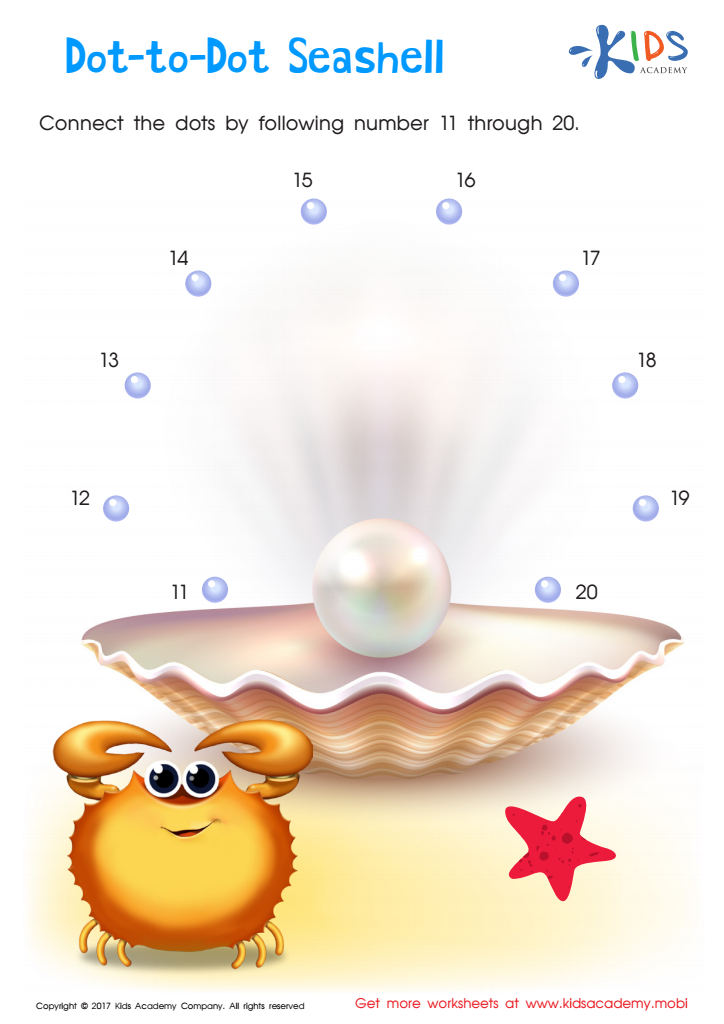
Ordering 11–20: Dot–to–dot Seashell Printable








Shape recognition is a foundational skill in early childhood education, setting the stage for future mathematical learning and problem-solving abilities. When parents and teachers focus on shape recognition for children ages 3-5, they are cultivating a vital cognitive skill that enhances visual-spatial awareness. Recognizing and distinguishing between different shapes helps children categorize objects and understand their environment, which is crucial for cognitive development.
Shape recognition also supports language development. As children learn the names and attributes of different shapes, they expand their vocabulary and enhance their descriptive language skills. For example, describing a triangle's three sides and angles introduces numerical concepts and comparative language.
Additionally, understanding shapes contributes to early math skills, such as geometry. Children start to notice patterns, symmetry, and spatial relations, all of which are important for higher-level math problems they'll encounter in later years.
Further, hands-on activities involving shapes can improve fine motor skills. Building with blocks or cutting shapes out of paper requires precise hand-eye coordination and dexterity.
Investing in shape recognition during early childhood also fosters a positive attitude towards learning. Fun and engaging activities with shapes can spark curiosity and motivation in young learners, making them more eager to explore and understand more complex mathematical concepts as they grow.








