Subtraction practice Math Worksheets for Ages 3-6 - Page 2
72 filtered results
-
From - To
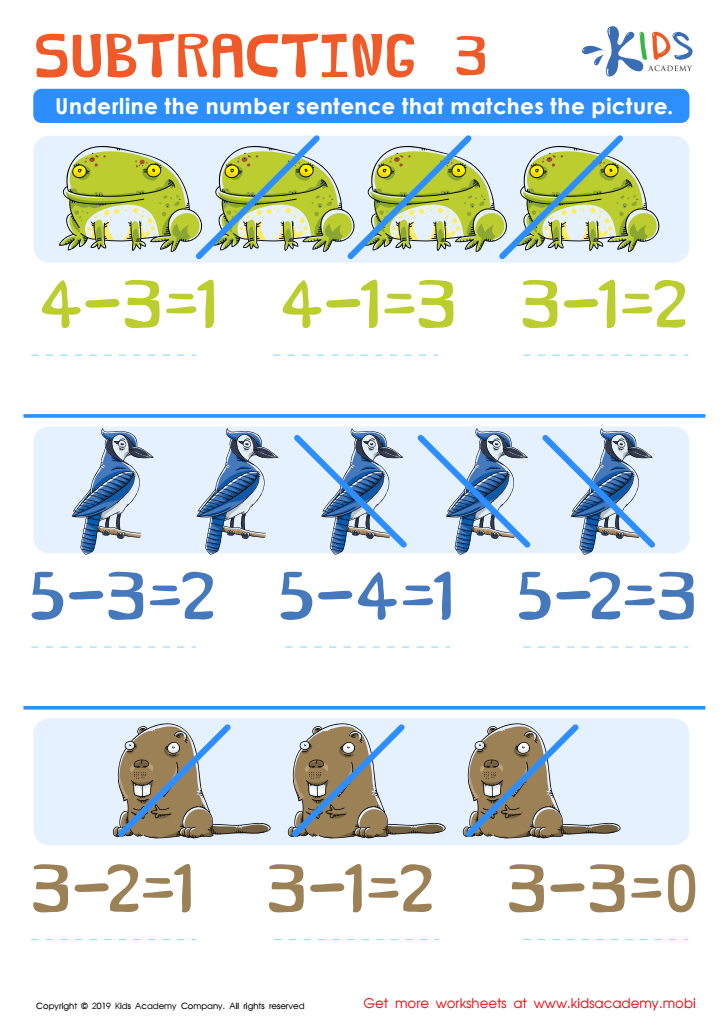
Subtracting 3 Worksheet
 Assign to My Students
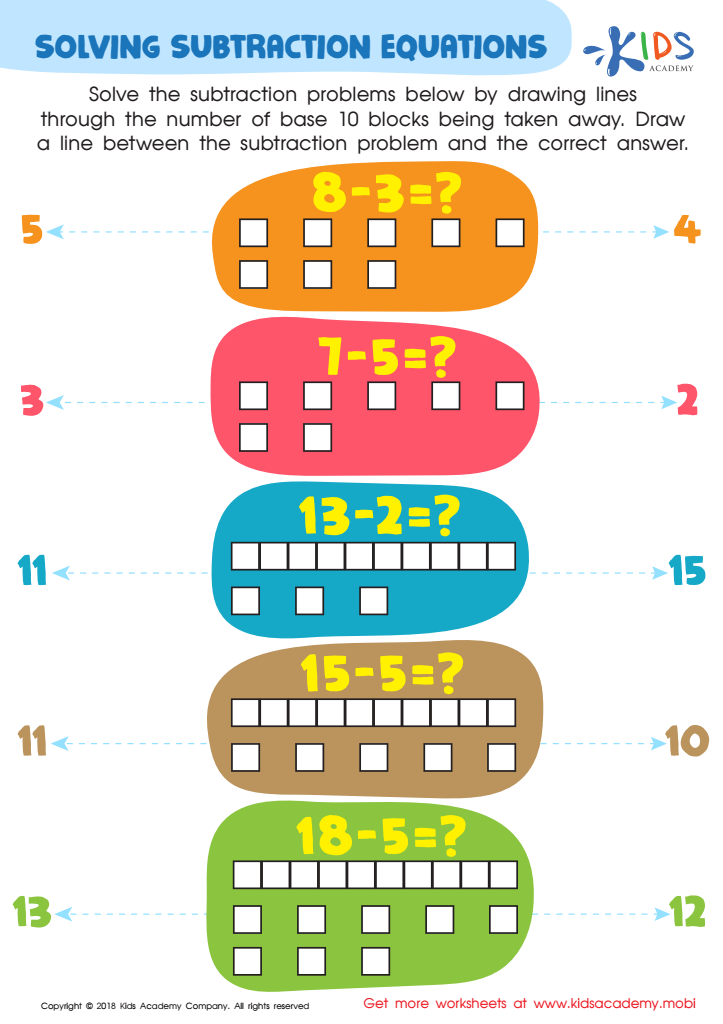
Solving Subtraction Equations Worksheet
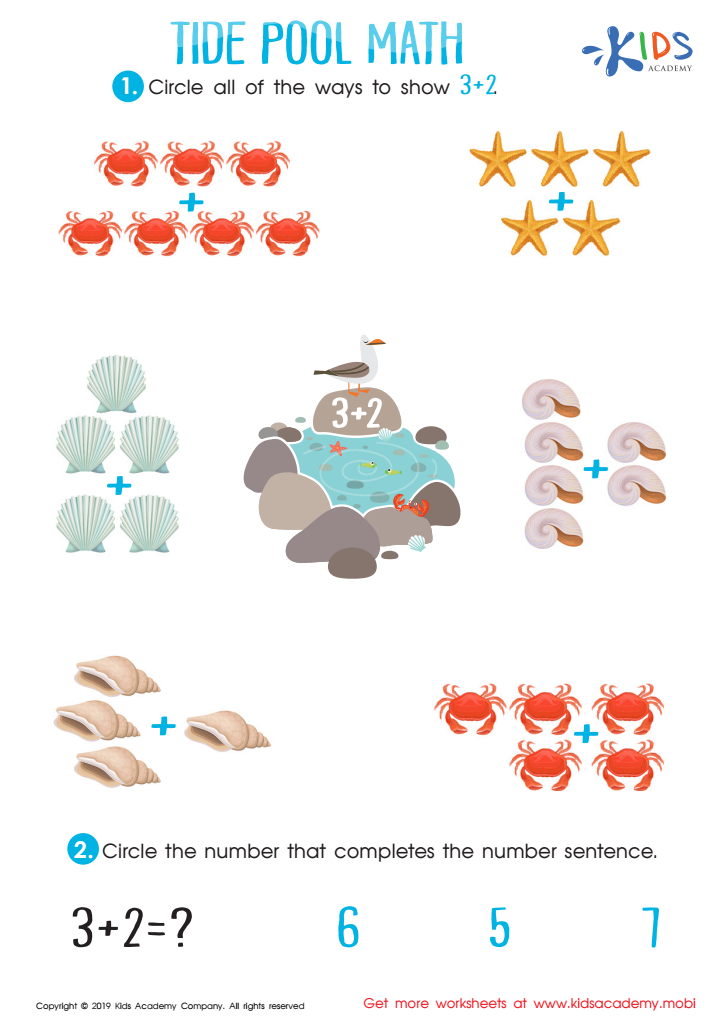
Tide Pool Math Worksheet
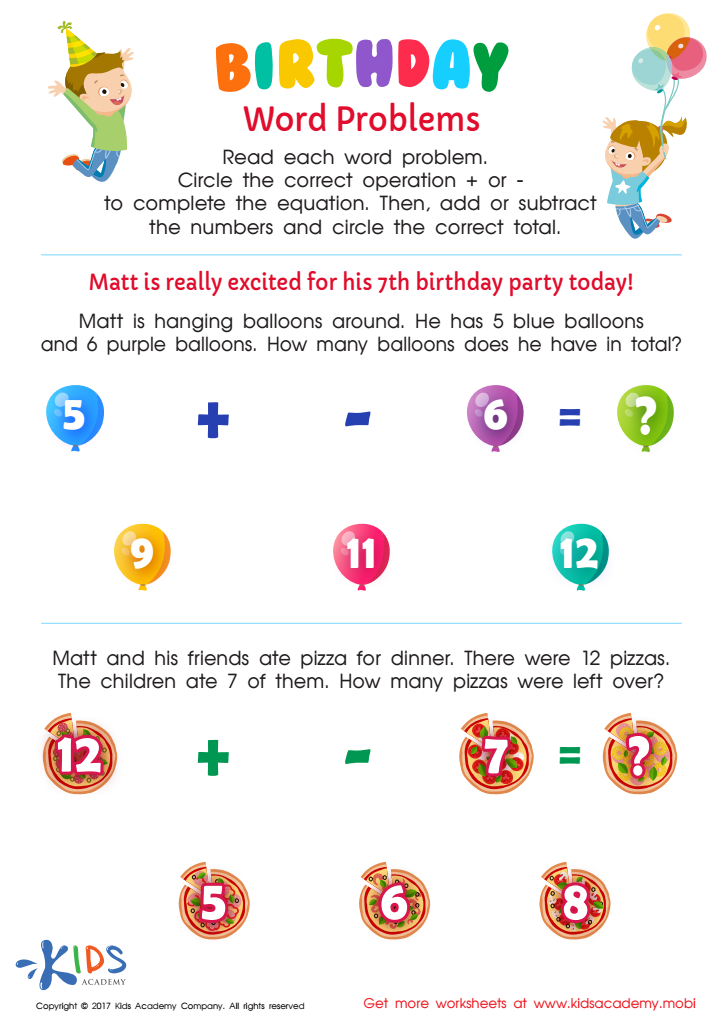
Birthday Word Problems Substraction Worksheet
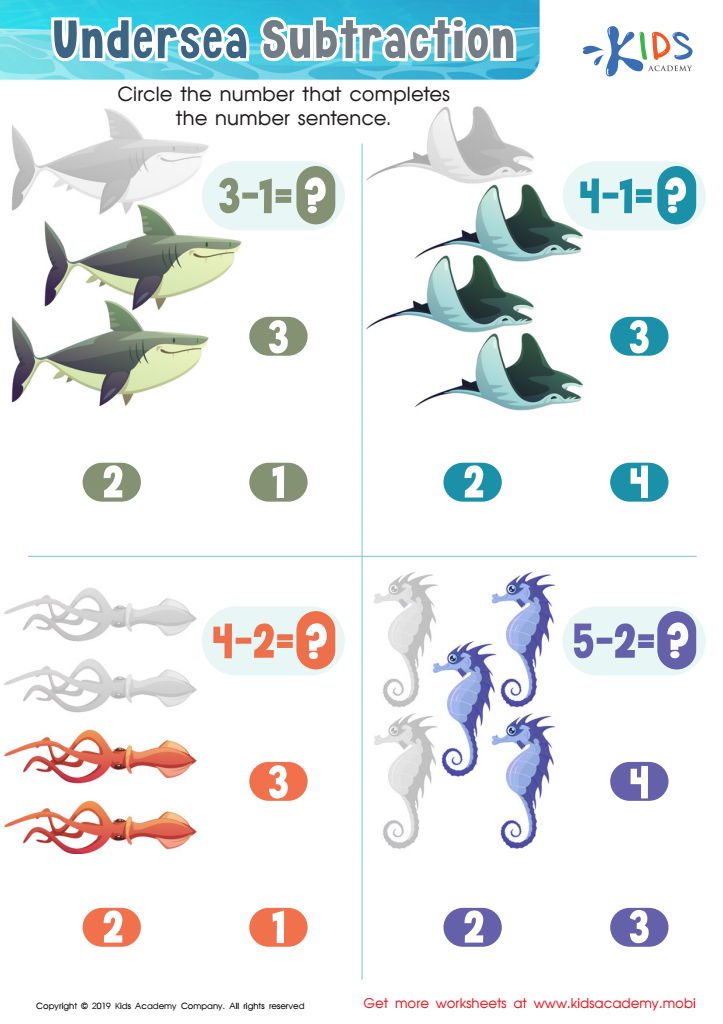
Undersea Subtraction Worksheet
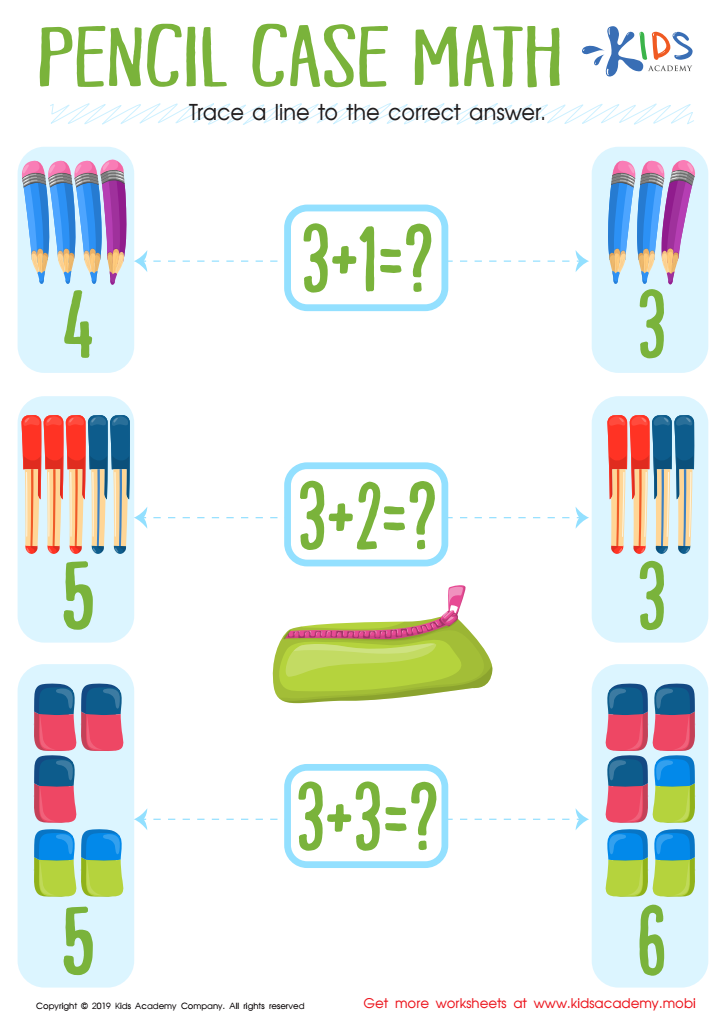
Pencil Case Math Worksheet
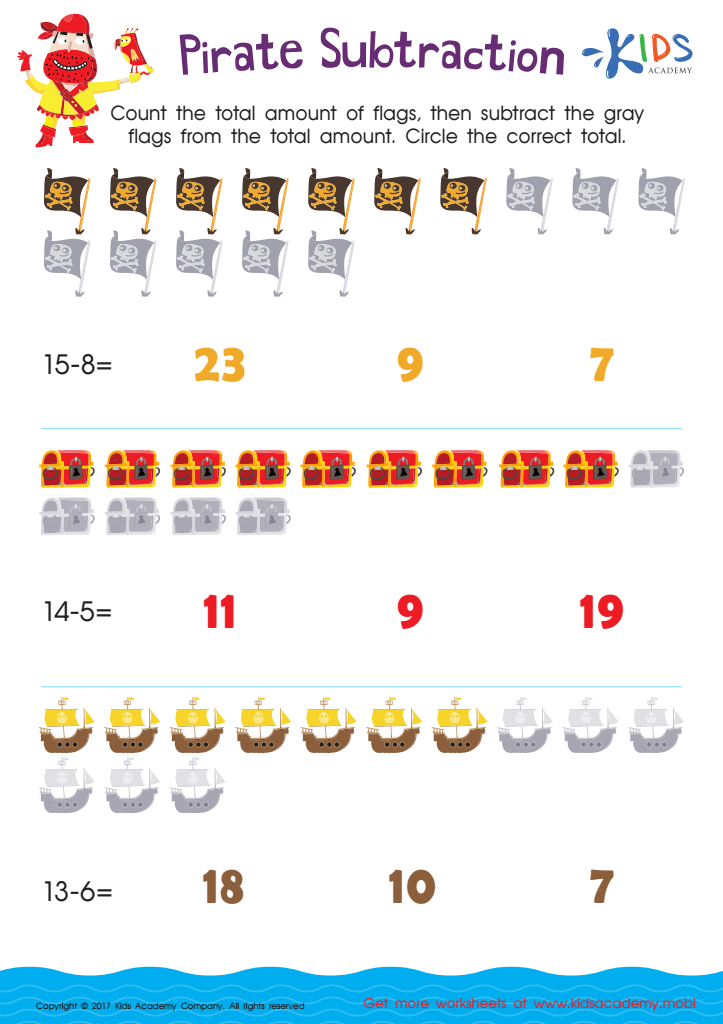
Pirate Subtraction Substraction Worksheet
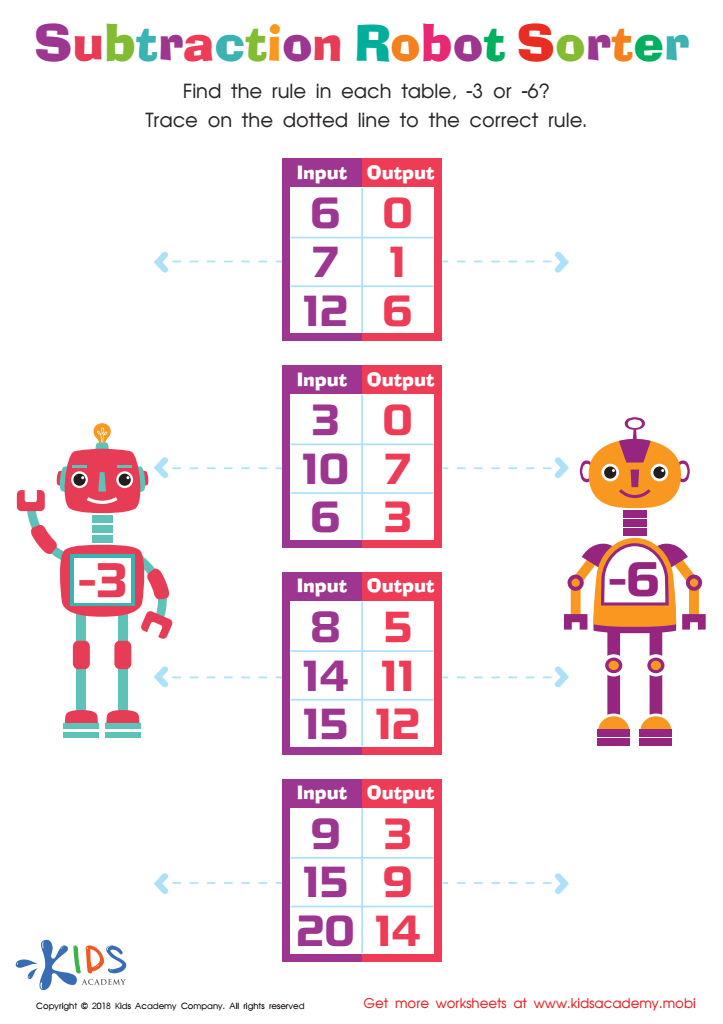
Subtraction Robot Sorter Worksheet
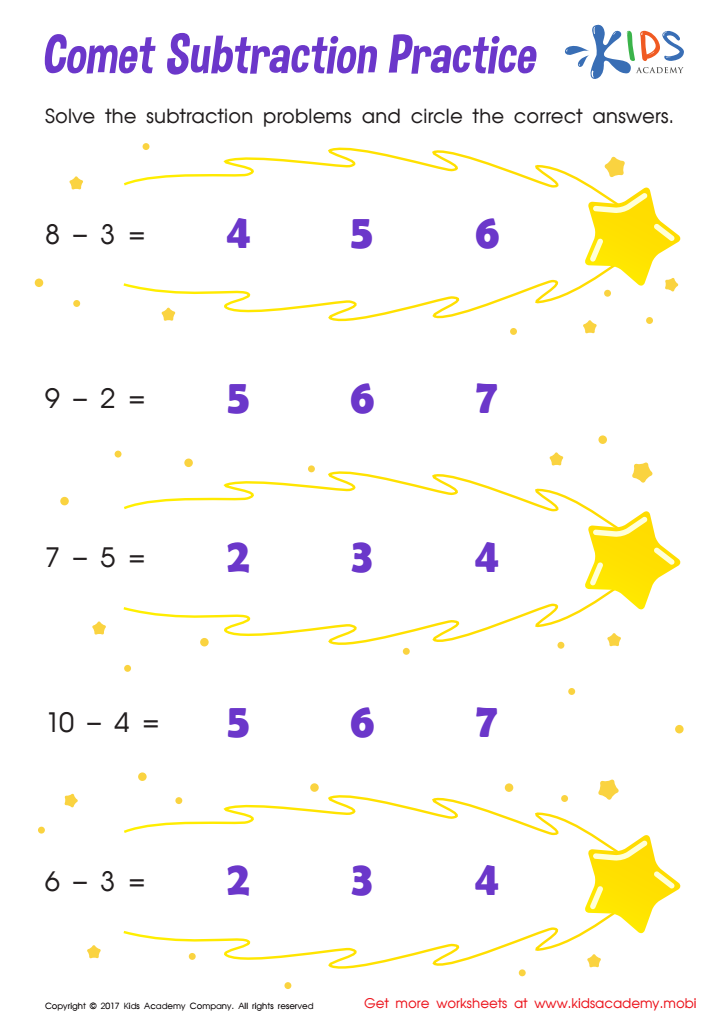
Comet Subtraction Practice Substraction Worksheet
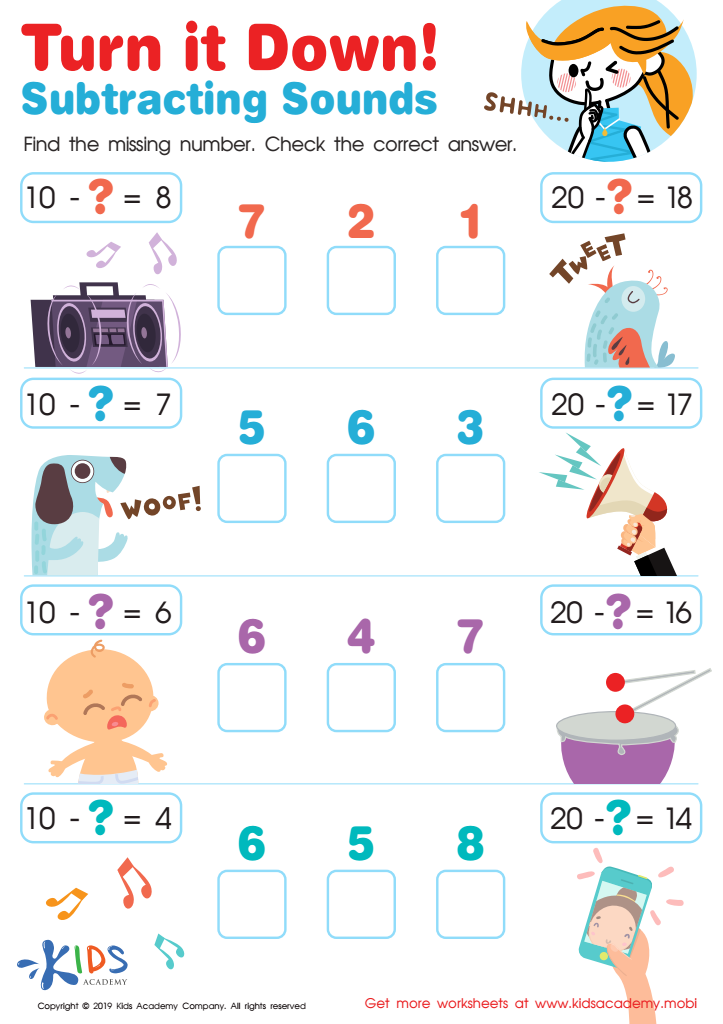
Turn It down! Subtracting Sounds Worksheet
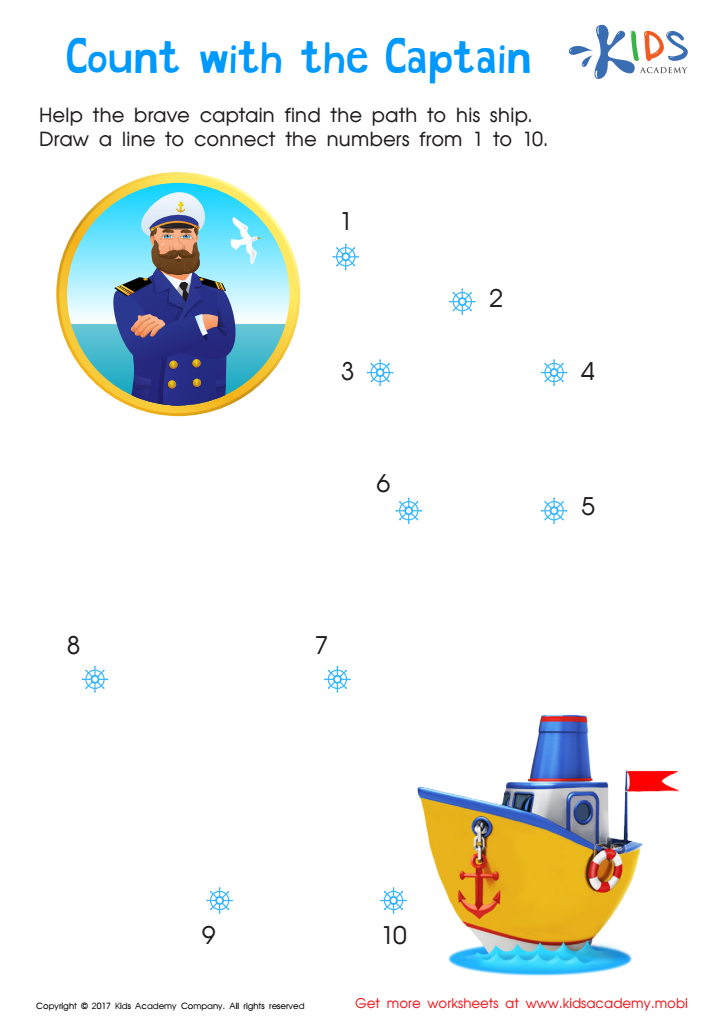
Count with the Captain Connect Dots Worksheet
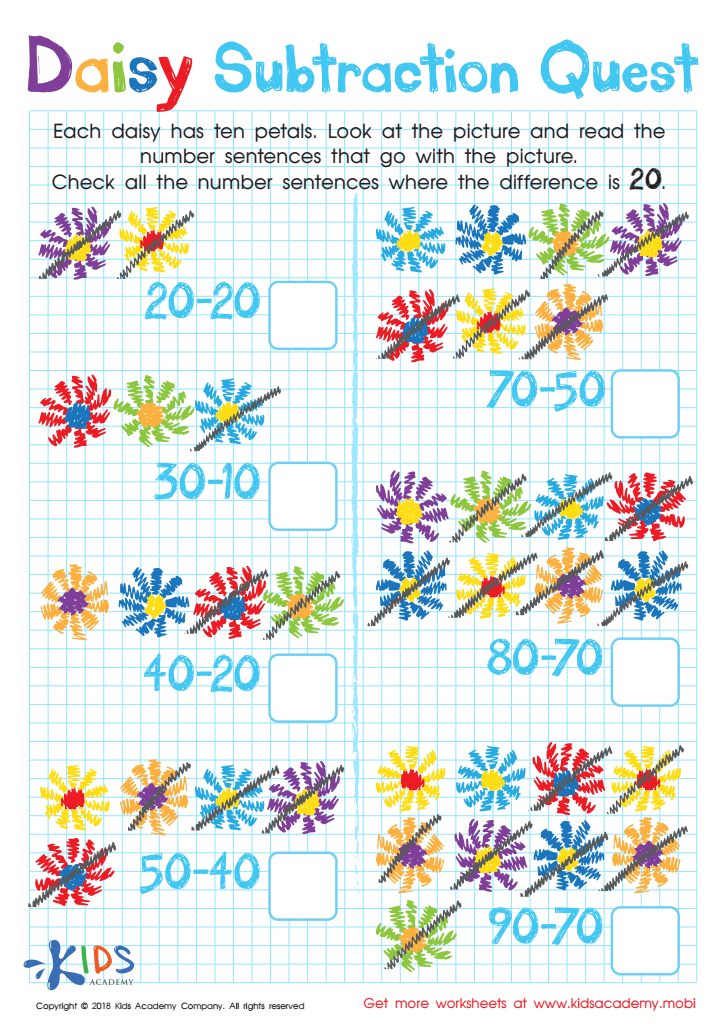
Daisy Subtraction Quest Worksheet
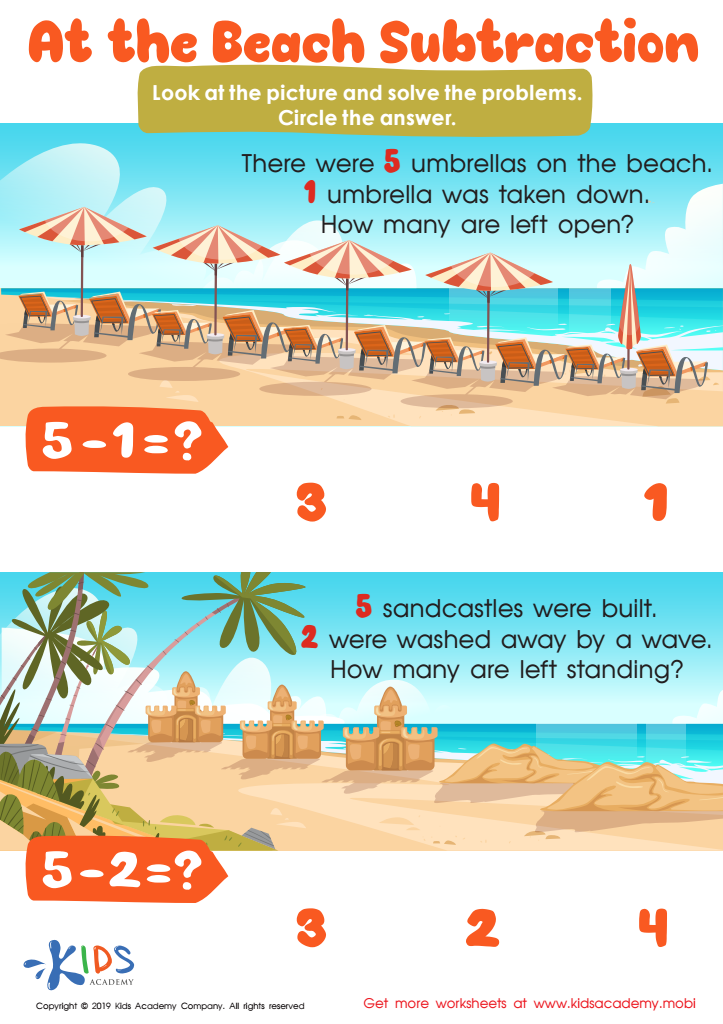
At the Beach Subtraction Worksheet
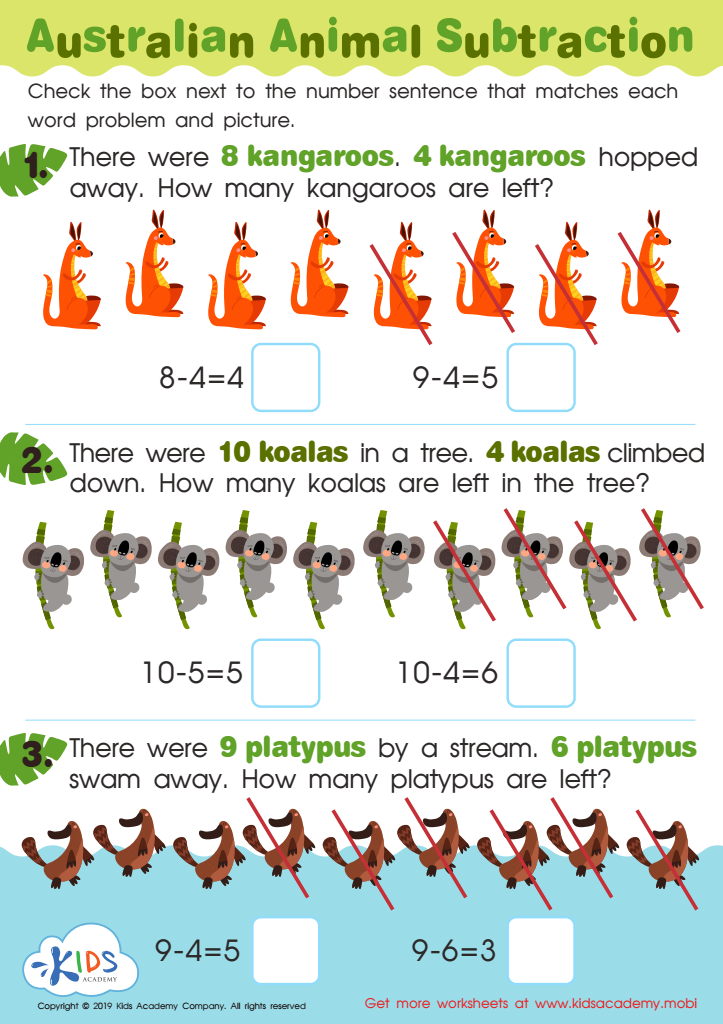
Australian Animal Subtraction Worksheet
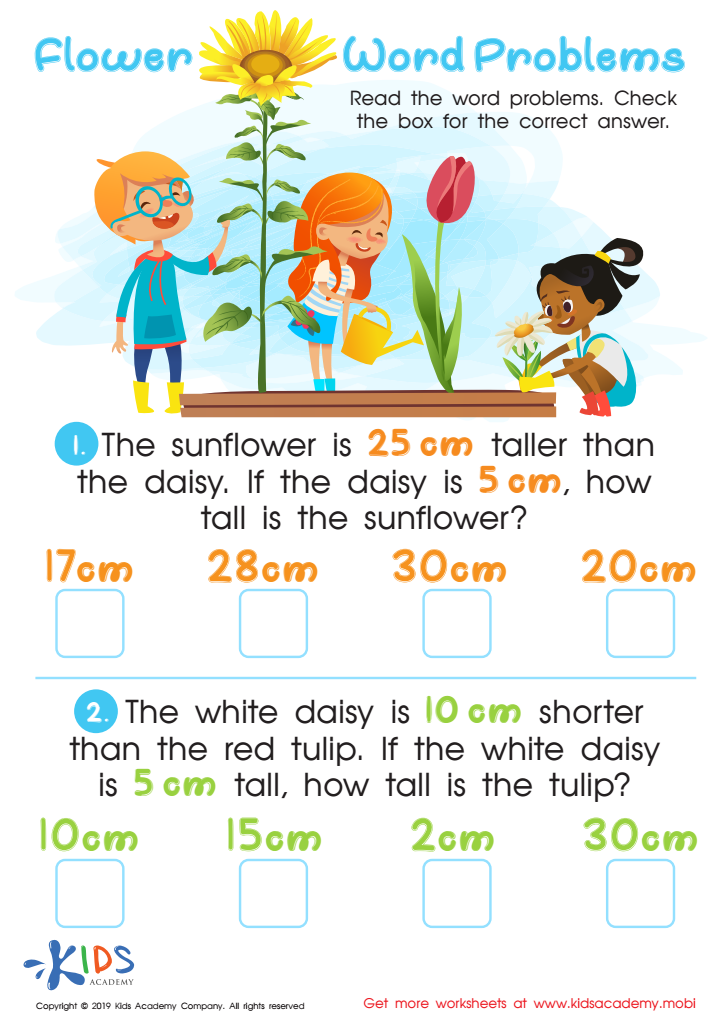
Flower Word Problems Worksheet
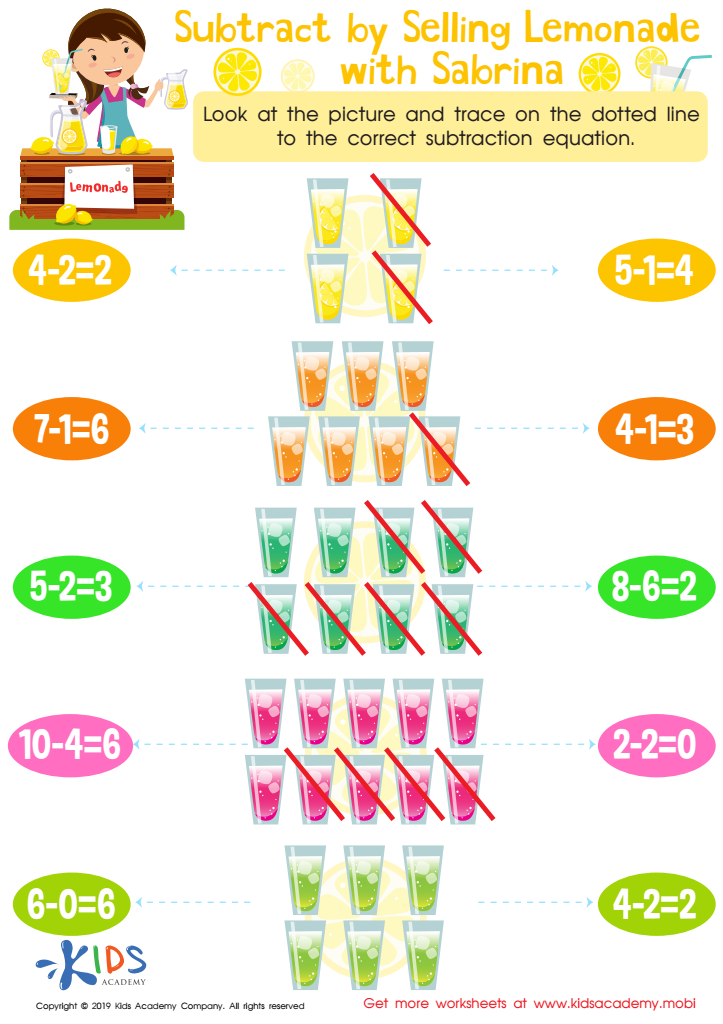
Subtract by Selling Lemonade with Sabrina Worksheet
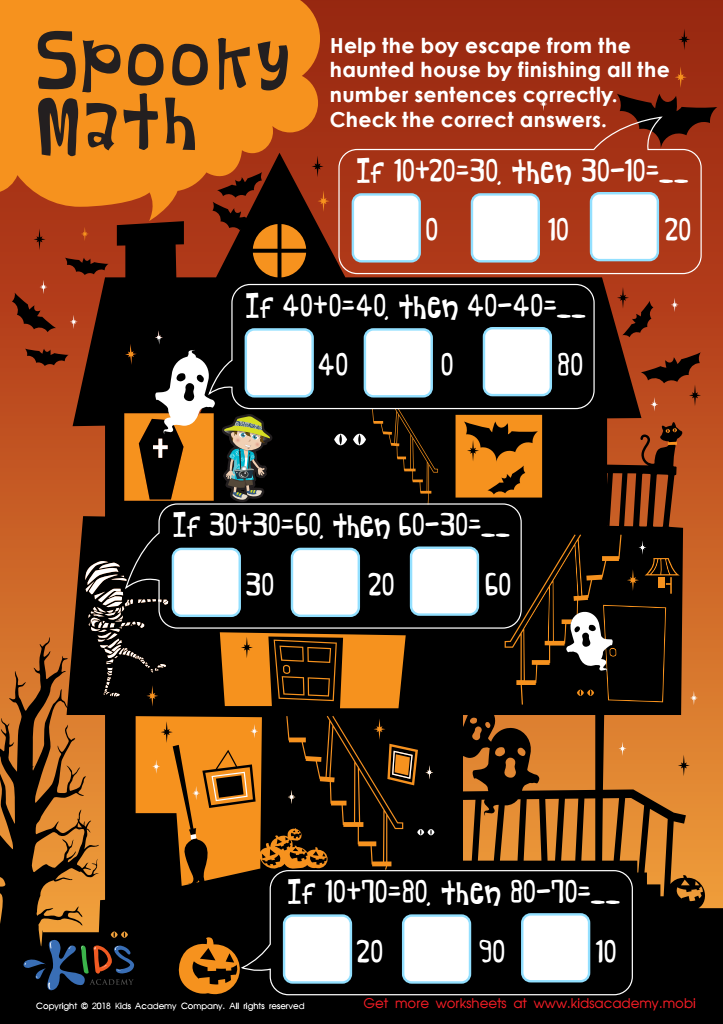
Subtract Tens: Spooky Math Worksheet
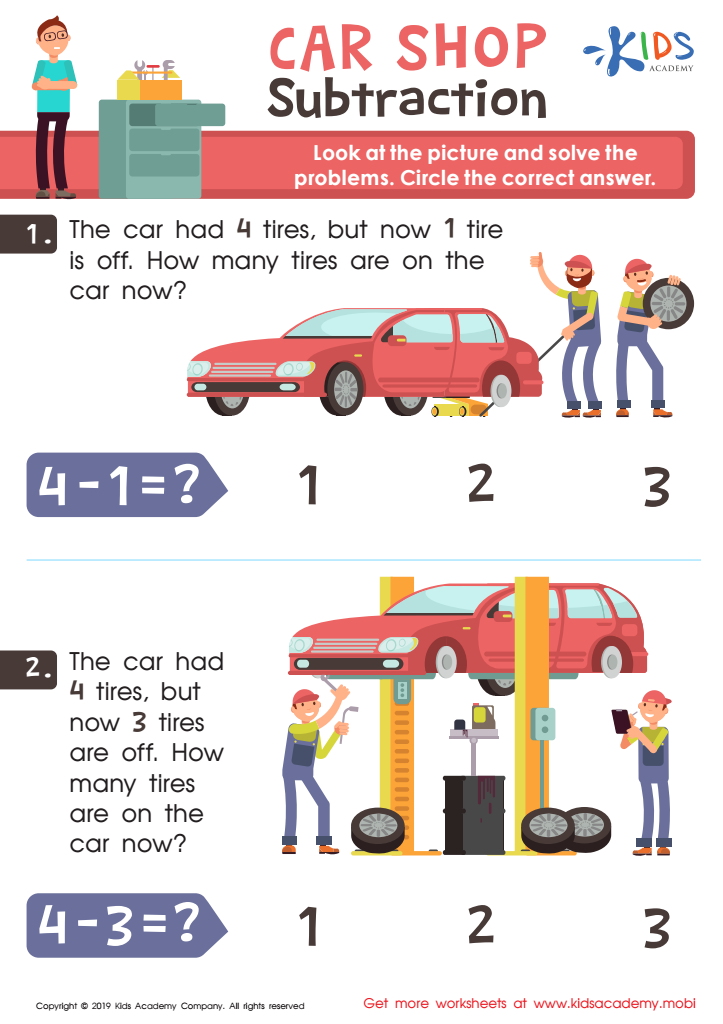
Car Shop Subtraction Worksheet
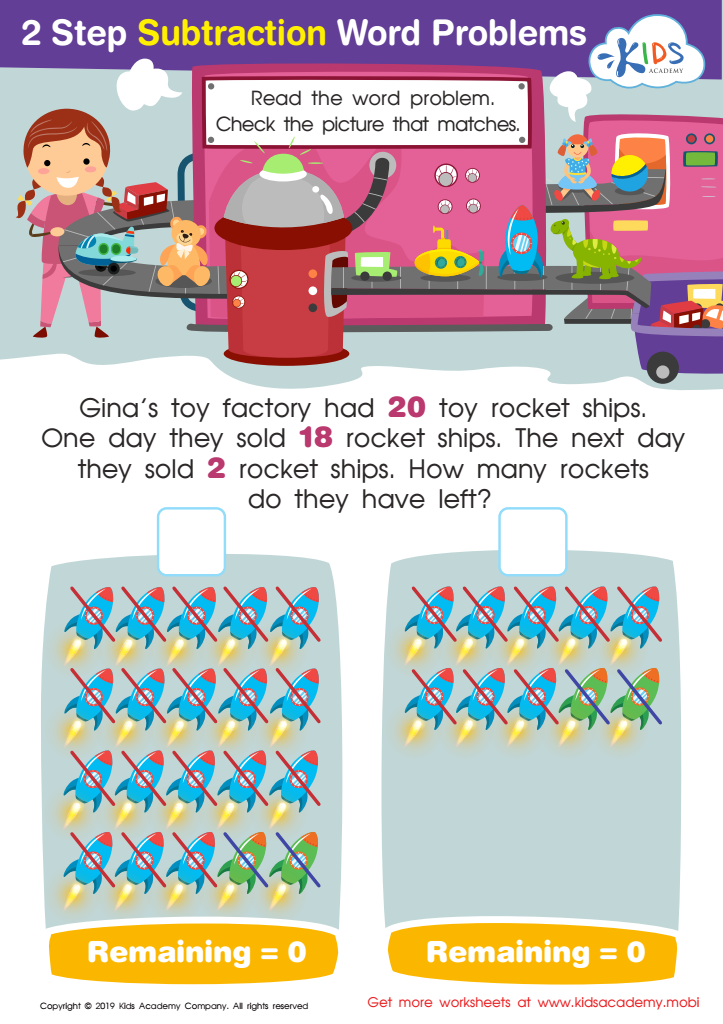
Step Subtraction Word Problems Worksheet
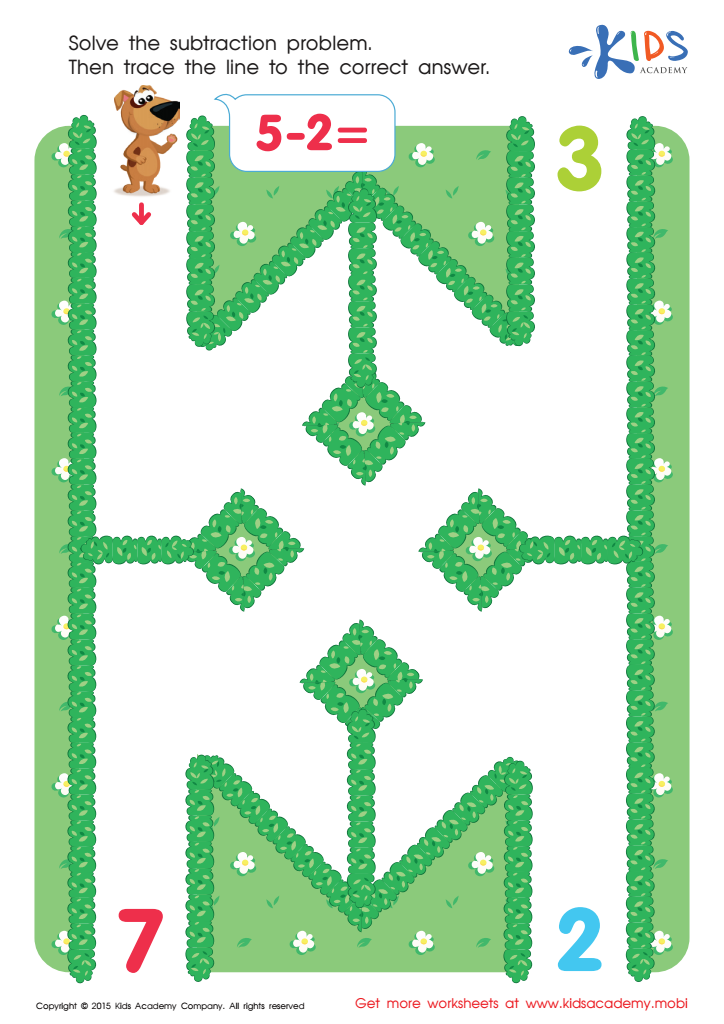
Five Minus Two Worksheet
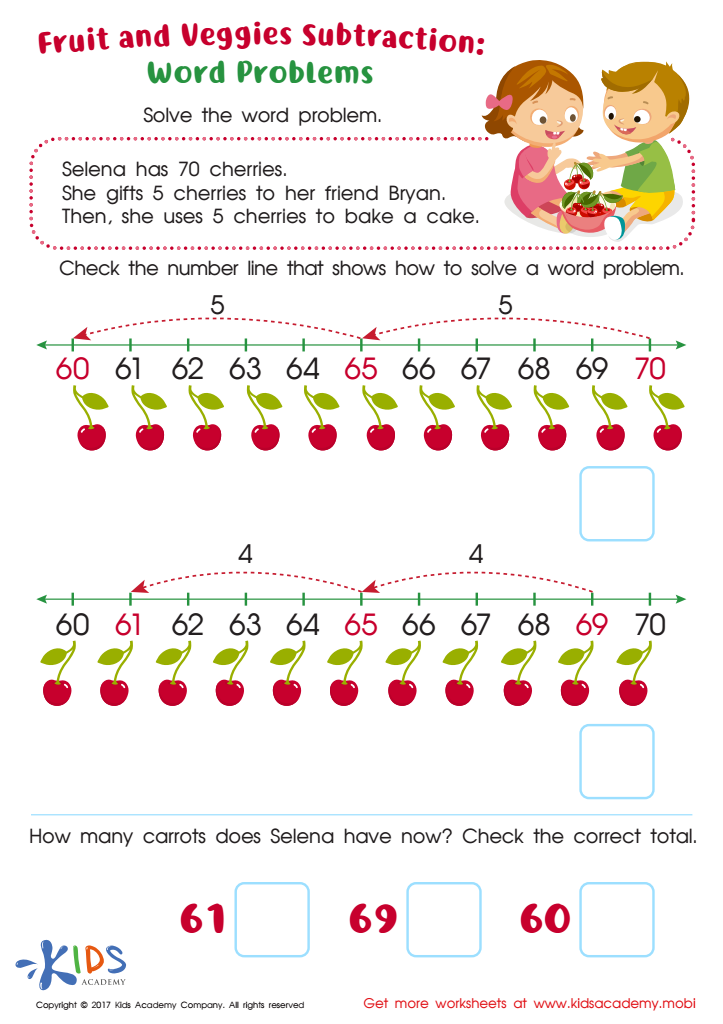
Subtraction Word Problems Free Printable
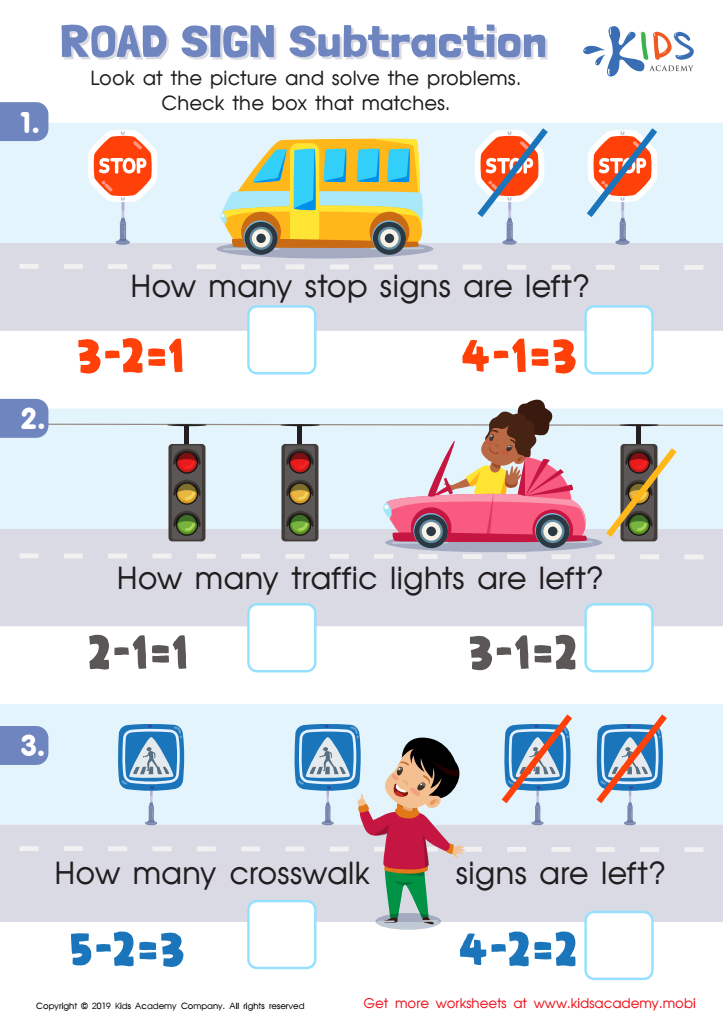
Road Sign Subtraction Worksheet
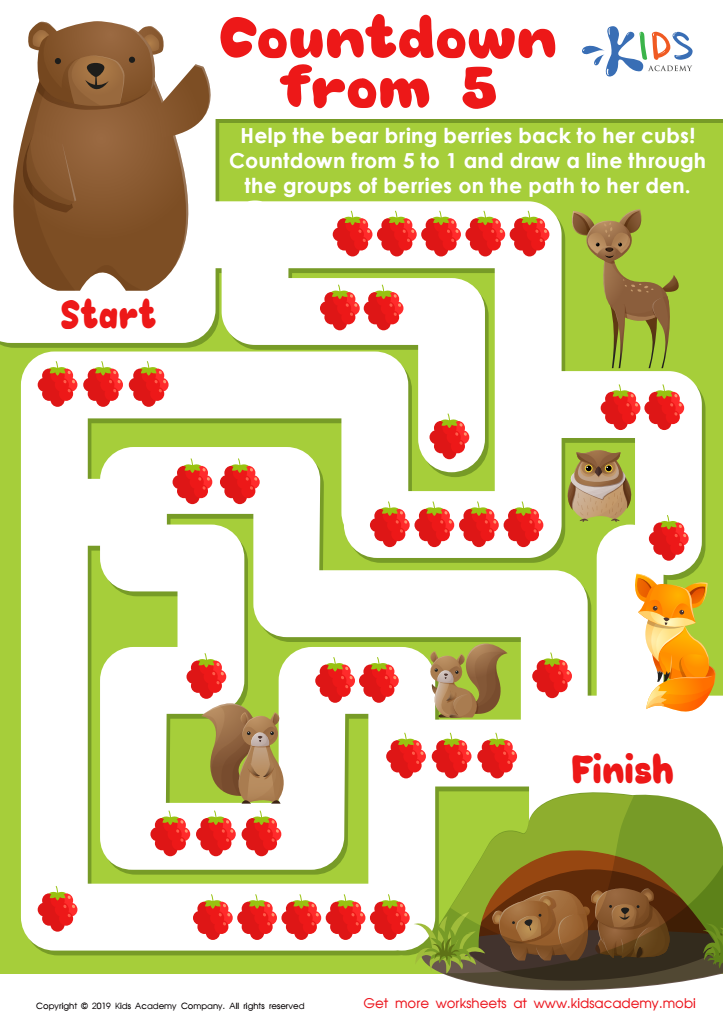
Countdown from 5 Worksheet
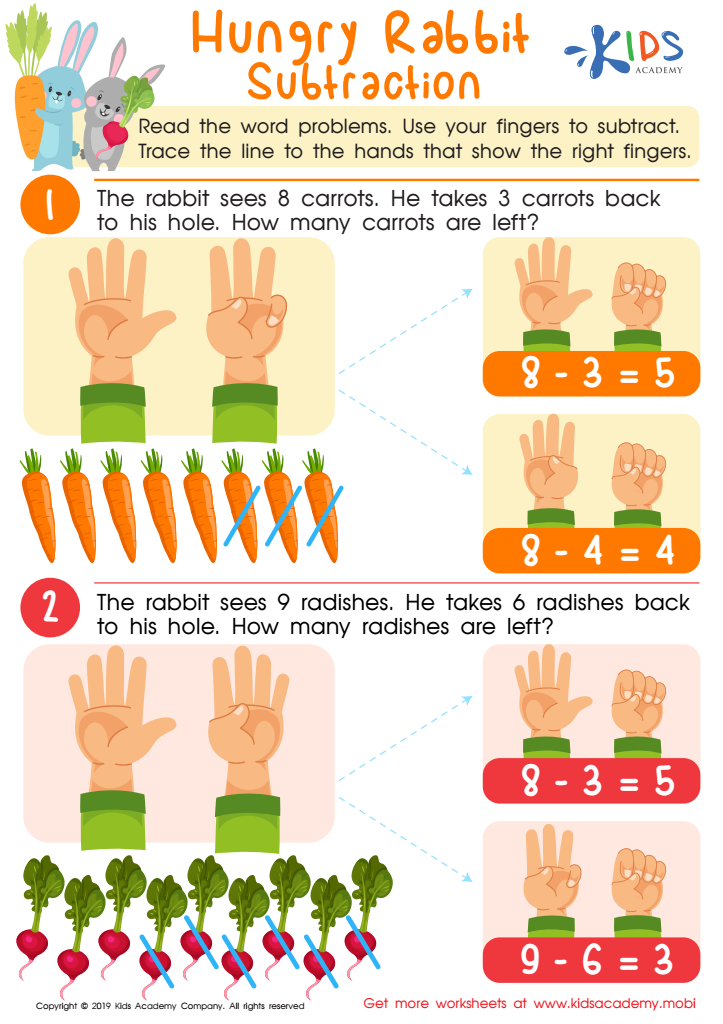
Hungry Rabbit Subtraction Worksheet


.jpg)




Parents and teachers should deeply care about subtraction practice for children ages 3-6 because it forms the bedrock of their mathematical foundation and cognitive development. During these early years, children's brains are highly adaptable and capable of absorbing new concepts with relative ease. Subtraction, an essential part of everyday mathematics, helps children understand and manage real-world situations, such as sharing toys or distributing snacks, thereby facilitating their understanding of basic quantitative relationships.
Practicing subtraction at an early age bolsters children's numeracy skills, ensuring they develop a strong grasp of number sense and arithmetic operations. This early exposure amplifies their problem-solving capabilities, logical thinking, and ability to manipulate numbers mentally. Furthermore, mastering subtraction enhances their confidence and reduces math-related anxiety as they progress through school. It also lays the groundwork for more complex mathematical concepts and operations, such as multiplication, division, and algebra, which they will encounter later on.
Indeed, supporting children in these formative years with engaging subtraction practice prepares them for academic success, fosters a love for learning, and nurtures essential life skills. Using age-appropriate tools like playful activities, manipulatives, and interactive games makes the learning process enjoyable and effective.








