Shape Recognition Tracing Shapes Worksheets for Ages 3-6
13 filtered results
-
From - To
Discover our exciting "Shape Recognition Tracing Shapes Worksheets for Ages 3-6," designed to enhance your child's early learning experience! These engaging worksheets are perfect for developing fine motor skills as children trace various shapes such as circles, squares, and triangles. By identifying and tracing shapes, kids improve shape recognition and pre-writing skills. Tailored for preschool and kindergarten learners, these activities blend fun and education to boost visual-spatial awareness. Our worksheets are ideal for parents and teachers aiming to provide interactive, hands-on learning. Help your child master essential skills with our captivating shape tracing worksheets today!
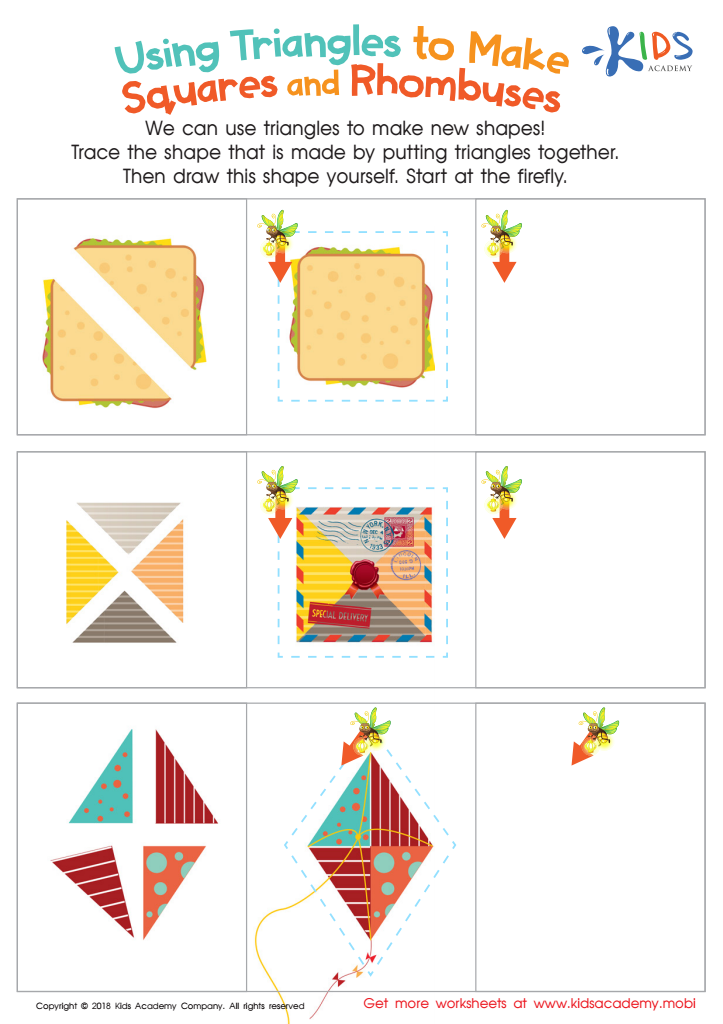
Using Triangles to Make Squares and Rhombuses Worksheet
 Assign to My Students
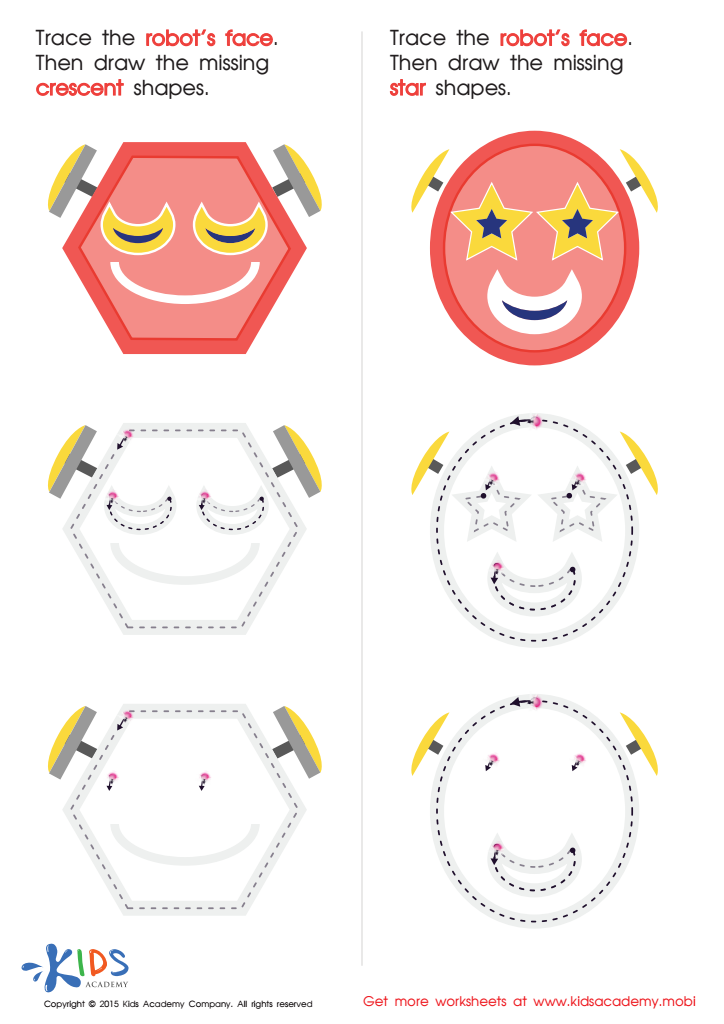
Composing a Robot's Face of Crescents And Stars Worksheet
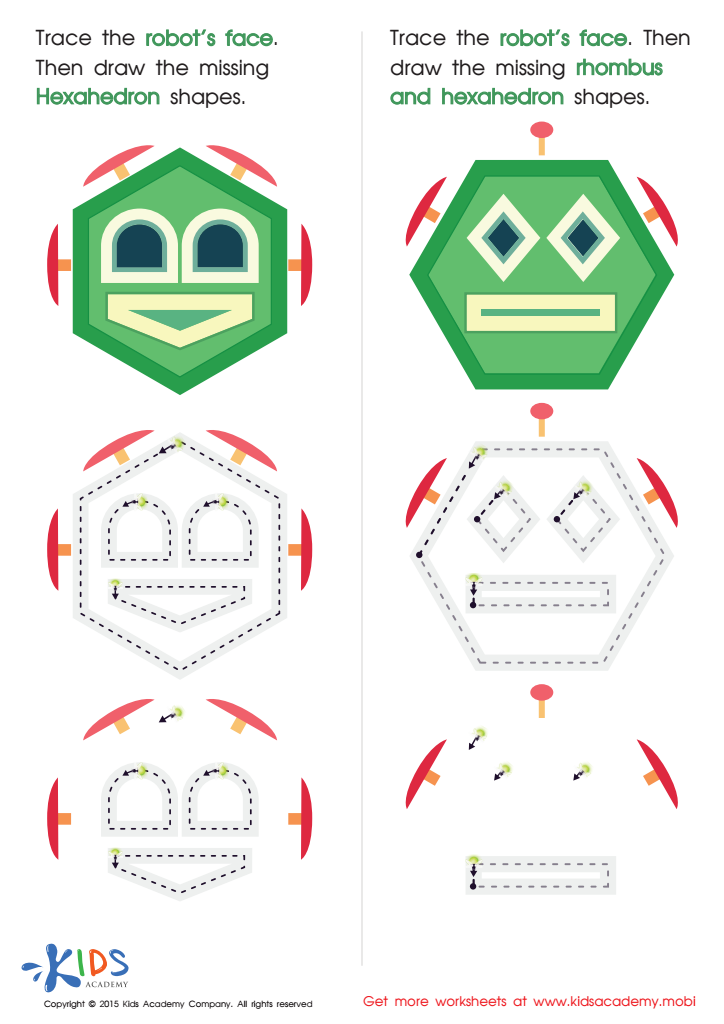
Practice Drawing Hexahedrons And a Rhombus Worksheet
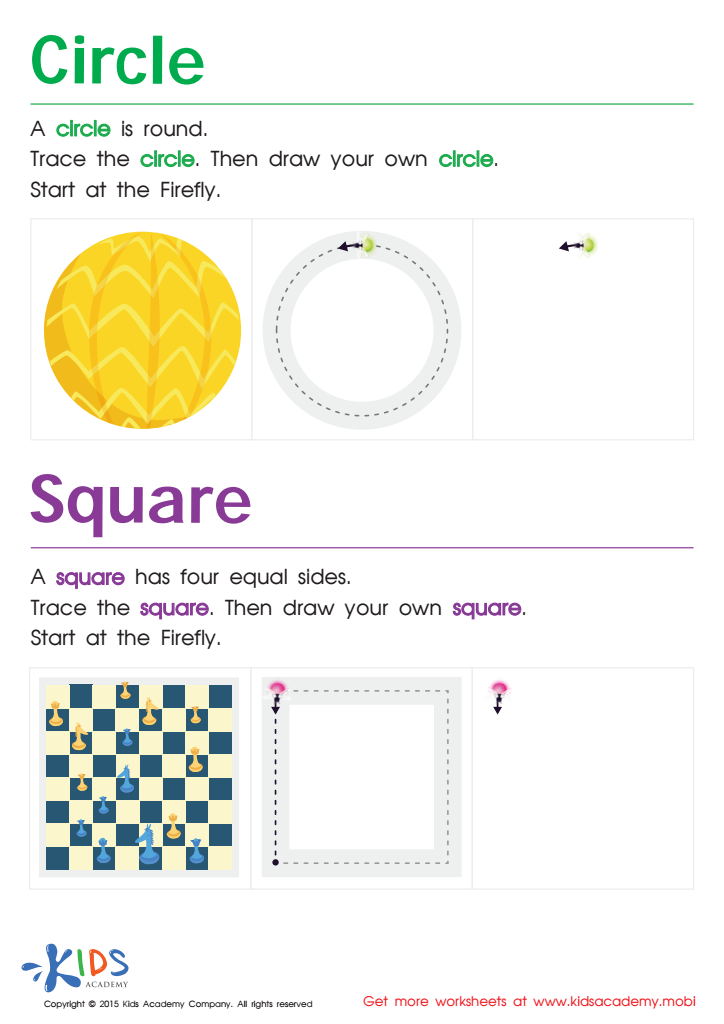
Trace And Draw a Circle And a Square Worksheet
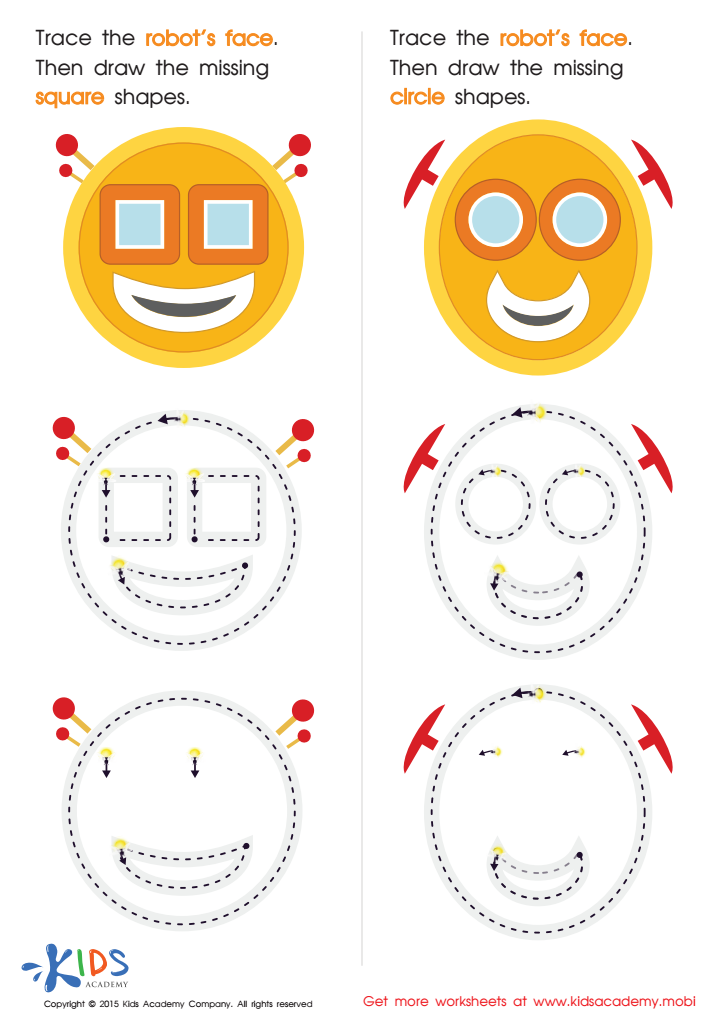
Practicing to Draw Circles And Squares Printable
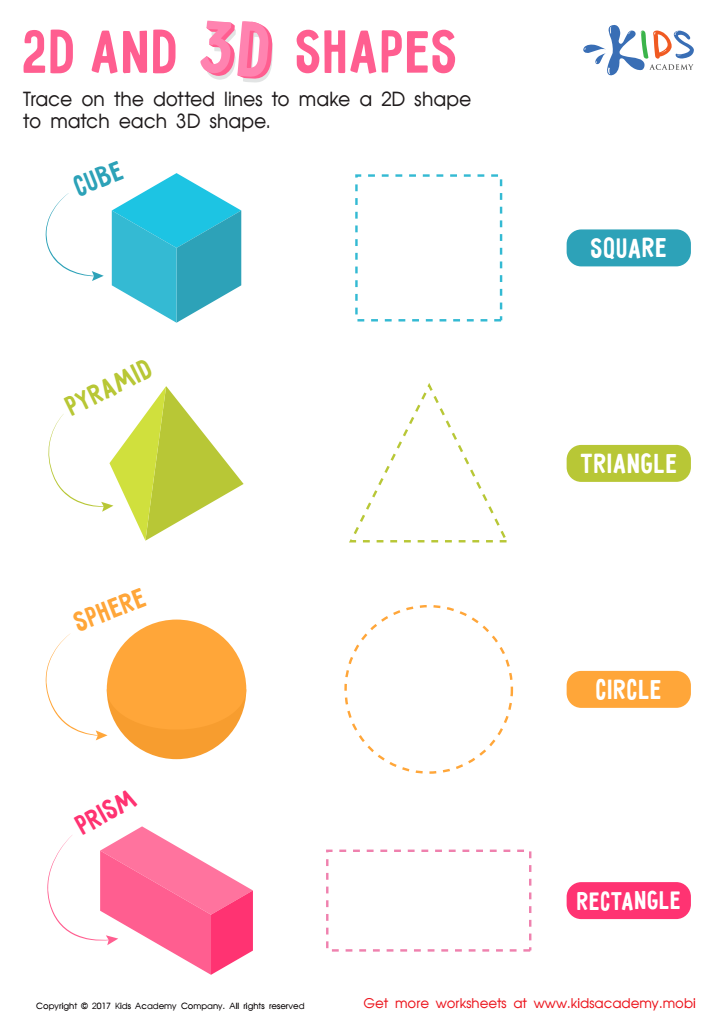
2D and 3D Shapes Worksheet
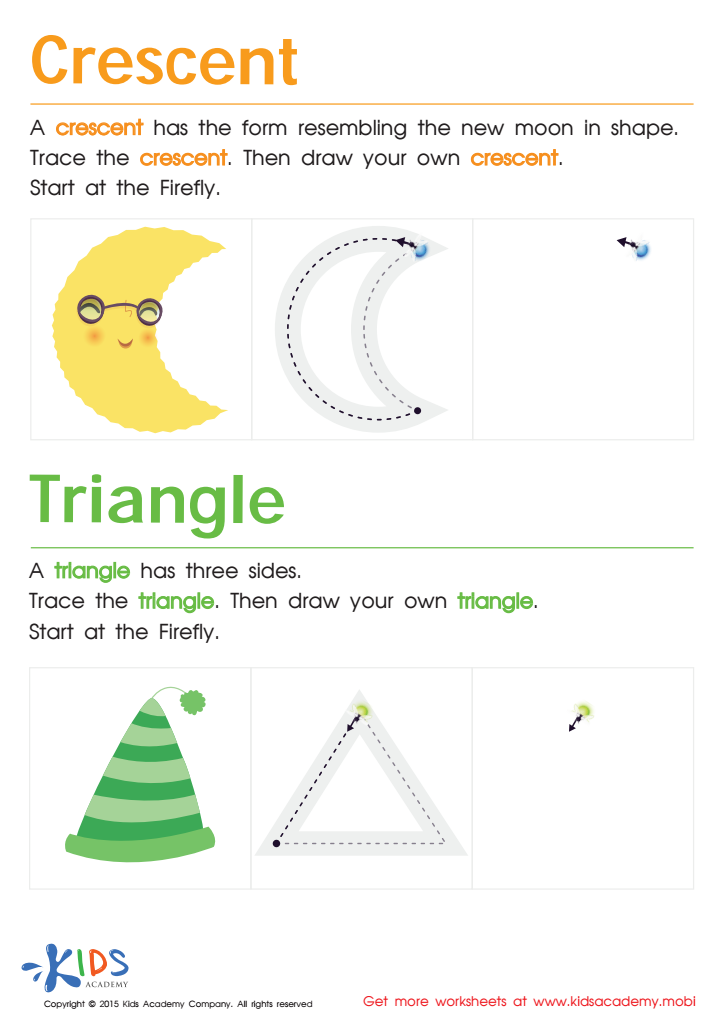
Learning to Draw Crescents And Triangles Worksheet
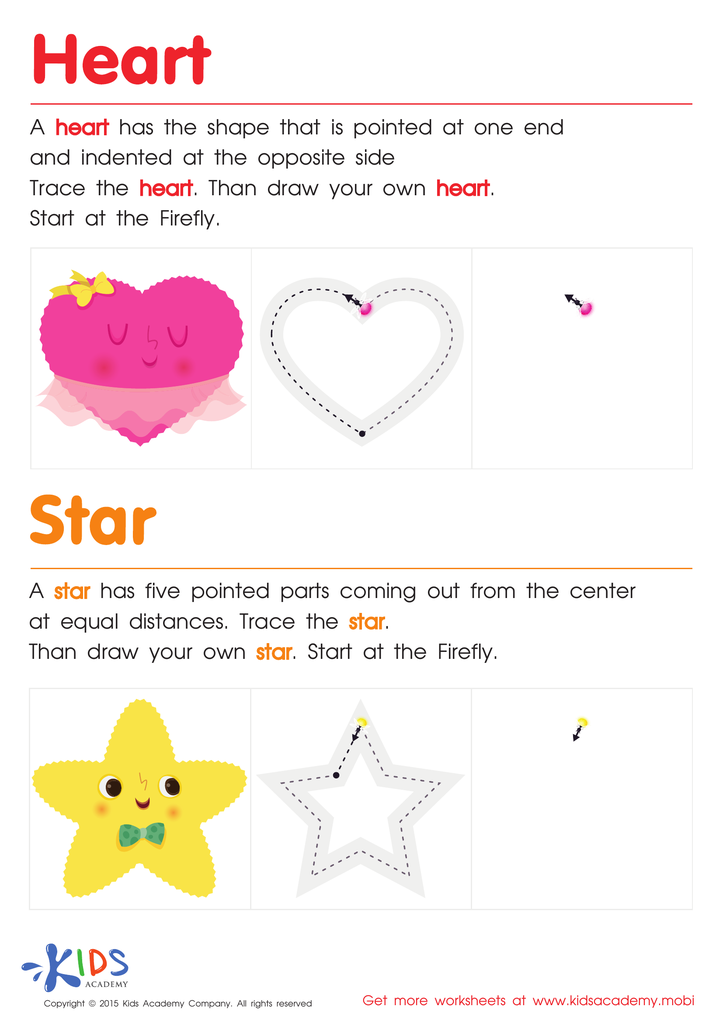
Let's Learn to Draw Hearts And Stars Printable
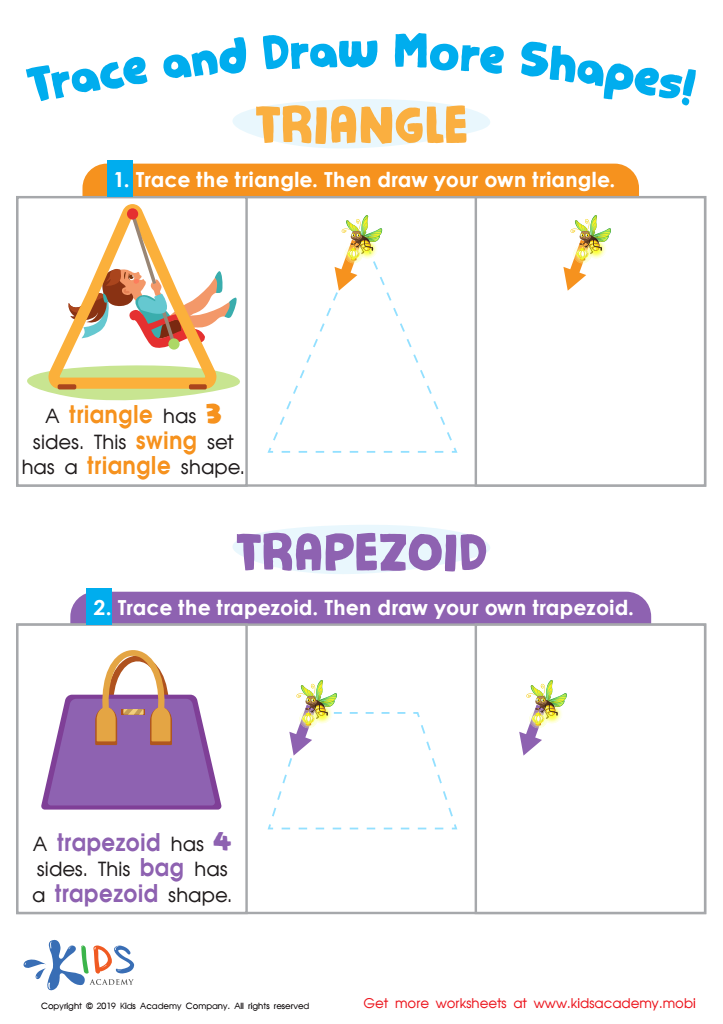
Trace and Draw More Shapes Worksheet
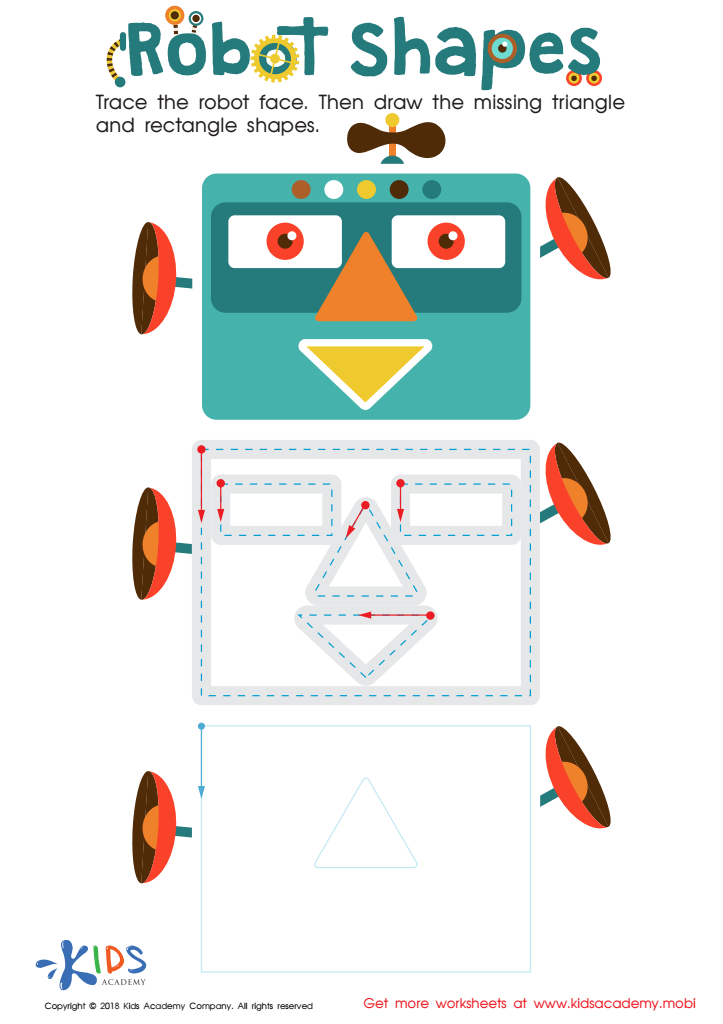
Robot Shapes Worksheet
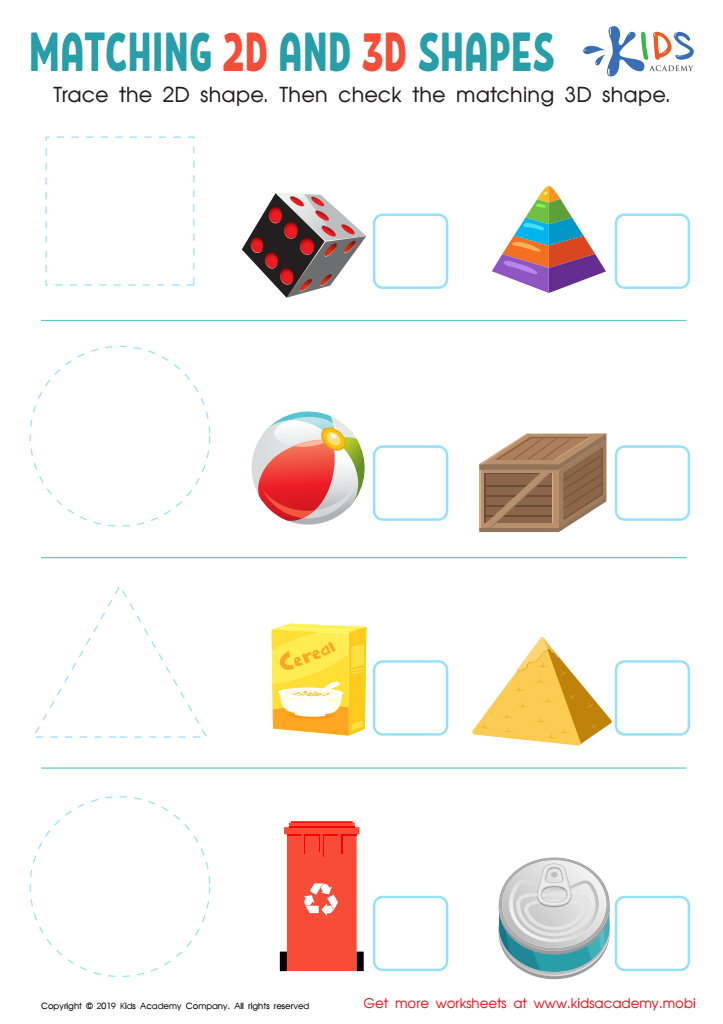
Matching 2D and 3D Shapes Worksheet
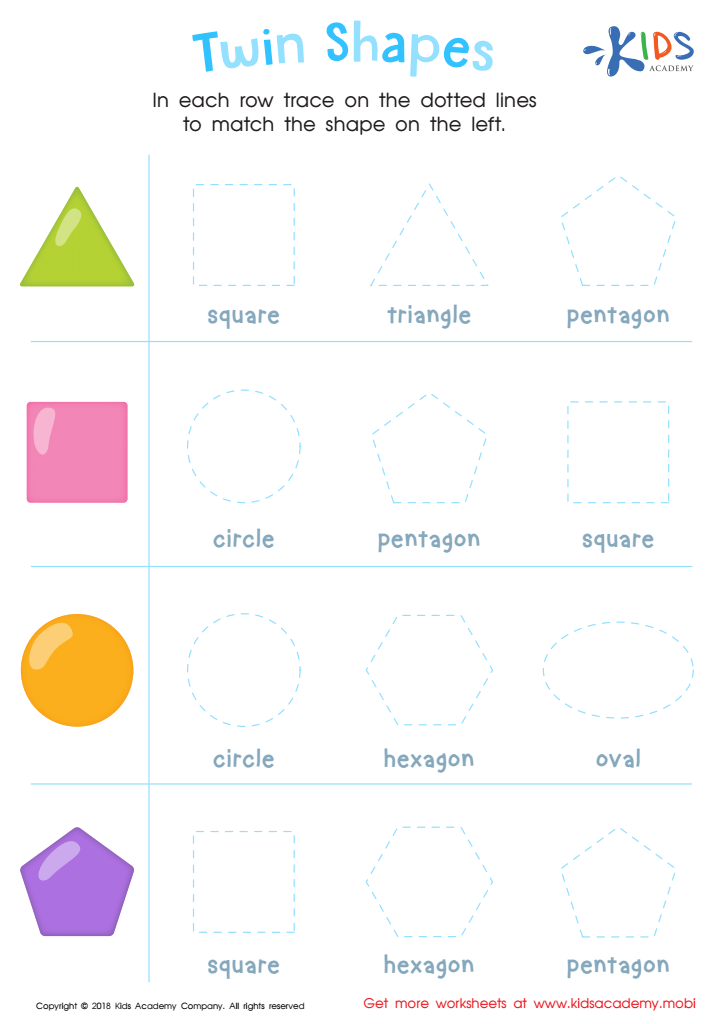
Twin Shapes Dot-to-Dot Worksheet
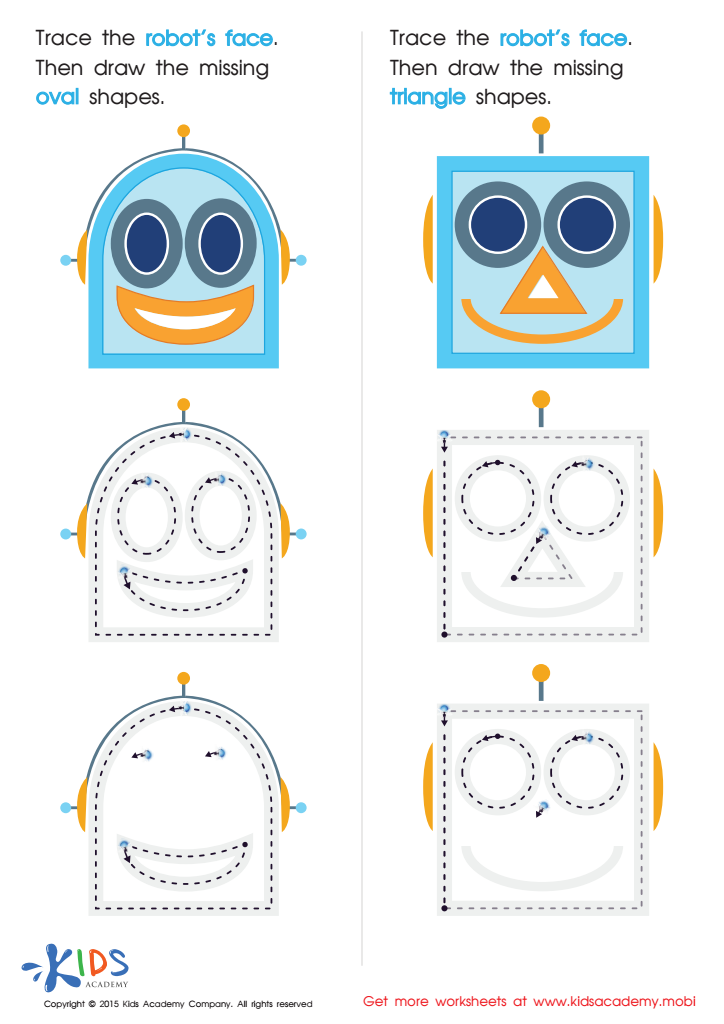
Drawing Ovals And Triangles with Fun Printable








Shape recognition and tracing shapes are foundational skills that bolster early childhood development, making them a vital educational component for children aged 3-6. Parents and teachers play a critical role in nurturing these skills, which offer numerous cognitive and developmental benefits.
Firstly, recognizing and tracing shapes promotes spatial awareness and geometry skills essential for future mathematical understanding. This lays the groundwork for more complex concepts like comparison, symmetry, and spatial reasoning.
Secondly, it enhances fine motor skills. Holding a pencil to trace shapes requires hand-eye coordination and fine motor control, which are crucial for writing. Mastering these skills early sets the stage for better handwriting and overall dexterity.
Thirdly, shape recognition aids visual discrimination. Identifying different shapes helps children notice differences and similarities in their environment, which is crucial for tasks such as reading and logical reasoning.
Moreover, engaging with shapes boosts problem-solving abilities and creativity. Creating pictures from basic shapes encourages kids to think outside the box and develop innovative solutions.
In sum, by incorporating shape recognition and tracing activities into daily routines, parents and teachers support critical cognitive processes and motor skills. This robust foundation not only improves academic readiness but also enhances overall developmental milestones, ensuring a smooth transition into more advanced learning.