Filters

50 filtered results

Clear all filters
Favorites
With answer key
Interactive

50 filtered results

Difficulty Level

Grade


Subject

    Check out this FREE Trial Lesson on Physical Science for age 3-6!

    What Makes Sound?

    Favorites
    With answer key
    Interactive
    • 3-6
    • Physical Science
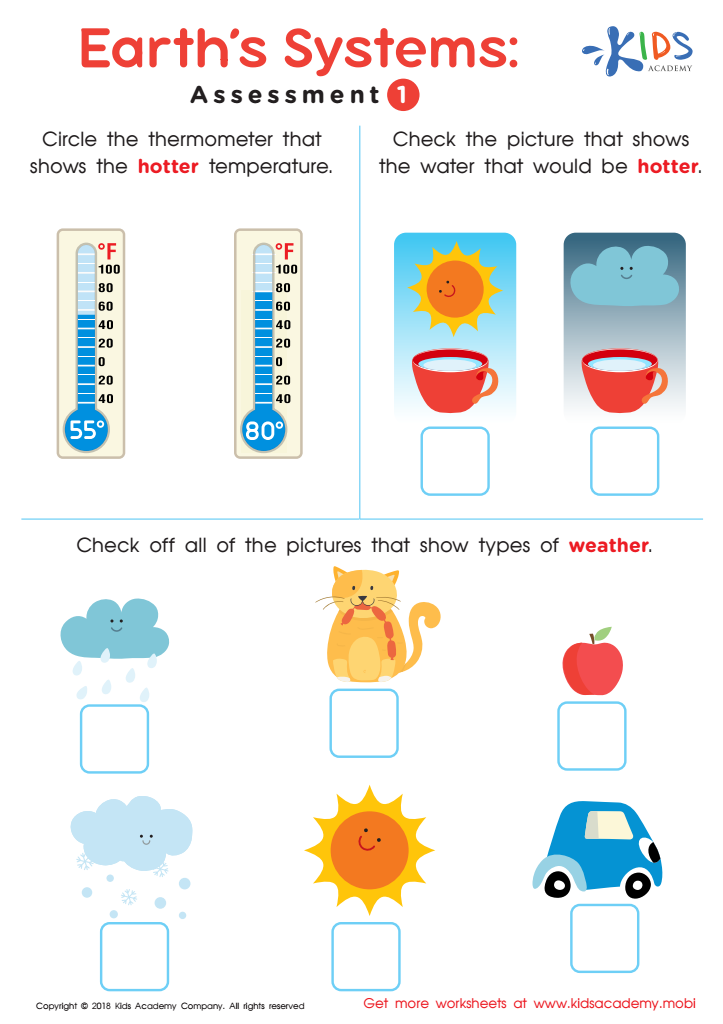
    Earth's Systems: Assessment 1
    Earth's Systems: Assessment 1

    Earth's Systems: Assessment 1

    Check your child's knowledge of weather basics with this quick printable worksheet! Using colorful pictures, instruct them to determine which thermometer shows a hotter reading and if water would be warmer in the sun or under clouds. Encourage kids to identify types of weather on the bottom of the page. Assess their readiness to move on!
    Earth's Systems: Assessment 1
    Worksheet
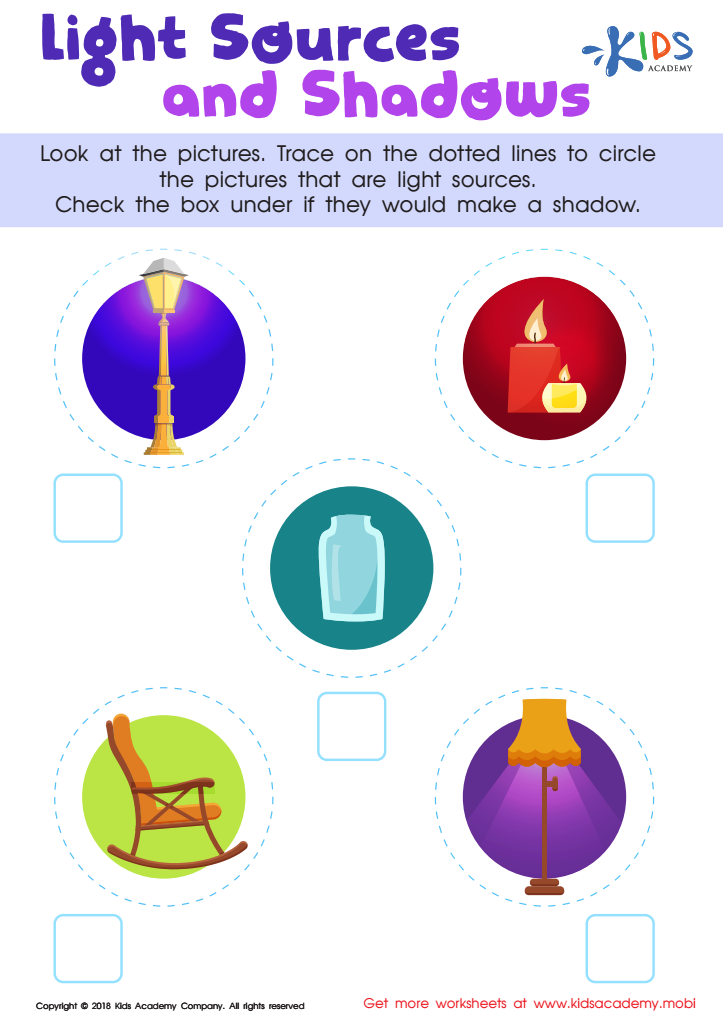
    Light Sources and Shadows Worksheet
    Light Sources and Shadows Worksheet

    Light Sources and Shadows Worksheet

    During the day, the sun radiates bright light. At night, when it's time for bed, the sun sets and darkness takes over. To light our way, we use other sources of light. With your students, trace the dotted lines around the pictures of light sources and check the boxes under the objects that will cast shadows.
    Light Sources and Shadows Worksheet
    Worksheet
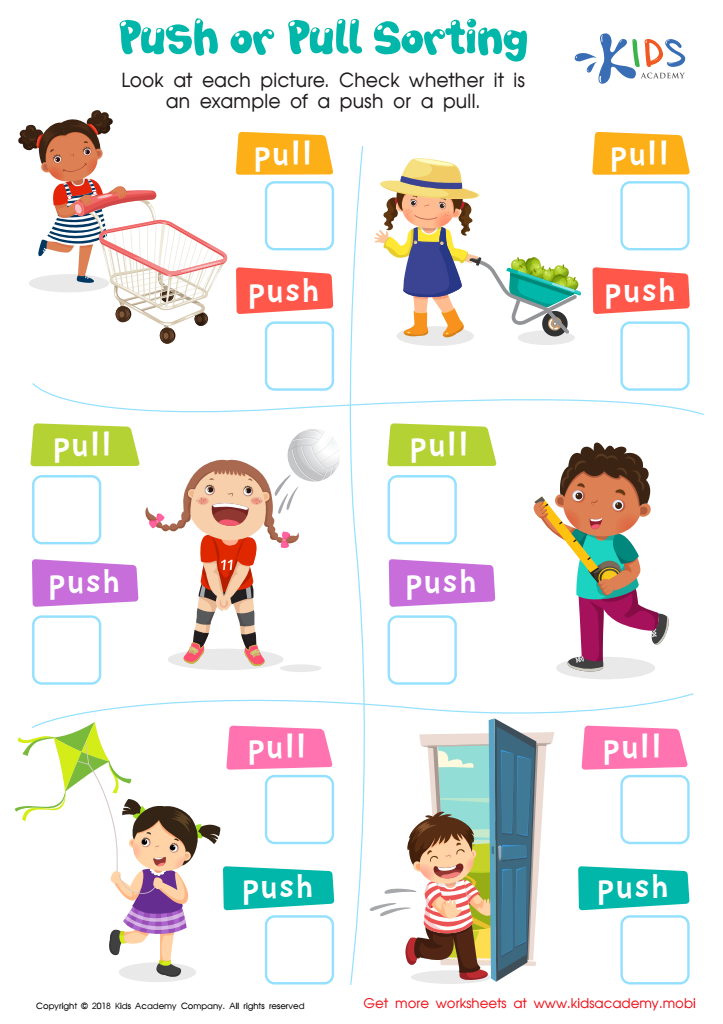
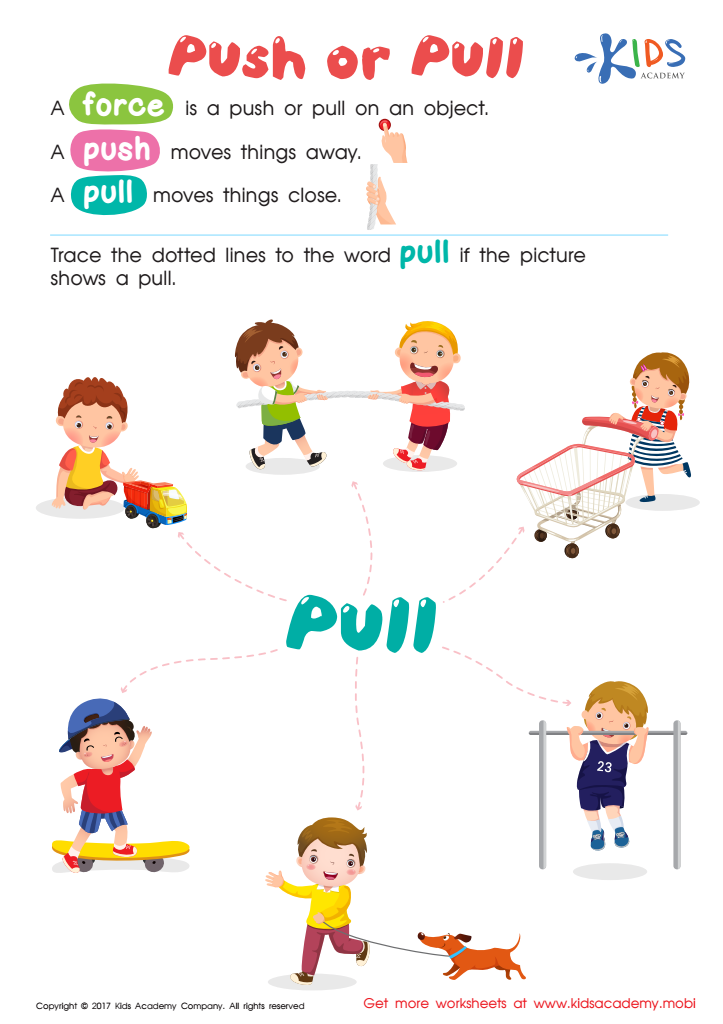
    Push or Pull Sorting Worksheet
    Push or Pull Sorting Worksheet

    Push or Pull Sorting Worksheet

    Show your child the pictures in this worksheet. Ask them to tell you what each child is doing. Then, ask them to identify whether it's an example of pushing or pulling. Ask if they know what these terms mean and if they can provide examples.
    Push or Pull Sorting Worksheet
    Worksheet
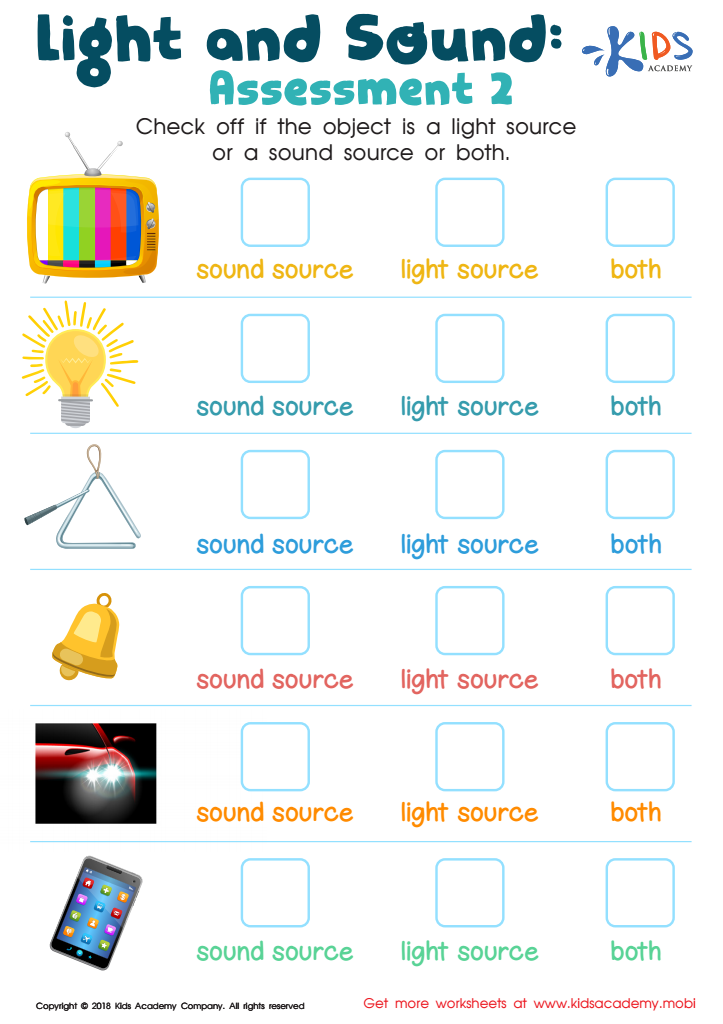
    Light and Sound: Assessment 2 Worksheet
    Light and Sound: Assessment 2 Worksheet

    Light and Sound: Assessment 2 Worksheet

    This worksheet introduces your kids to light and sound, with common sources of each. Identify the objects and help them check if it's a light source, a sound source, or both. Colourful and simple, it's a great way to teach your little ones! (80 words)
    Light and Sound: Assessment 2 Worksheet
    Worksheet
    Vibrations and Sounds Worksheet
    Vibrations and Sounds Worksheet

    Vibrations and Sounds Worksheet

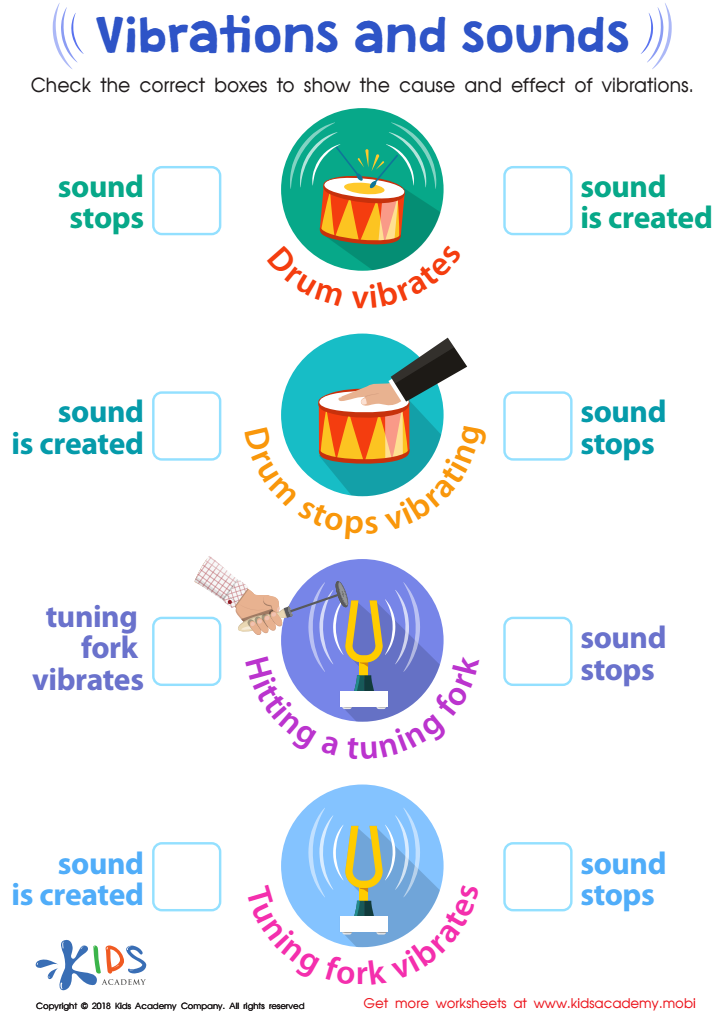
    Many objects, creatures, and things make sounds. People talk, animals bark, hiss or meow, and things make sounds too. Ask your students to name others that produce sounds and why they do, such as when a drum is hit with a stick. Get them to learn about vibrations and cause/effect in this fun worksheet and check the answers.
    Vibrations and Sounds Worksheet
    Worksheet
    Light to Communicate Worksheet
    Light to Communicate Worksheet

    Light to Communicate Worksheet

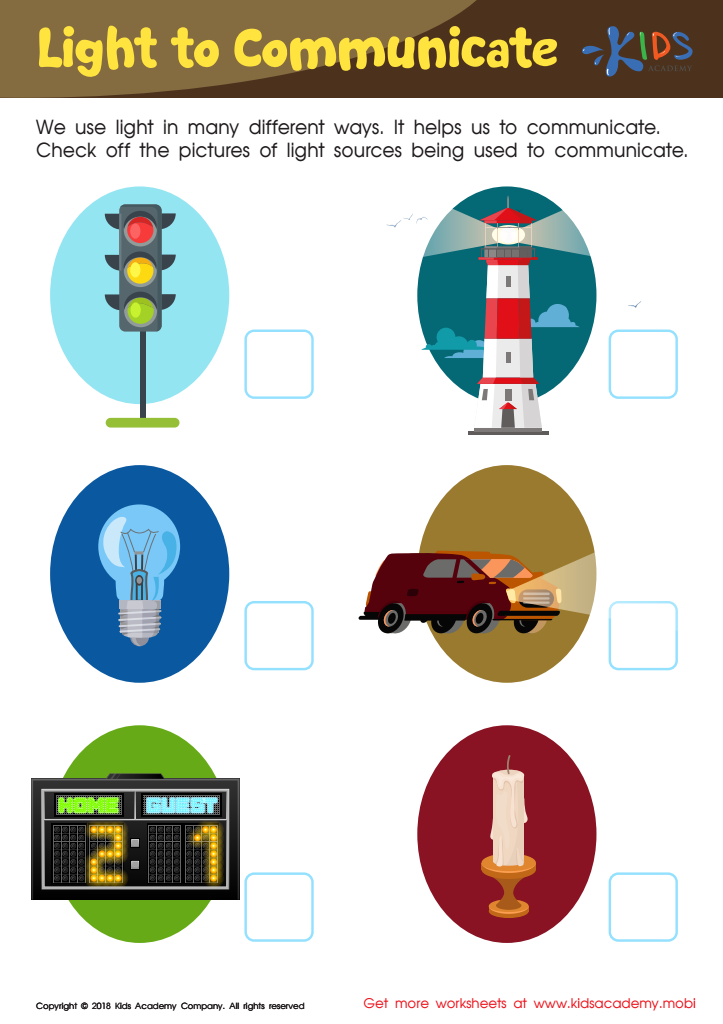
    We can use lights to communicate effectively, like we use sounds. Ask your kids for examples and then help them tick off the pictures of light sources in the worksheet. This exercise will help them understand how light can be used to communicate.
    Light to Communicate Worksheet
    Worksheet
    Ramps All Around us Worksheet
    Ramps All Around us Worksheet

    Ramps All Around us Worksheet

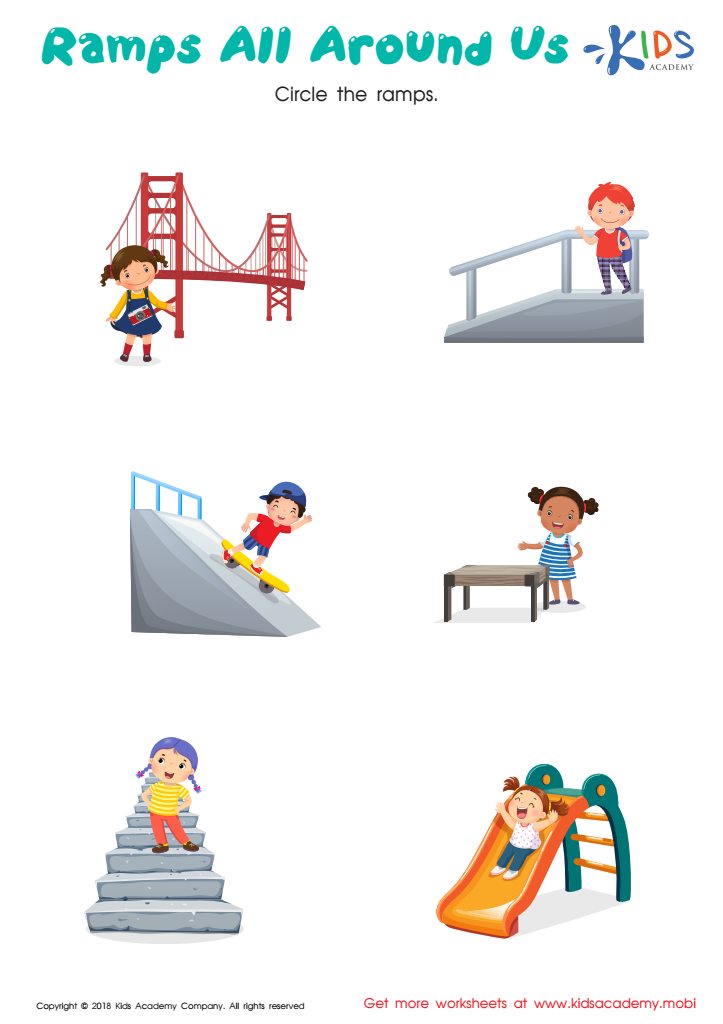
    Ask your kids if they know what ramps are, then have them give you examples of places they've seen them. This worksheet has pictures of ramps - have your child identify and circle them.
    Ramps All Around us Worksheet
    Worksheet
    Lights for Safety Worksheet
    Lights for Safety Worksheet

    Lights for Safety Worksheet

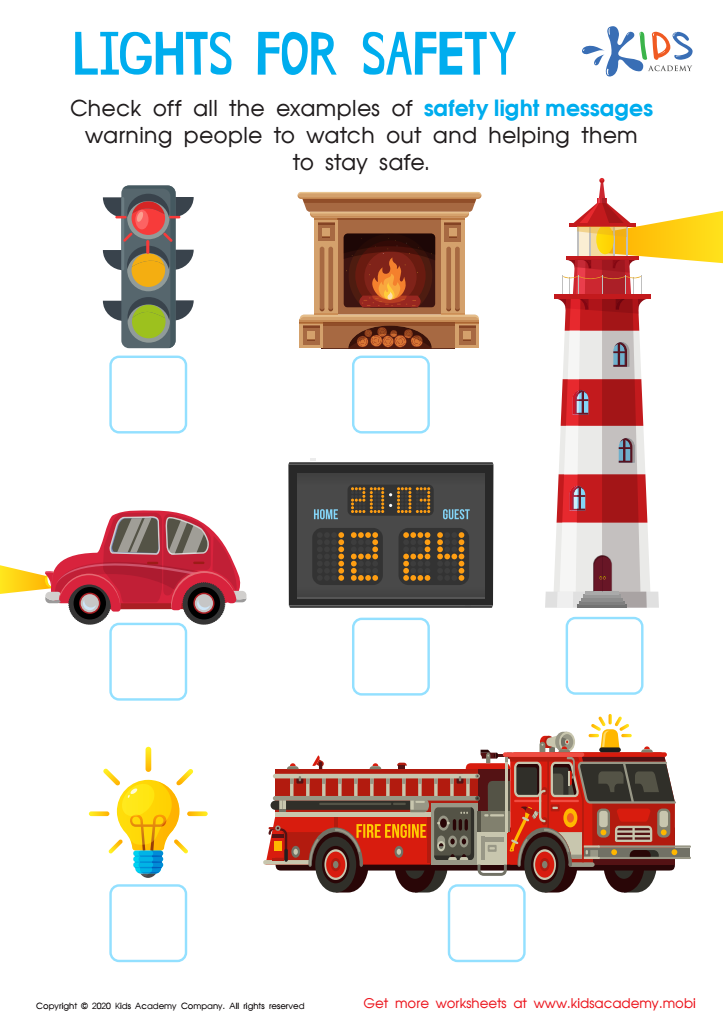
    Teach kids safety light messages to stay safe. Print this worksheet and ask students to identify the objects in the pictures. Then, ask them to check off the safety light messages which warn people to watch out. This helps keep kids safe at all times.
    Lights for Safety Worksheet
    Worksheet
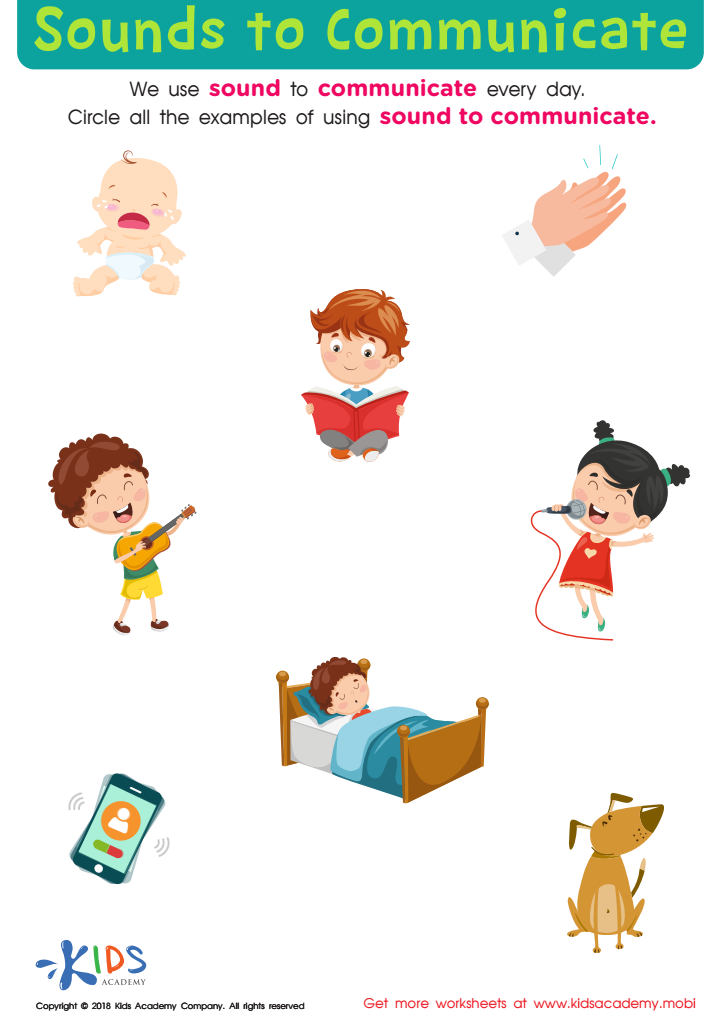
    Sounds to Communicate Worksheet
    Sounds to Communicate Worksheet

    Sounds to Communicate Worksheet

    Sounds are important for communication. Ask your students to name sounds people, animals and things make. Then, review this worksheet with them and see if they can identify the activities. Ask them to circle examples of sounds used to communicate.
    Sounds to Communicate Worksheet
    Worksheet
    Worksheet: Magnetic or Non-Magnetic
    Worksheet: Magnetic or Non-Magnetic

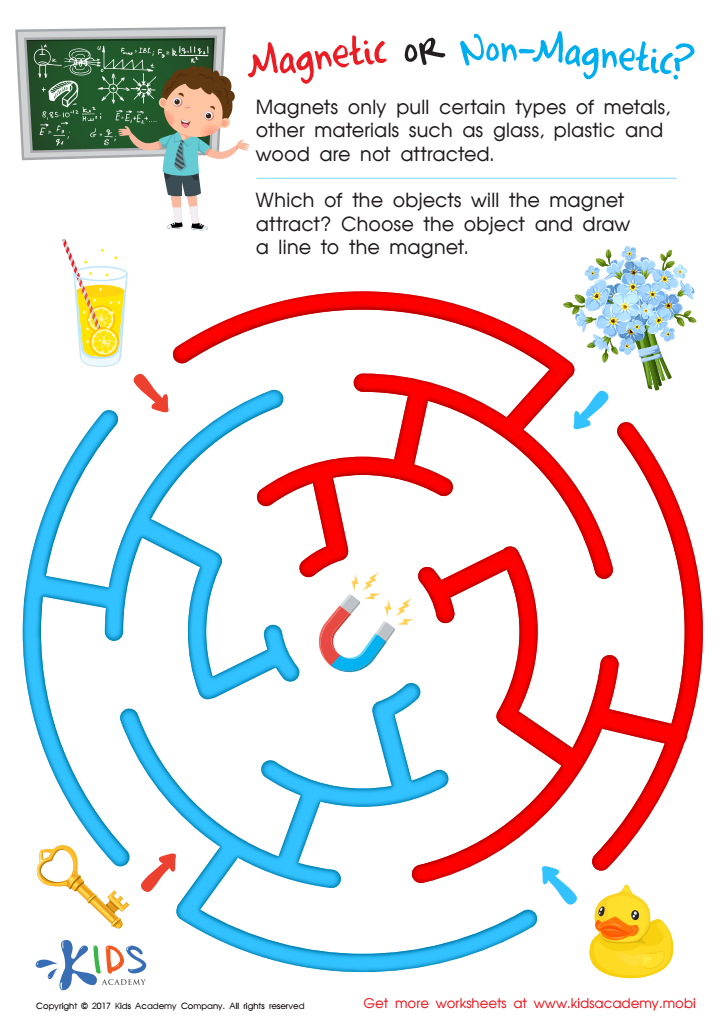
    Magnetic or Non–Magnetic Worksheet

    Introduce your child to magnetism with this fun maze! Read the summary to explain the concept, then help them find the magnetic object as they navigate the maze. It's a great way to learn and have fun!
    Magnetic or Non–Magnetic Worksheet
    Worksheet
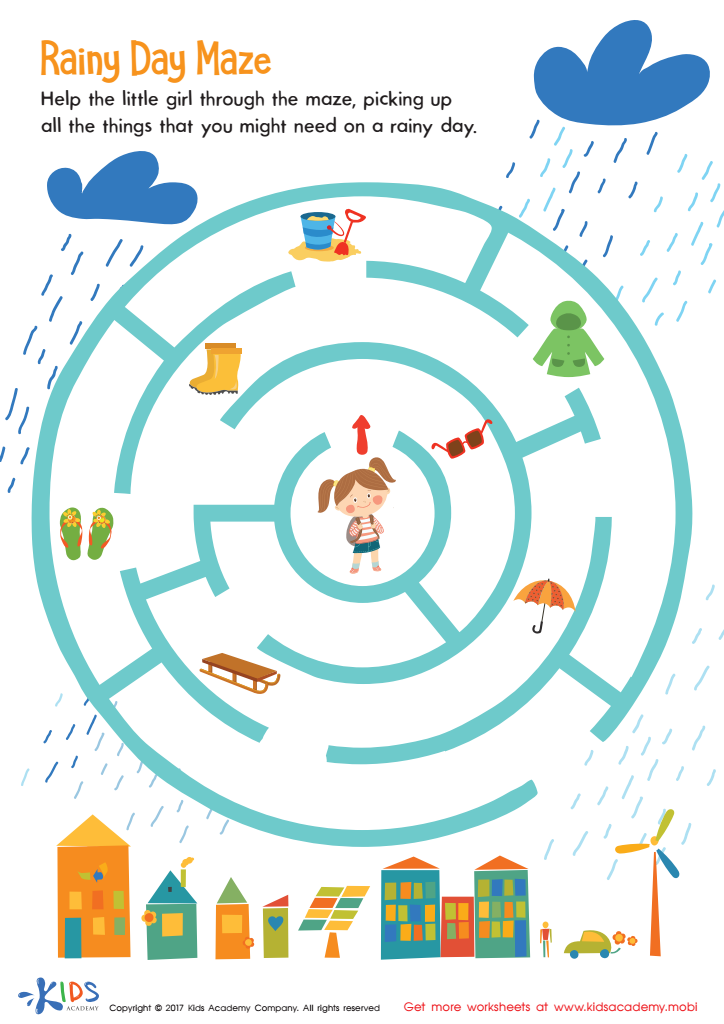
    Rainy Day Printable Maze
    Rainy Day Printable Maze

    Rainy Day Maze Worksheet

    Help your child use critical and problem solving skills to choose the right items! With this fun rainy day worksheet, they'll have a blast helping the character in the maze while learning about weather. Let’s get started!
    Rainy Day Maze Worksheet
    Worksheet
    How We See Objects Worksheet
    How We See Objects Worksheet

    How We See Objects Worksheet

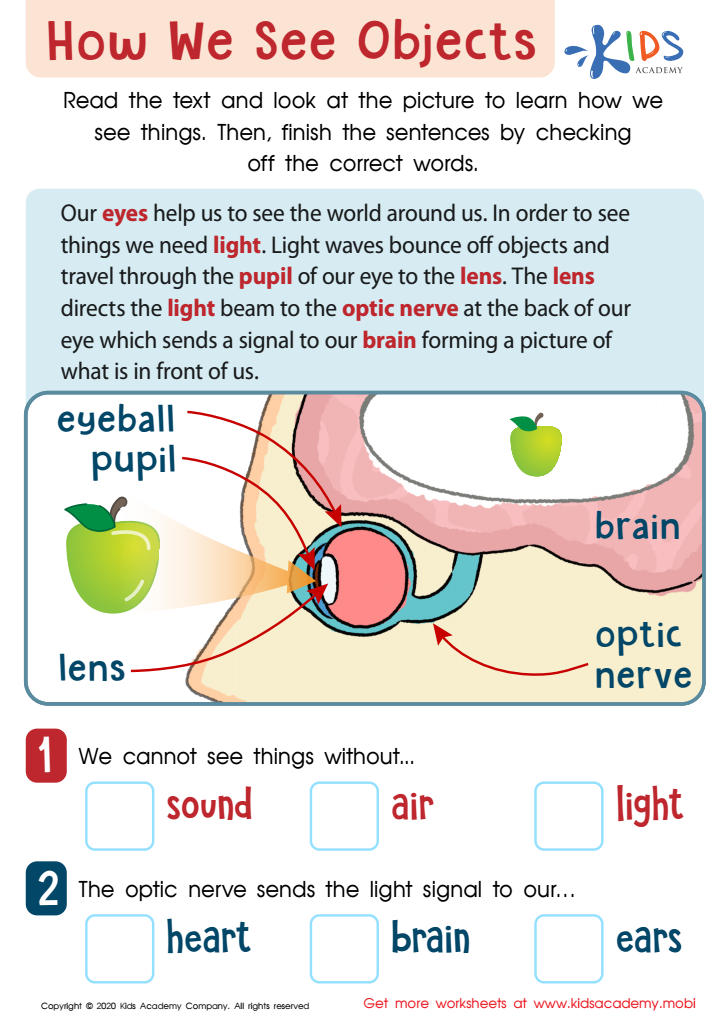
    Remind your students of our five senses! This worksheet will teach them more about sight: read/listen to the text, look at pictures, then help them complete sentences. Check off the right words!
    How We See Objects Worksheet
    Worksheet
    Force and Interactions: Assessment 2 Worksheet
    Force and Interactions: Assessment 2 Worksheet

    Force and Interactions: Assessment 2 Worksheet

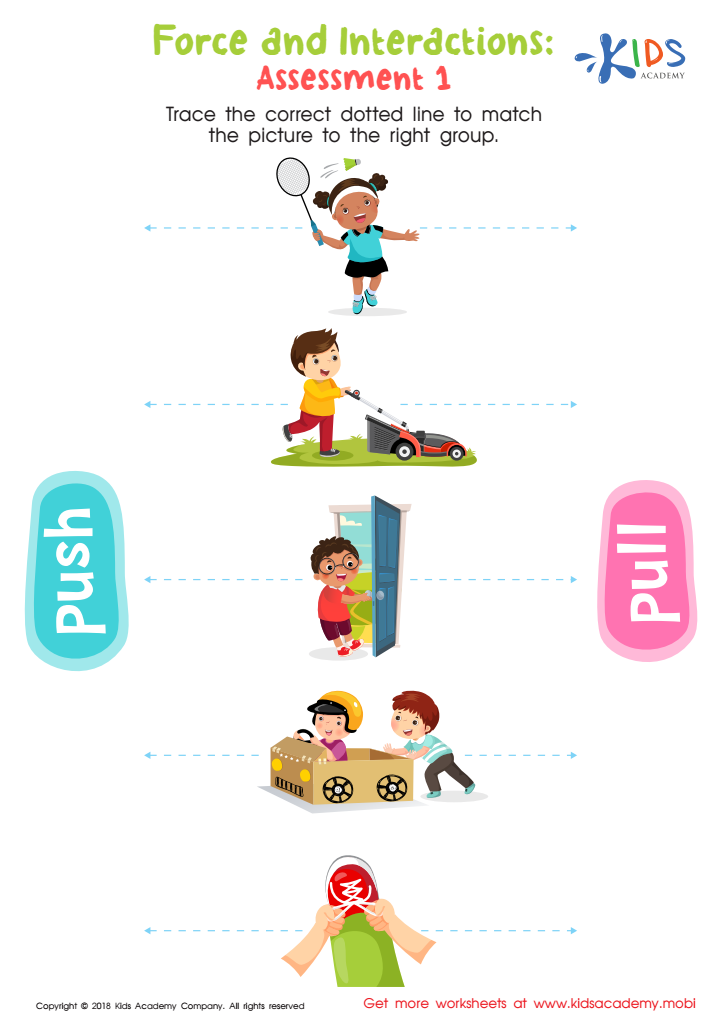
    Help your child see the difference between push and pull with this fun worksheet. Ask them to match each picture to the right group. The "push" is on the left and the "pull" is on the right. Assist them in tracing the activities and explain what it is the people are doing.
    Force and Interactions: Assessment 2 Worksheet
    Worksheet
    What Are Solids? Worksheet
    What Are Solids? Worksheet

    What Are Solids? Worksheet

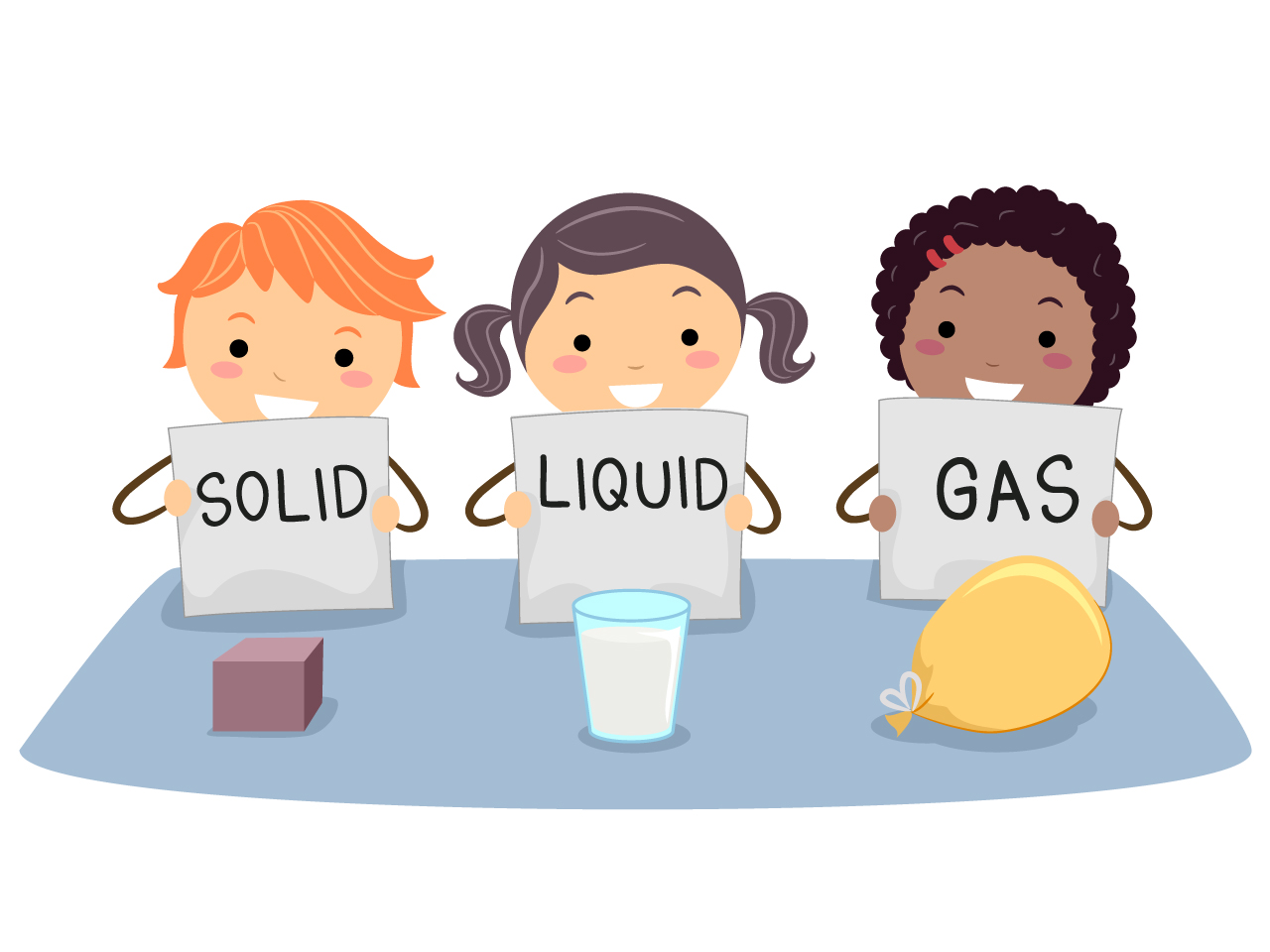
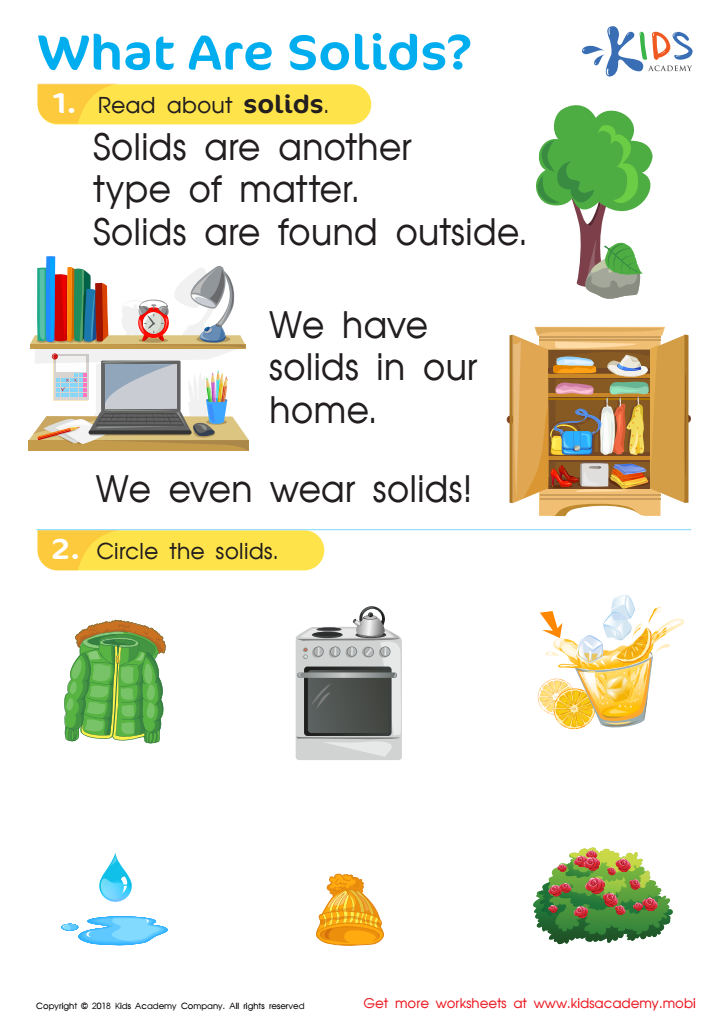
    Help your kids understand matter's three forms - solid, liquid, and gas - with examples. Ask them to give their own and where to find them. Then, read and discuss the worksheet's facts about solids. Afterward, have them circle the solids among the provided objects.
    What Are Solids? Worksheet
    Worksheet
    Is It a Light Source? Worksheet
    Is It a Light Source? Worksheet

    Is It a Light Source? Worksheet

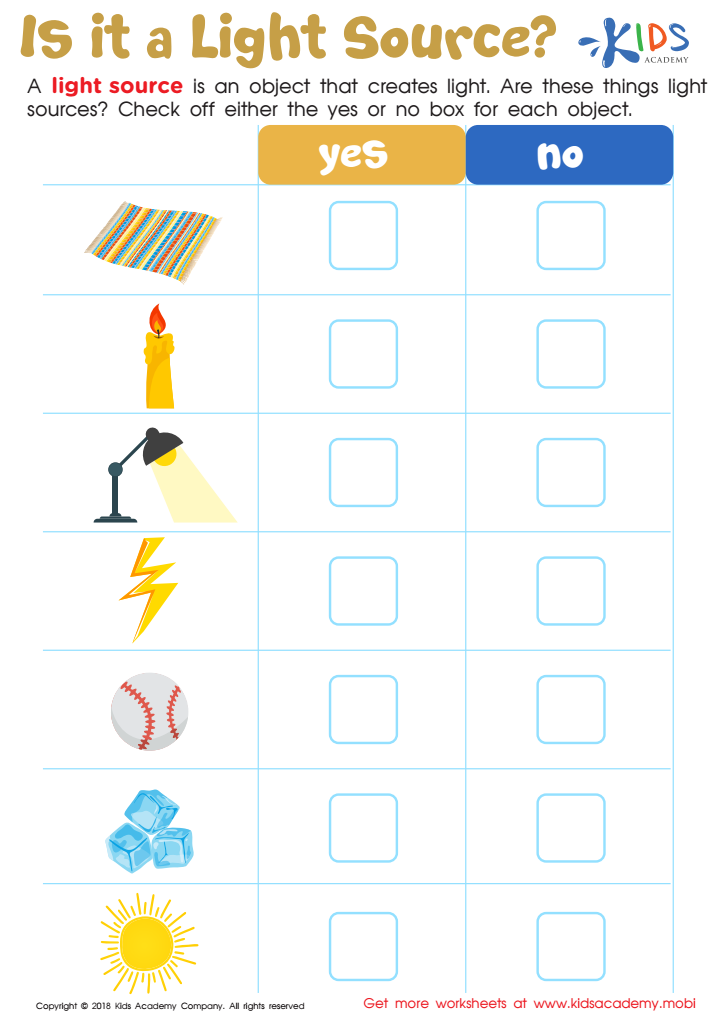
    This worksheet is a fun way to teach kids about light sources. Children must identify natural sources like the sun and lightning, and man-made sources such as candles and lamps. Ask them to look at each object and check the box to indicate if it's a light source or not.
    Is It a Light Source? Worksheet
    Worksheet
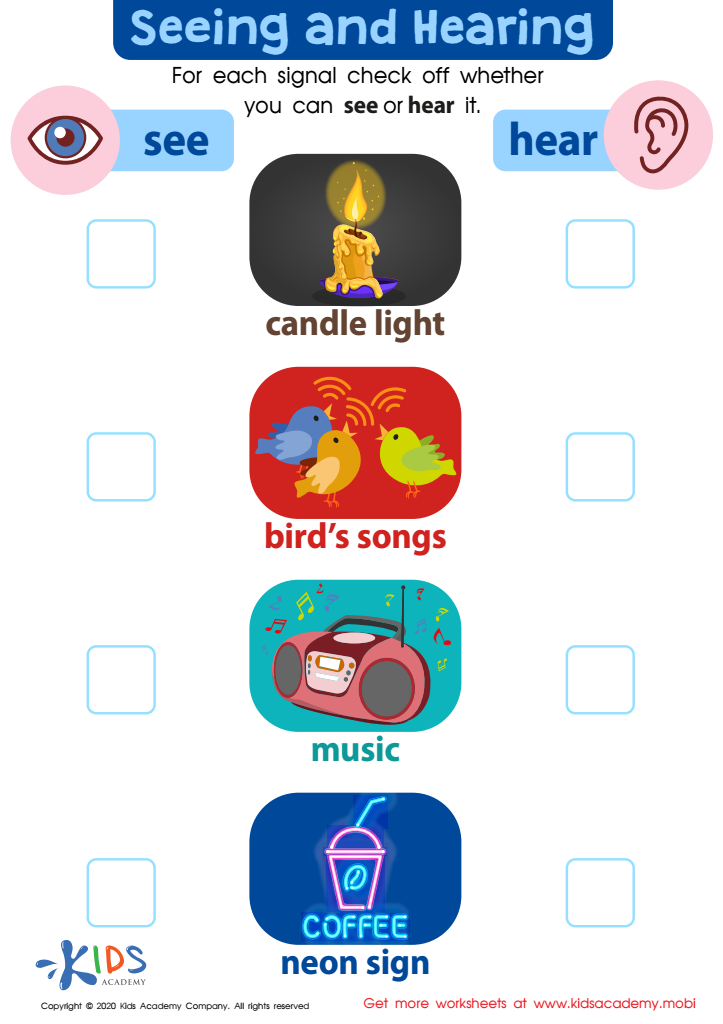
    Seeing and Hearing Worksheet
    Seeing and Hearing Worksheet

    Seeing and Hearing Worksheet

    Before beginning this worksheet, ensure your students know that we have five senses: eyes (seeing), tongue (tasting), skin (feeling), nose (smelling), and ears (hearing). This worksheet will explore seeing and hearing - ask your students what they can see/hear in the picture and get them to check it off.
    Seeing and Hearing Worksheet
    Worksheet
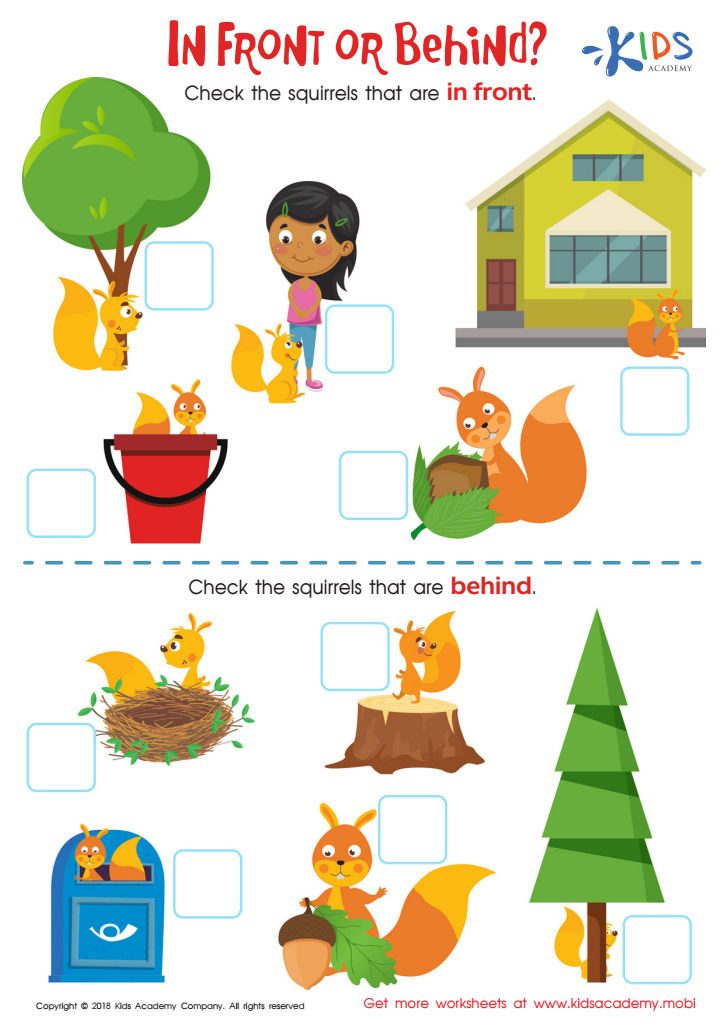
    In Front or Behind: Part 2 Worksheet
    In Front or Behind: Part 2 Worksheet

    In Front or Behind: Part 2 Worksheet

    Teach positional words "front" and "behind" with this fun worksheet! Students identify where the squirrel is in relation to the object - in front or behind. It's a great exercise to practice early geometry skills and understanding object movement.
    In Front or Behind: Part 2 Worksheet
    Worksheet
    Worksheet: Push or Pull
    Worksheet: Push or Pull

    Pull or Push Worksheet

    With this fun worksheet, they'll explore physics by sorting objects into categories according to their mode of motion. It's a great way to get them interested in science.
    Pull or Push Worksheet
    Worksheet
    Sounds Are Everywhere! Worksheet
    Sounds Are Everywhere! Worksheet

    Sounds Are Everywhere! Worksheet

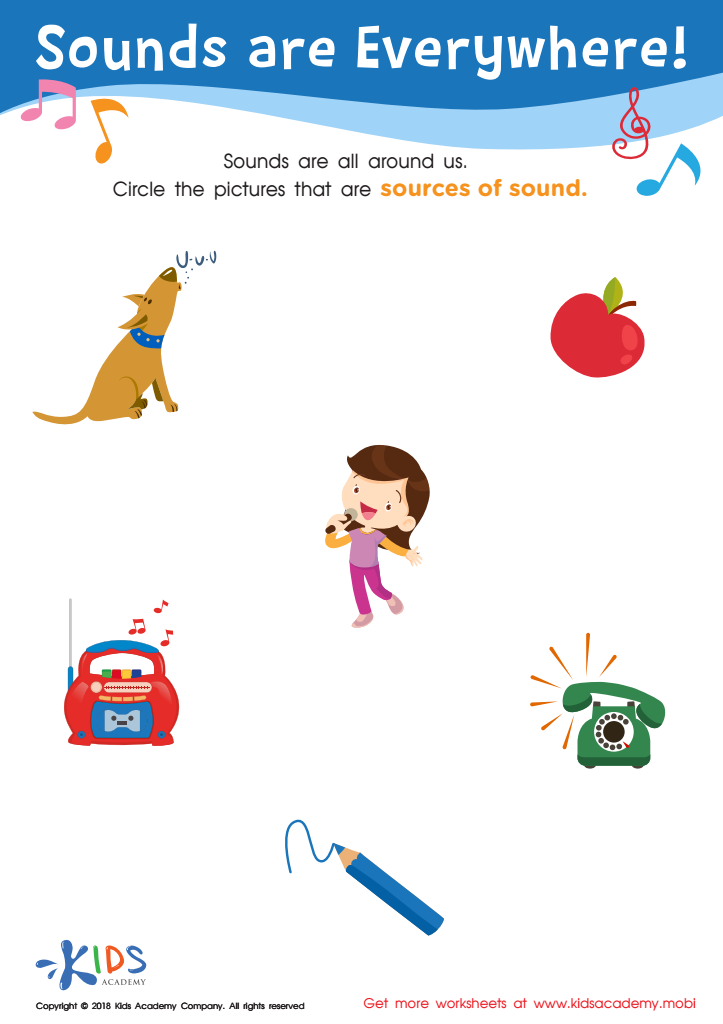
    Ask your students to recall objects that make sound. Then, help them identify the sources of sound in the pictures of this worksheet.
    Sounds Are Everywhere! Worksheet
    Worksheet
    Will it Move? Worksheet
    Will it Move? Worksheet

    Will it Move? Worksheet

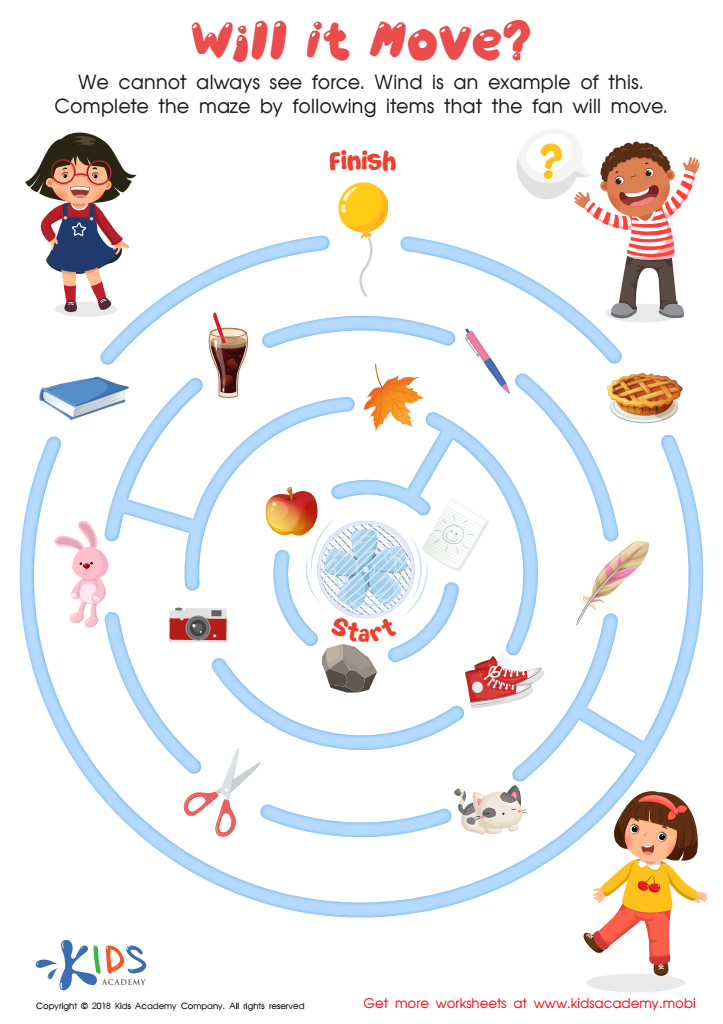
    Does your child know about force? If yes/no, this worksheet can help. Force is invisible - like wind - but it moves objects. Ask your child to complete the maze, following the path of items moved by the wind. 80 words.
    Will it Move? Worksheet
    Worksheet
    Down it Goes Worksheet
    Down it Goes Worksheet

    Down it Goes Worksheet

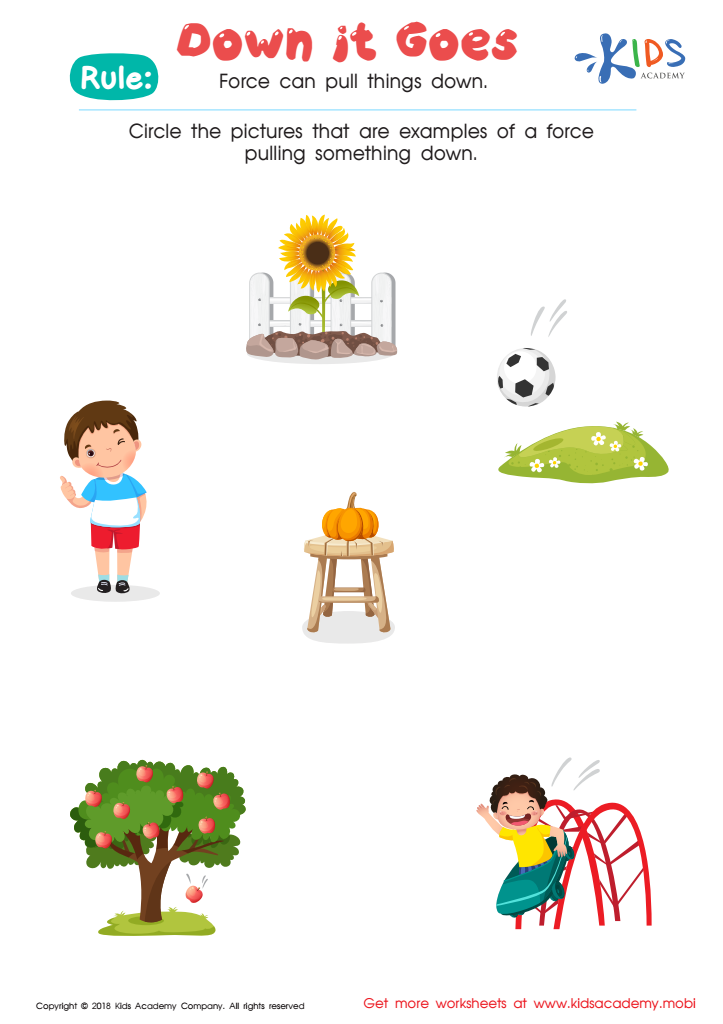
    Explain gravity to your child using this fun worksheet. Ask them to give examples of things pulled down with force, then instruct them to circle the pictures that show this. It's a great way to help them understand the concept of gravity.
    Down it Goes Worksheet
    Worksheet
    Moon Phases Worksheet
    Moon Phases Worksheet

    Moon Phases Worksheet

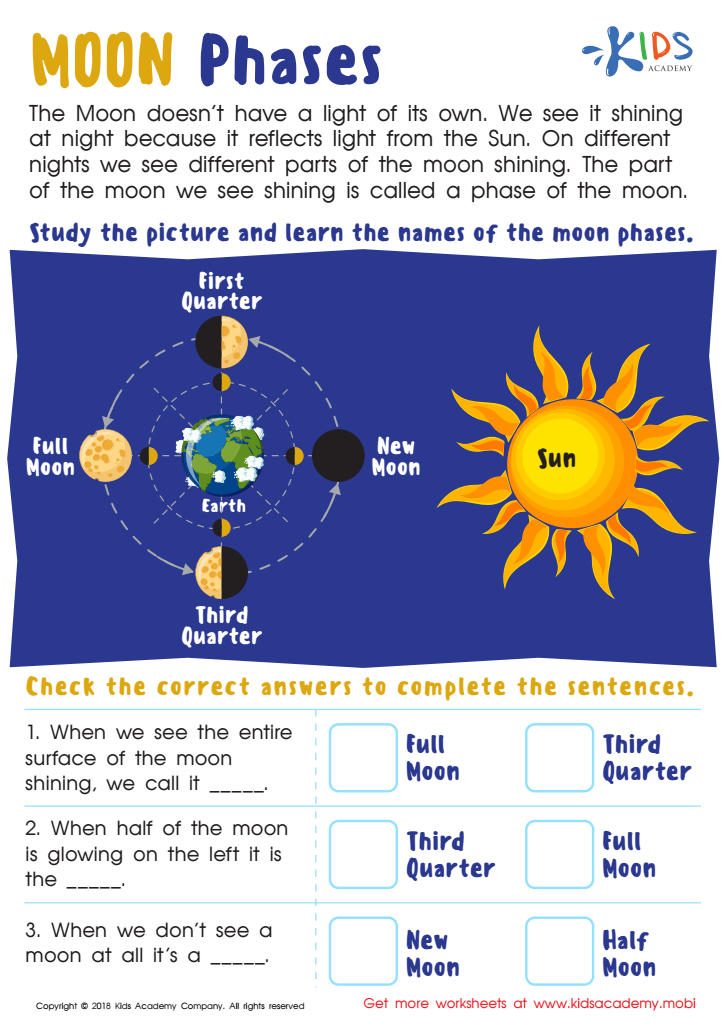
    Gaze up at the night sky and the moon's appearance may change from night to night. Encourage your child to learn more about the sun, the moon, and space with this science worksheet. Have them read the text then study the picture. Finally, read the sentences and check the answers to identify the moon's phases.
    Moon Phases Worksheet
    Worksheet
    What Is Matter? Worksheet
    What Is Matter? Worksheet

    What Is Matter? Worksheet

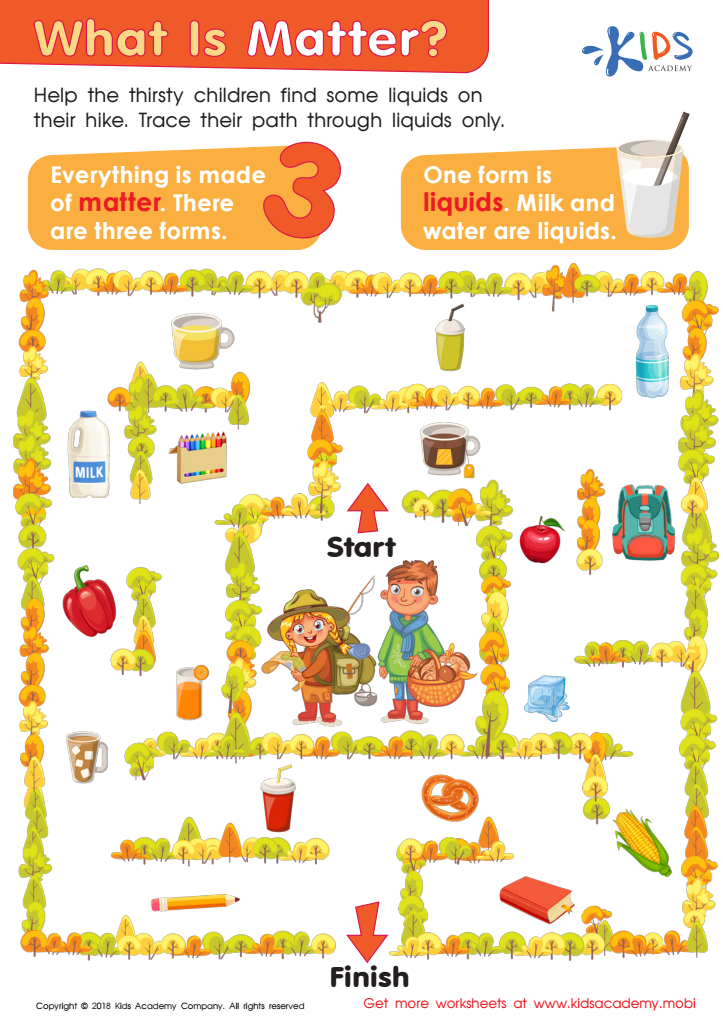
    Matter is anything that occupies space and has weight. Show your child examples, like people, cars, food, animals, objects etc. Ask them to name more. Help the thirsty kids in the picture find liquids - have them trace the path in the tracing sheet.
    What Is Matter? Worksheet
    Worksheet
    Energy sources worksheet PDF
    Energy sources worksheet PDF

    Energy Sources Printable

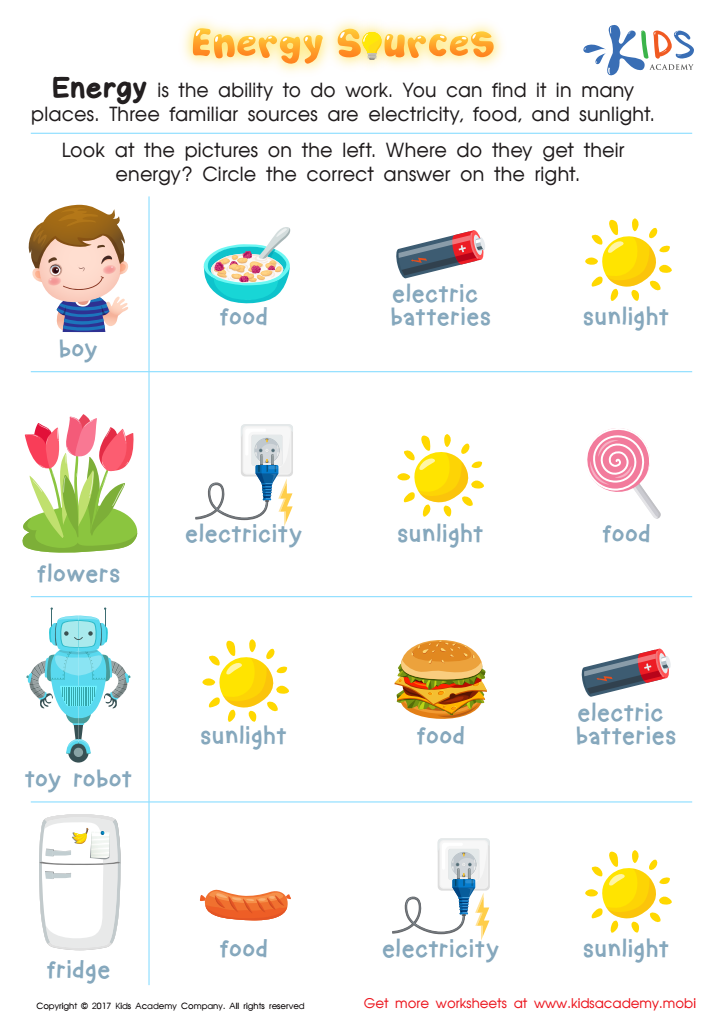
    Introduce energy sources with this worksheet PDF — explore the sun, batteries, and more! Get your mini scientist excited about energy and power up their learning.
    Energy Sources Printable
    Worksheet


    Physical science for young children, ages 3-6, plays a critical role in their overall development and understanding of the world. At this age, children are naturally curious and constantly exploring their environment. Introducing them to basic physical science concepts can nurture this curiosity, laying a strong foundation for future scientific learning.

    Engaging with physical science helps develop essential skills such as observation, critical thinking, and problem-solving. Through simple, interactive experiments, like mixing water with different substances or exploring magnets, children learn about cause and effect, the properties of materials, and fundamental principles like gravity. This hands-on learning is crucial for cognitive development and can make complex ideas accessible and exciting.

    Furthermore, early exposure to science fosters a sense of wonder and creativity. It encourages children to ask questions, hypothesize, and explore multiple solutions to problems. These experiences not only build their scientific knowledge but also boost their confidence and enthusiasm for learning in general.

    For parents and teachers, incorporating physical science into early education can be a collaborative and enriching experience that strengthens the bond with the child. By fostering a supportive environment where scientific exploration is encouraged, adults can help children develop a lifelong passion for learning and discovery.