Space Worksheets for Ages 3-6 - Page 2
27 filtered results
-
From - To
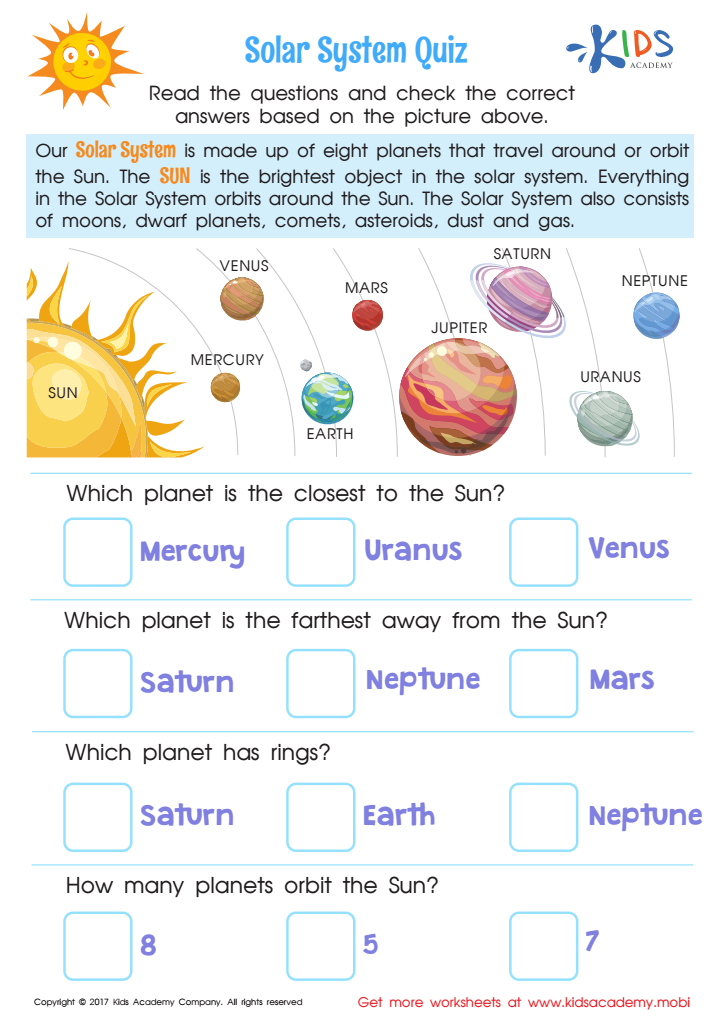
Solar System Quiz Printable
 Assign to My Students
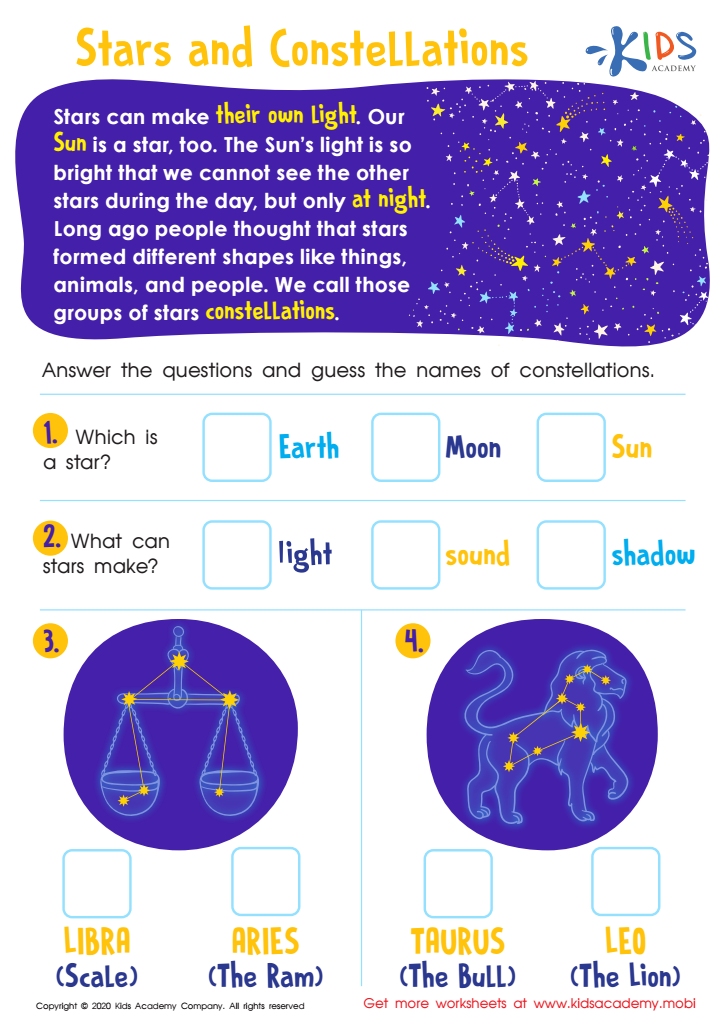
Stars and Constellations Worksheet
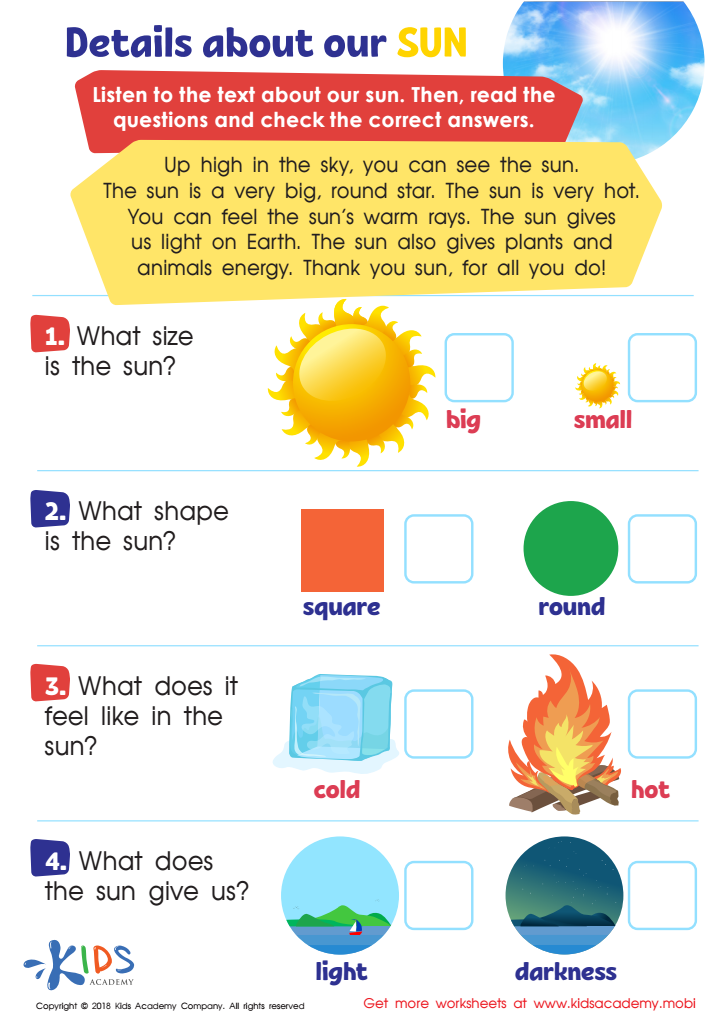
Details About Our Sun Worksheet





Exploring space with children aged 3-6 can offer innumerable benefits both intellectually and developmentally. At this formative stage, young minds are exceptionally curious, absorbing information rapidly and forming the foundation for future learning. Introducing space concepts, such as the Earth, moon, stars, and planets, can spark wonder and intrigue, which are crucial for fostering a lifelong love of learning.
Teaching space can improve language skills as children learn new vocabulary, like "astronaut," "telescope," and "galaxy." The visual nature of space, with its striking images and videos, significantly enhances cognitive development by helping kids understand abstract concepts like size, distance, and gravity in an approachable way.
Additionally, discussing space encourages the development of critical thinking skills. Asking questions like "What do astronauts eat in space?" or "Why do we have day and night?" promotes curiosity, inquiry, and problem-solving skills. It can even integrate basic scientific principles, laying early groundwork for understanding science and technology.
Moreover, the vastness and mystery of space inspire creativity and imagination. This can be seen in play activities, storytelling, and art, all fostering emotional and social growth alongside cognitive benefits.
Ultimately, engaging children aged 3-6 with space topics isn't just about learning facts; it’s about inspiring an amazing journey of discovery and instilling an inquisitive mindset that extends beyond the stars.







