Consonants Worksheets for Ages 3-7 - Page 2
31 filtered results
-
From - To
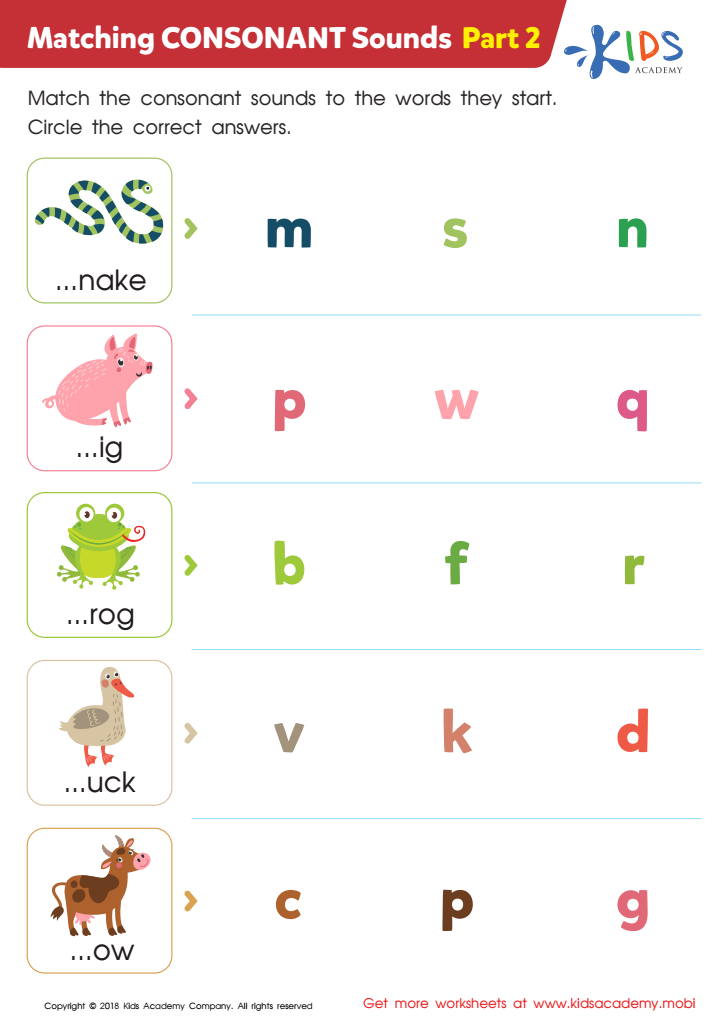
Matching Consonant Sounds: Part 2 Worksheet
 Assign to My Students
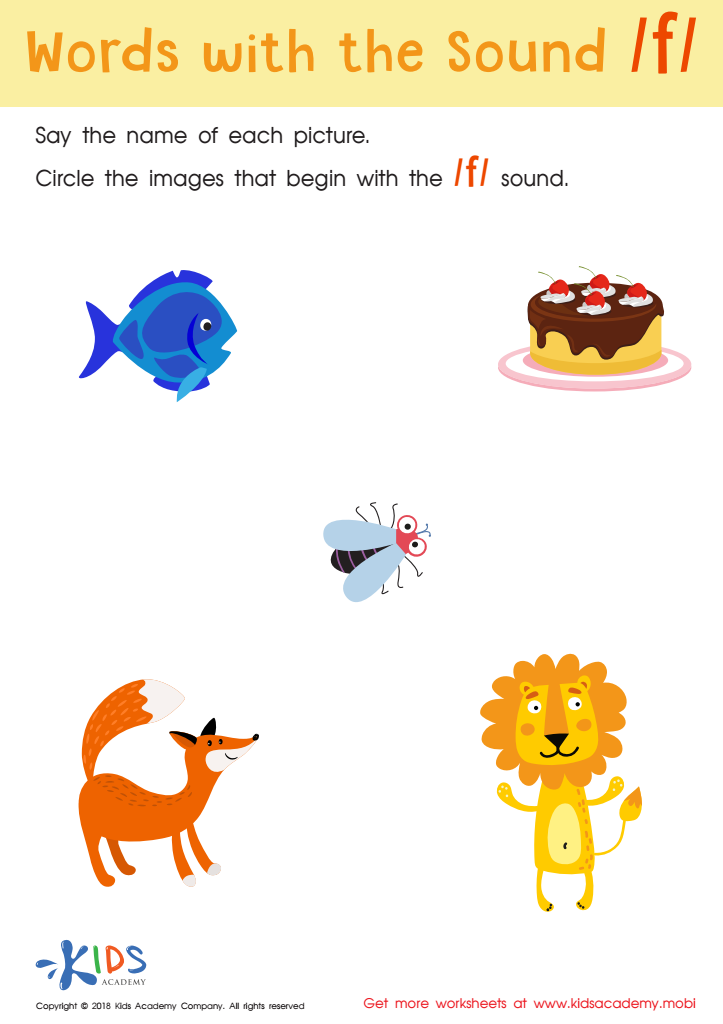
Words with sound f Reading Worksheet
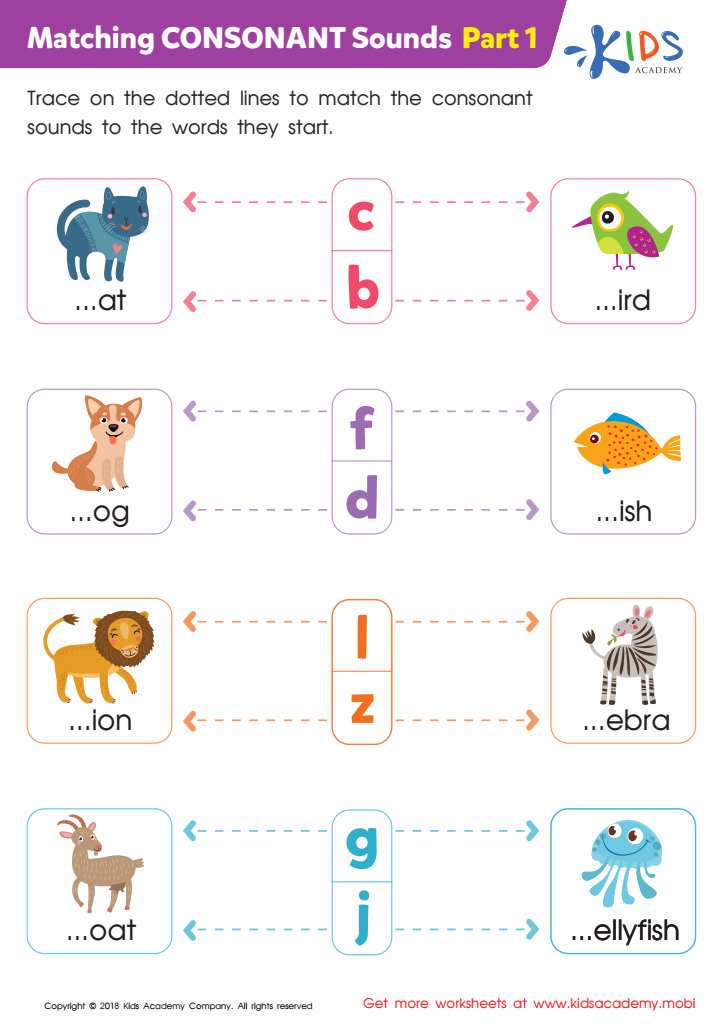
Matching Consonant Sounds: Part 1 Worksheet
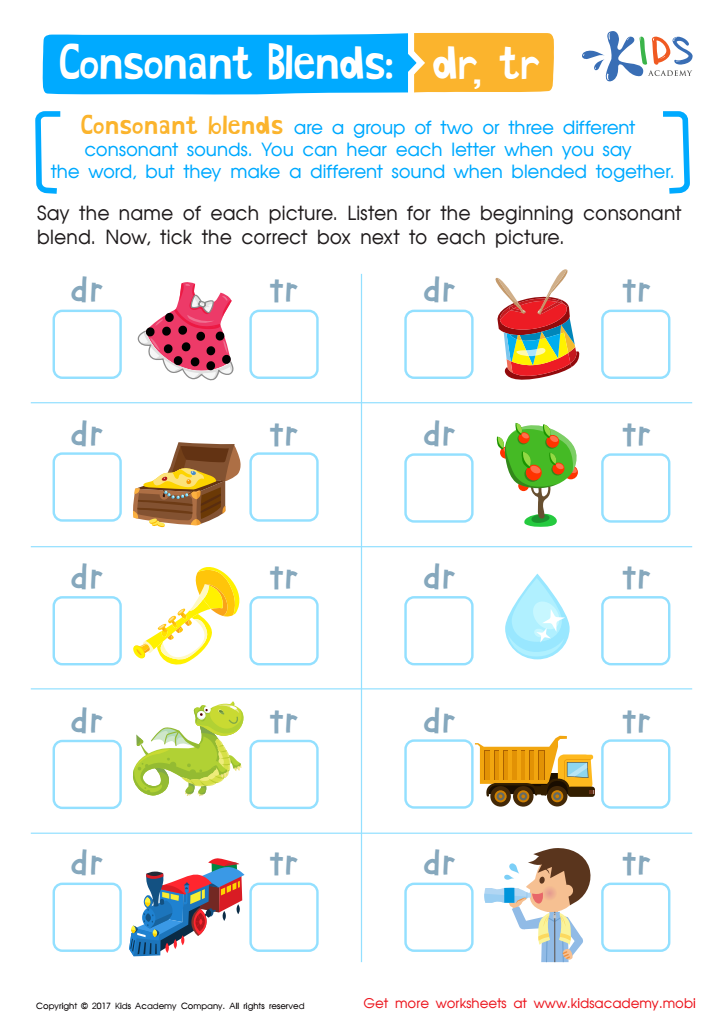
Consonant Blends: "Dr" and "Tr" Printable
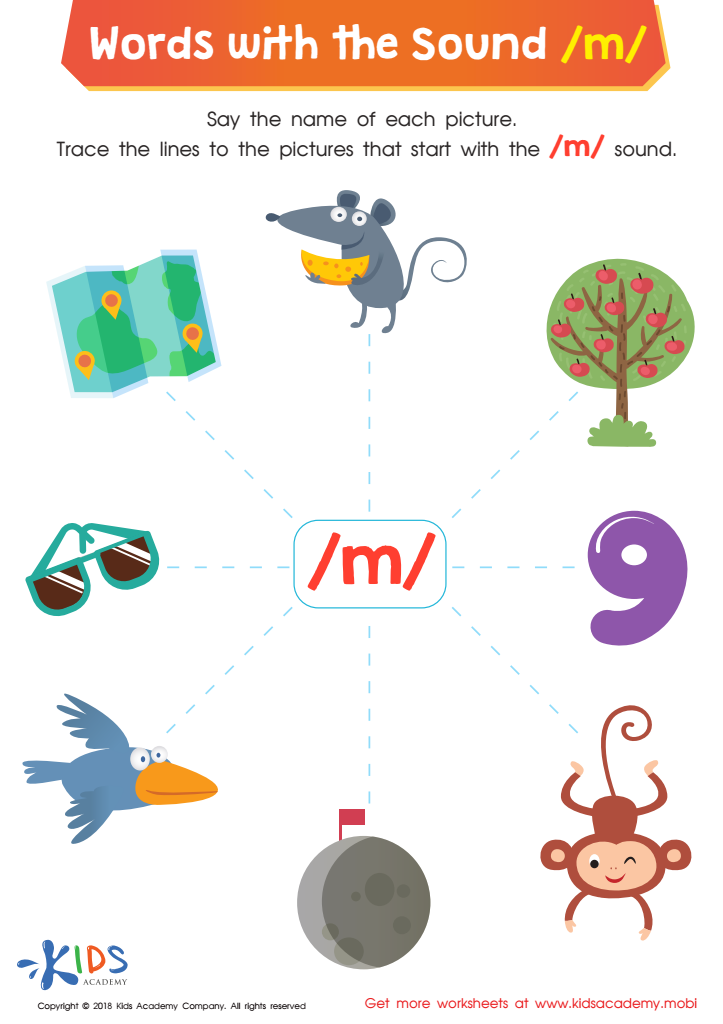
Words with Sound M Reading Worksheet
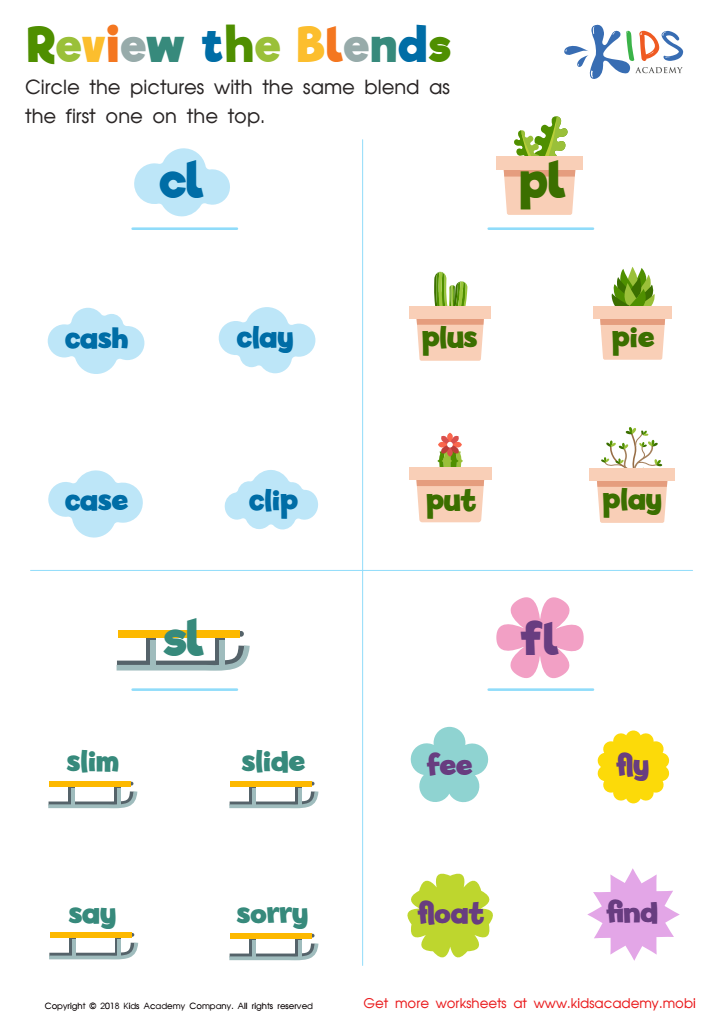
Review the Blends Worksheet
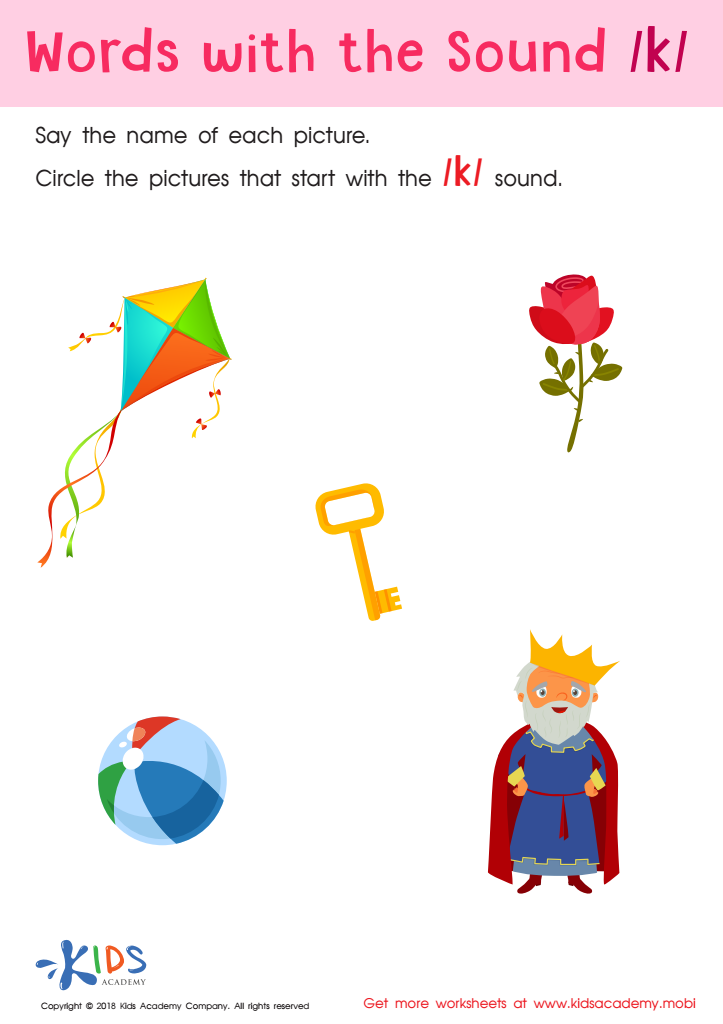
Words with sound k Reading Worksheet



Understanding consonants is crucial for children aged 3-7 as they form the foundation for literacy development. During these early years, children are honing their phonemic awareness—the ability to hear, identify, and manipulate sounds in spoken words. Consonants play a critical role in this process because they make up the majority of the sounds in English words.
When children become familiar with consonant sounds, they can more easily learn to read and write. Early exposure to consonants helps them decode words, recognize patterns, and improve their spelling abilities. Additionally, mastering consonant sounds contributes to their vocabulary growth and enhances their ability to express themselves verbally and in writing.
Parents and teachers can aid lifelong literacy skills by integrating consonant recognition into everyday activities. Exploring consonants through playful techniques—like rhymes, songs, and games—makes learning enjoyable. Furthermore, understanding consonants enables educators to assess children's oral language skills, making it easier to tailor instruction to their unique needs.
Ultimately, by prioritizing consonant education, adults lay a strong foundation for reading fluency, comprehension, and a love for language, setting the stage for ongoing academic success.







