Adding up to 100 Without Regrouping Worksheets for Ages 3-7 - Page 2
73 filtered results
-
From - To
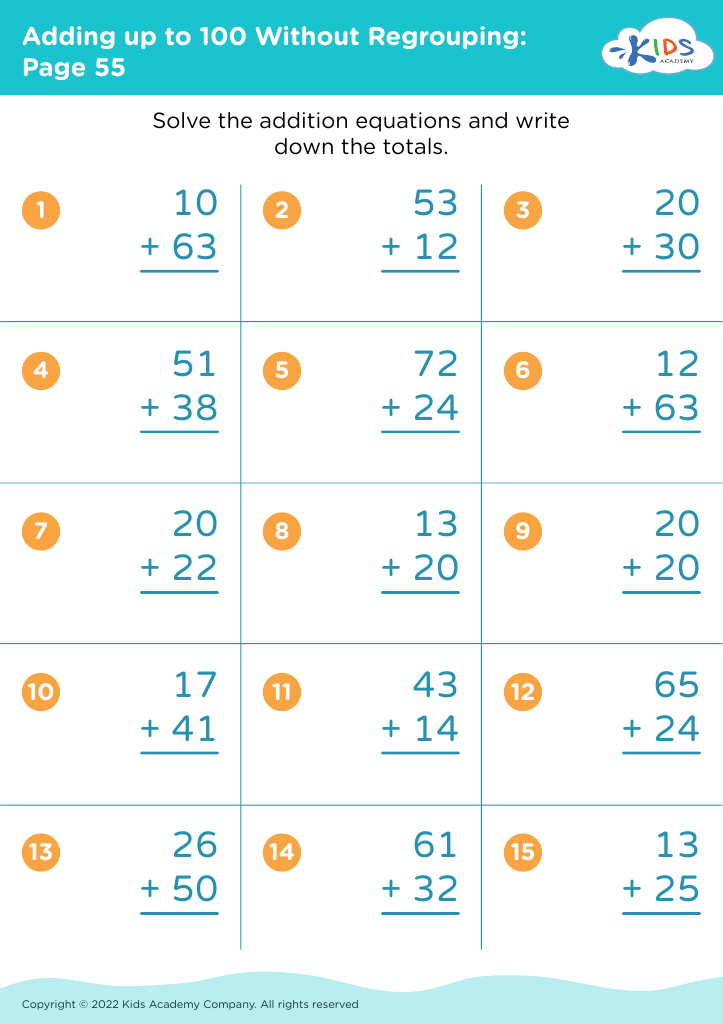
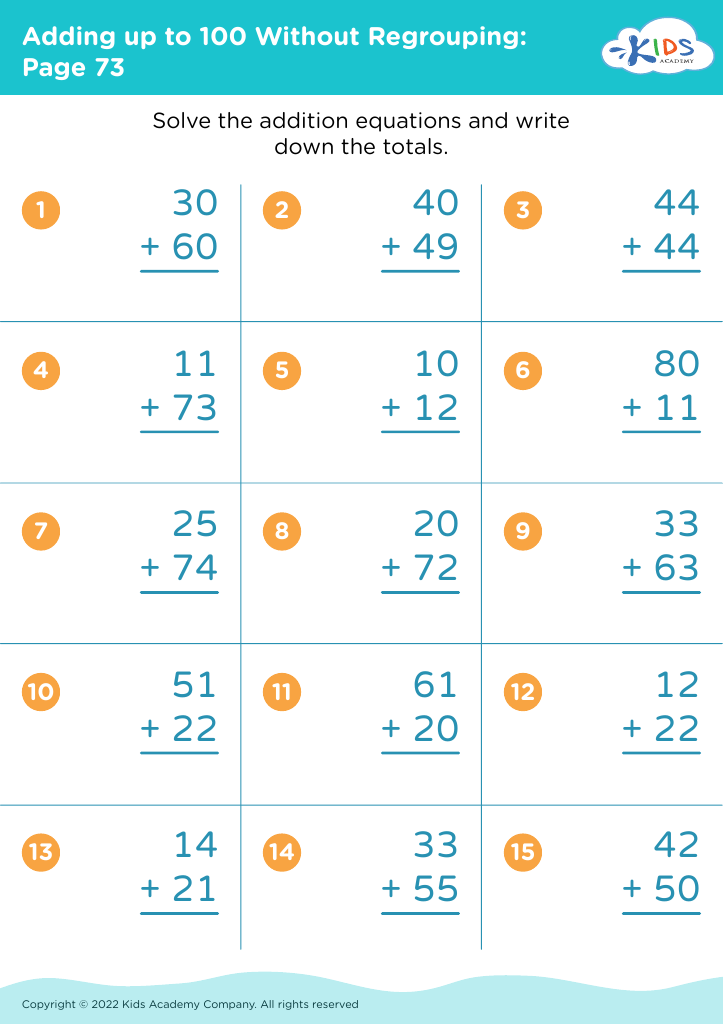
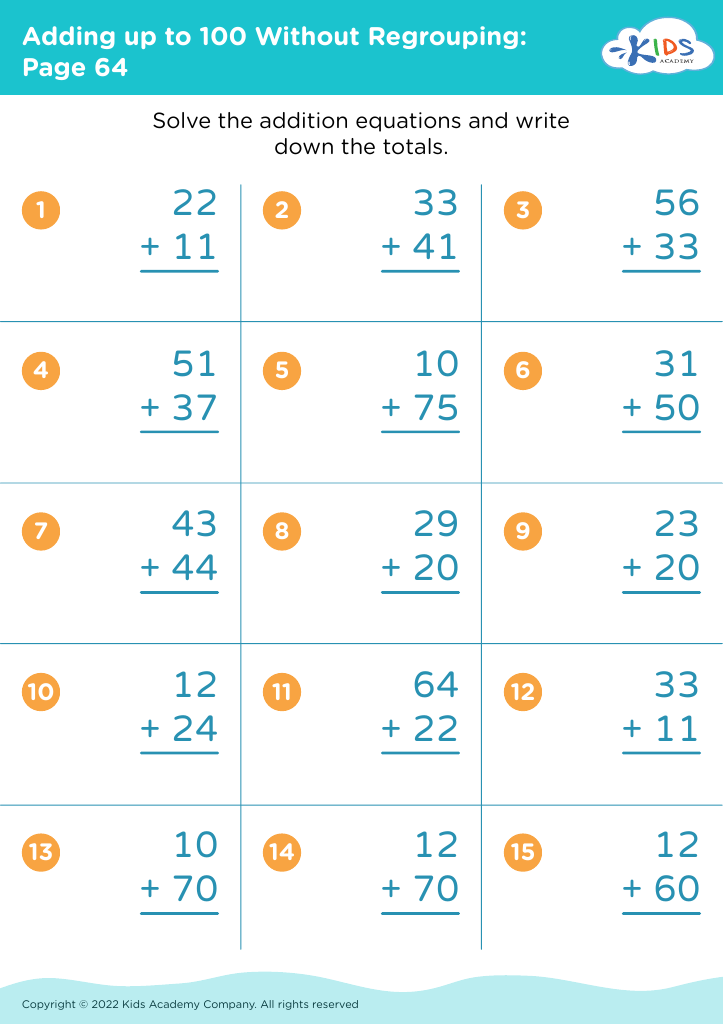
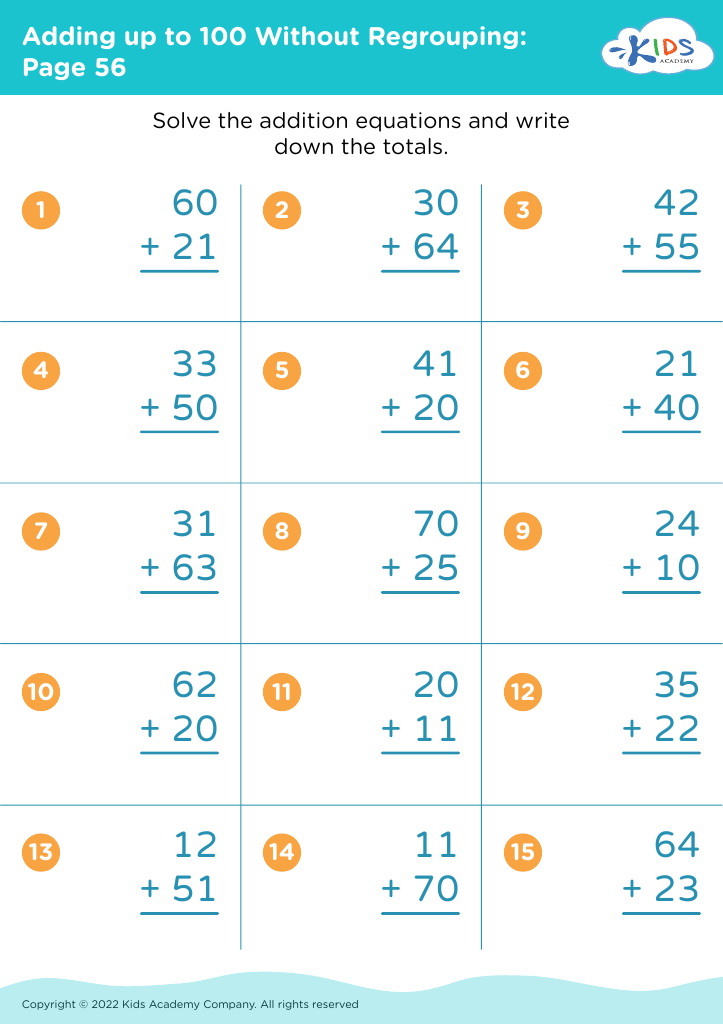
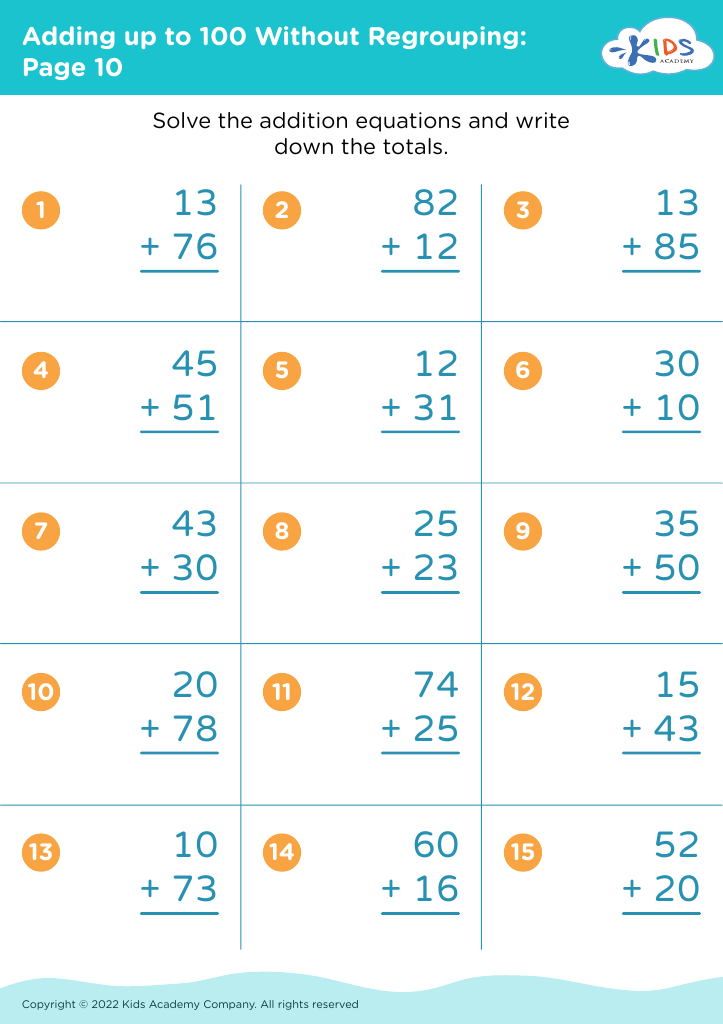
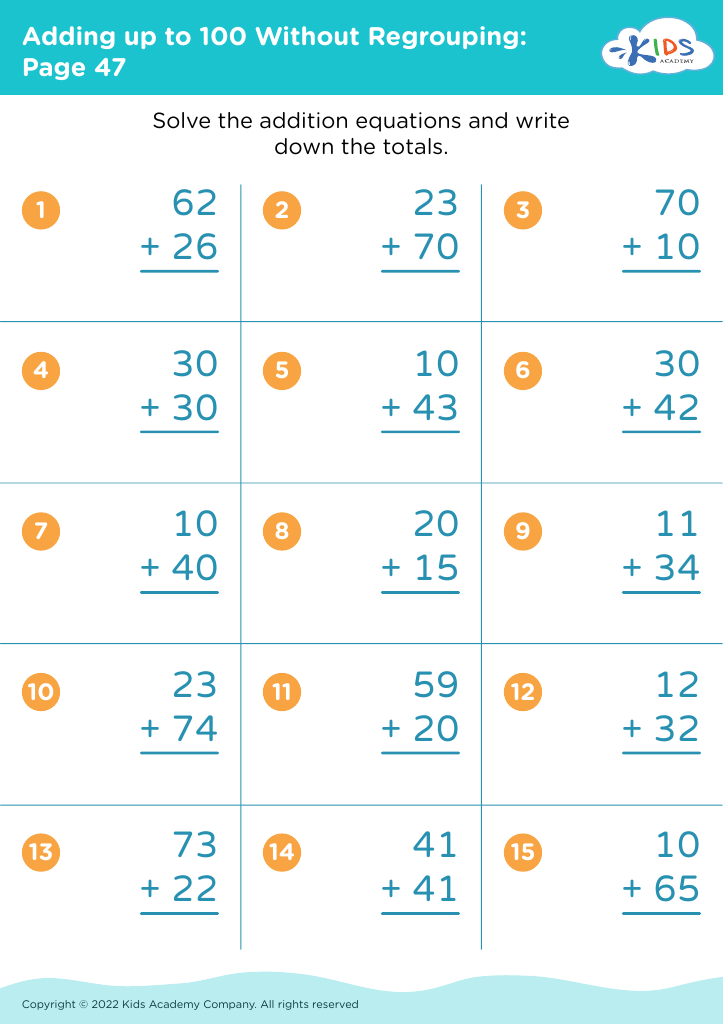
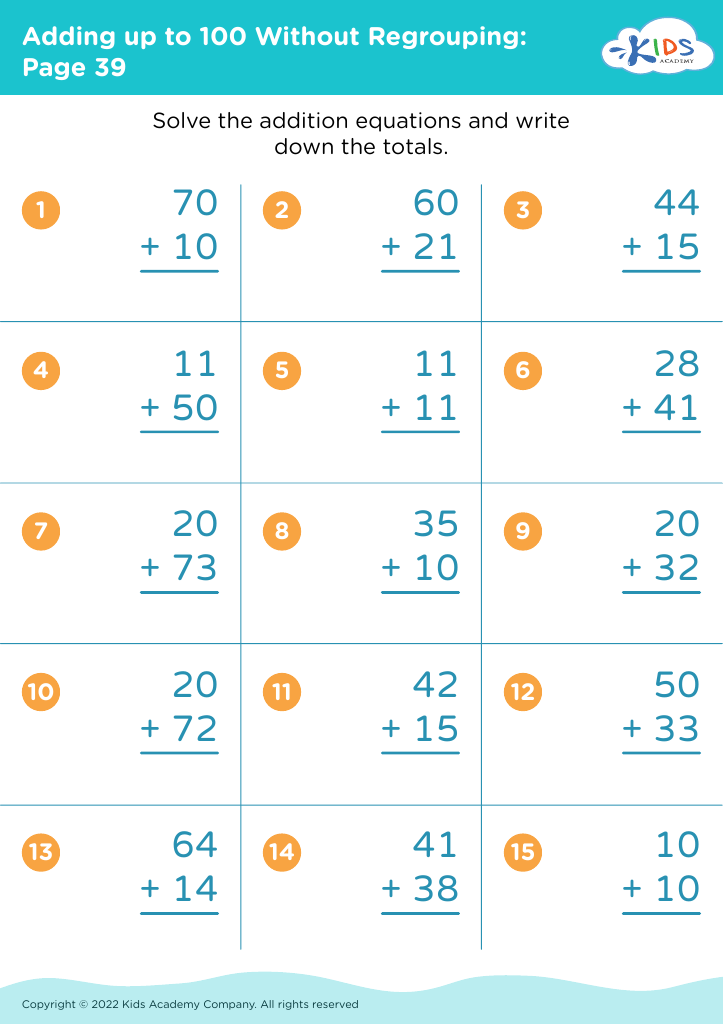
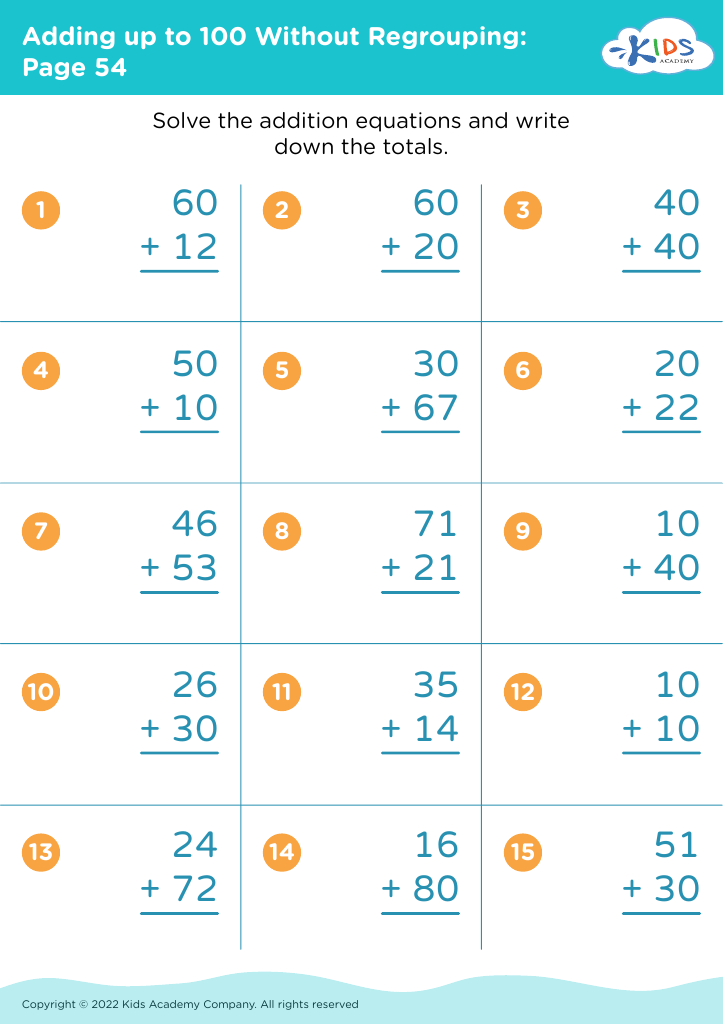
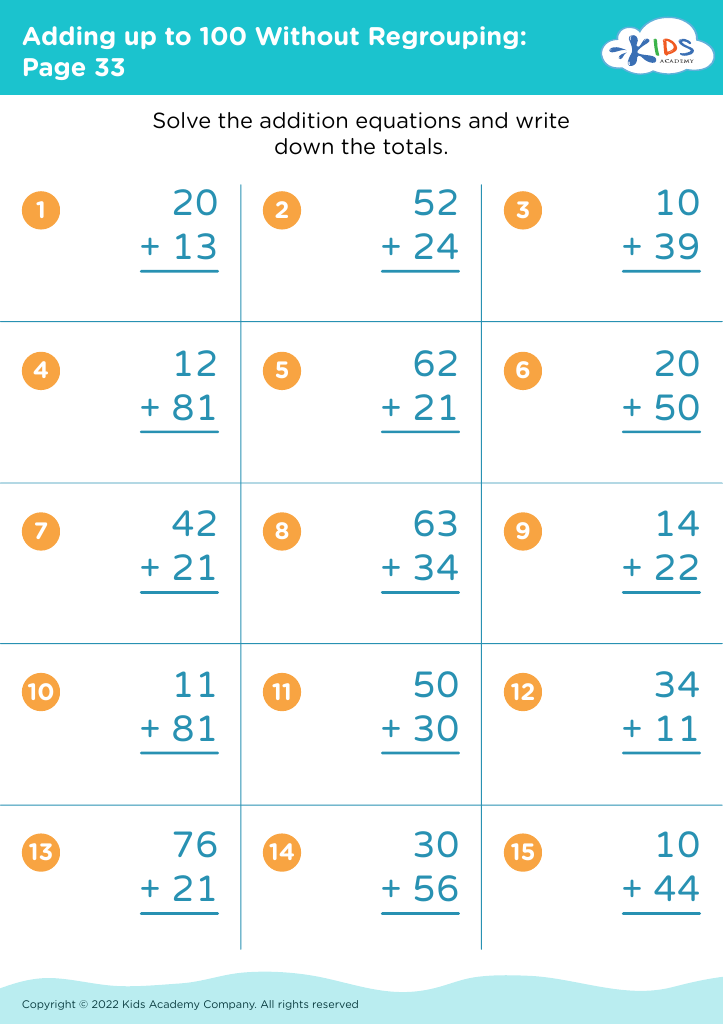
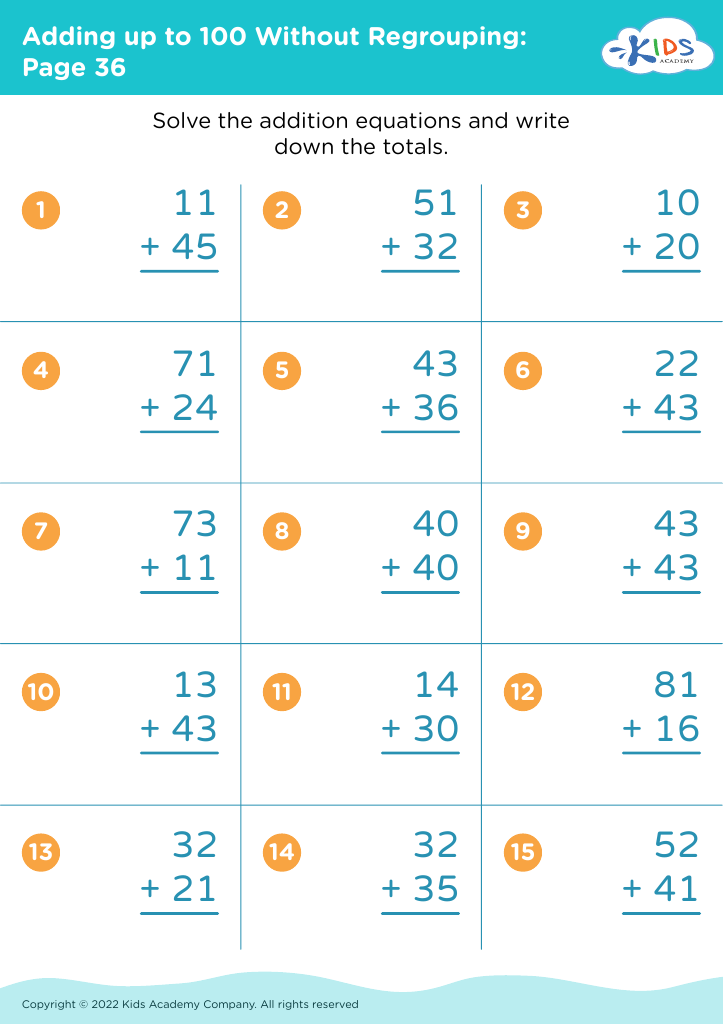
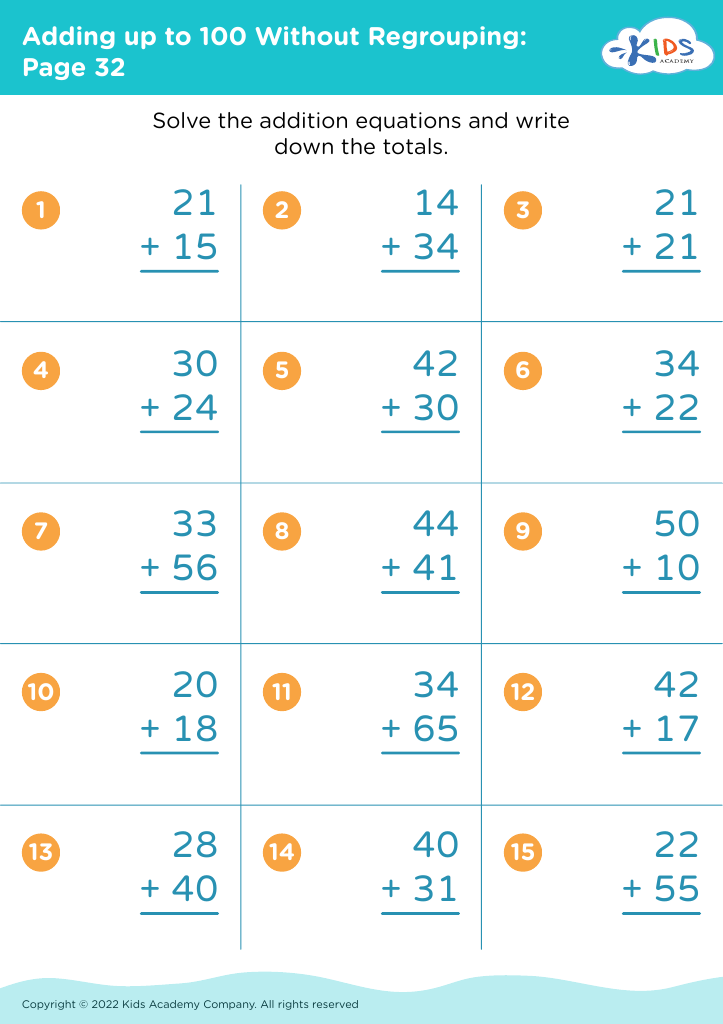
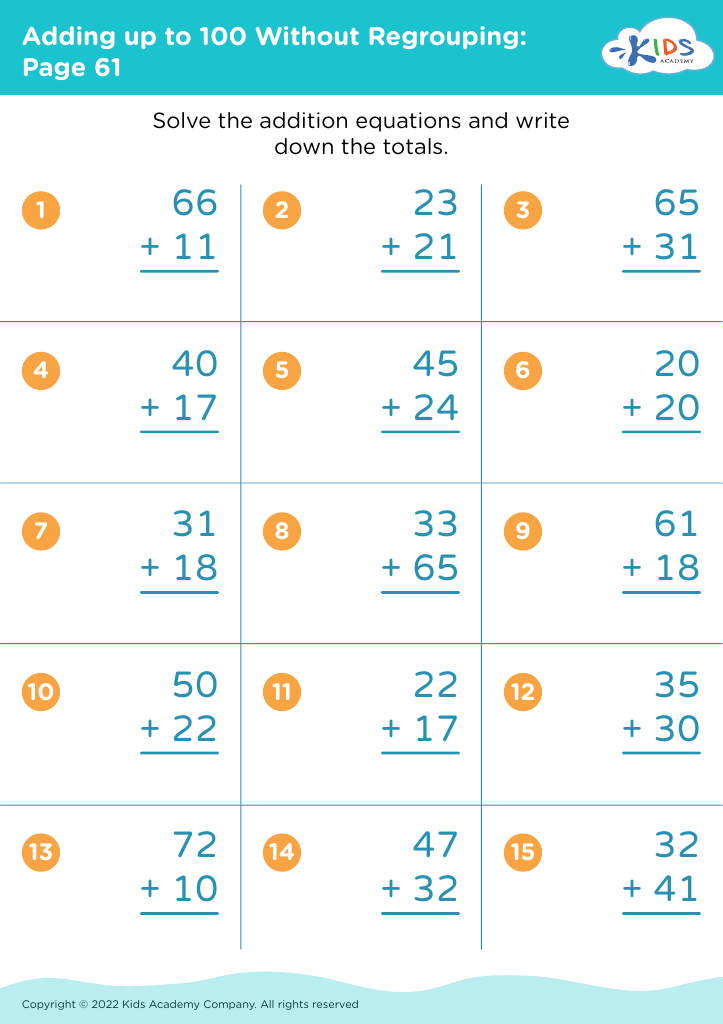
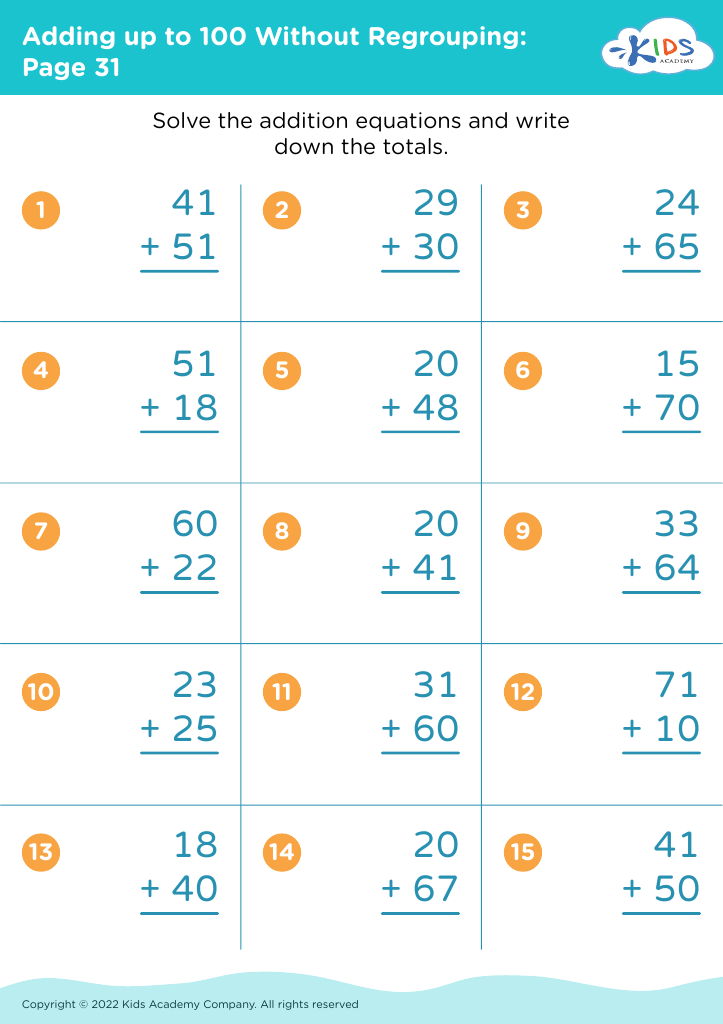
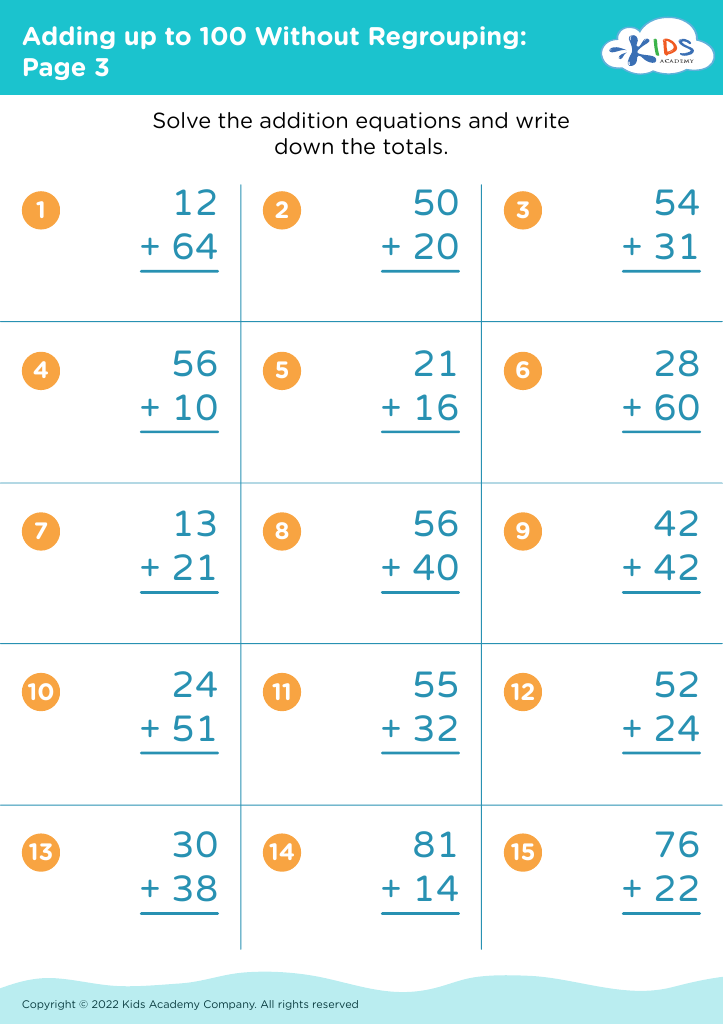
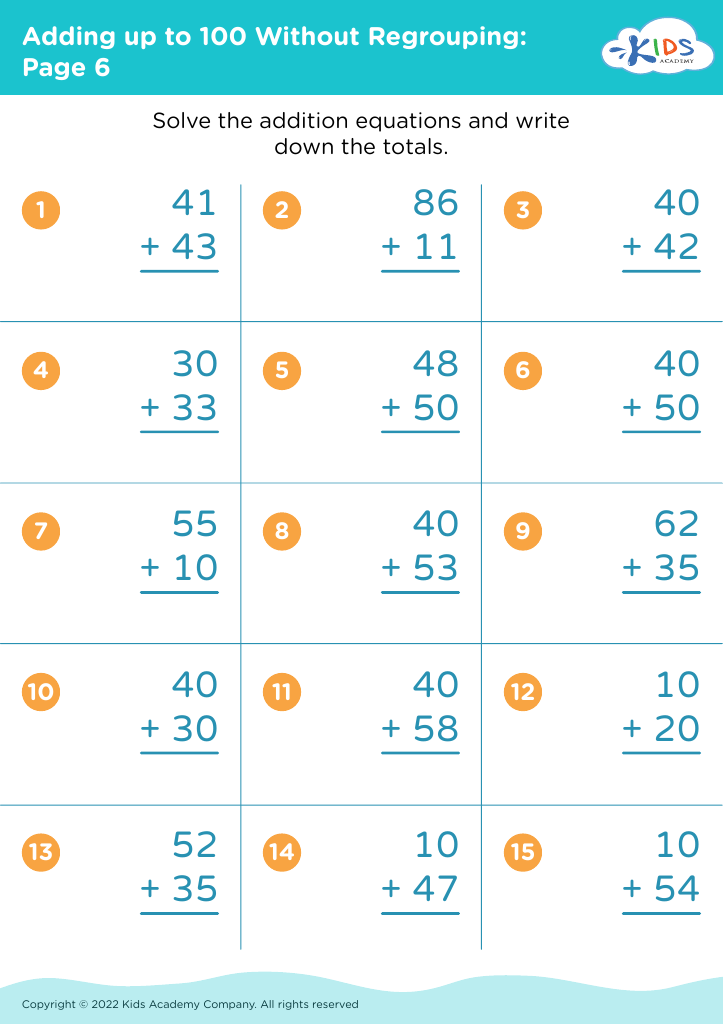
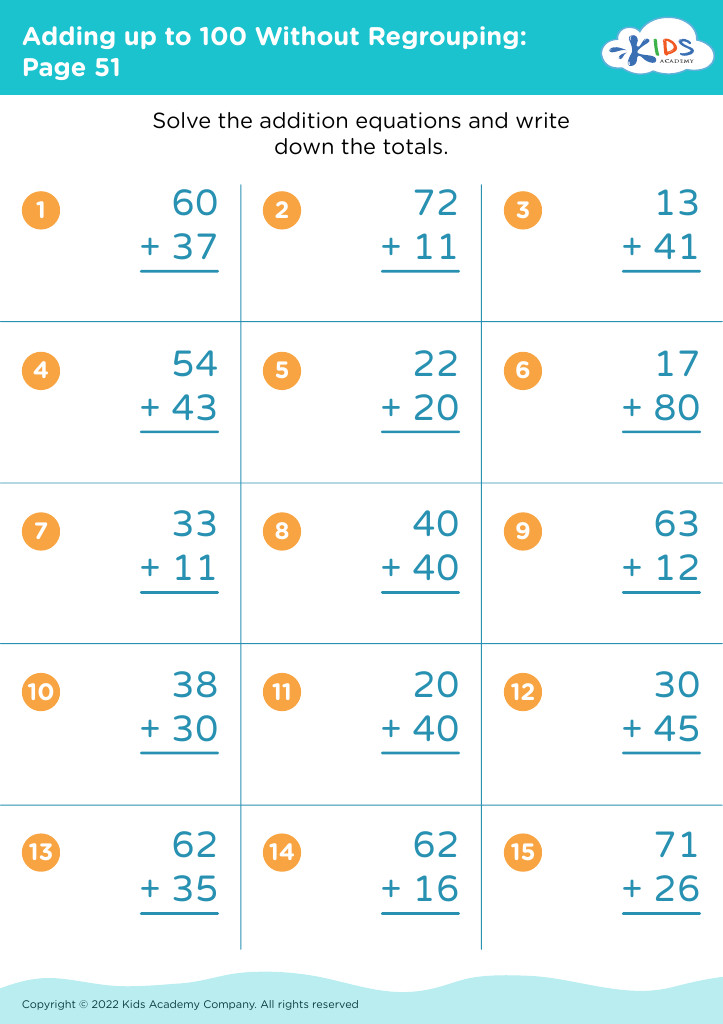
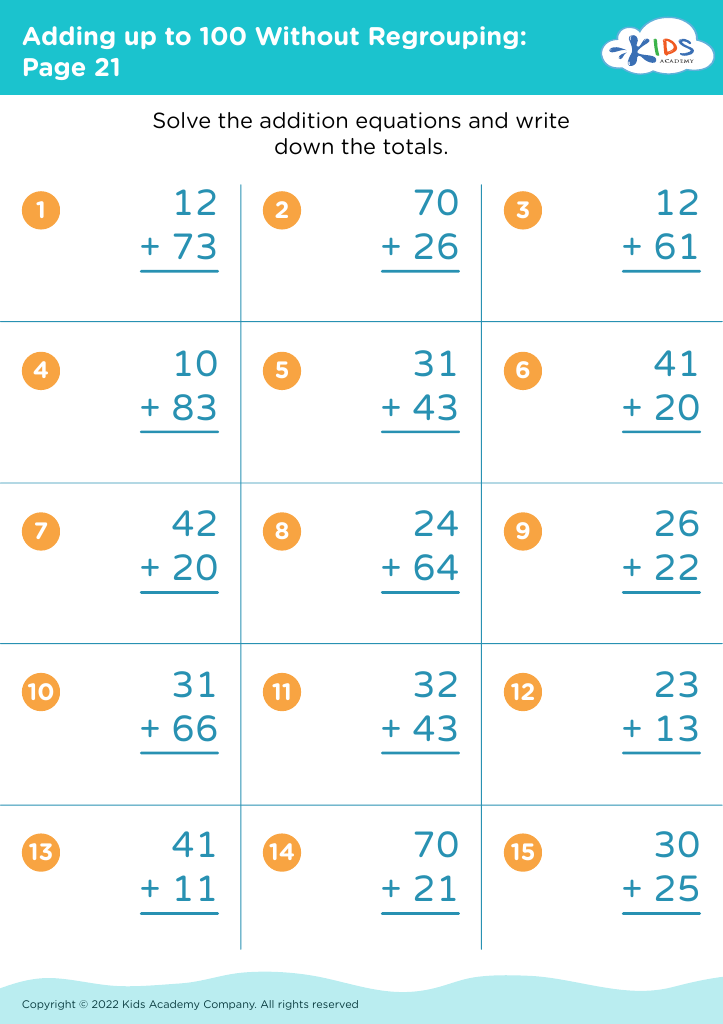
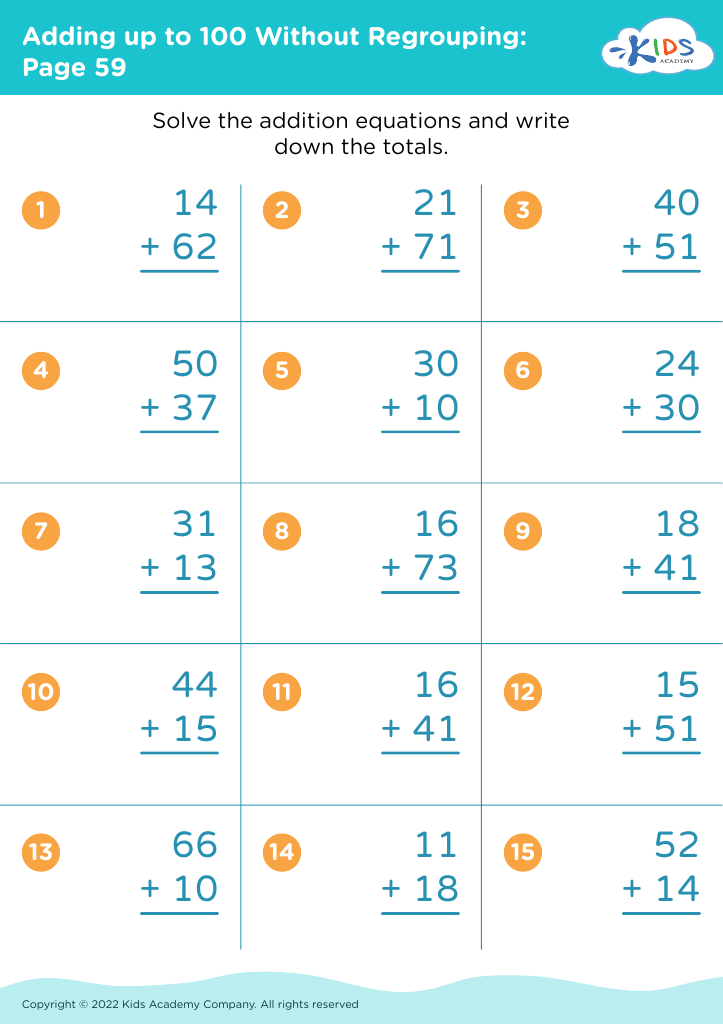
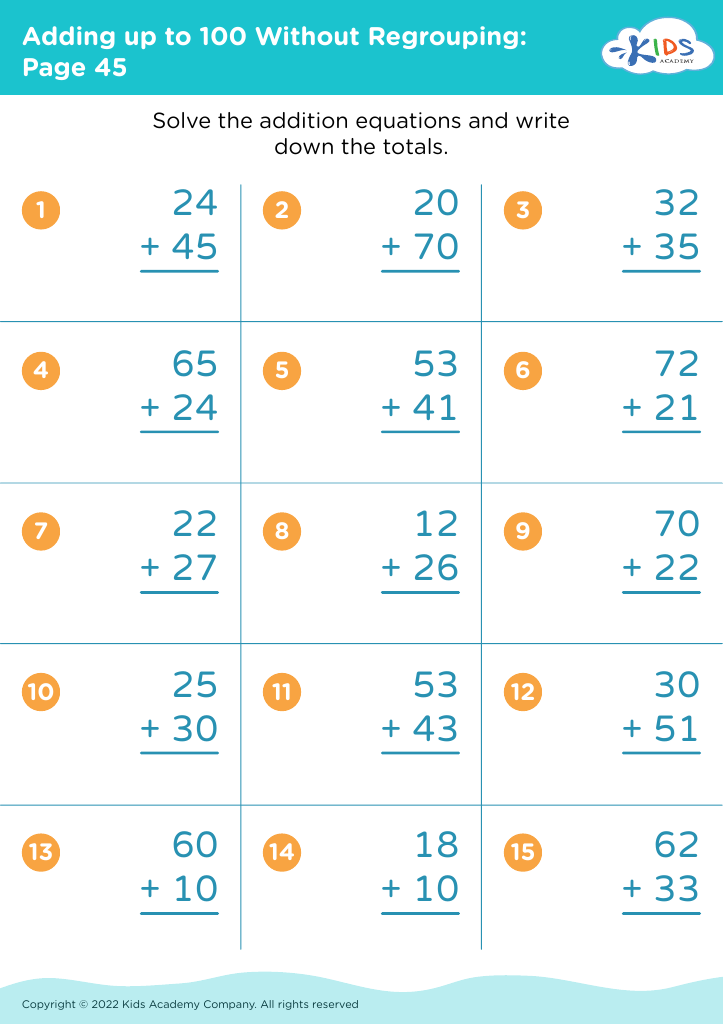
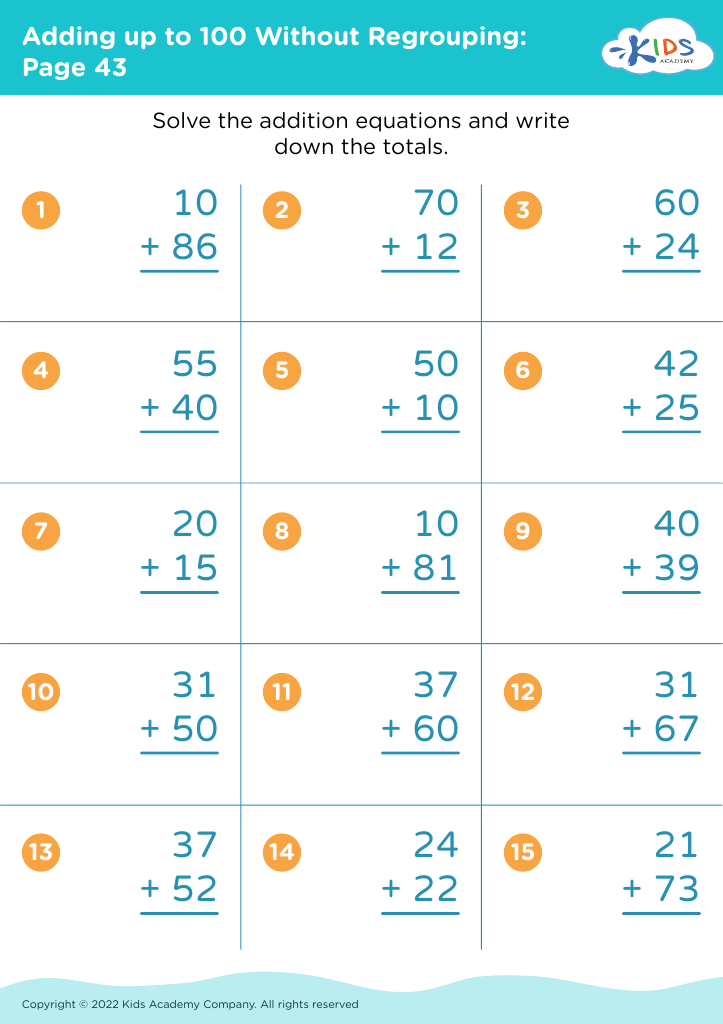
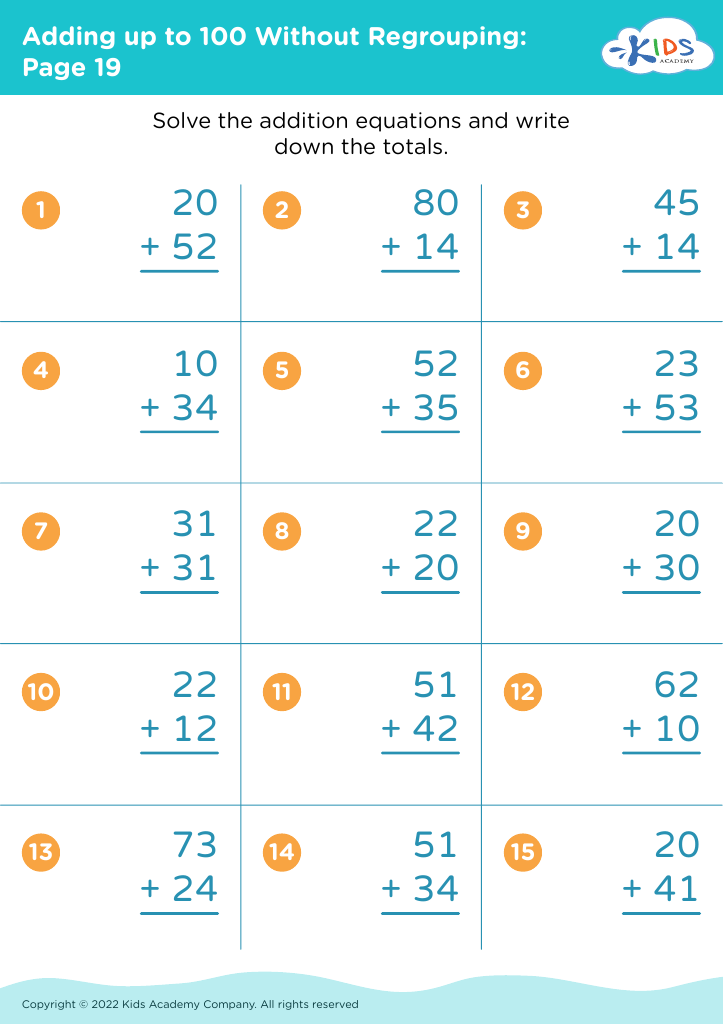
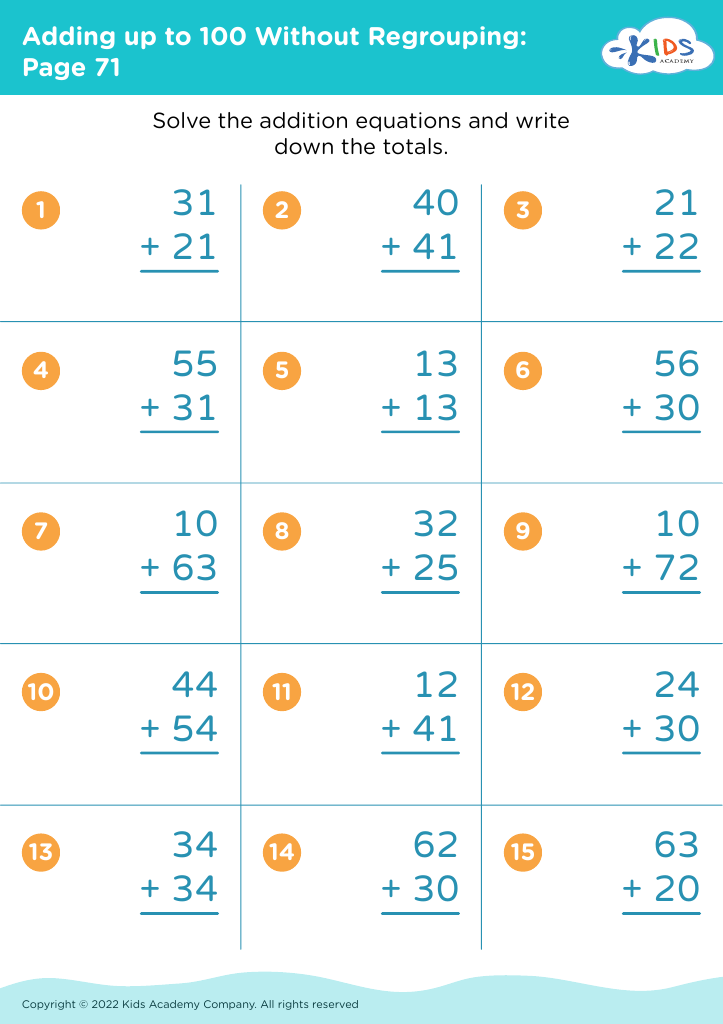
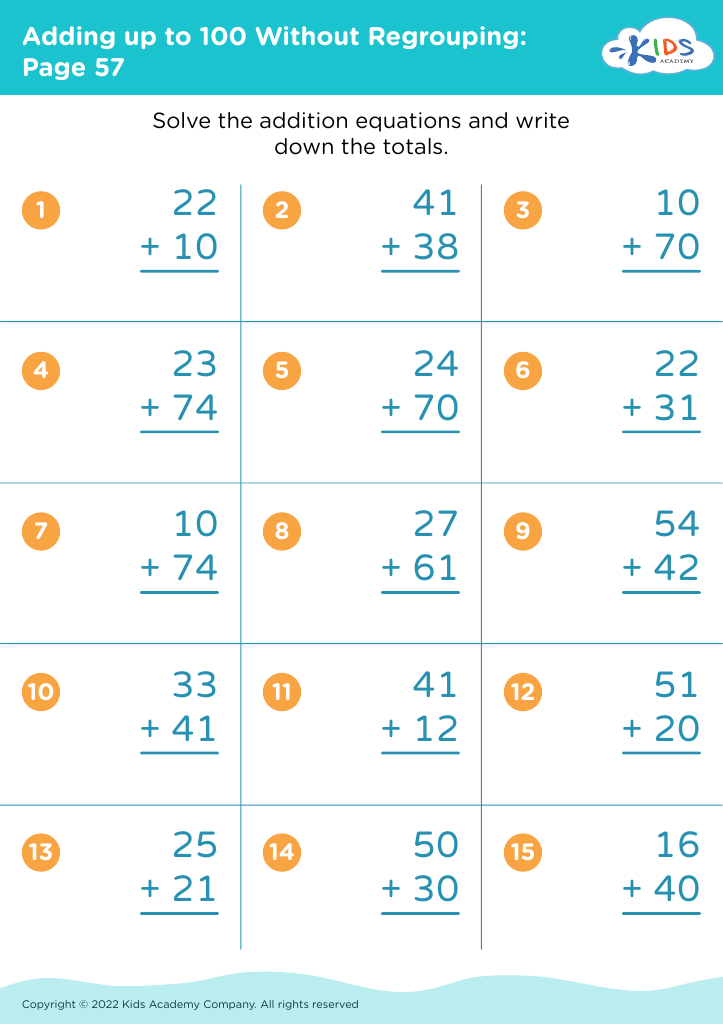
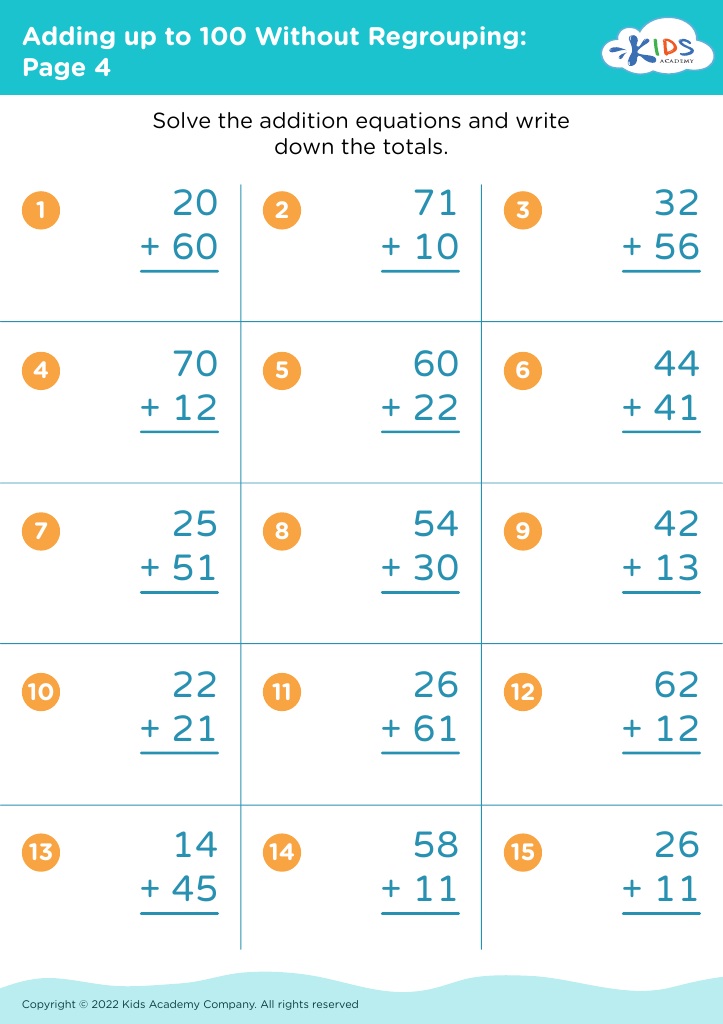





Understanding how to add up to 100 without regrouping is an essential foundational skill for young learners aged 3-7. This concept not only builds solid arithmetic abilities but also fosters critical thinking and problem-solving skills.
Firstly, mastering addition strategies early on instills a sense of confidence in children. When they understand how to combine numbers effectively, they are more likely to enjoy math, reducing math anxiety as they progress to more complex concepts. Engaging in addition without regrouping also enhances number sense, helping children recognize numerical patterns and relationships, which can aid their overall mathematical understanding.
Moreover, this skill supports practical life applications, such as counting money or measuring while cooking, allowing children to make connections between classroom learning and real-world situations. Teachers and parents play a crucial role in this learning process: they can create fun, interactive activities that promote practice, making math enjoyable rather than daunting.
Finally, cultivating an early appreciation for math helps create a strong educational foundation, setting children up for future academic success. Thus, teachers and parents should prioritize teaching addition up to 100 without regrouping to empower young learners for their educational journey.