Filters

27 filtered results

Clear all filters
Favorites
With answer key
Interactive

27 filtered results

Difficulty Level

Grade


Subject

    Check out this FREE Trial Lesson on Rhyming Words for age 3-7!

    Poem Text Features

    Favorites
    With answer key
    Interactive
    • 3-7
    • Rhyming Words
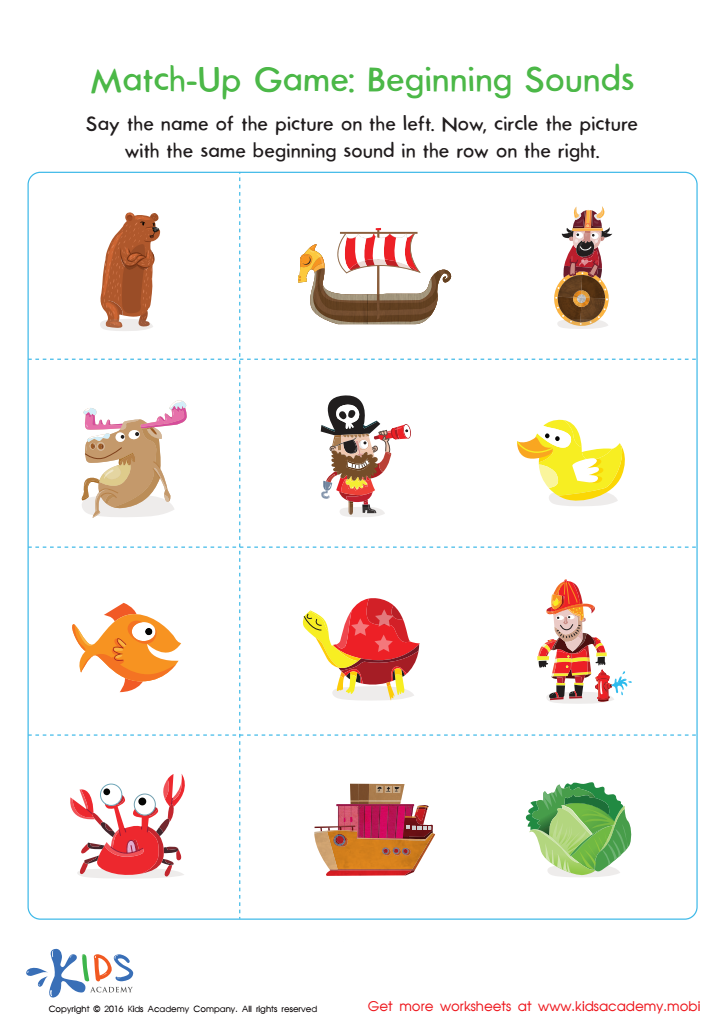
    Beginning Sounds Match-up Printable
    Beginning Sounds Match-up Printable

    Match–Up Game: Beginning Sounds Worksheet

    Start today with this beginning sounds match-up printable! Teach your child to solve problems mentally with this beginning sounds match-up printable. They'll learn to categorize pictures based on phonics rules, developing mental stamina and focus. It's an important step for recognizing sounds and letters in print, building a foundation for reading and spelling. Start today and take your child's skills to the next level!
    Match–Up Game: Beginning Sounds Worksheet
    Worksheet
    Rhyming Words PDF Worksheets, Pen
    Rhyming Words PDF Worksheets, Pen

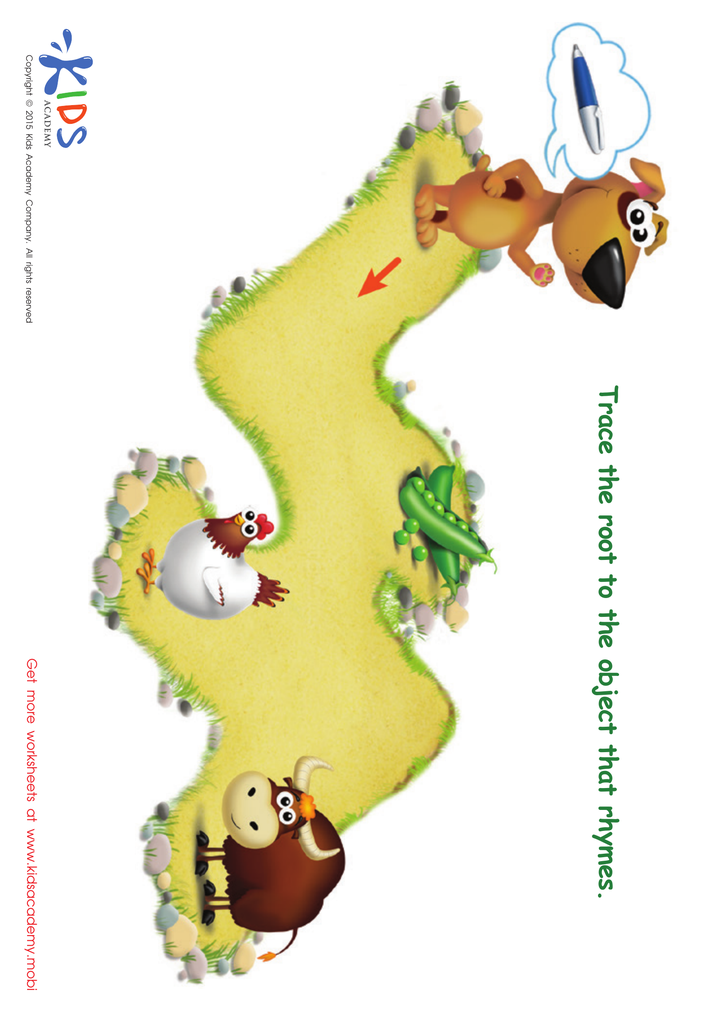
    Pen Rhyming Words Worksheet

    Check out the cute pup, pondering away. He's thinking of a root word - no suffix or prefix. Now check the hen, green beans, and the cow. Can you find the word that rhymes with pen? Draw a line from the root word to its rhyme for this simple yet beneficial worksheet. It helps young learners practice hearing and recognizing rhymes.
    Pen Rhyming Words Worksheet
    Worksheet
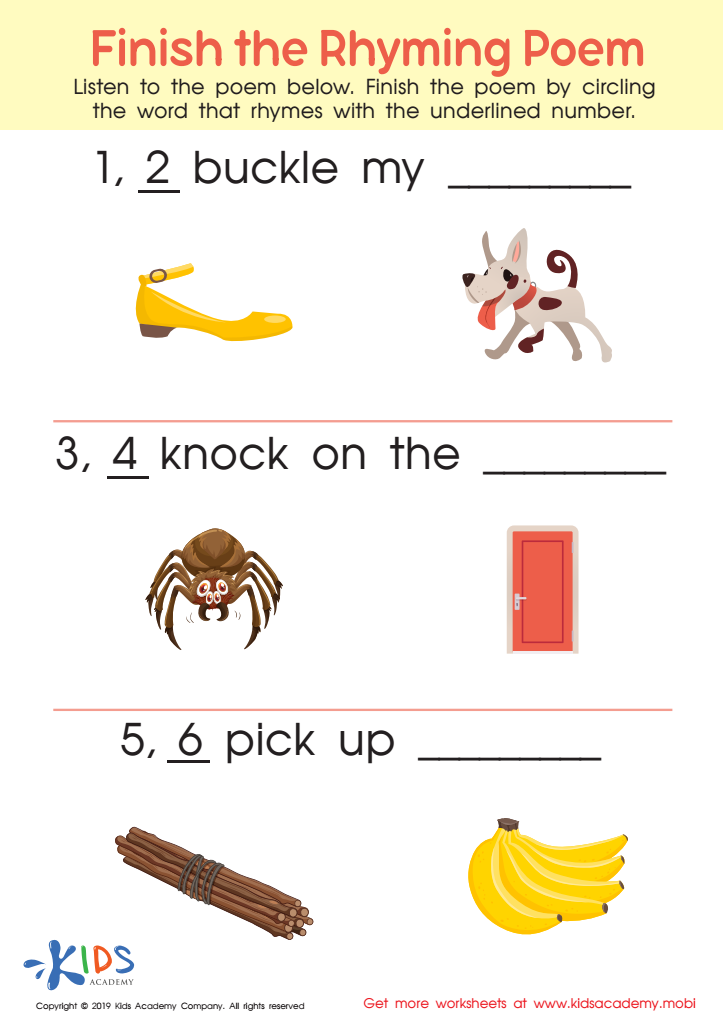
    Finish Rhyming Poem Worksheet

    Finish Rhyming Poem Worksheet

    Finish Rhyming Poem Worksheet

    Poems are a great way to express emotions and spark imagination. Does your child enjoy poetry and even have their own creations? If so, they'll love this worksheet. It's a great way to develop their rhyming skills. Challenge them to find and circle the words that rhyme with the ones underlined.
    Finish Rhyming Poem Worksheet
    Worksheet


    Rhyming words are a fundamental part of early literacy development for children ages 3-7, and both parents and teachers play a crucial role in supporting this learning process. Engaging with rhymes enhances children's phonemic awareness, helping them recognize sound patterns in words, which is essential for reading success. When children can identify and produce rhyming words, they also develop critical listening skills, enabling them to manipulate sounds—a key aspect of phonics.

    Moreover, rhyming activities often promote language development. They introduce children to new vocabulary and encourage the playful experimentation with language, which fosters creativity. Through nursery rhymes, songs, and playful rhyming games, children can develop not just verbal skills but also rhythm and rhyme recognition, vital components of fluent reading.

    Additionally, interacting with rhymes bolsters memory and recall, as their melodic and repetitive nature makes information easier to grasp. This joyful exploration of language can also cultivate a love for reading at an early age, making it a fun and entertaining learning experience. By caring about rhyming words, parents and teachers can actively contribute to a child’s cognitive, social, and emotional growth, setting a strong foundation for future academic success.