Understanding ecosystems Plants and Animals Worksheets for Ages 3-7
6 filtered results
-
From - To
Discover our vibrant "Understanding Ecosystems: Plants and Animals Worksheets for Ages 3-7"! Perfect for young explorers, these engaging worksheets help children uncover the secrets of ecosystems through fun activities. Designed to develop curiosity and foundational science skills, kids will learn about plant and animal habitats, life cycles, and much more. Bursting with colorful illustrations and easy-to-follow exercises, our worksheets make understanding nature an exciting adventure. Ideal for teachers and parents, these resources enhance early learning and promote a love for the natural world. Jumpstart your child's journey into the wonders of ecosystems today!
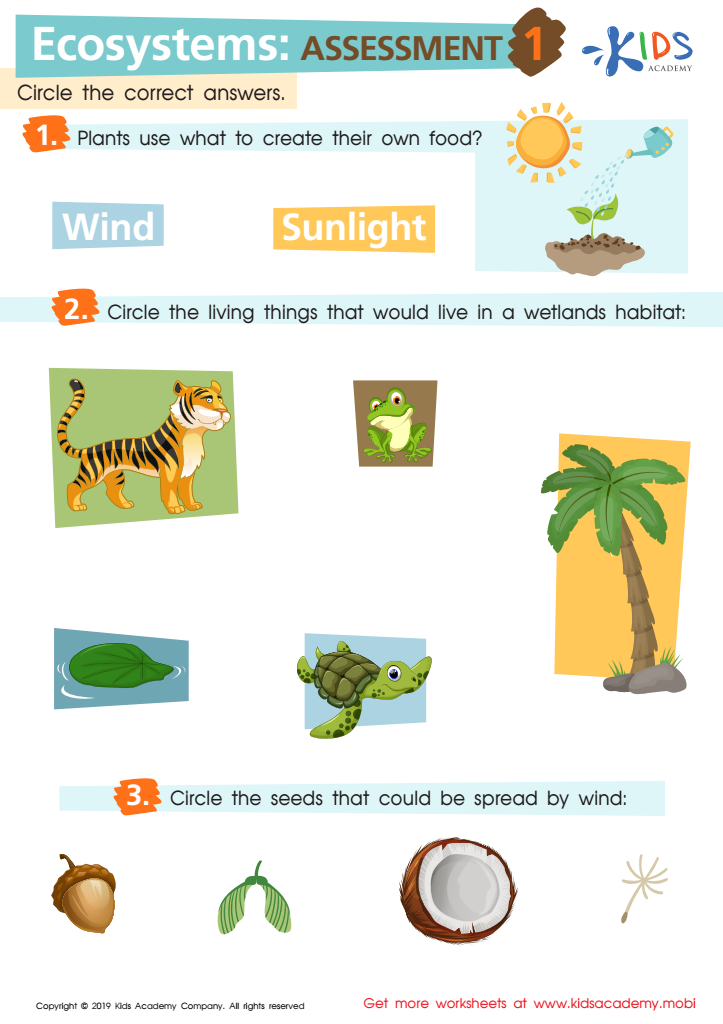
Ecosystems: Assessment 1 Worksheet
 Assign to My Students











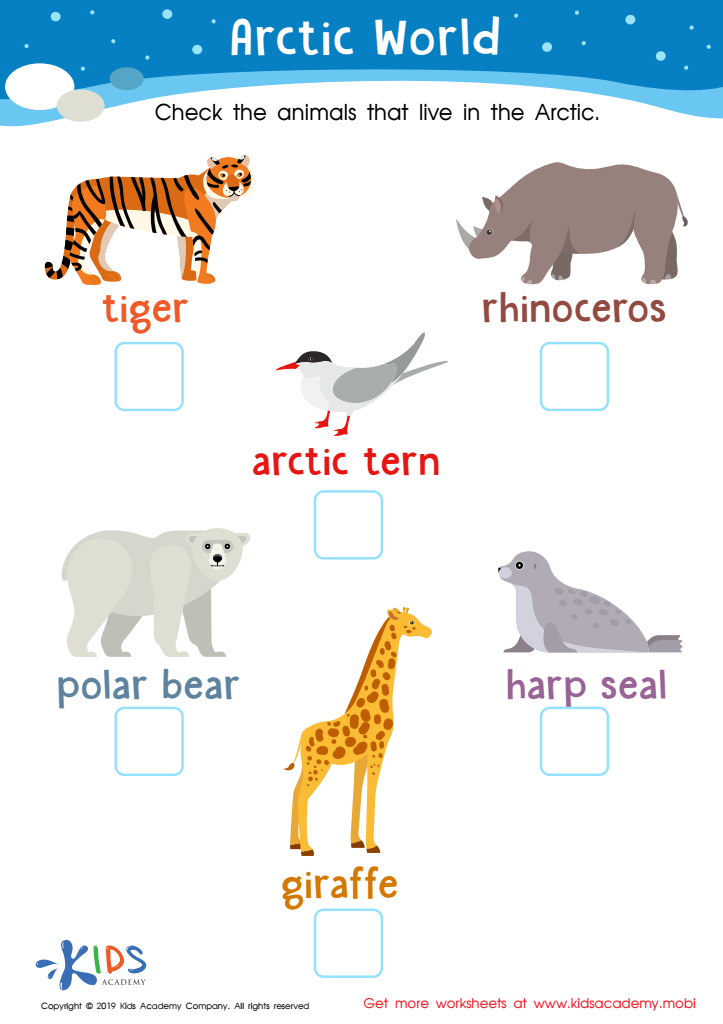
Arctic World Worksheet
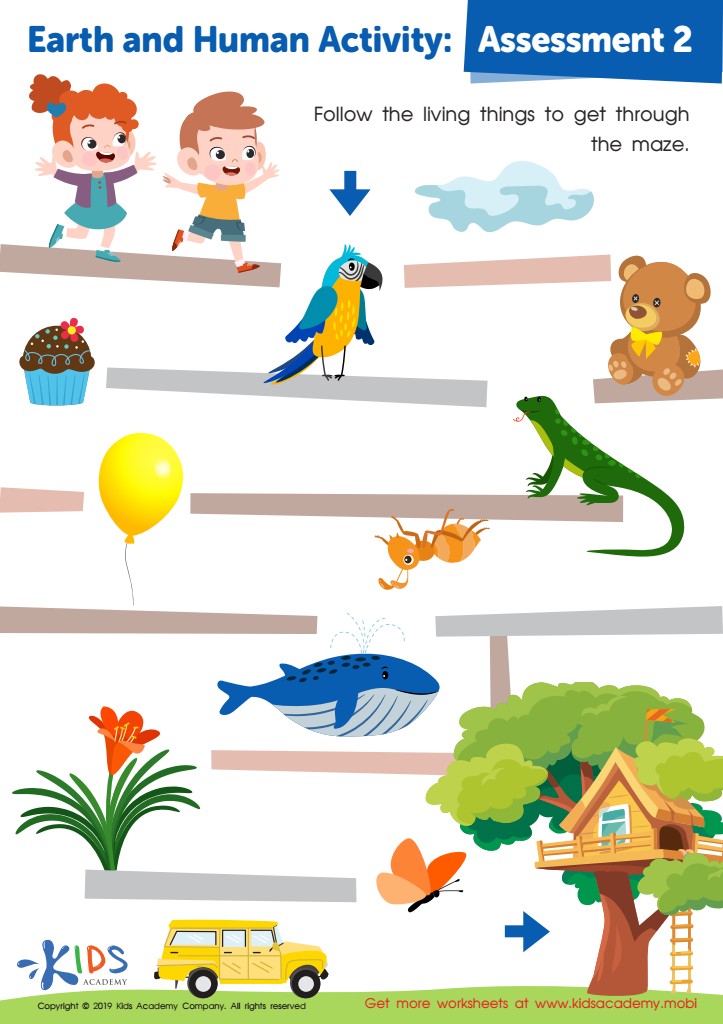
Earth and Human Activity: Assessment 2 Worksheet
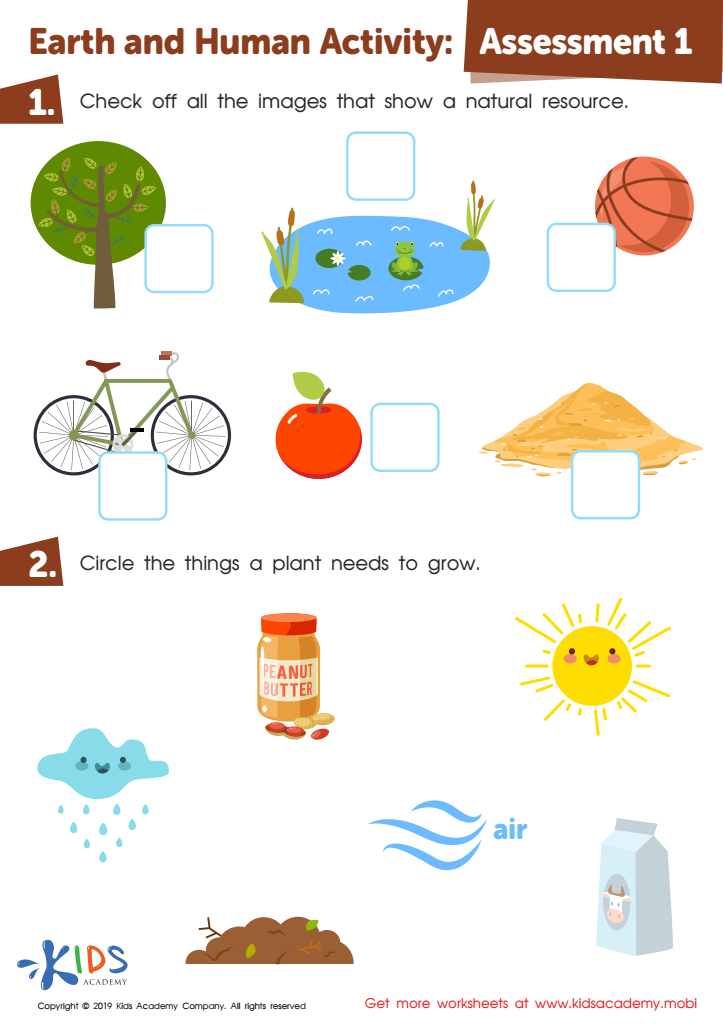
Earth and Human Activity: Assessment 1 Worksheet
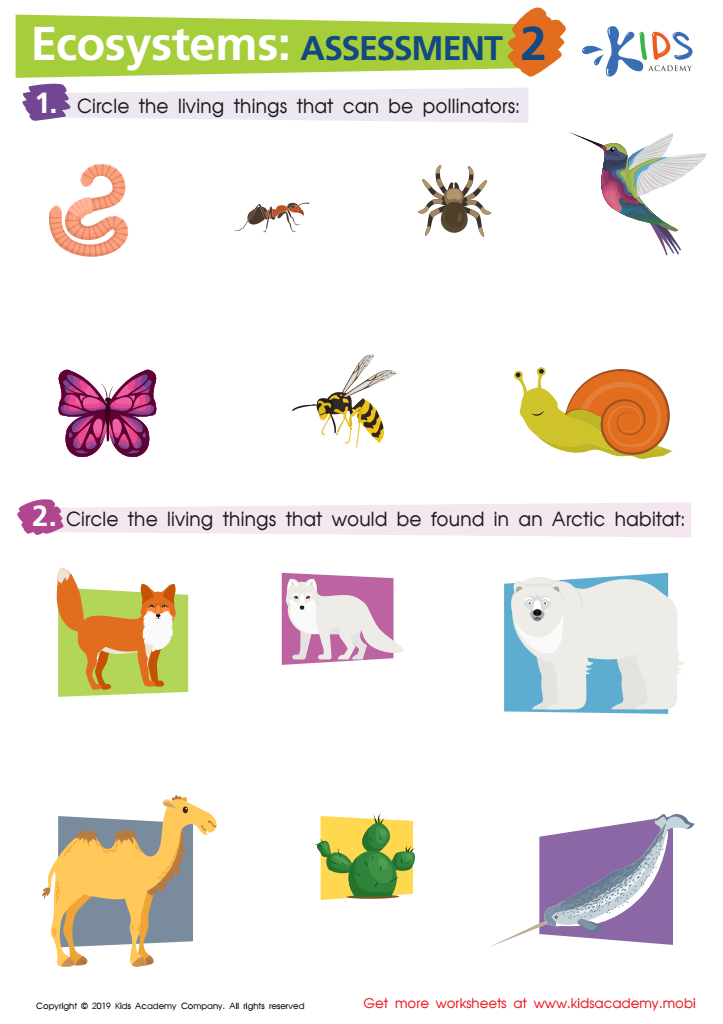
Ecosystems: Assessment 2 Worksheet
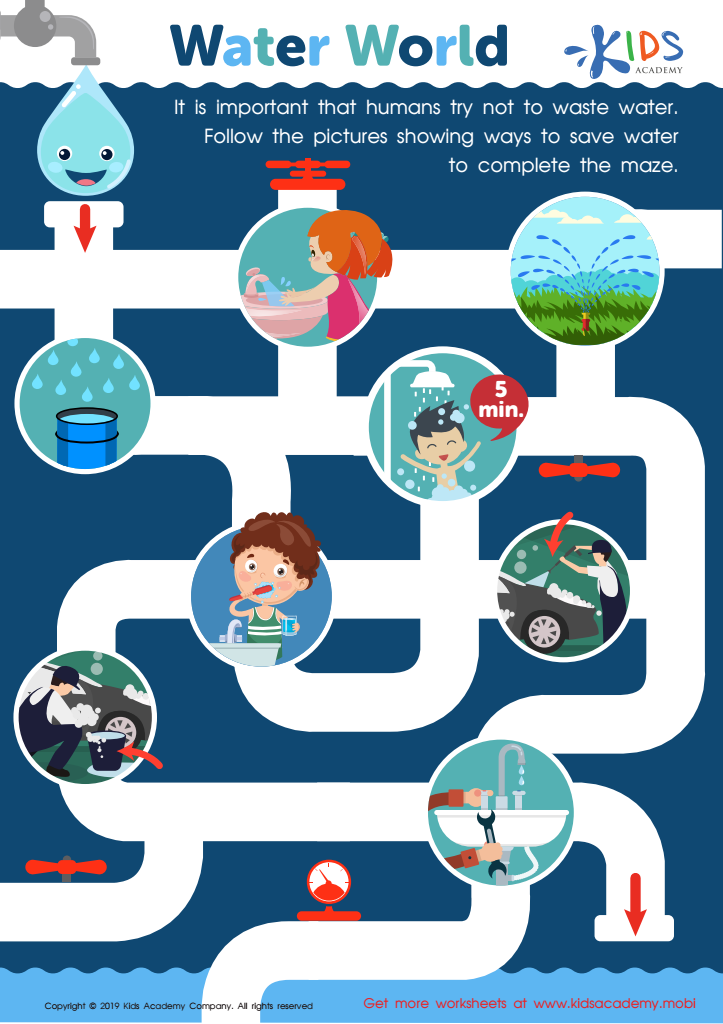
Water World Worksheet








Understanding ecosystems, plants, and animals is critical for children ages 3-7 as it lays a foundation for environmental awareness and scientific curiosity. During these formative years, young minds are exceptionally receptive to new concepts, making it the perfect time to introduce the basics of nature and ecological systems.
Engaging children in learning about ecosystems aids in developing their observation and critical thinking skills. Recognizing the interdependence of plants and animals fosters a sense of empathy and responsibility towards living organisms. This foundational knowledge encourages sustainable habits and an appreciation for biodiversity, which is imperative for future generations to care about environmental conservation.
Moreover, hands-on activities like gardening, nature walks, and observing wildlife spark curiosity and interactive learning. Such activities not only make science tangible and exciting but also improve motor skills and enhance sensory development. For teachers, integrating nature studies in the curriculum aligns with STEM education goals, fostering analytical and cooperative skills in students.
Parents and teachers who invest in teaching about ecosystems help children build a respectful relationship with nature, instilling values that transcend the traditional classroom. This early exposure paves the way for responsible and informed individuals who are prepared to tackle environmental challenges with dedication and creativity.








