Vocabulary enhancement Writing Worksheets for Ages 3-7 - Page 3
61 filtered results
-
From - To
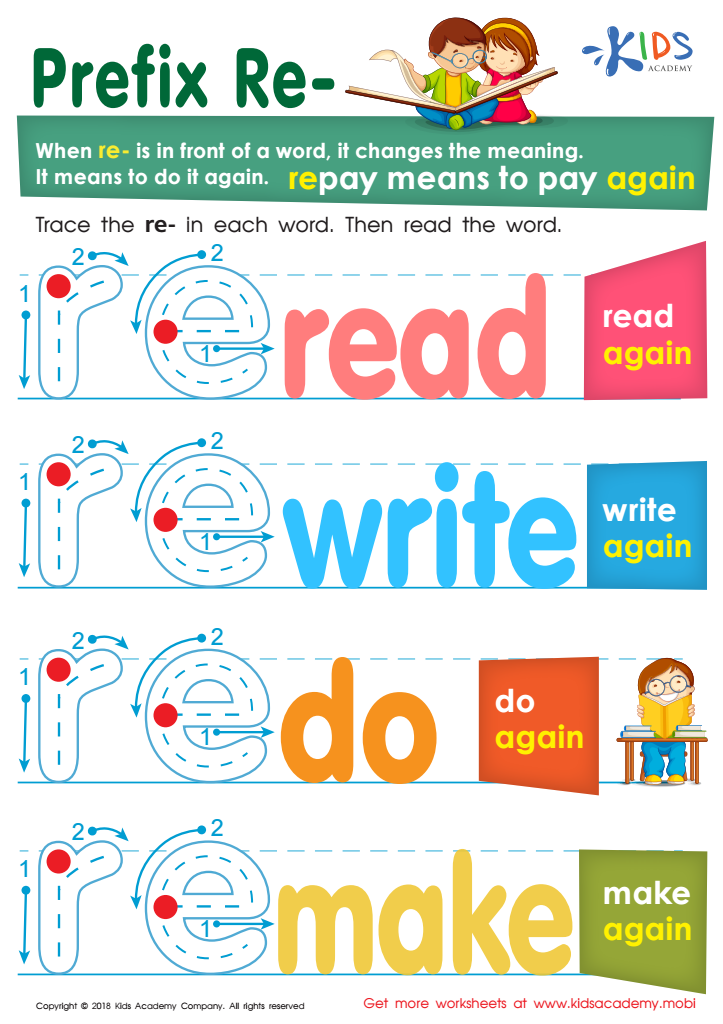
Prefix Re- Worksheet
 Assign to My Students
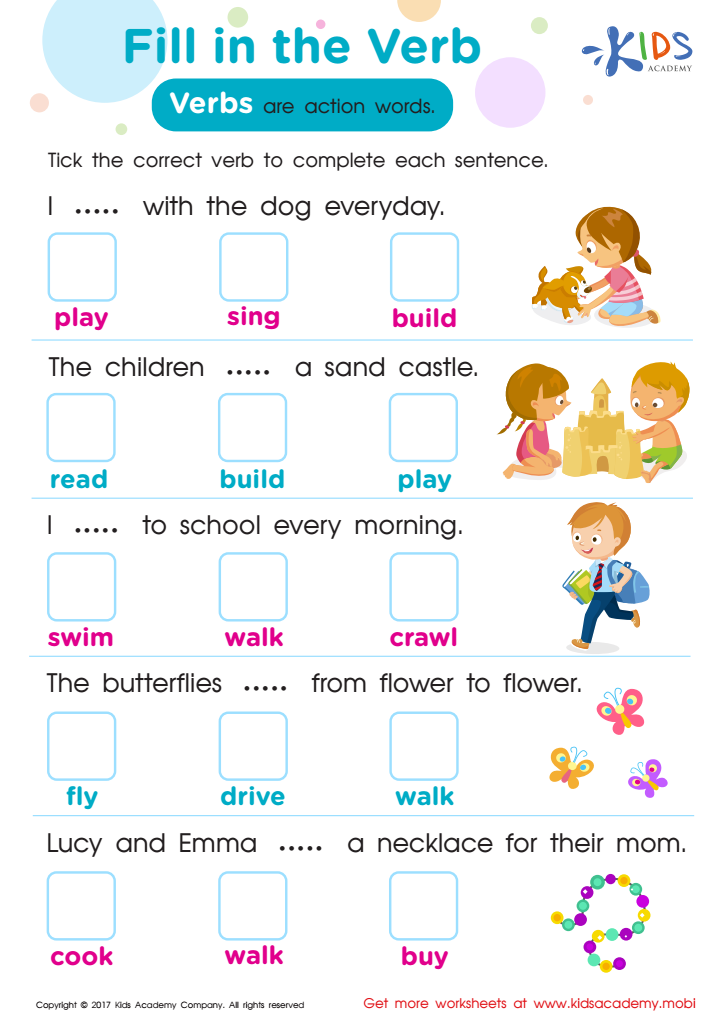
Fill in the Verb Printable
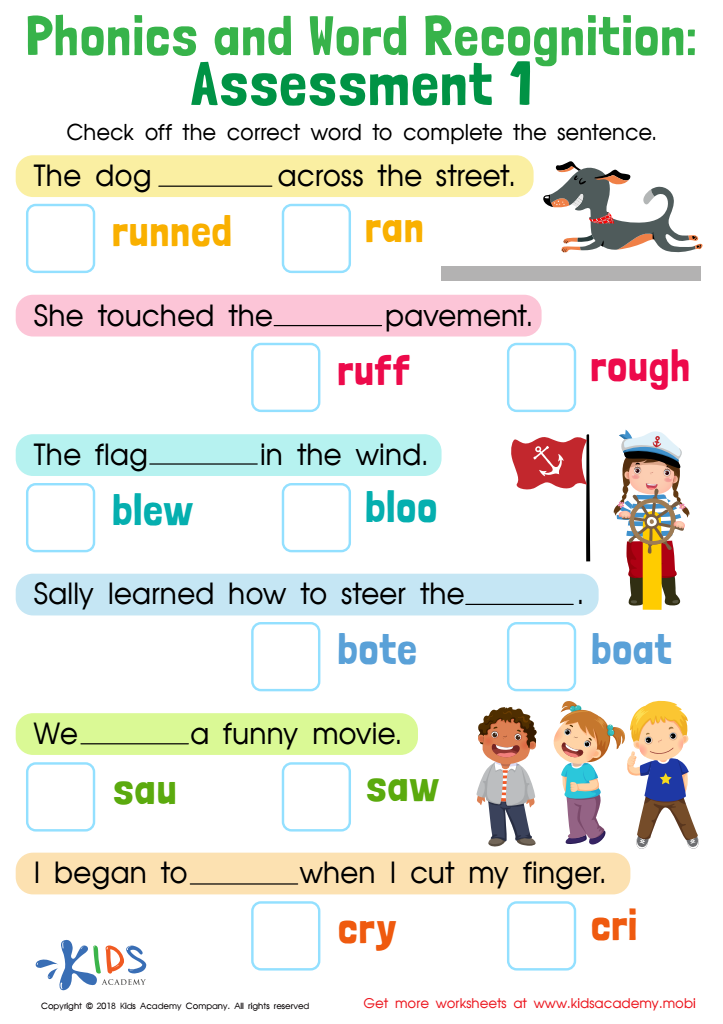
Phonics and Word Recognition: Assessment 1 Worksheet
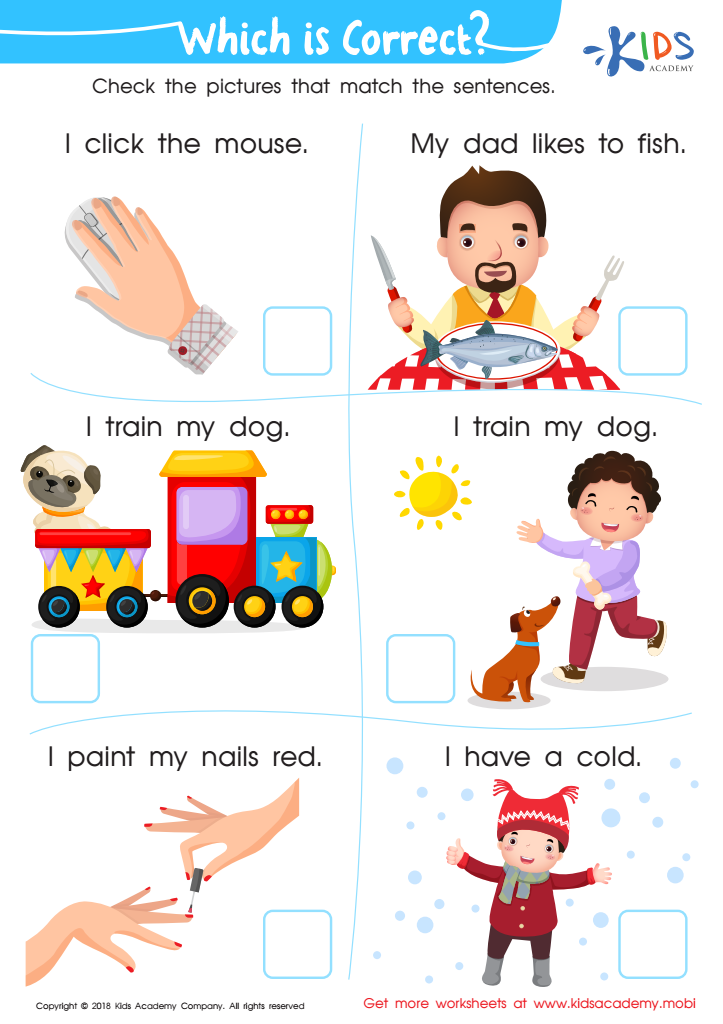
Which Is Correct? Worksheet
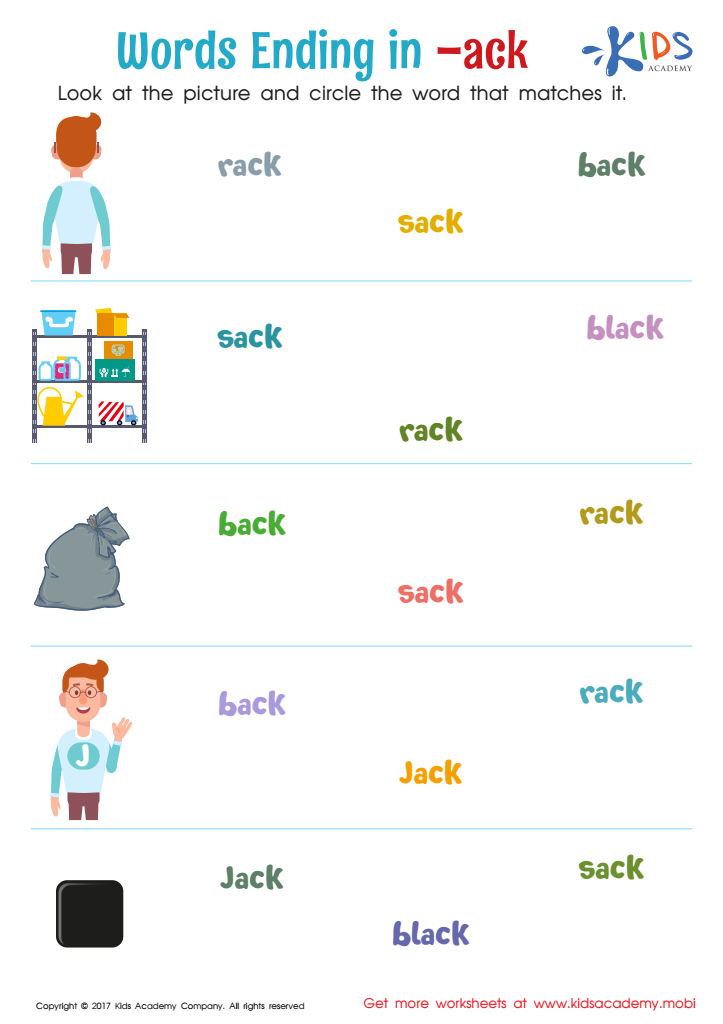
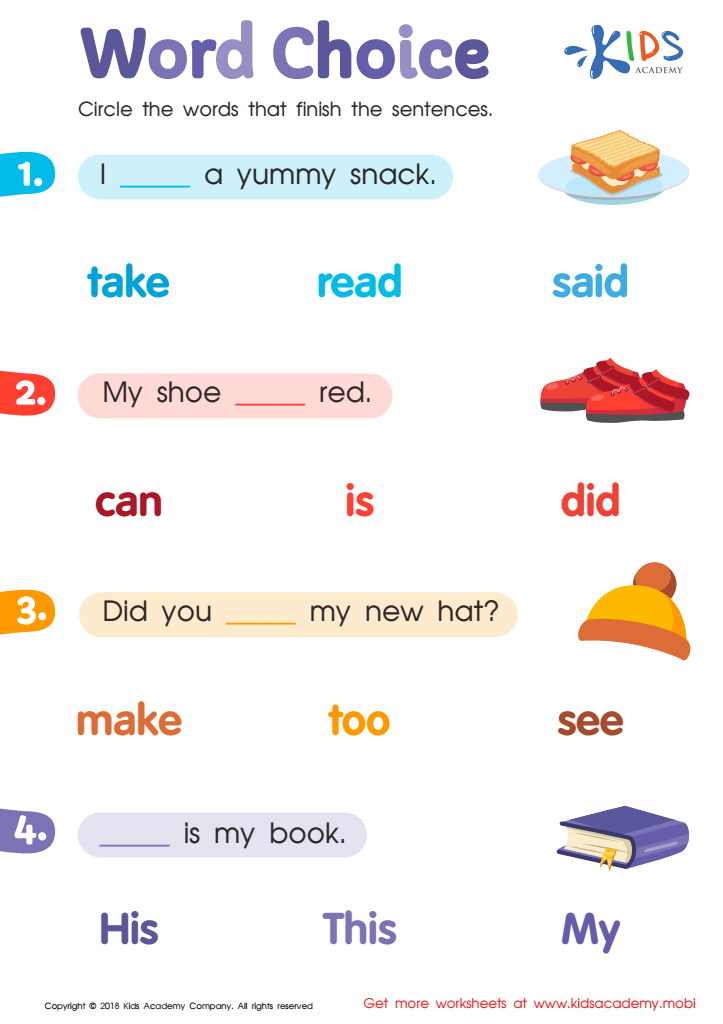
Word Choice Worksheet
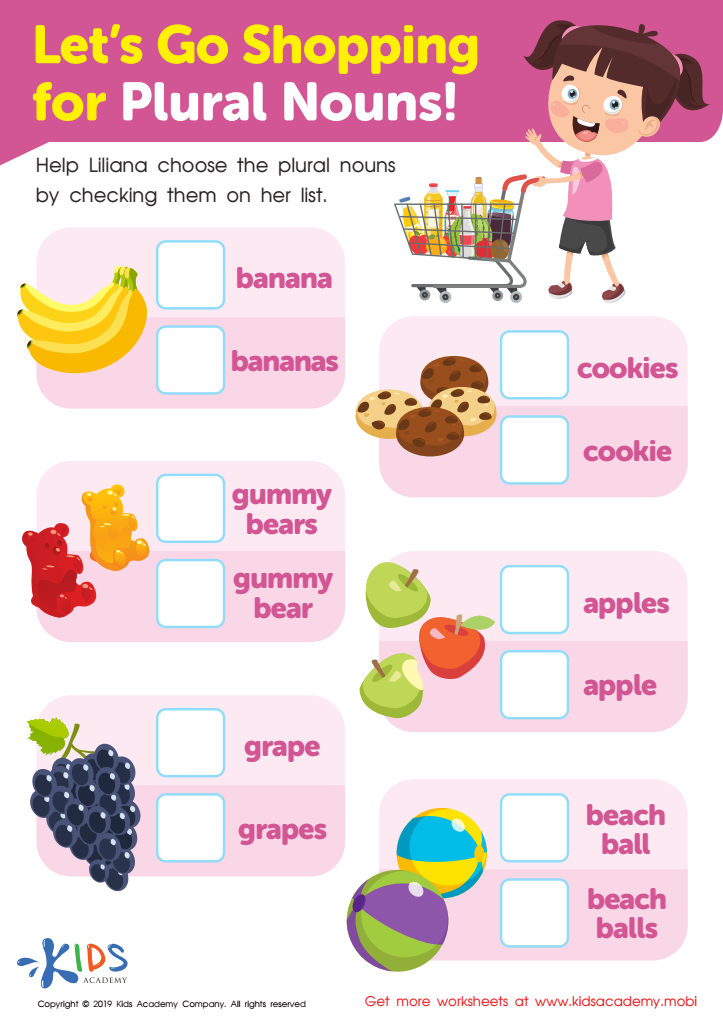
Let's Go Shopping for Plural Nouns! Worksheet
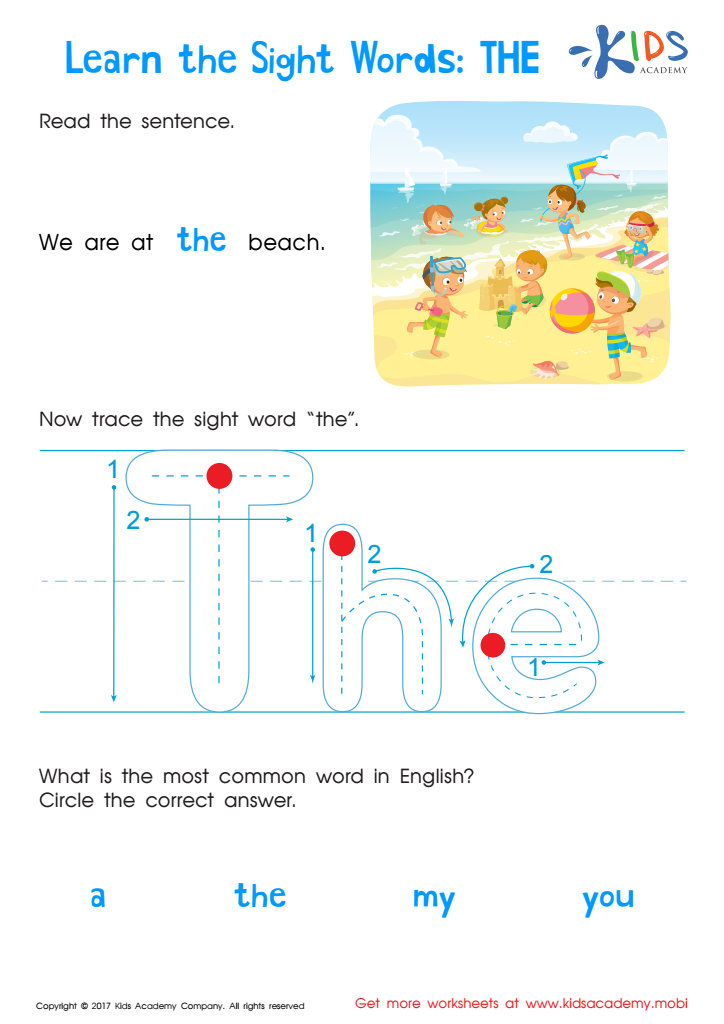
Sight Words: The Worksheet
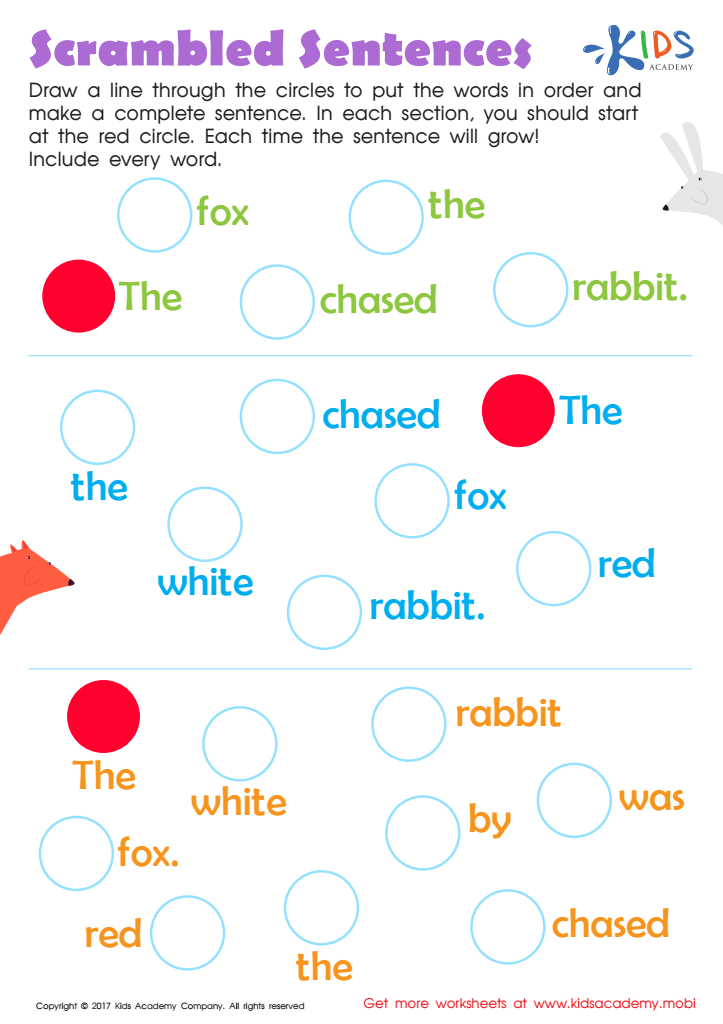
Scrambled Sentences Worksheet
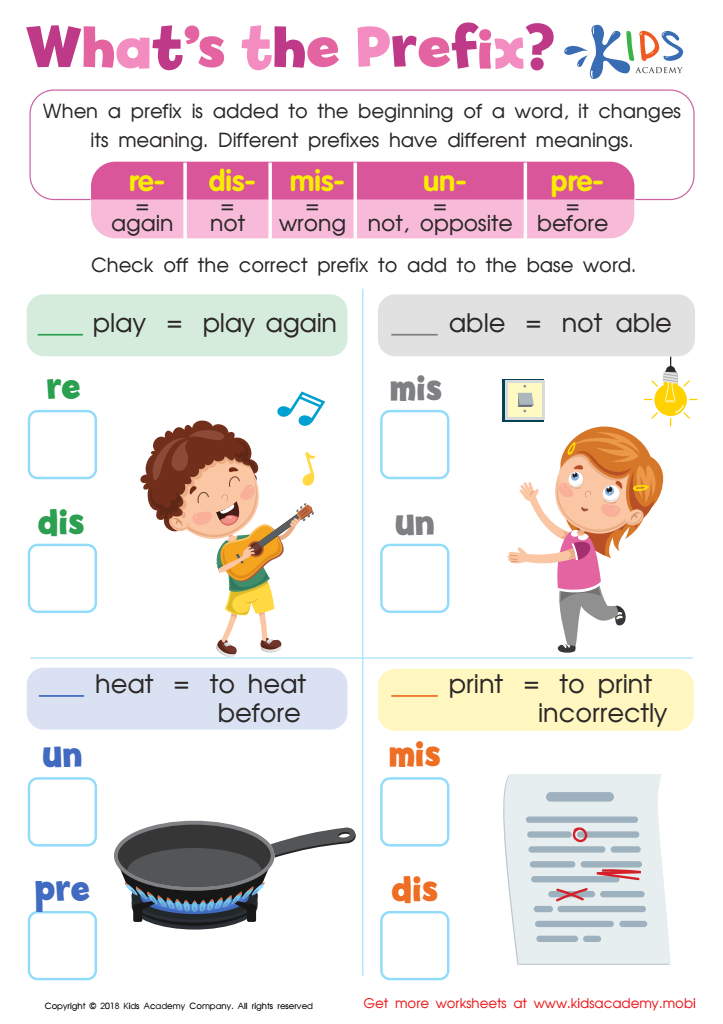
Reading: What Is the Prefix Worksheet
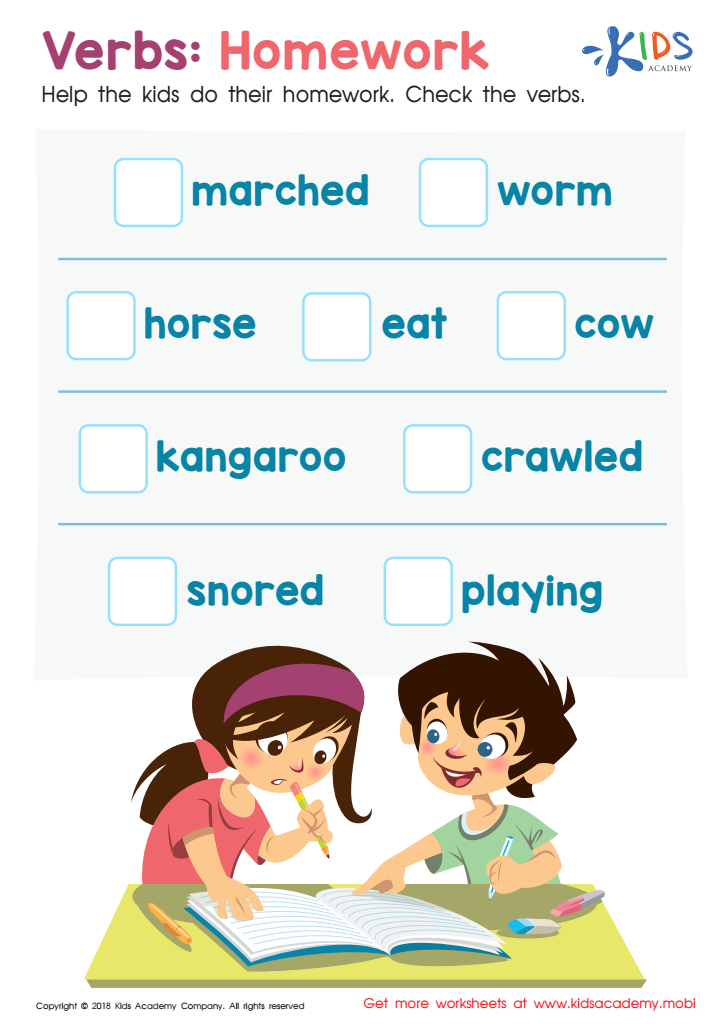
Verbs Homework Worksheet
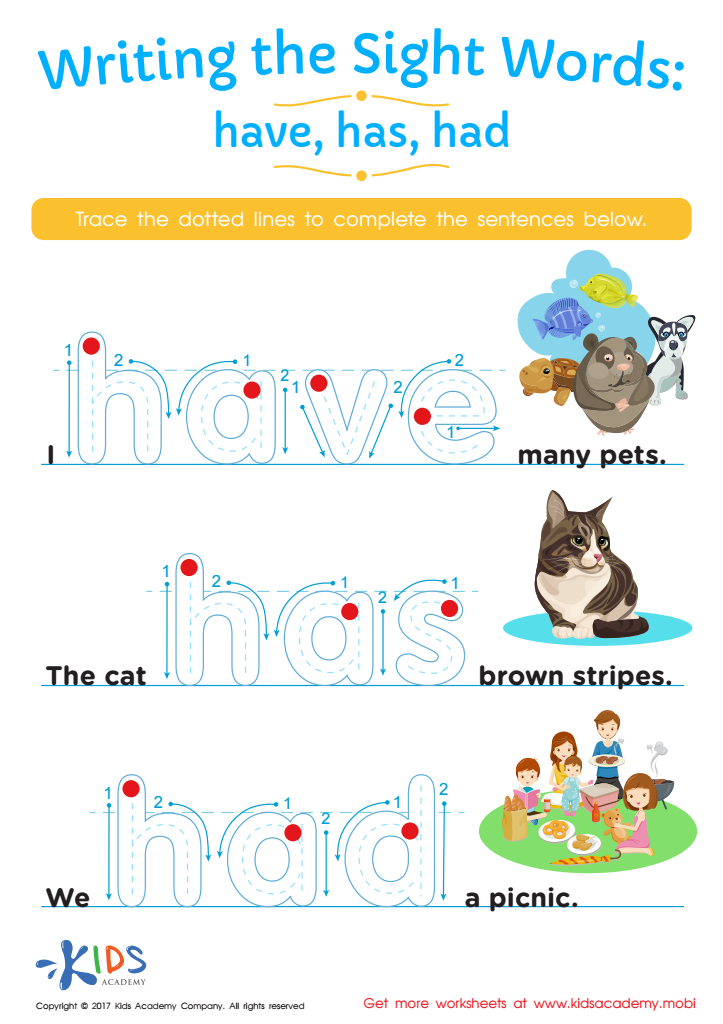
Have, Has, Had Worksheet Sight Words Worksheet
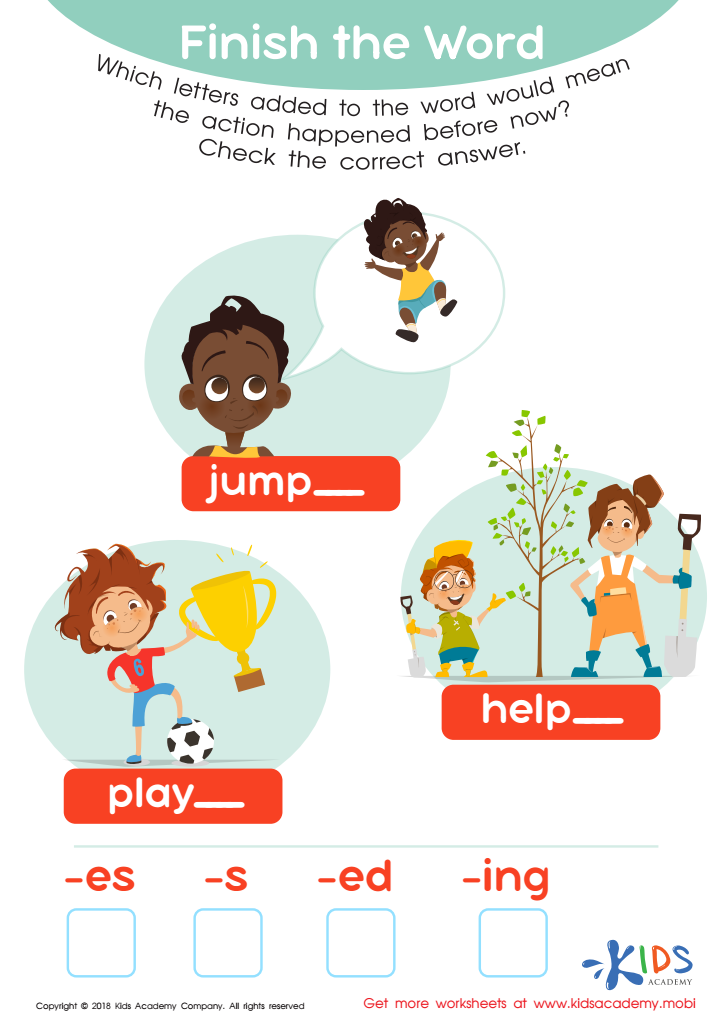
Finish the Word Worksheet







Parents and teachers should prioritize vocabulary enhancement in writing for children aged 3-7 because it is a foundational aspect of early literacy that fosters cognitive and language development. During this critical period, children are incredibly receptive to learning new words, which supports their ability to comprehend and produce language effectively. A rich vocabulary is essential for reading comprehension; when children understand the words they encounter in books, they can better grasp stories and informational texts.
Moreover, expanding a child's vocabulary enhances their communication skills. It enables them to express their thoughts and emotions more clearly and precisely, leading to better social interactions and emotional intelligence. A strong vocabulary also encourages curiosity and a love for learning. When children are introduced to new words, particularly through engaging contexts like storytelling and interactive writing activities, they become more interested in the world around them and more confident in their ability to explore it.
Additionally, vocabulary growth contributes to academic success across subjects. For instance, scientific understanding, mathematical problem-solving, and historical knowledge all depend on grasping subject-specific terminology. By cultivating a robust vocabulary early on, parents and teachers help create a solid foundation for lifelong learning and intellectual growth.








