Filters

1537 filtered results

Clear all filters
Favorites
With answer key
Interactive

1537 filtered results

Difficulty Level

Grade


Subject

    Check out this FREE Trial Lesson on Addition & Subtraction for age 3-9!

    D

    Favorites
    With answer key
    Interactive
    • 3-9
    • Addition & Subtraction
    Adding up to 1000 Without Regrouping: Page 45
    Adding up to 1000 Without Regrouping: Page 45
    Adding up to 1000 Without Regrouping: Page 45
    Worksheet
    Adding 2-digit Numbers: Page 59
    Adding 2-digit Numbers: Page 59

    Adding 2-digit Numbers: Page 59

    Adding 2-digit Numbers: Page 59
    Worksheet
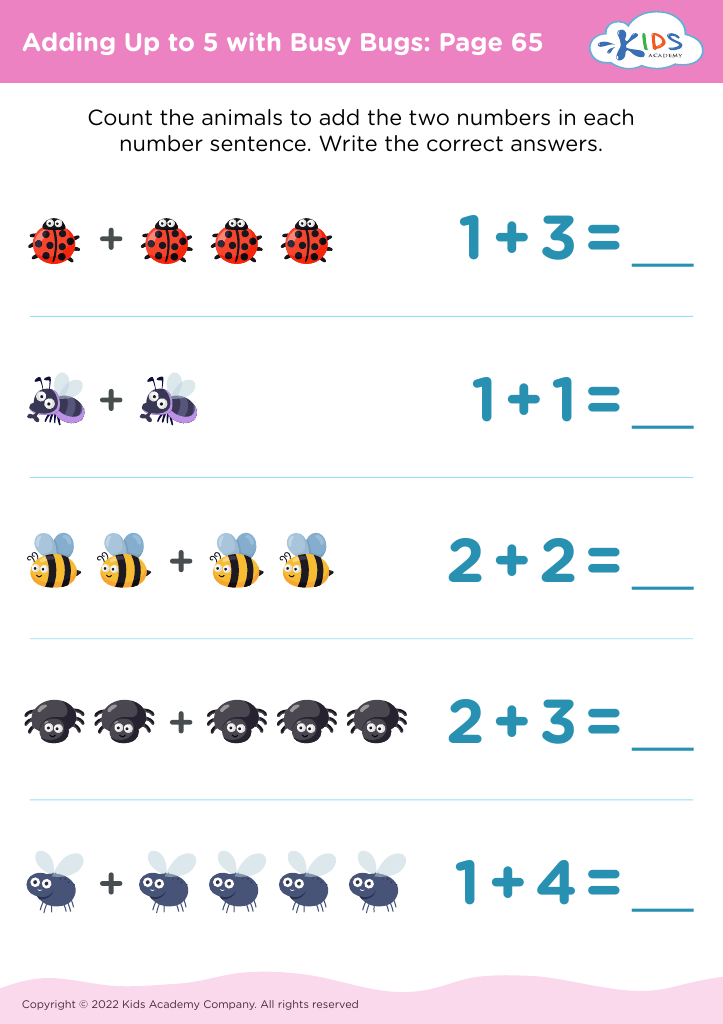
    Adding Up to 5 with Busy Bugs: Page 65
    Adding Up to 5 with Busy Bugs: Page 65
    Adding Up to 5 with Busy Bugs: Page 65
    Worksheet
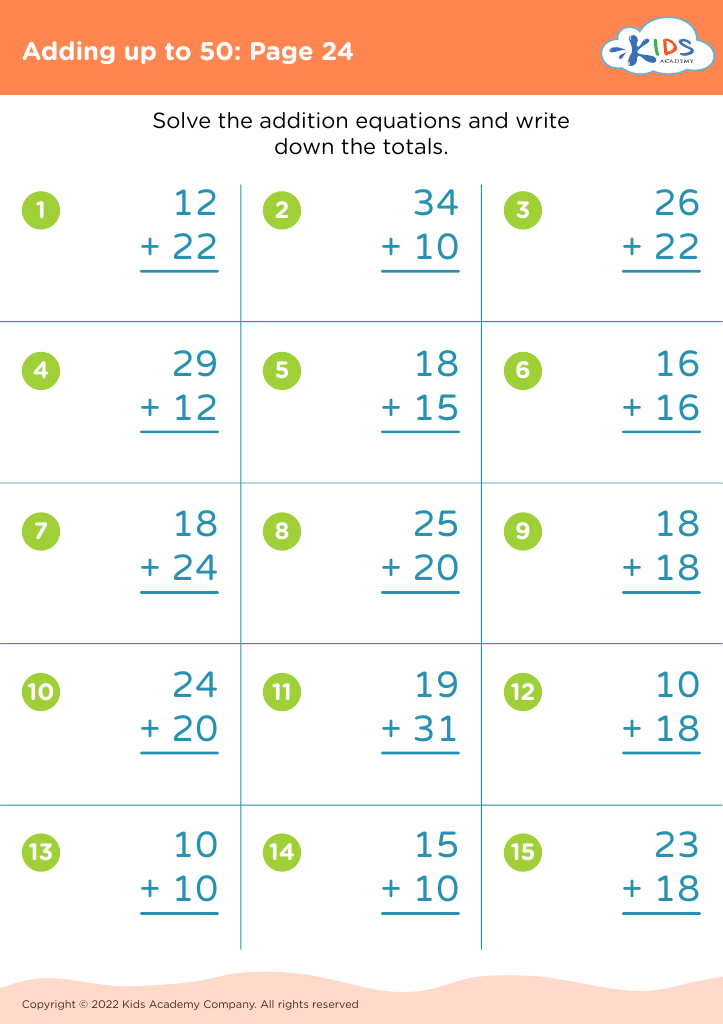
    Adding up to 50: Page 24
    Adding up to 50: Page 24

    Adding up to 50: Page 24

    Adding up to 50: Page 24
    Worksheet
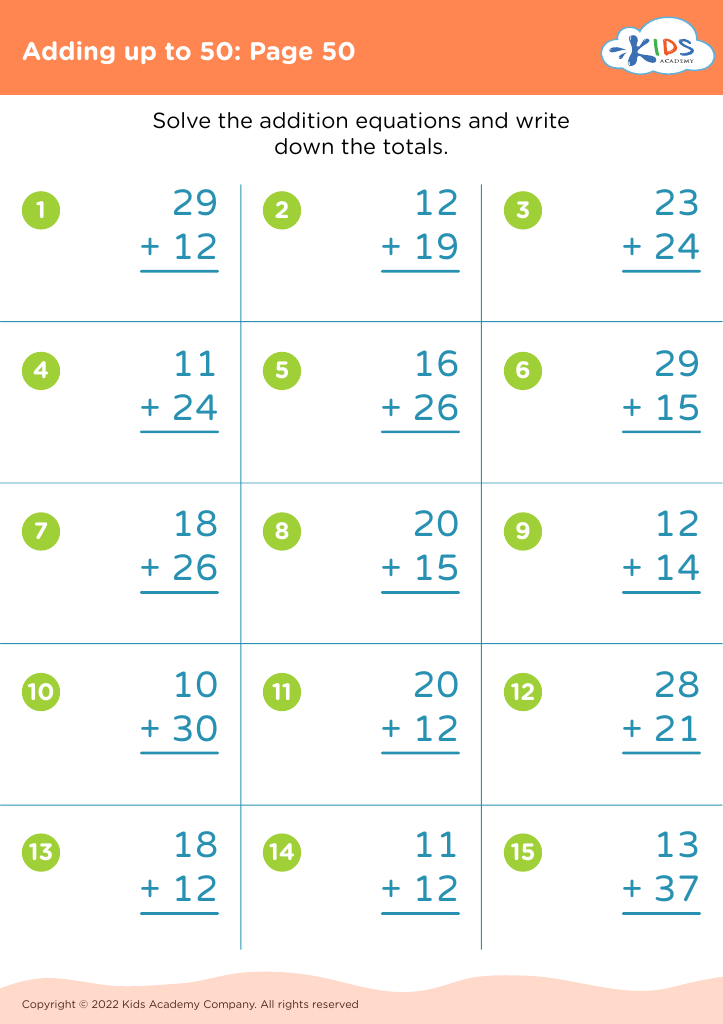
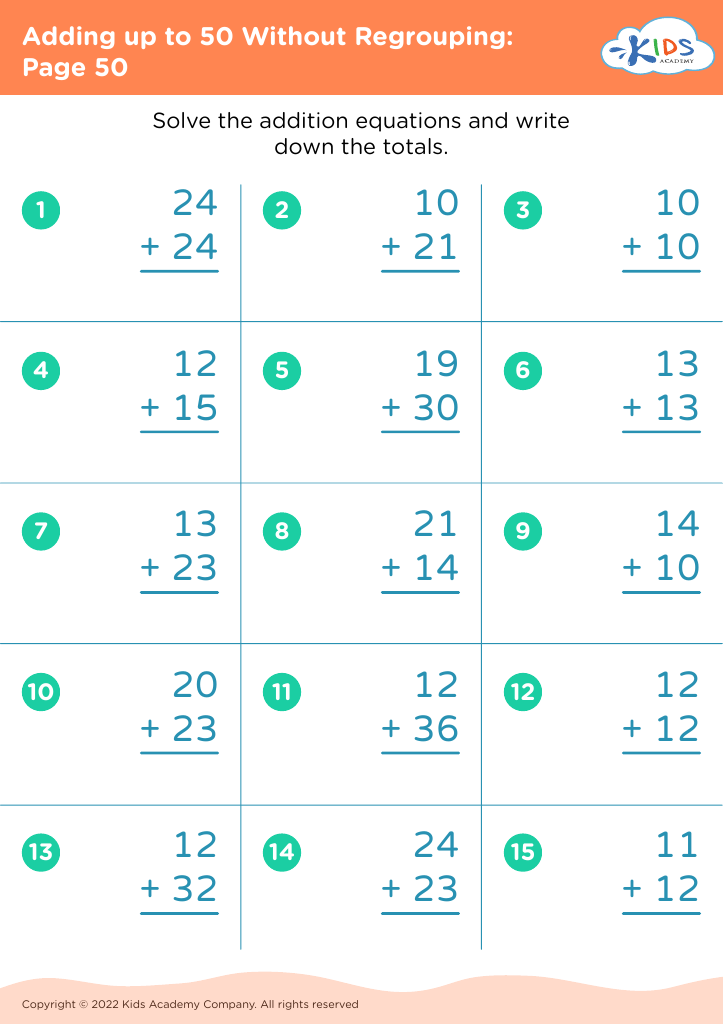
    Adding up to 50 Without Regrouping: Page 50
    Adding up to 50 Without Regrouping: Page 50
    Adding up to 50 Without Regrouping: Page 50
    Worksheet
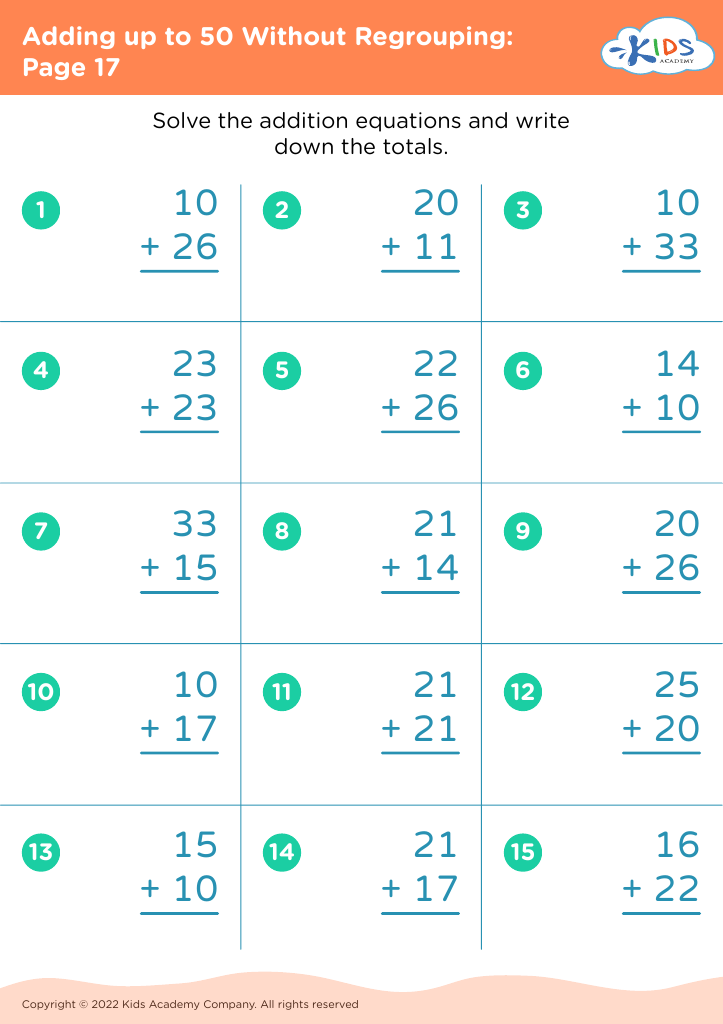
    Adding up to 50 Without Regrouping: Page 17
    Adding up to 50 Without Regrouping: Page 17
    Adding up to 50 Without Regrouping: Page 17
    Worksheet
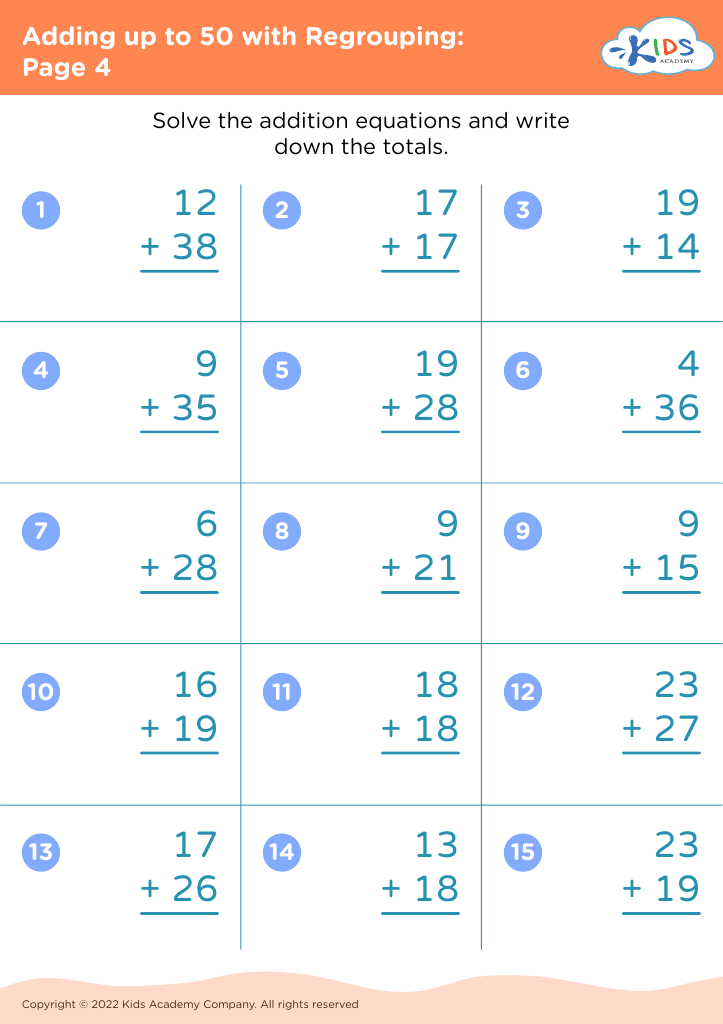
    Adding up to 50 with Regrouping: Page 4
    Adding up to 50 with Regrouping: Page 4
    Adding up to 50 with Regrouping: Page 4
    Worksheet
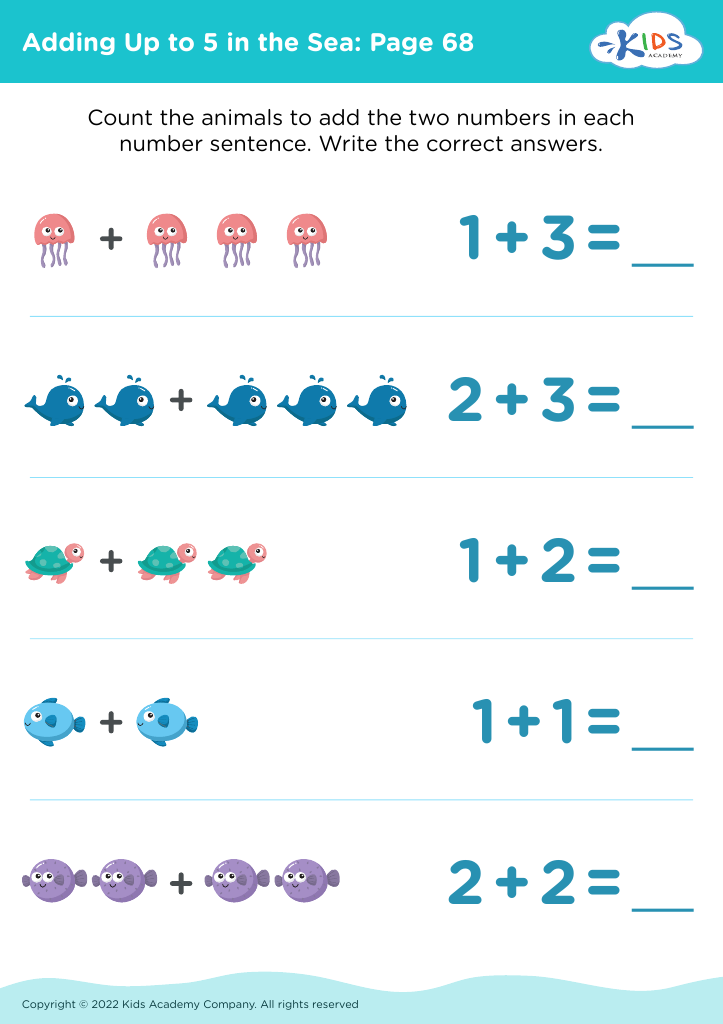
    Adding Up to 5 in the Sea: Page 68
    Adding Up to 5 in the Sea: Page 68
    Adding Up to 5 in the Sea: Page 68
    Worksheet
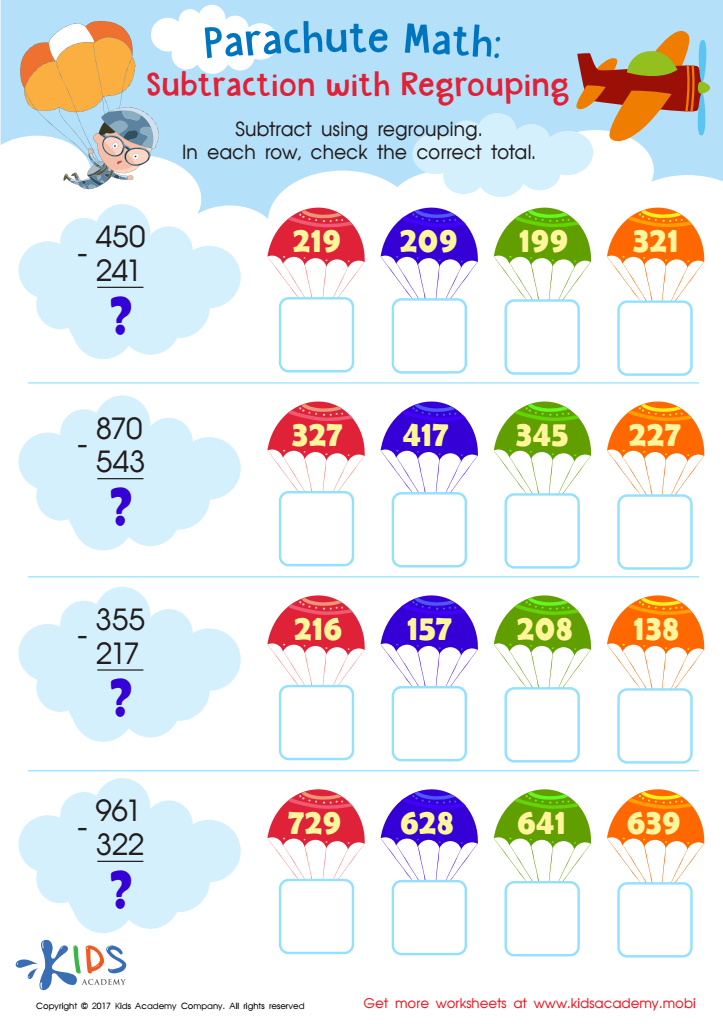
    Subtraction with regrouping worksheet for 3rd grade
    Subtraction with regrouping worksheet for 3rd grade

    Subtraction with Regrouping for 3rd Grade Worksheet

    Kids will have fun mastering subtraction with regrouping with this parachute-themed worksheet! Perfect for 3rd graders, it provides plenty of practice so your child can take to the skies in their math understanding.
    Subtraction with Regrouping for 3rd Grade Worksheet
    Worksheet
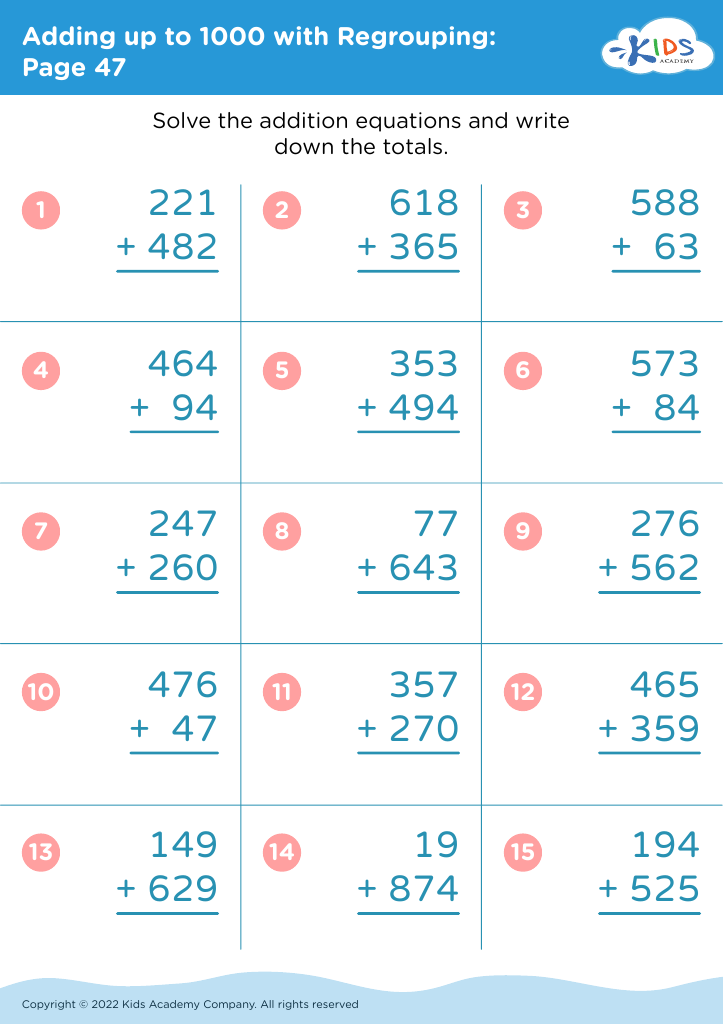
    Adding up to 1000 with Regrouping: Page 47
    Adding up to 1000 with Regrouping: Page 47
    Adding up to 1000 with Regrouping: Page 47
    Worksheet
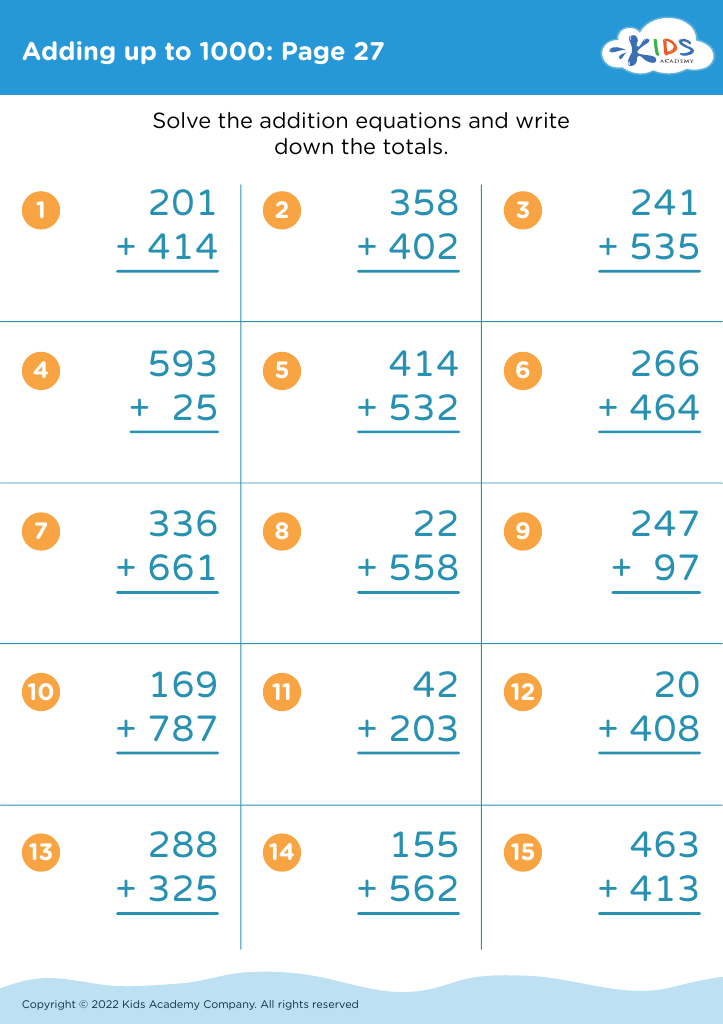
    Adding up to 1000: Page 27
    Adding up to 1000: Page 27

    Adding up to 1000: Page 27

    Adding up to 1000: Page 27
    Worksheet
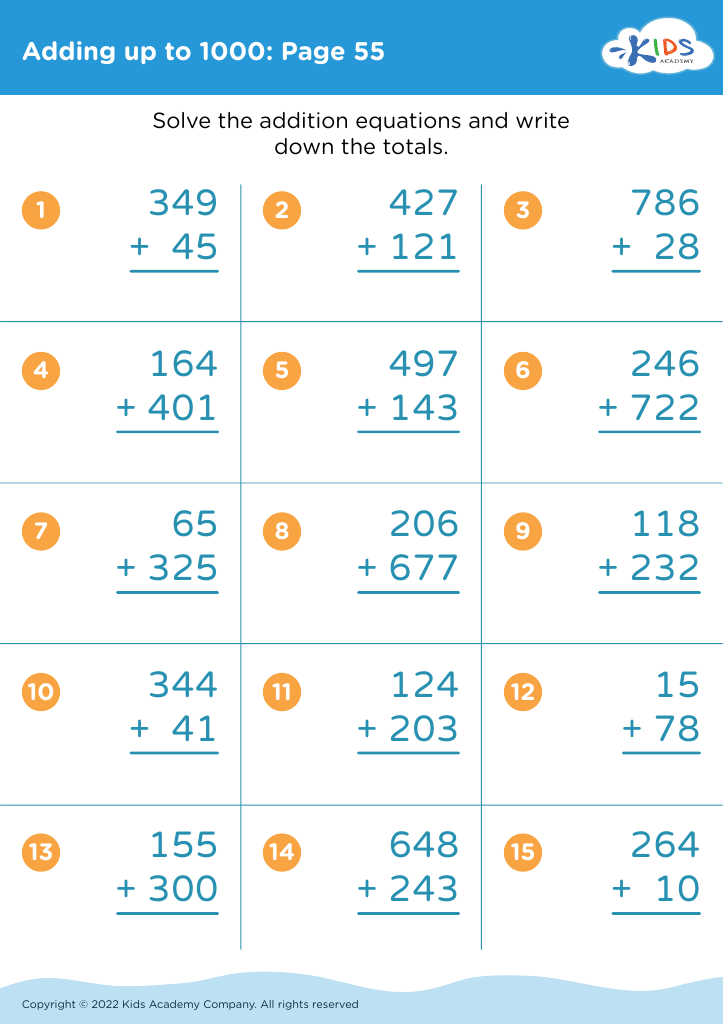
    Adding up to 1000: Page 55
    Adding up to 1000: Page 55

    Adding up to 1000: Page 55

    Adding up to 1000: Page 55
    Worksheet
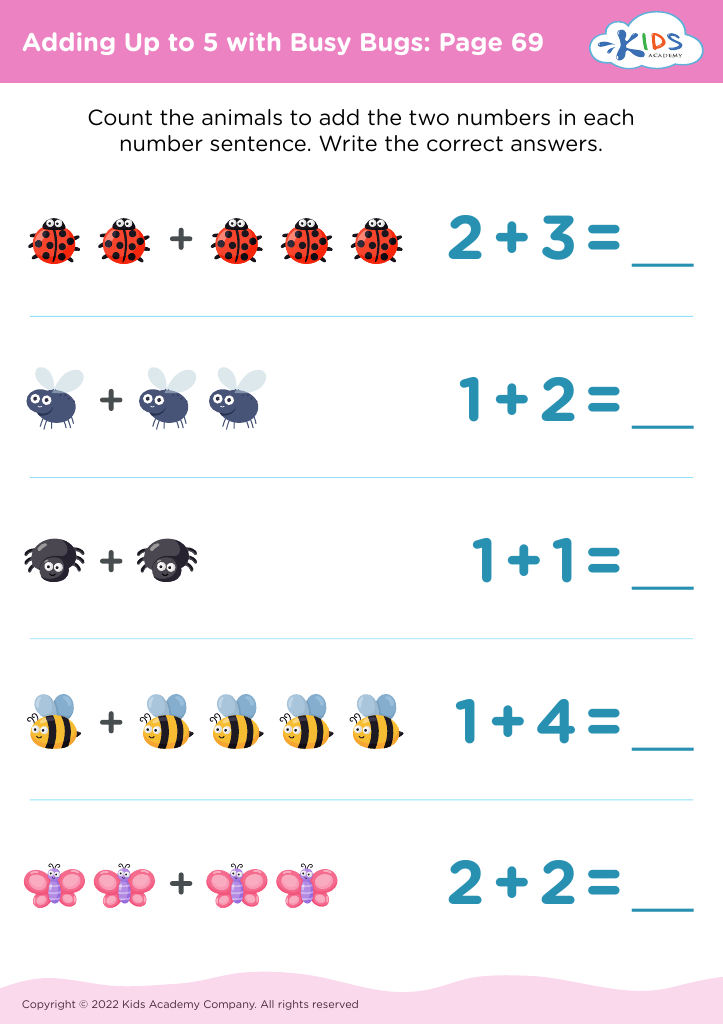
    Adding Up to 5 with Busy Bugs: Page 69
    Adding Up to 5 with Busy Bugs: Page 69
    Adding Up to 5 with Busy Bugs: Page 69
    Worksheet
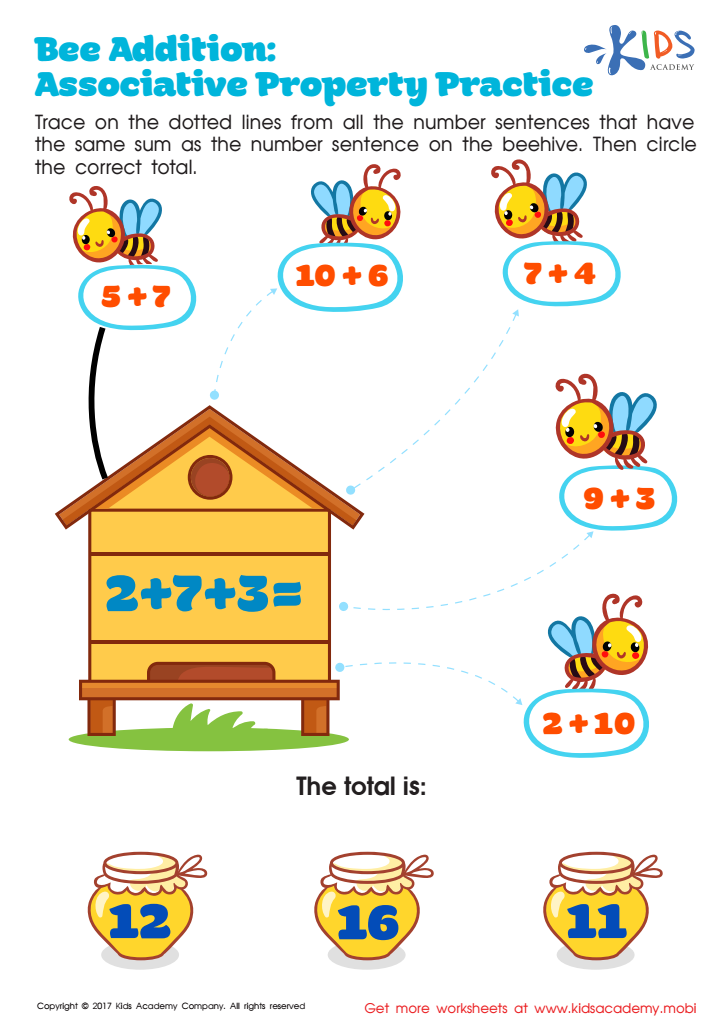
    Bee Addition: Associative Property Practice Worksheet
    Bee Addition: Associative Property Practice Worksheet
    Bee Addition: Associative Property Practice Worksheet
    Come to the beehive to practice the associative property of addition! This worksheet will help your child better understand addition facts. Compare equations to the 3-digit problem in the hive, solve each to find the correct answers, and trace the dotted line to show the worker bees home. Complete the sheet to find all the matching equations!
    Bee Addition: Associative Property Practice Worksheet
    Worksheet
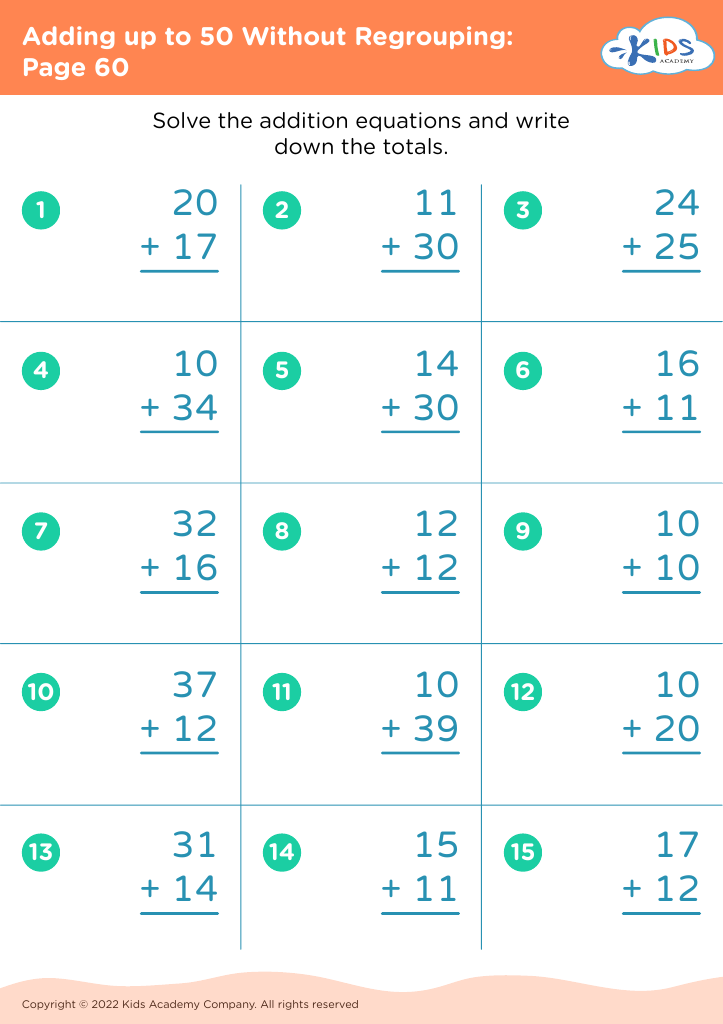
    Adding up to 50 Without Regrouping: Page 60
    Adding up to 50 Without Regrouping: Page 60
    Adding up to 50 Without Regrouping: Page 60
    Worksheet
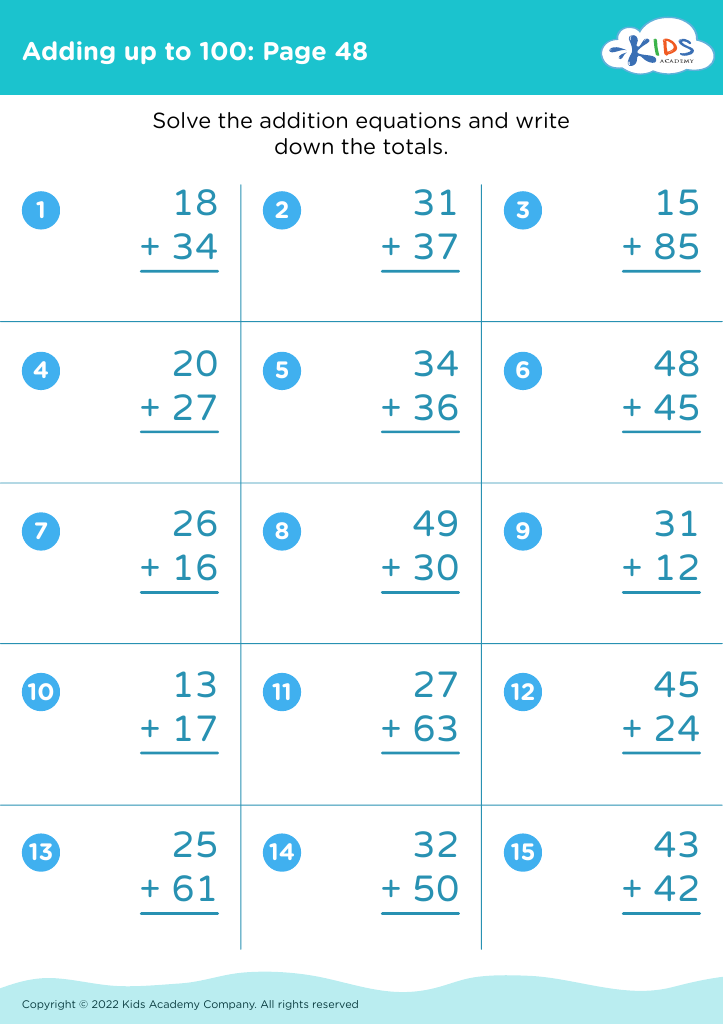
    Adding up to 100: Page 48
    Adding up to 100: Page 48

    Adding up to 100: Page 48

    Adding up to 100: Page 48
    Worksheet
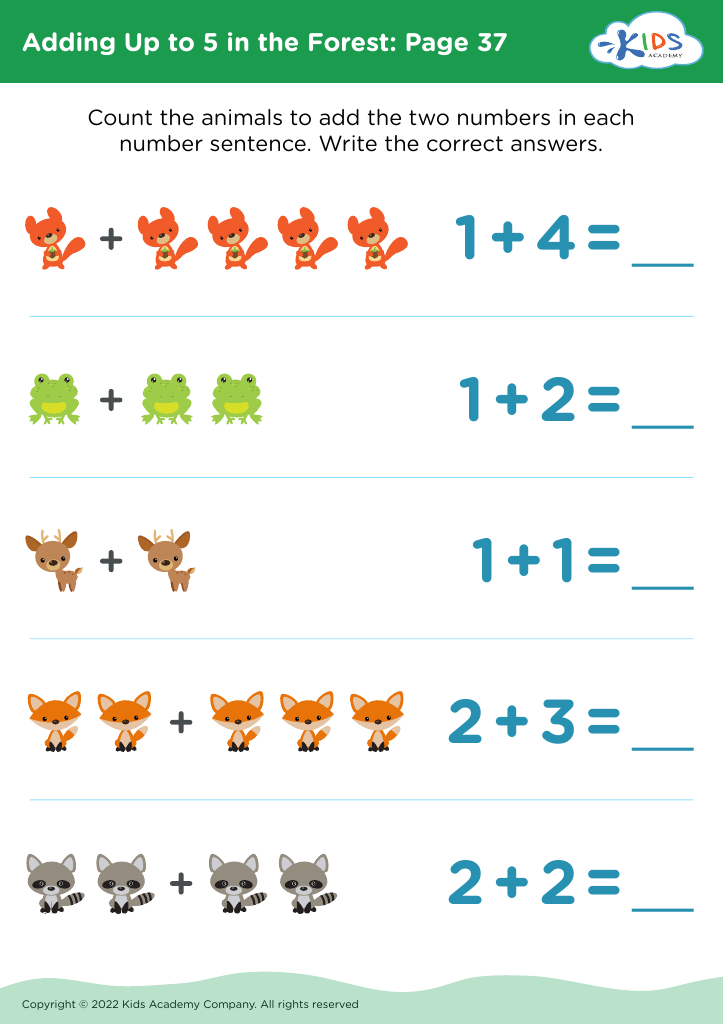
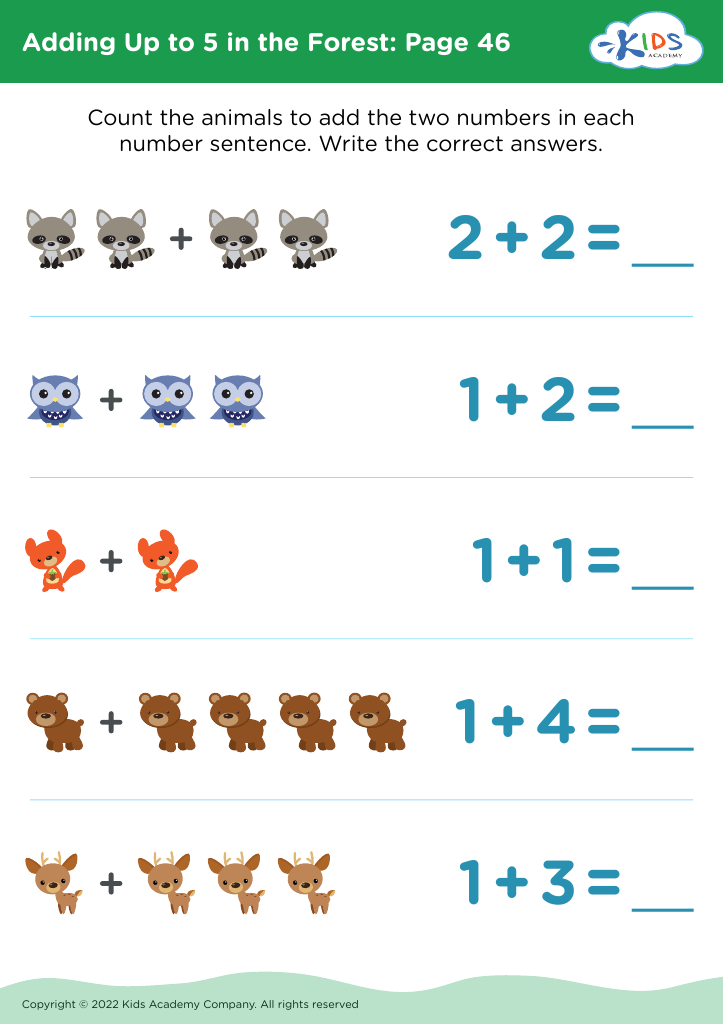
    Adding Up to 5 in the Forest: Page 46
    Adding Up to 5 in the Forest: Page 46
    Adding Up to 5 in the Forest: Page 46
    Worksheet
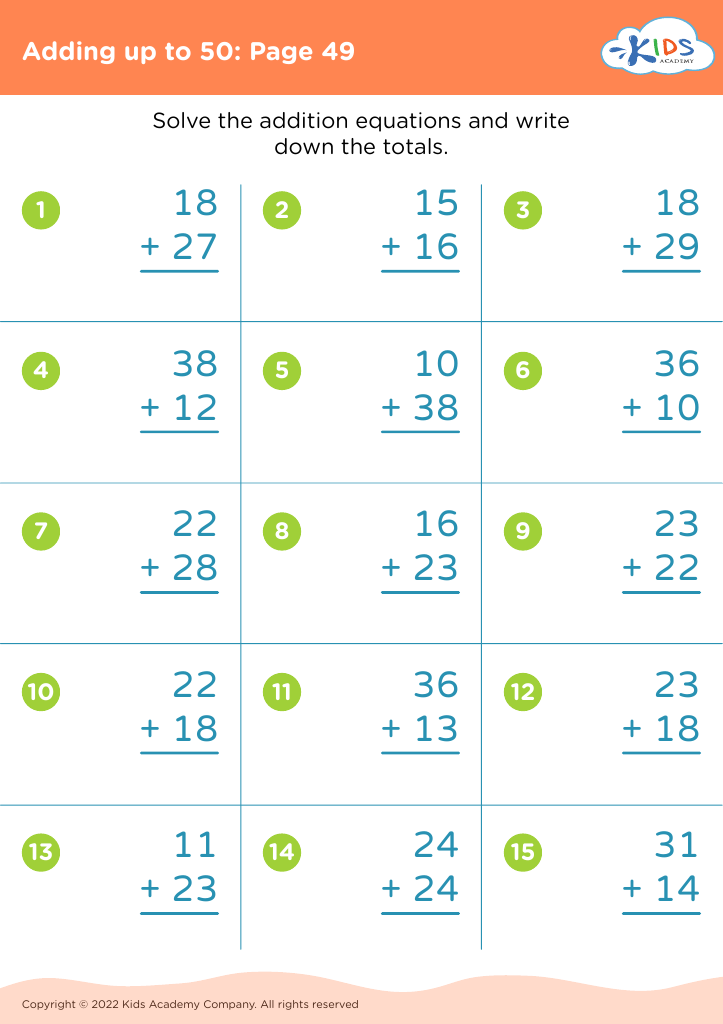
    Adding up to 50: Page 49
    Adding up to 50: Page 49

    Adding up to 50: Page 49

    Adding up to 50: Page 49
    Worksheet
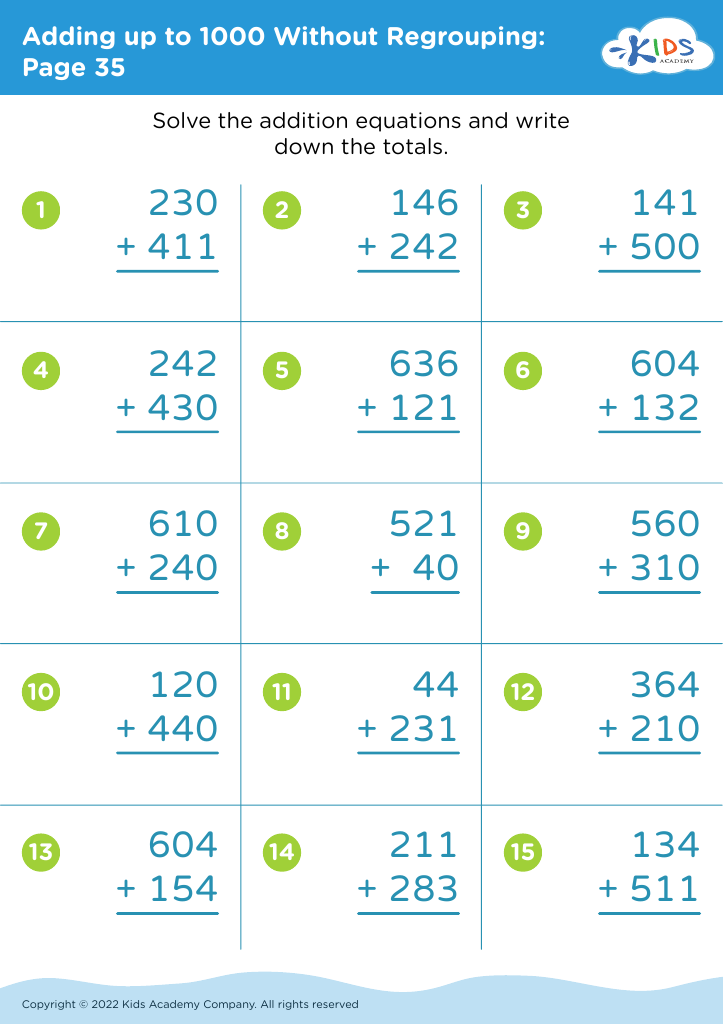
    Adding up to 1000 Without Regrouping: Page 35
    Adding up to 1000 Without Regrouping: Page 35
    Adding up to 1000 Without Regrouping: Page 35
    Worksheet
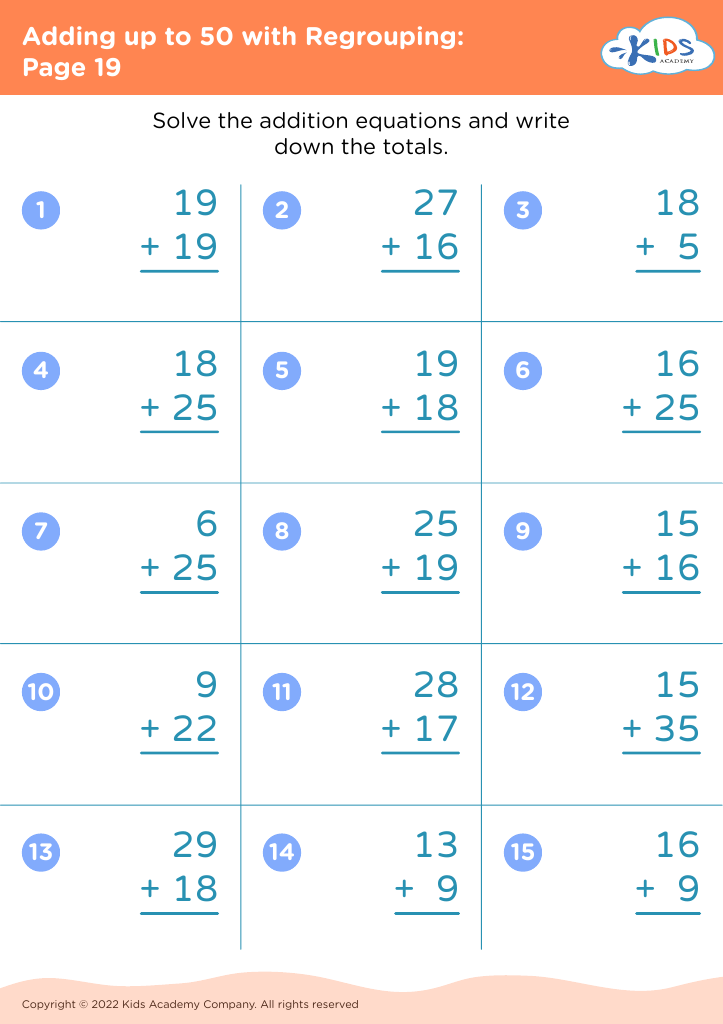
    Adding up to 50 with Regrouping: Page 19
    Adding up to 50 with Regrouping: Page 19
    Adding up to 50 with Regrouping: Page 19
    Worksheet
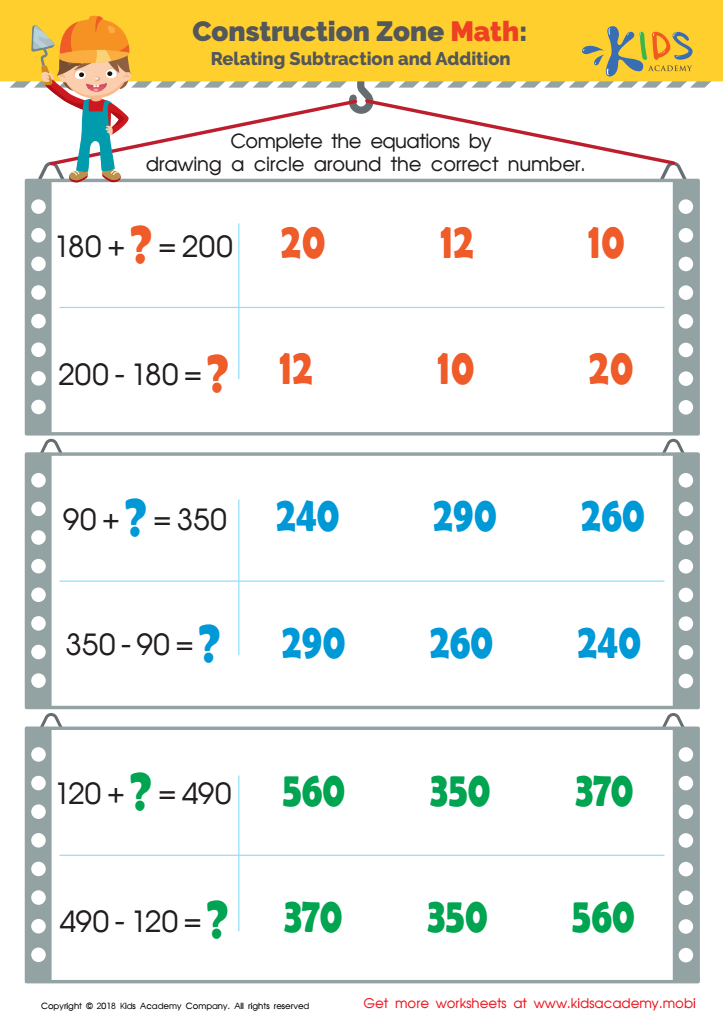
    Construction Zone Math: Relating Subtraction and Addition Worksheet
    Construction Zone Math: Relating Subtraction and Addition Worksheet
    Construction Zone Math: Relating Subtraction and Addition Worksheet
    Help kids master the concept of solving for missing numbers with subtraction. Use this cute worksheet featuring construction elements and colorful equations. Show them how to subtract to find the missing number, then circle the answer. It'll help them increase their number sense and get ready for algebra.
    Construction Zone Math: Relating Subtraction and Addition Worksheet

    Worksheet
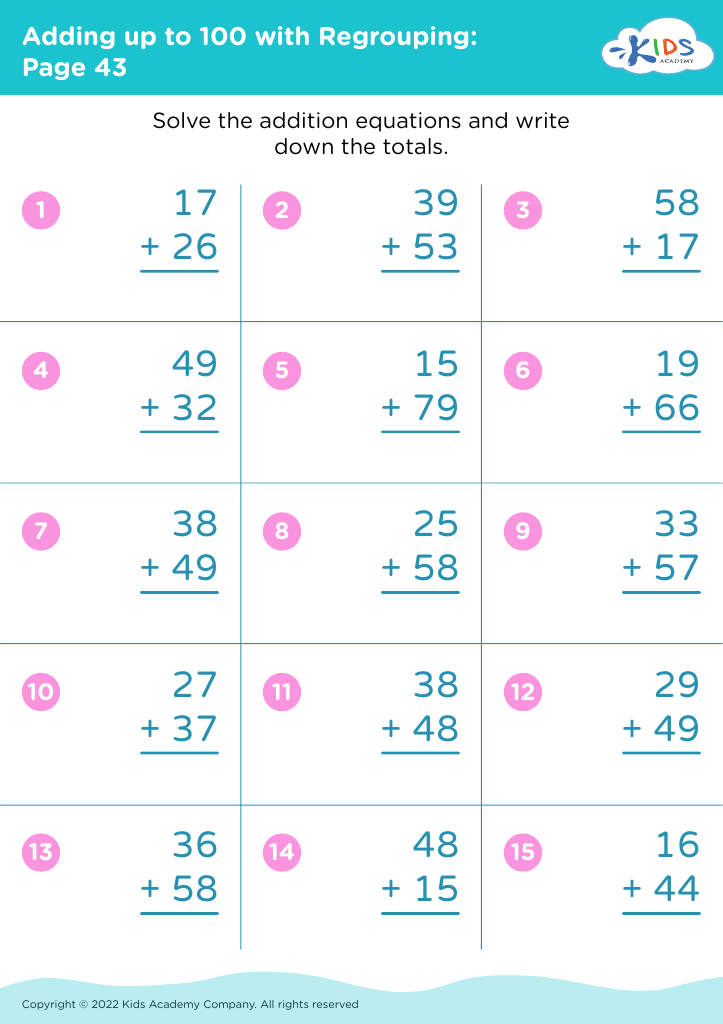
    Adding up to 100 with Regrouping: Page 43
    Adding up to 100 with Regrouping: Page 43
    Adding up to 100 with Regrouping: Page 43
    Worksheet
    Adding up to 50 Without Regrouping: Page 65
    Adding up to 50 Without Regrouping: Page 65
    Adding up to 50 Without Regrouping: Page 65
    Worksheet
    Adding Up to 5 with Busy Bugs: Page 44
    Adding Up to 5 with Busy Bugs: Page 44
    Adding Up to 5 with Busy Bugs: Page 44
    Worksheet


    Parents and teachers should care deeply about teaching addition and subtraction to children aged 3-9 because these foundational skills are crucial for their overall mathematical development and daily problem-solving capabilities. At this early age, children’s brains are highly receptive, making it an ideal time to introduce fundamental math concepts. Mastering addition and subtraction helps build a solid mathematical foundation, which is essential for understanding more complex math topics later in life, such as multiplication, division, fractions, and algebra.

    Moreover, these early arithmetic skills promote critical thinking and logical reasoning. When children learn to add and subtract, they engage in problem-solving, learn to make decisions, and recognize patterns, all of which are important cognitive skills.

    Basic adding and subtracting also demonstrate immediate practical value, enabling children to handle real-life situations, such as sharing toys, understanding time, and managing simple financial transactions like counting money.

    Finally, early success in mastering these skills can instill a sense of confidence and a positive attitude towards learning mathematics. Positive early math experiences lay the foundation for academic success and a lifelong appreciation for numbers. This, in turn, can foster improved performance in various subjects, emphasizing the importance of early math education for young learners.