
Critical Thinking Math Worksheets for Ages 3-9
52 filtered results
Difficulty Level
Grade
Age
-
From - To
Subject
Activity
Standards
Discover our engaging Critical Thinking Math Worksheets designed for children ages 3-9! These fun, interactive worksheets help young learners develop essential problem-solving skills, logical reasoning, and critical thinking through math. Each activity encourages kids to think creatively while exploring numbers, shapes, patterns, and basic operations. With colorful illustrations and age-appropriate exercises, these worksheets make learning fun and effective. Perfect for classroom settings or at-home practice, our Critical Thinking Math Worksheets promote cognitive development and prepare children for future academic success. Explore our collection today and inspire a love for math and critical thinking in your young learners!
Favorites
With answer key
Interactive
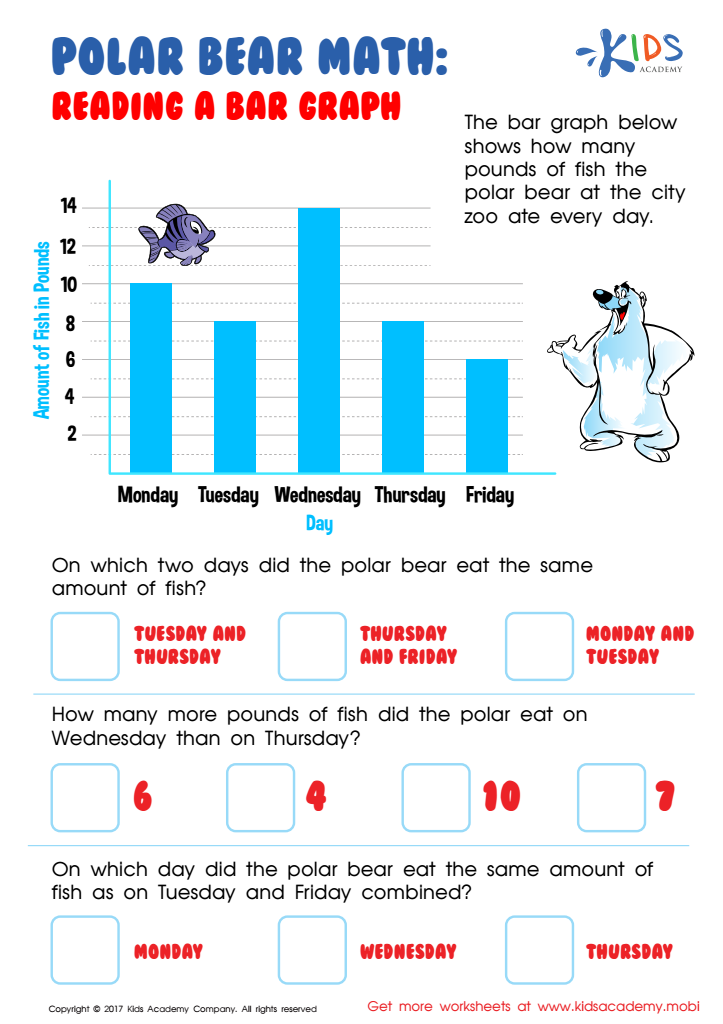
Reading Bar Graph Worksheet
Take your child north to practice data reading with a polar bear friend! This worksheet challenges 3rd graders to interpret data on a graph and solve related math problems.
 Assign to My Students
Reading Bar Graph Worksheet
Worksheet
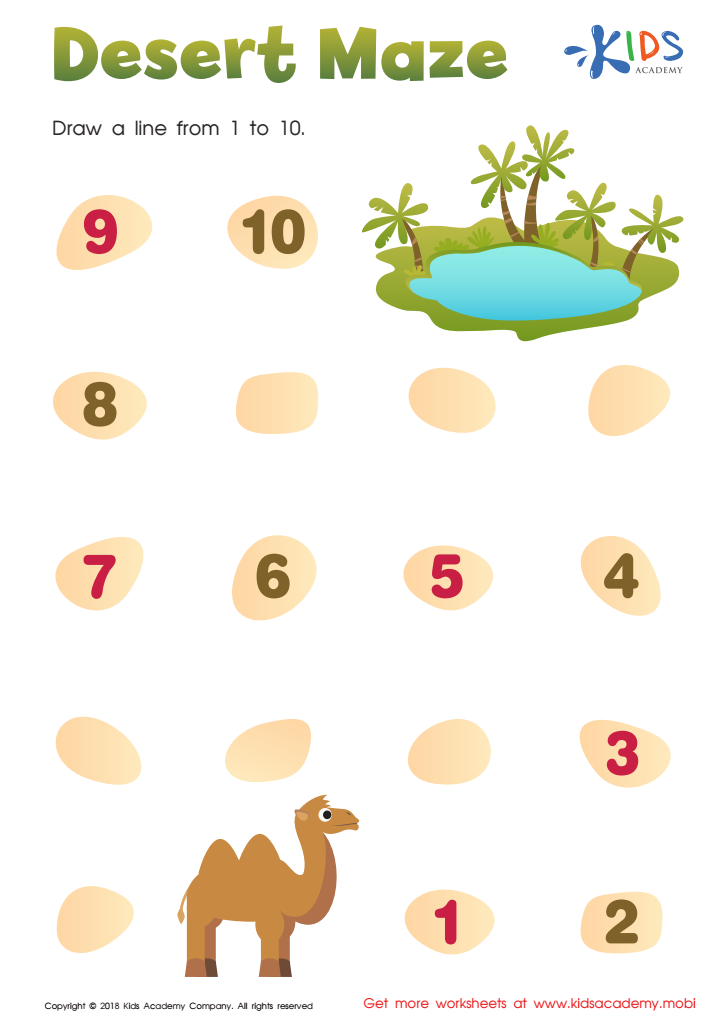
Desert Maze Worksheet
Introduce kids to deserts with videos or photos. Describe how, in deserts, camels are used for transportation due to their ability to go long distances without water. This worksheet gives kids the chance to help a camel cross the desert by drawing a line from 1 to 10.
Desert Maze Worksheet
Worksheet
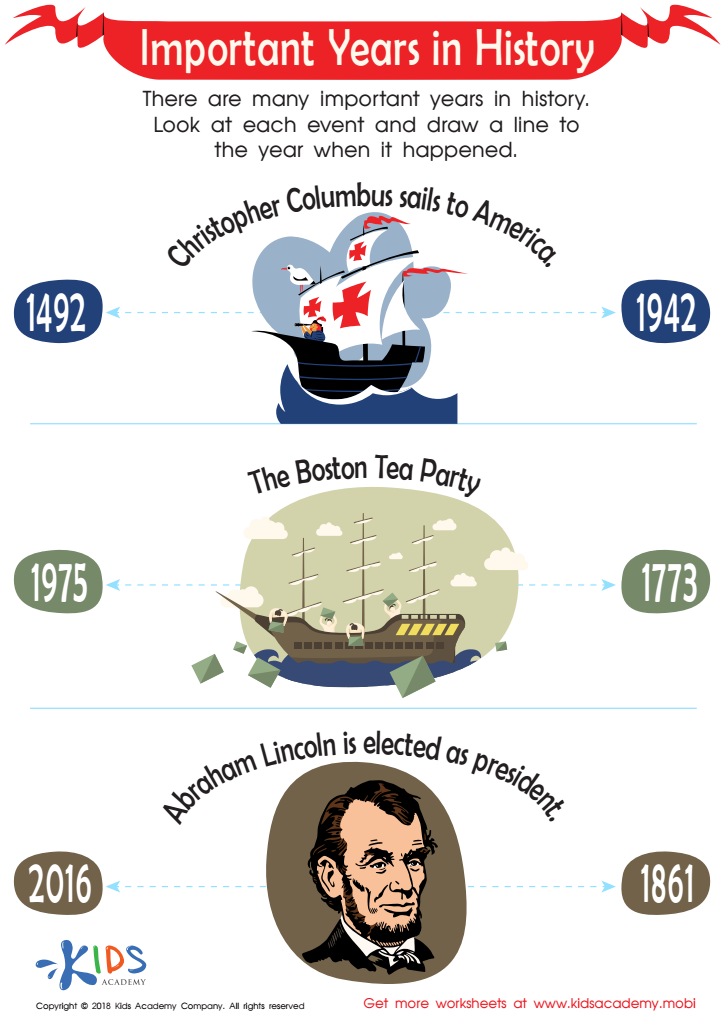
Important Years in History Worksheet
Ask your students if they can name any important dates in history. Then, look at the images in the worksheet with them. Read the sentences above each one to them and have them trace a line to the year when the event occurred.
Important Years in History Worksheet
Worksheet
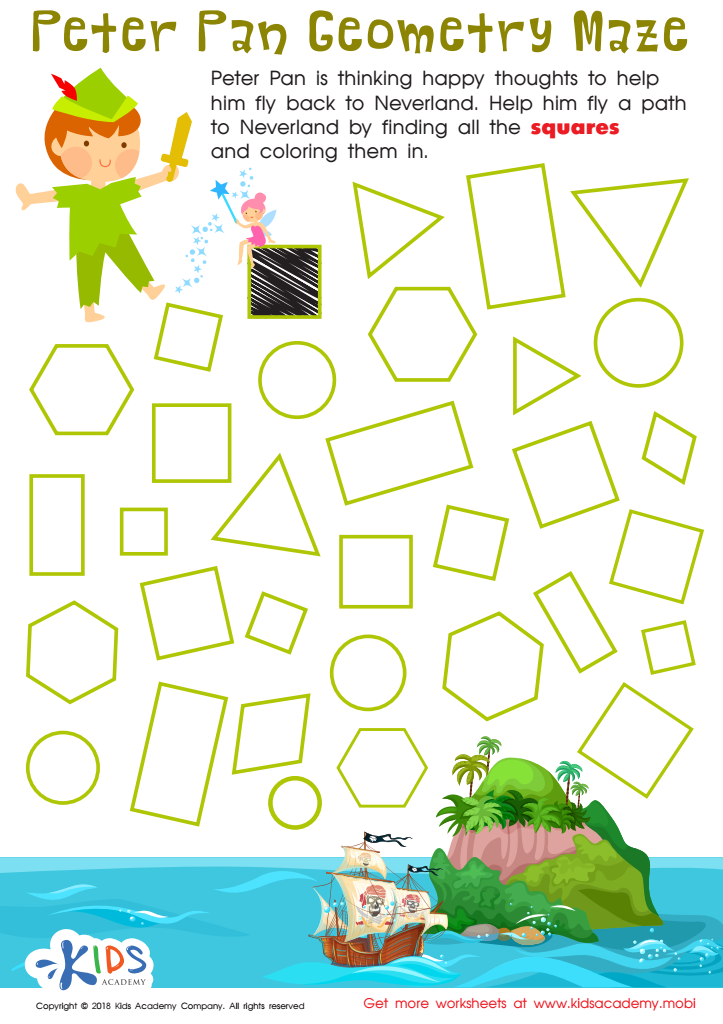
Peter Pan Worksheet
Kindergarteners can join Peter Pan on an adventure to Neverland! They can help him by coloring squares to create a path, strengthening their shape identification skills in a fun maze. Let the journey begin!
Peter Pan Worksheet
Worksheet
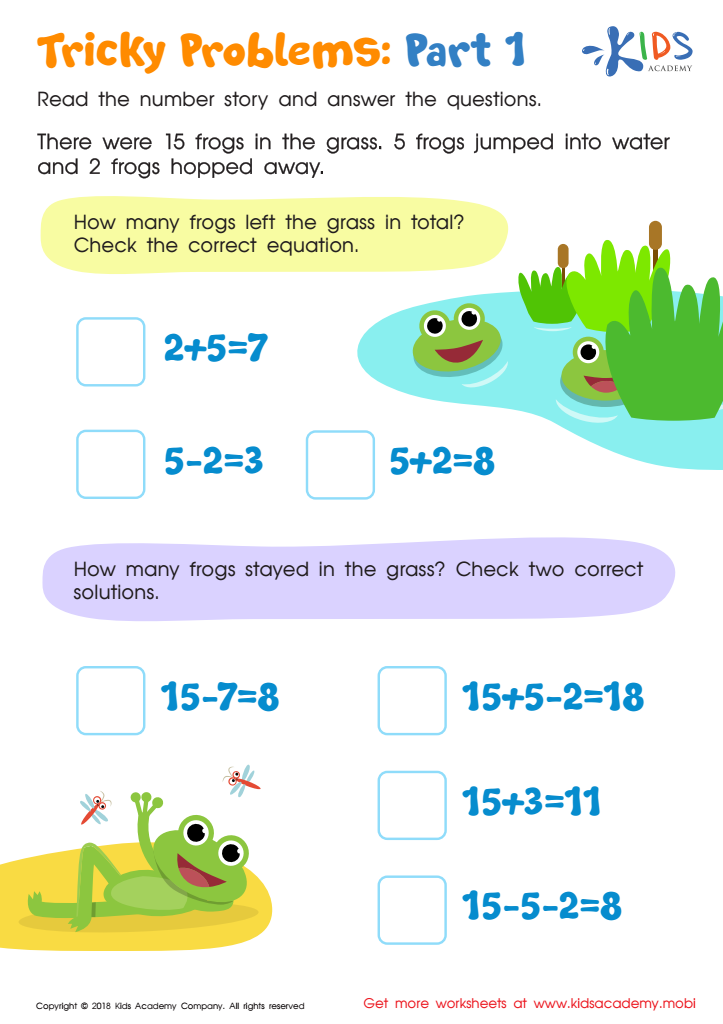
Tricky Problems Worksheet: Part 1
Visualizing word problems can help students solve them. This fun PDF worksheet encourages students to create mental images using math facts, then check boxes to match the equations for basic addition problems. It's a great way to build confidence in solving math.
Tricky Problems Worksheet: Part 1
Worksheet
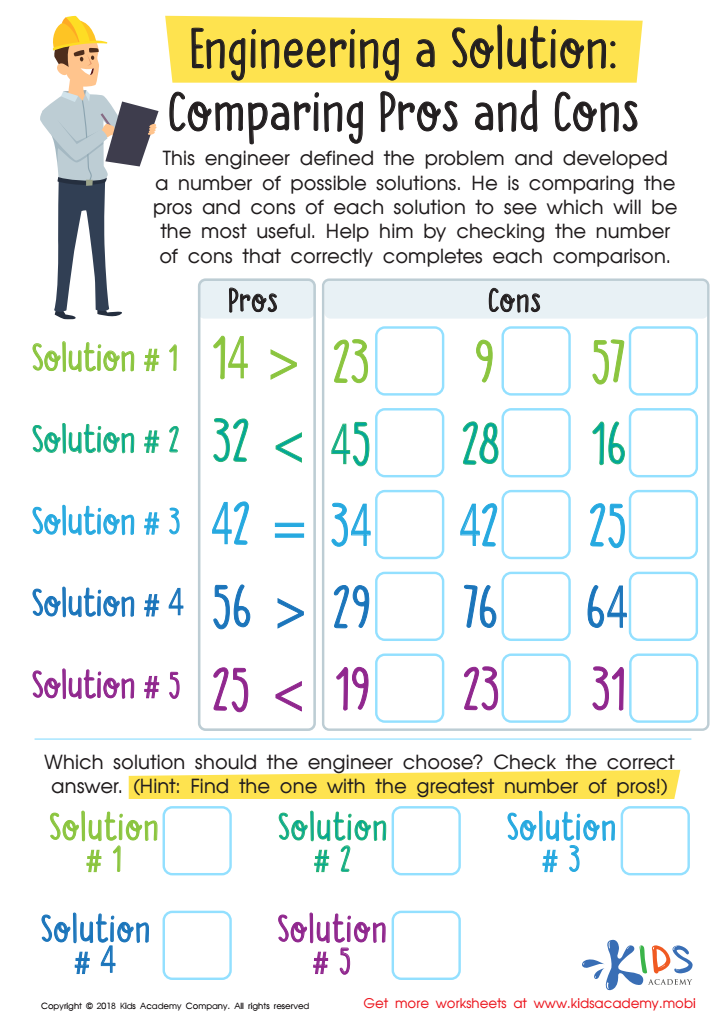
Engineering a Solution: Comparing Pros and Cons Worksheet
Help our little engineers assist the engineer in making a decision! They will solve the equations using greater than, less than, and equal to, and then decide the best solution for the problem using the pros and cons of each.
Engineering a Solution: Comparing Pros and Cons Worksheet
Worksheet
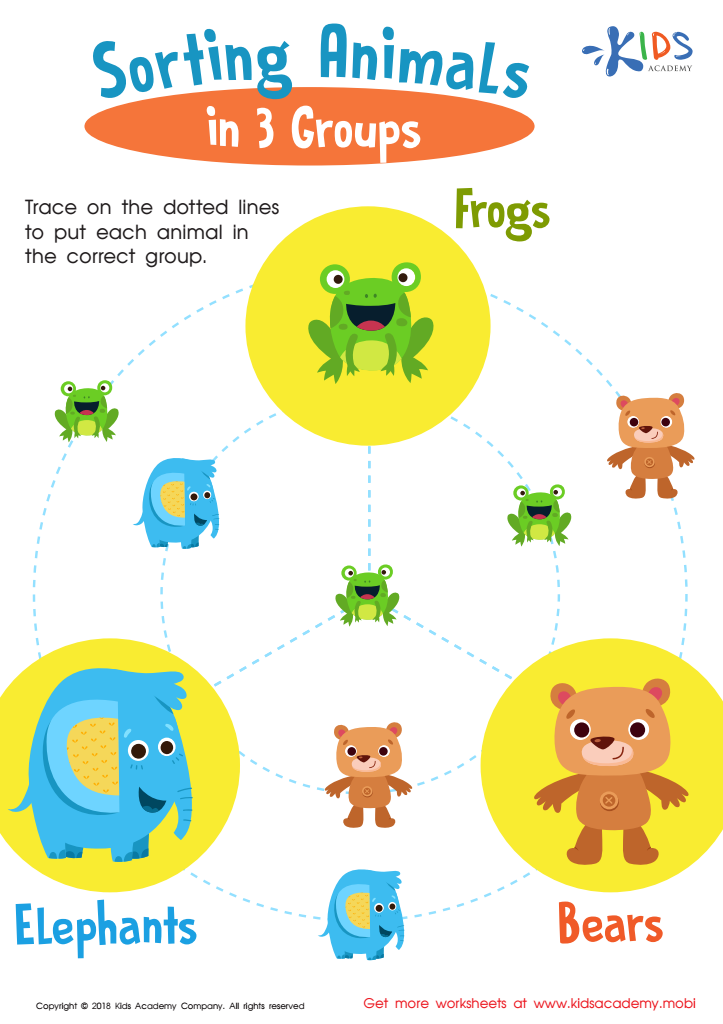
Sorting Animals in 3 Groups Worksheet
Let your kids practice and build skills for future Venn Diagrams with this PDF worksheet. They'll trace lines to match and group animals, and learn the differences and similarities of animals by categorizing with pictures and words. Plus, it's a great way to develop fine motor skills.
Sorting Animals in 3 Groups Worksheet
Worksheet
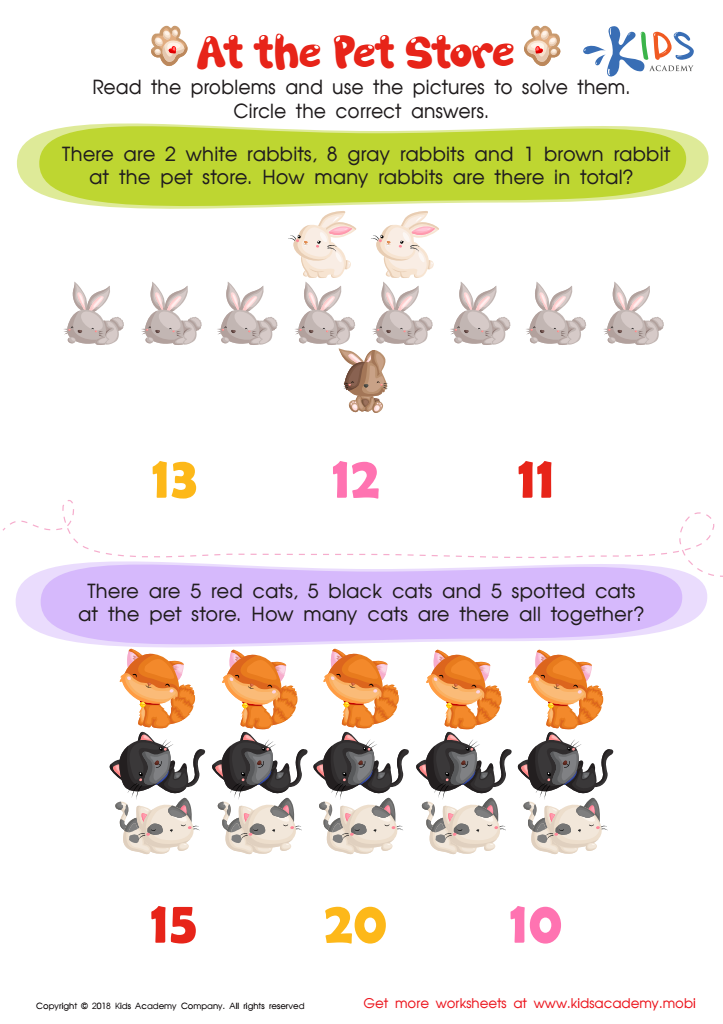
At the Pet Store Word Problems Worksheet
Kids love pet stores! This free, fun PDF worksheet engages little learners to solve word problems with counting and addition. With adorable animals to focus on, your child will practice arithmetic with three addends to find the sum! Help them gain success with word addition word problems.
At the Pet Store Word Problems Worksheet
Worksheet
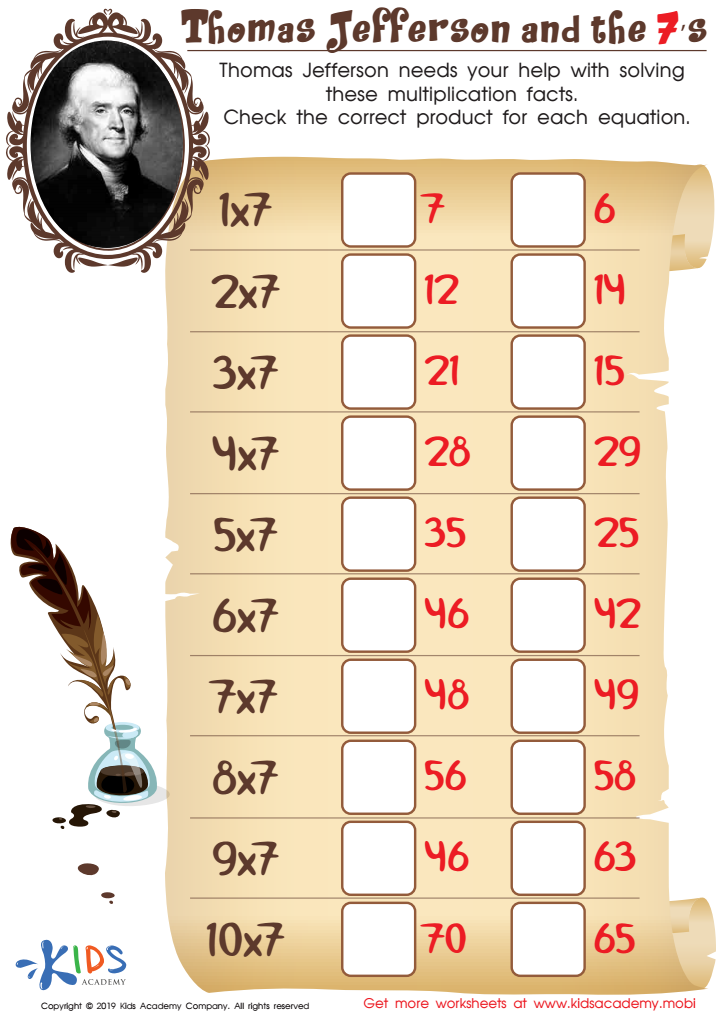
Thomas Jefferson and the 7’s Worksheet
Thomas Jefferson championed education and wants kids to know their times tables. Help your child with this worksheet focusing on 7's. Check the box for the correct answer for each multiplication problem. Make sure your child gets the facts right!
Thomas Jefferson and the 7’s Worksheet
Worksheet
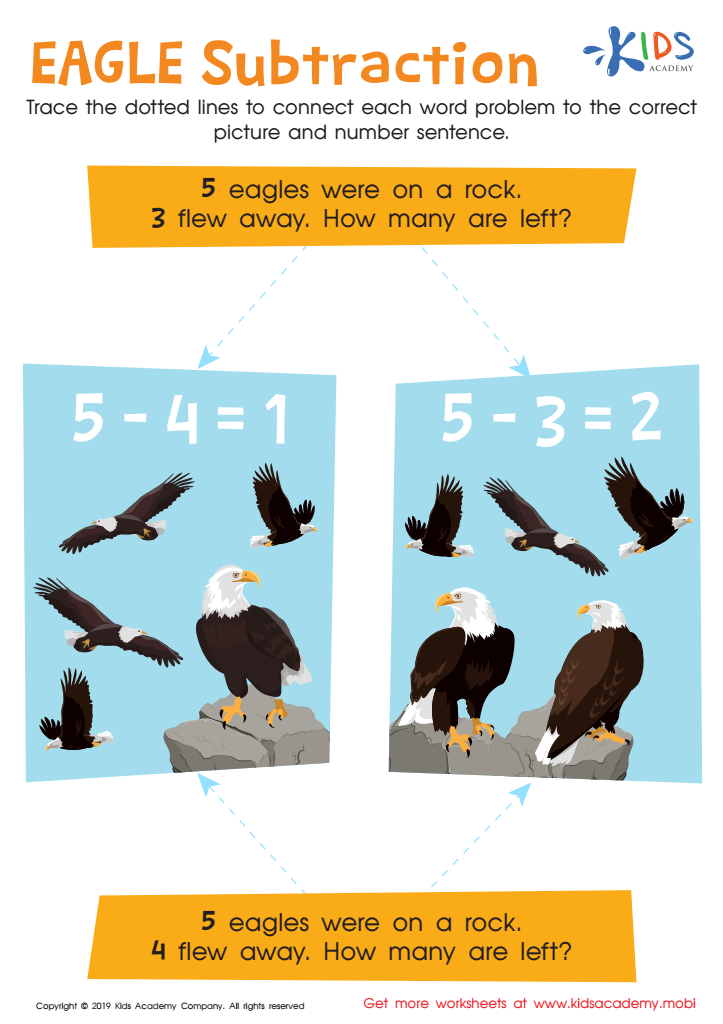
Eagle Subtraction Worksheet
Help your kids become math experts! Through practice and adult guidance, even addition and subtraction can seem simple. Show them how with this worksheet - get them to trace the dotted lines to connect each word problem to the correct picture and solve the number sentence with some eagles!
Eagle Subtraction Worksheet
Worksheet
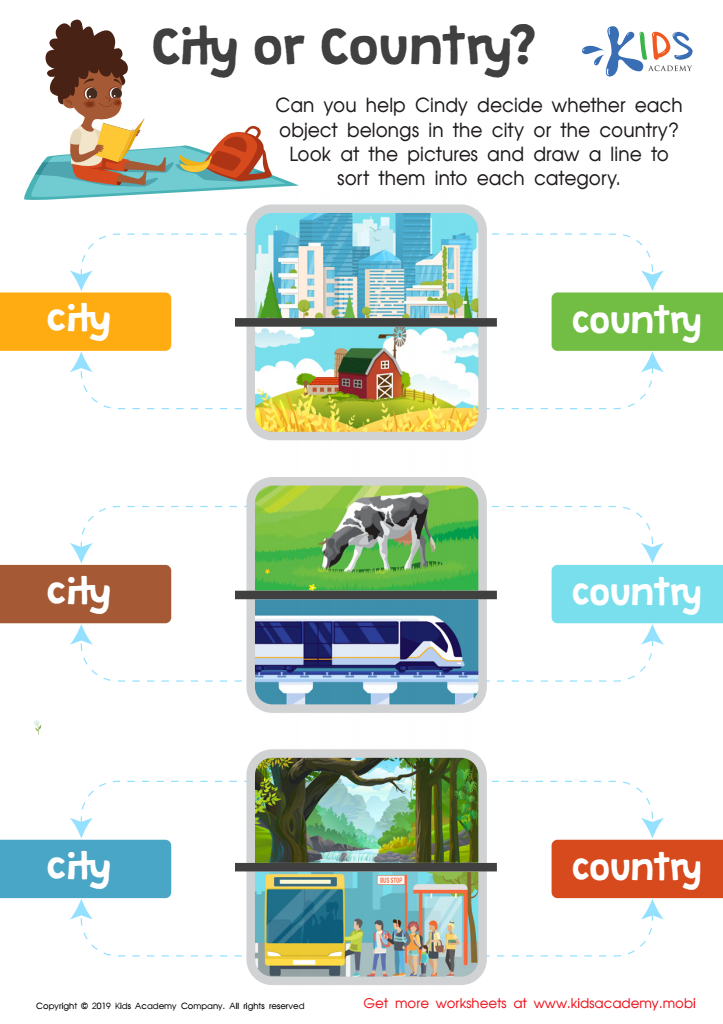
City or Country? Worksheet
Whether city or country, both have distinct attributes. Cities have skyscrapers, public transport, and many business people, whereas the countryside is rural and full of nature, often farms. Download this PDF to help your child and Cindy use traced lines to decide which picture fits city or country.
City or Country? Worksheet
Worksheet
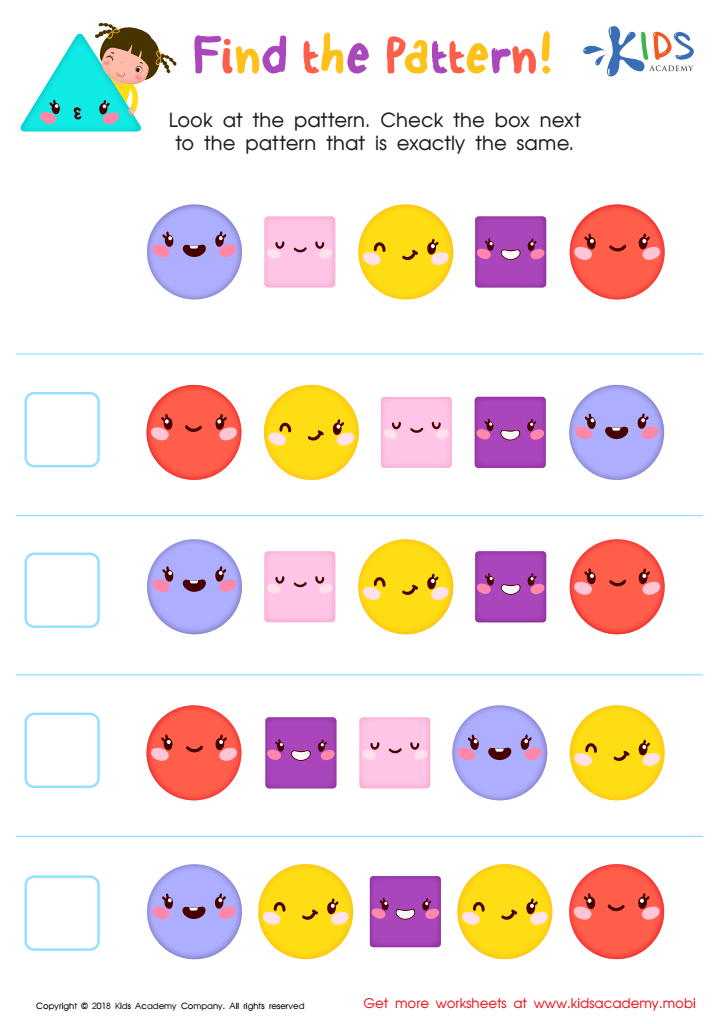
Find the Pattern Worksheet
This colorful pattern worksheet is perfect for testing your kids' pattern recognition. The bright colors will keep them engaged, while they check the box next to the pattern that is the same. Ask your kids to identify the colors used and see how well they can spot similarities!
Find the Pattern Worksheet
Worksheet
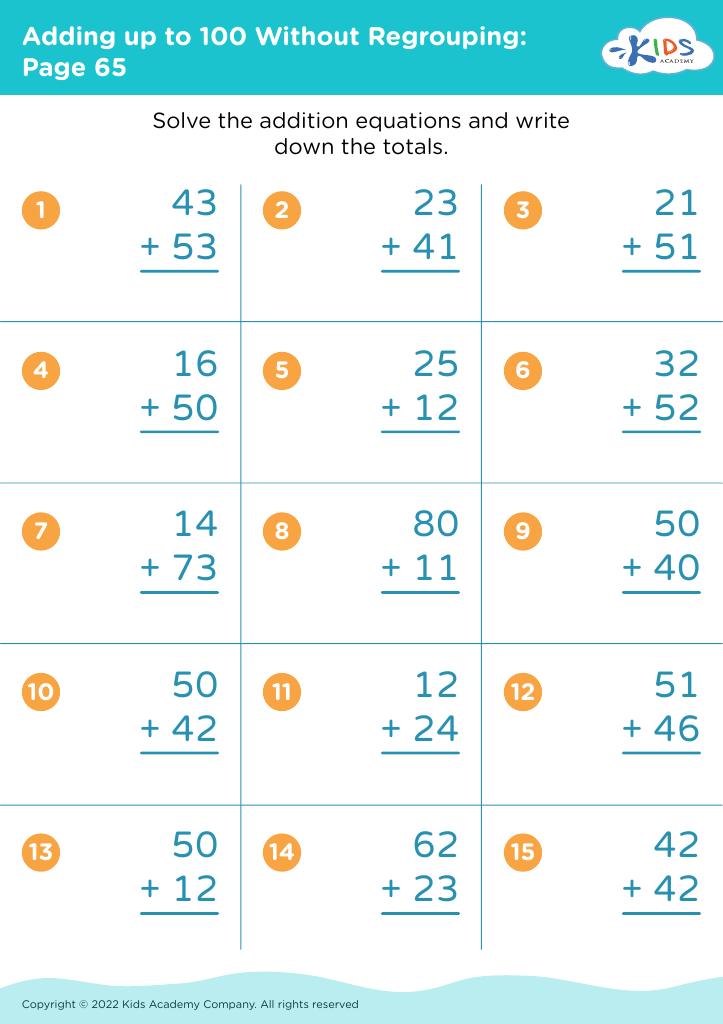
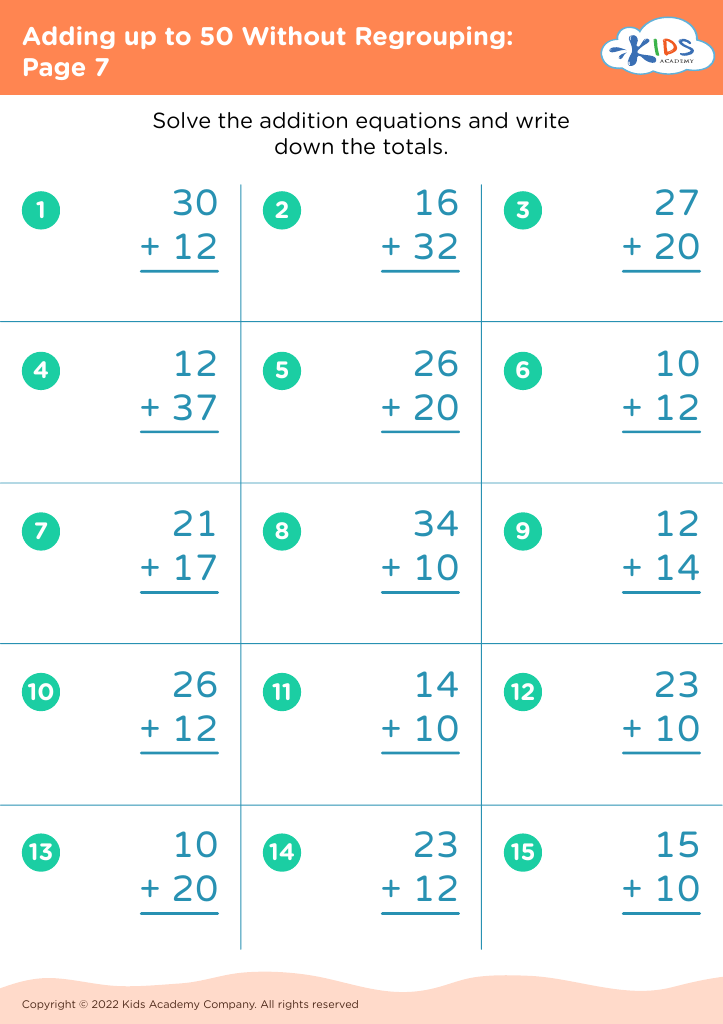
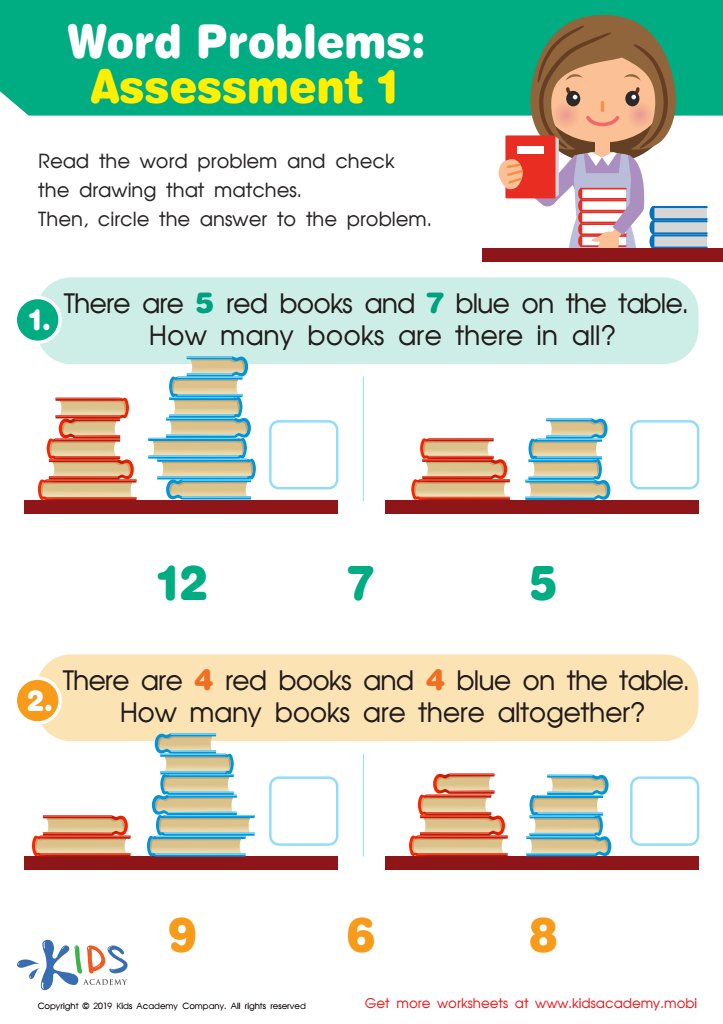
Word Problems: Assessment 1 Worksheet
This free worksheet assesses your child's basic addition word problem skills. It presents word problems with pictures offering clues in one-to-one representation. Your child will select the correct drawing to match the problem, without even knowing they're being assessed! This is a great way to gauge their math computation and reasoning abilities.
Word Problems: Assessment 1 Worksheet
Worksheet
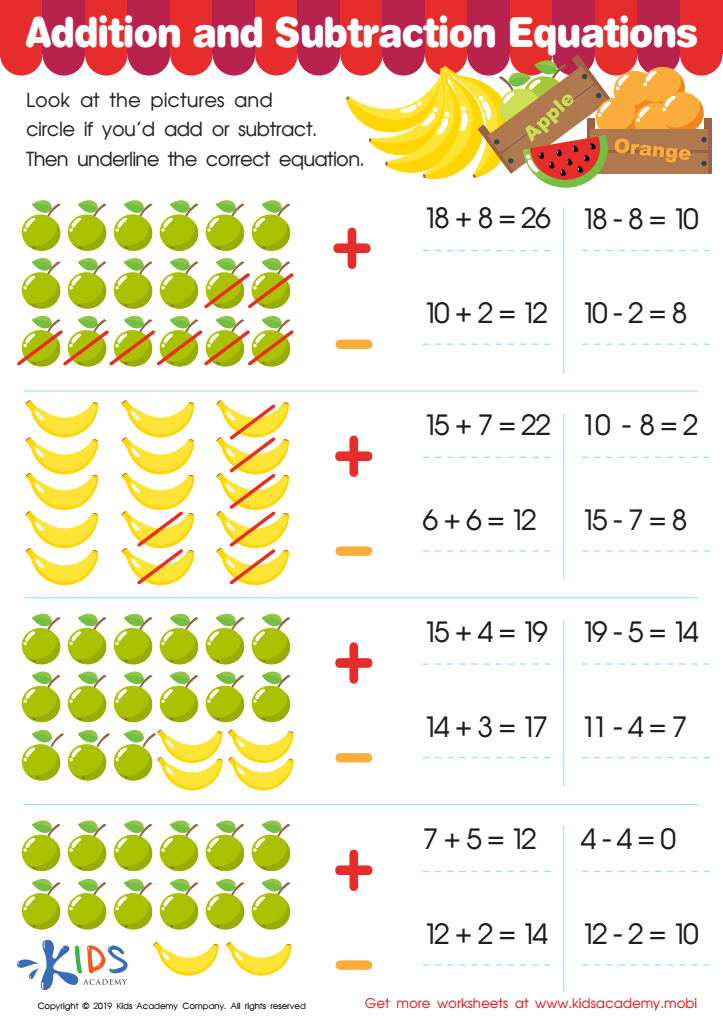
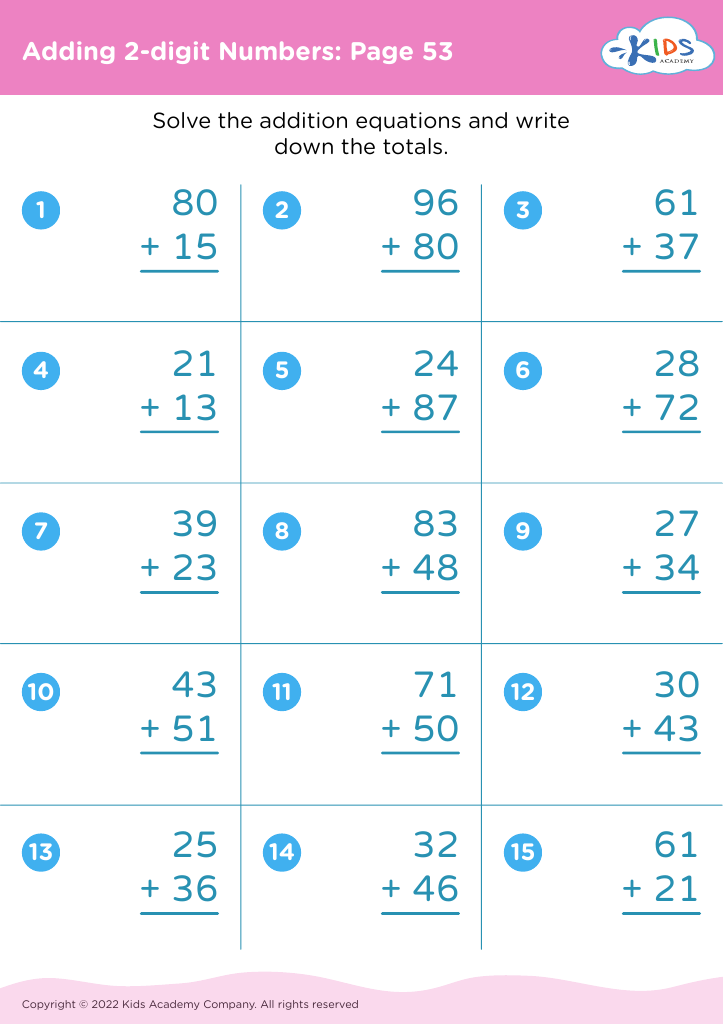
Addition and Subtraction: Equations Worksheet
This worksheet sharpens your child's visual processing, math equation solving and order of operations skills. It features colorful pictures to help them add and subtract, and traceable lines to identify the correct equation. A great way to practice these skills! (80 words)
Addition and Subtraction: Equations Worksheet
Worksheet
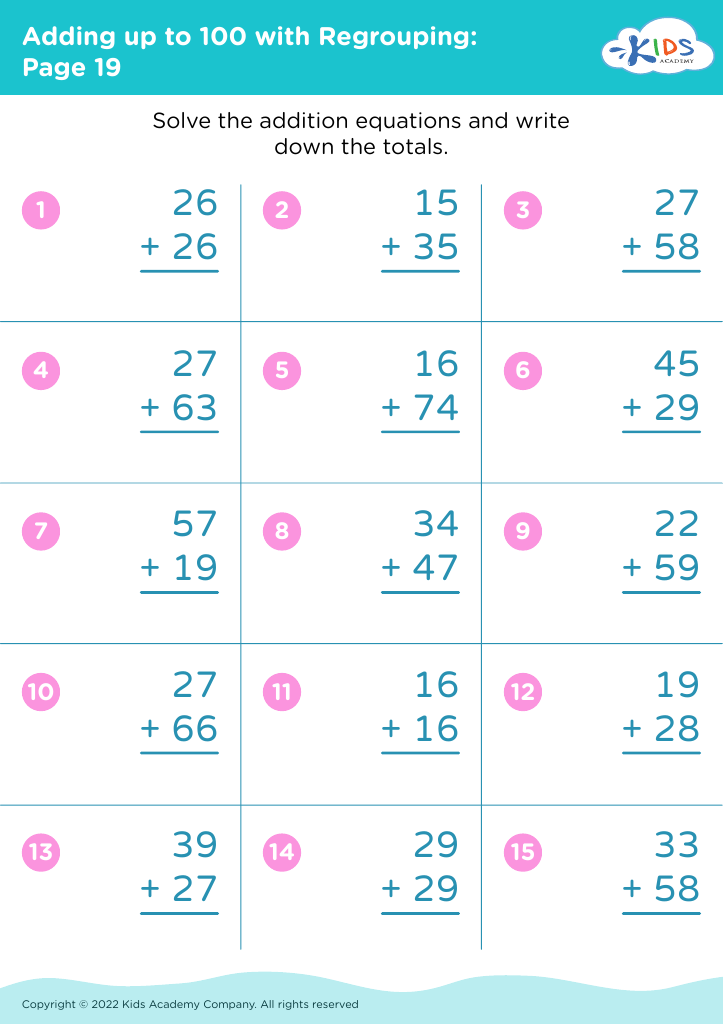
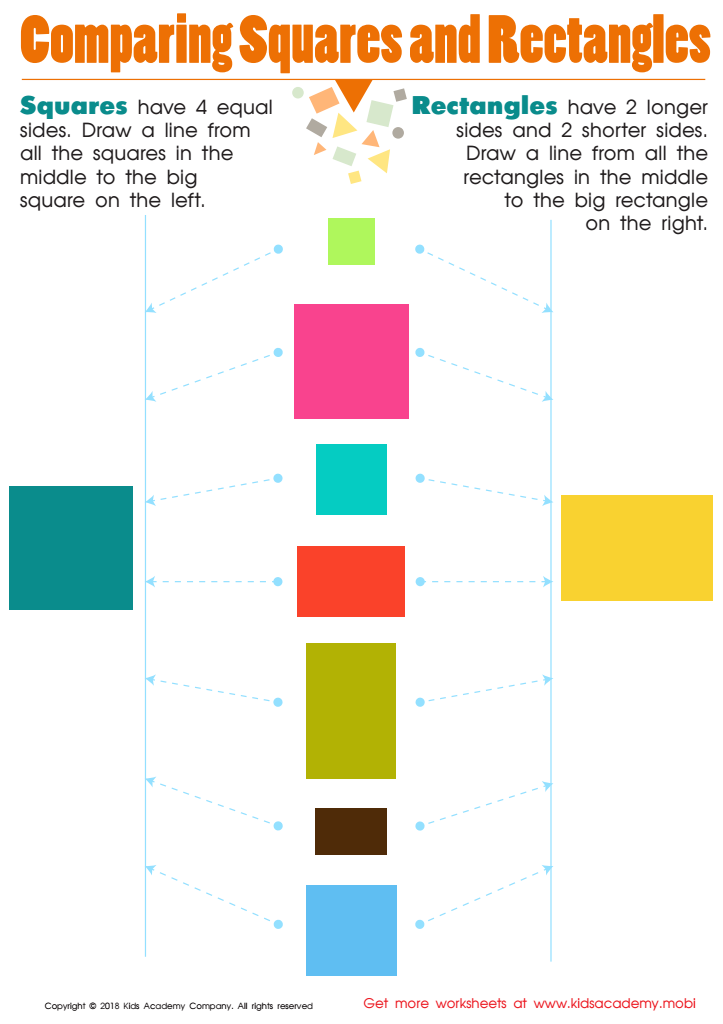
Comparing Squares Rectangles Worksheet
Help your little learner distinguish rectangles from squares with this fun geometry worksheet from Kids Academy! Read the definitions at the top, use the shapes on either side as a guide, then trace over the dotted line to match the rectangles and squares!
Comparing Squares Rectangles Worksheet
Worksheet
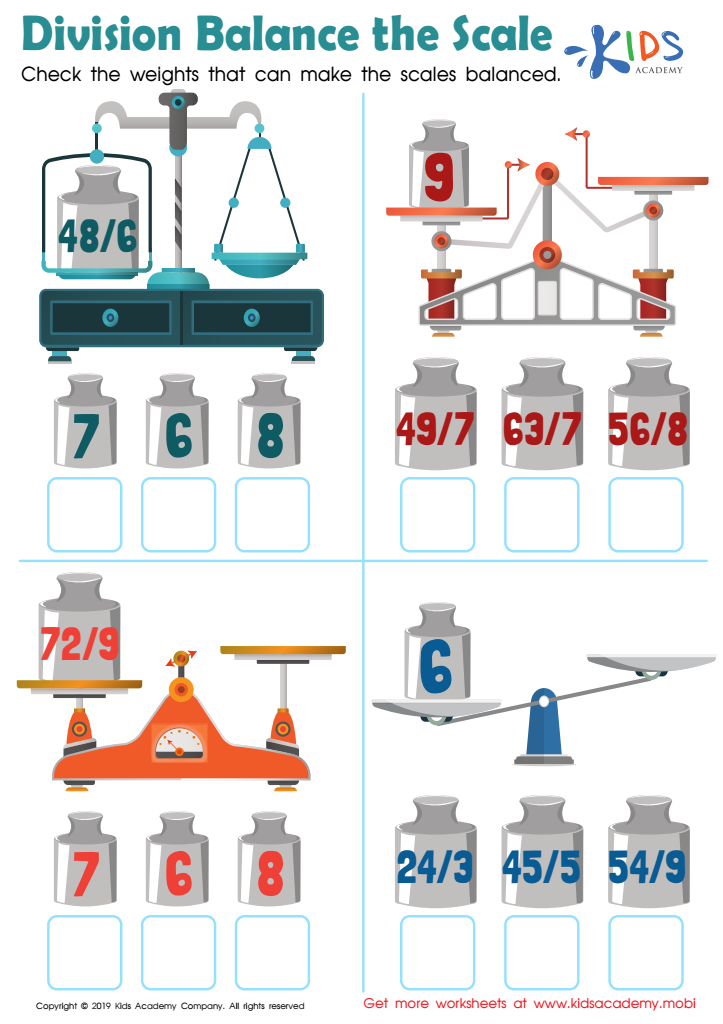
Division Balance the Scale Worksheet
Students can learn math better when they understand the relationships between numbers. This free worksheet helps them practice division: solving problems and matching the correct quotient to balance the scales. Fun visual boxes make it a unique way to engage with the material.
Division Balance the Scale Worksheet
Worksheet
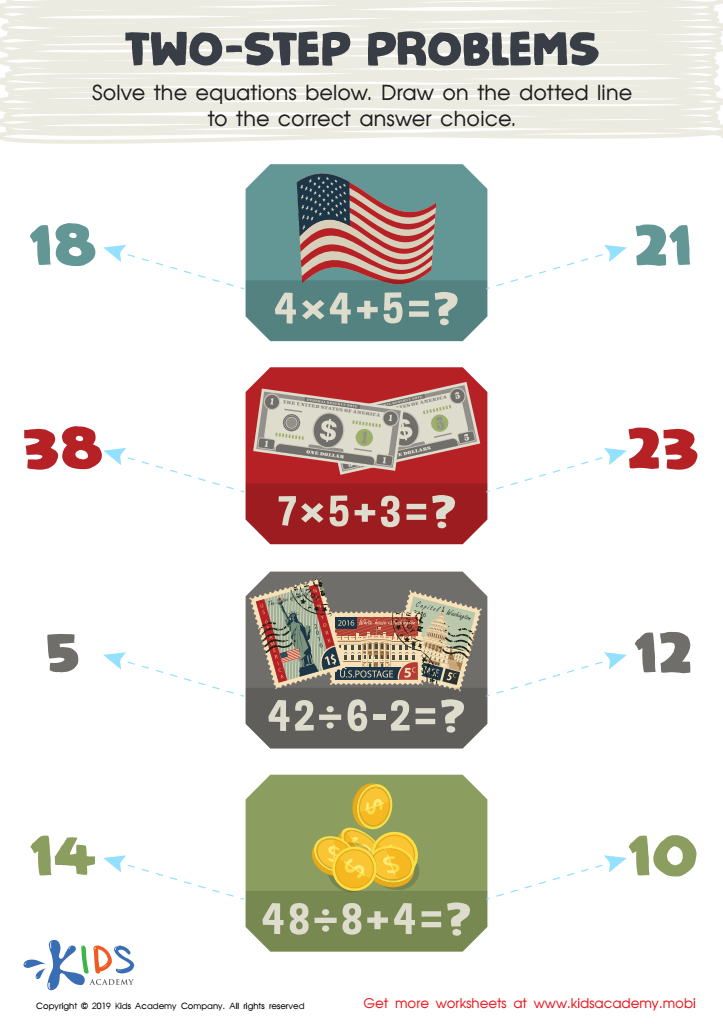
Two-Step Problems Worksheet
Help your child practice their math problem-solving skills with this worksheet. It covers the basics of subtractions, additions, multiplications, and divisions. With four simple equations, your kids can solve them and draw the correct answer on the dotted line. Reduce their strain and give them the help they need.
Two-Step Problems Worksheet
Worksheet
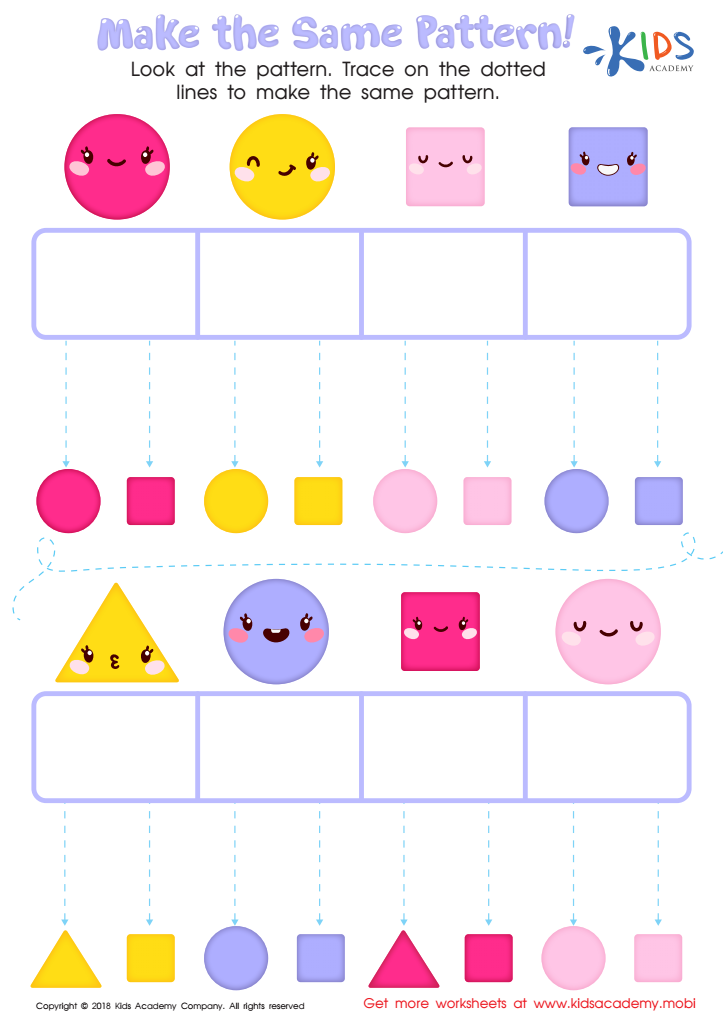
Make the Same Pattern Worksheet
Help your child look at the patterns in the tracing sheet and guide them to trace the dotted lines to match the shapes. This exercise tests their ability to copy pictures correctly, so emphasize the importance of paying attention to the instructions and details.
Make the Same Pattern Worksheet
Worksheet
Join Kids Academy for Free
Who is primarily going to use this learning content?








Critical thinking in mathematics for children aged 3-9 is vital for several reasons. Firstly, it fosters a strong foundation for problem-solving skills that will benefit students throughout their education and beyond. At this age, children are naturally curious and motivated to explore concepts, and critical thinking encourages them to ask questions, make observations, and seek solutions independently.
Secondly, math is not just about numbers; it's also about understanding patterns, relationships, and logical reasoning. By engaging in critical thinking math activities, children learn to analyze situations, draw connections, and think outside the box, helping them to develop a more profound conceptual understanding of mathematical principles.
Moreover, critical thinking skills enhance a child's confidence. When they learn to approach math challenges with creativity and resilience, they are more likely to embrace difficulty instead of shying away from it. This willingness to tackle challenges leads to a positive attitude toward learning and encourages lifelong curiosity.
Finally, in a rapidly changing world, equipping young learners with the skills necessary to think critically prepares them for future success in various fields, including science, technology, engineering, and mathematics (STEM), ensuring they are not just consumers of information but active learners and innovators.








