Sorting Worksheets for Ages 3-9 - Page 2
27 filtered results
-
From - To
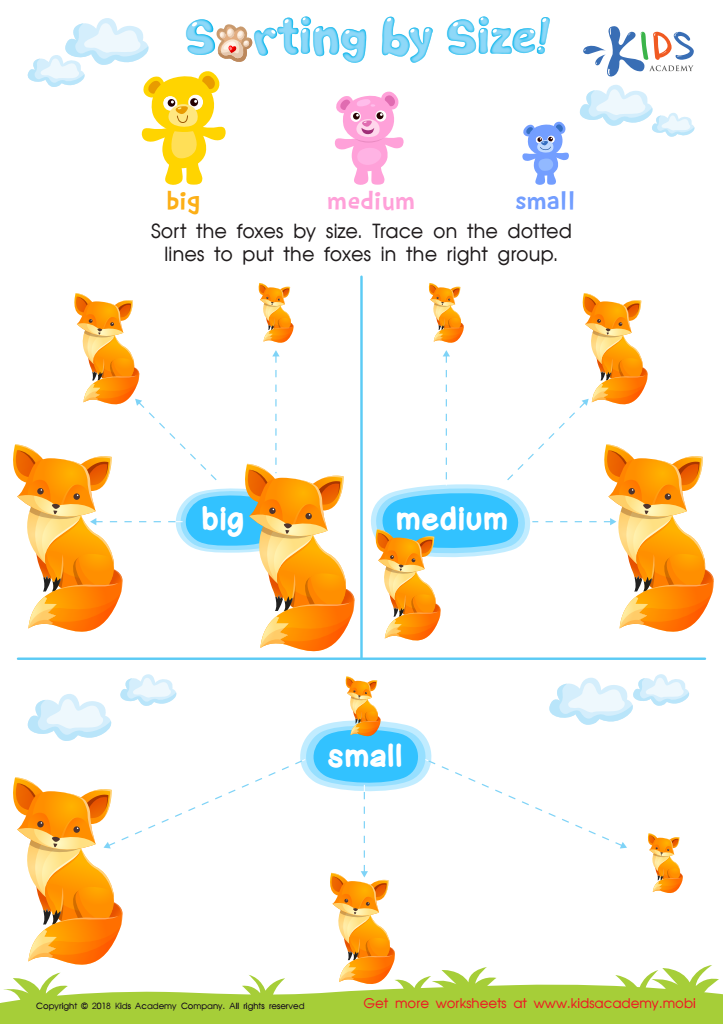
Sorting by Size Worksheet
 Assign to My Students
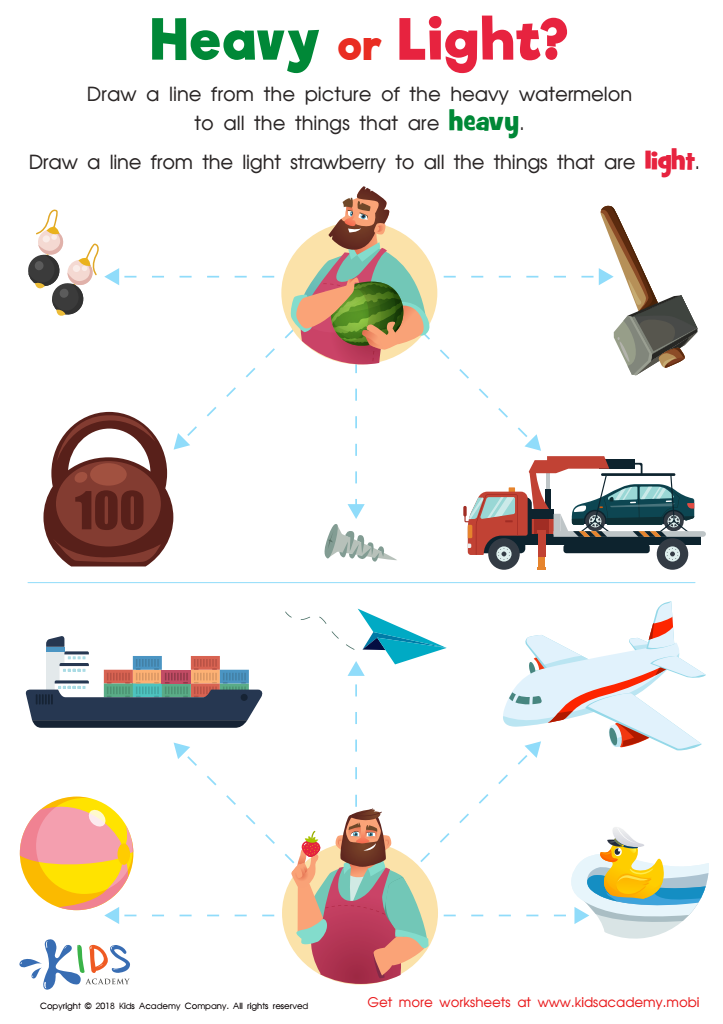
Heavy or Light? Worksheet
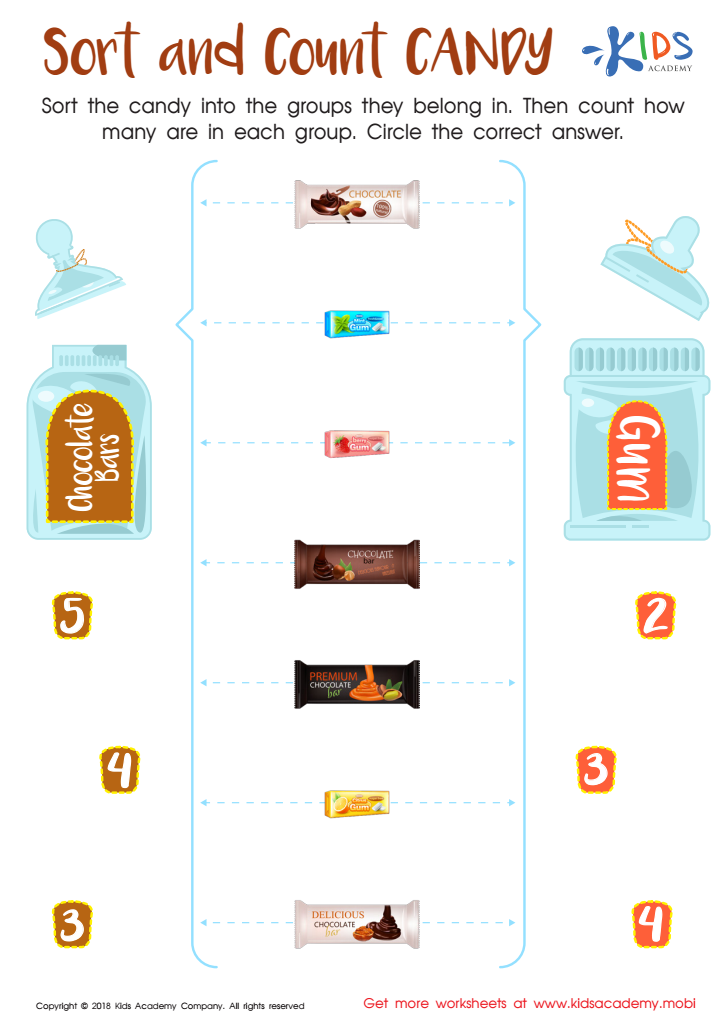
Sort and Count Candy Worksheet







Sorting is a fundamental cognitive skill that develops critical thinking, organization, and mathematical reasoning in children aged 3-9. When children sort objects by attributes like color, size, shape, or type, they learn to observe details, group similar items, and categorize information. This process enhances their ability to make sense of the world, promoting better problem-solving abilities.
By engaging in sorting activities, kids develop vocabulary as they describe objects and their characteristics. These activities also introduce basic mathematical concepts, such as counting, pattern recognition, and the understanding of sets, which are foundational for more complex math skills later on. For instance, sorting crayons by color helps children differentiate and understand classification, while organizing blocks by size aids in comprehending measurement and comparison.
Moreover, sorting tasks foster fine motor skills and coordination, as children manipulate various items. This hands-on learning boosts concentration and perseverance, important traits for academic success. Socially, when done in groups, sorting encourages cooperative play and communication skills.
Understanding the importance of sorting allows parents and teachers to incorporate engaging and educational activities into daily routines, laying a strong cognitive foundation for a child’s ongoing intellectual and social development. Thus, sorting is crucial not just for immediate learning, but for setting the stage for lifelong cognitive and academic growth.








