Governance and Civics Worksheets for Ages 3-9 - Page 3
51 filtered results
-
From - To
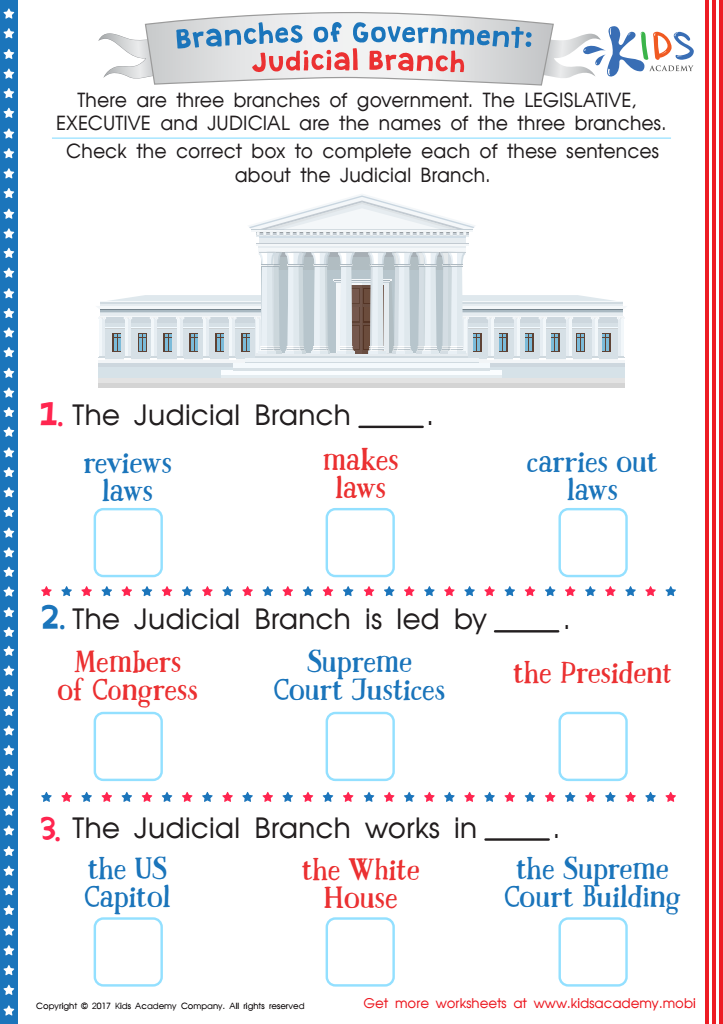
Braches of the Government: Judicial Branch Worksheet
 Assign to My Students
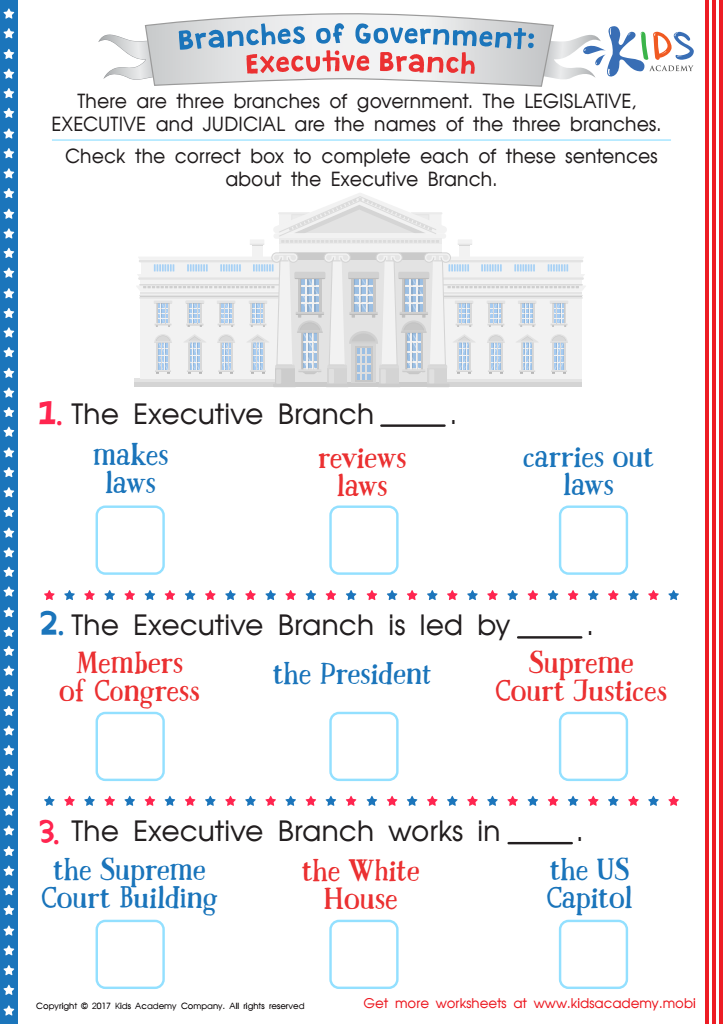
Branches of the Government: Executive Branch Printable
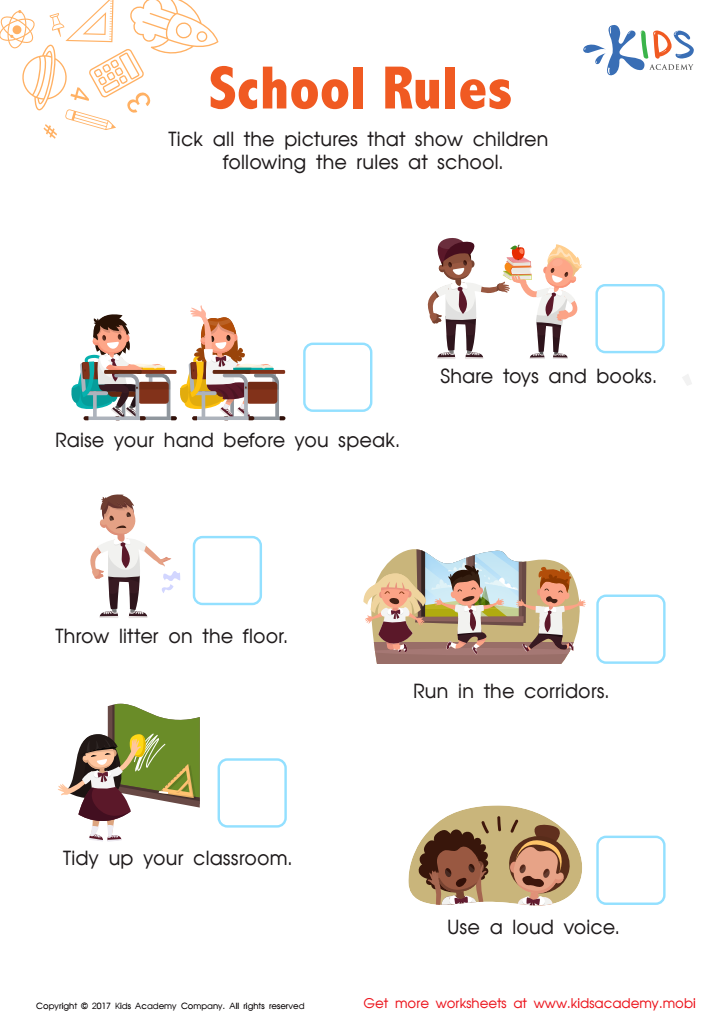
School Rules Worksheet


Governance and civics are essential subjects that lay the foundation for responsible citizenship and social awareness from a young age. For children aged 3-9, understanding these concepts helps cultivate a sense of belonging and community. As parents and teachers, encouraging early engagement with governance and civics enhances children's critical thinking skills, enabling them to make informed decisions and appreciate diverse perspectives.
Introducing basic concepts of citizenship, such as rights and responsibilities, fairness, and teamwork, fosters empathy and cooperation. This age group is naturally curious and learns through play and interaction, making it an ideal time to explore themes of justice, community roles, and how rules impact our daily lives. Activities like group projects or role-playing can illustrate these principles in relatable ways, encouraging children to express their views and respect differing opinions.
Moreover, early exposure to civics instills a sense of agency, empowering children to understand that they can influence their environment and make positive changes. By nurturing this awareness, parents and teachers lay the groundwork for future engaged citizens who are aware of their rights and responsibilities, ultimately contributing to a more informed and cohesive society. Early civic education can spark lasting values crucial for sustaining democratic principles in the future.








