Vocabulary Building Matching Worksheets for Ages 4-5
6 filtered results
-
From - To
Boost your child's vocabulary with our Vocabulary Building Matching Worksheets designed specifically for ages 4-5! Engaging and visually captivating, these worksheets help young learners enhance their word recognition and language skills through fun matching activities. Children will enjoy pairing pictures with corresponding words, fostering both comprehension and retention in a playful way. Perfect for home or classroom use, these worksheets encourage independent learning and can easily be incorporated into daily lesson plans. Nurture your child’s language development and confidence with our easy-to-use, printable resources that make learning enjoyable and effective. Start building a strong vocabulary foundation today!
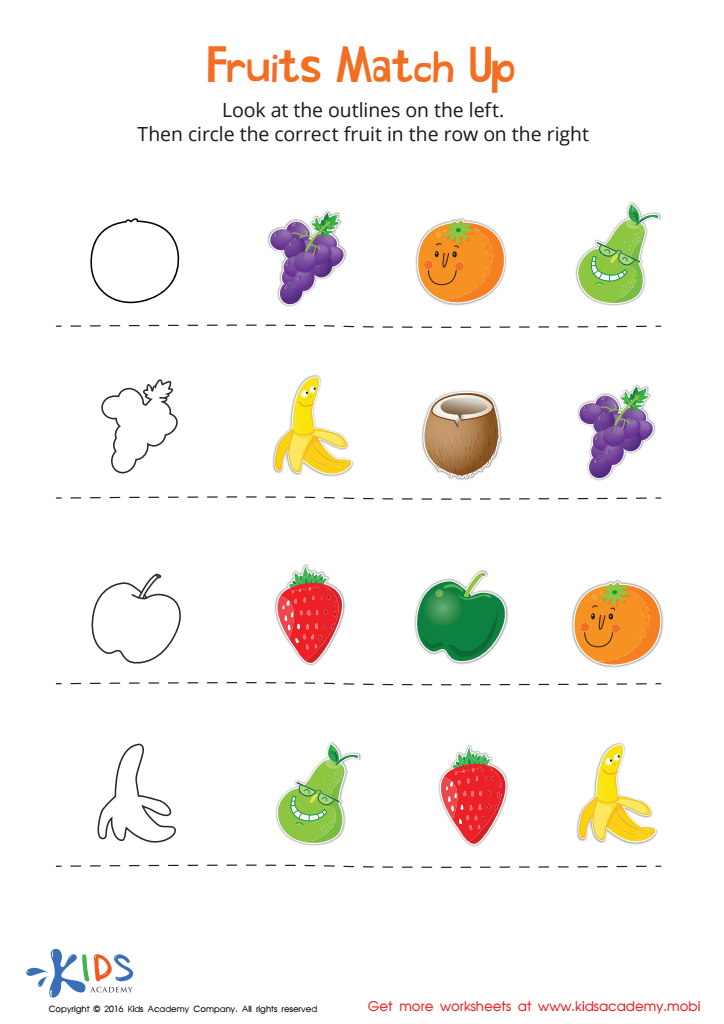
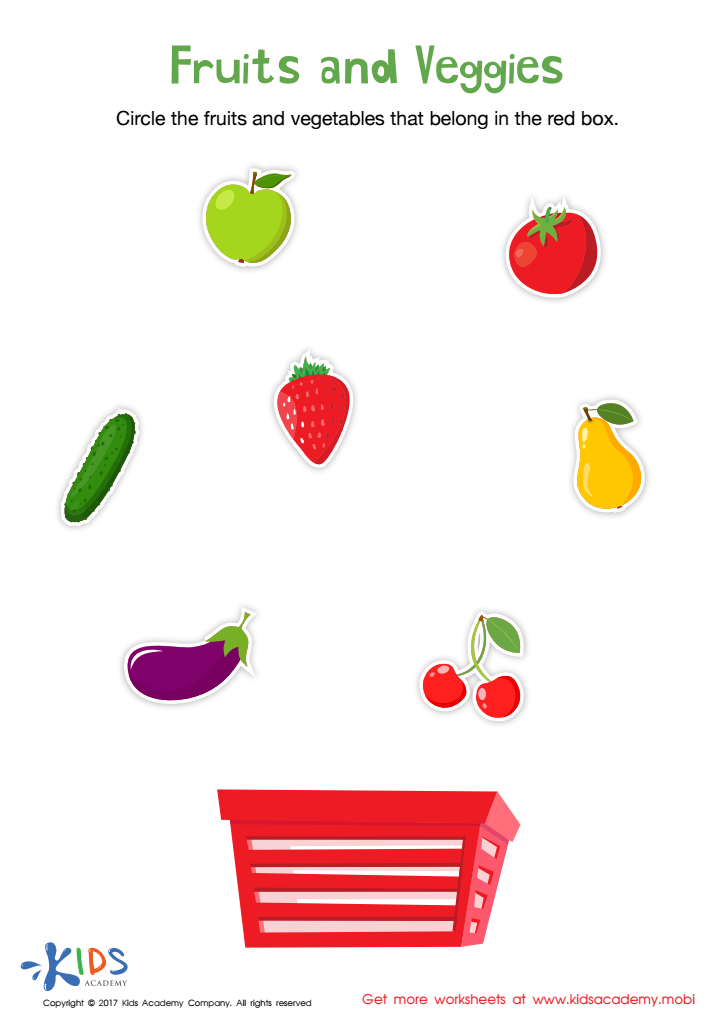
Fruits Match Up Worksheet
 Assign to My Students
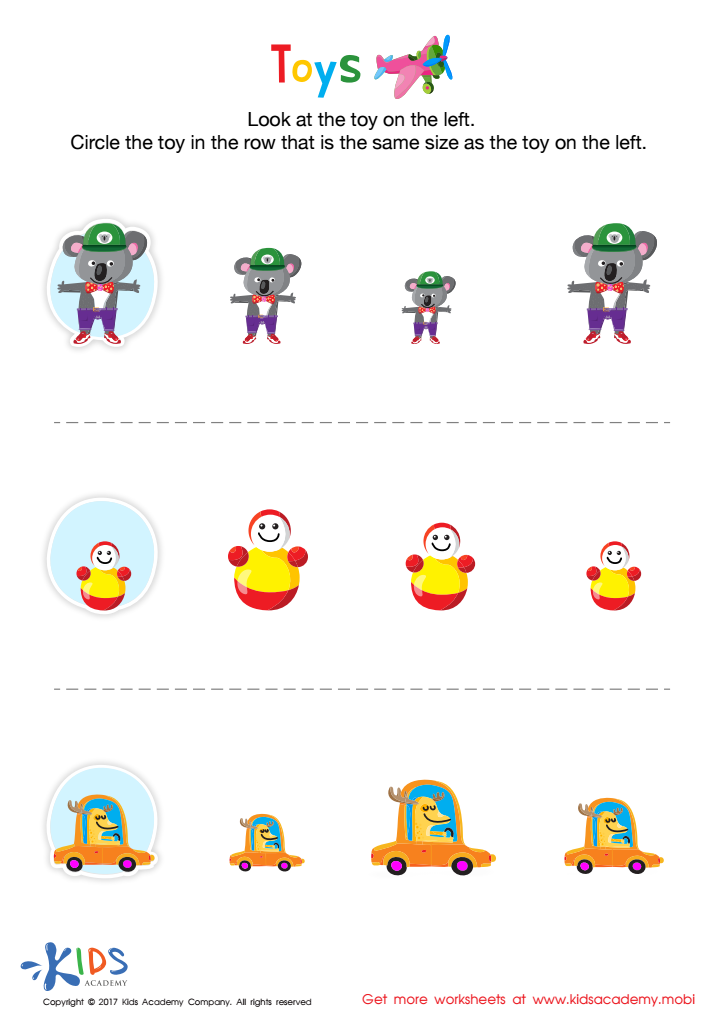
Matching: Classifying Toys by Size Worksheet
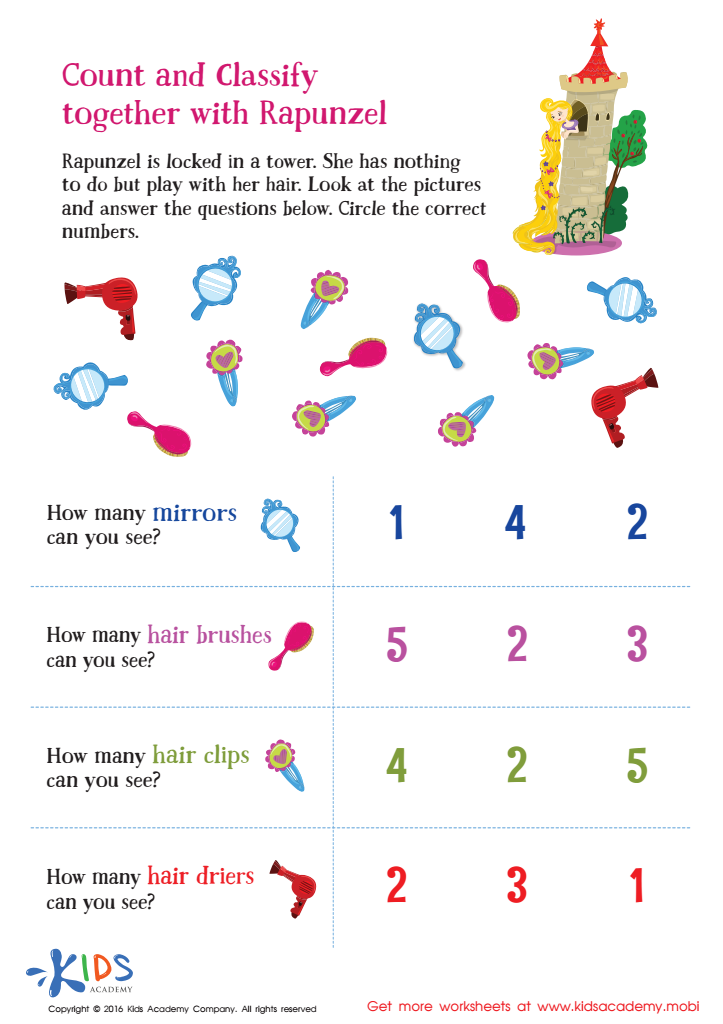
Fairy Tale Worksheet: Count and Classify with Rapunzel
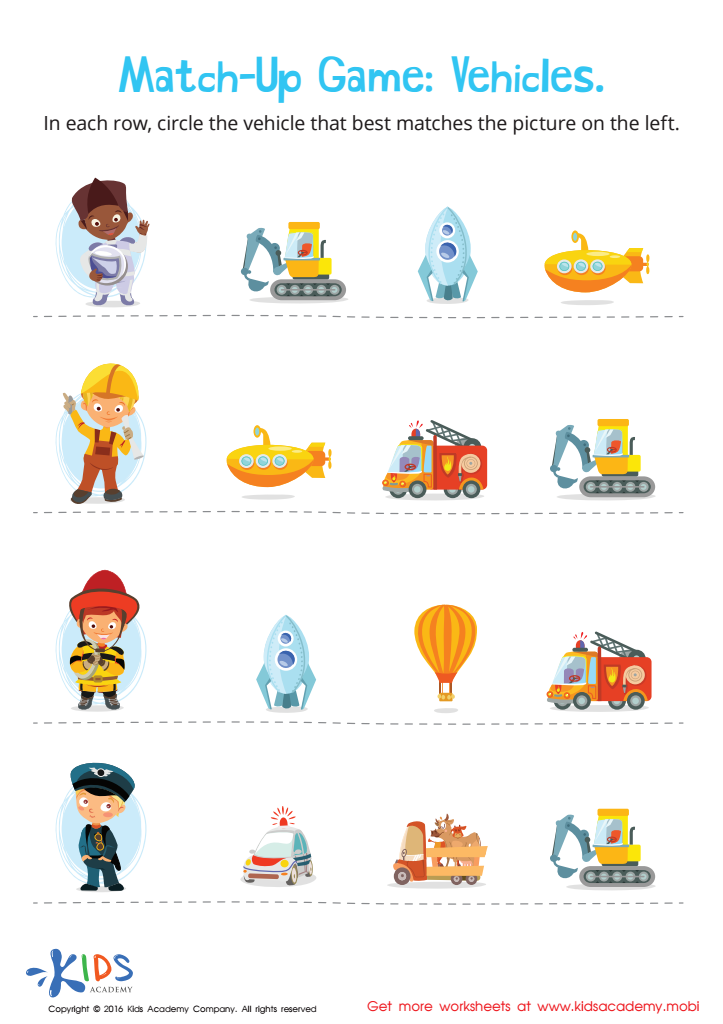
Vehicles Worksheet
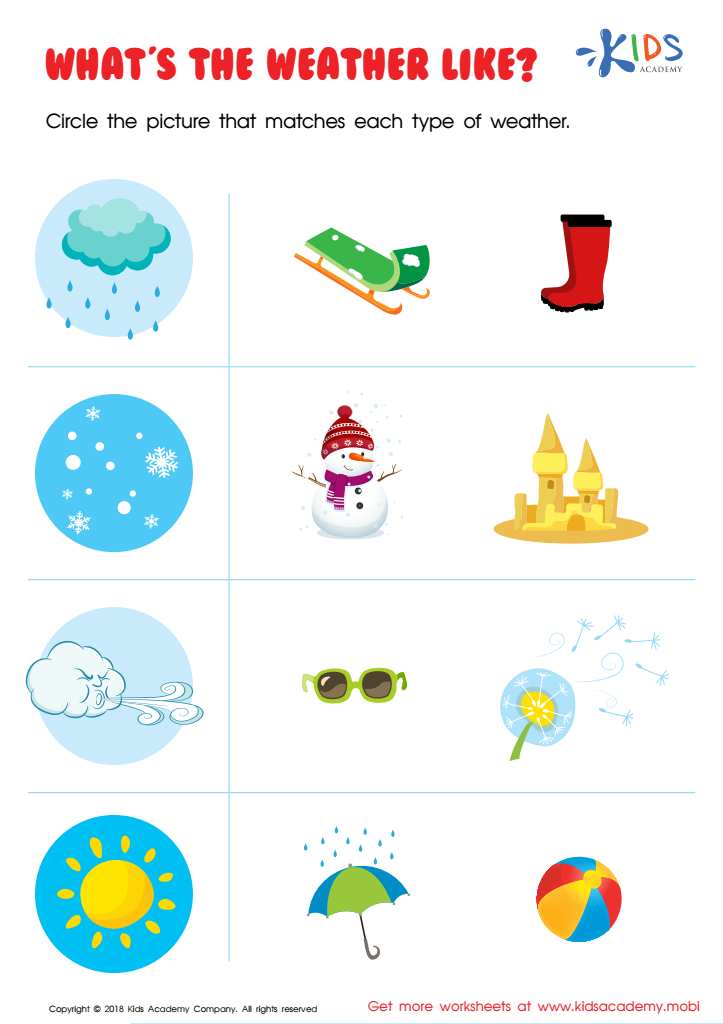
What's the Weather Like? Worksheet








Vocabulary building is crucial for early development, especially for children ages 4-5, as it significantly impacts their reading, writing, and overall communication skills. This is a formative stage when kids are absorbing language rapidly, and their vocabulary lays the foundation for future academic success. Engaging in vocabulary building activities enhances children's ability to express their thoughts and emotions, fostering social interactions and confidence.
Teachers and parents should prioritize vocabulary-building matching exercises because they not only make learning fun but also encourage cognitive development. Such activities improve memory retention and enable children to recognize relationships between words — crucial for literacy skills. Additionally, through playful matching games, children learn words in context, improving comprehension and usage flexibility.
Moreover, vocabulary skills are directly linked to later achievement in school. Children with a rich vocabulary are better positioned to tackle complex texts and engage critically with content. By actively participating in vocabulary-building activities, both parents and teachers can nurture a love for language, paving the way for lifelong learning and communication excellence. Ultimately, investing time and effort in vocabulary building at this age is an investment in a child’s future.








