Cognitive Development Tracing Shapes Worksheets for Ages 4-5
4 filtered results
-
From - To
Enhance your child's cognitive development with our engaging Tracing Shapes Worksheets designed specifically for ages 4-5. These printable resources focus on shape recognition, fine motor skills, and concentration—essential building blocks for early learning. By tracing various shapes, children not only improve their hand-eye coordination but also boost their cognitive abilities through fun, interactive exercises. Our worksheets promote critical thinking as kids identify different shapes and their properties. Perfect for classroom activities or home practice, these worksheets provide a comprehensive approach to early childhood education, ensuring that your child is ready for future academic success. Download and watch your child thrive!
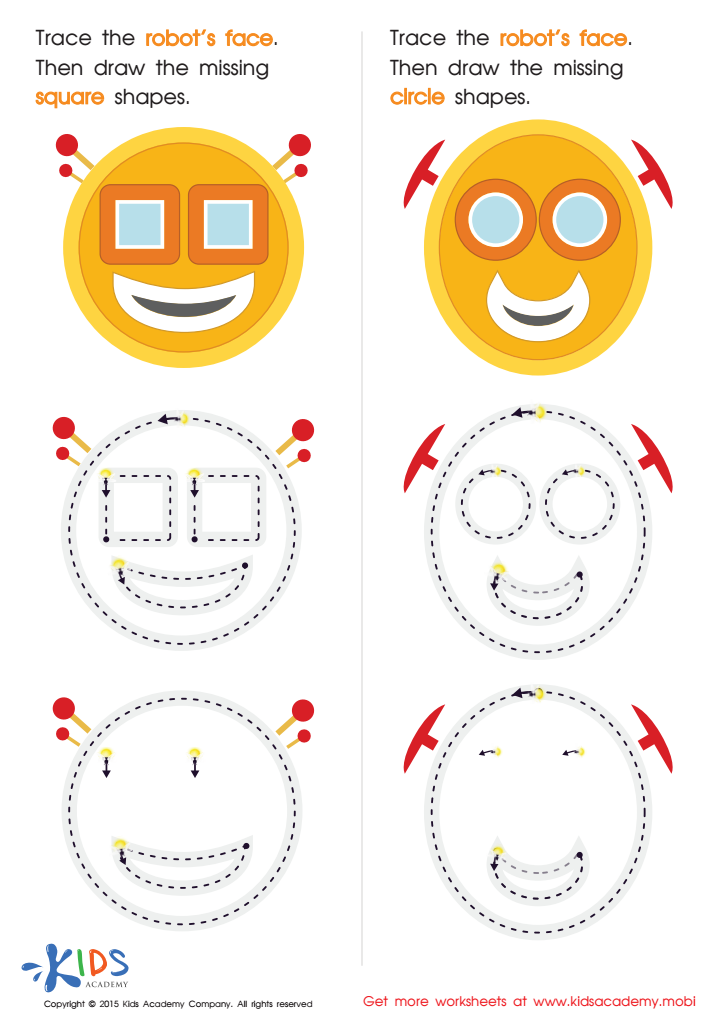
Practicing to Draw Circles And Squares Printable
 Assign to My Students
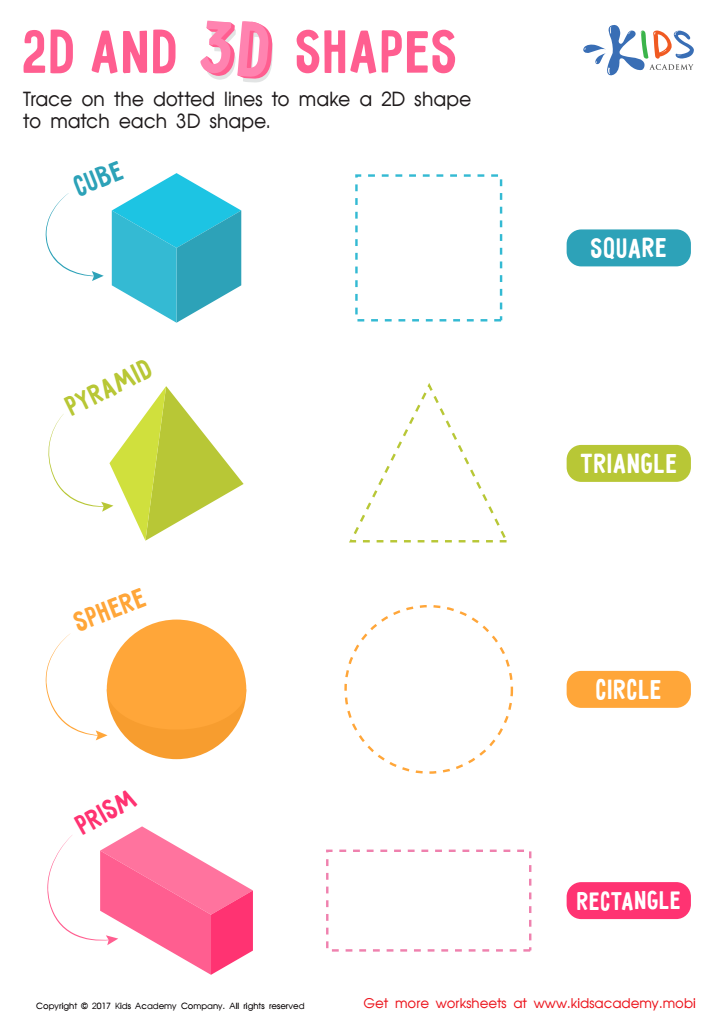
2D and 3D Shapes Worksheet
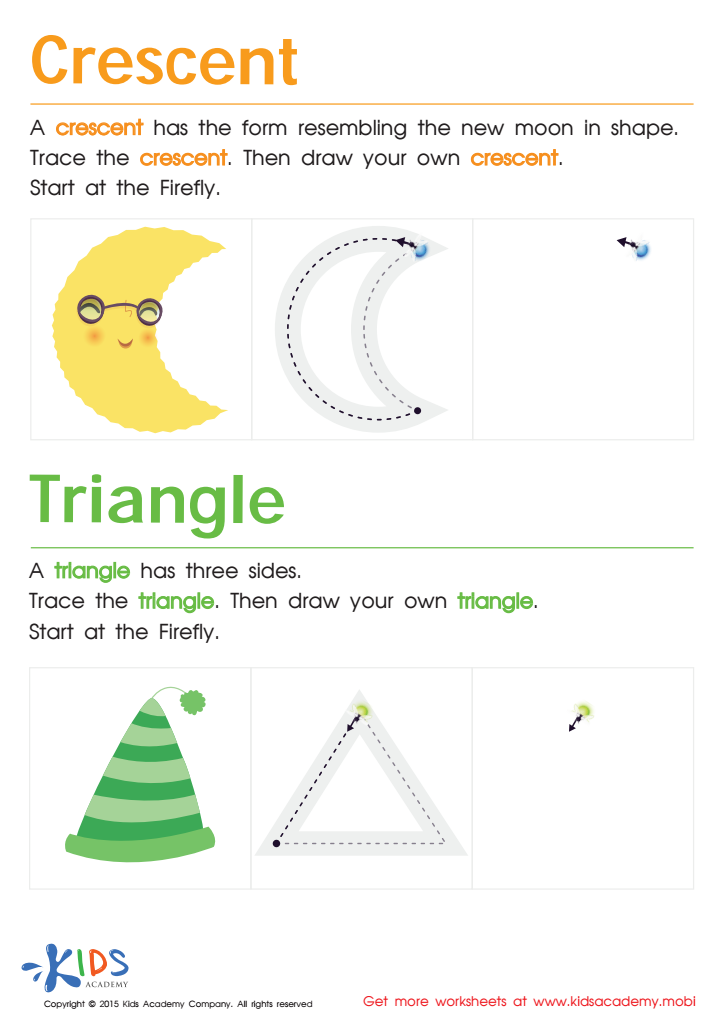
Learning to Draw Crescents And Triangles Worksheet
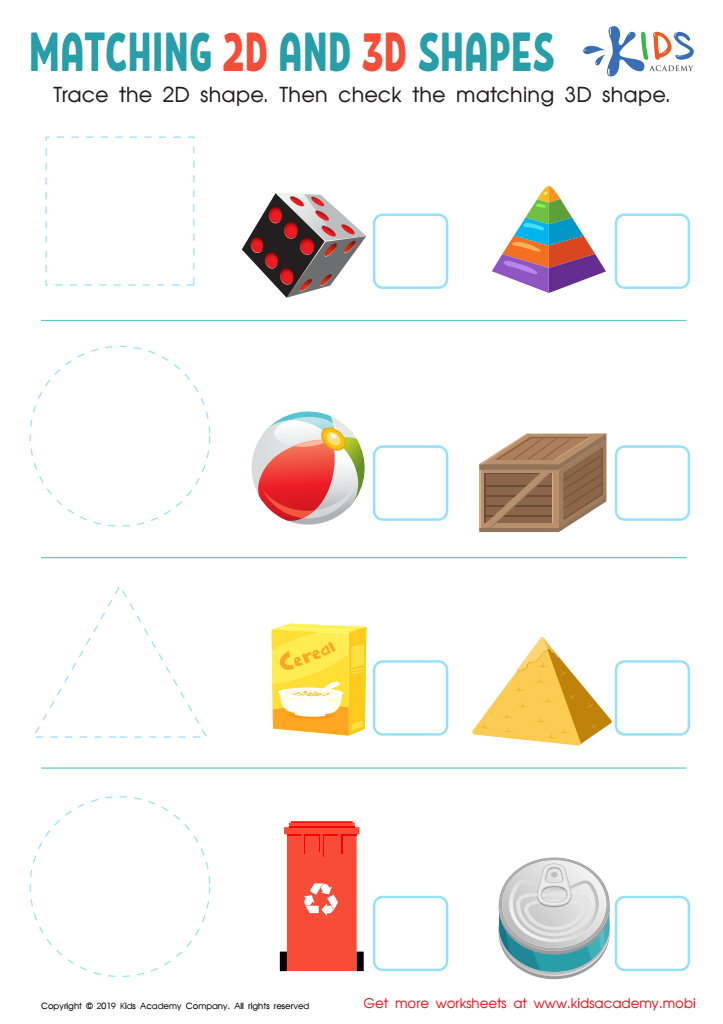
Matching 2D and 3D Shapes Worksheet








Cognitive development in early childhood is a critical aspect of a child's overall growth, and tracing shapes is an engaging activity that can significantly contribute to this process for children aged 4-5. At this developmental stage, children are actively developing cognitive skills such as critical thinking, problem-solving, and spatial awareness. Tracing shapes encourages the practice of fine motor skills, which are essential for future tasks like writing and drawing.
When children trace shapes, they also enhance their understanding of geometry and form, laying the groundwork for mathematical concepts. This activity promotes hand-eye coordination, attention to detail, and persistence as kids learn to replicate shapes accurately. Additionally, it fosters concentration and patience, critical skills for later learning.
For parents and teachers, facilitating such activities is key to nurturing a child's curiosity and confidence. Engaging children in tracing shapes not only aids in cognitive development but also nurtures creativity as they begin to see shapes in their surroundings. Working with shapes can also be integrated with storytelling or exploration of colors, making it a versatile tool for holistic development. By prioritizing such developmental activities, parents and teachers can significantly influence a child's early learning experiences and set a strong foundation for future academic success.