Filters

6 filtered results

Clear all filters
Favorites
With answer key
Interactive

6 filtered results

Difficulty Level

Grade


Subject

    Discover our engaging Vowel Diphthongs Worksheets designed specifically for children ages 4-6! These fun and interactive resources help young learners master the concept of diphthongs through colorful illustrations and enjoyable activities. With a variety of exercises, including identification, matching, and filling in the blanks, kids will build their phonics skills while developing essential reading and writing abilities. Perfect for parents and educators alike, our worksheets are easy to use and ideal for enhancing early literacy. Let your child embark on a phonetic adventure and watch their confidence soar as they learn to recognize these important sound combinations!

    Check out this FREE Trial Lesson on Vowel Diphthongs for age 4-6!

    The OA Vowel Pair

    Favorites
    With answer key
    Interactive
    • 4-6
    • Vowel Diphthongs
    The AI Vowel Pair Worksheet
    The AI Vowel Pair Worksheet

    The AI Vowel Pair Worksheet

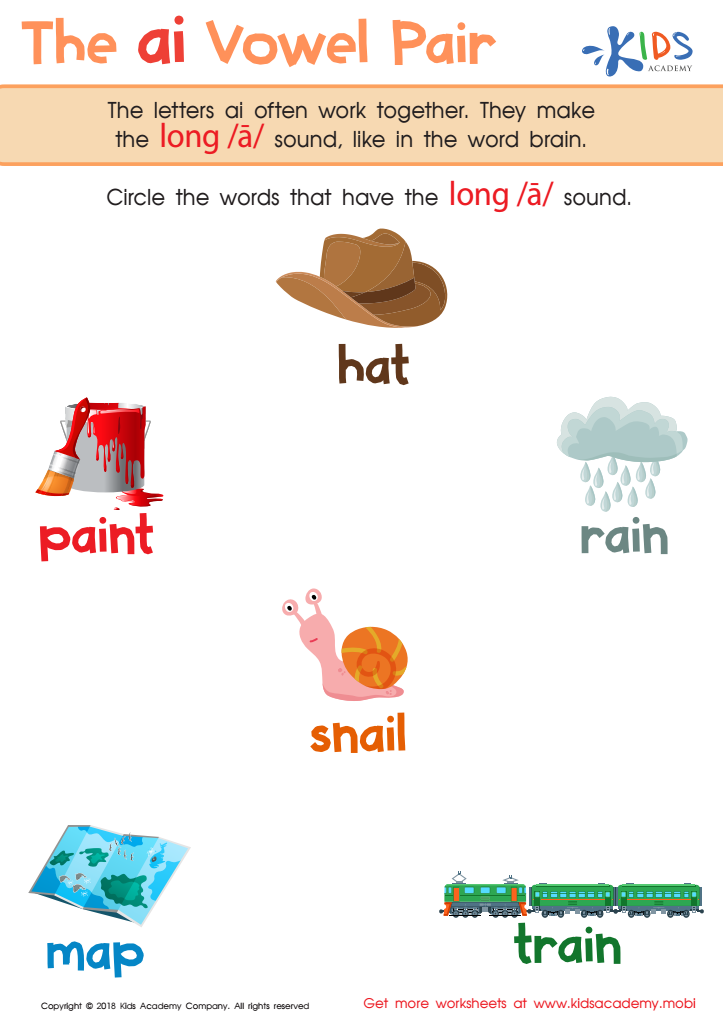
    Vowel pairs make different sounds than individual letters. The 'ai' combination often forms the long /a/ sound, like in 'brain' and 'strain'. Get your kids to look at the pictures in the worksheet, identify each and say the name aloud. Help them circle the words with the long /a/ sound.
    The AI Vowel Pair Worksheet
    Worksheet
    Which's the OA Word? Worksheet
    Which's the OA Word? Worksheet

    Which's the OA Word? Worksheet

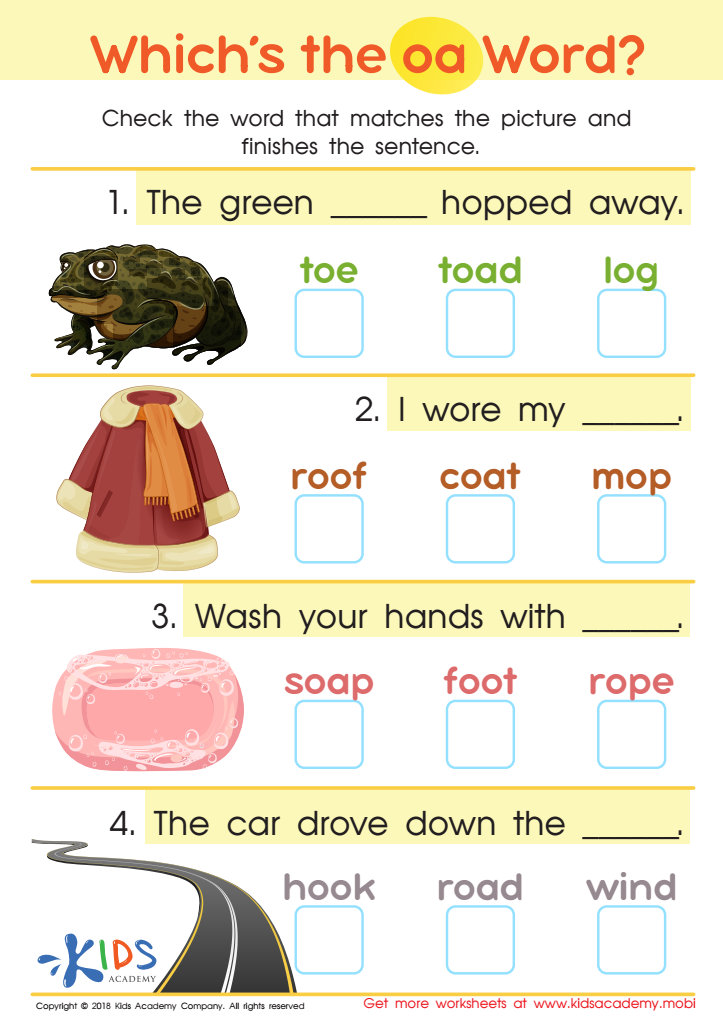
    Encourage your kids to complete this fun worksheet. Ask them to identify the animals and objects in the pictures. Read the incomplete sentences aloud, and then find the correct word to finish the sentence. Check their work.
    Which's the OA Word? Worksheet
    Worksheet
    Is It EE, EA, or AY? Worksheet
    Is It EE, EA, or AY? Worksheet

    Is It EE, EA, or AY? Worksheet

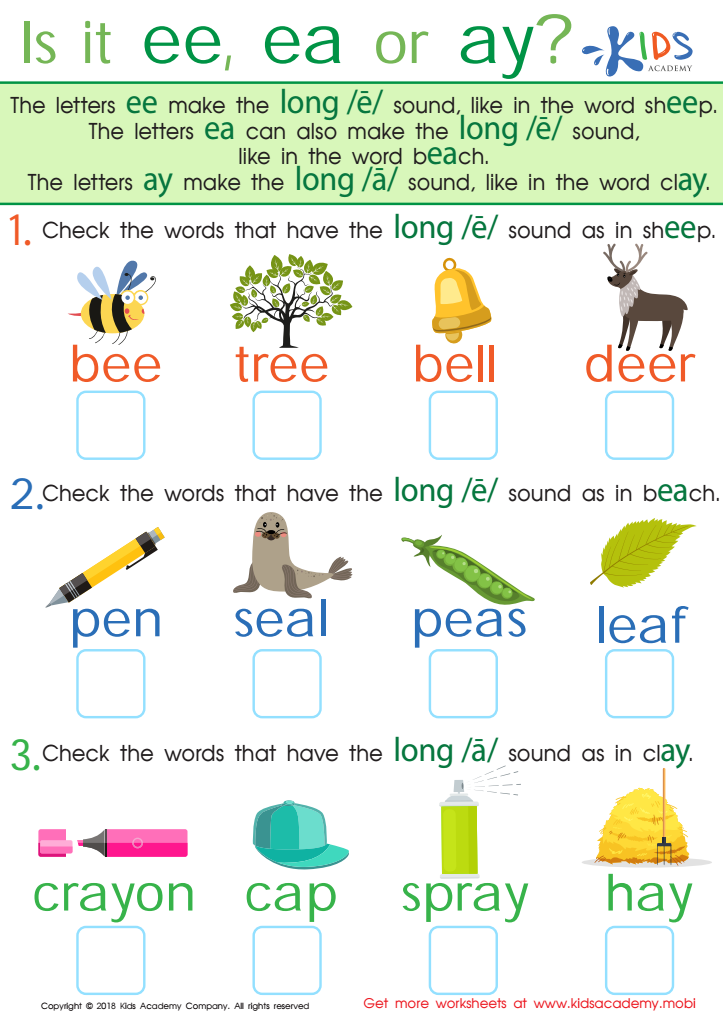
    When 'ee', 'ea' and 'ay' are in words, they usually make the long /e/ and /a/ sounds. Examples of words with 'ee' are "sheep", 'beach' and 'seat' with 'ea', and 'clay' and 'play' with 'ay'. Check this colourful worksheet with your kids; help them find the words that make the long /e/ sound like 'sheep'.
    Is It EE, EA, or AY? Worksheet
    Worksheet
    What Sounds Like Float? Worksheet
    What Sounds Like Float? Worksheet

    What Sounds Like Float? Worksheet

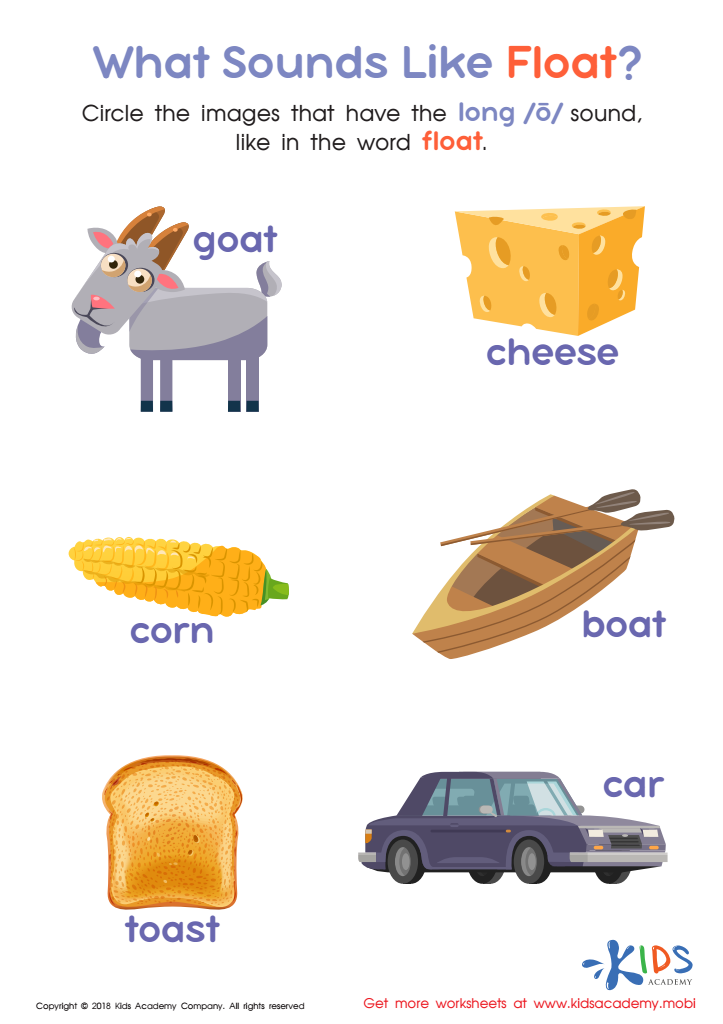
    Help your kids practice the long /o/ sound with words such as 'boat', 'goat' and 'float'. Ask them to identify and circle the images in the worksheet that have the same sound. Award bonus points if they come up with more words with 'oa' spelling!
    What Sounds Like Float? Worksheet
    Worksheet
    The AI Tree Worksheet
    The AI Tree Worksheet

    The AI Tree Worksheet

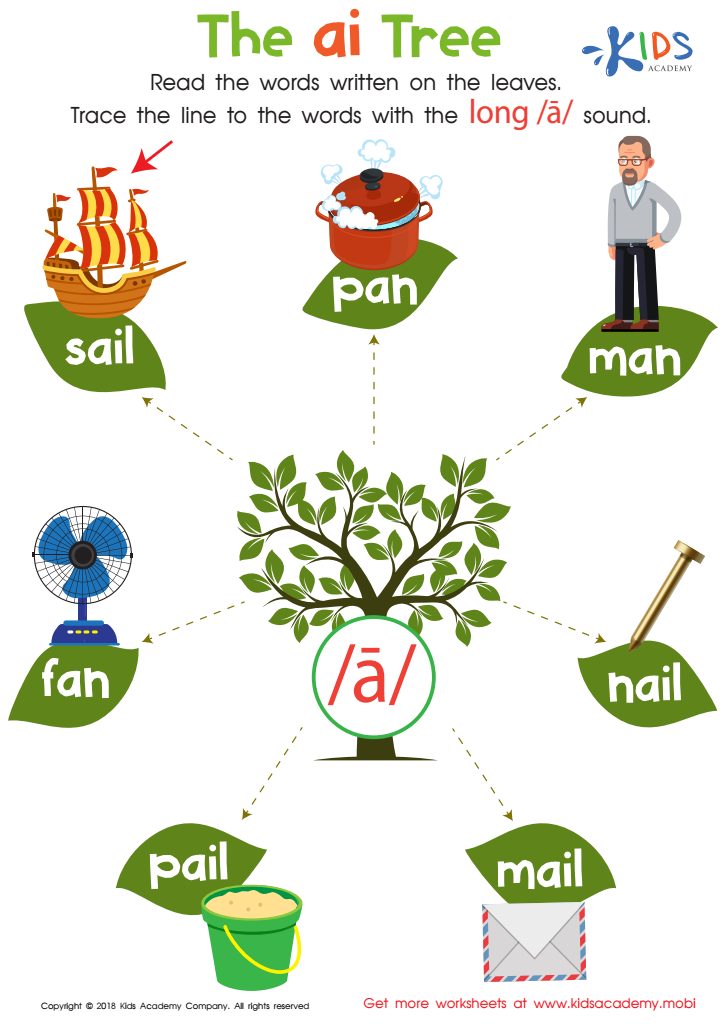
    Help your kids learn to read better with this worksheet! Introduce the vowel pair 'ai' and give them familiar examples. Ask them to give you some in return. Then, have them read the words on the leaves and help them trace the ones with the long /a/ sound.
    The AI Tree Worksheet
    Worksheet
    Hungry Caterpillar Maze Worksheet

    Hungry Caterpillar Maze Worksheet

    Hungry Caterpillar Maze Worksheet

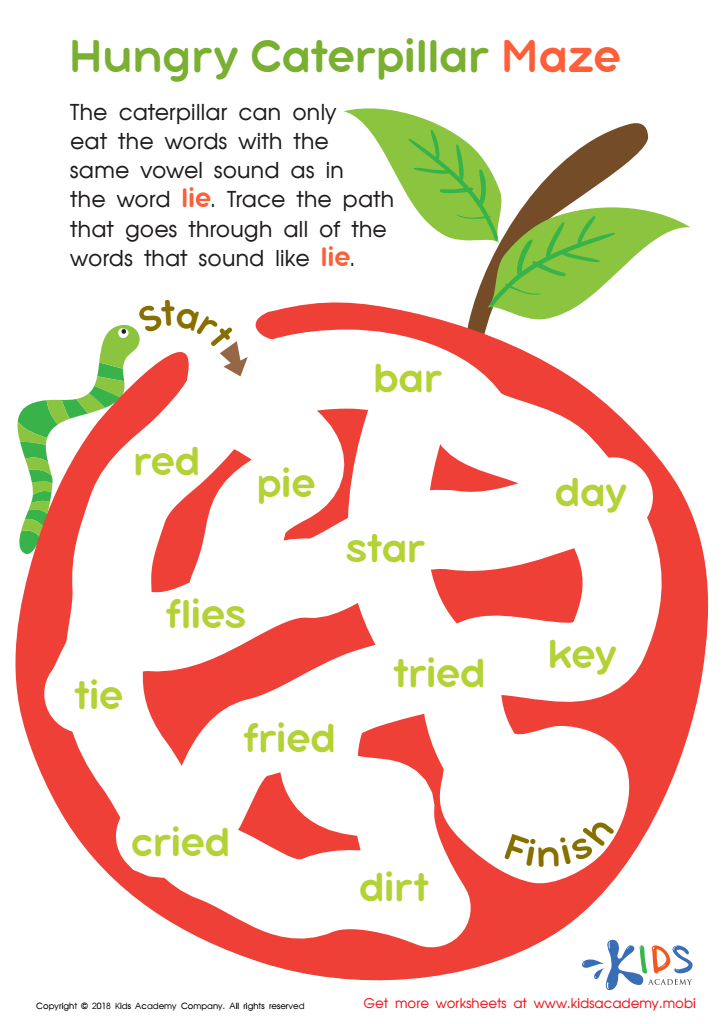
    Remind the kids that caterpillars turn into butterflies! This worksheet helps them practice their vowel sounds. They must trace the path of words that sound like ‘lie’ to help the caterpillar reach the finish line. It's a fun way to learn and explore!
    Hungry Caterpillar Maze Worksheet
    Worksheet


    Vowel diphthongs are essential for early readers and language learners, especially for children aged 4-6. Understanding these combinations, such as "ou," "oi," and "au," enhances phonemic awareness, which is crucial for reading development. When children recognize how these sounds blend, they become more proficient in decoding words, leading to better reading and spelling skills.

    Moreover, diphthongs contribute to expressive language development. By learning to pronounce these sounds correctly, children can enhance their speaking skills, improving their ability to communicate effectively with peers and adults. Incorporating activities that promote diphthong recognition not only makes learning fun but also helps build vocabulary as children encounter more complex word structures.

    Parents and teachers play a vital role in this process. Engaging children in games, songs, and interactive lessons centered around diphthongs can lead to deeper understanding and retention of language skills. Additionally, these efforts foster a love for learning as children experience the joy of mastering challenging sounds. In summary, early exposure to vowel diphthongs is critical for fostering literacy, vocabulary growth, and communication skills, making it a priority for both parents and educators.