Discover engaging Visual Learning Addition & Subtraction Worksheets designed specifically for children aged 4-7. These worksheets make math fun and interactive, helping young learners grasp essential math concepts. Featuring vibrant visuals and hands-on activities, children can practice addition and subtraction in a playful environment. Each worksheet aims to enhance critical thinking and problem-solving skills while catering to different learning styles. Ideal for home or classroom use, our visual worksheets are perfect for reinforcing math skills through enjoyable challenges. Equip your early learners with the tools they need to build a strong foundation in mathematics and inspire a love for learning!
Check out this FREE Trial Lesson on Addition & Subtraction for age 4-7!

L

Favorites
With answer key
Interactive
  • 4-7
  • Visual Learning
  • Addition & Subtraction
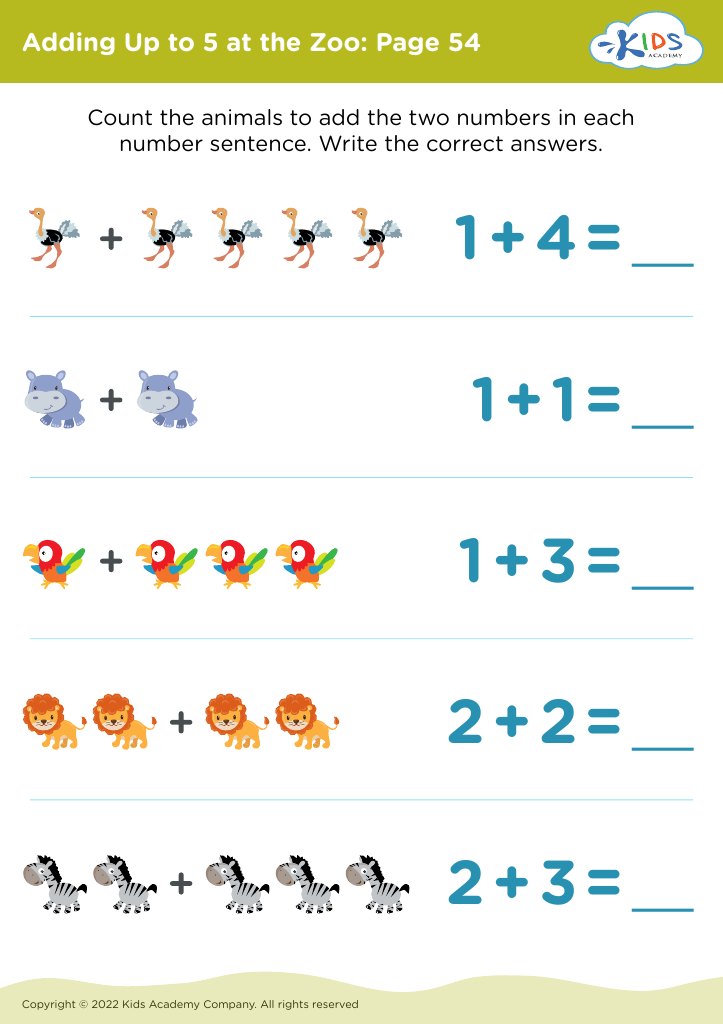
Adding Up to 5 at the Zoo: Page 54
Worksheet
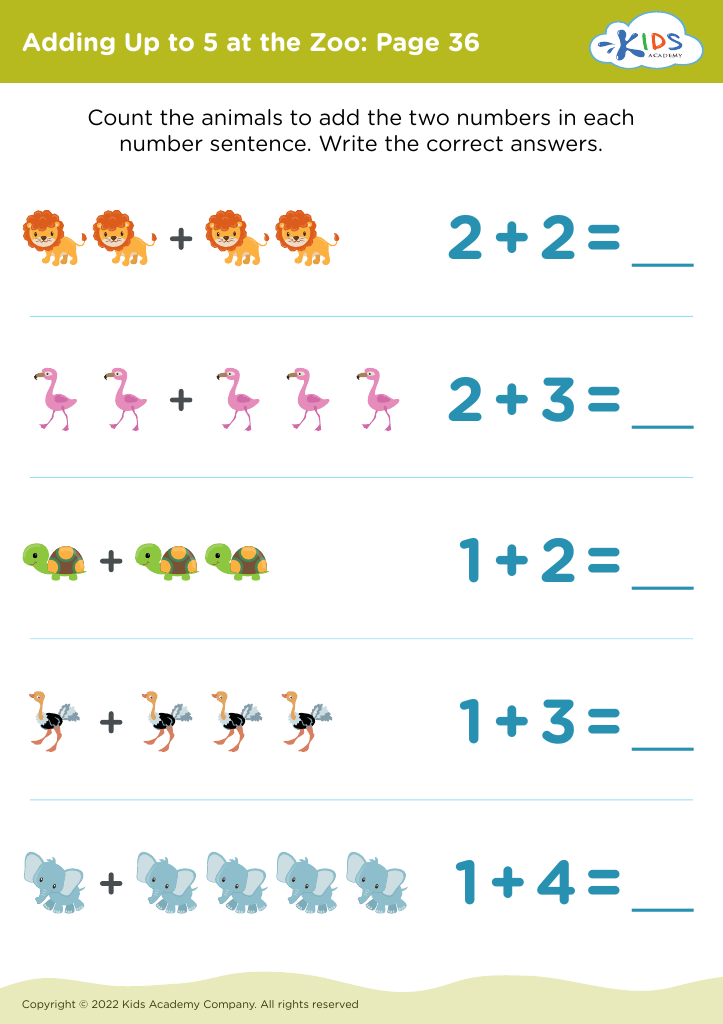
Adding Up to 5 at the Zoo: Page 36
Worksheet
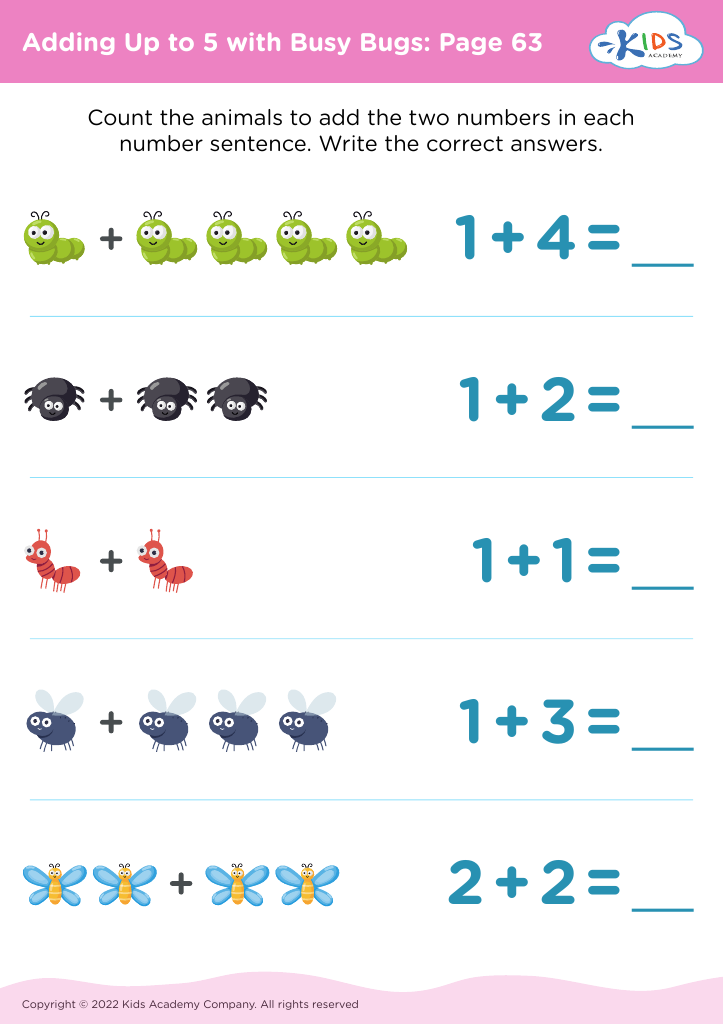
Adding Up to 5 with Busy Bugs: Page 63
Worksheet
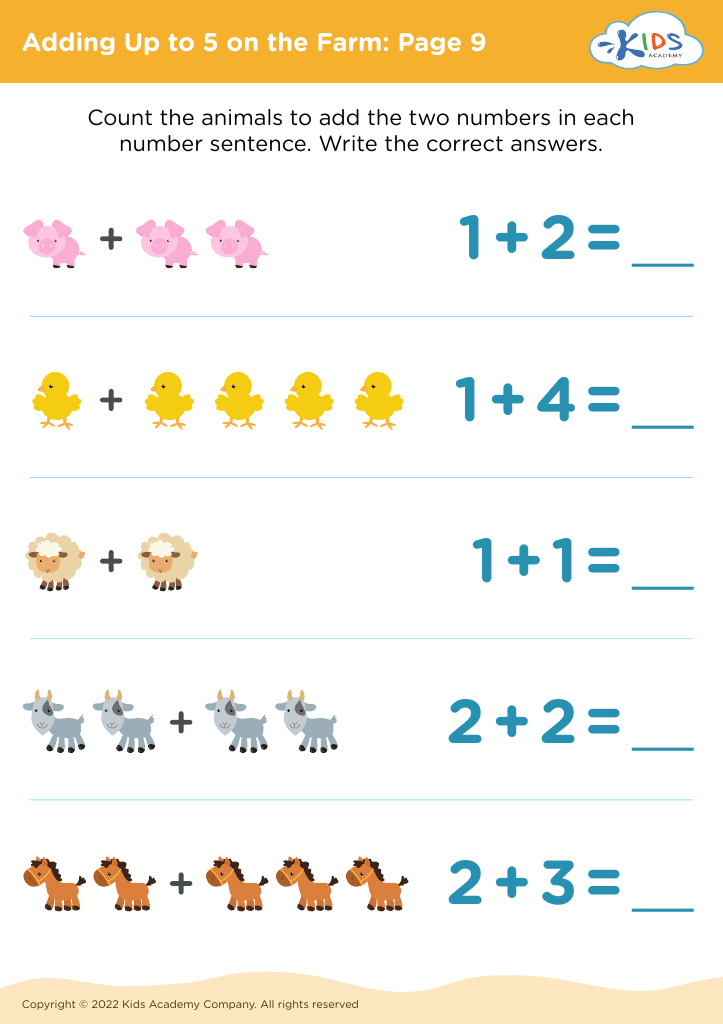
Adding Up to 5 on the Farm: Page 9
Worksheet
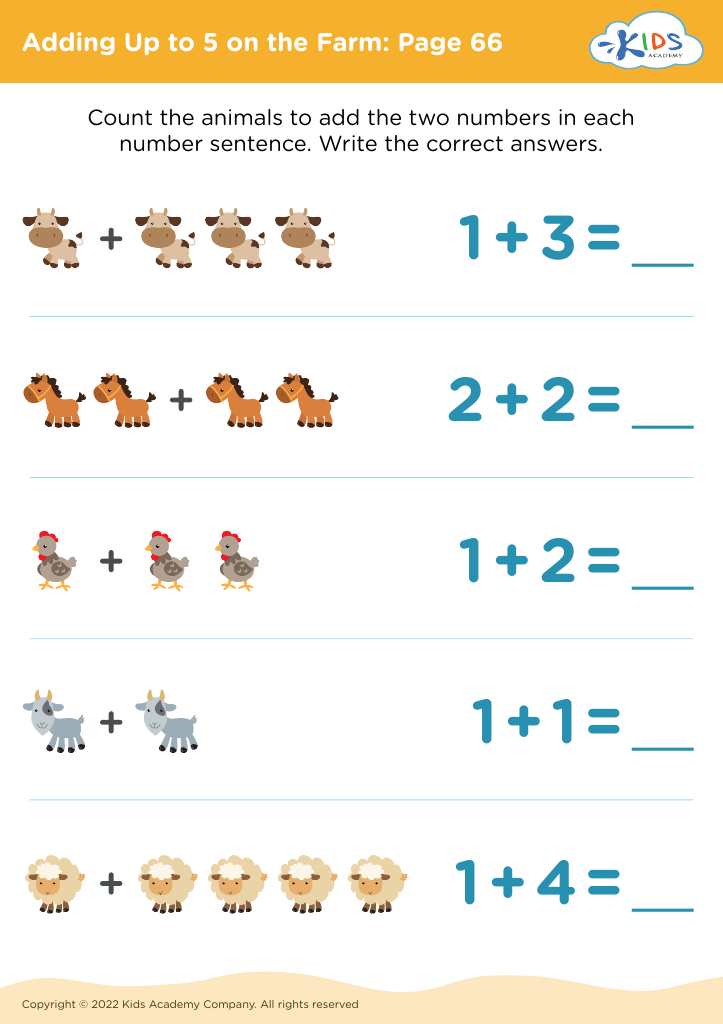
Adding Up to 5 on the Farm: Page 66
Worksheet
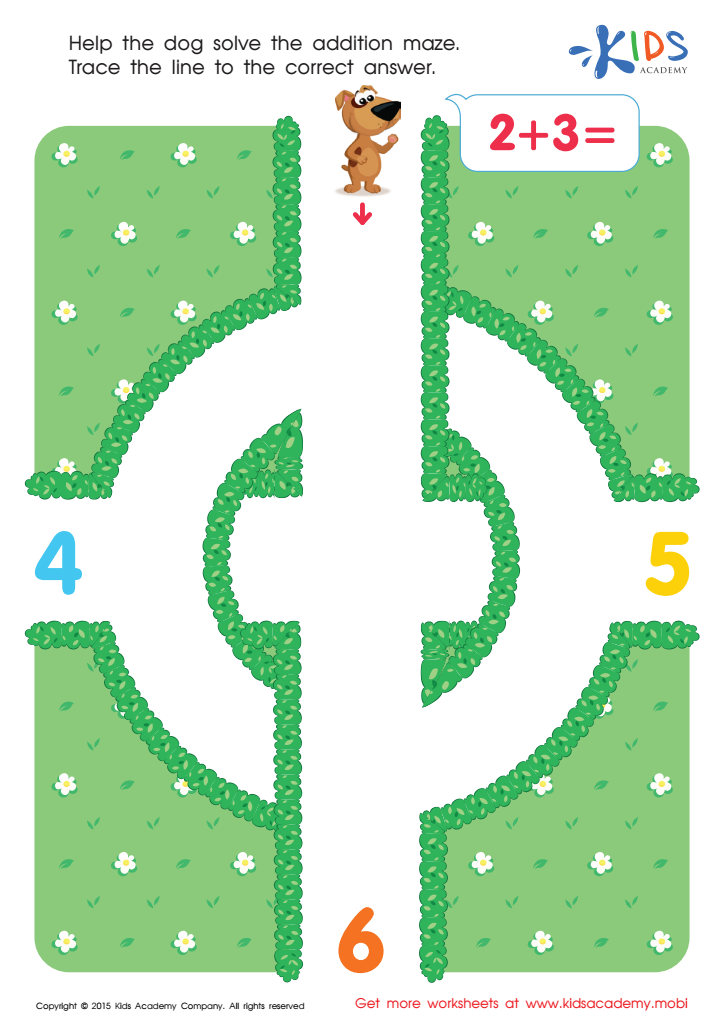
Math: Two And Three Addition PDF Worksheet

Two And Three Addition Worksheet

Give your children the task and let them find the path to the right answer while they make their way through the maze, and don't forget to let them trace the path.
Two And Three Addition Worksheet
Worksheet
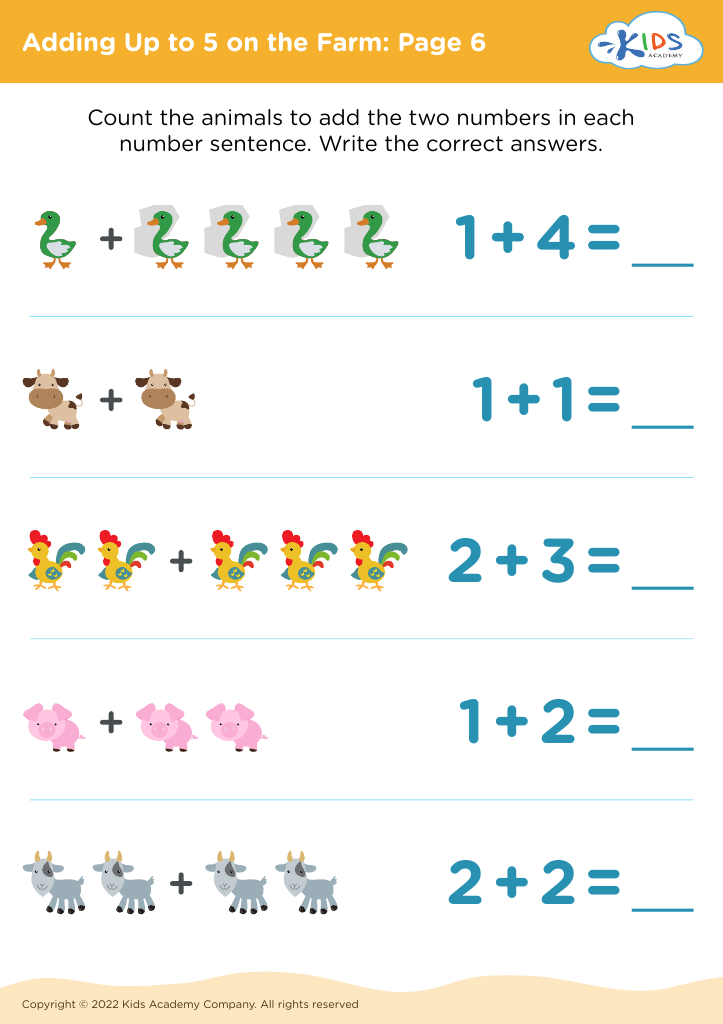
Adding Up to 5 on the Farm: Page 6
Worksheet
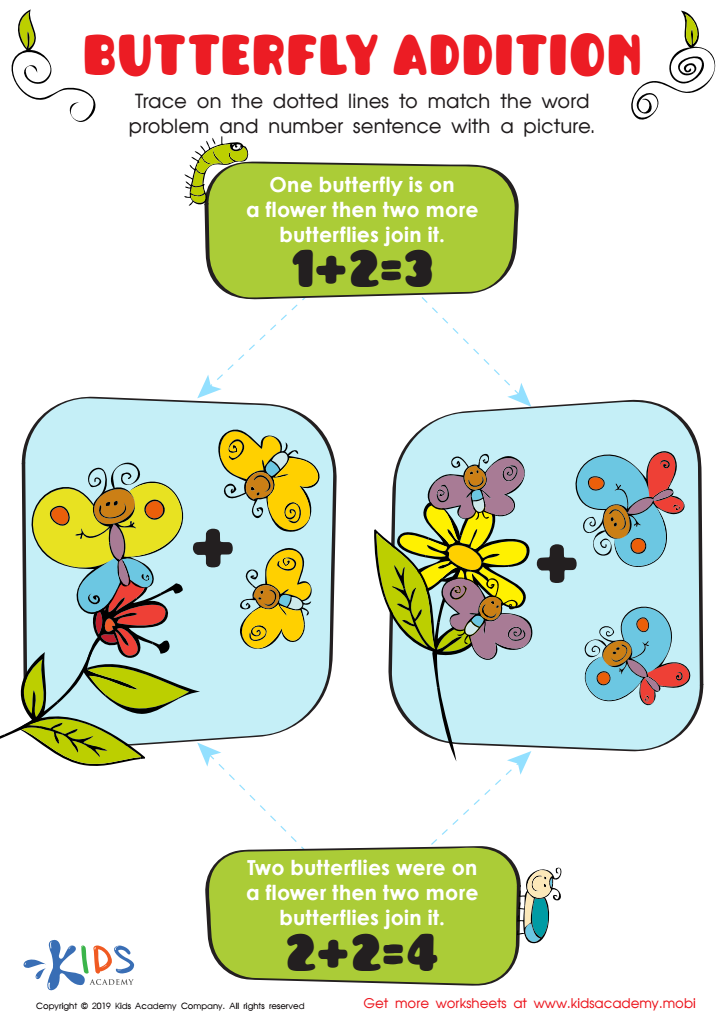
Butterfly Addition Worksheet

Butterfly Addition Worksheet

This tracing sheet is great for kids to work on math skills and have fun too. Read the word problems to them, then help them trace the dotted lines to match the problem and number sentence to a picture. Not only is it educational, it's beautiful too - your kids will love learning about butterflies!
Butterfly Addition Worksheet
Worksheet
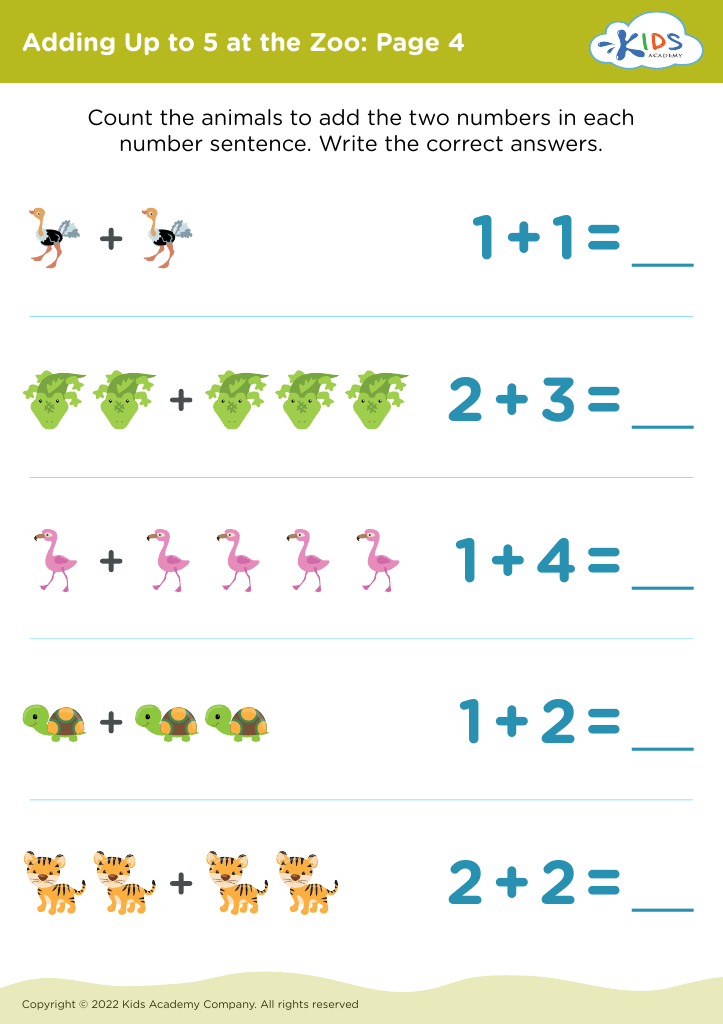
Adding Up to 5 at the Zoo: Page 4

Adding Up to 5 at the Zoo: Page 4

Adding Up to 5 at the Zoo: Page 4
Worksheet
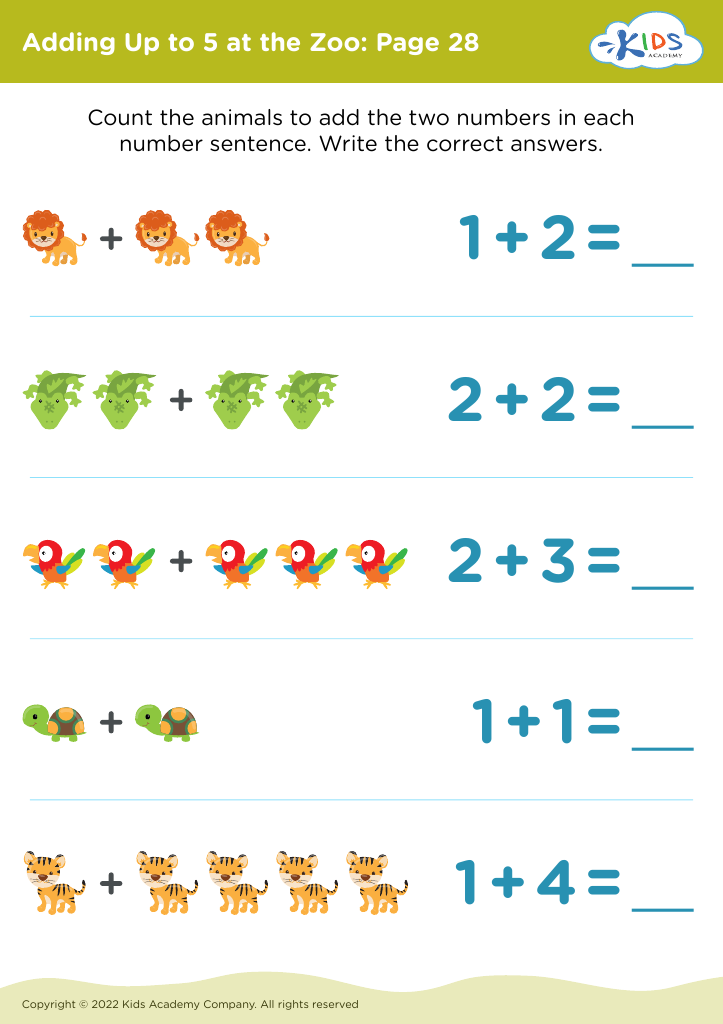
Adding Up to 5 at the Zoo: Page 28
Worksheet
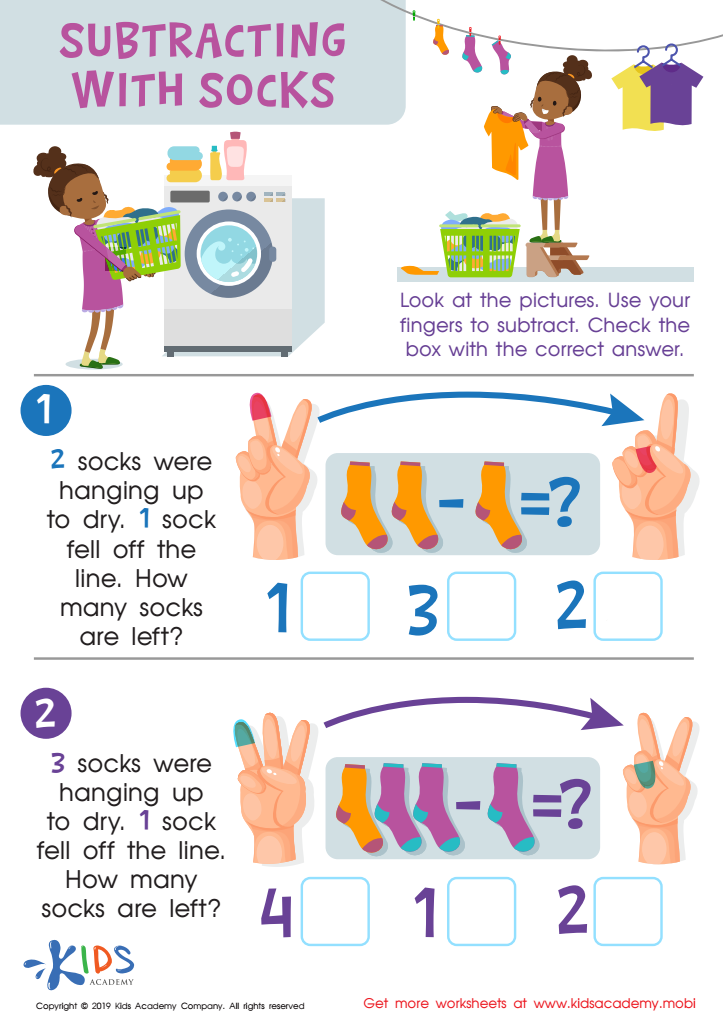
Subtracting Socks Worksheet
Subtracting Socks Worksheet
Before beginning this exercise with your children, warm them up with a counting game. If math is not their favorite subject, use this worksheet. Help them read the two word problems, then use their fingers to count and subtract. Ask them to select the correct answer and check the box.
Subtracting Socks Worksheet
Worksheet
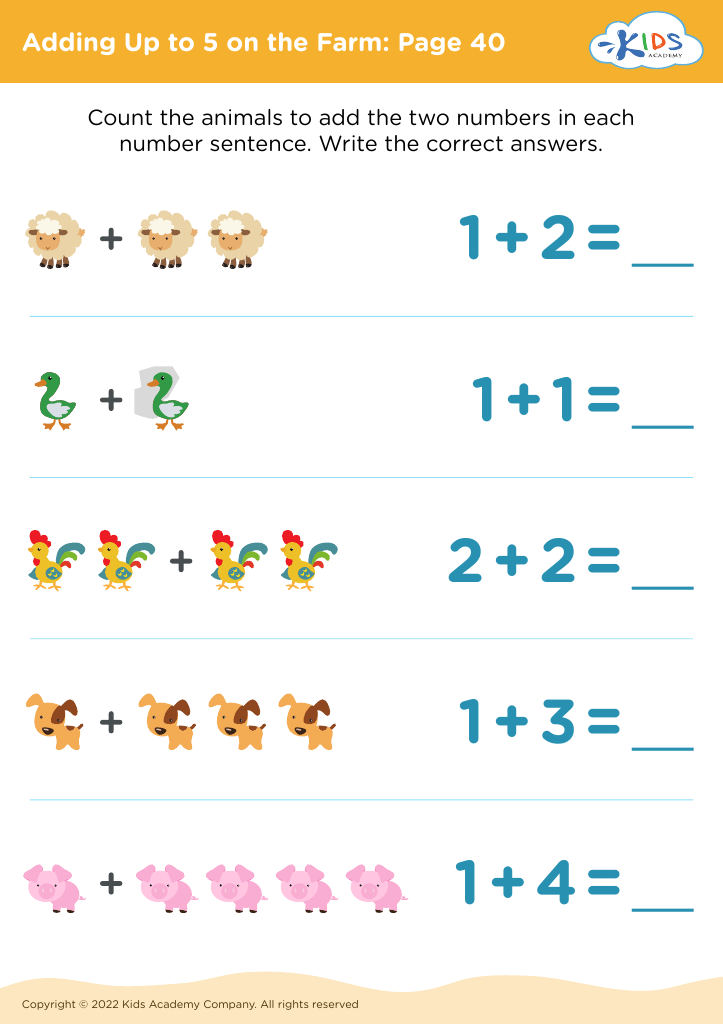
Adding Up to 5 on the Farm: Page 40
Worksheet
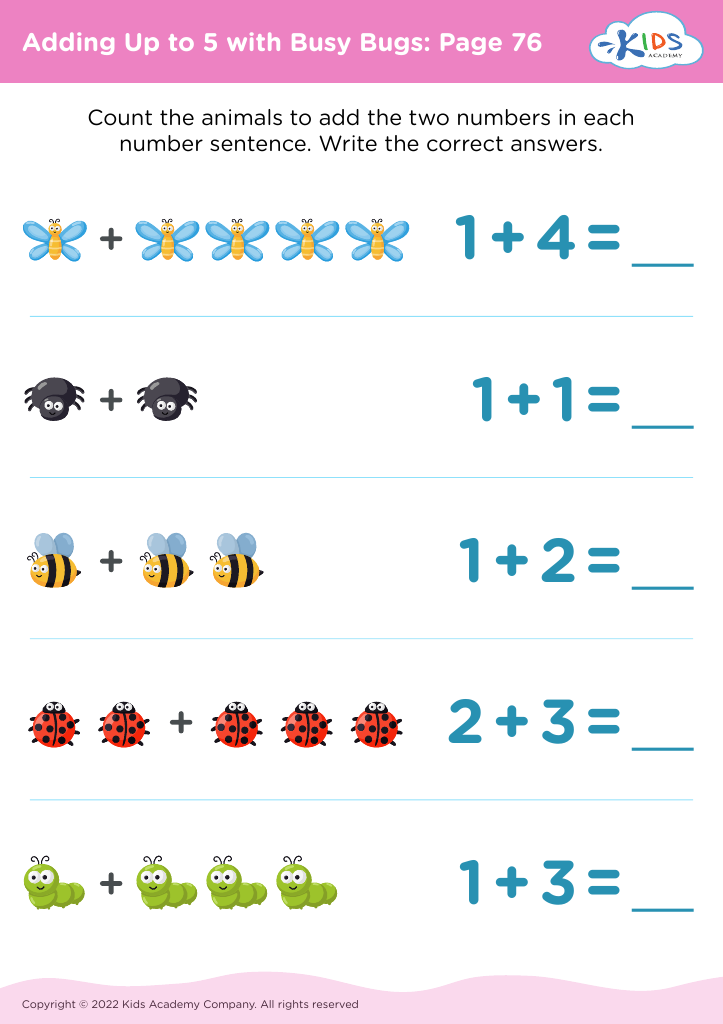
Adding Up to 5 with Busy Bugs: Page 76
Worksheet
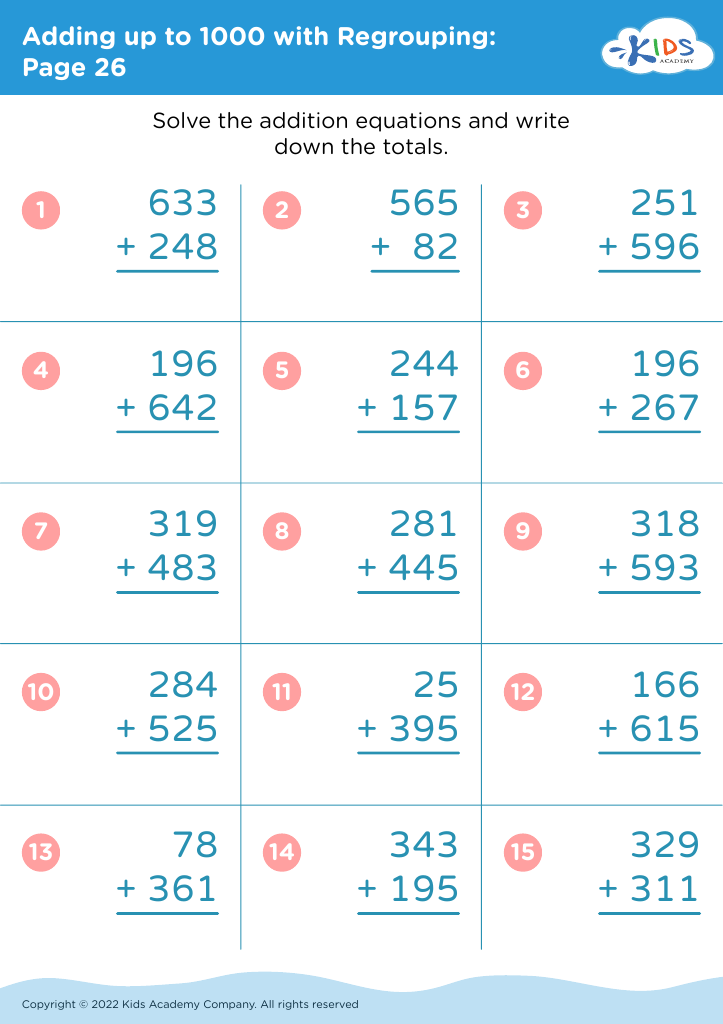
Adding up to 1000 with Regrouping: Page 26
Worksheet
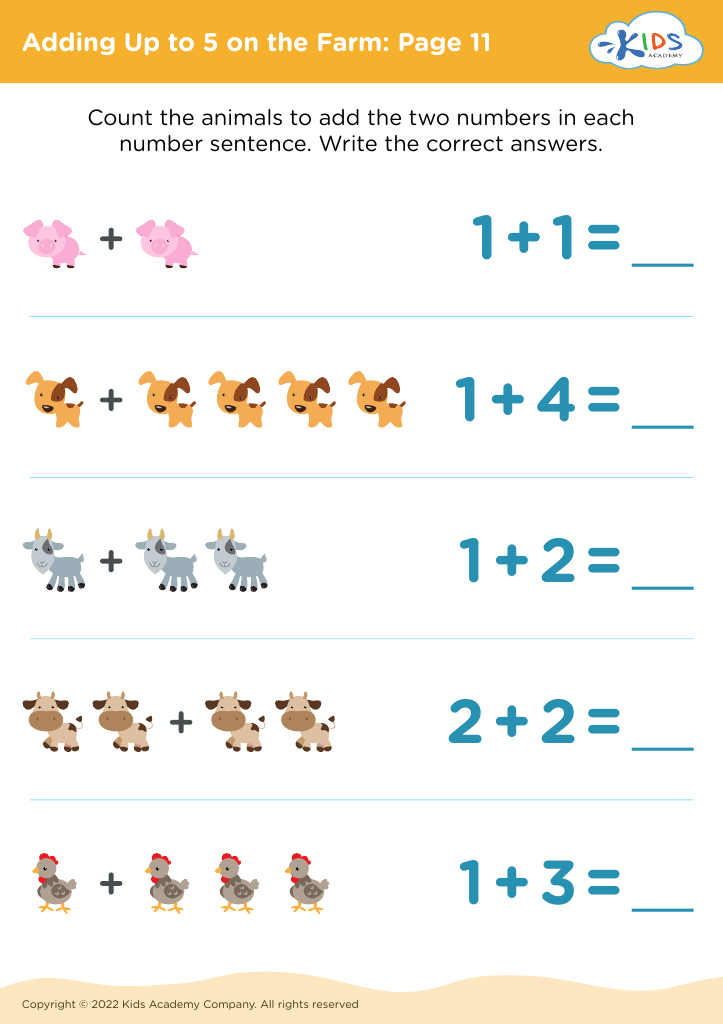
Adding Up to 5 on the Farm: Page 11
Worksheet
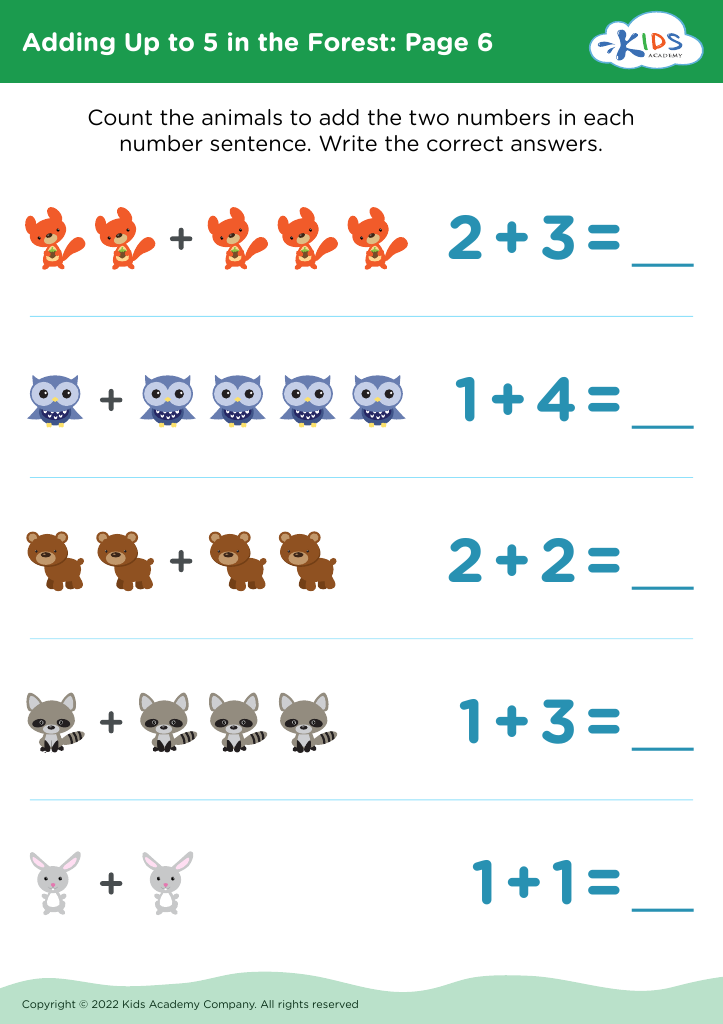
Adding Up to 5 in the Forest: Page 6
Worksheet
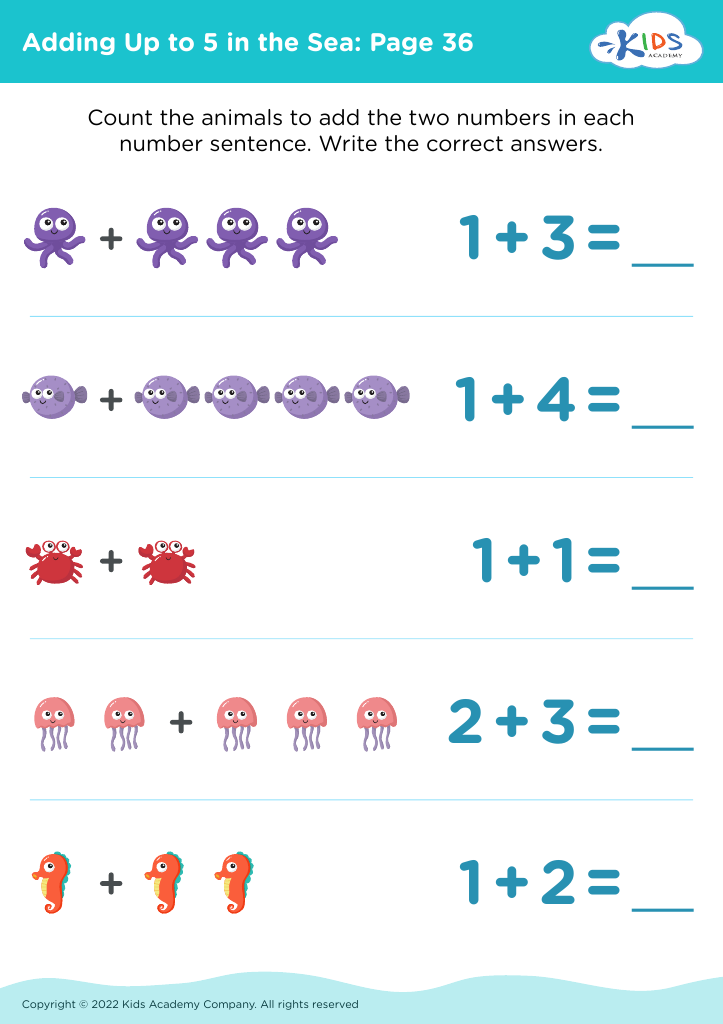
Adding Up to 5 in the Sea: Page 36
Worksheet
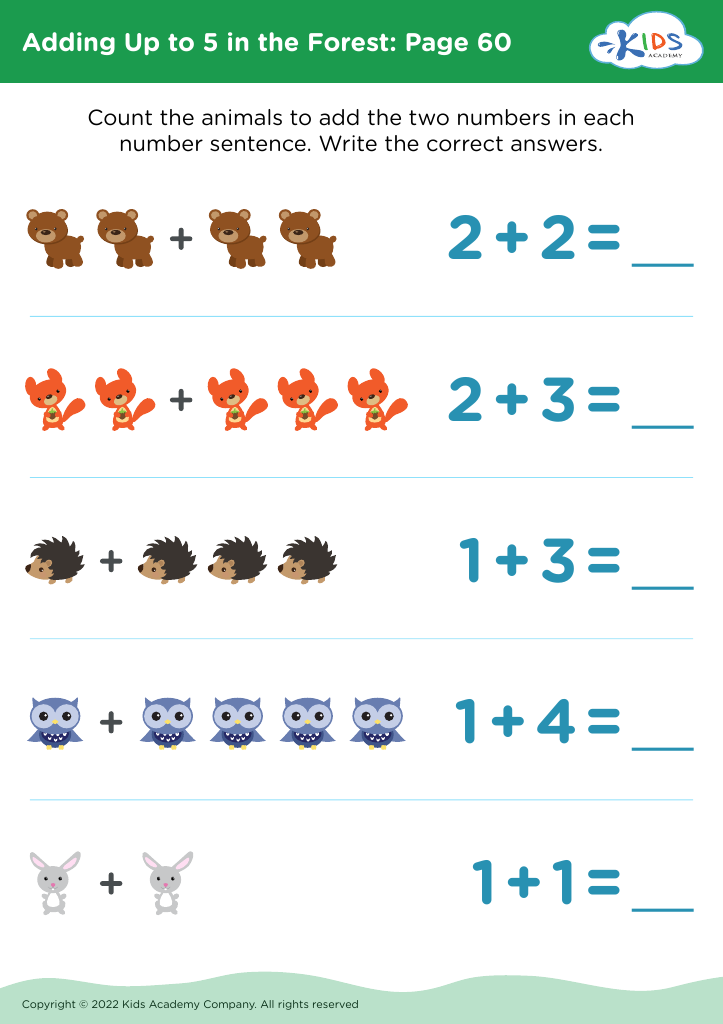
Adding Up to 5 in the Forest: Page 60
Worksheet
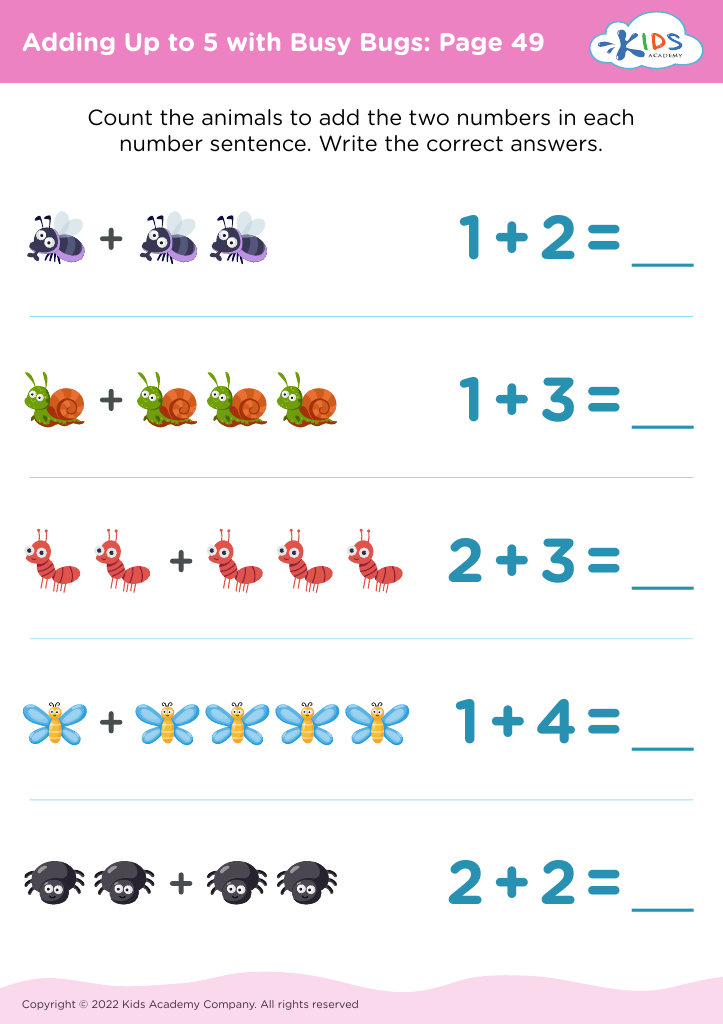
Adding Up to 5 with Busy Bugs: Page 49
Worksheet
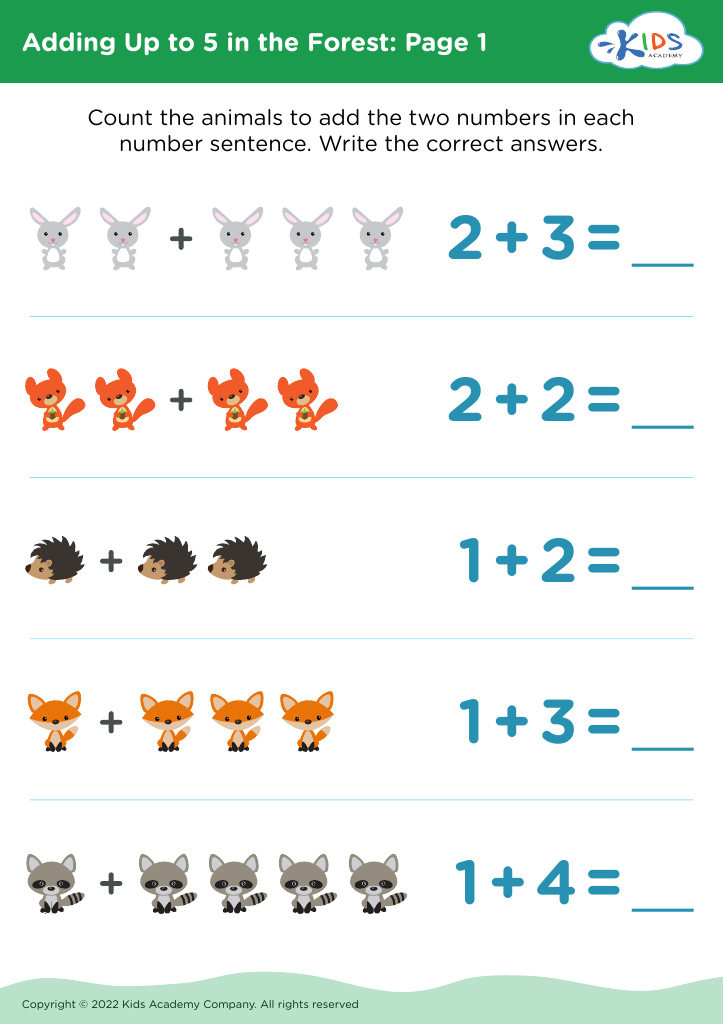
Adding Up to 5 in the Forest: Page 1
Worksheet
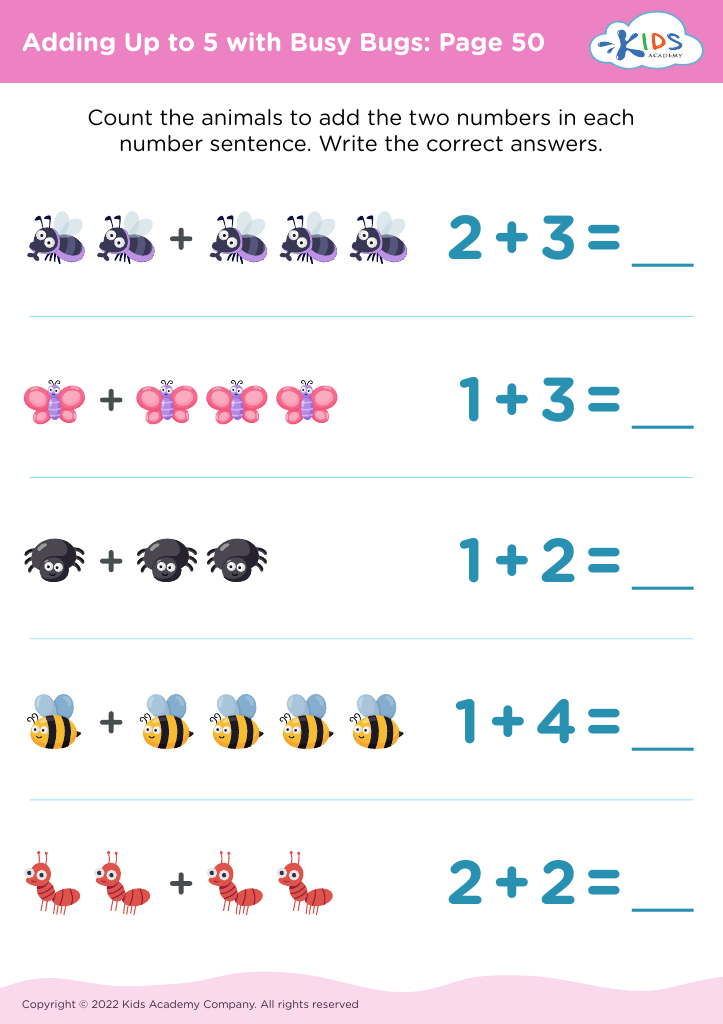
Adding Up to 5 with Busy Bugs: Page 50
Worksheet
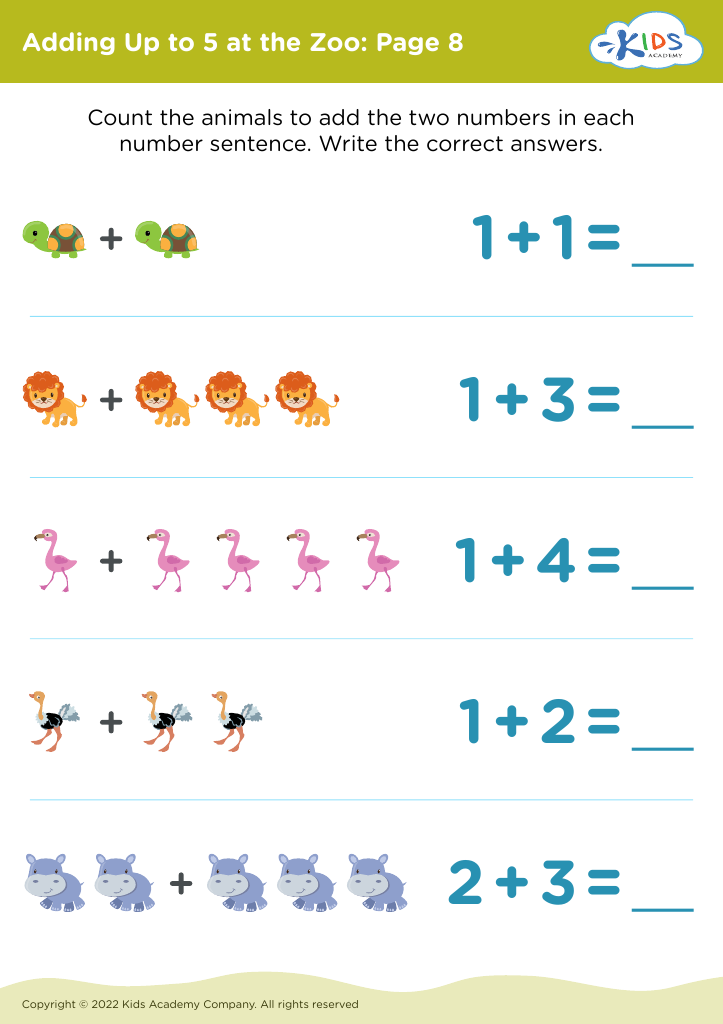
Adding Up to 5 at the Zoo: Page 8

Adding Up to 5 at the Zoo: Page 8

Adding Up to 5 at the Zoo: Page 8
Worksheet
Free 2 digit addition worksheet

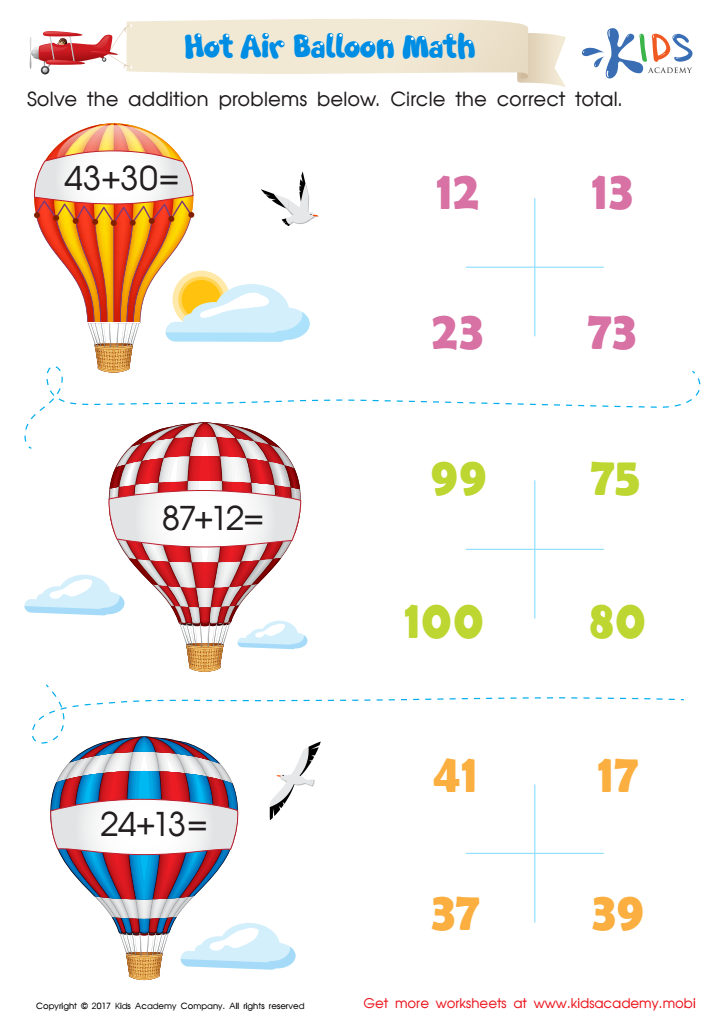
Hot Air Balloon Math Worksheet
It uses engaging pictures and a hot air balloon theme to keep your child interested, and it’s designed to build addition confidence.
Hot Air Balloon Math Worksheet

Worksheet
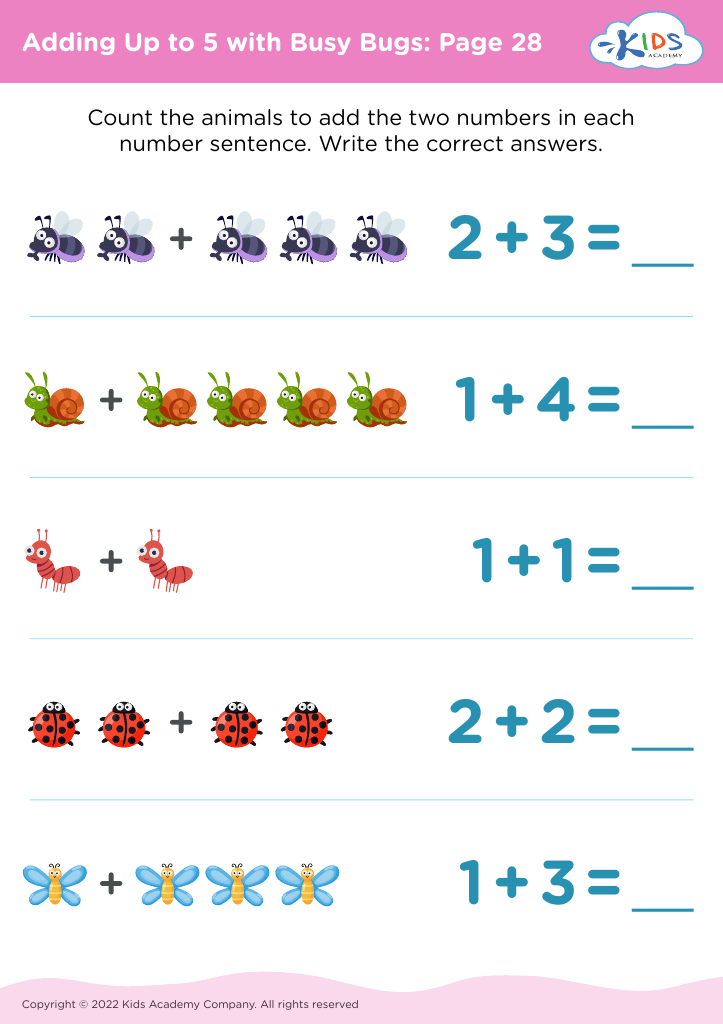
Adding Up to 5 with Busy Bugs: Page 28
Worksheet


Parents and teachers should prioritize visual learning for addition and subtraction for children aged 4-7 because it lays a strong foundation for mathematical understanding. At this developmental stage, children are highly receptive to visual aids, which help them grasp abstract concepts through tangible representation. Visual learning utilizes objects, drawings, and interactive tools like counters or number lines, making math relatable and engaging.

By incorporating visual strategies, children can recognize patterns and develop problem-solving skills. Visual representations foster critical thinking, as kids learn to visualize numbers and operations, leading to a deeper understanding of relationships between them. This approach caters to various learning styles, accommodating both visual and kinesthetic learners, and can boost confidence by making challenging concepts more accessible.

Moreover, applying visual learning techniques can encourage a positive attitude toward mathematics. Early experiences with math can shape a child’s perception of their abilities, influencing their future academic choices. When kids see math as fun and manageable, they’re more likely to remain engaged and curious, fostering a lifelong love for learning. Ultimately, prioritizing visual learning in early math education equips children with essential skills they will use throughout their educational journeys and daily lives.