Subtraction practice Math Worksheets for Ages 4-7
88 filtered results
-
From - To
Help your child build essential subtraction skills with our engaging Math Worksheets designed for ages 4-7! At Kids Academy, our printable worksheets make learning subtraction fun and effective. From colorful visuals to interactive exercises, these worksheets introduce young learners to subtracting numbers in a simple, graspable way. Whether your child is just beginning their math journey or needs extra practice, our worksheets are tailored to their developmental stage and learning pace. Start building a solid math foundation today with our comprehensive subtraction practice worksheets—where learning and fun go hand in hand!
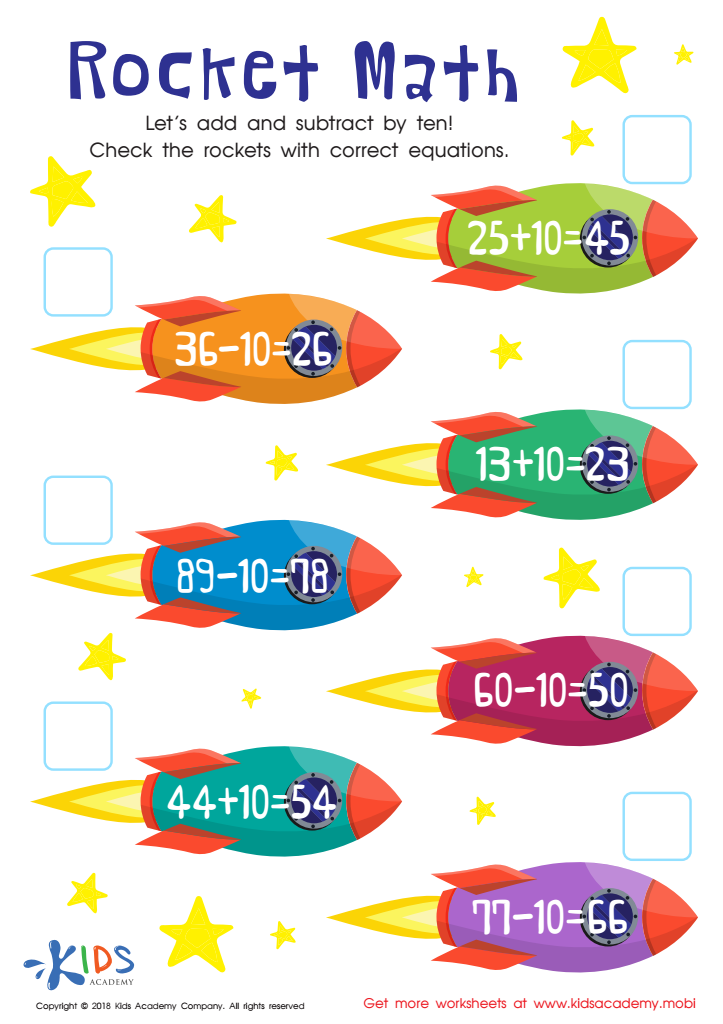
Rocket Math Worksheet
 Assign to My Students
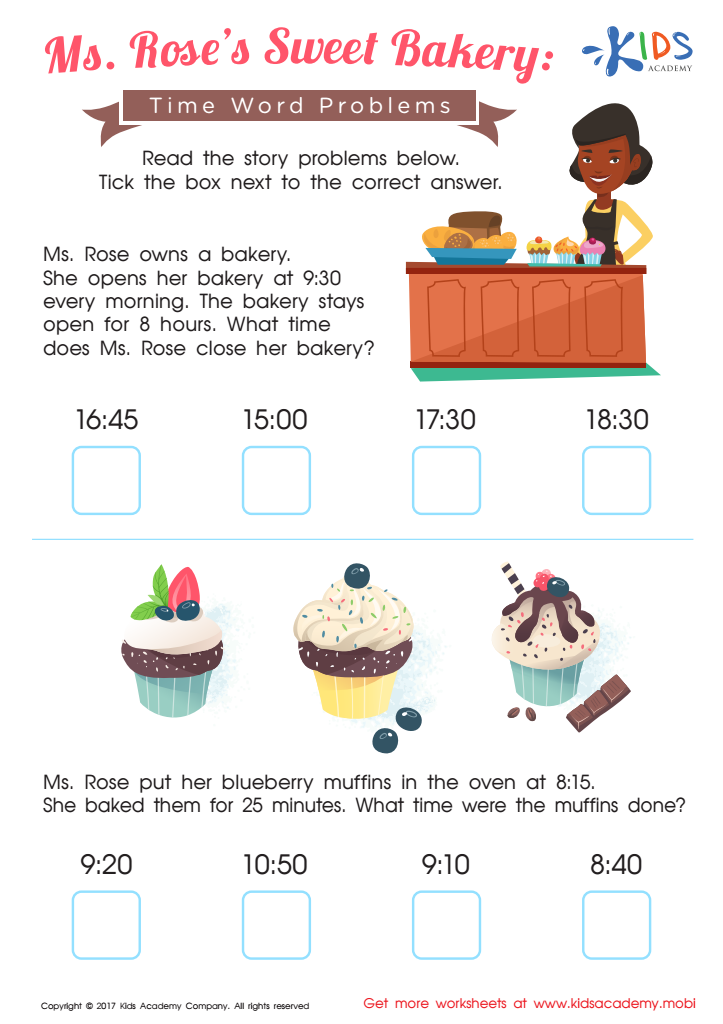
Ms. Roseв's Sweet Bakery Time Worksheet
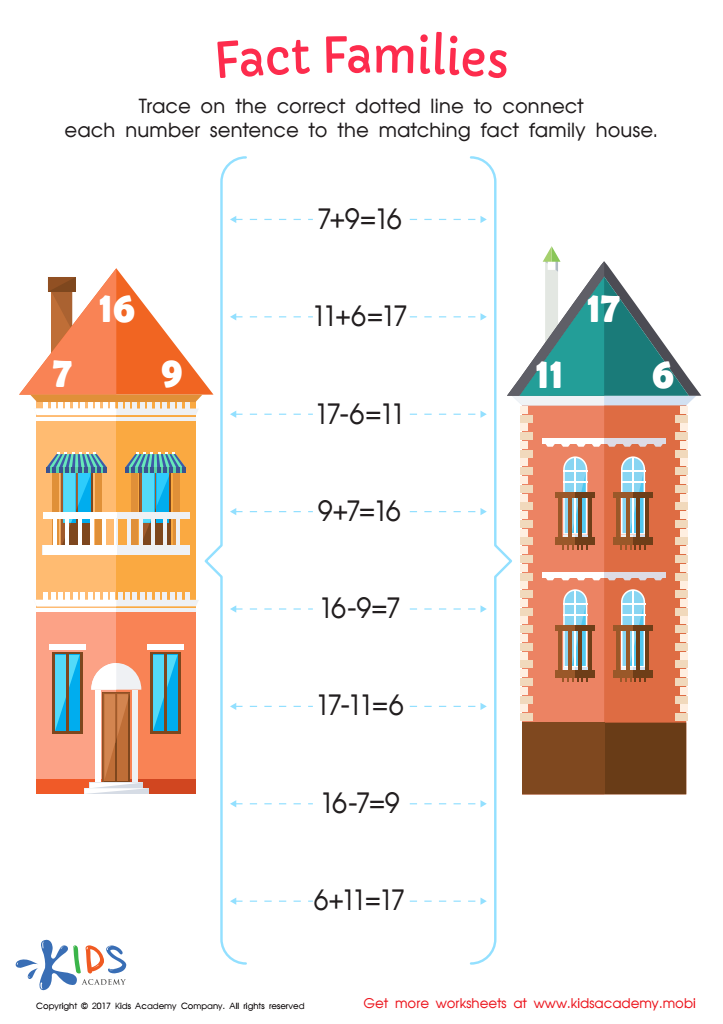
Fact Families — Add and Subtract Worksheet
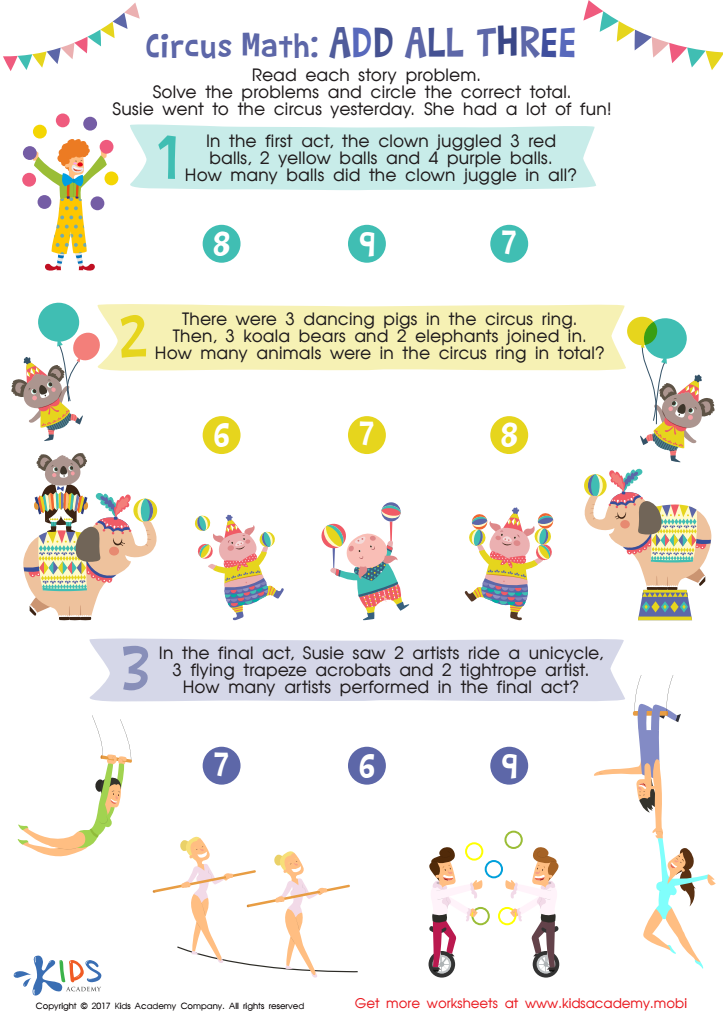
Circus Math Printable
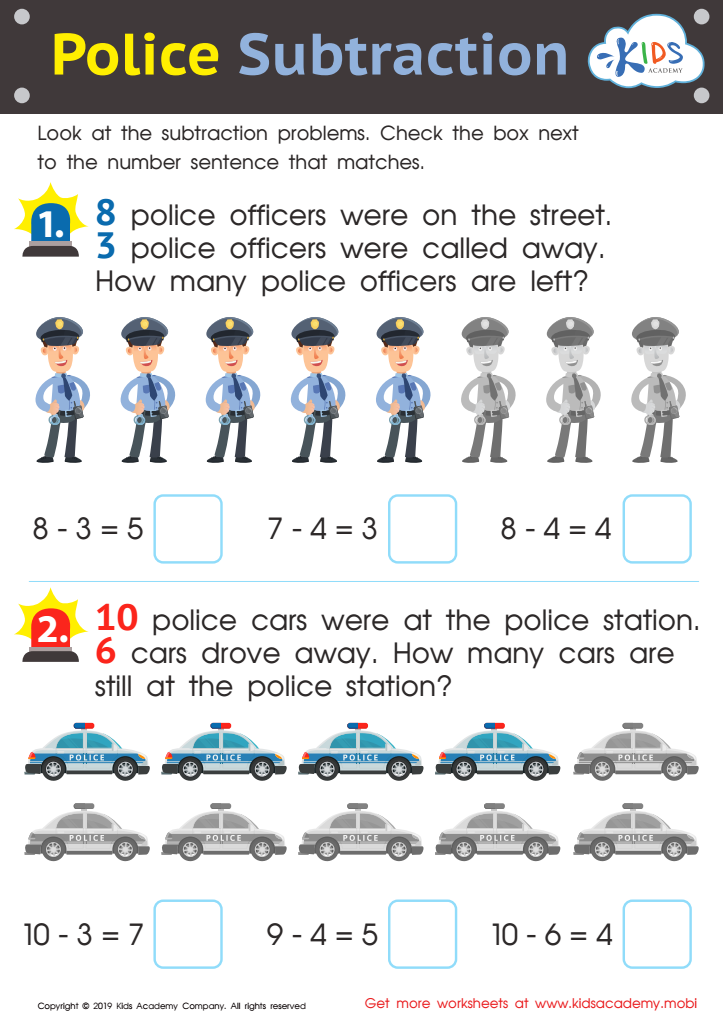
Police Subtraction Worksheet
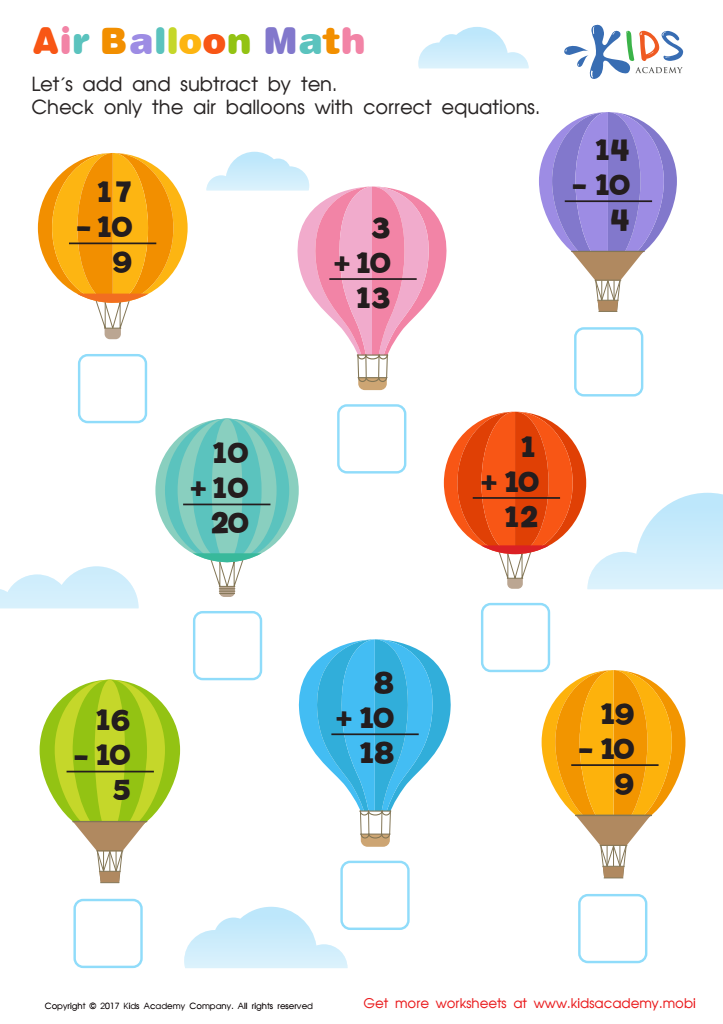
Air Balloon Math Worksheet
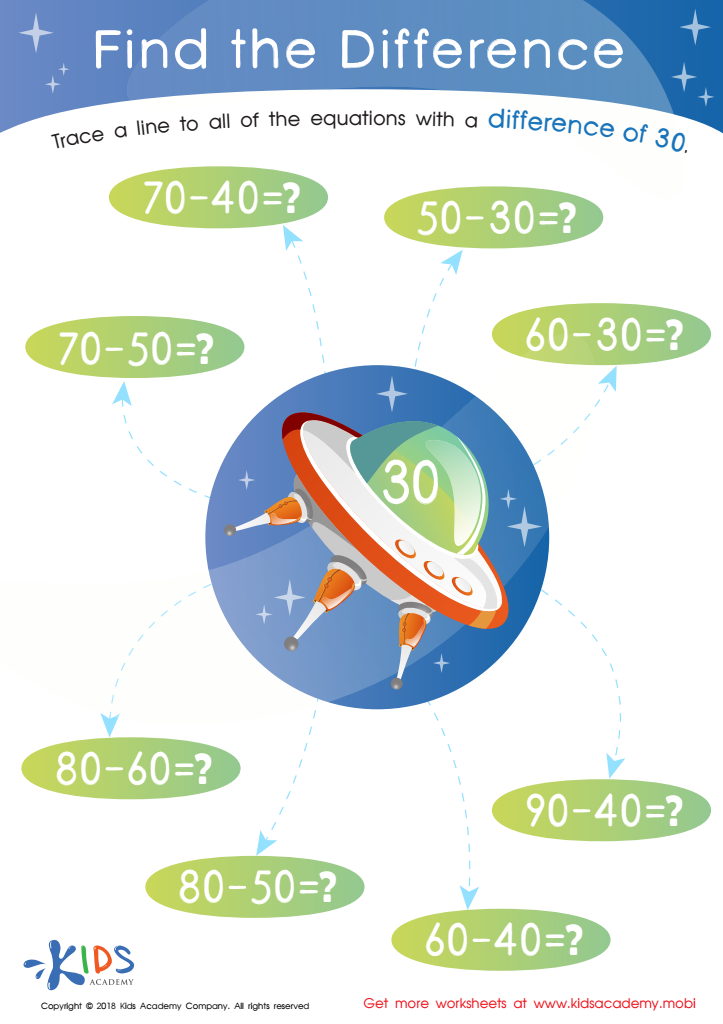
Find The Difference Worksheet
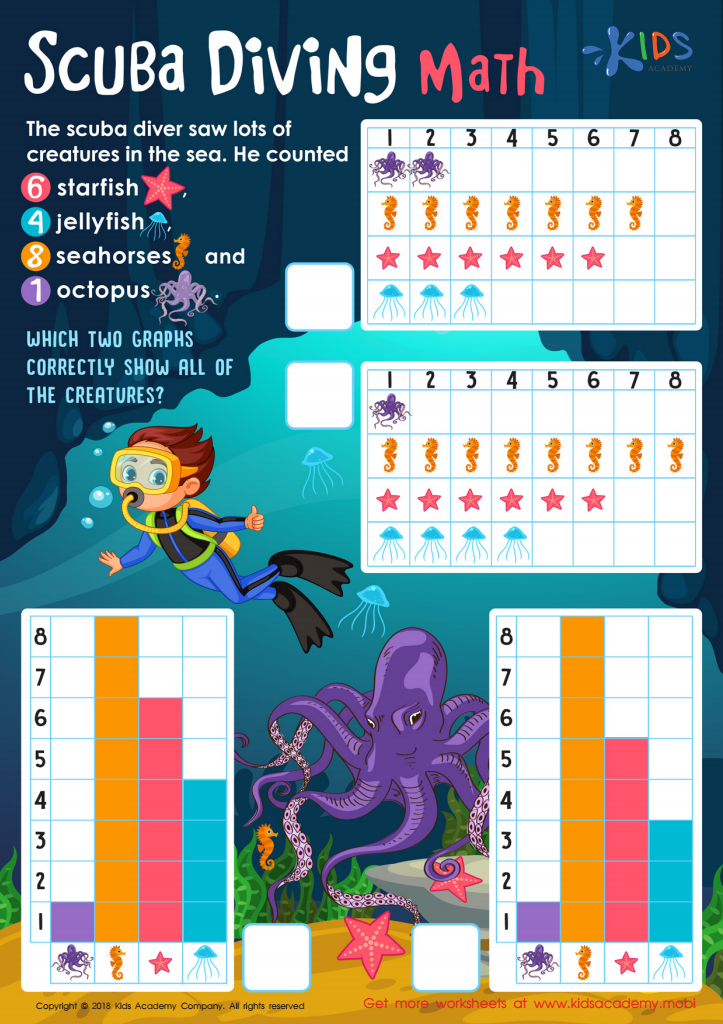
Scuba Diving Math Worksheet
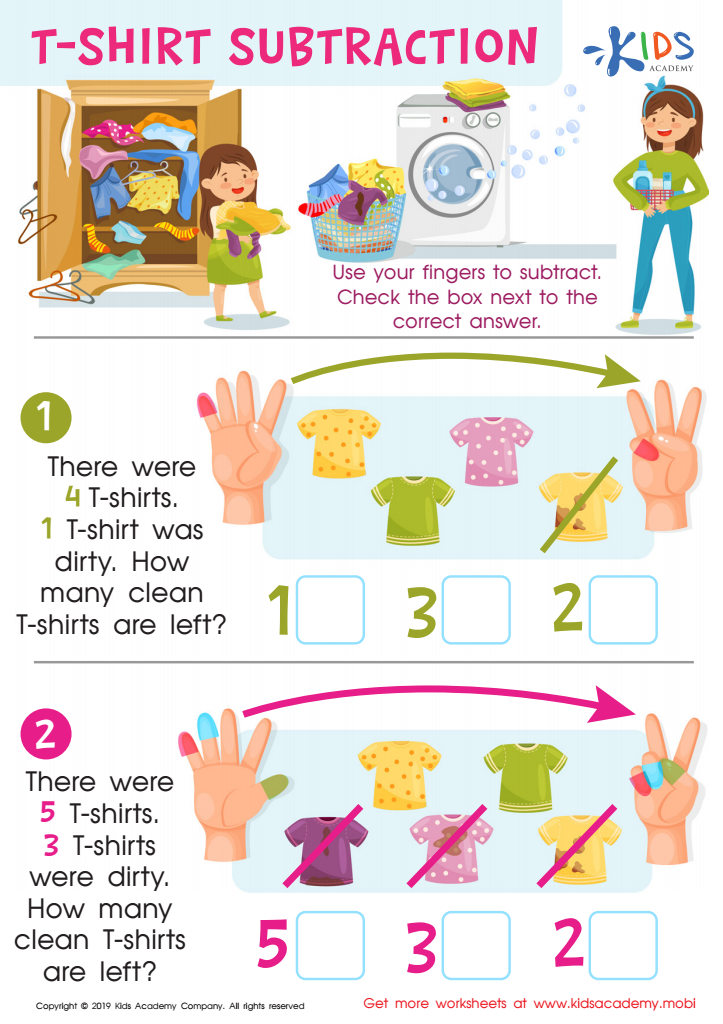
T-shirt Subtraction Worksheet
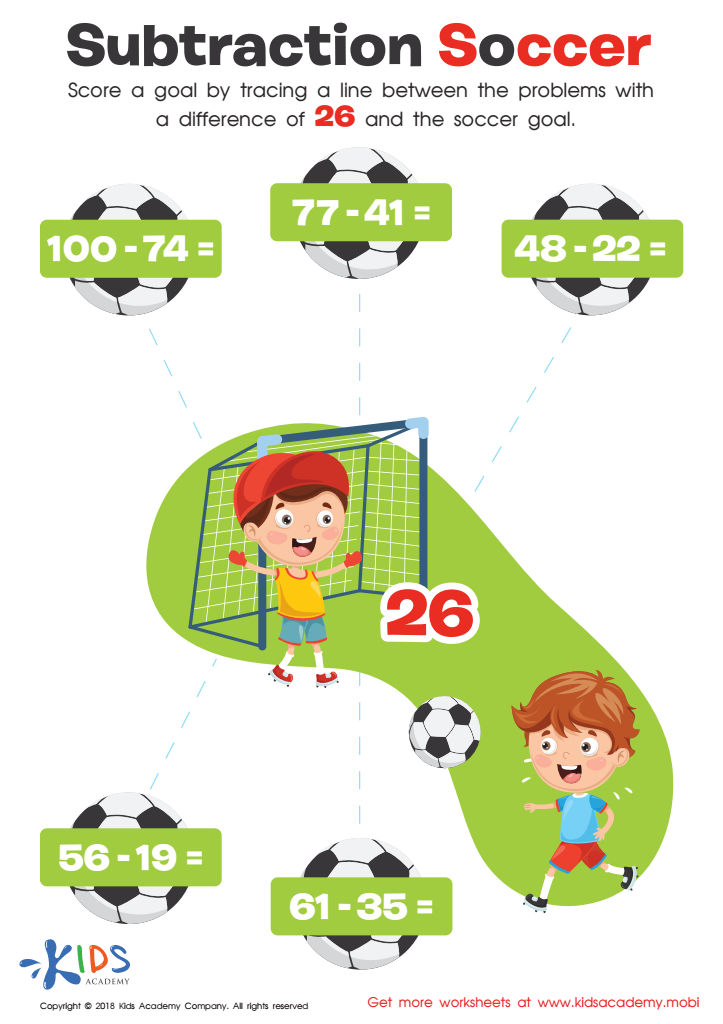
Subtraction Soccer Worksheet
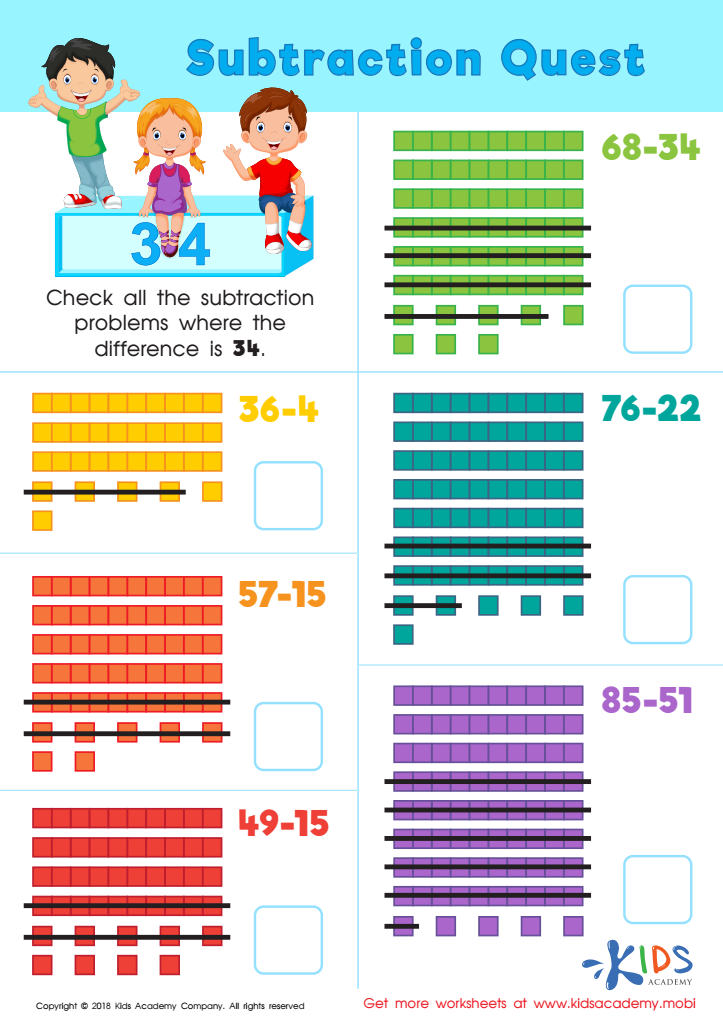
Subtraction Quest Worksheet
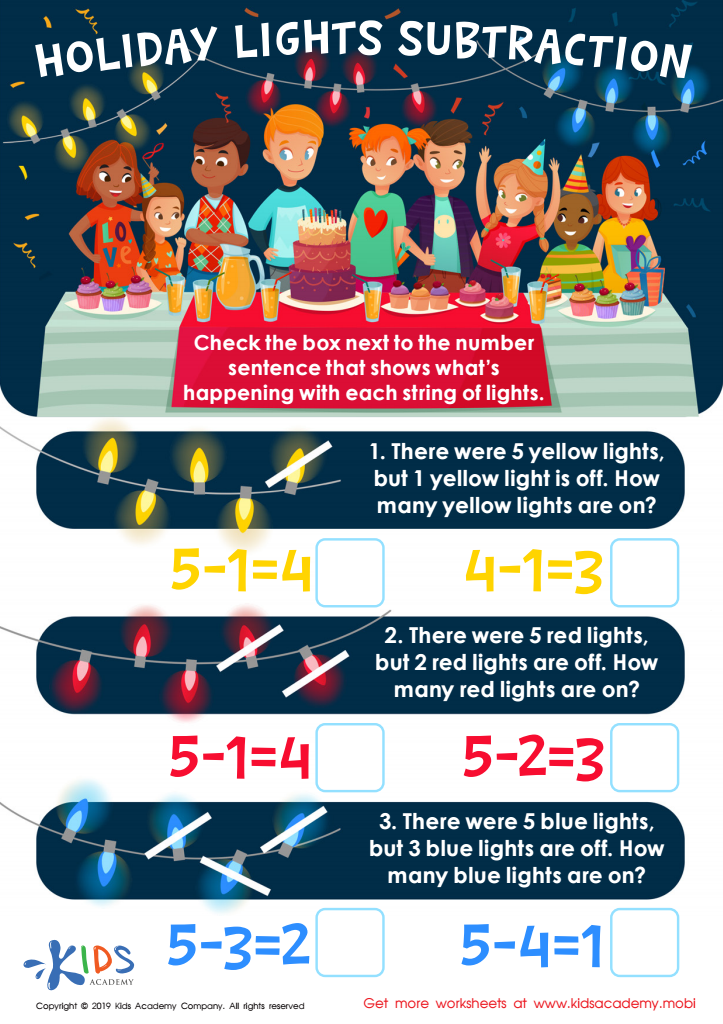
Holiday Lights Subtraction Worksheet
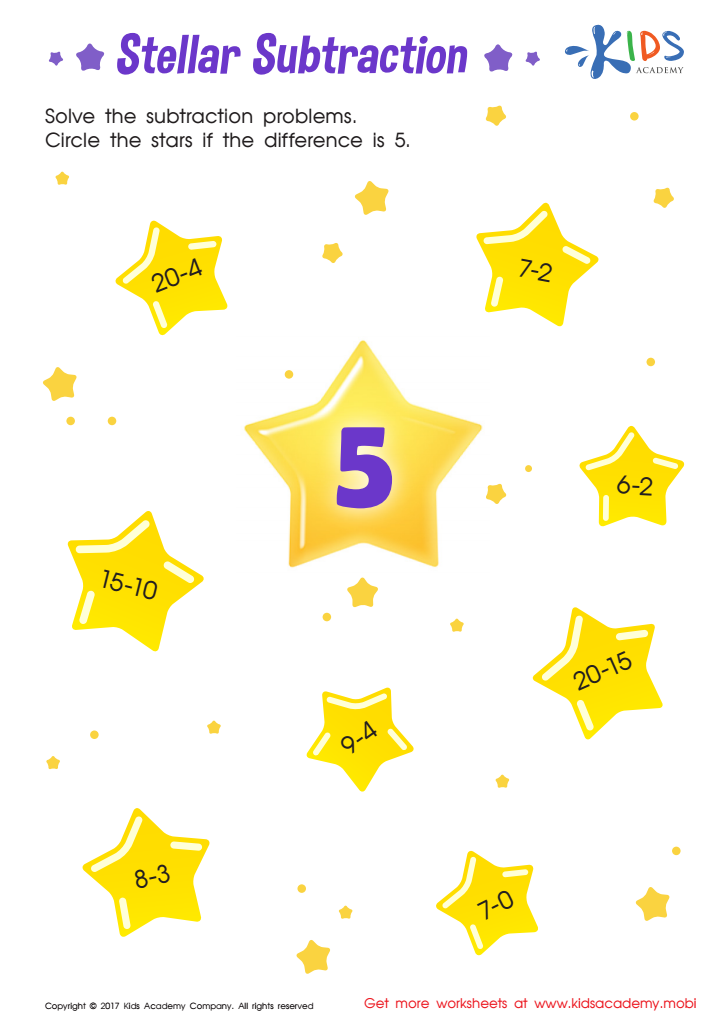
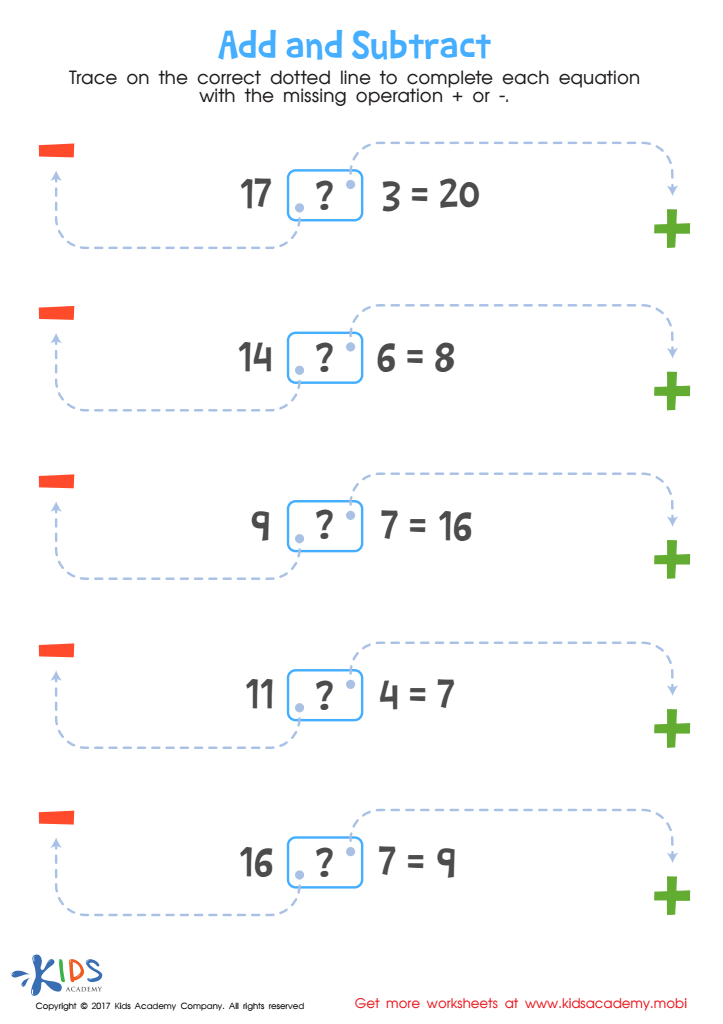
Add and Subtract Worksheet

Find 9 Worksheet
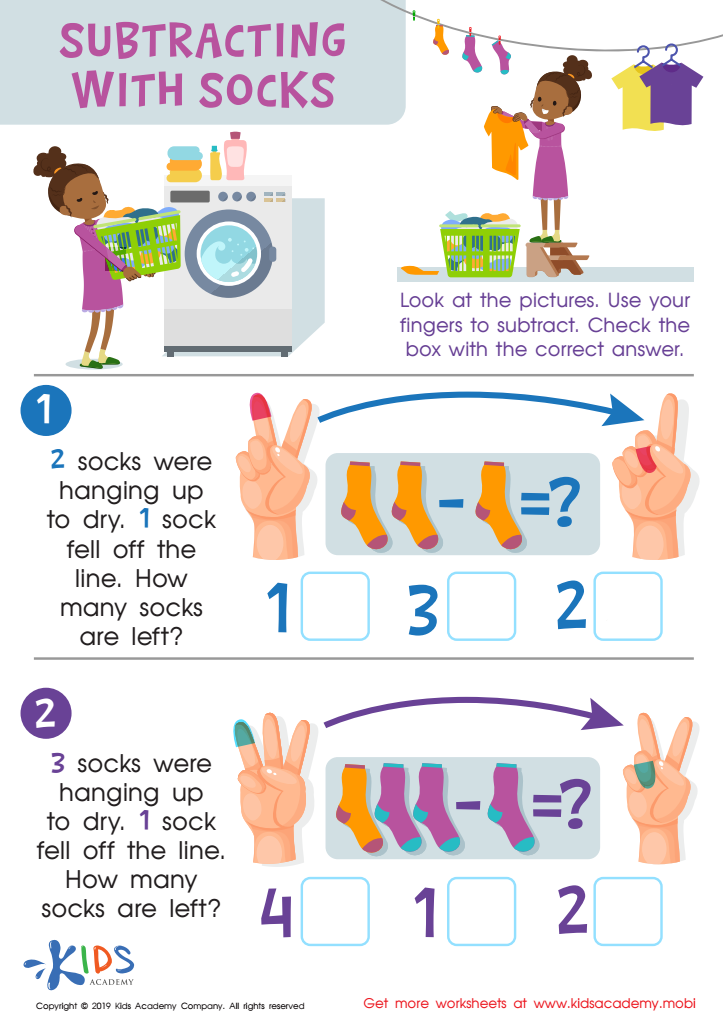
Subtracting Socks Worksheet
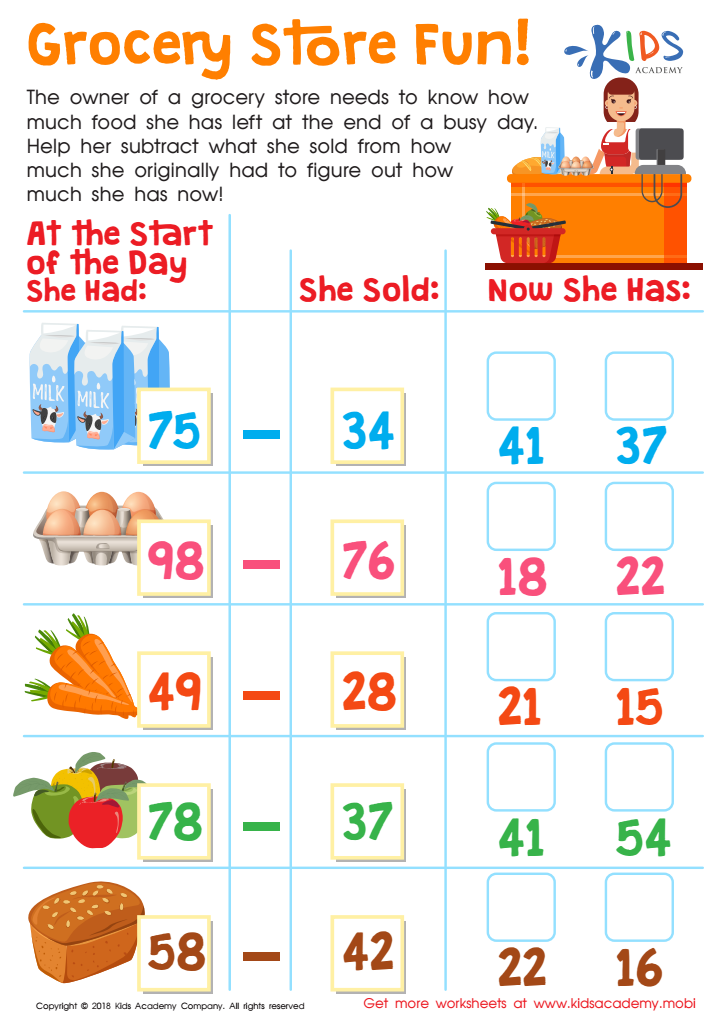
Grocery Store Fun! Worksheet
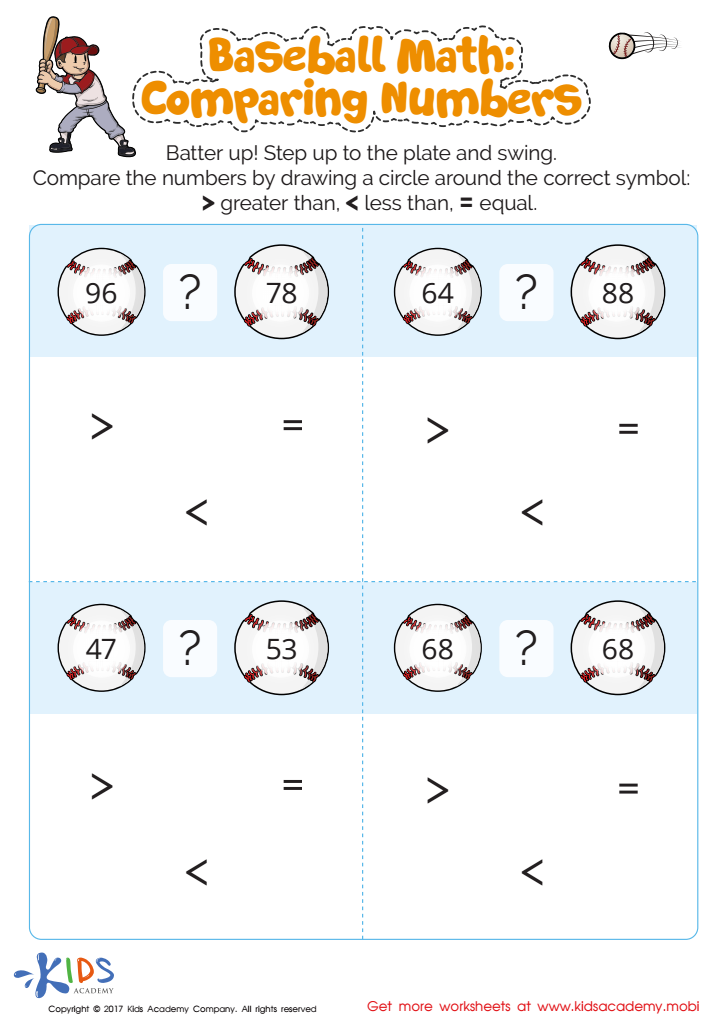
Compare Numbers Printable
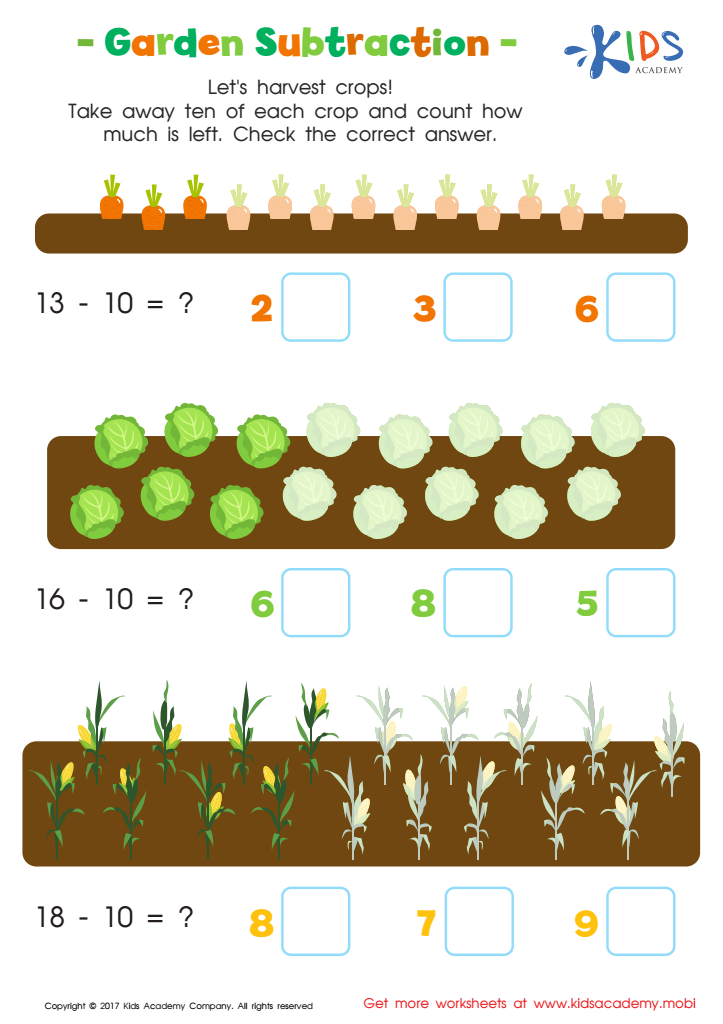
Garden Subtraction Worksheet
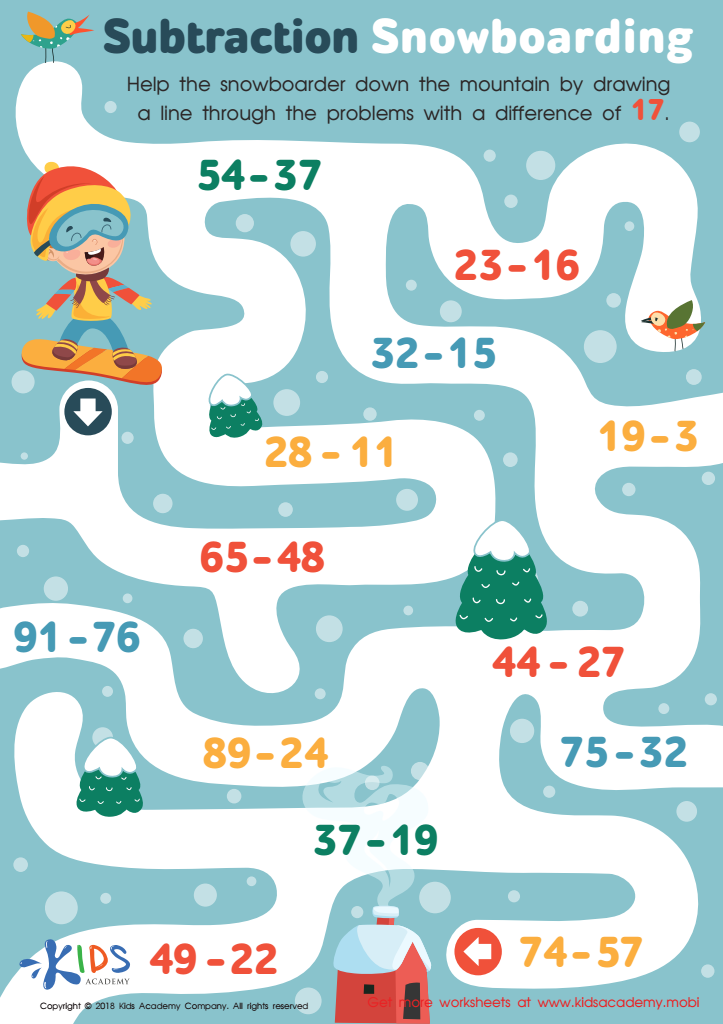
Subtraction Snowboarding Worksheet
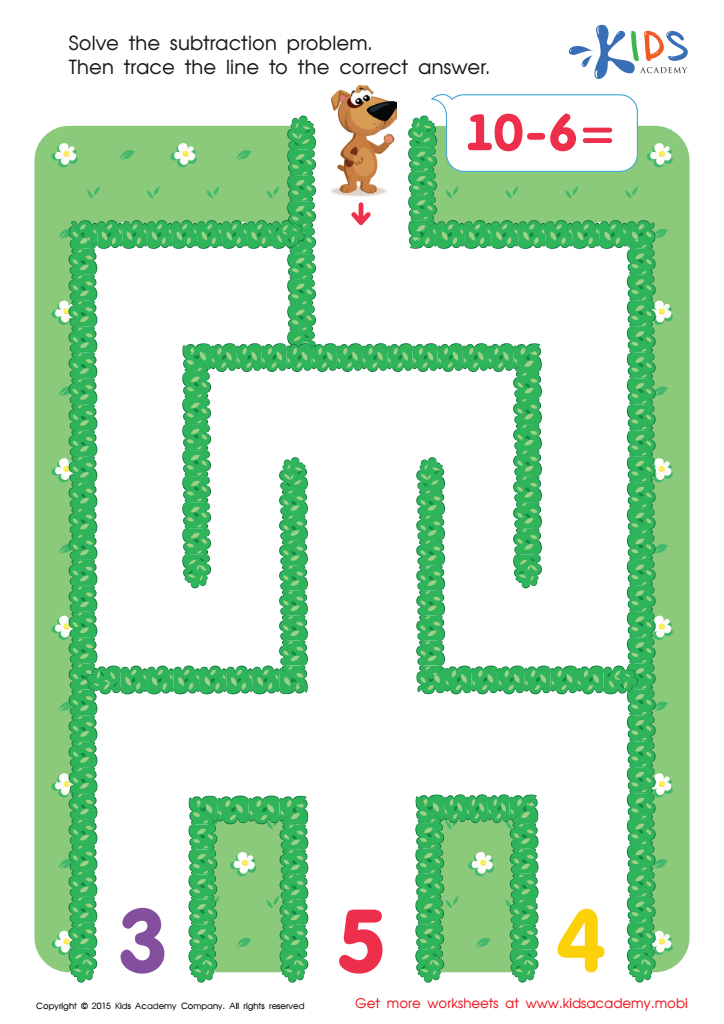
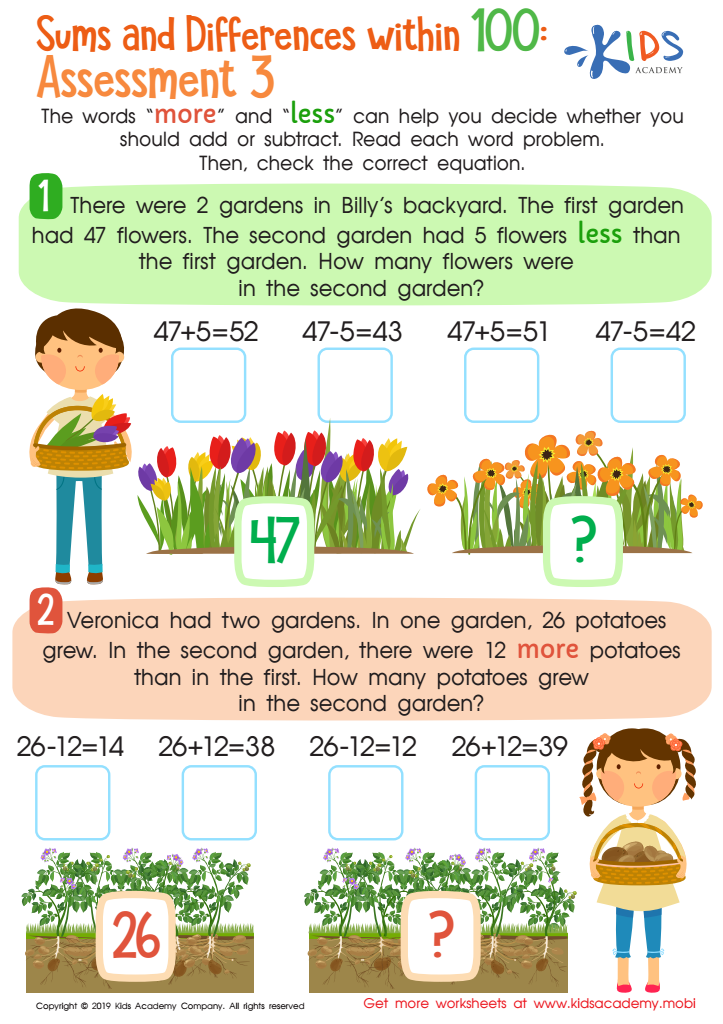
Sums and Differences Within 1 - Assessment 1 Worksheet
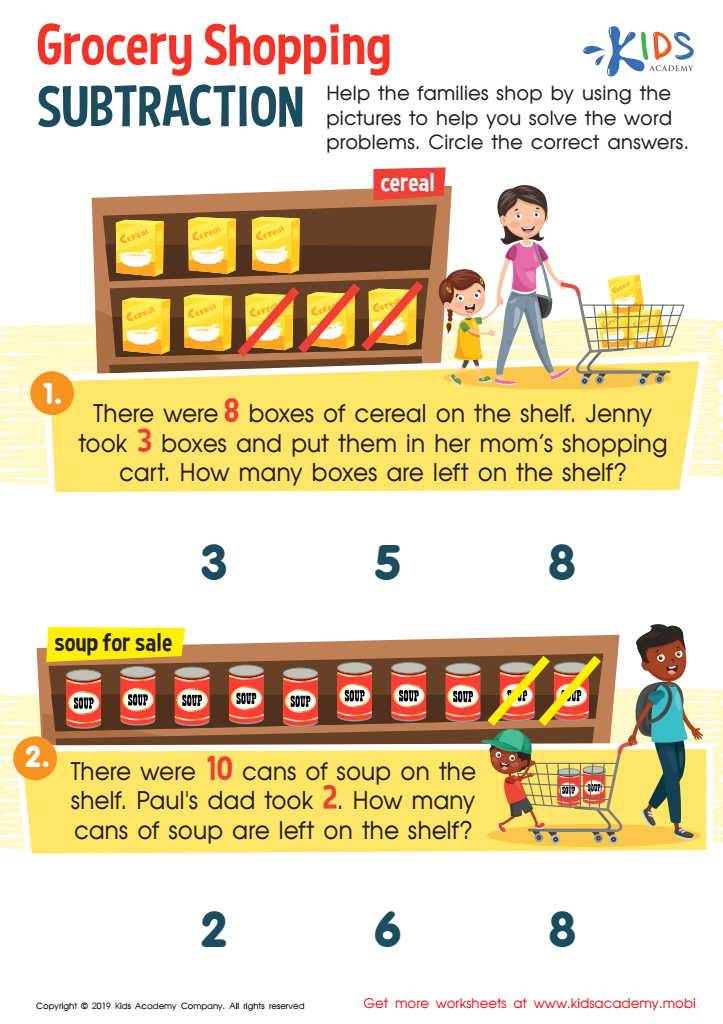
Grocery Shopping Subtraction Worksheet
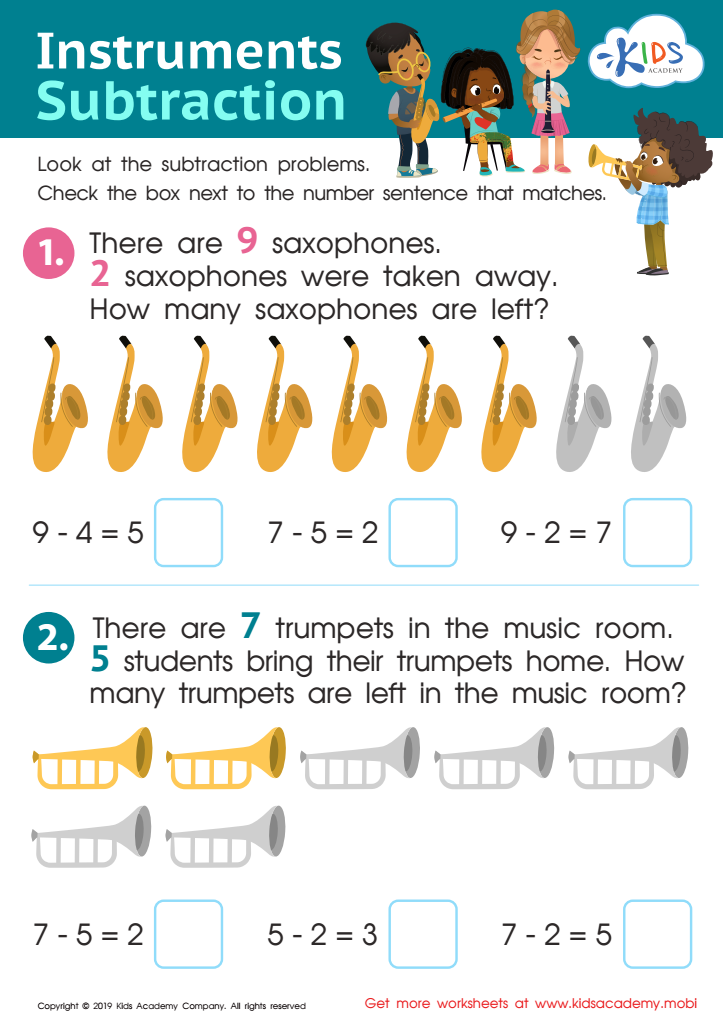
Instrument Subtraction Worksheet







Subtraction practice for children ages 4-7 is crucial for several reasons, fundamentally shaping their mathematical foundation. At this early age, children are developing their cognitive abilities and establishing essential numeracy skills. Mastery of subtraction, and basic arithmetic, is key to understanding more complex mathematical concepts in the future.
Firstly, subtraction helps improve critical thinking and problem-solving skills. When children practice subtraction, they learn to analyze numbers, recognize patterns, and find logical solutions—skills surpassing just math and useful in everyday decision-making.
Secondly, engaging in subtraction practice enhances memory and concentration. Exercises involving subtraction require holding numbers and operations in mind, aiding short-term and long-term memory retention, and developing a more substantial span of attention.
For parents and teachers, focusing on subtraction is about equipping children with essential life skills. Subtraction forms the bedrock for practical tasks later in life, such as budgeting, measuring, and timing. Without a solid understanding of subtraction, children could face difficulties in future academic pursuits, leading to gaps in their education.
Lastly, subtraction games and activities can be fun and engaging, catalyzing a positive attitude towards learning math. Engaging in enjoyable subtraction tasks fosters a love for learning, building self-confidence, and reducing potential anxieties associated with math challenges as they grow older.








