Categorizing objects Science Worksheets for Ages 4-7
4 filtered results
-
From - To
Explore our engaging "Categorizing Objects Science Worksheets" for children aged 4-7 to enhance their understanding of science concepts through fun and interactive activities. These worksheets are designed to help young learners recognize, group, and classify various objects based on characteristics such as color, size, and shape. By using these resources, children will develop critical thinking skills and improve their ability to categorize items in their everyday environment. Perfect for home or classroom use, our worksheets provide an exciting way to introduce foundational scientific concepts while fostering curiosity and a love for learning in early childhood education. Start categorizing with us today!
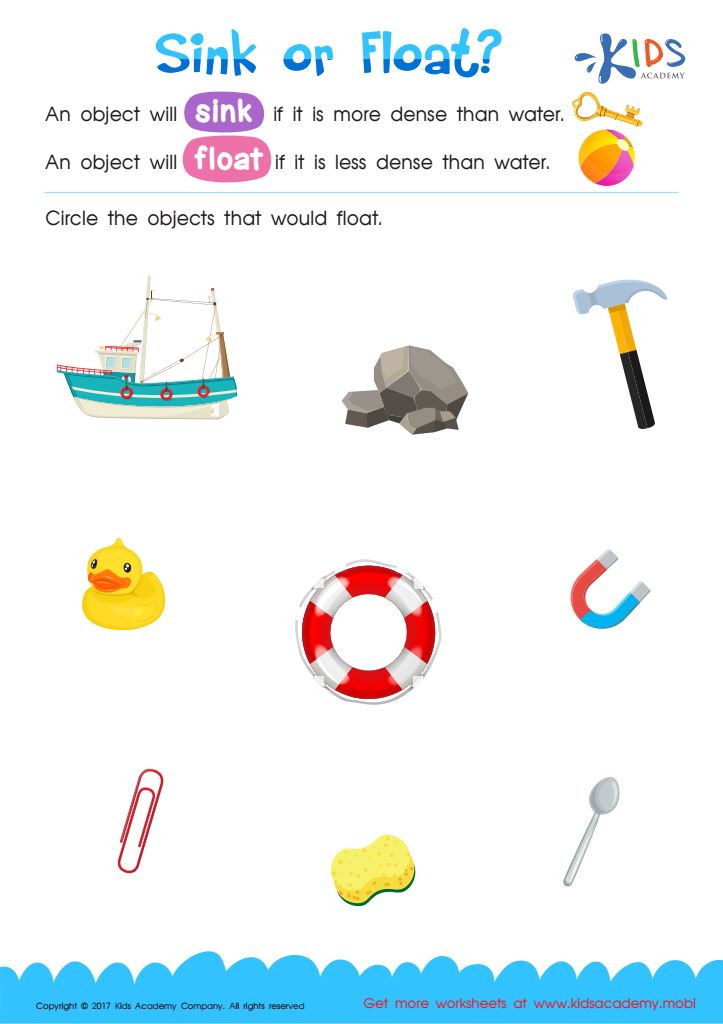
Sink or Float Printable
 Assign to My Students
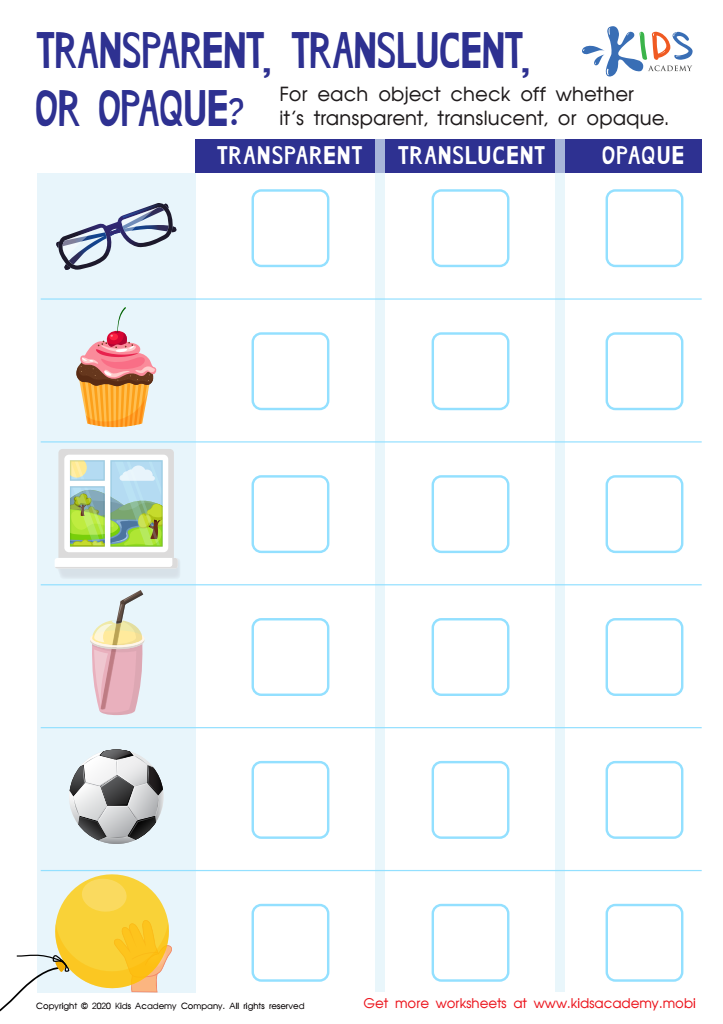
Transparent, Translucent, or Opaque Worksheet
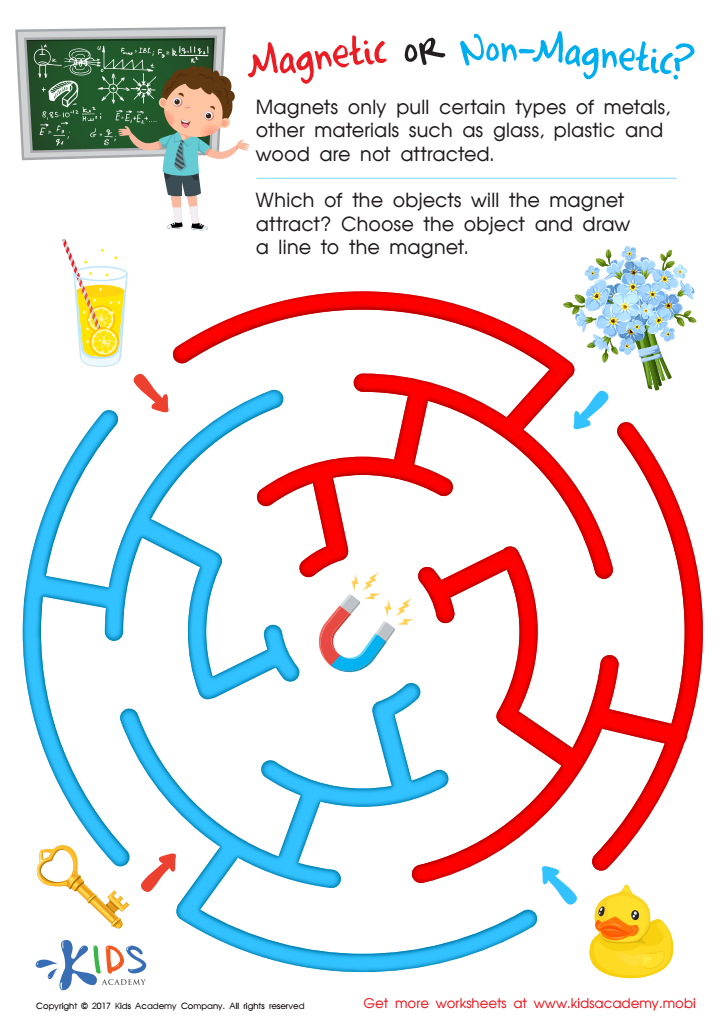
Magnetic or Non–Magnetic Worksheet
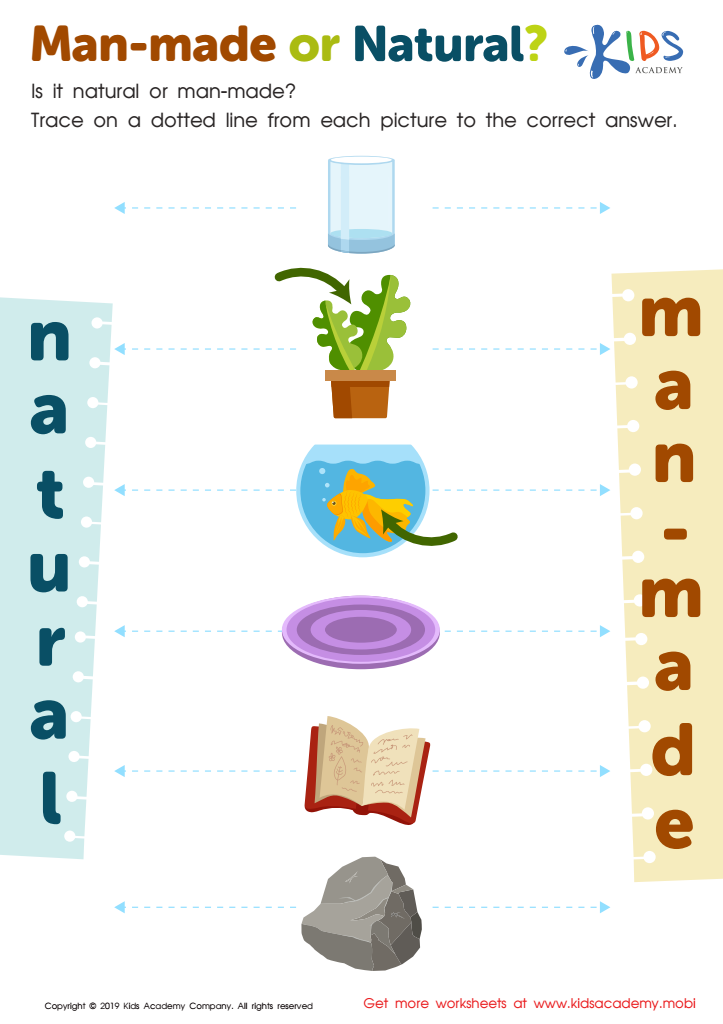
Man-Made or Natural? Worksheet







Categorizing objects is a fundamental skill that plays a crucial role in early childhood education for children aged 4 to 7. Parents and teachers should care about this concept because it lays the groundwork for critical thinking and problem-solving abilities. When children categorize objects, they learn to identify similarities and differences, which enhances their observational skills and boosts cognitive development.
Through categorization, children make sense of the world around them. It teaches them organizational skills, as they group items based on characteristics such as size, shape, color, or function. This process fosters creativity, allowing children to explore and engage with their environment in meaningful ways. Furthermore, categorization is vital for scientific inquiry; children develop foundational skills for science through observing patterns and relationships.
By encouraging this practice at home or in the classroom, caregivers help children cultivate a love for learning and exploration. It can promote language development, as children learn to describe their categories and communicate their thoughts. Overall, promoting the skill of categorizing objects empowers young learners to build a strong foundation for future academic success while enriching their everyday experiences.







