
Science knowledge Science Worksheets for Ages 4-7
3 filtered results
Difficulty Level
Grade
Age
-
From - To
Subject
Activity
Standards
Discover an engaging collection of science knowledge worksheets designed specifically for children aged 4 to 7! Our printable resources aim to spark curiosity and foster a love for science through fun, age-appropriate activities. Each worksheet encourages young learners to explore fundamental concepts, including the world around them, basic biology, and simple physical science principles. With colorful illustrations and interactive tasks, these worksheets help develop critical thinking skills while making learning exciting. Perfect for teachers, parents, and caregivers, our science knowledge worksheets provide a unique opportunity to enhance early cognitive development and inspire the next generation of scientists!
Favorites
With answer key
Interactive
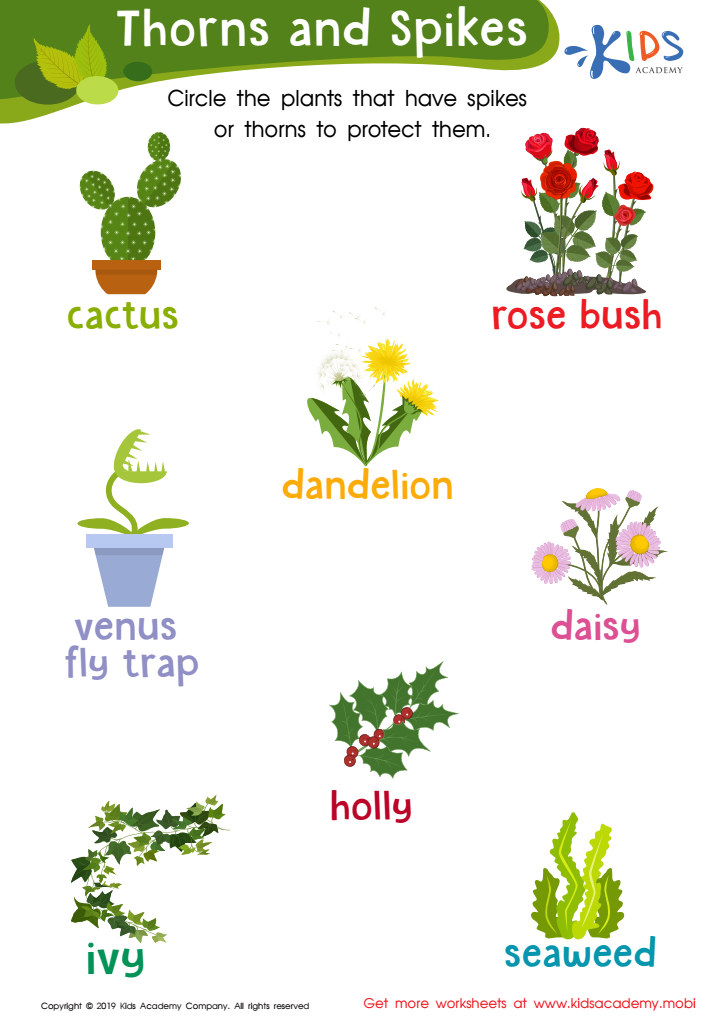
Thorns and Spikes Worksheet
Can your students name and identify the plants and flowers in this worksheet? Ask them to read out the names and circle the ones with spikes or thorns. Help them appreciate nature's beauty and understand how plants protect themselves.
 Assign to My Students
Thorns and Spikes Worksheet
Worksheet
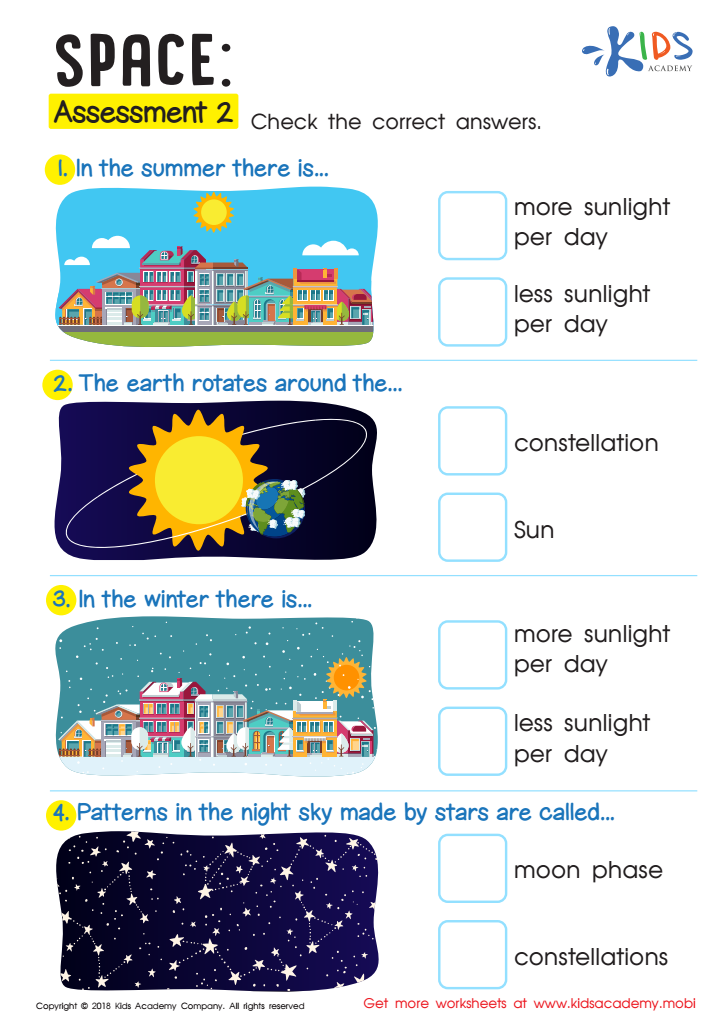
Space: Assessment 2 Worksheet
Test your kids' knowledge of the weather, constellations and Earth with this worksheet. Show them the 4 images and ask what's happening; then read the questions and options and help them pick the right answers. This printout is a helpful and fun way to learn!
Space: Assessment 2 Worksheet
Worksheet
Join Kids Academy for Free
Who is primarily going to use this learning content?






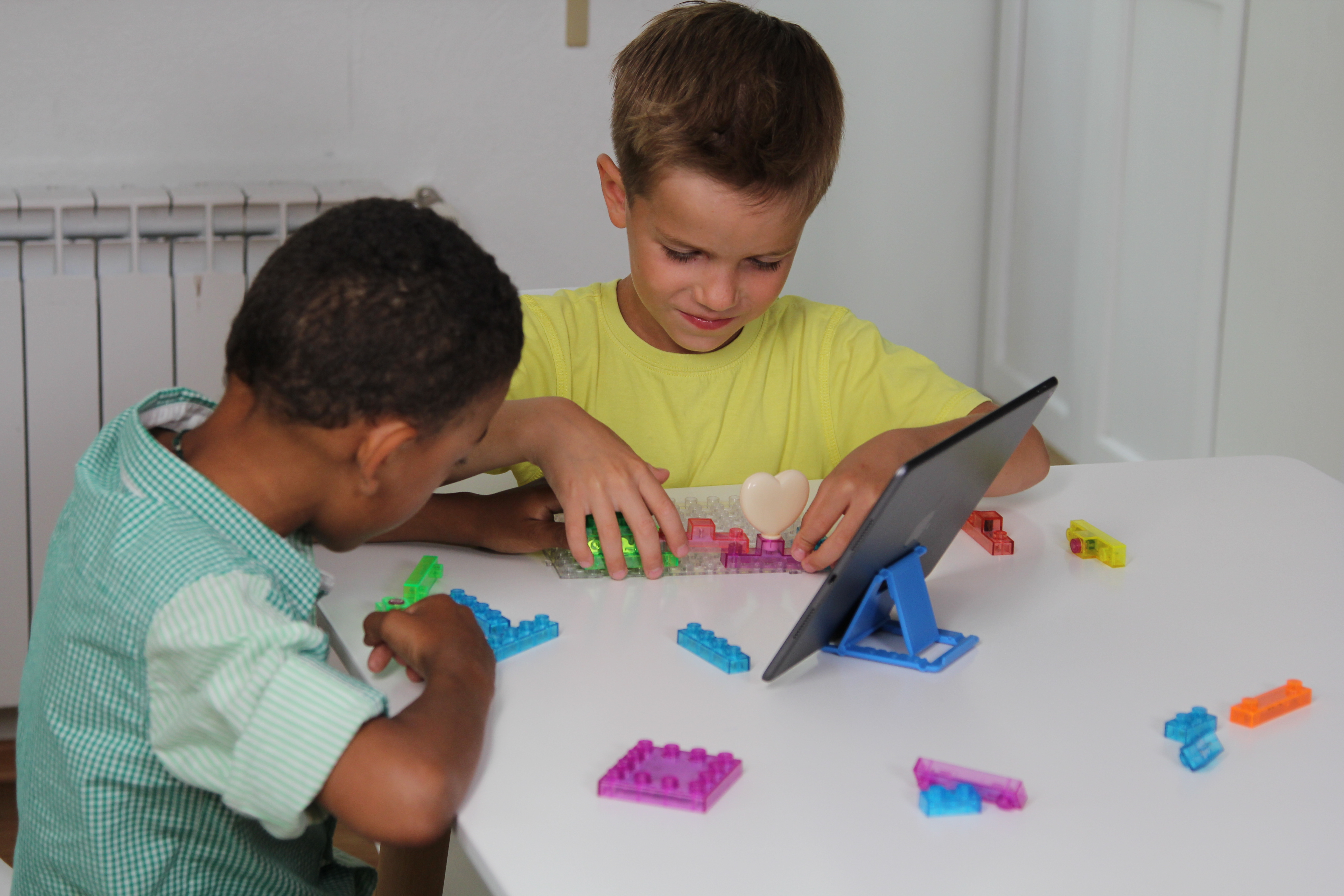
Parents and teachers should prioritize science knowledge for children aged 4-7 because it lays the foundation for critical thinking and curiosity. At this age, children are naturally inquisitive, asking "why" and "how" about the world around them. Engaging with science fosters their ability to ask questions, explore, and understand their environment, which enhances cognitive development.
Additionally, early exposure to science helps to cultivate a sense of wonder and encourages imaginative play — elements crucial to learning. Science activities—such as simple experiments or nature walks—allow children to explore concepts of observation and measurement in a hands-on way, making learning tangible and meaningful.
Furthermore, establishing a strong science foundation prepares children for future academic success. Science education cultivates skills like problem-solving and logical reasoning, which are transferable to other subjects and areas of life.
Lastly, equipping young learners with scientific knowledge promotes awareness of the world around them. It encourages environmentally responsible behaviors and an understanding of health, technology, and societal issues, crucial for informed citizenship. In summary, prioritizing science education in early childhood is essential for holistic development, lifelong learning, and preparing future innovators.







