2D Shapes Worksheets for Ages 4-8
75 filtered results
Difficulty Level
Grade
Age
-
From - To
Subject
Activity
Standards
Explore our engaging 2D Shapes Worksheets designed for children aged 4-8! Perfect for early learners, these worksheets promote shape recognition and understanding through vibrant illustrations and fun activities. Young students will enjoy hands-on exercises like tracing, coloring, and matching shapes, empowering them to develop essential math skills in a playful manner. Our resources are curriculum-aligned, making them an invaluable tool for parents and teachers alike. Foster creativity and spatial awareness while enhancing problem-solving abilities with our variety of interactive worksheets. Dive into a world of shapes and make learning exciting today! Start your child’s math journey with us!
Favorites
With answer key
Interactive
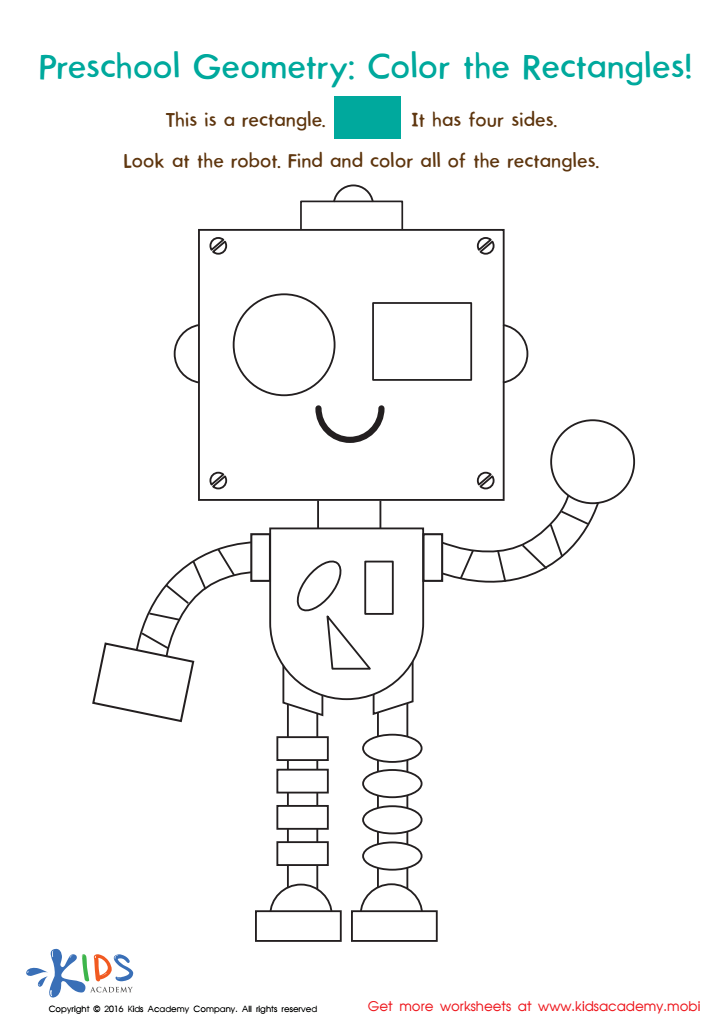
Geometry Worksheet
Geometry can be fun for kids! They explore shapes that create their favorite pics and objects. This preschool worksheet explains that rectangles have four sides, then kids color rectangles on a funny robot!
 Assign to My Students
Geometry Worksheet
Worksheet











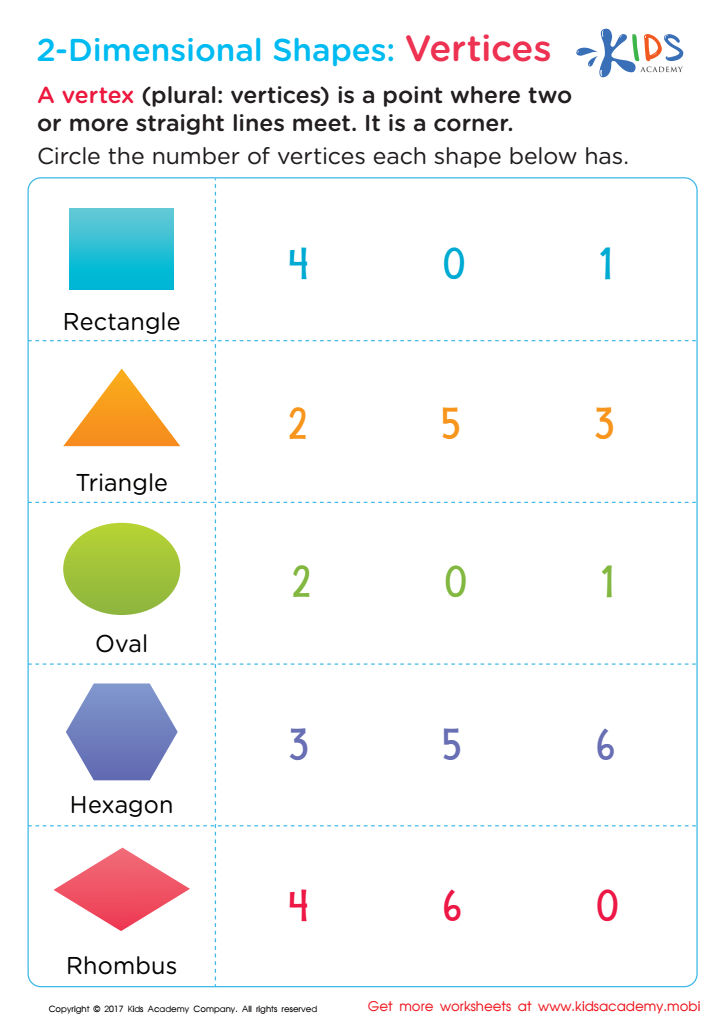
Two–Dimensional Shapes: Vertices Printable
This colorful worksheet teaches kids geometry by introducing them to two-dimensional shapes and vertices. Kids can practice counting vertices and learn an important new math term in an easy to understand way. Boost your child's knowledge of geometry today!
Two–Dimensional Shapes: Vertices Printable
Worksheet
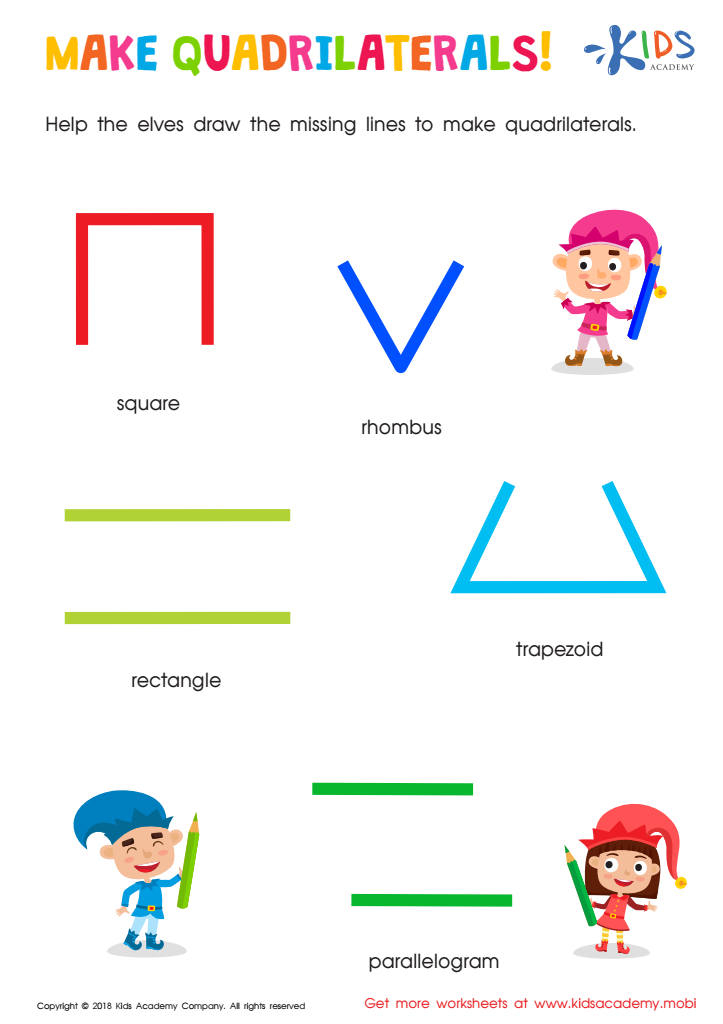
Make Quadrilaterals Worksheet
This fun and colorful worksheet will help your child understand and identify quadrilaterals. It's simple and encourages them to draw lines to create a square, rectangle, rhombus, trapezoid, and parallelogram. Stimulate their minds and watch them learn while they have fun!
Make Quadrilaterals Worksheet
Worksheet
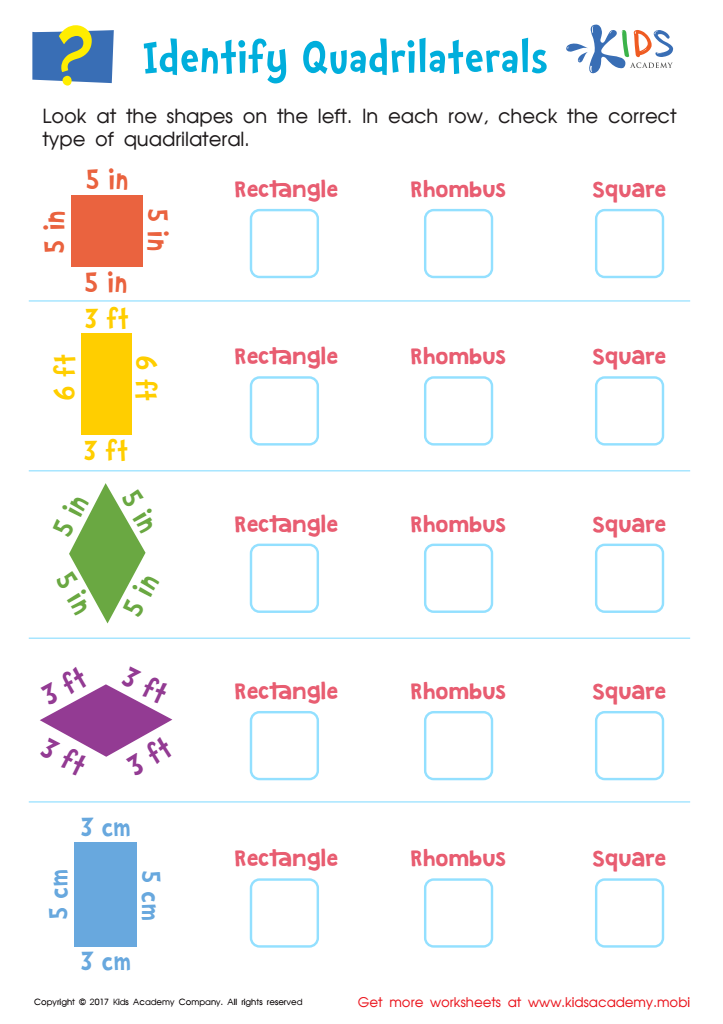
Identify Quadrilaterals Worksheet
This PDF worksheet helps kids identify different quadrilaterals using pictures and measurements. From rectangles to diamonds, children will use their knowledge of geometry to observe and classify shapes. A colorful and fun way to learn!
Identify Quadrilaterals Worksheet
Worksheet
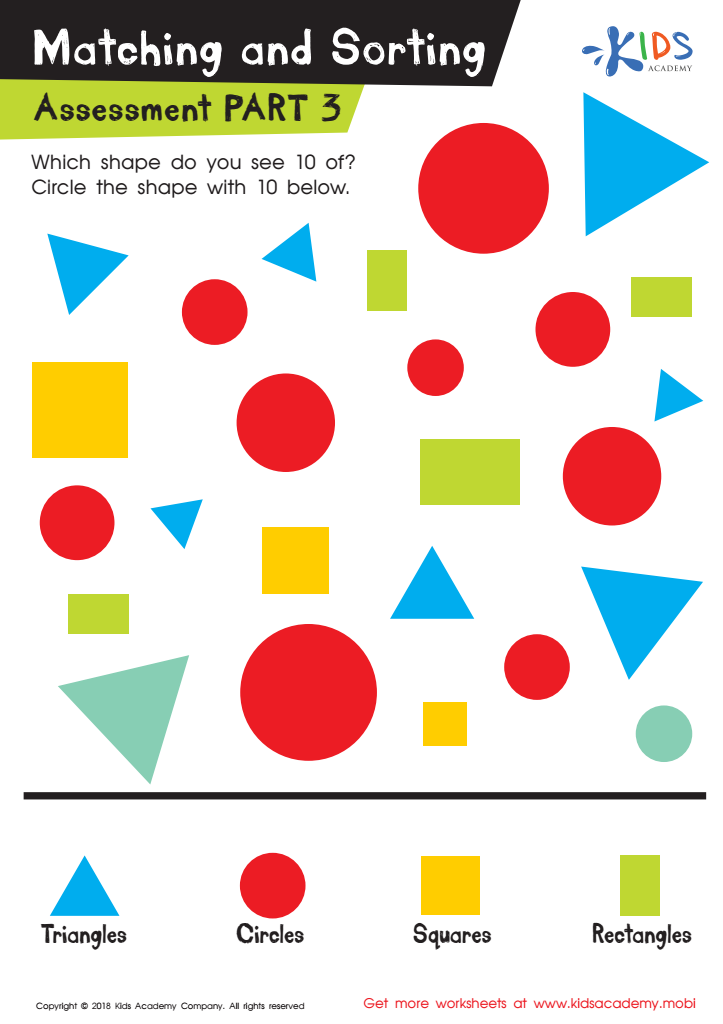
Matching and Sorting for Kindergarten: Assessment 3 Worksheet
Assess your child's basic geometry skills and properties with a colorful worksheet! Utilize visual discrimination and number sense to identify groups of ten and sort objects by bold colors. Challenge them to differentiate shapes and sizes.
Matching and Sorting for Kindergarten: Assessment 3 Worksheet
Worksheet
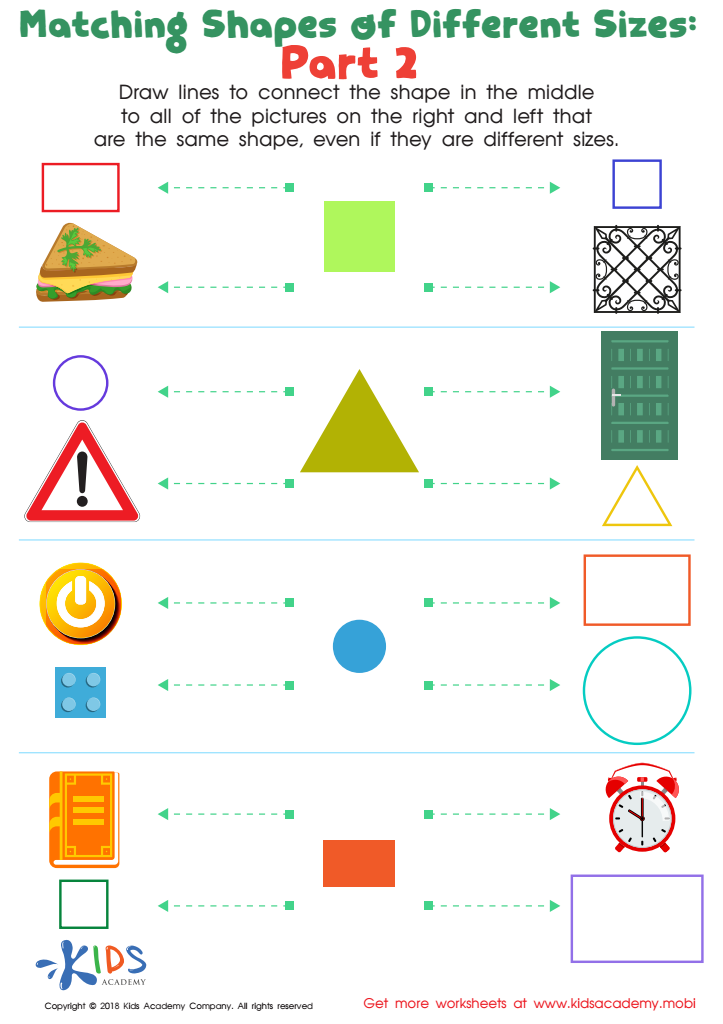
Geometry: Part 2 Worksheet
Third grade geometry gets a challenge with this free worksheet. Kids match shapes to everyday objects like sandwiches, alarm clocks and books for a better understanding of geometry in their lives. Printable pdf is included.
Geometry: Part 2 Worksheet
Worksheet
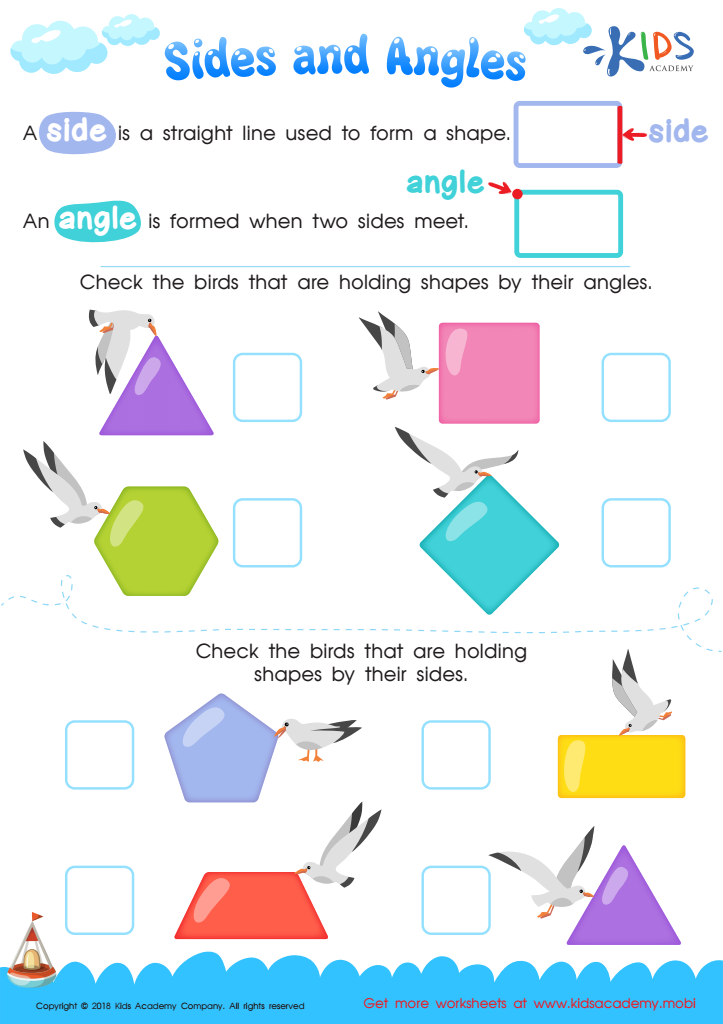
Sides and Angles Worksheet
Sides are lines forming a shape; angles are points where two sides meet (pictured). Before going through the exercise, explain this to your kids. In the first exercise, check for birds holding shapes by their angles. In the second, check for birds holding shapes by their sides.
Sides and Angles Worksheet
Worksheet
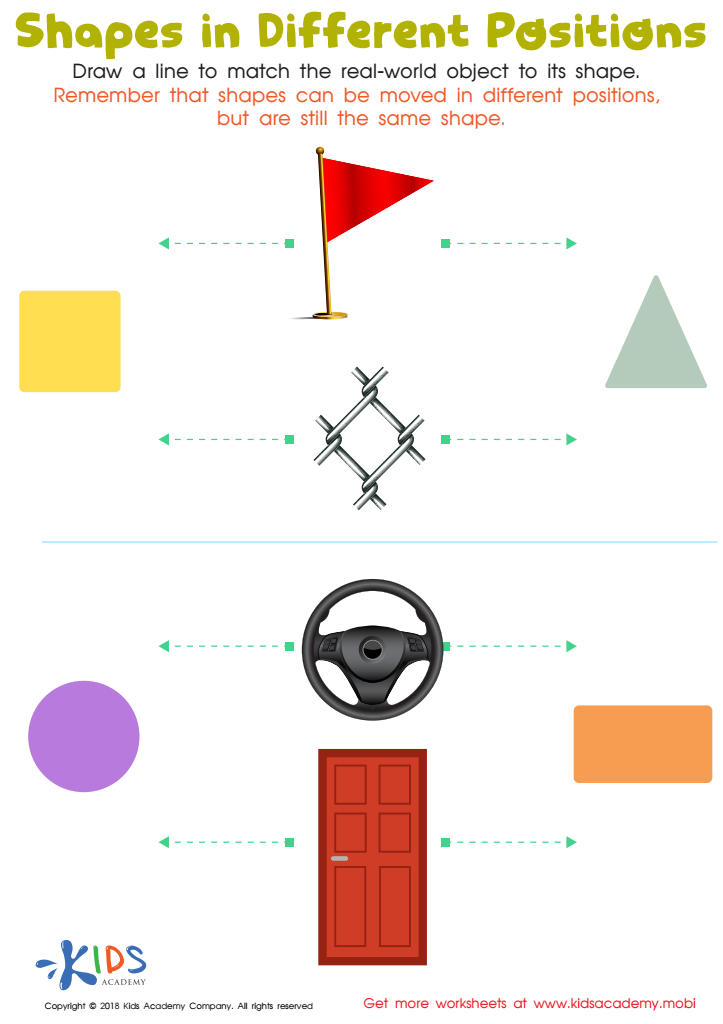
Shapes in Different Positions Worksheet
Children can practice and strengthen their visual-discernment, hand-eye coordination and neural connections by manipulating shapes in their minds and matching them with the right answer. This PDF with bright colors gives your kids the opportunity to do so.
Shapes in Different Positions Worksheet
Worksheet
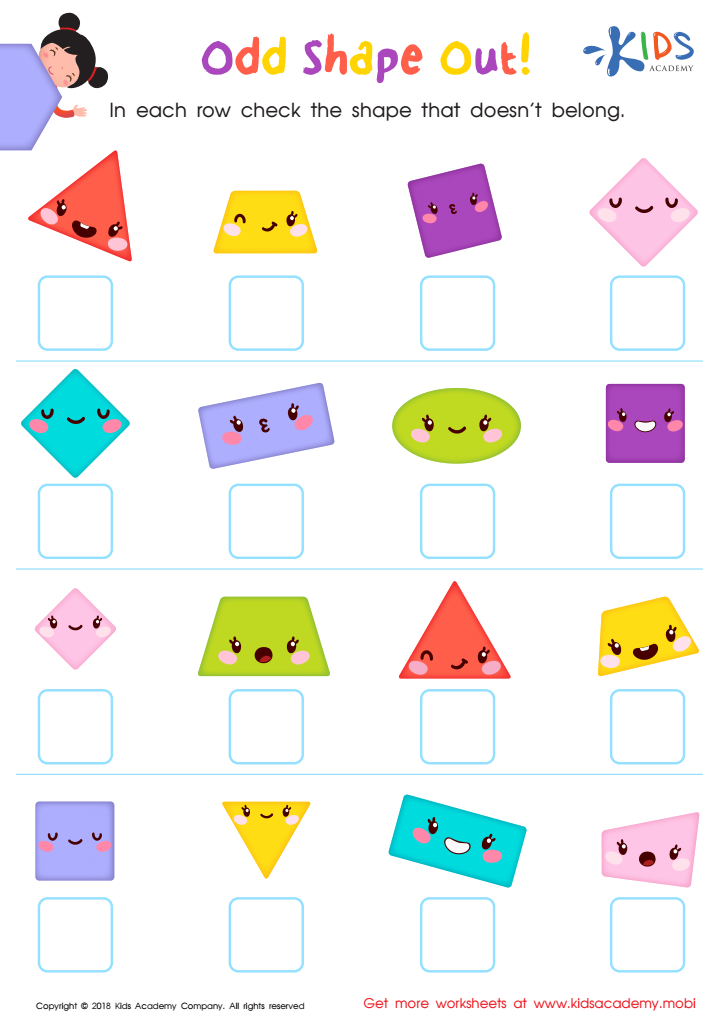
Odd Shape Out Worksheet for Grade 3
Time to test your child's shape knowledge! With this worksheet, help them find the odd shape out in each row and check the box under it. Print out the pdf and look through it with them – each row has four brightly colored shapes. See if they can spot any differences among them and then check the box below the shape that does not belong.
Odd Shape Out Worksheet for Grade 3
Worksheet
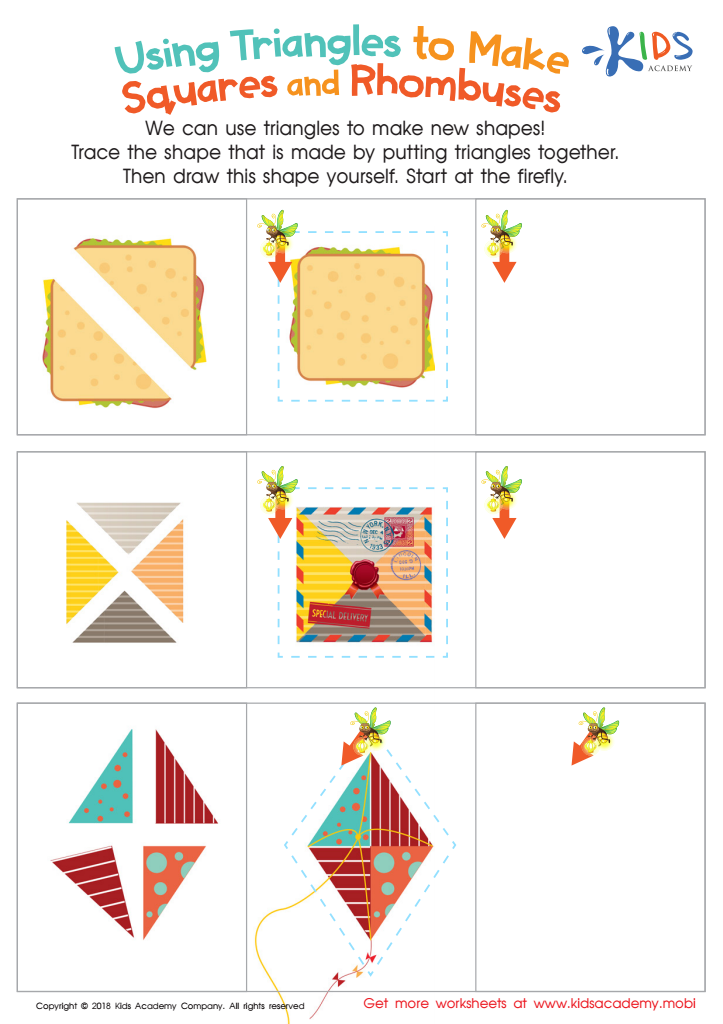
Using Triangles to Make Squares and Rhombuses Worksheet
Learning shapes is a fun way to boost spatial skills and critical thinking. This worksheet shows children how to use triangles to construct squares and rhombuses. Clear illustrations and a printout help children draw the new shape. A great activity for the math classroom! 80 words.
Using Triangles to Make Squares and Rhombuses Worksheet
Worksheet
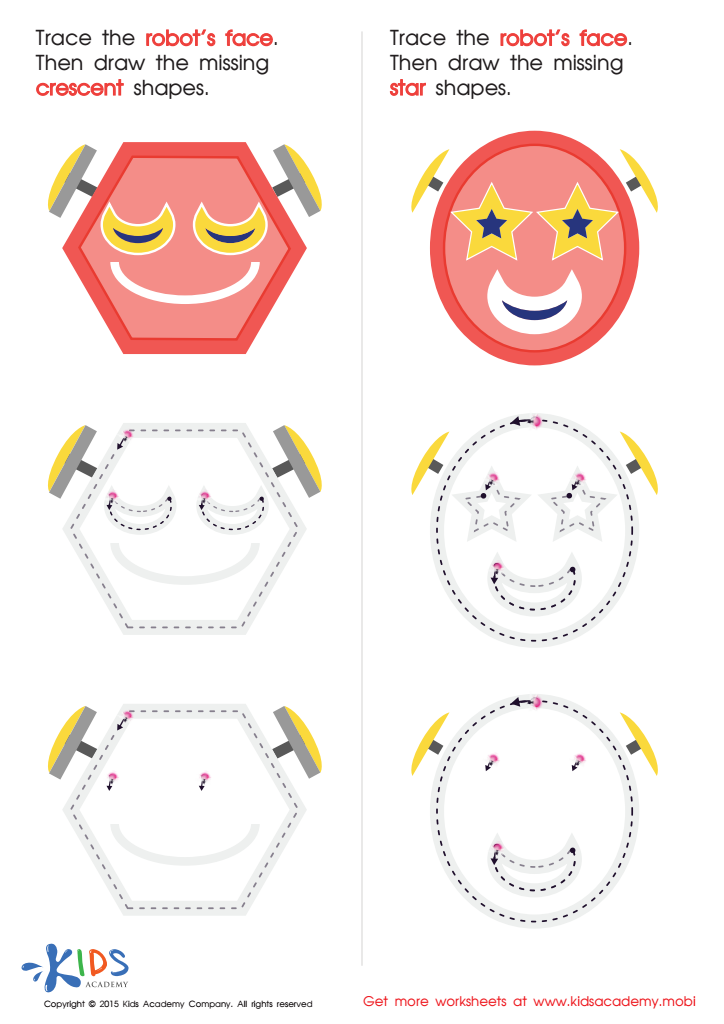
Composing a Robot's Face of Crescents And Stars Worksheet
Get free math geometry worksheets at Kids Academy! Help your child learn by practicing together - trace the robot's face and draw the missing crescent and star shapes. Be sure to remember their names! Have fun and learn with shapes for kids.
Composing a Robot's Face of Crescents And Stars Worksheet
Worksheet
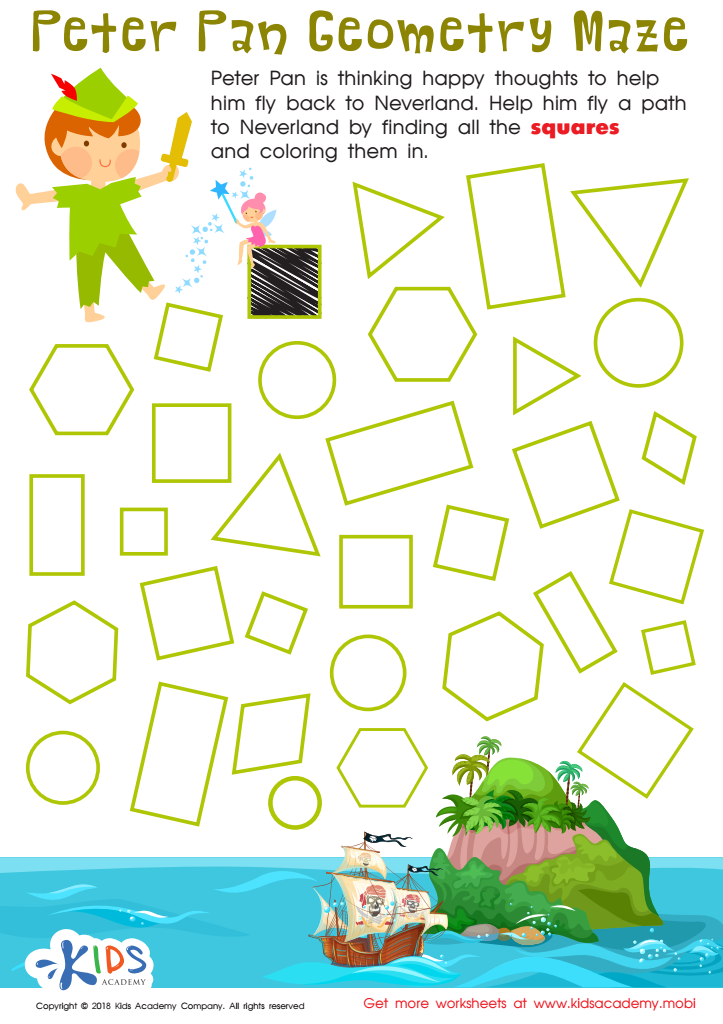
Peter Pan Worksheet
Kindergarteners can join Peter Pan on an adventure to Neverland! They can help him by coloring squares to create a path, strengthening their shape identification skills in a fun maze. Let the journey begin!
Peter Pan Worksheet
Worksheet
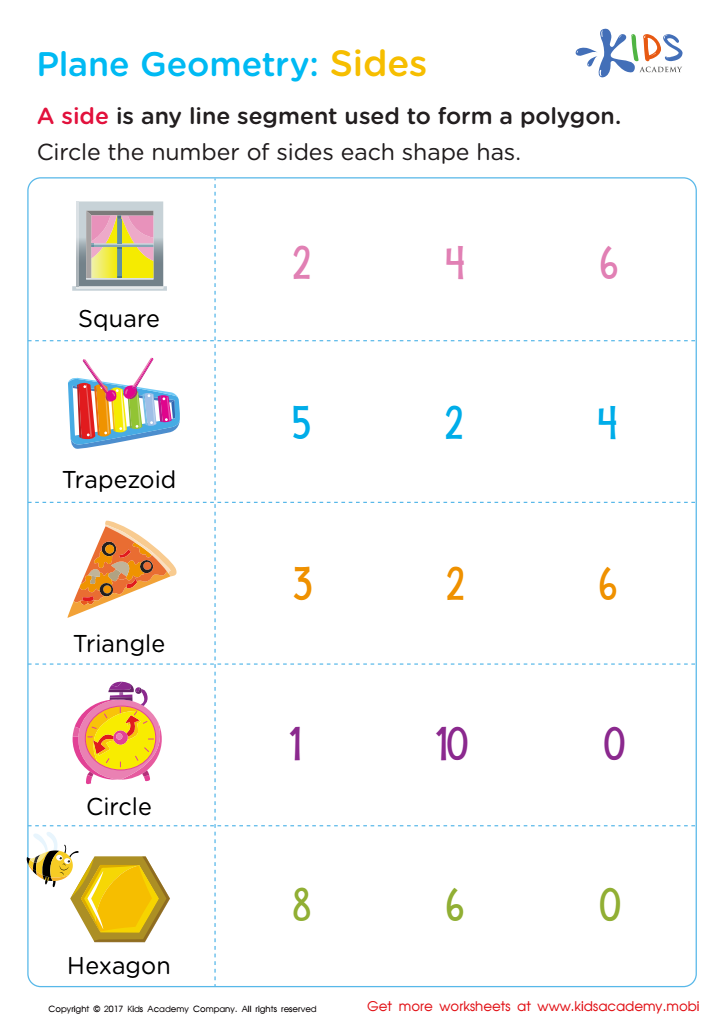
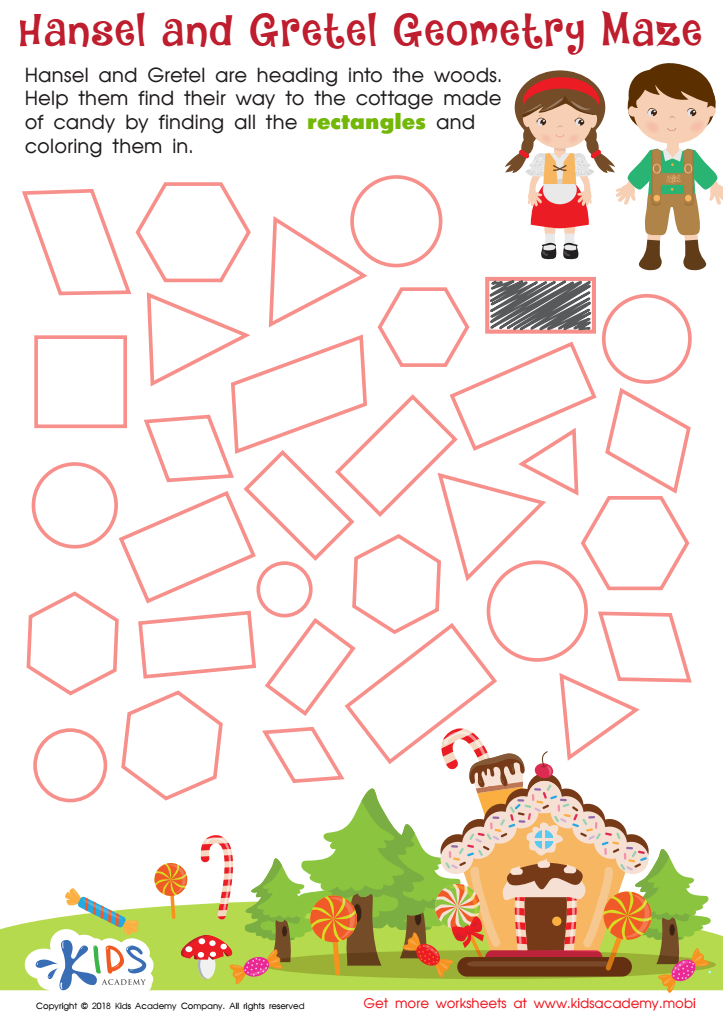
Hansel and Gretel Geometry Maze Worksheet
Your kids will have fun helping Hansel and Gretel get through a colorful forest of shapes! This free PDF reinforces the properties of rectangles, building skills in visual discernment and laying the foundations for geometry. They'll be too busy enjoying the story to realize they're learning!
Hansel and Gretel Geometry Maze Worksheet
Worksheet
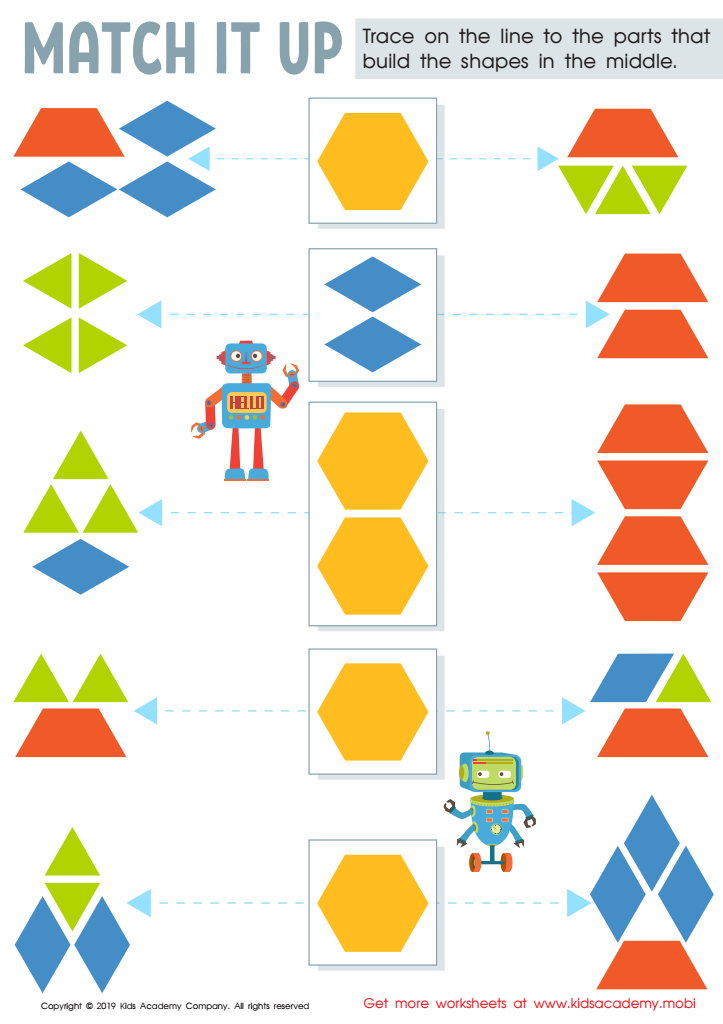
Match It up Worksheet
If your kids are into robots, they'll be thrilled to work on this worksheet. Ask them to name shapes they know, and help them draw and identify these shapes. Look at the shapes in the middle, and the sides. Finally, help your kids trace the lines to build the shapes in the middle.
Match It up Worksheet
Worksheet
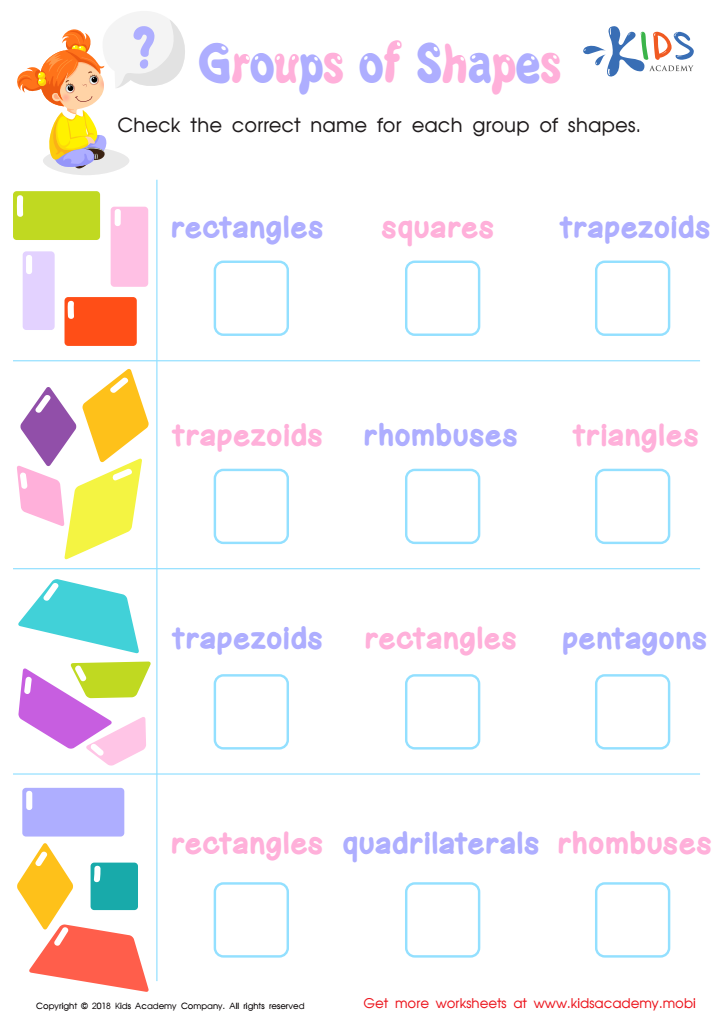
Groups of Shapes Worksheet
Can your child identify and name shapes? Help them learn the unique features of each and have them check the correct name for each group in the colorful pictures on this worksheet.
Groups of Shapes Worksheet
Worksheet
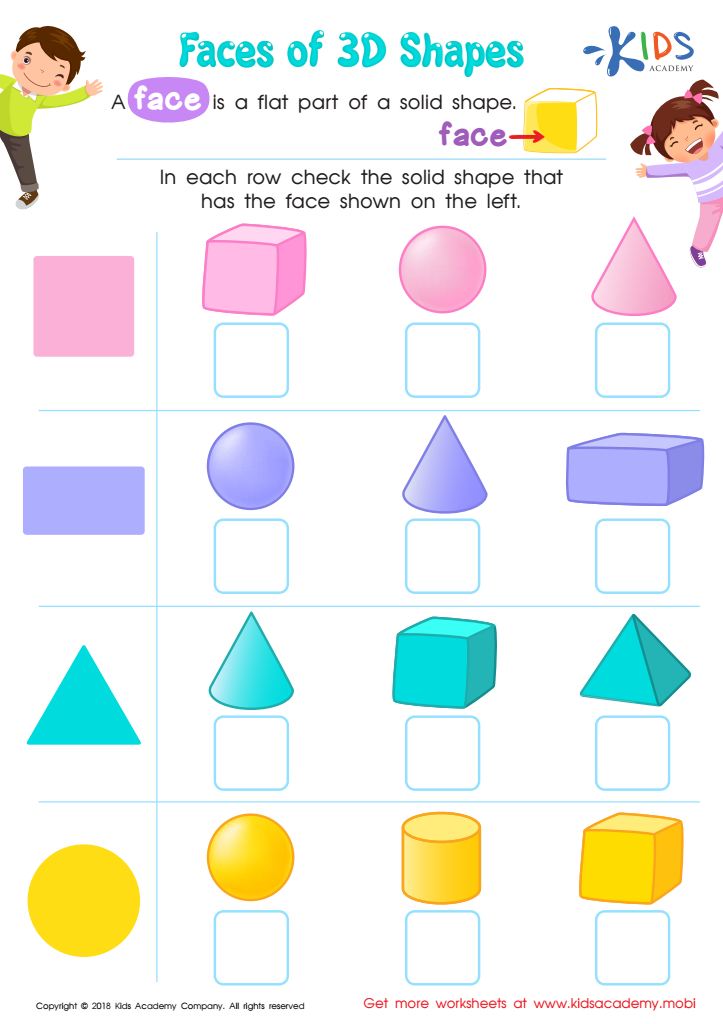
Faces of 3D Shapes Worksheet
Point at random body parts and ask your child to name them. Point to their face and ask them to identify it. Use this worksheet to show how "face" doesn't just refer to body parts - it can also mean the flat surface of a solid shape. Check the picture to find the matching solid shape for each face shown.
Faces of 3D Shapes Worksheet
Worksheet
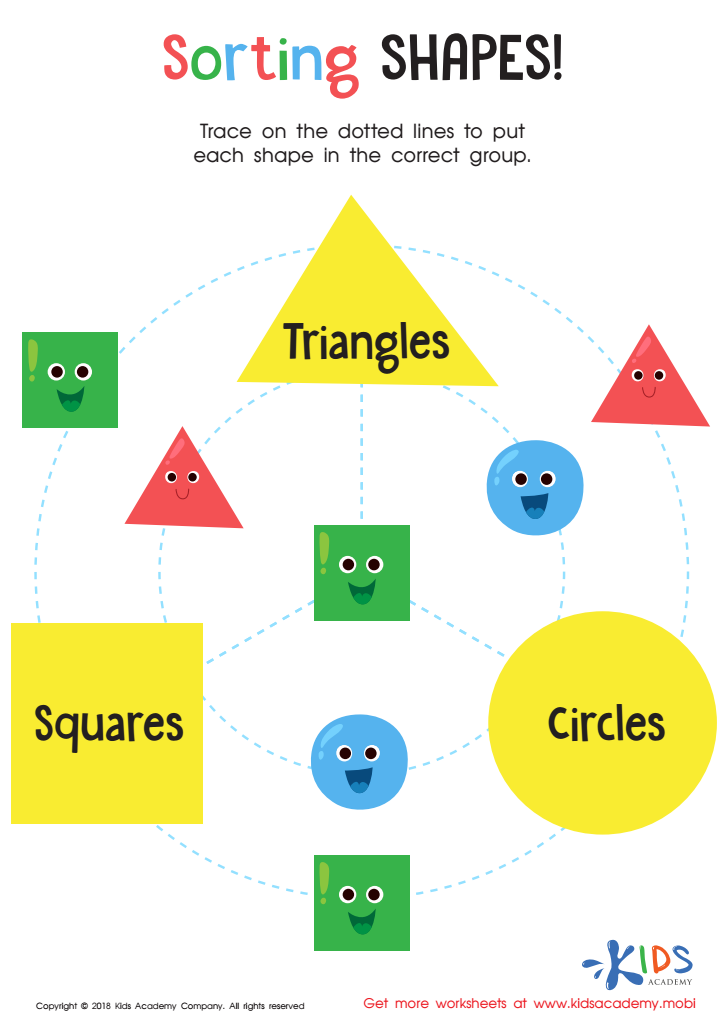
Sorting Shapes - Part 3 Worksheet
Download this fun PDF to help your kiddos recognize basic shapes like circles, squares, and triangles. It'll sharpen their fine motor skills as they trace and sort shapes by color, size, and sides. Your kids won't even realize they're learning with these cheery shapes!
Sorting Shapes - Part 3 Worksheet
Worksheet
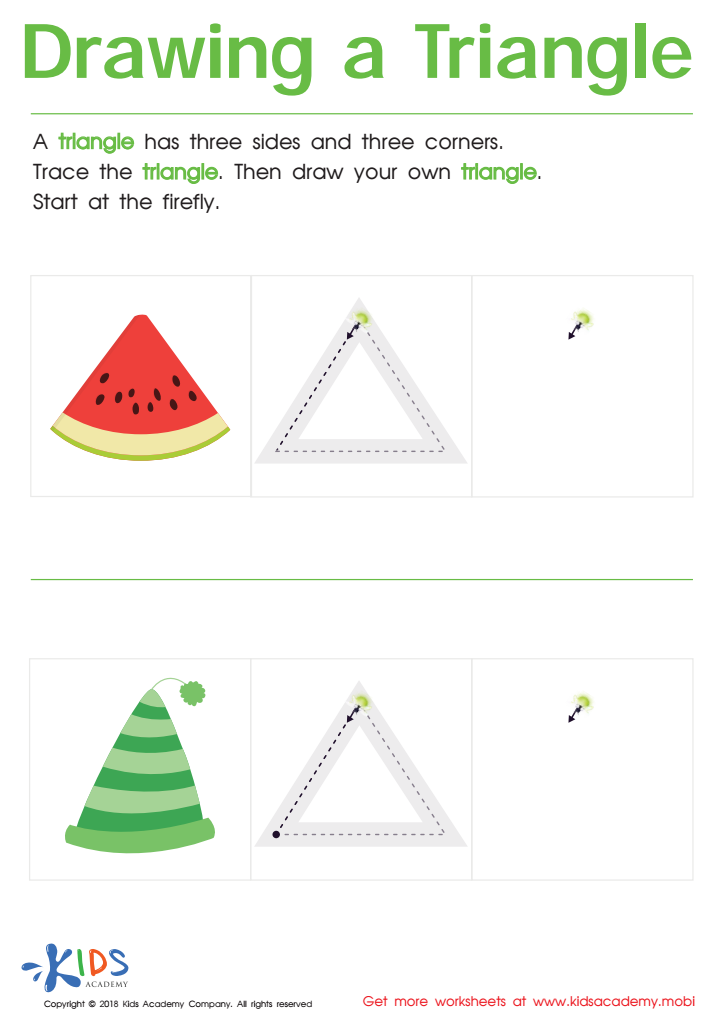
Drawing a Triangle Worksheet
Help your child develop fine motor skills with this fun, traceable printable! It teaches them how to draw a triangle, with easy steps and cute picture motivation. They'll work on pre-writing skills, pencil position, and grip control without even realizing it. With this basic shape, they'll gain a foundation for strong writing and drawing skills.
Drawing a Triangle Worksheet
Worksheet
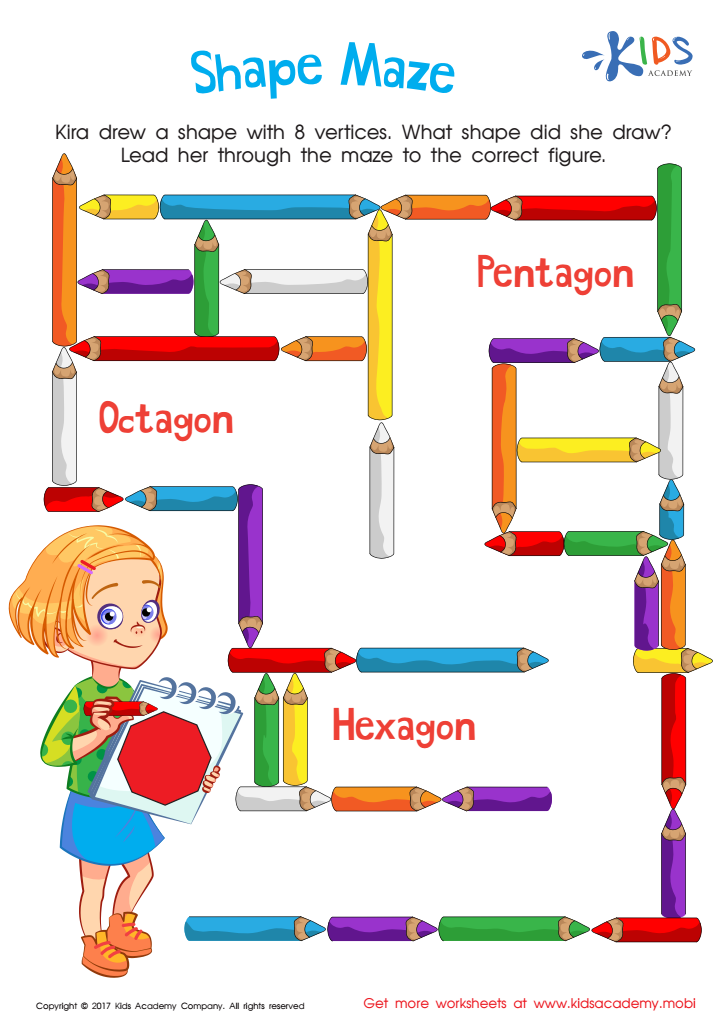
Shape Maze Worksheet
Test your child's geometry knowledge with this fun printable maze! They'll need to identify shapes with 8 vertices to find their way through the maze and get the correct answer.
Shape Maze Worksheet
Worksheet
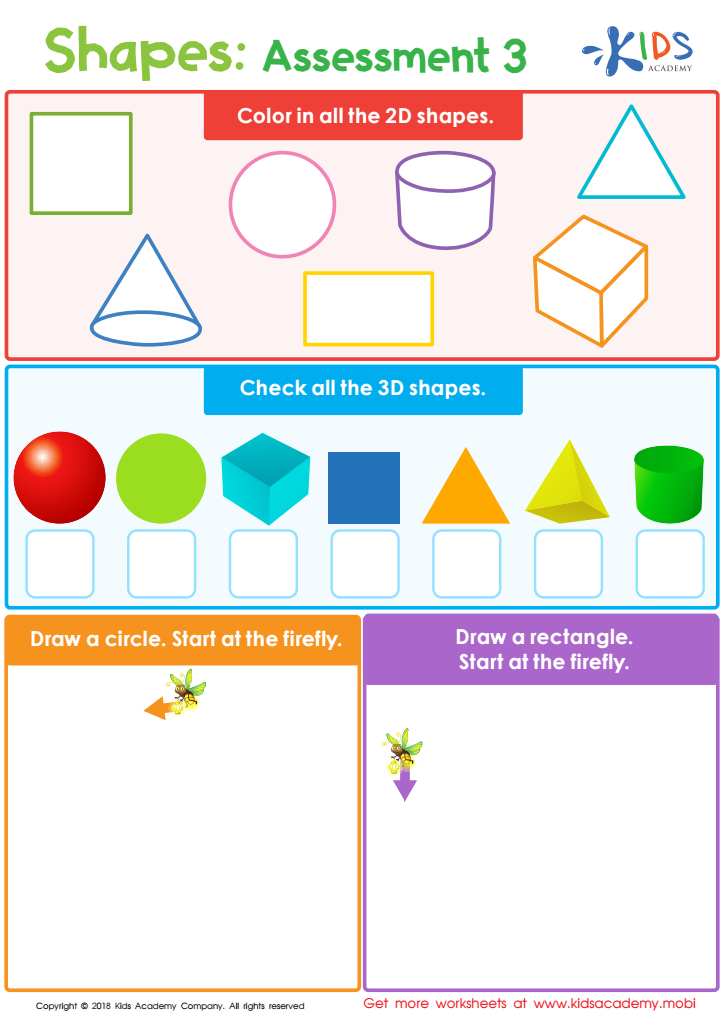
Shapes: Assessment 3 Worksheet
Shapes are everywhere! Help your students differentiate between 2D and 3D shapes. Ask them the difference between a triangle and pyramid, or a circle and a sphere. This worksheet tests their understanding of both types and is a useful assessment tool.
Shapes: Assessment 3 Worksheet
Worksheet
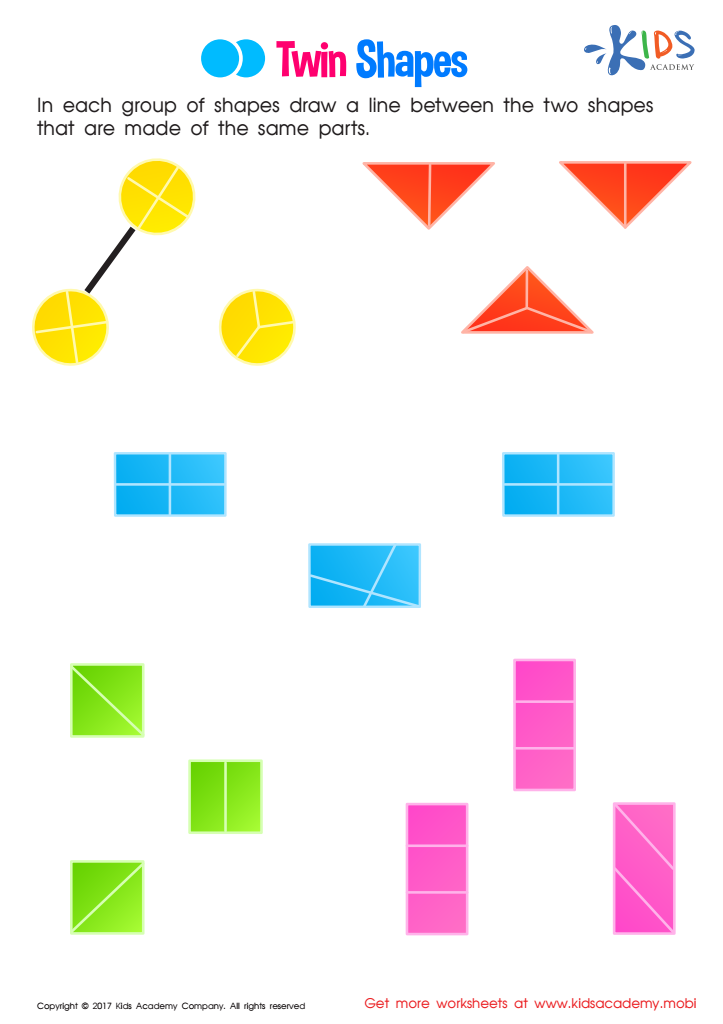
Twin Shapes Worksheet
Your students' goal in this worksheet is to find the twin shapes: drawing a line between two shapes made of the same parts. Likely, the first shapes encountered were circles, triangles, rectangles and squares - examples of which are seen frequently in everyday life. Encourage them to apply what they know and work out which is the twin shape!
Twin Shapes Worksheet
Worksheet
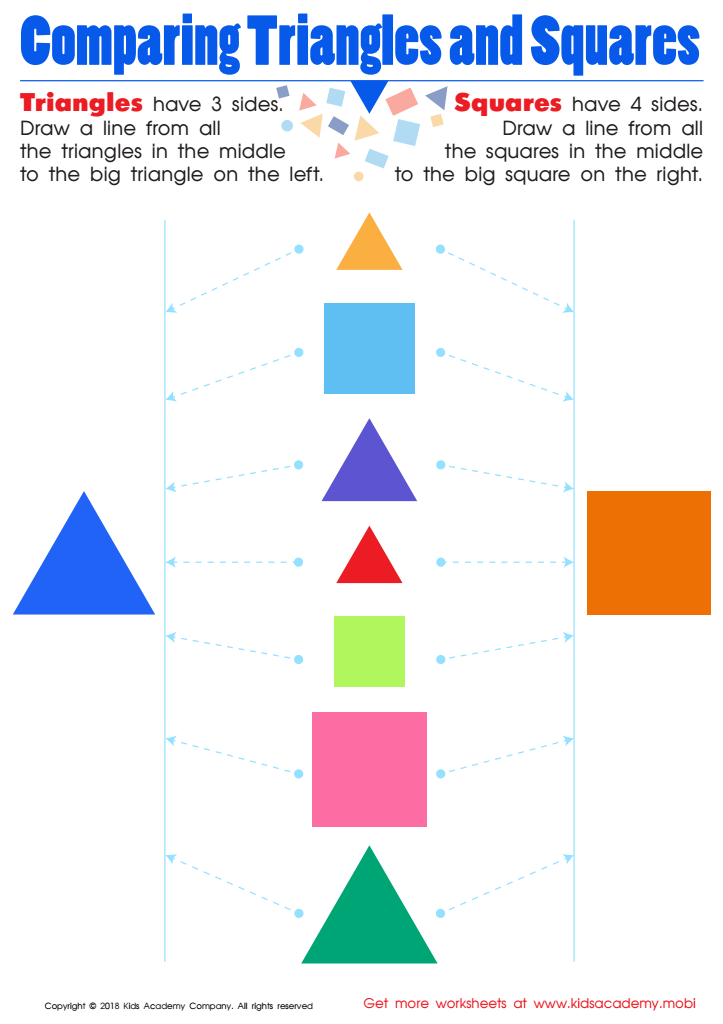
Comparing Triangles Squares Worksheet
Squares and triangles are different in the number of sides they have. Challenge kids to compare them with this fun worksheet! Read the descriptions at the top, then use the left and right shapes to match up the middle ones. Go down the page, joining the middle shapes to the side using the dotted lines!
Comparing Triangles Squares Worksheet
Worksheet
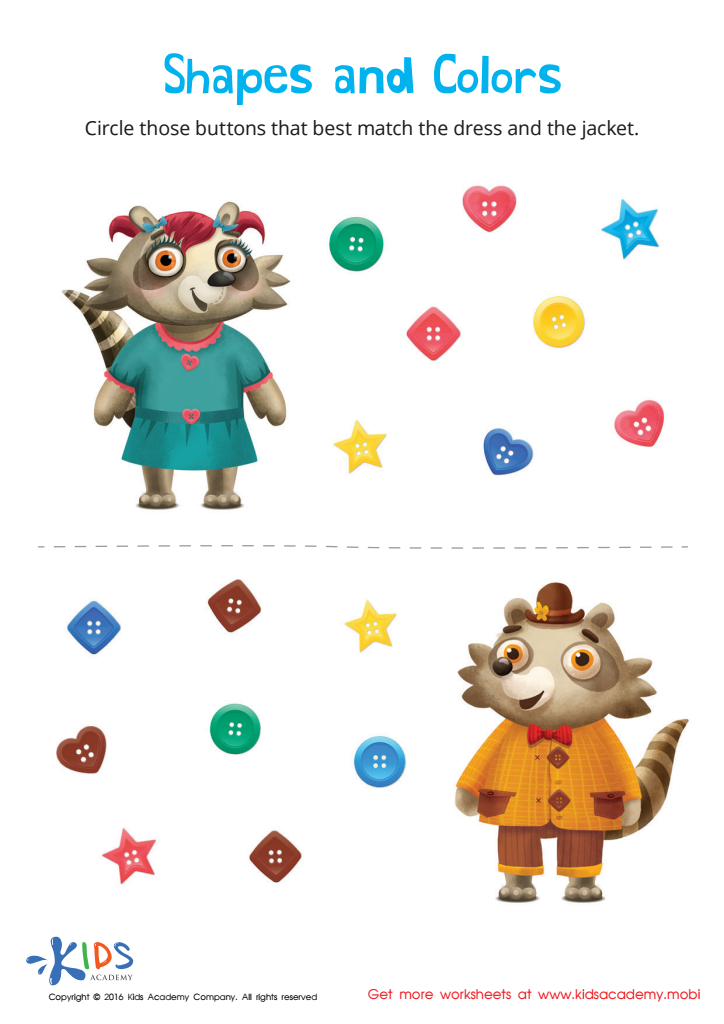
Matching: Shapes and Colors Worksheet
Help Mr. and Mrs. Raccoon find the right buttons to match their shirts! Kids will identify shapes and colors and learn to match them correctly.
Matching: Shapes and Colors Worksheet
Worksheet
Join Kids Academy for Free
Who is primarily going to use this learning content?








Understanding 2D shapes is foundational for children aged 4-8, as it plays a crucial role in their cognitive development and everyday life. First, learning about shapes helps enhance spatial awareness, enabling children to recognize and analyze the world around them. This skill is critical for their ability to navigate and interpret their environment later in life.
Moreover, 2D shapes form the basis for more complex mathematical concepts, such as geometry, measurement, and symmetry. By identifying shapes like circles, squares, triangles, and rectangles, children build problem-solving skills that will aid them across various subjects. Recognizing shapes also supports their development in critical thinking and creativity, as they learn to distinguish between different forms and characteristics.
In addition, shape recognition is connected to literacy. Many letters and numbers possess distinct shapes, and understanding 2D shapes can facilitate early reading and writing skills. Furthermore, incorporating shape activities into play fosters hands-on learning, keeps children engaged, and makes education enjoyable.
Ultimately, nurturing an appreciation for 2D shapes lays the groundwork for future academic success and enriches children’s everyday experiences, paving the way for confident learners. Parents and teachers should embrace this essential aspect of early education to strengthen holistic development.