Filters

7 filtered results

Clear all filters
Favorites
With answer key
Interactive

7 filtered results

Difficulty Level

Grade


Subject

    Explore our engaging Ending Sounds Worksheets designed for children ages 4-9! These worksheets are perfect for helping young learners master the crucial skill of identifying and practicing ending sounds in words. Featuring colorful illustrations and interactive exercises, our resources not only make learning fun but also enhance phonemic awareness, spelling, and vocabulary development. These downloadable activities cater to various learning styles and can be easily integrated into your teaching or homeschooling routine. Equip your child with the essential building blocks of literacy as they confidently navigate the world of words. Start fostering their love for reading today with our delightful worksheets!

    Check out this FREE Trial Lesson on Ending Sounds for age 4-9!

    Digraphs

    Favorites
    With answer key
    Interactive
    • 4-9
    • Ending Sounds
    Missing Digraph: Part 1 Worksheet
    Missing Digraph: Part 1 Worksheet

    Missing Digraph: Part 1 Worksheet

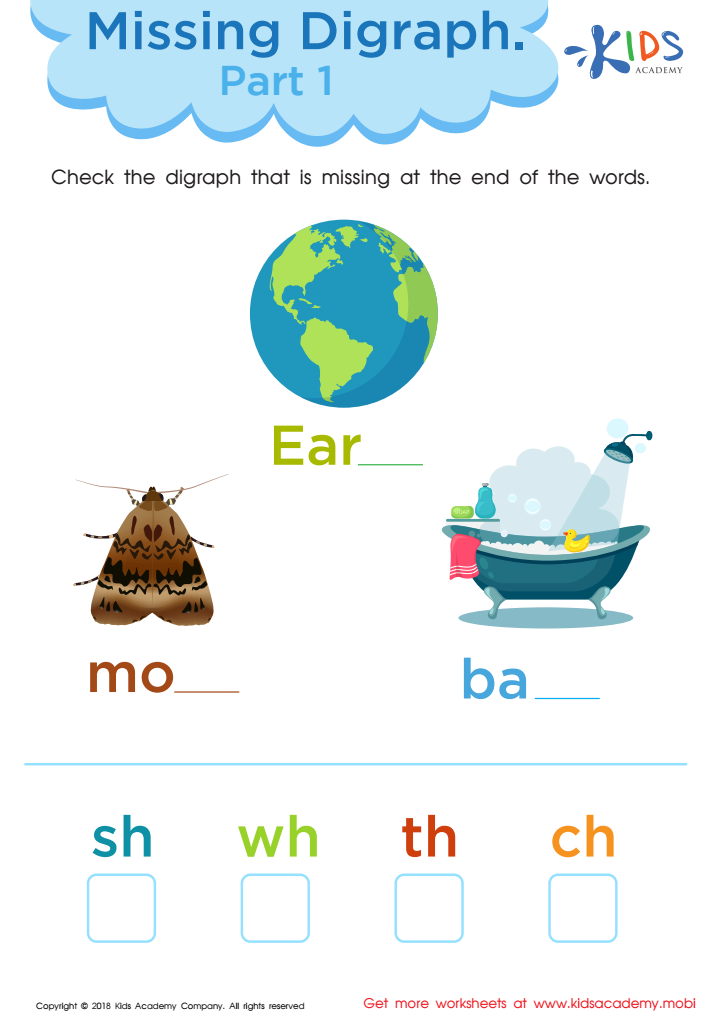
    Practice the 'th' digraph with this worksheet! Ask kids to say the words shown and sound out the letters below each image. Check the box with the correct digraph to complete. Examples include 'earth', 'bath' and 'moth', all ending with the same two letters. Phonics teaches that digraphs are two letters that make one sound.
    Missing Digraph: Part 1 Worksheet
    Worksheet
    Hotel Mix-up Worksheet
    Hotel Mix-up Worksheet

    Hotel Mix-up Worksheet

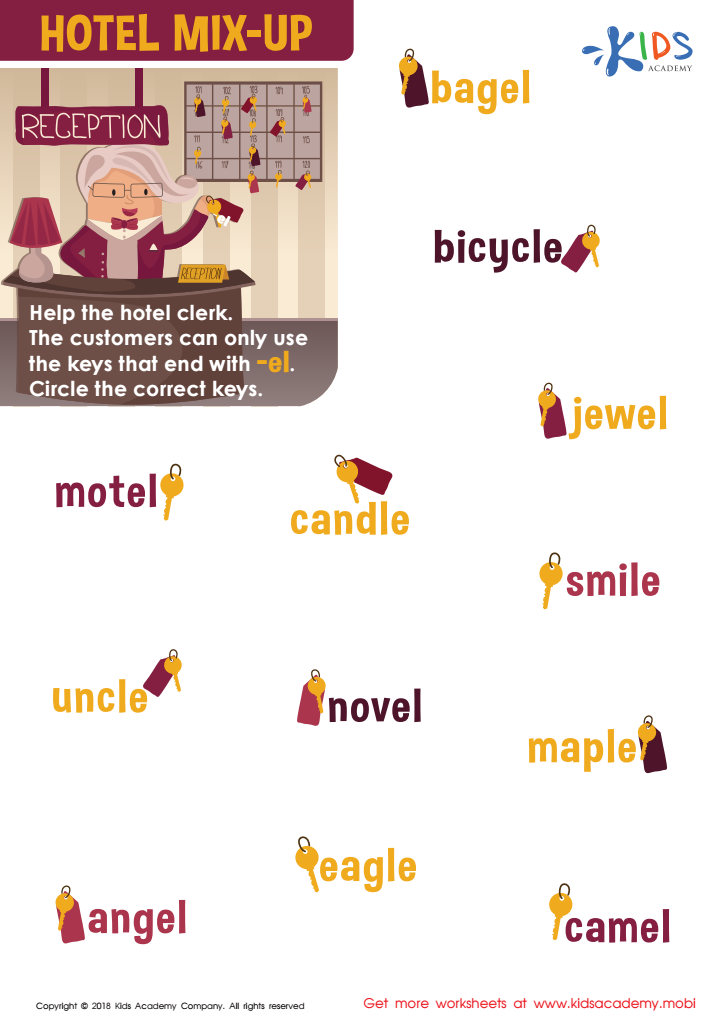
    Before doing this worksheet, explain to your kids what a hotel is. It's a building where guests can stay for a few days and pay for their stay. In this exercise, the hotel clerk needs help finding the correct keys. Have your kids circle words ending with -el to find the right ones.
    Hotel Mix-up Worksheet
    Worksheet
    Digraph Th Printable Worksheet
    Digraph Th Printable Worksheet

    Digraphs: Think About "th" Worksheet
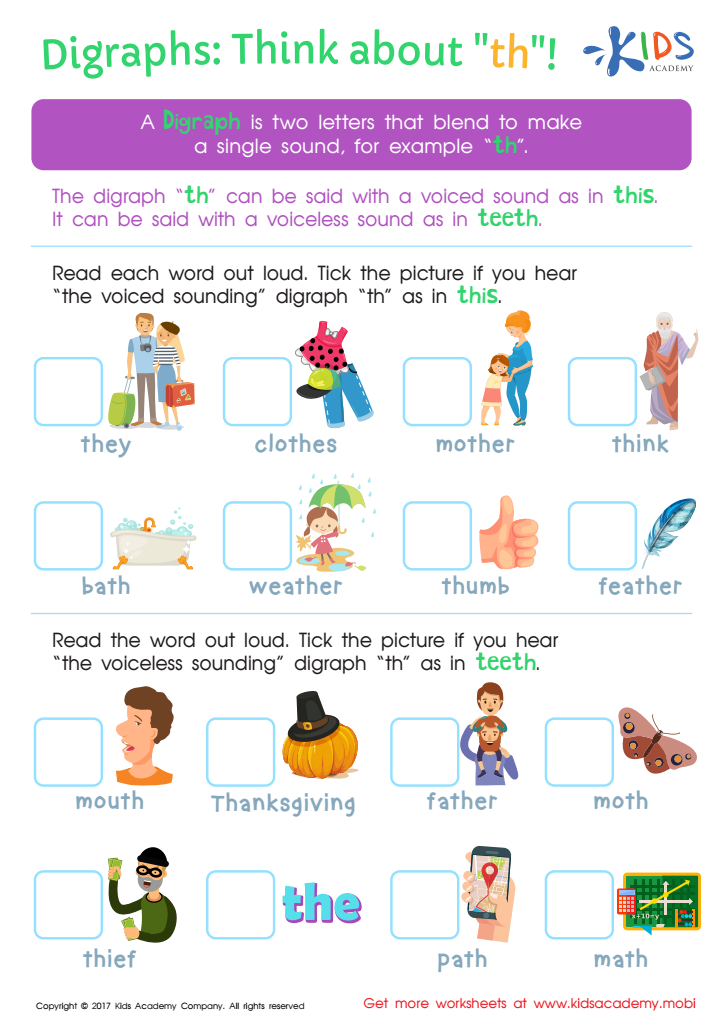
    Help your child master phonics with this illustrated digraph Th printable worksheet. It will help recognize "Th" words, differentiate voiced and voiceless sounds and understand key concepts. Use similar words while they work to reap its full benefits!
    Digraphs: Think About "th" Worksheet
    Worksheet
    Which Is the Onset? Worksheet
    Which Is the Onset? Worksheet

    Which Is the Onset? Worksheet

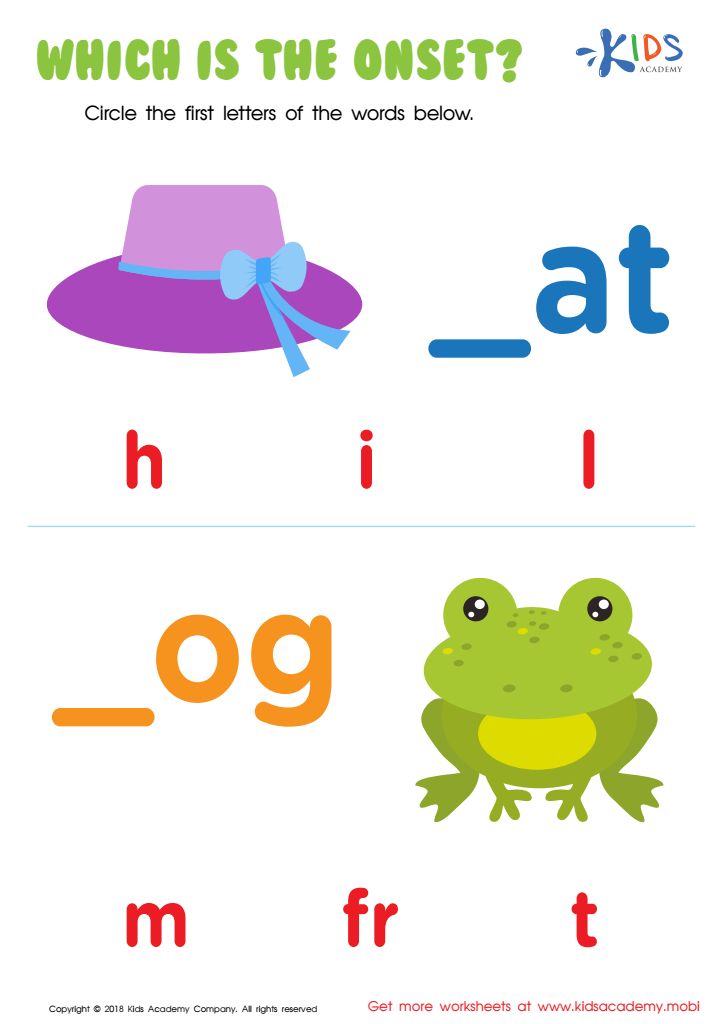
    Help your children learn to spell with this bright, fun worksheet. Struggling with spelling small words can make reading and writing sentences difficult. Encourage them to look at the pictures, say the names aloud and circle the correct first letter from the options. They will soon overcome any reluctance to spell.
    Which Is the Onset? Worksheet
    Worksheet
    Twin Onset Worksheet
    Twin Onset Worksheet

    Twin Onset Worksheet

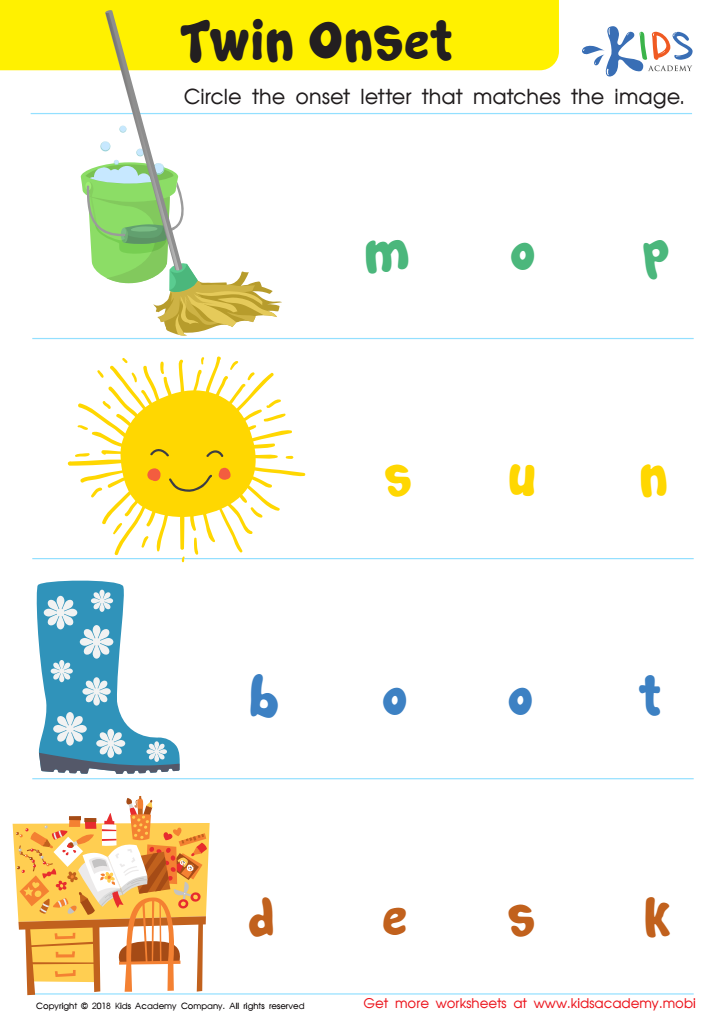
    Children's phonological skills and reading/spelling strategies are strengthened by isolating initial consonants. This fun PDF worksheet encourages kids to trace the correct onset letter and hone fine motor skills. It's a great way to introduce early reading and spelling.
    Twin Onset Worksheet
    Worksheet
    Phonics and Word Recognition: Assessment 1 ELA Worksheet
    Phonics and Word Recognition: Assessment 1 ELA Worksheet

    Phonics and Word Recognition: Assessment 1 ELA Worksheet

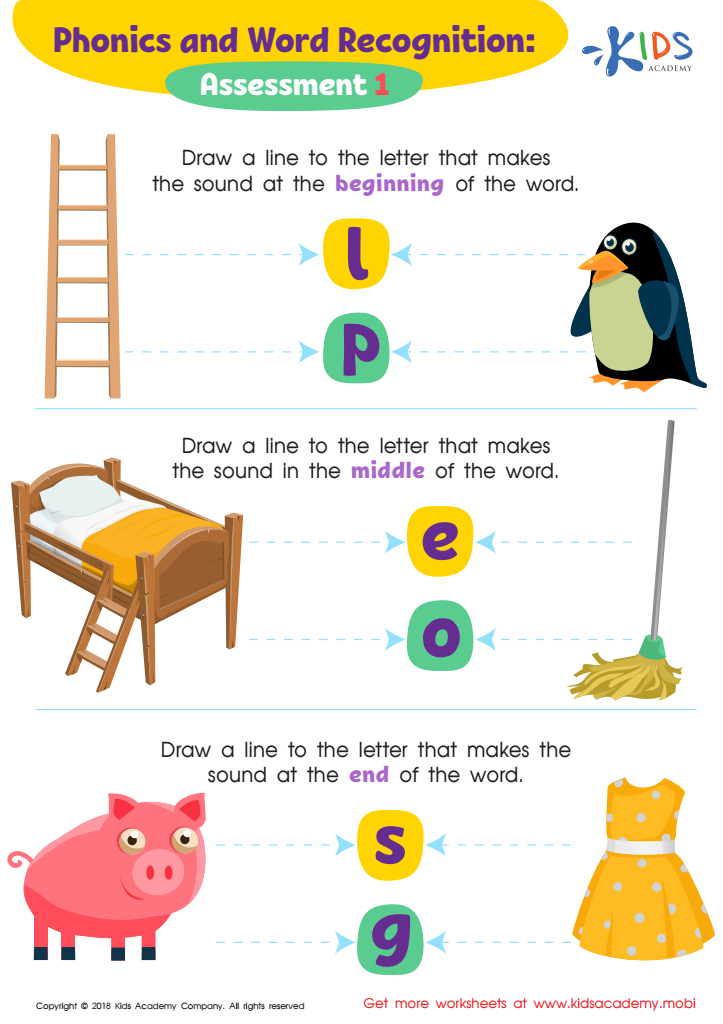
    This fun worksheet tests your child's sound recognition skills for each part of a word. Ask your child to name each image and trace the line to match it with the corresponding letter. Listen for beginning sounds on 1st, middle sounds on 2nd, and ending sounds on 3rd. Encourage learning with this colorful and interactive activity!
    Phonics and Word Recognition: Assessment 1 ELA Worksheet
    Worksheet
    Which Is the Rime? Worksheet

    Which Is the Rime? Worksheet

    Which Is the Rime? Worksheet

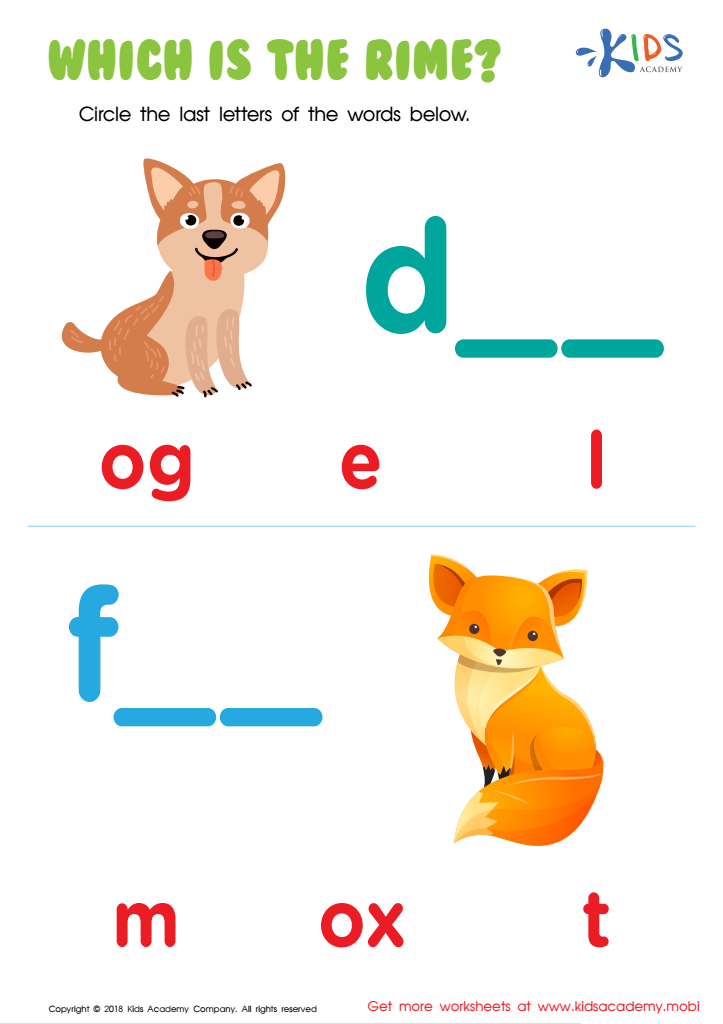
    Beginning readers benefit from rimes that aid letter familiarity, recognition, and spelling. With this fun PDF worksheet, kids can identify and spell the correct word for each image by circling the last letter. This activity develops fine motor skills as well.
    Which Is the Rime? Worksheet
    Worksheet


    Ending sounds, or phonemes, are a critical aspect of early literacy development for children ages 4-9. Understanding how to identify and produce these sounds helps children tackle the complexities of reading and spelling. Parental and teacher support in this area lays the groundwork for strong phonemic awareness, which is essential for successful reading.

    When children can recognize ending sounds, they enhance their ability to decode words, leading to improved reading fluency and comprehension. This skill also contributes to spelling proficiency, as knowing how words end can help with predicting and understanding similar words.

    Furthermore, when parents and teachers emphasize the significance of ending sounds, they foster a love for language and literacy. Engaging in playful activities like rhyming games and sound matching can turn learning into a fun and rewarding experience, igniting children’s interest in reading and writing.

    Ultimately, focusing on ending sounds equips children with the tools they need to navigate the world of written language, promoting confidence and independence as learners. Investing time into this essential aspect of literacy can set a strong foundation for lifelong learning and academic success. Thus, it is essential for both parents and educators to prioritize this skill in their early education efforts.