
Vowels and Consonants Worksheets for Ages 4-9
29 filtered results
Difficulty Level
Grade
Age
-
From - To
Subject
Activity
Standards
Explore our engaging "Vowels and Consonants Worksheets for Ages 4-9" designed to make learning fun and interactive. Perfect for early learners, these printable resources from Kids Academy help children differentiate between vowels and consonants through a variety of activities including tracing, matching, and coloring. Ideal for both classroom use and at-home practice, our worksheets cater to different learning styles, ensuring kids build a solid foundation in literacy. Each worksheet is thoughtfully created to enhance phonemic awareness, improve reading skills, and boost confidence. Start your child's educational journey today with our comprehensive and entertaining resources!
Favorites
With answer key
Interactive
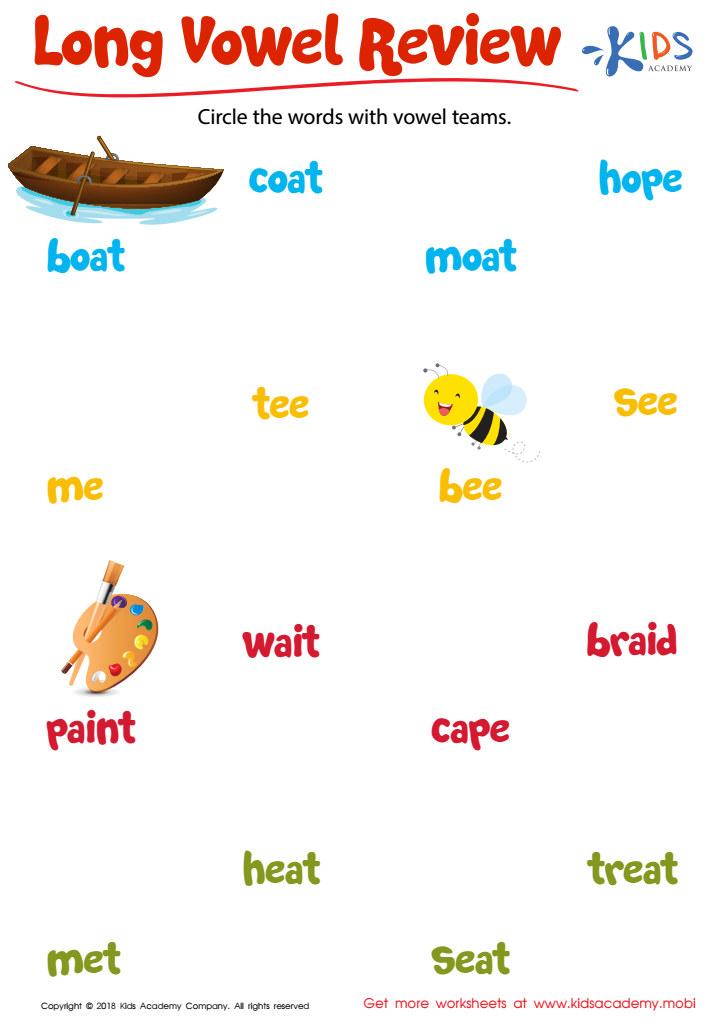
Long Vowel Review Worksheet
Vowel teams like "ea" and "ai" help us make words, and understanding these patterns aids emerging readers in becoming more fluent. This review worksheet has students finding words with vowel teams that make the long vowel sound, and helps them recognize high-frequency words.
 Assign to My Students
Long Vowel Review Worksheet
Worksheet
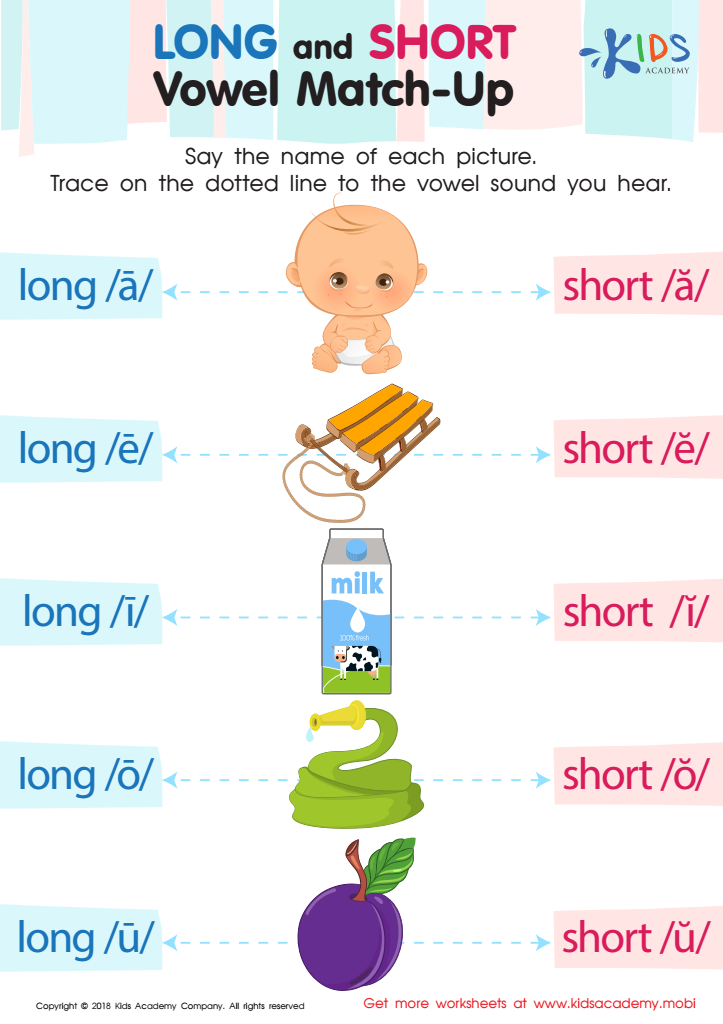
Long and Short Vowel Match up Reading Worksheet
Help your reader build confidence and refine their decoding skills! This worksheet combines long and short vowel recognition with a traceable component to improve fine motor skills. Your learner will name each picture and trace the dotted lines to get to the correct vowel sounds.
Long and Short Vowel Match up Reading Worksheet
Worksheet
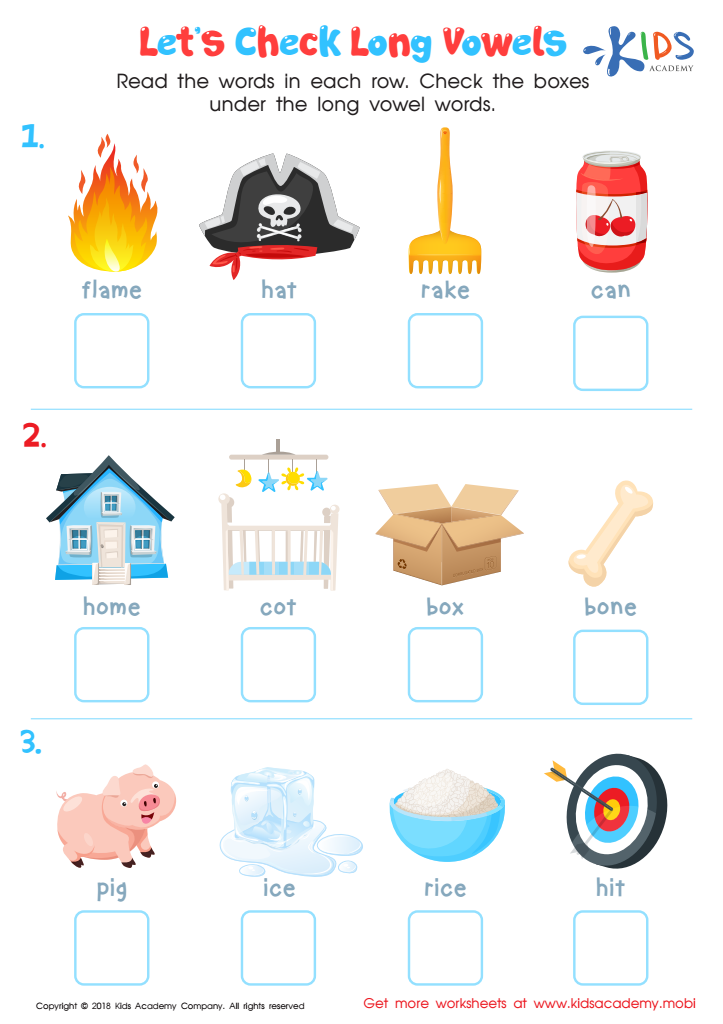
Let's Check Long Vowels: Assessment Worksheet
This worksheet helps your child identify objects and learn long vowel sounds. Ask them to say the names of the four objects in each row. Then, help them check the boxes to confirm they know the long vowel sounds. This will help them develop their reading skills.
Let's Check Long Vowels: Assessment Worksheet
Worksheet
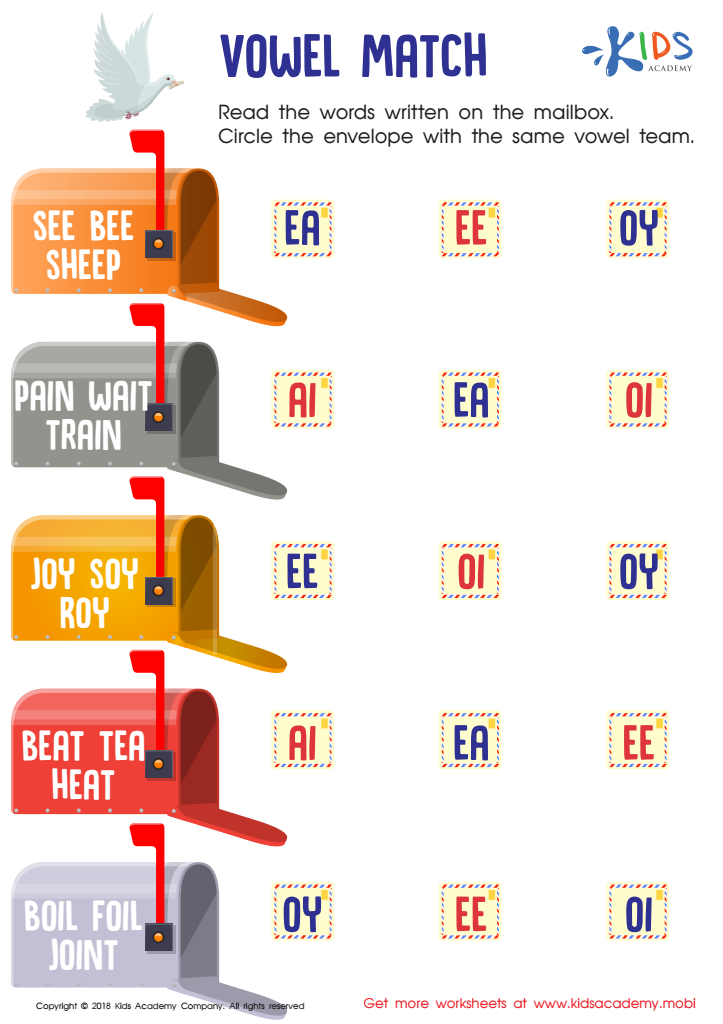
Vowel match Worksheet
Early readers can find vowel teams (digraphs) tricky. This simple worksheet helps kids match words with the right digraphs and learn to read! They'll practice reading words from different families, and linking the letters to their sounds. It's a fun way to get kids sending letters to the right addresses!
Vowel match Worksheet
Worksheet
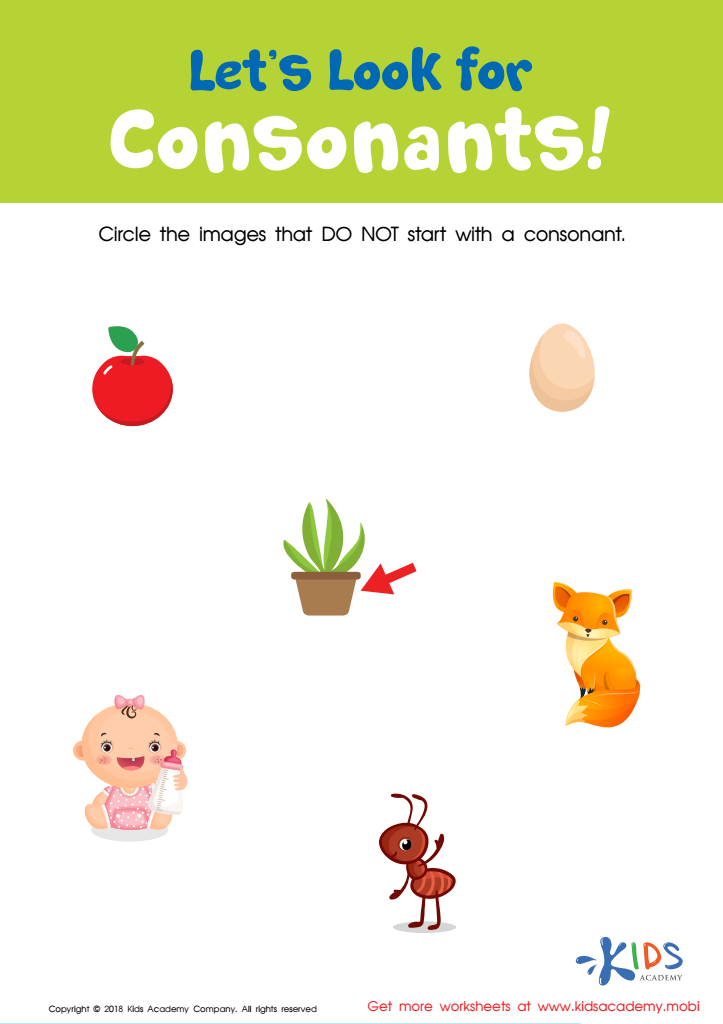
Let's Look for Consonants Worksheet
Help kids learn consonants and words that start with them. Ask them to recite the alphabet, then explain consonants are all letters but the 5 vowels. Use the worksheet to ask them to circle items without a consonant. Emphasize that's 21 consonants.
Let's Look for Consonants Worksheet
Worksheet
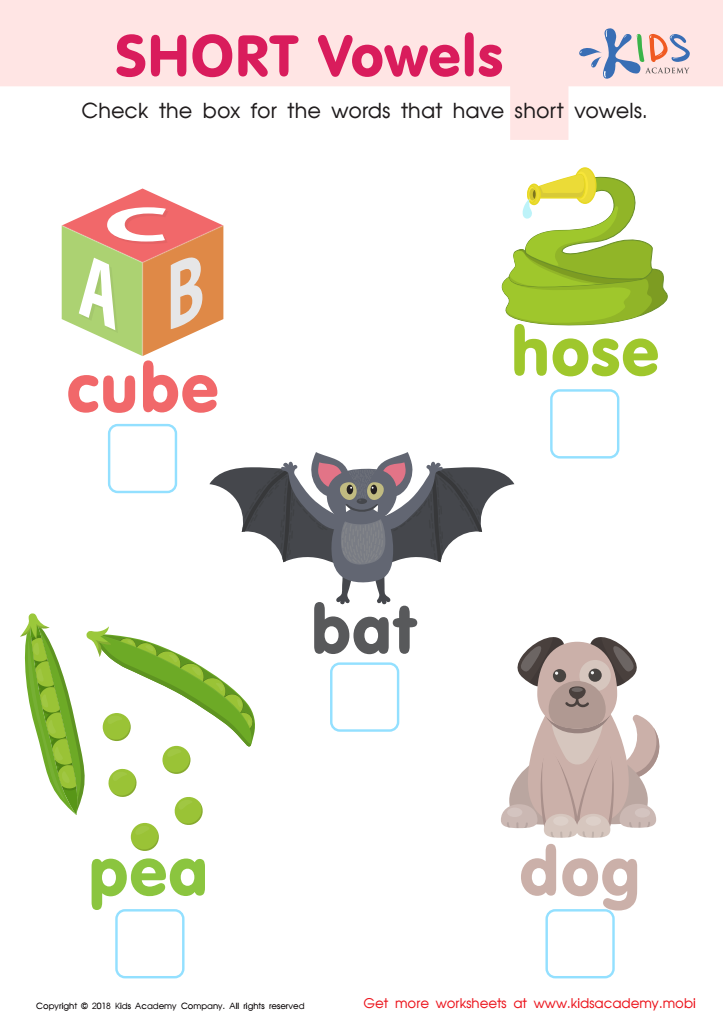
short vowels Worksheet
Say "dog" and notice how long it takes to pronounce the vowel. Is it short or long? Compare it to "pea" and use this worksheet to quickly assess your child's mastery. Have them name each picture and listen for the vowel sounds. Only check the boxes for words with short vowel sounds.
short vowels Worksheet
Worksheet
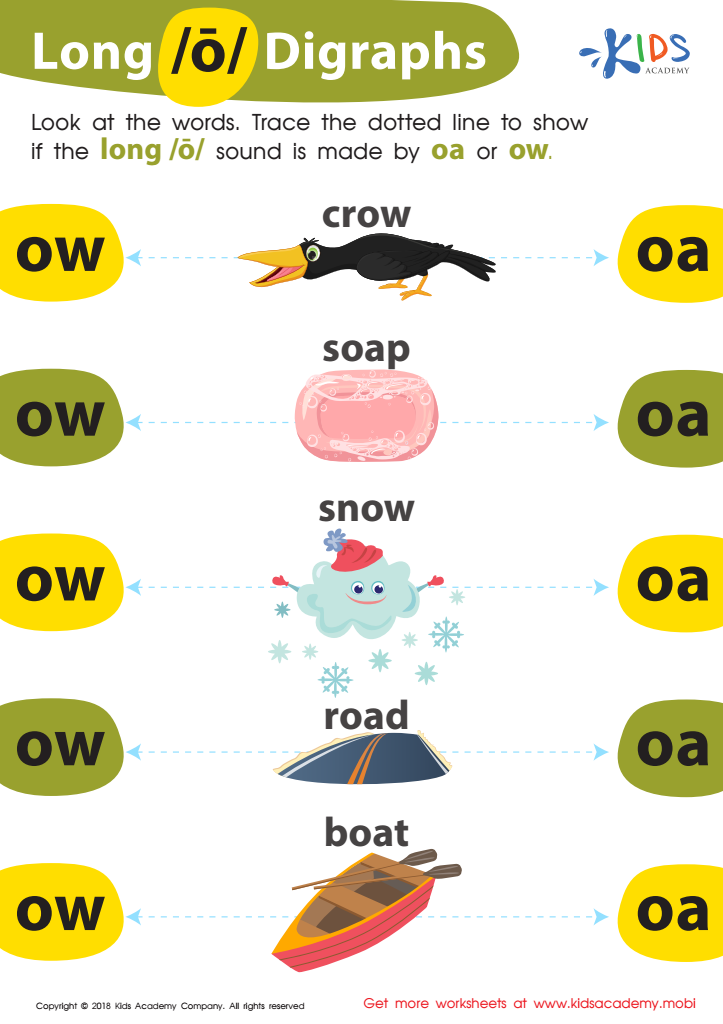
Reading: Long O Digraphs Worksheet
Reading and decoding words can be complex for learners when they start studying digraphs, two letters that make one sound. This worksheet focuses on the long O sound, /oa/ and /ow/. With the understanding of digraphs, students can decode more words and build their reading confidence.
Reading: Long O Digraphs Worksheet
Worksheet
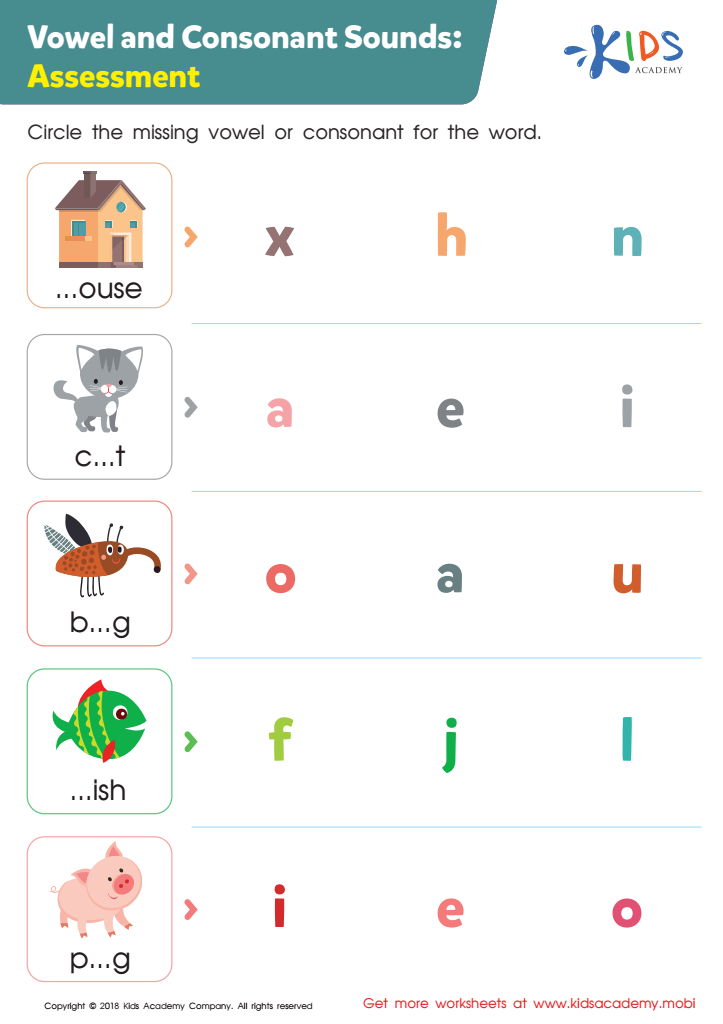
Vowel and Consonant Sounds: Assessment Worksheet
Test young elementary students on vowel and consonant sounds with this friendly phonics assessment worksheet. Get kids to name each image and look at the word underneath. Ask them to sound out the word, then circle the missing letter to complete. This will help assess their knowledge and skills!
Vowel and Consonant Sounds: Assessment Worksheet
Worksheet
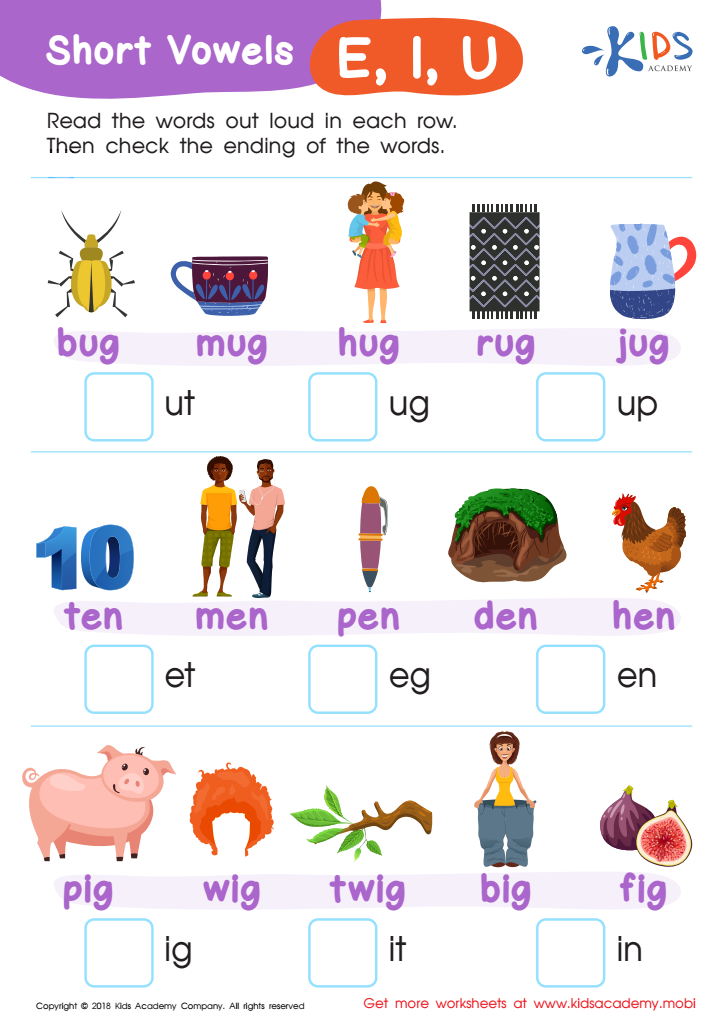
Short Vowels /e/, /i/, and /u/ Worksheet
Your emergent reader can have fun while practicing their short vowel sounds with this free, brightly colored worksheet. They'll identify one-syllable words by their pictures, then match the correct ending for each. They'll gain an understanding of how short vowel sounds vary in closed syllables with different endings, without even realizing it!
Short Vowels /e/, /i/, and /u/ Worksheet
Worksheet
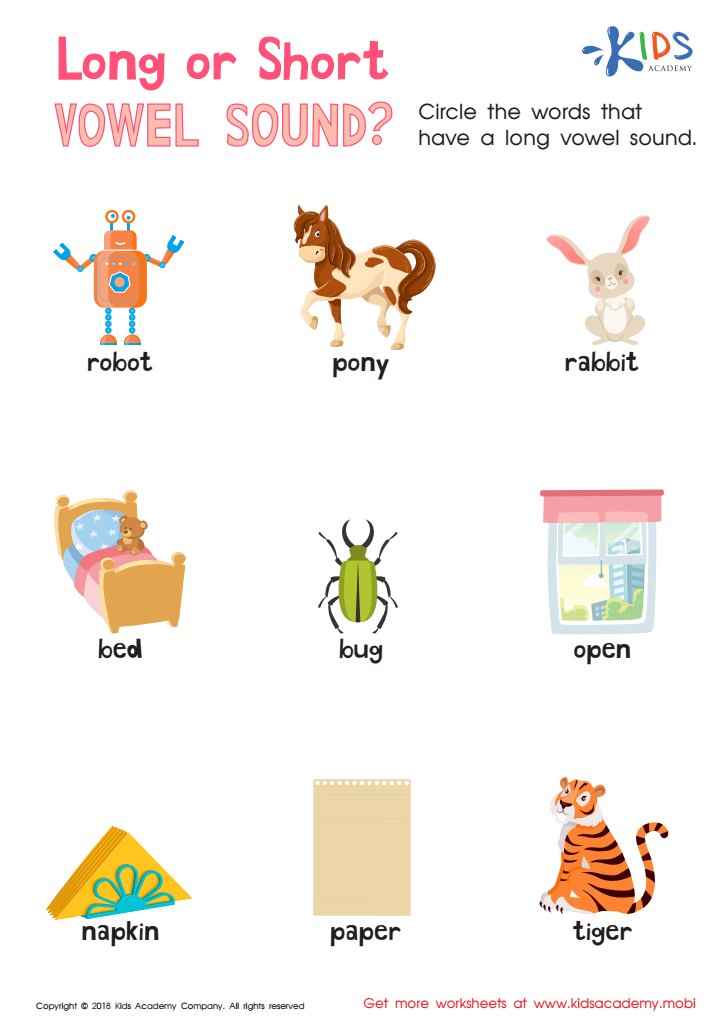
Long or Short Vowel Sound? Worksheet
Help your kids learn the difference between long and short vowels with this worksheet. Point at each object and check their pronunciation. Ask them to identify the long and short vowel words and guide them to circle those with long vowels. Give them a thumbs up if they get it right!
Long or Short Vowel Sound? Worksheet
Worksheet
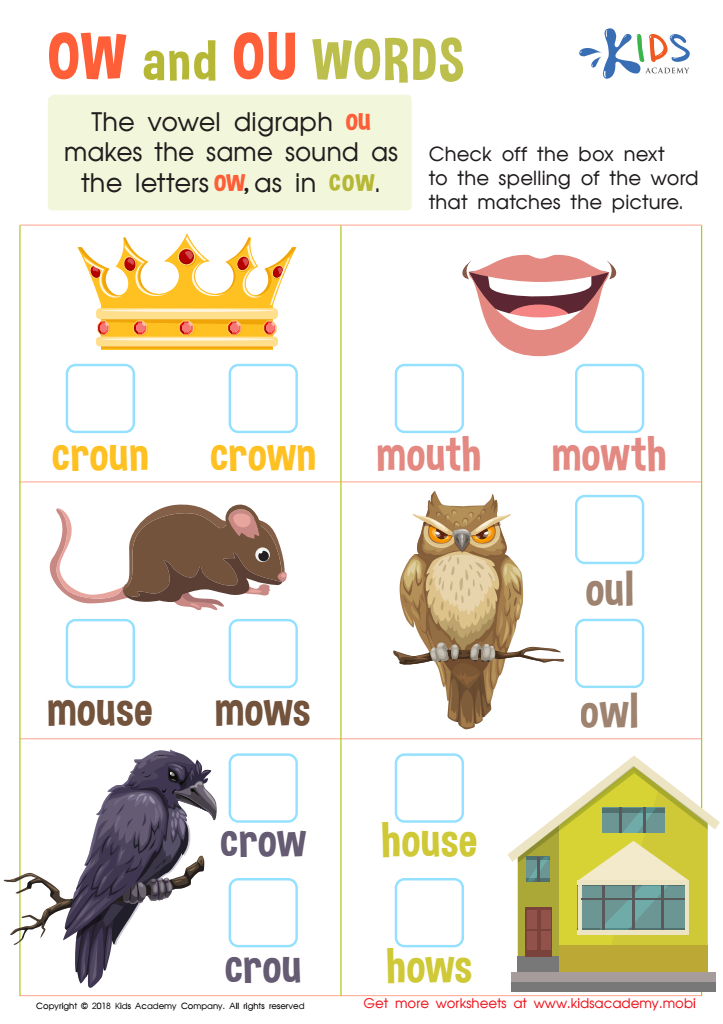
Reading: OW and OU Words Worksheet
Help your kids learn phonetics! Explain the different sounds and long/short variations. Emphasize that some vowel sounds are the same, e.g. ou = ow in cow. For practice, have them read aloud the words in the worksheet and check the box next to the spelling that matches the picture.
Reading: OW and OU Words Worksheet
Worksheet
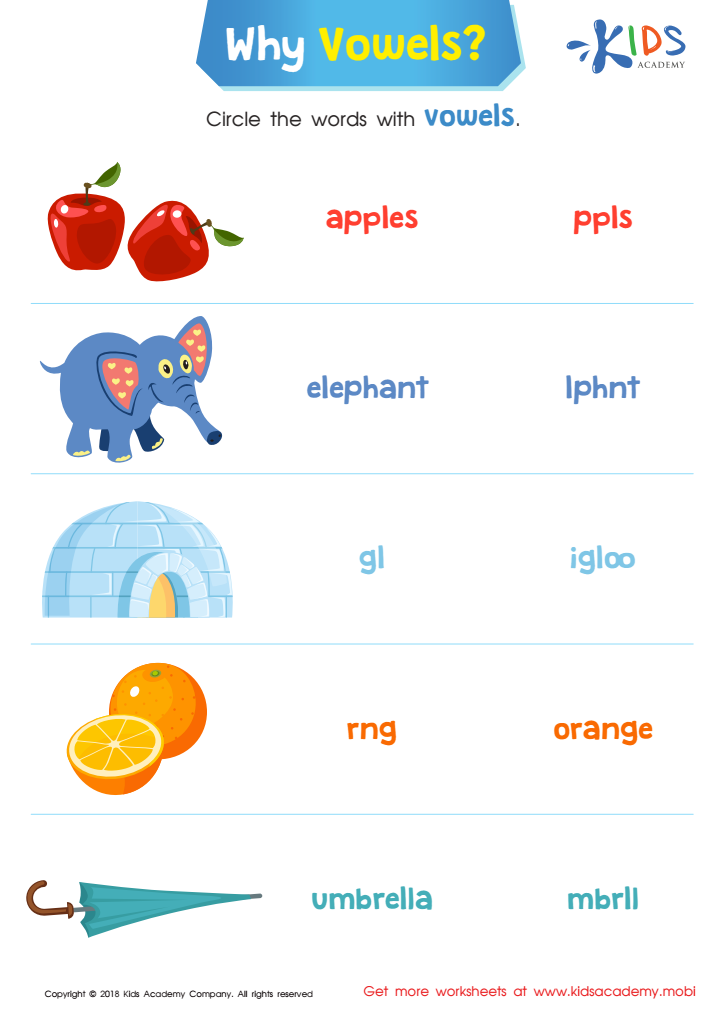
Why Vowels? Reading Worksheet
This worksheet teaches kids to spell words with vowels. It features familiar pics for them to recognize, and they practice fine motor skills by circling the correct spelling. It's an enjoyable way for kids to learn how to spell and promote reading skills.
Why Vowels? Reading Worksheet
Worksheet
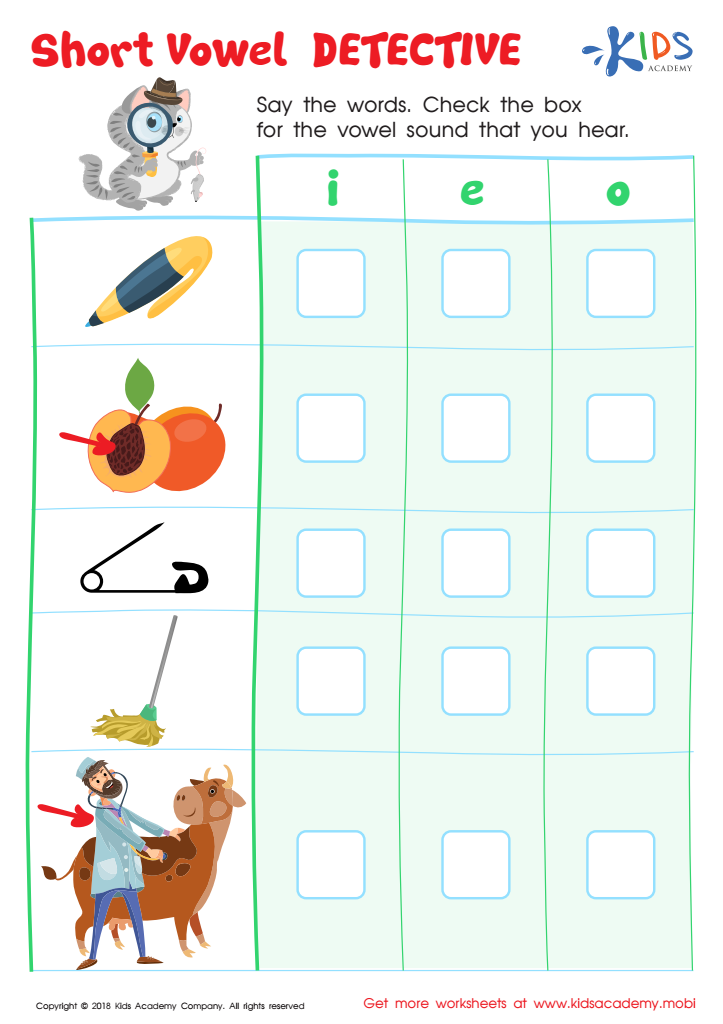
Short Vowel Detective Worksheet
Help your kids become phonetics masters by teaching them how to tell the difference between long and short vowels. As it may be difficult for them, take a look at a worksheet together. Have them pronounce the words and check the box for the vowel sound they hear. This is a great way for them to learn quickly and easily.
Short Vowel Detective Worksheet
Worksheet
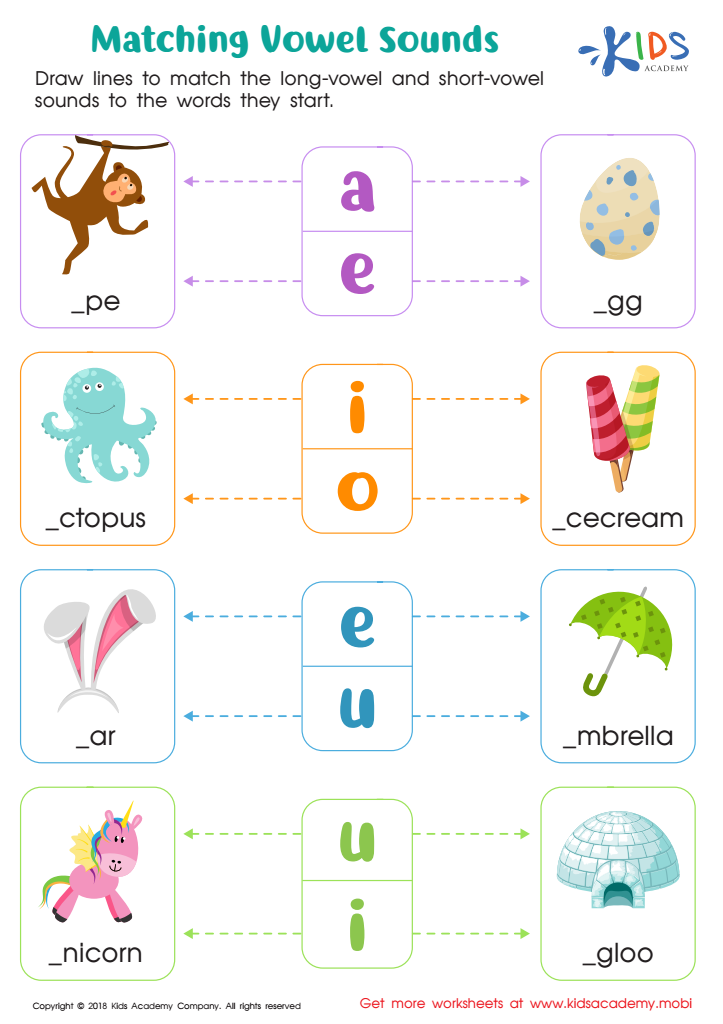
Matching Vowel Sounds Worksheet
Teach your child phonics with a fun worksheet! Ask your child to name a vowel sound and listen if it's long or short. Differentiating between long and short vowel sounds can be tricky, but this matching worksheet makes it easy for kids to understand. Have fun and master phonics - the worksheet will help them understand the difference between long and short vowel sounds!
Matching Vowel Sounds Worksheet
Worksheet
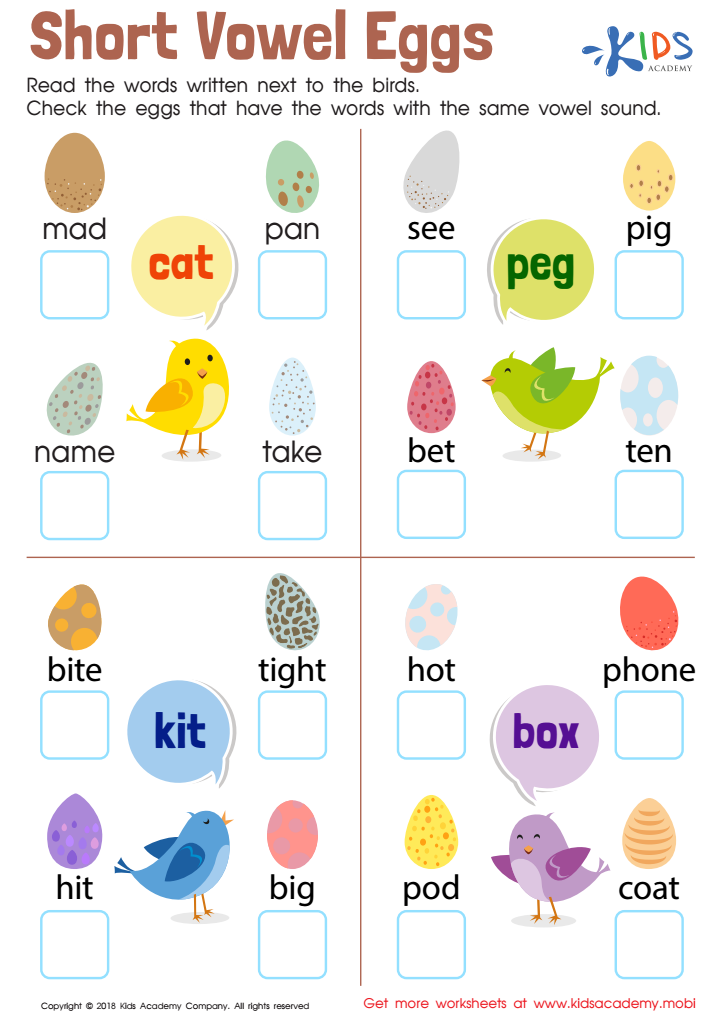
Short Vowel Eggs Worksheet
Your students will love helping these birdies pick the short vowel eggs! Have them read the words in the thought bubbles, then check off the boxes with the same short vowel sounds. The bright colors of this free Worksheet will draw them in and get them practicing their vowels!
Short Vowel Eggs Worksheet
Worksheet
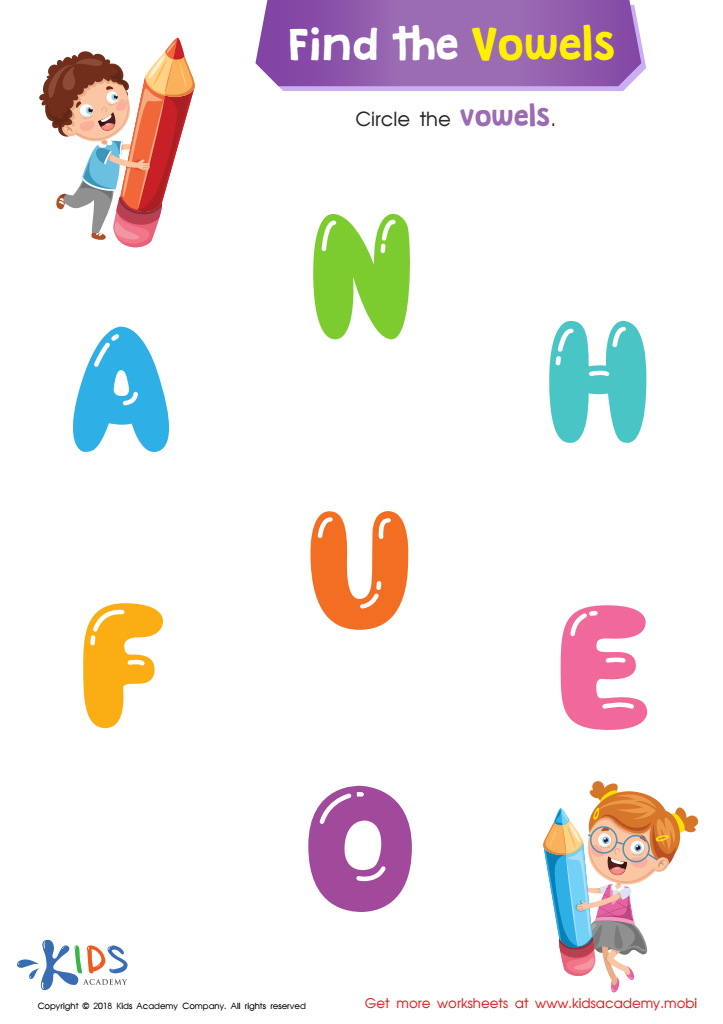
Find the Vowels Reading Worksheet
This worksheet helps kids identify vowels with bright colors and engaging activities to strengthen their visual discrimination and fine motor skills. Young learners will find it easy to succeed and be excited to keep reading!
Find the Vowels Reading Worksheet
Worksheet
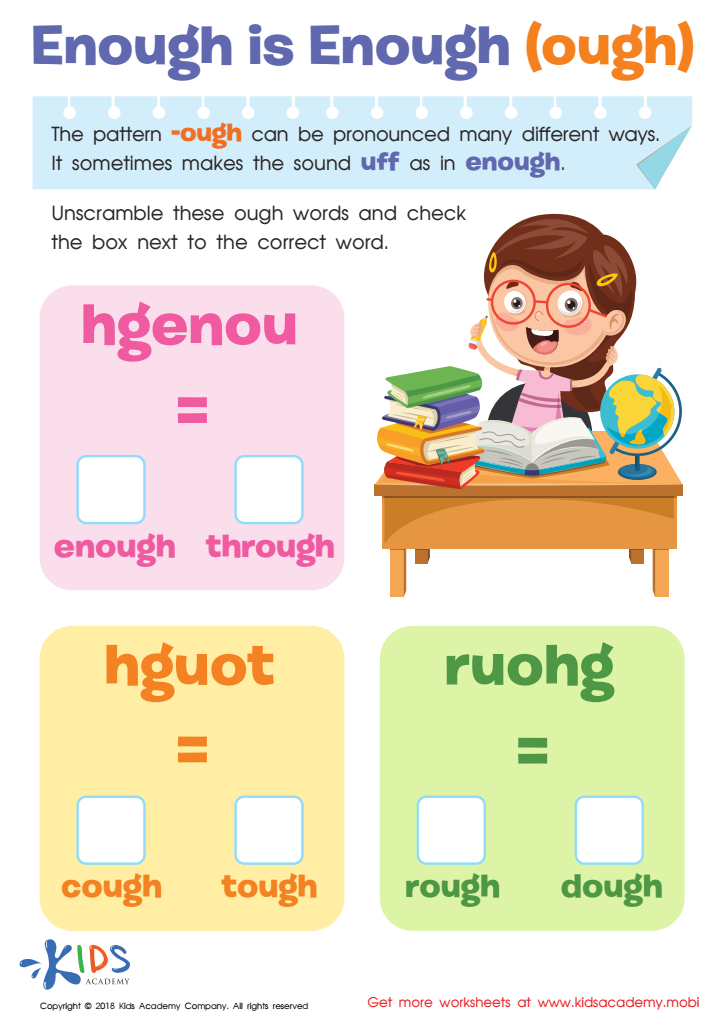
Enough Is Enough (ough) Worksheet
As your students learn more about reading and pronouncing words, they can explore how some word patterns can be said differently. The 'ough' pattern, for instance, can be pronounced several ways. 'Enough' has the 'uff' sound. Provide your students with examples of words pronounced similarly and help them unscramble 'ough' words on this worksheet, ticking the box for the correct word.
Enough Is Enough (ough) Worksheet
Worksheet
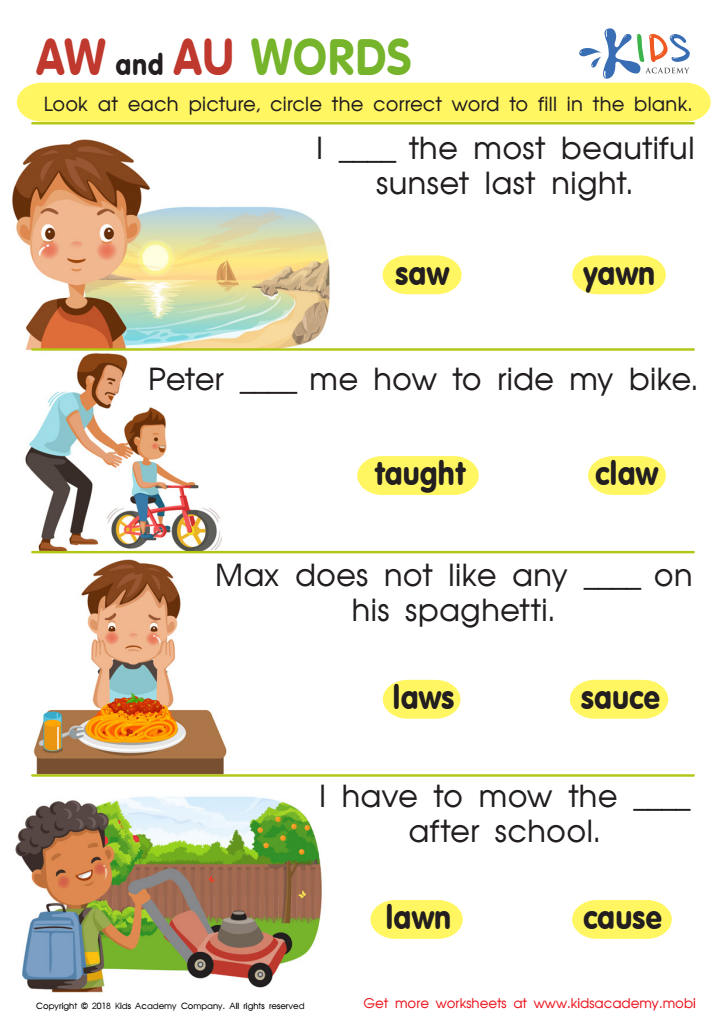
Reading: AW and AU Words Worksheet
This worksheet helps kids recognize that /au/ and /aw/ can make the same sound. Students read sentences and pick the correct word with one of the digraphs. Understanding digraphs improves decoding and reading fluency. Perfect for reading and phonics classes.
Reading: AW and AU Words Worksheet
Worksheet
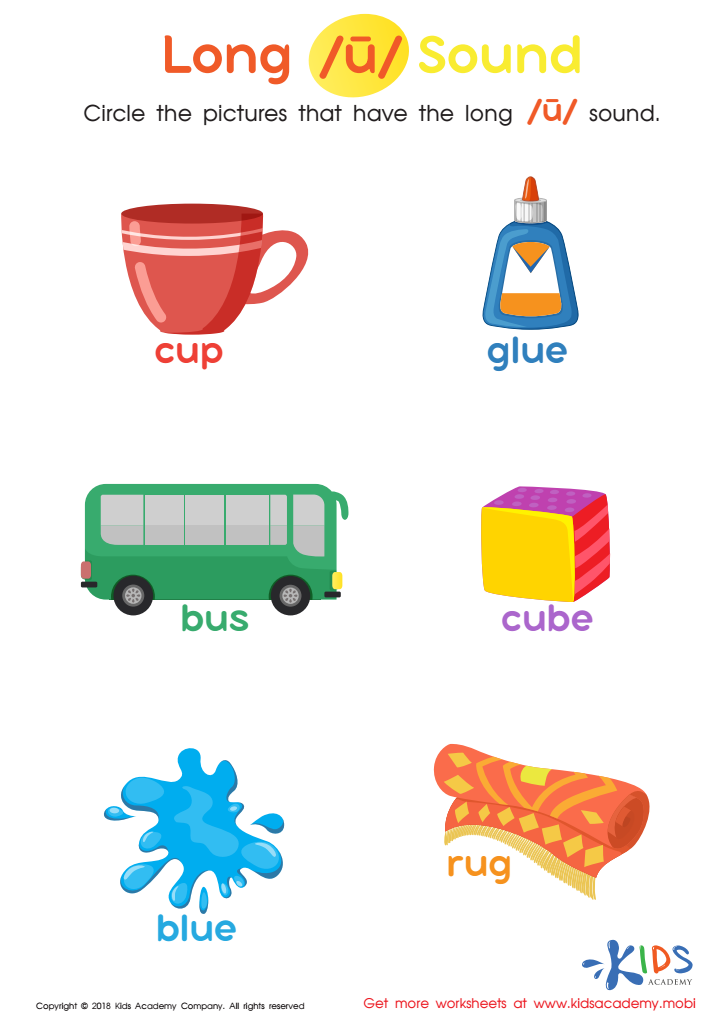
Long «u» Sound Worksheet
This fun and engaging free PDF worksheet teaches kids to differentiate between long and short «u» sounds. Through tracing circles around the correct words, they'll practice their fine motor skills while also recognizing patterns (silent-e for «ū» sound) in closed-syllable words. Bright and cheery pictures make it a great confidence booster for new readers!
Long «u» Sound Worksheet
Worksheet
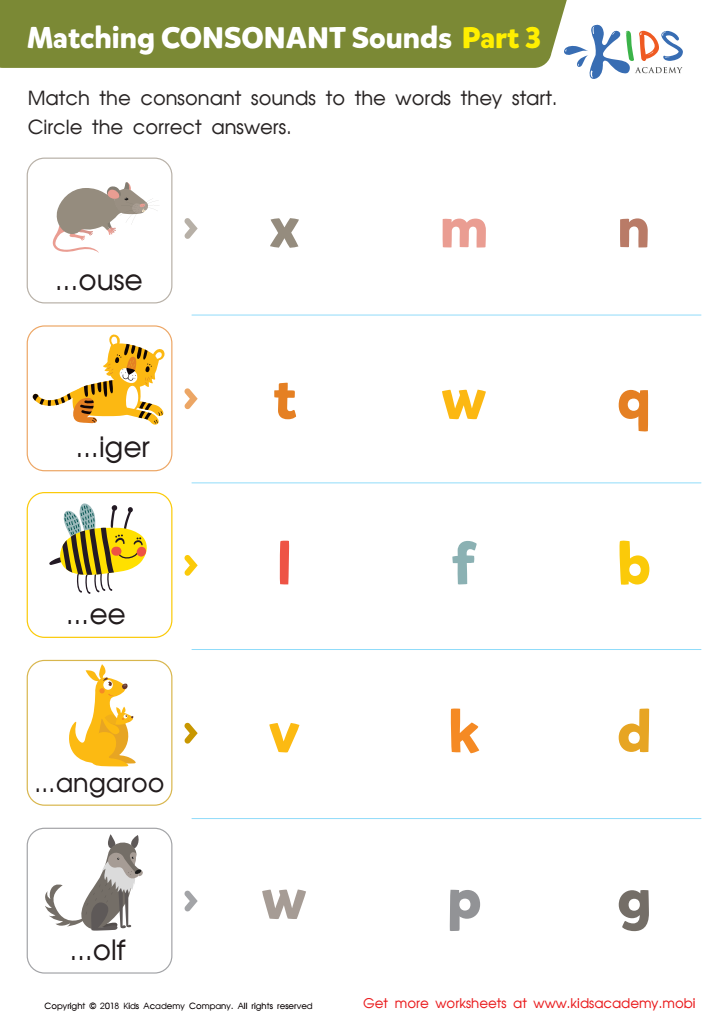
Matching Consonant Sounds: Part 3 Worksheet
Help your early learner match consonant sounds to words with this fun worksheet! Have them name the pictures and try out each letter in the corresponding column. When they hear the sound that matches, circle it. Have them write the letter in the box to complete the word. Work their way down the page until the critters' names all match with consonants!
Matching Consonant Sounds: Part 3 Worksheet
Worksheet
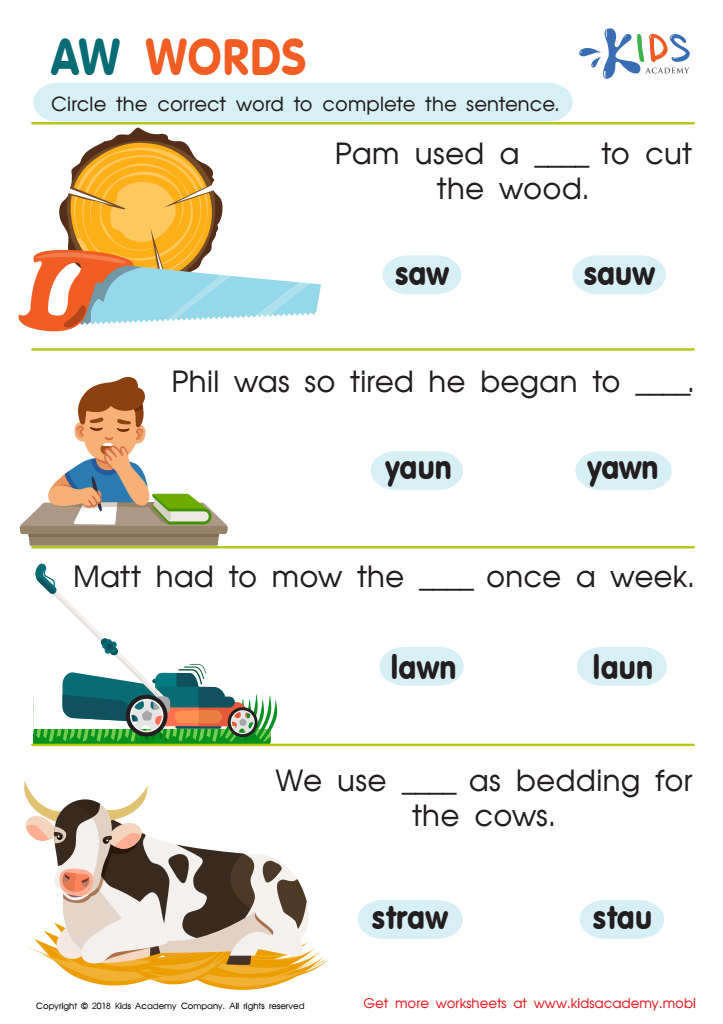
Reading: AW Words Worksheet
Practice decoding the /aw/ digraph with this printable. Students read sentences and select the word with the correct spelling to complete each one. Note, /aw/ is sometimes spelled /au/, so this worksheet helps prevent confusion. Have fun, and practice hard!
Reading: AW Words Worksheet
Worksheet
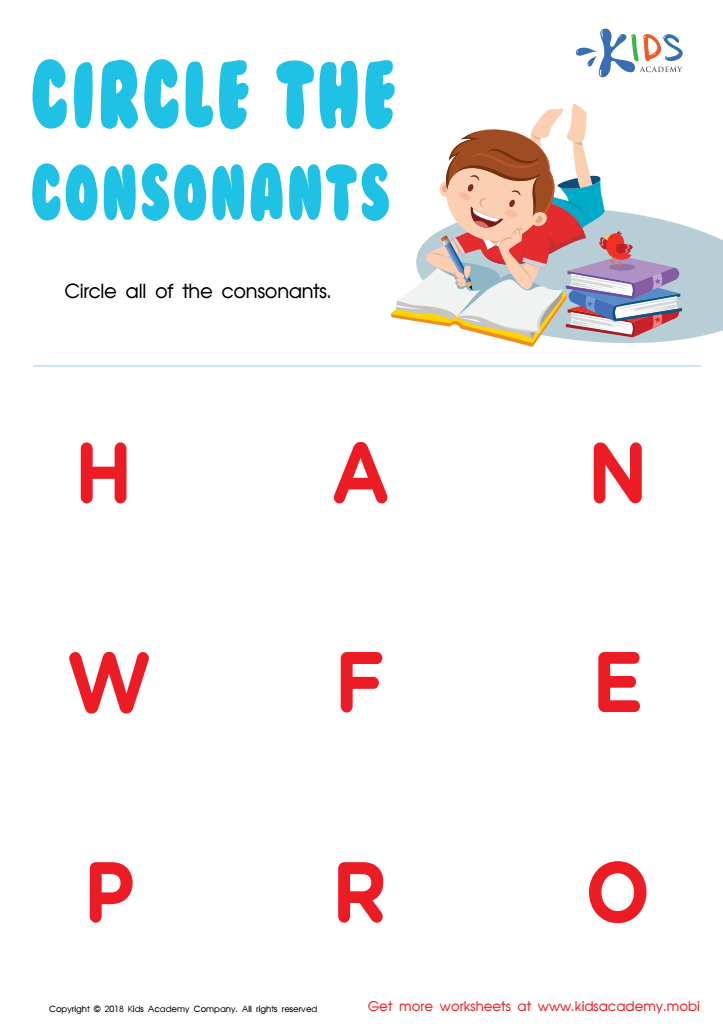
Circle the Consonants Worksheet
Teach your kids that there are 5 vowels and 21 consonants in the alphabet. Give examples of words that begin with consonants and ask them to recite the alphabet. Help them circle all of the consonants in a simple printout.
Circle the Consonants Worksheet
Worksheet
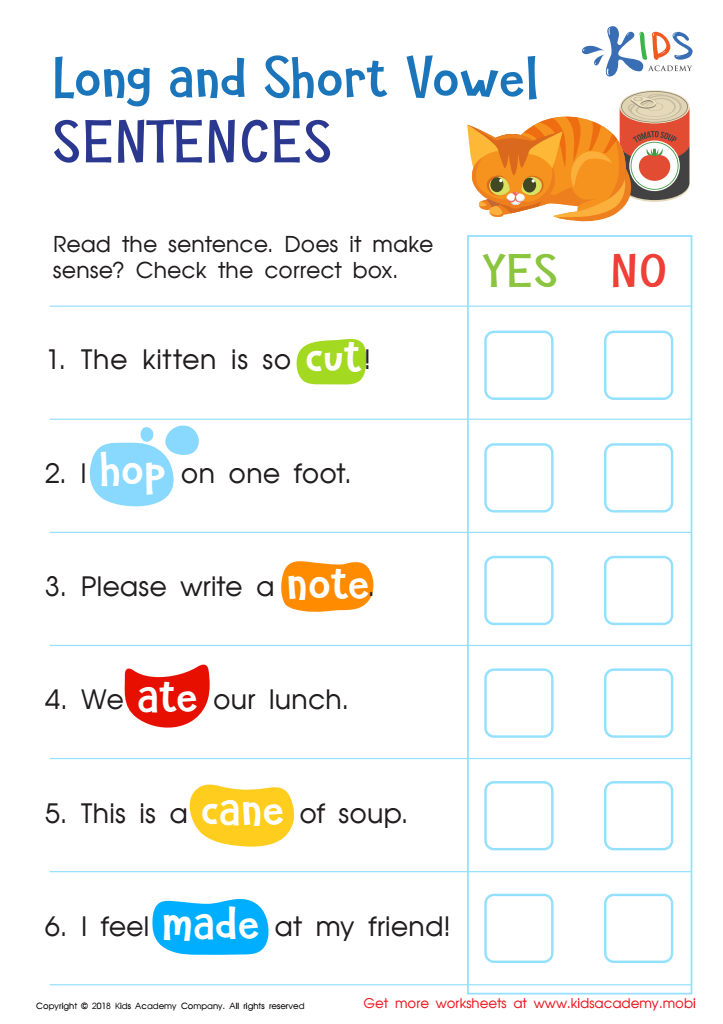
Long and Short Vowel Sentences: Assessment Worksheet
This printable worksheet helps kids practice differentiating between short and long vowel sounds. They'll use context clues to figure out which words make sense in simple sentences. A great way to build reading and writing skills!
Long and Short Vowel Sentences: Assessment Worksheet
Worksheet
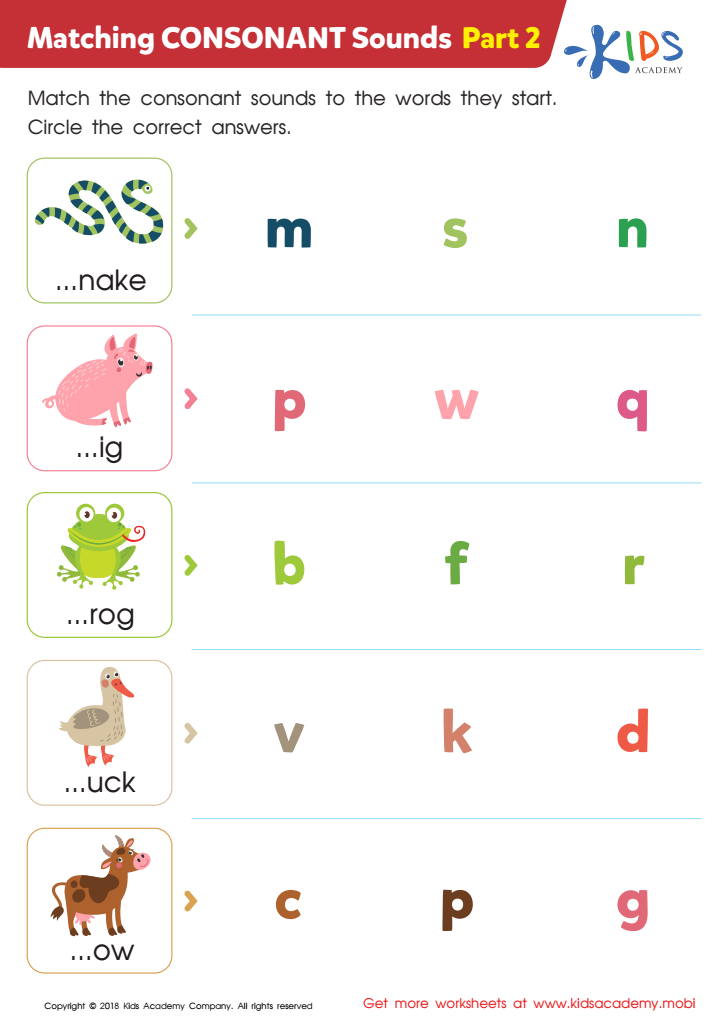
Matching Consonant Sounds: Part 2 Worksheet
Look at the picture, say the word and match the consonant sound with the letter. Coach your child to name the animal and complete the word. For extra challenge, write the missing letter in the box! This PDF worksheet helps kids learn to read words with familiar animal pictures.
Matching Consonant Sounds: Part 2 Worksheet
Worksheet
Join Kids Academy for Free
Who is primarily going to use this learning content?



Understanding vowels and consonants is fundamental for young children aged 4-9 because it forms the foundation of their literacy skills, which are crucial for their academic development and overall confidence. During these formative years, children's brains are highly receptive and ready to acquire language skills. Teaching them the difference between vowels and consonants equips them with essential tools for reading, writing, and spelling.
Vowels (A, E, I, O, U) and consonants (all other letters) work together to create words, and recognizing their distinct sounds aids in phonemic awareness. Phonemic awareness is the ability to hear and manipulate individual sounds in words, which is a critical predictor of successful reading and spelling. For instance, understanding that the word "cat" is composed of the consonants 'c' and 't' and the vowel 'a' helps children decode similar words independently, enhancing their reading skills.
Furthermore, grasping these concepts early on can prevent future learning difficulties. It fosters better pronunciation, a richer vocabulary, and improved grammar skills. Engaging children in playful and interactive activities, such as songs, rhymes, and letter games, makes the learning process enjoyable, which in turn promotes a lasting interest in reading and learning. Investing in this foundational knowledge yields long-term academic benefits, making it essential for parents and teachers to pay attention to vowels and consonants.







