Fine Motor Skills 2D Shapes Worksheets for Ages 4-9
12 filtered results
-
From - To
Enhance your child's fine motor skills with our engaging 2D Shapes Worksheets designed for ages 4-9. These meticulously crafted worksheets help young learners develop precise hand movements while familiarizing them with essential geometric shapes. By tracing, drawing, and manipulating shapes, children improve their hand-eye coordination, dexterity, and spatial awareness, creating a solid foundation for future mathematical learning. Our colorful and interactive worksheets make learning fun and effective, catering to various skill levels and abilities. Ideal for parents and educators seeking high-quality, educational resources to support developmental milestones and foster a lifelong love of learning in every child.
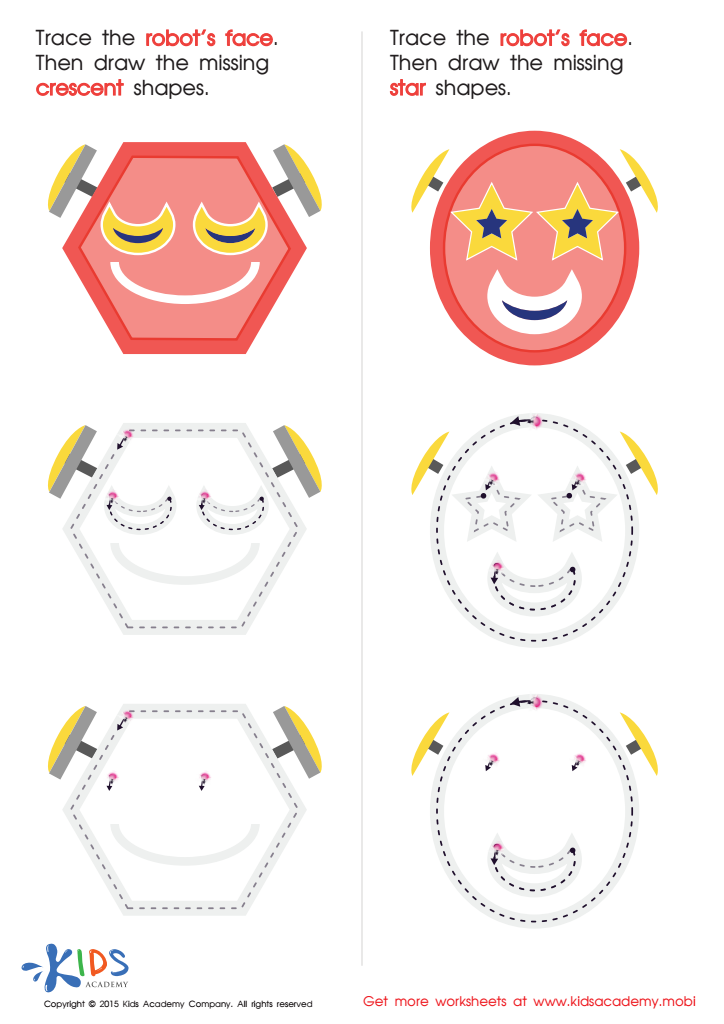
Composing a Robot's Face of Crescents And Stars Worksheet
 Assign to My Students











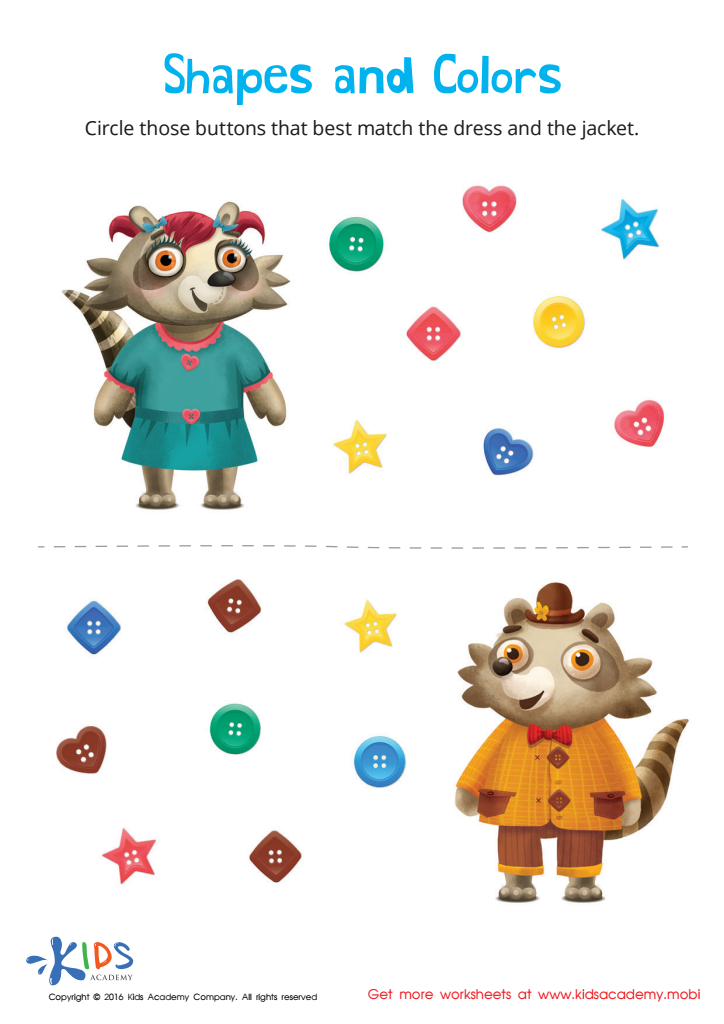
Matching: Shapes and Colors Worksheet
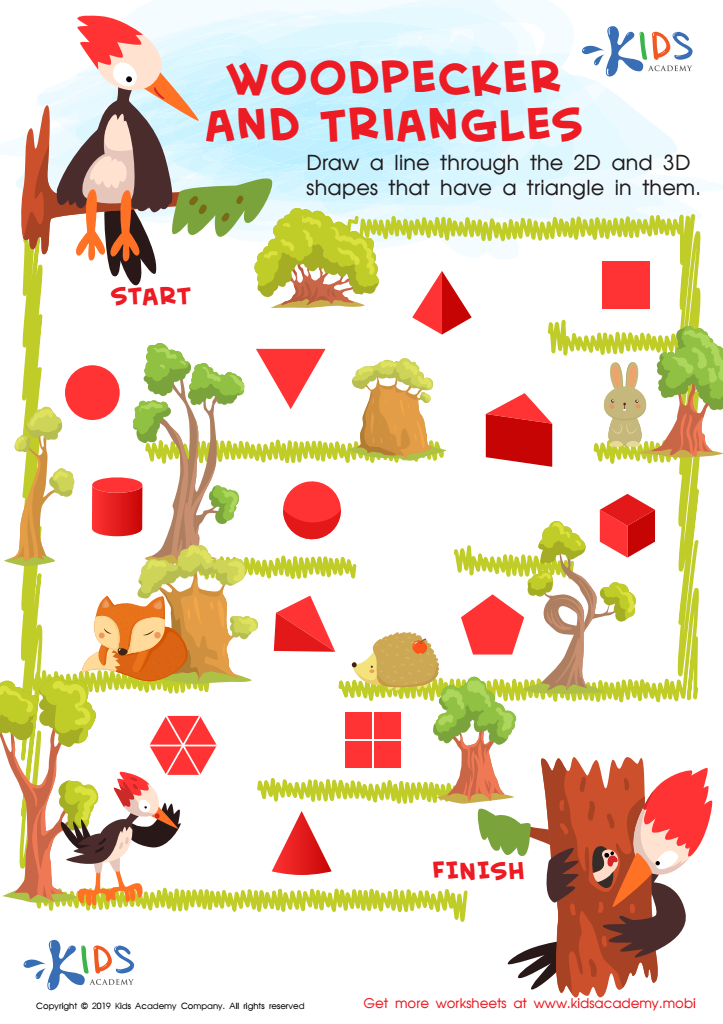
Woodpecker and Triangles Worksheet
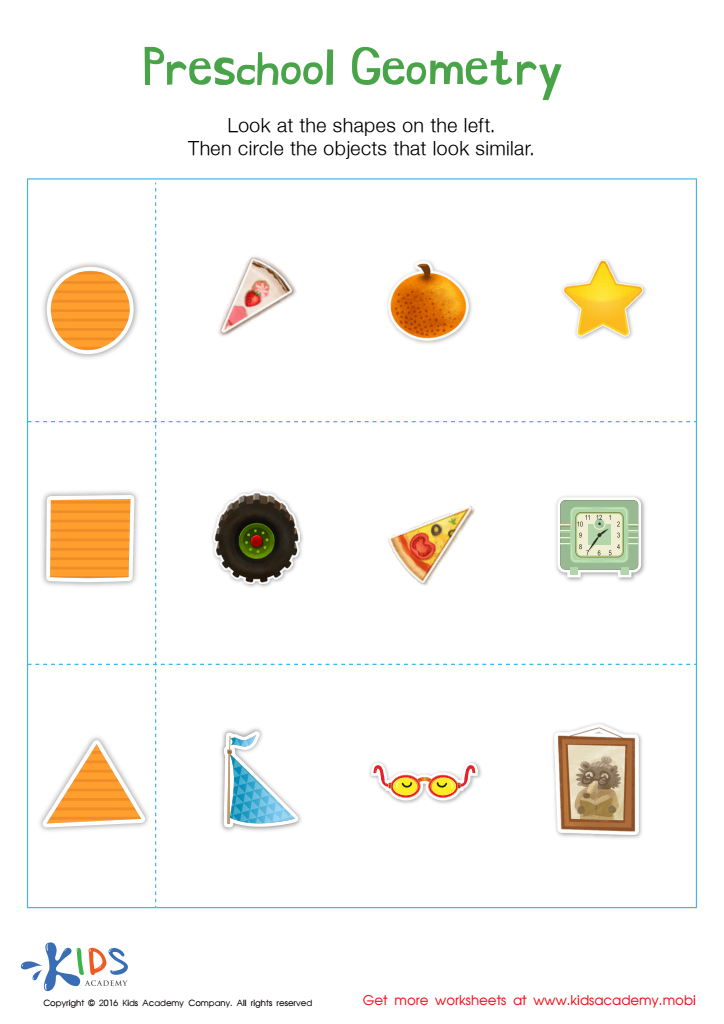
Preschool Geometry Match Up Worksheet

Learning to Draw Crescents And Triangles Worksheet
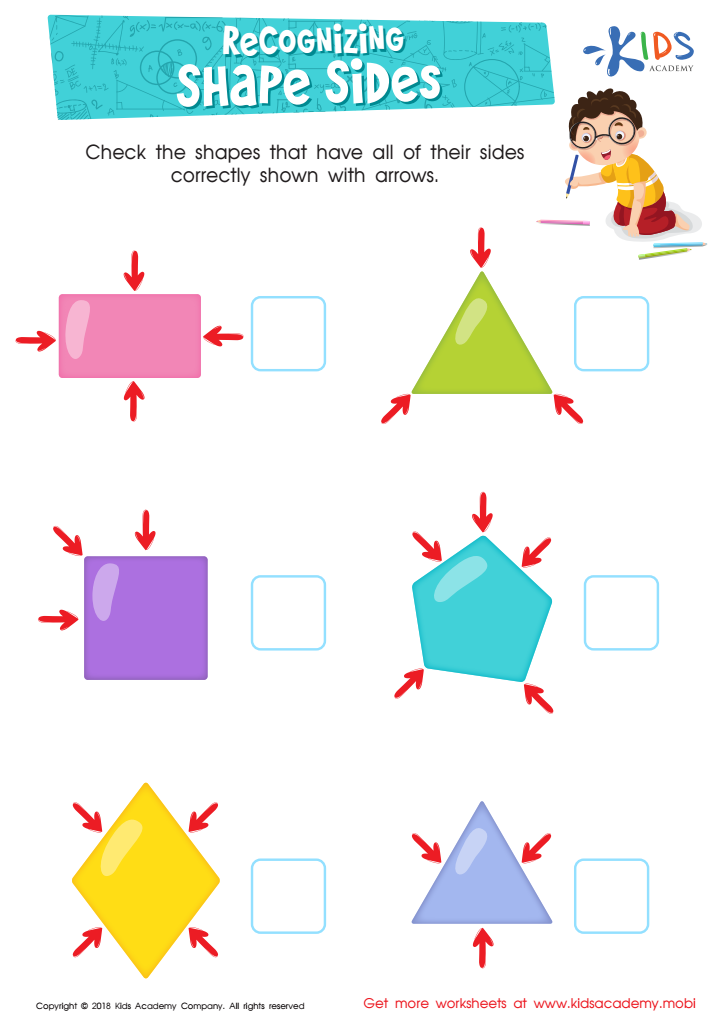
Recognizing Shape Sides Worksheet
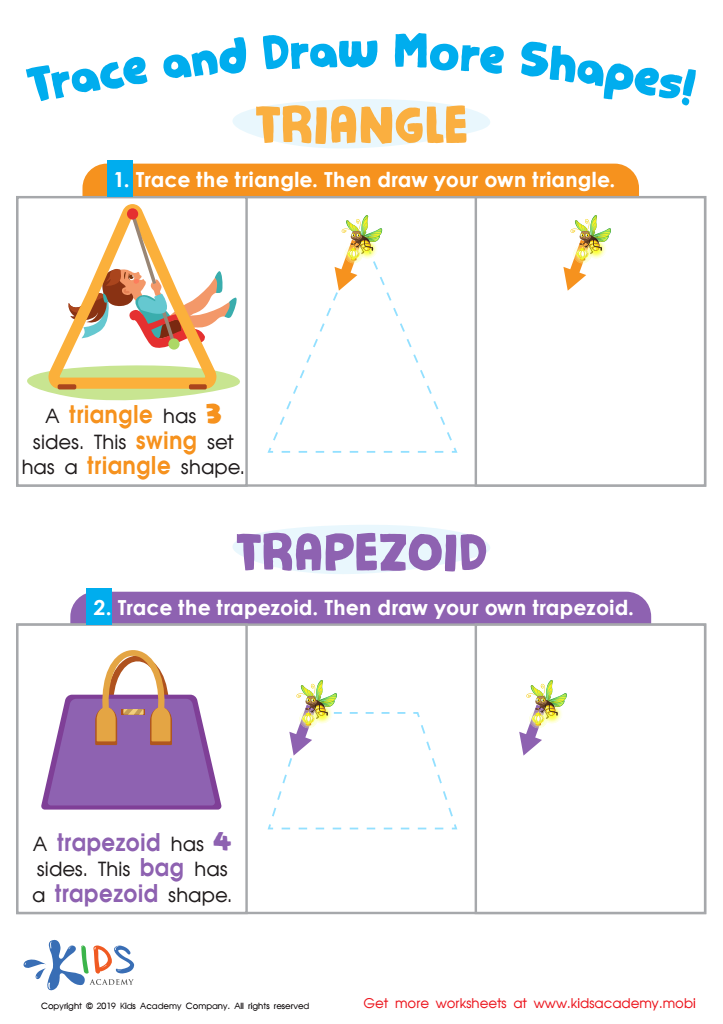
Trace and Draw More Shapes Worksheet
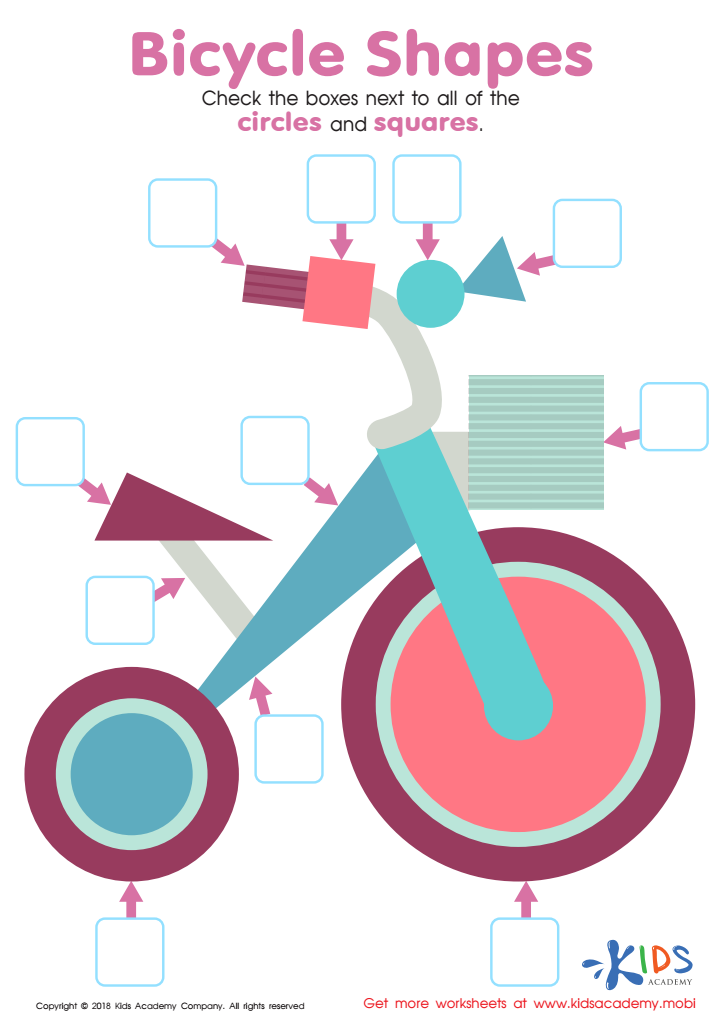
Bicycle Shapes Worksheet
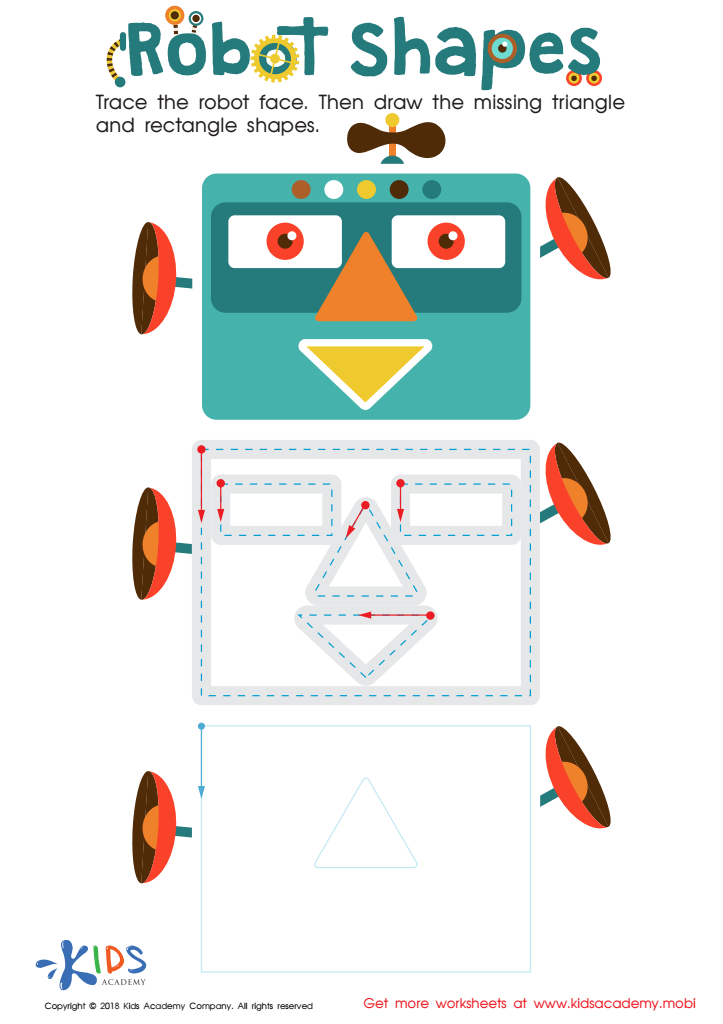
Robot Shapes Worksheet
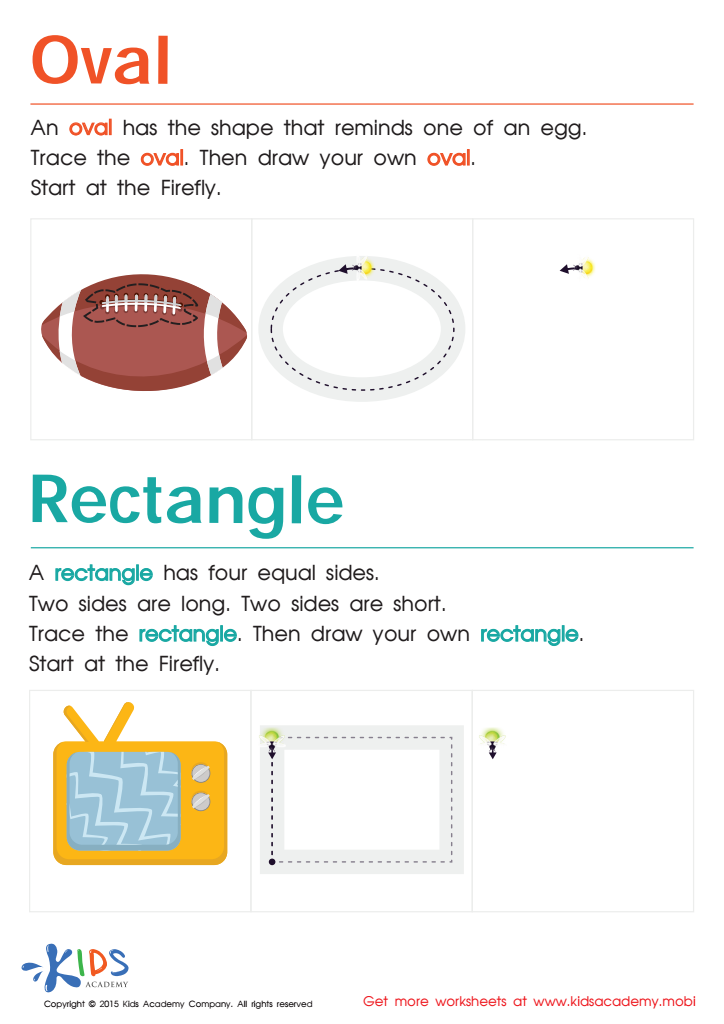
Easy Drawing of Ovals And Rectangles Worksheet
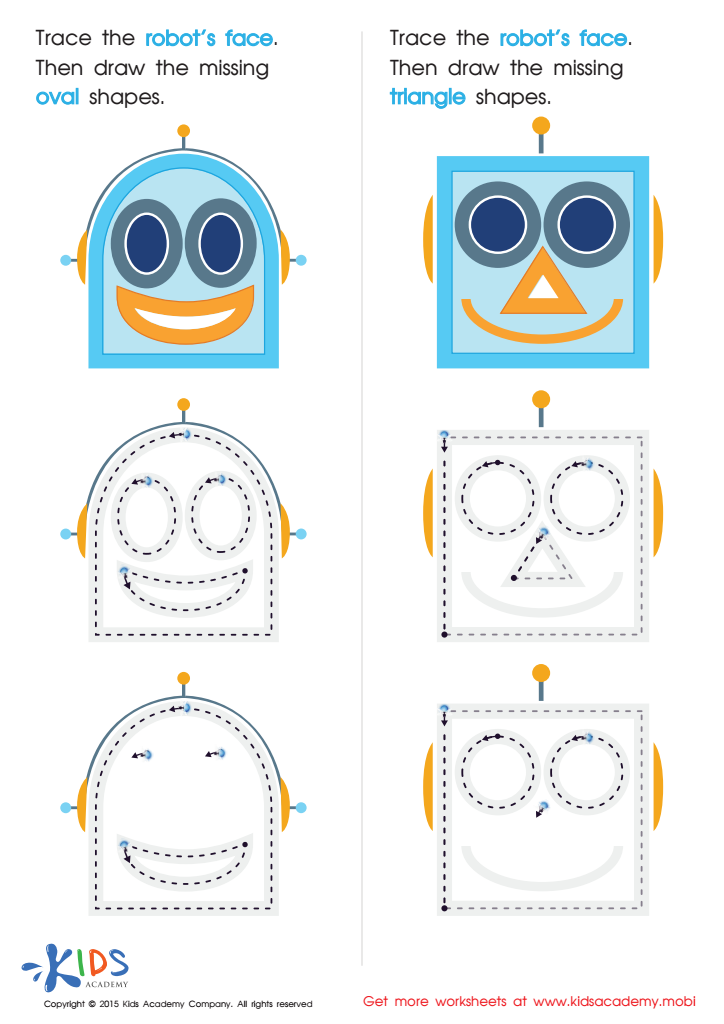
Drawing Ovals And Triangles with Fun Printable
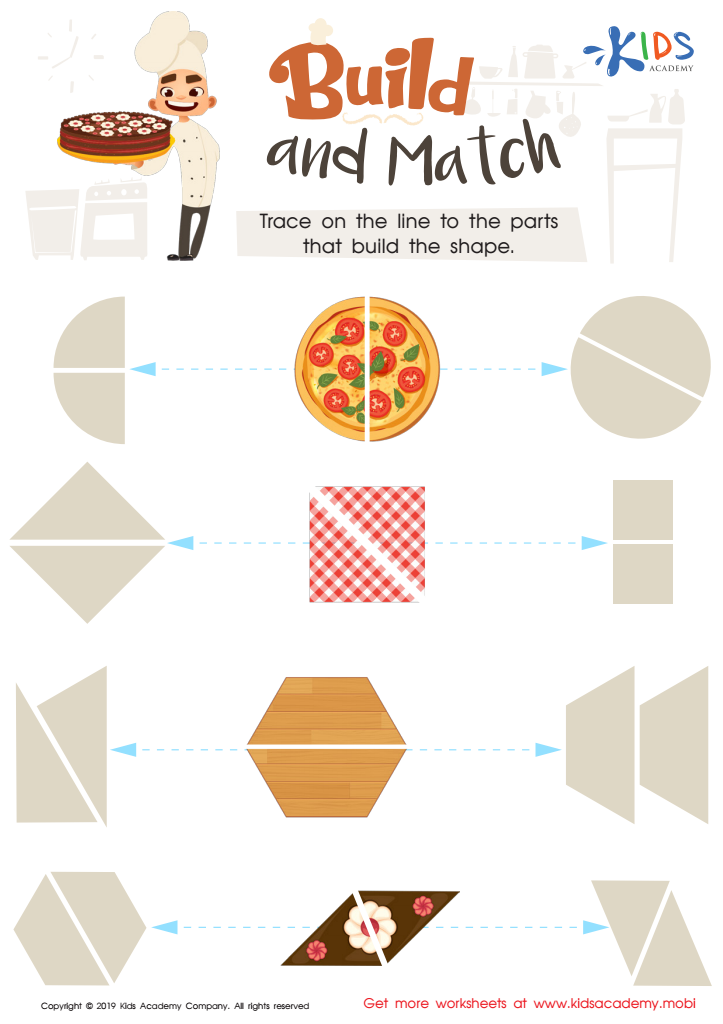
Build and Match Worksheet








Fine motor skills and the understanding of 2D shapes are crucial elements of early childhood development, providing foundational support for a child’s academic and everyday activities. Fine motor skills involve the coordination of small muscles in actions like drawing, cutting, or manipulating objects, which are essential for writing, dressing, and basic self-care tasks. Developing these skills between ages 4-9 ensures that children become more independent and proficient in tasks that are necessary for school and life.
Familiarity with 2D shapes (such as circles, squares, and triangles) impacts multiple areas of cognitive development. Recognizing and understanding these shapes lays the groundwork for mathematical skills, including geometry, spatial awareness, and problem-solving. These skills also foster a child's ability to classify objects, practice critical thinking, and develop a logical mindset.
Integrating activities that enhance fine motor skills and understanding of 2D shapes also promotes creativity and confidence. Activities like tracing shapes, building with blocks, or creating drawings can be enjoyable and educational, making learning feel like play. By focusing on these skills, parents and teachers support a comprehensive learning experience, ensuring children are equipped with the tools they need for academic success and everyday functionality. Prioritizing fine motor skills and 2D shape recognition during early education fosters well-rounded intellectual and physical development critical for lifelong learning and adaptation.