Sorting Worksheets for Ages 4-9 - Page 2
27 filtered results
-
From - To
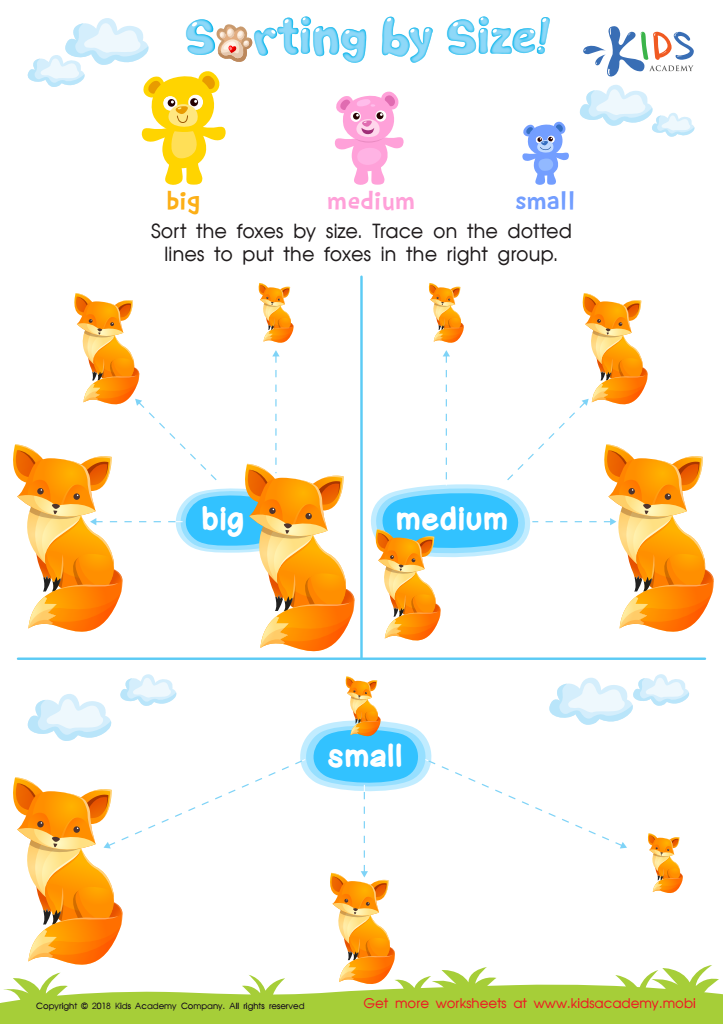
Sorting by Size Worksheet
 Assign to My Students
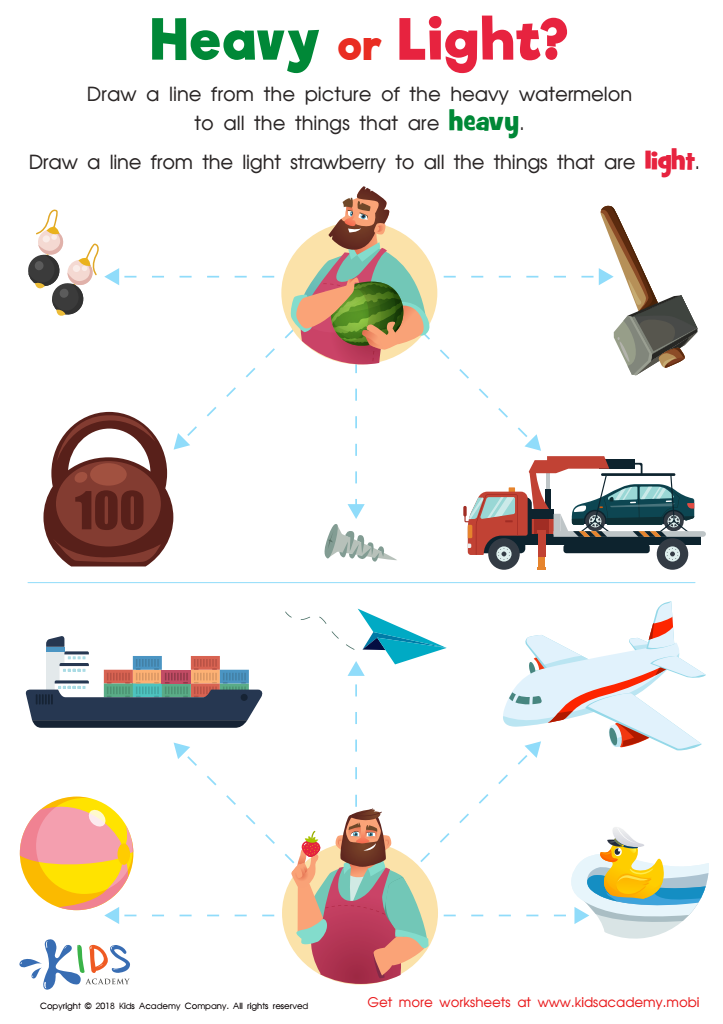
Heavy or Light? Worksheet
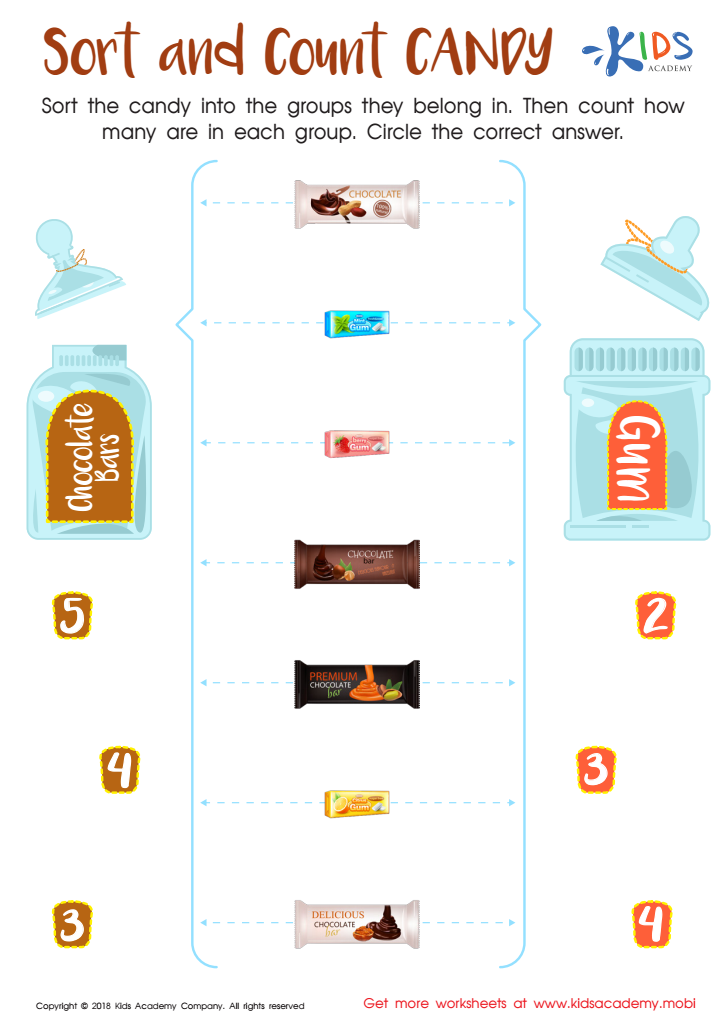
Sort and Count Candy Worksheet








Sorting is a fundamental cognitive skill that promotes critical thinking and problem-solving abilities in children aged 4-9. At this developmental stage, kids are actively exploring their environment and categorizing information. By engaging in sorting activities, children learn to recognize patterns, differentiate between objects, and understand relationships—a foundation for more complex mathematical concepts.
Parents and teachers should care about sorting because it develops both cognitive and social skills. Sorting encourages children to verbalize their thought processes, fostering language development and communication skills. It also enhances fine motor skills through the manipulation of objects, such as sorting blocks or colored items.
Participating in sorting helps children build their organizational skills, an essential life skill that will serve them in school and beyond. The practice of classifying objects based on attributes such as size, shape, or color cultivates a sense of early mathematical reasoning, setting the stage for arithmetic learnings.
Moreover, sorting can be an enjoyable, interactive activity that promotes cooperative play, teaching children how to work with peers and take turns. Hence, emphasizing sorting activities at home or in the classroom not only aids intellectual development but also nurtures social and emotional growth during these formative years.








