Time Worksheets for Ages 4-9 - Page 2
25 filtered results
-
From - To
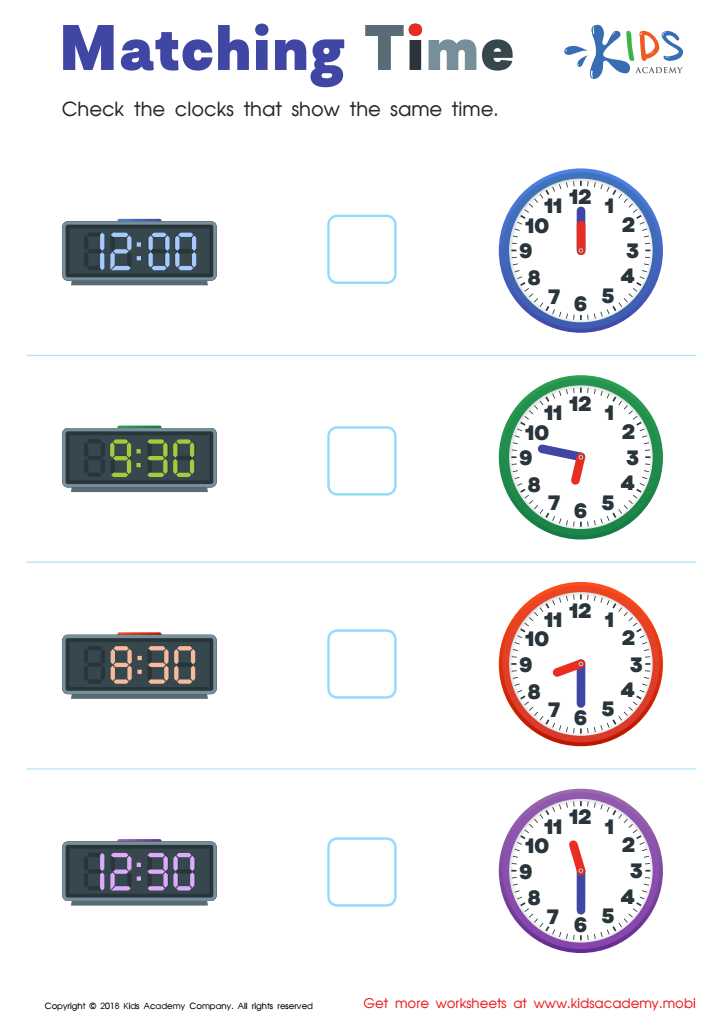
Matching Time Worksheet
 Assign to My Students








Understanding time is fundamental for children aged 4-9 as it forms the basis for their daily routines and long-term planning. At this developmental stage, children begin to grasp the concepts of past, present, and future. This knowledge sets the groundwork for literacy and math skills, improving their abilities to sequence events, solve problems, and make sense of the world around them.
Parents and teachers play a crucial role in this learning by providing consistent opportunities for children to engage with time-related concepts. Whether it’s using timers for activities, a daily schedule, or discussing clocks, these real-life applications help solidify their understanding. Additionally, teaching time management fosters independence, self-regulation, and a sense of responsibility, which are crucial for social and academic success.
Furthermore, familiarizing children with time encourages critical thinking and planning, as they learn to estimate durations and anticipate upcoming events. When parents and teachers emphasize the importance of time, they effectively support children in developing essential life skills that lead to future personal and academic achievements. Ultimately, prioritizing time education allows children to navigate their lives more effectively, setting them up for success in a structured and deadline-driven environment.








