Problem-Solving Skills Tracing Shapes Worksheets for Ages 4-9
4 filtered results
-
From - To
Unlock your child's potential with our engaging Problem-Solving Skills Tracing Shapes Worksheets, designed for ages 4-9! These interactive worksheets provide a fun and educational way for children to enhance their cognitive abilities while learning to identify and trace various shapes. Through vibrant images and exciting activities, kids develop essential problem-solving skills, improving their critical thinking and spatial reasoning. Perfect for homeschooling or classroom use, these worksheets encourage creativity and independent thought, making learning enjoyable. Watch your young learners gain confidence as they master shape recognition and tracing techniques—all while fostering a love for math and learning.
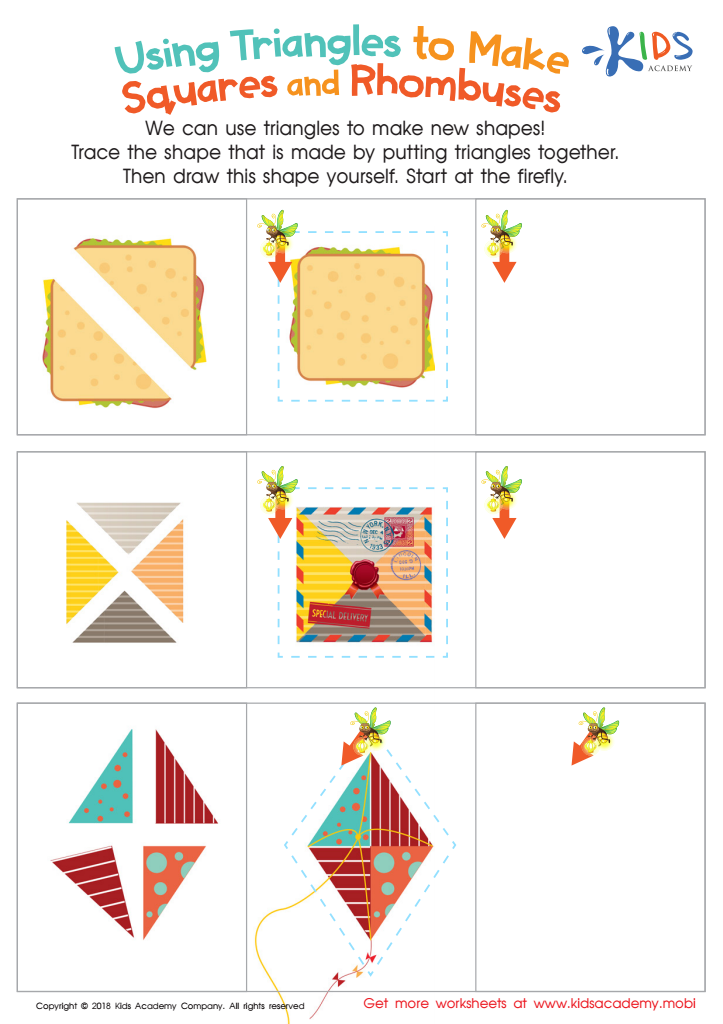
Using Triangles to Make Squares and Rhombuses Worksheet
 Assign to My Students
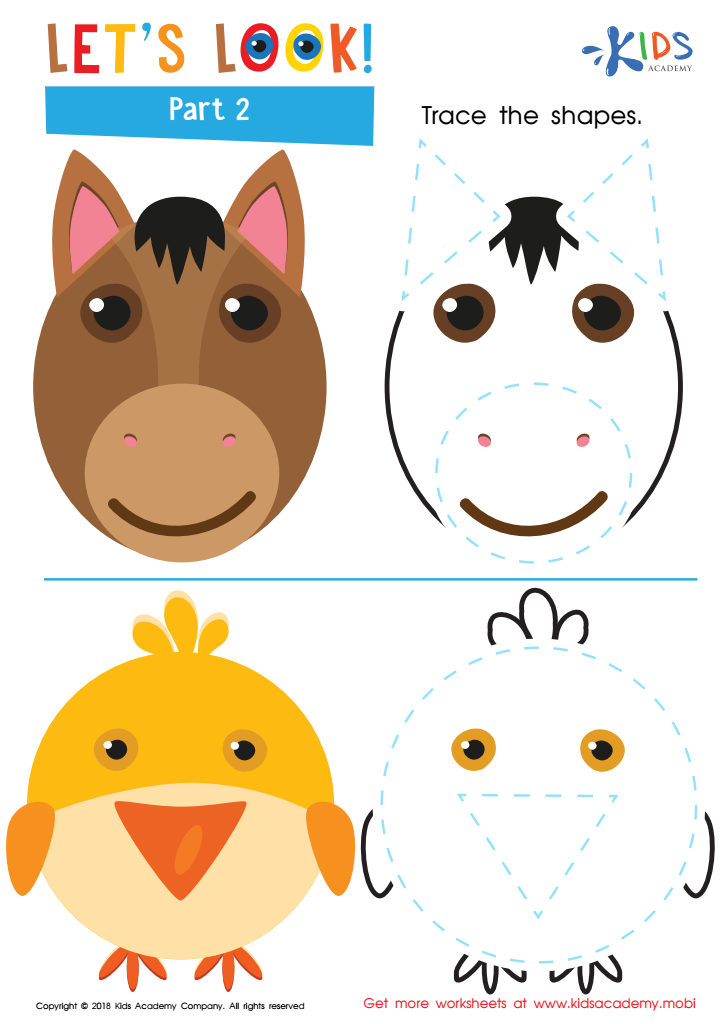
Let's Look! Part 2 Worksheet
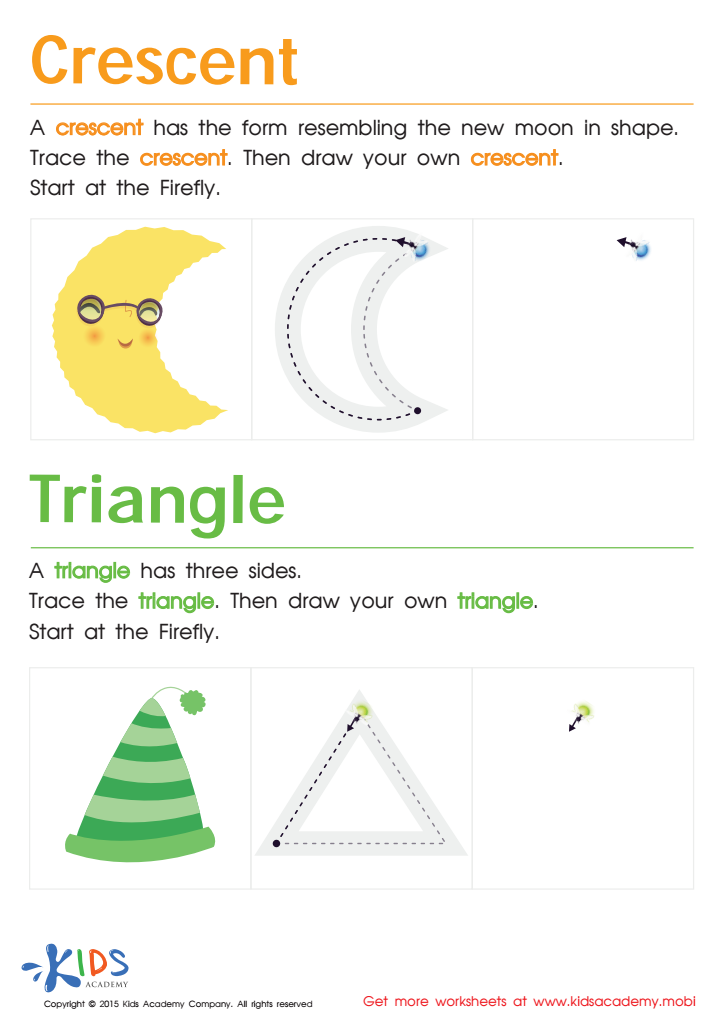
Learning to Draw Crescents And Triangles Worksheet
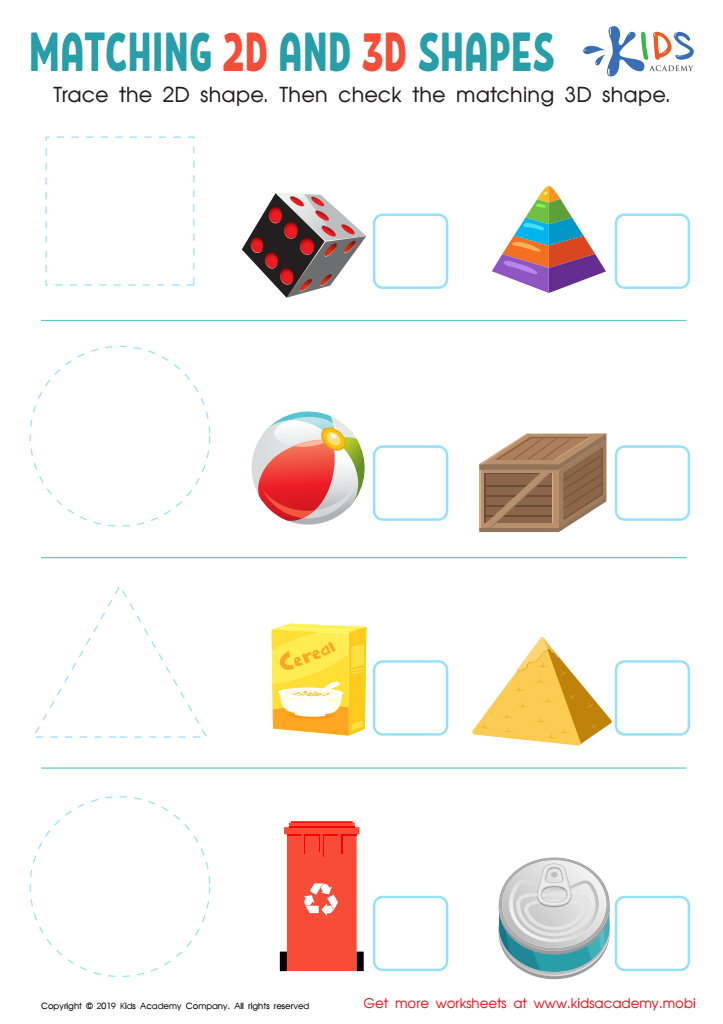
Matching 2D and 3D Shapes Worksheet








Problem-solving skills are essential for children aged 4-9 as they lay the foundation for critical thinking and reasoning abilities. Tracing shapes is an engaging way to nurture these skills while helping young learners develop fine motor proficiency. As children trace, they learn to recognize various shapes, enhancing their spatial awareness and geometry understanding, which is crucial in early mathematics.
Incorporating activities like tracing shapes encourages persistence and resilience when faced with challenges. Children learn to approach problems methodically, which can translate into better strategies for tackling more complex tasks later in life. Additionally, these activities can spark creativity, as students explore different designs and configurations, strengthening their imaginative capabilities.
Moreover, problem-solving through shape tracing often happens in collaborative environments, fostering communication and teamwork. Children learn to express their thought processes and ideas while also listening to peers, enhancing social skills.
For parents and teachers, fostering problem-solving in young learners not only prepares them academically but also equips them with essential life skills. Ultimately, nurturing these abilities lays the groundwork for confident, capable students who are prepared for future educational challenges and everyday problem-solving scenarios they will inevitably encounter.