Chess Worksheets for Ages 5-7 - Page 5
97 filtered results
-
From - To
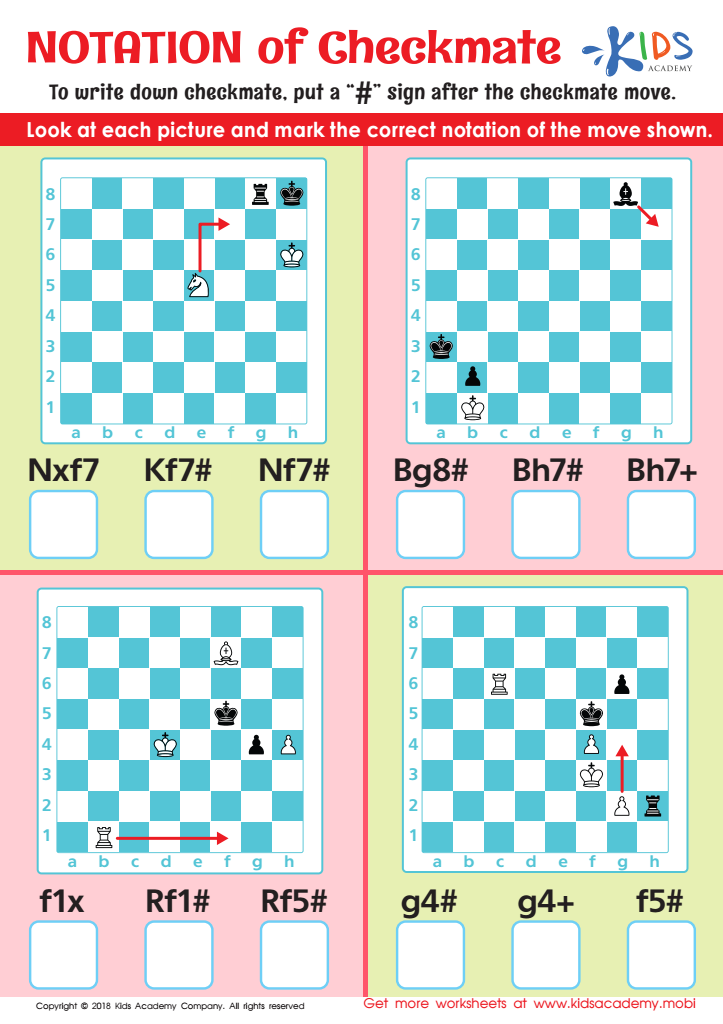
Notation of Checkmate Worksheet
 Assign to My Students








Chess is an excellent educational tool for children aged 5 to 7 that offers a multitude of cognitive, social, and emotional benefits. Engaging young minds in chess promotes critical thinking and problem-solving skills, as players must strategize their moves and anticipate their opponent's tactics. This practice fosters cognitive development, enhancing abilities like memory, concentration, and spatial reasoning.
Chess also encourages patience, discipline, and resilience. Children learn to cope with losses gracefully and to celebrate their successes, promoting a growth mindset. This helps them develop emotional intelligence as they learn to manage their feelings and respond positively to challenges.
Moreover, chess is a fantastic way for children to socialize and develop essential interpersonal skills. Playing against others teaches cooperation, sportsmanship, and communication. In diverse classroom settings, it can serve as a bridge to connect children from different backgrounds, fostering inclusivity.
Finally, promoting chess can stimulate creativity, as young players invent unique strategies and tactics. Introducing chess at an early age sets a foundation for lifelong learning and intellectual curiosity. For parents and teachers, engaging young learners in chess is an impactful way to enrich their educational experiences and empower them with valuable life skills.