Adding up to 50 Without Regrouping Worksheets for Ages 5-7 - Page 2
73 filtered results
-
From - To
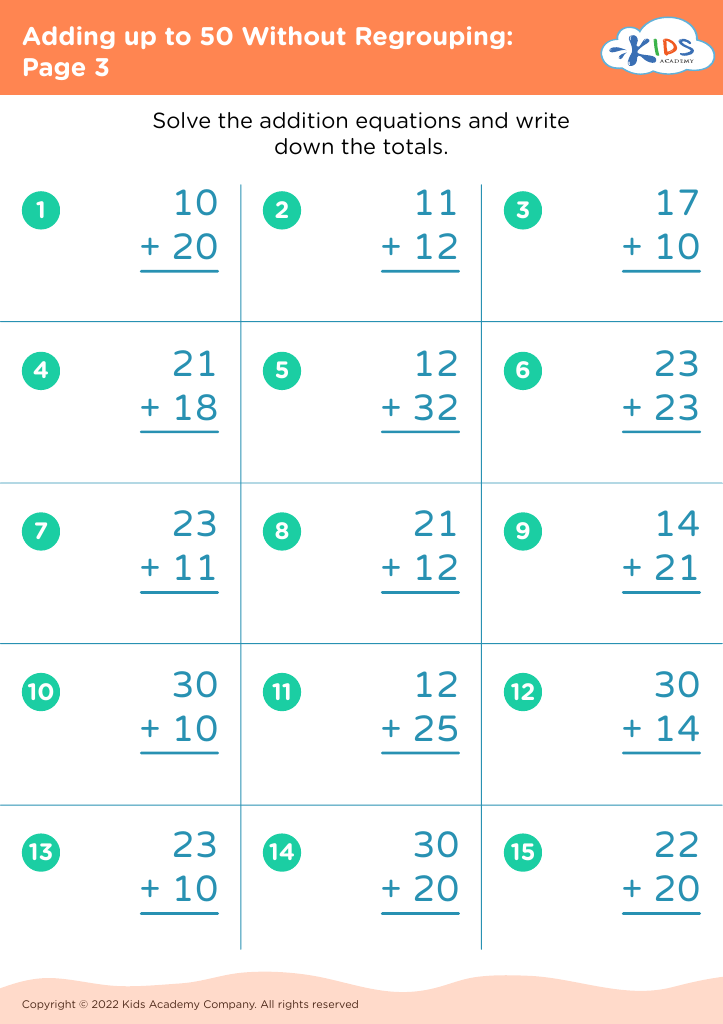
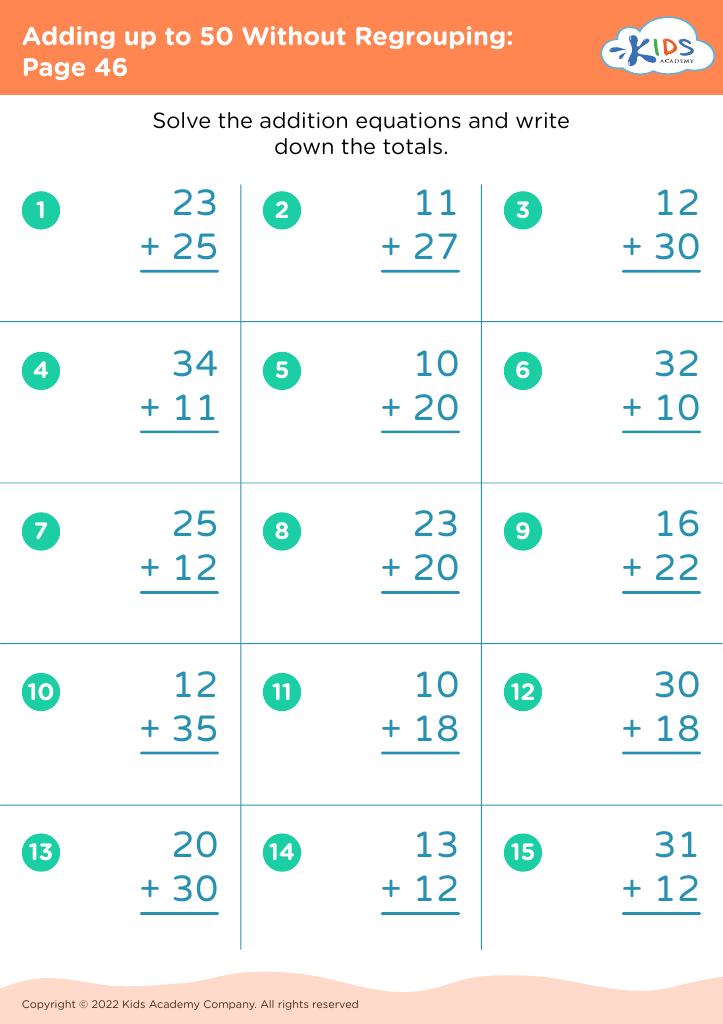
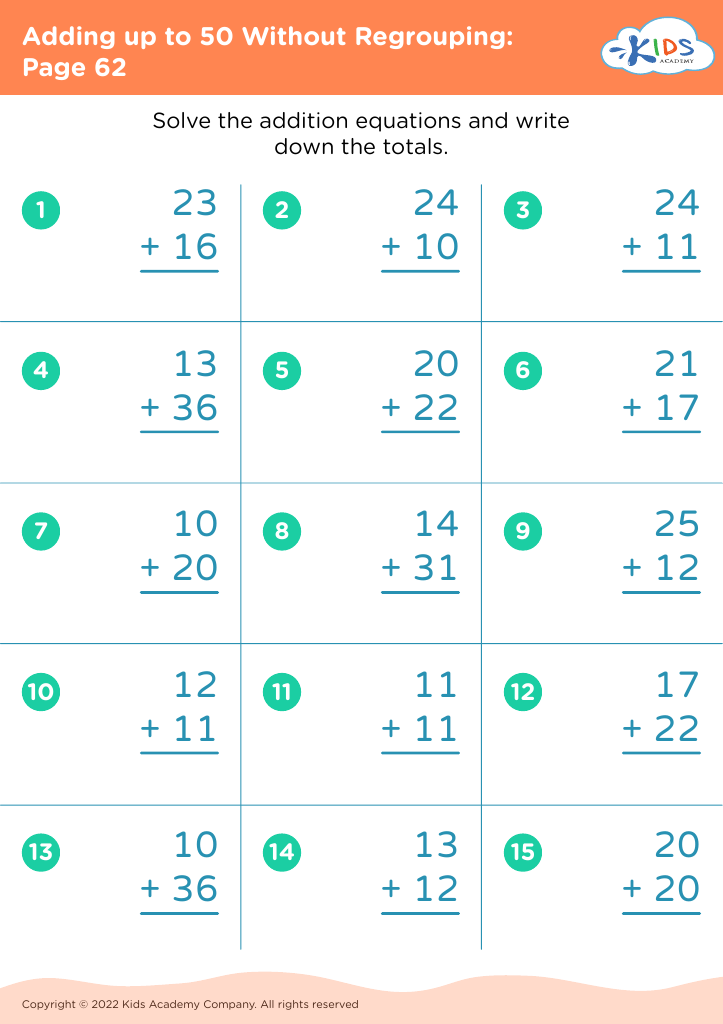
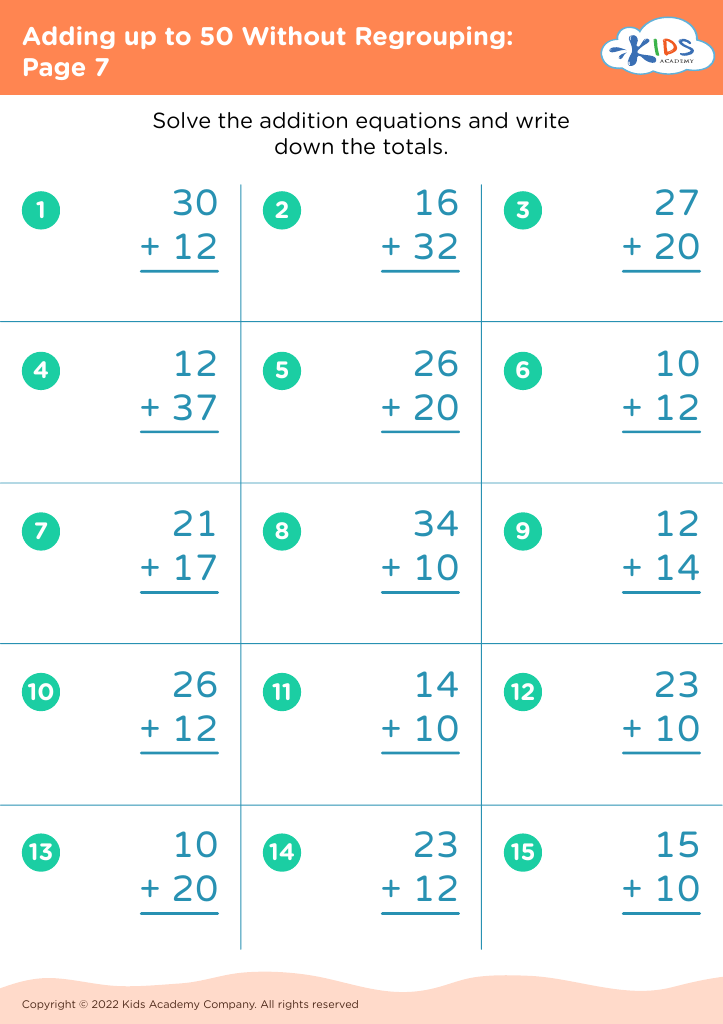
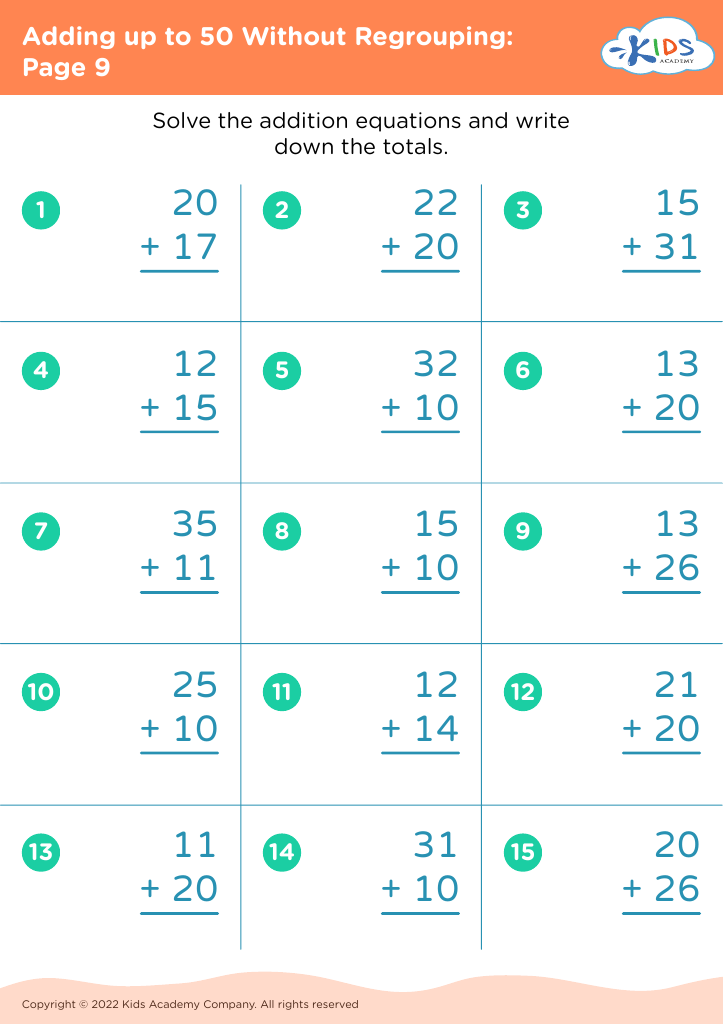
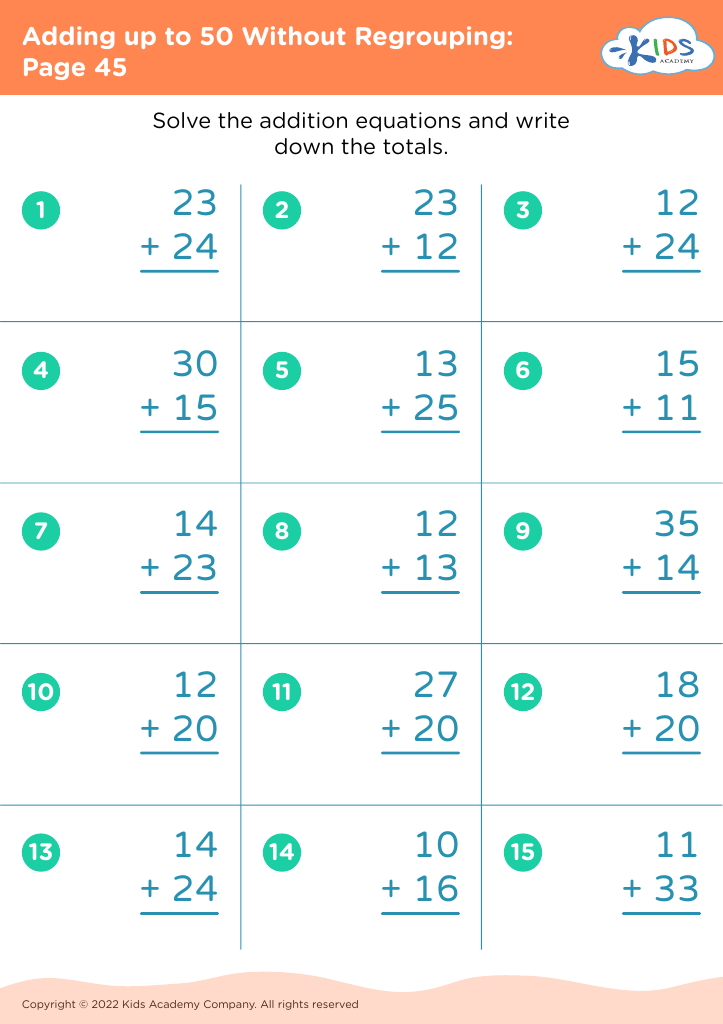
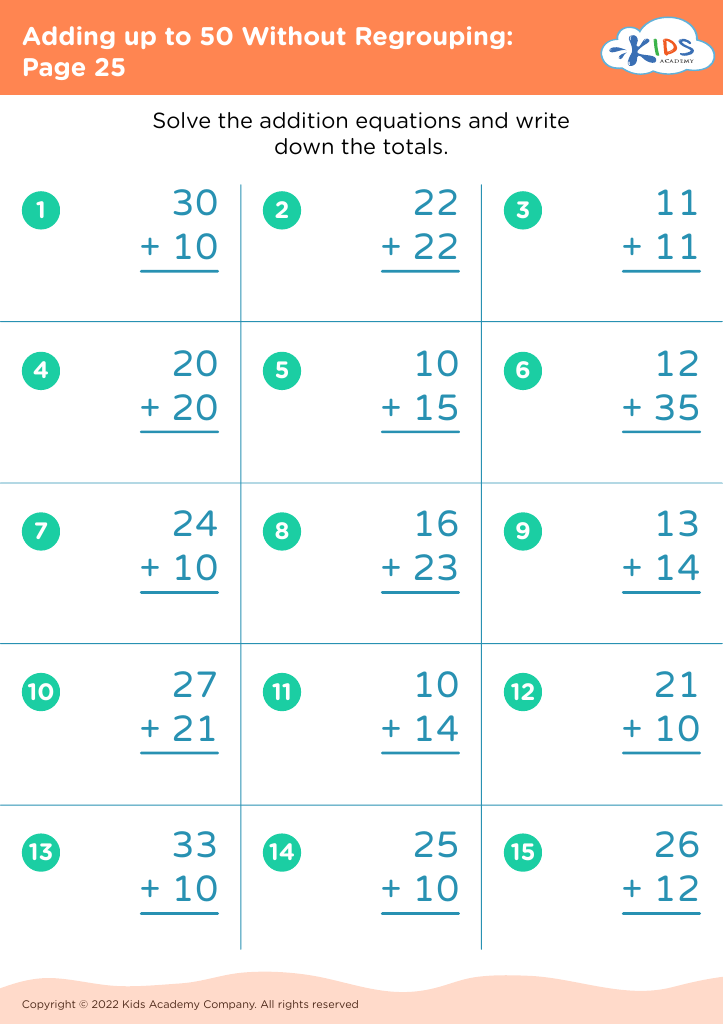
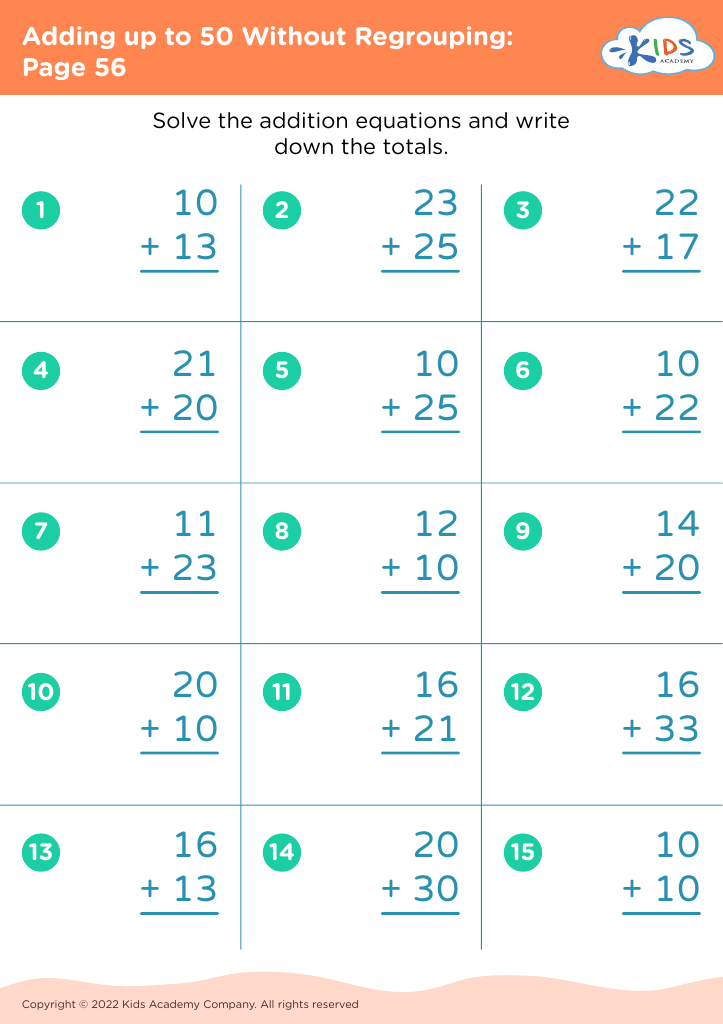
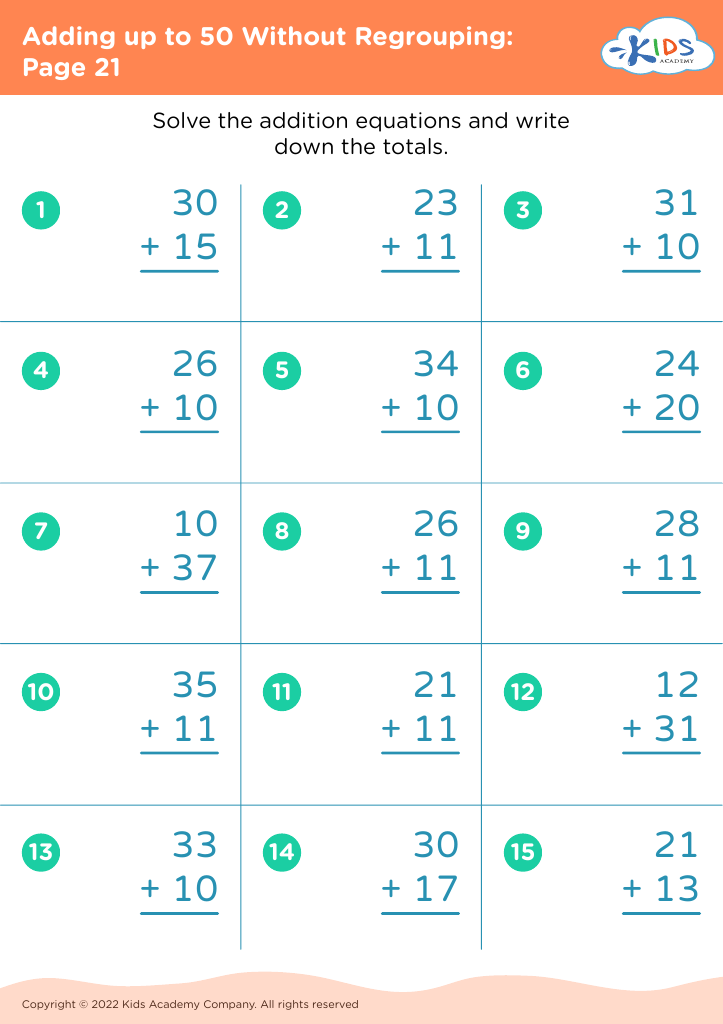
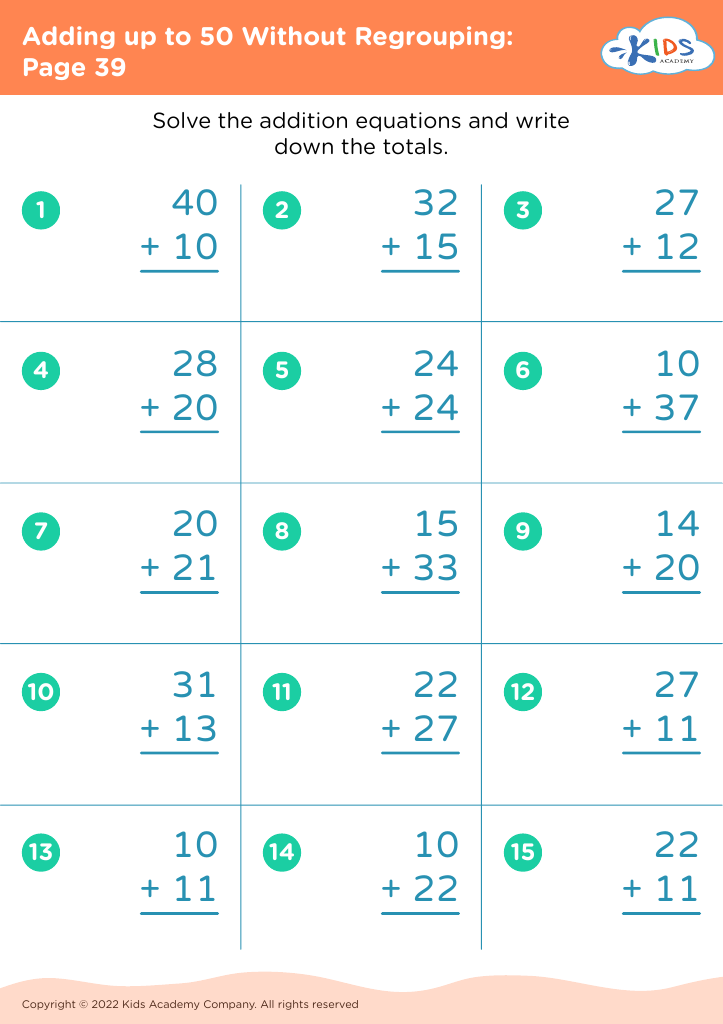
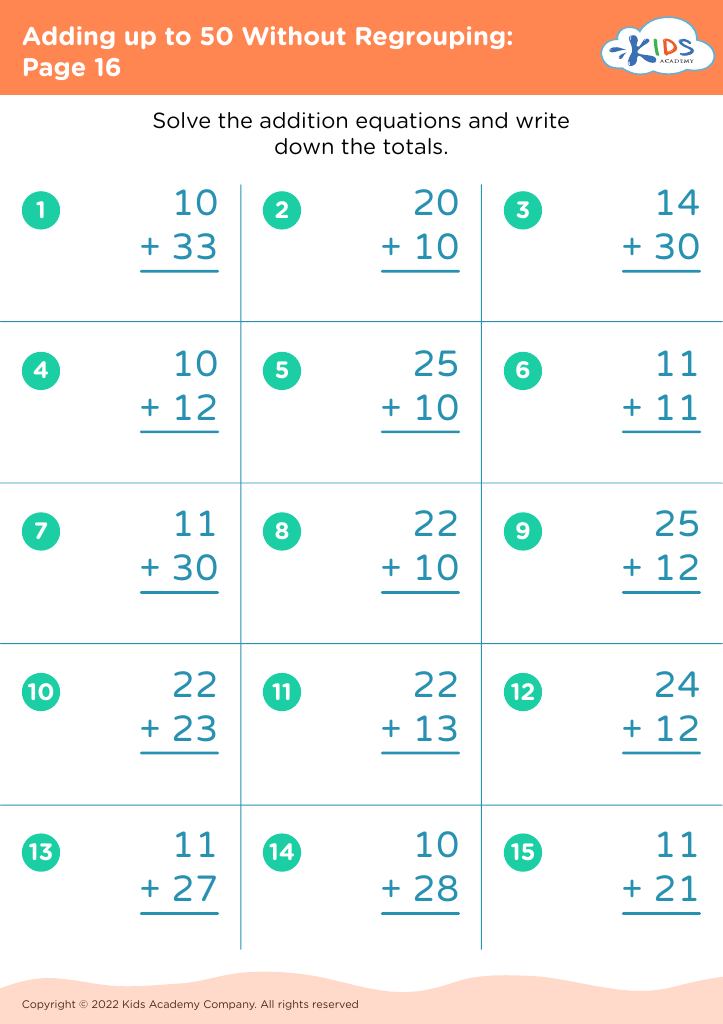
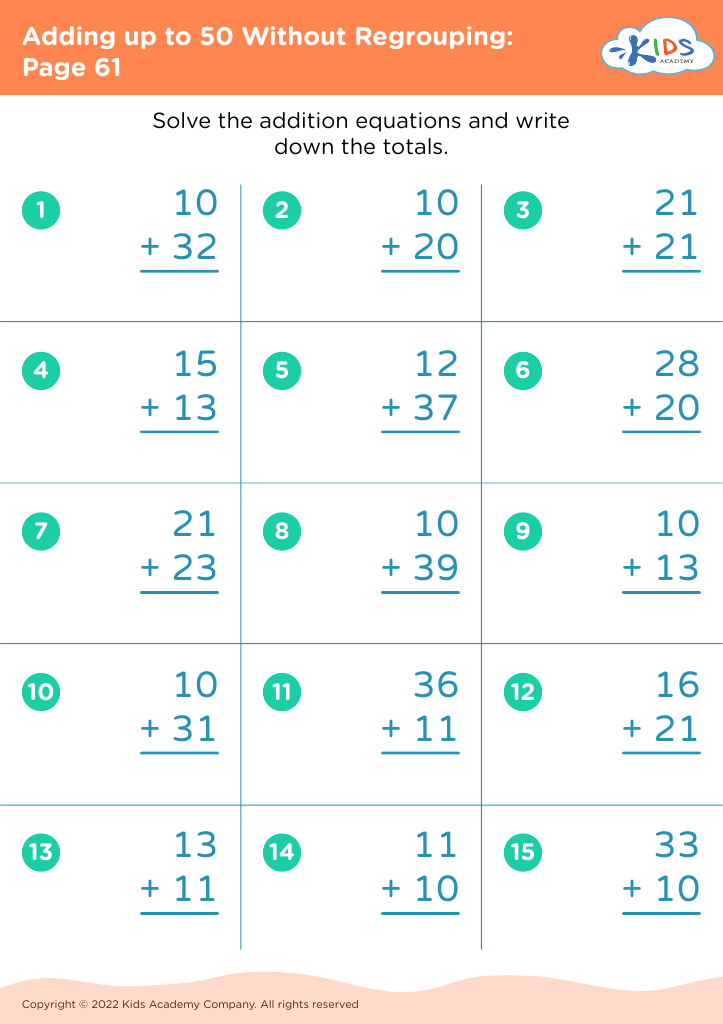
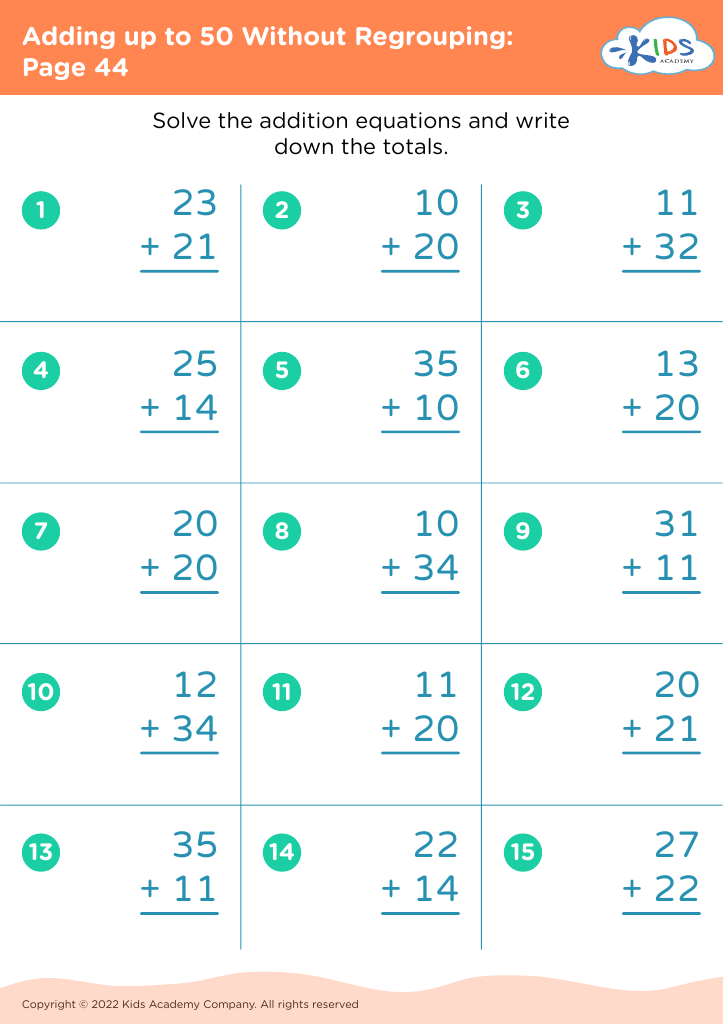
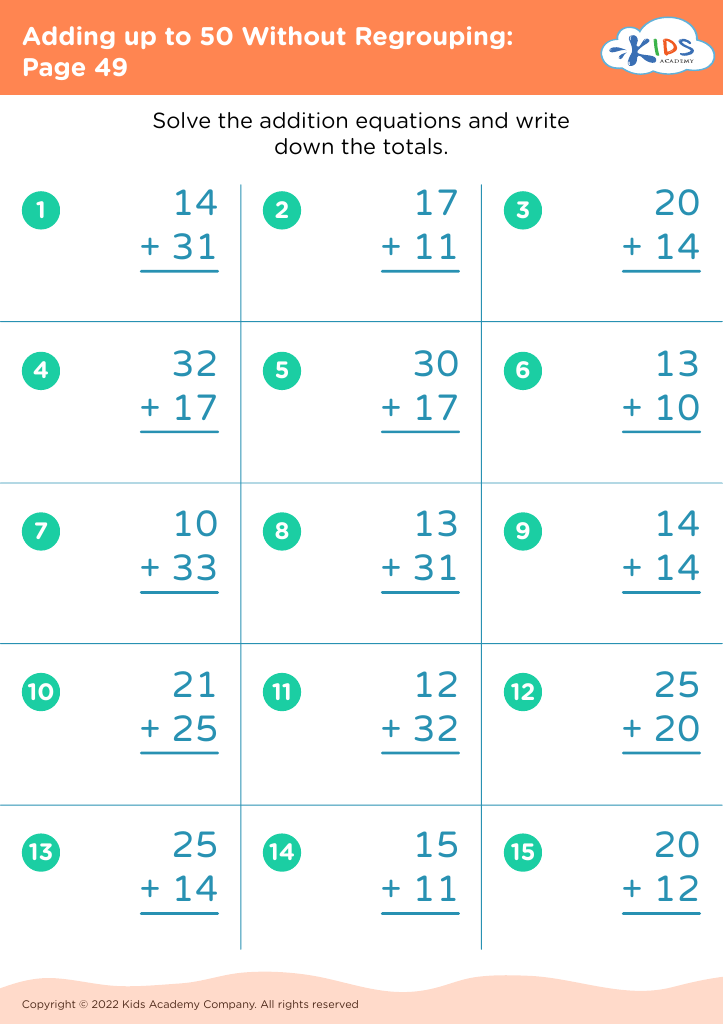
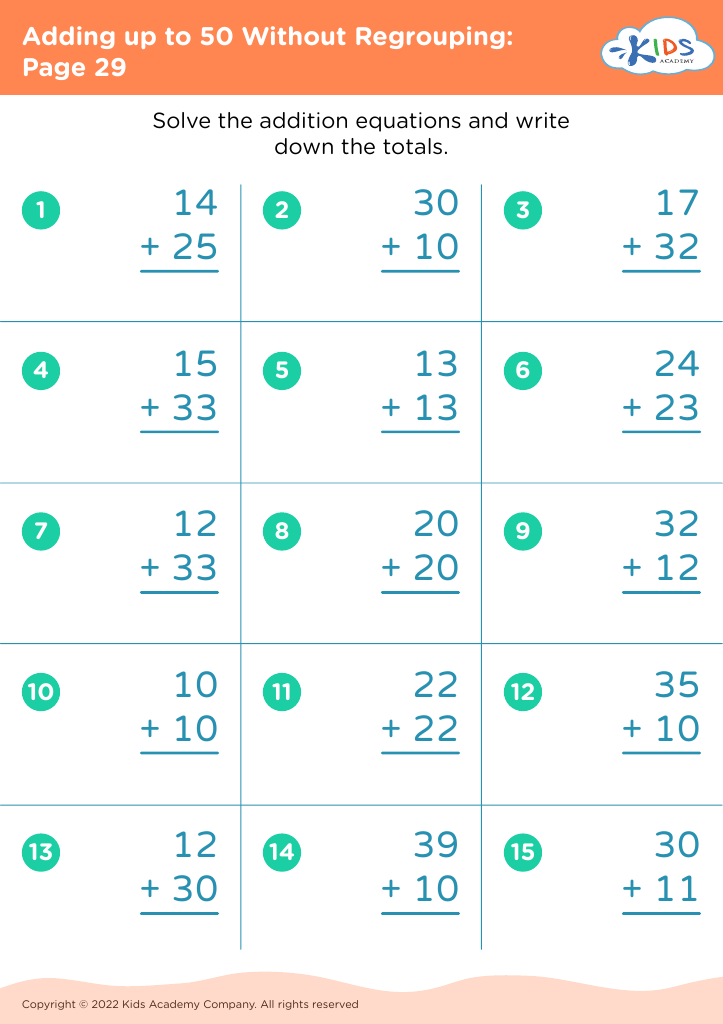
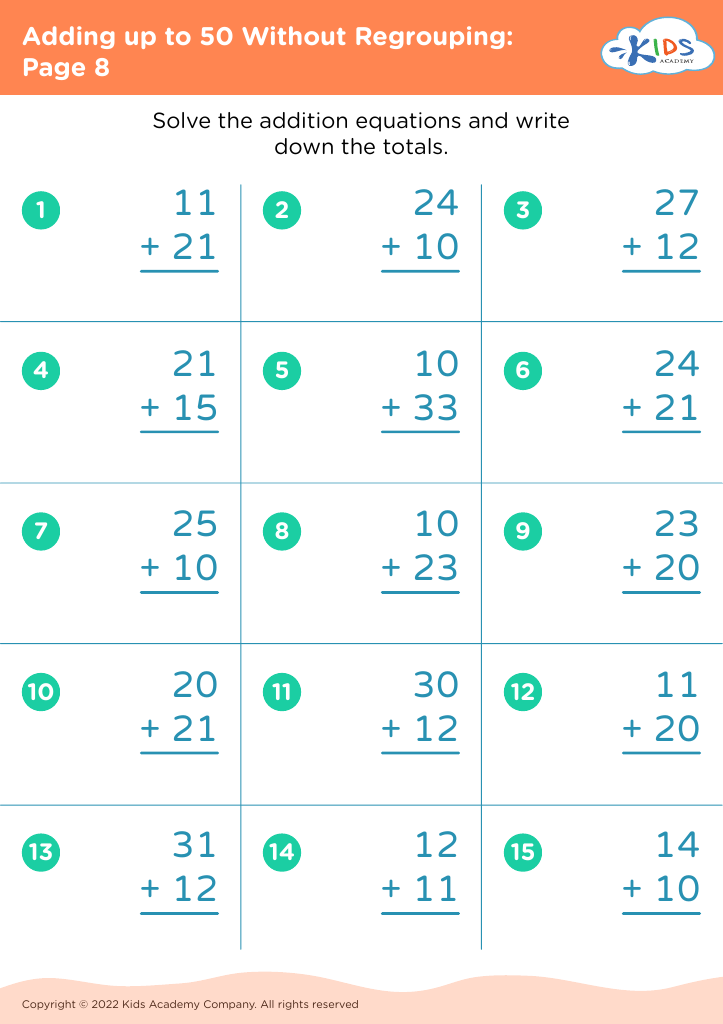
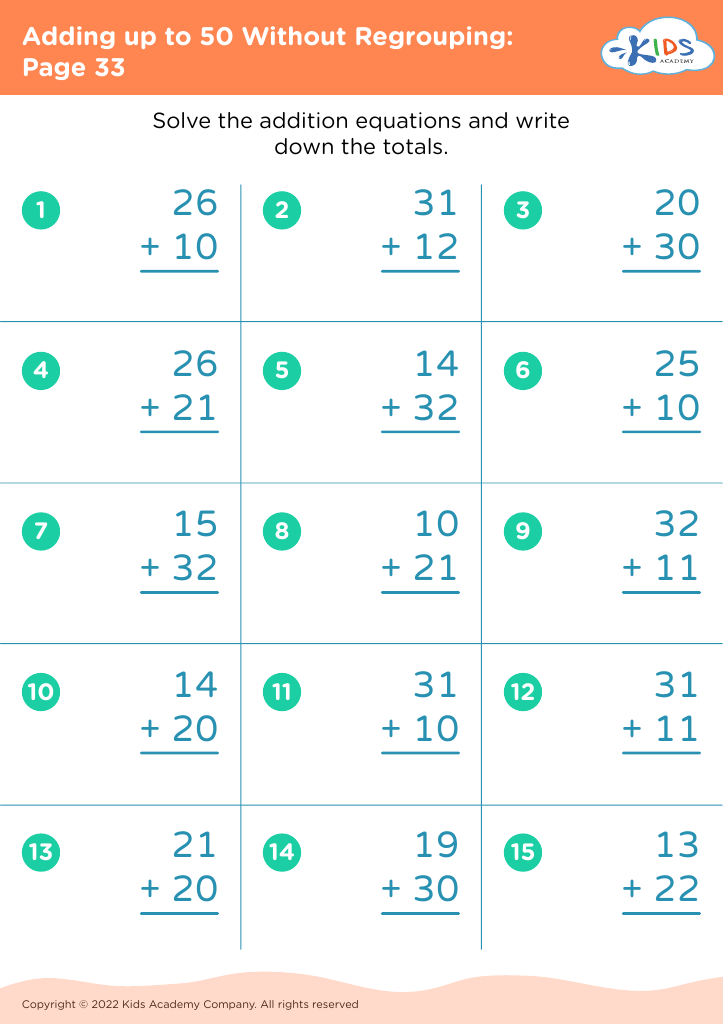
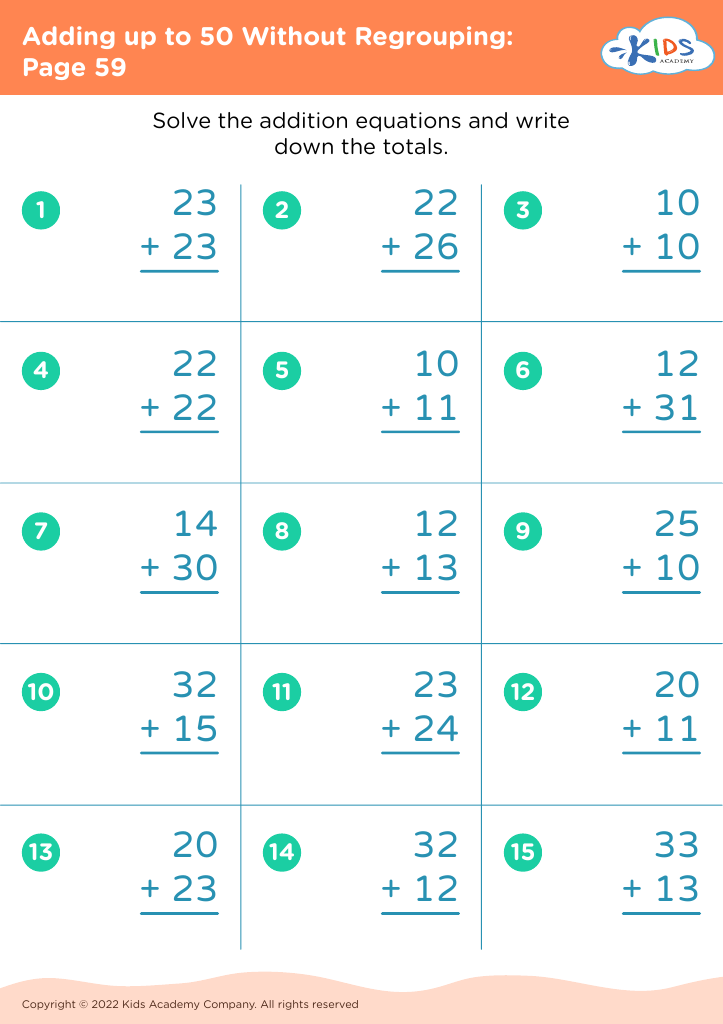
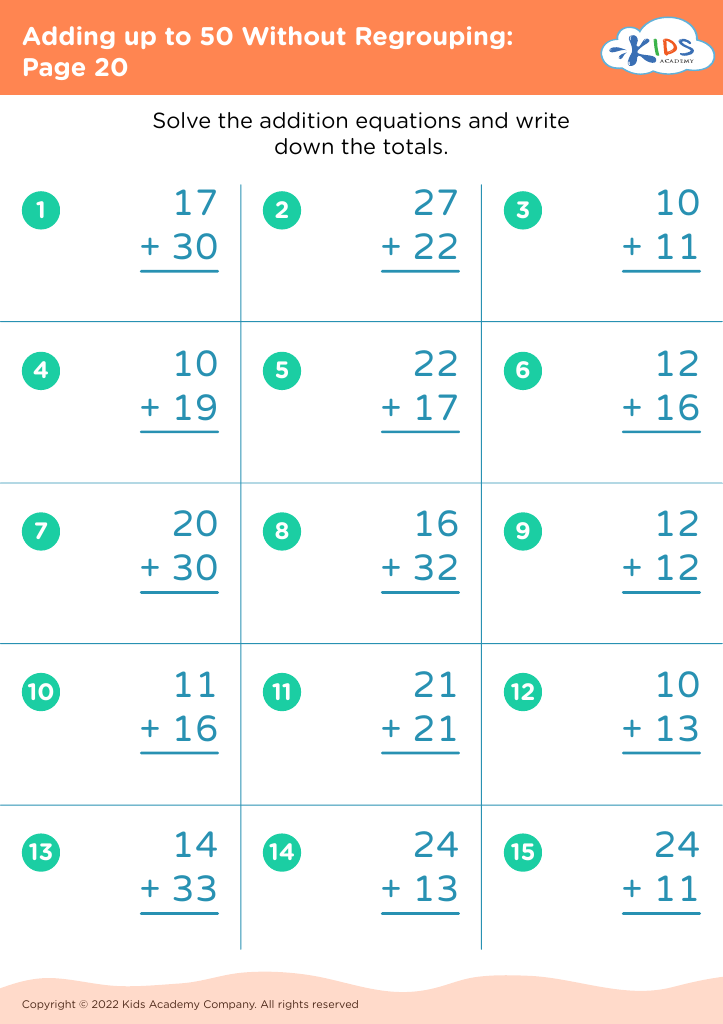
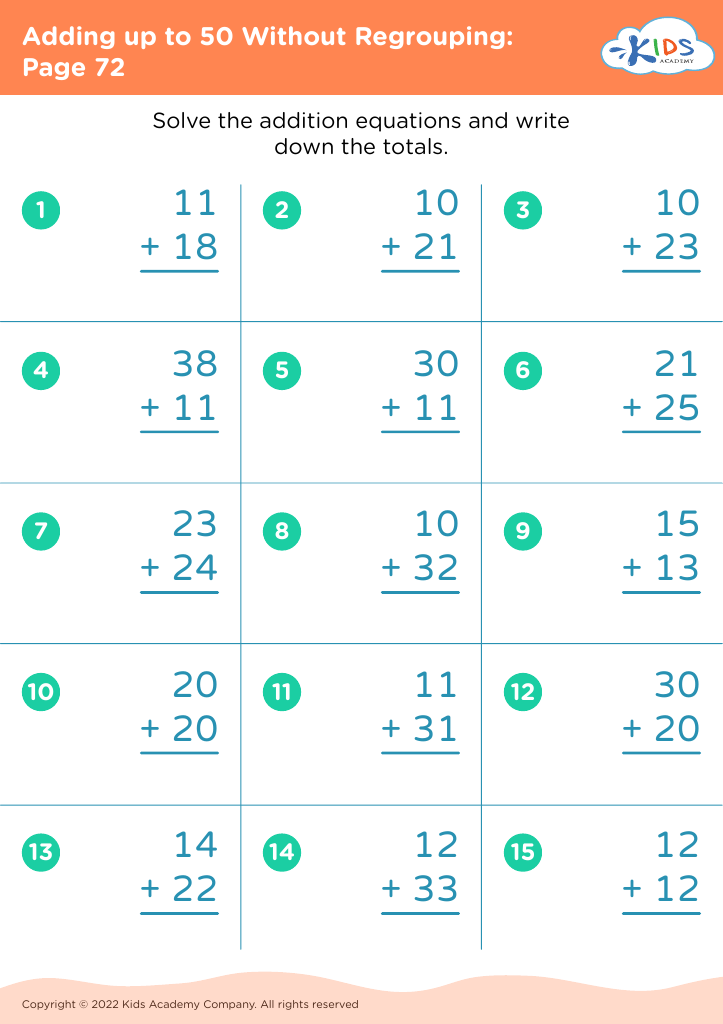
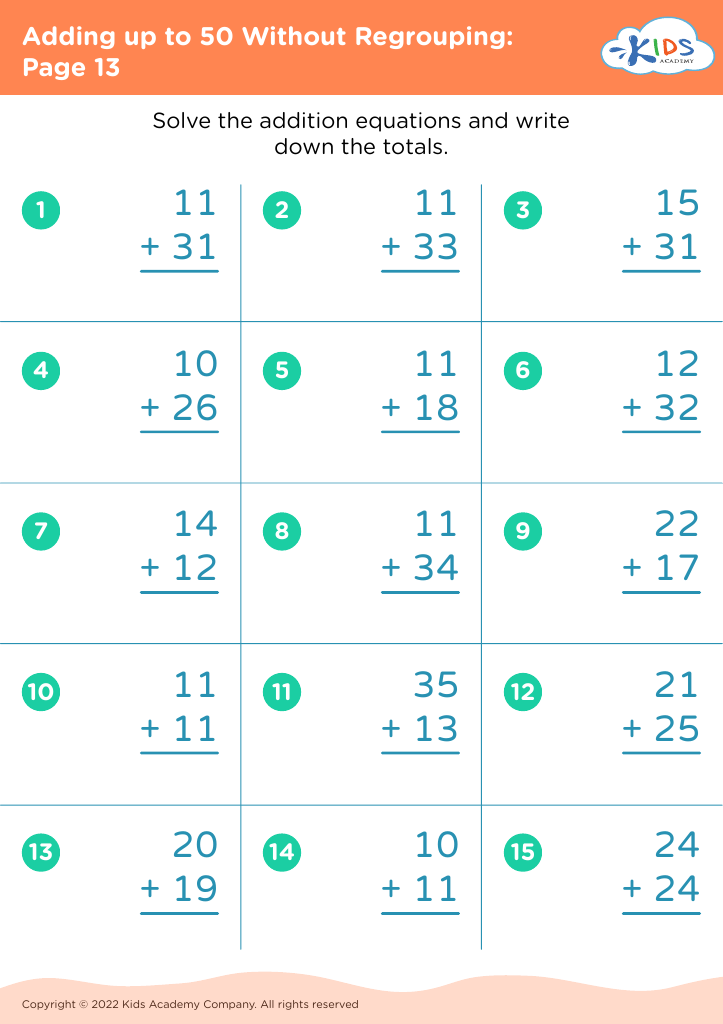
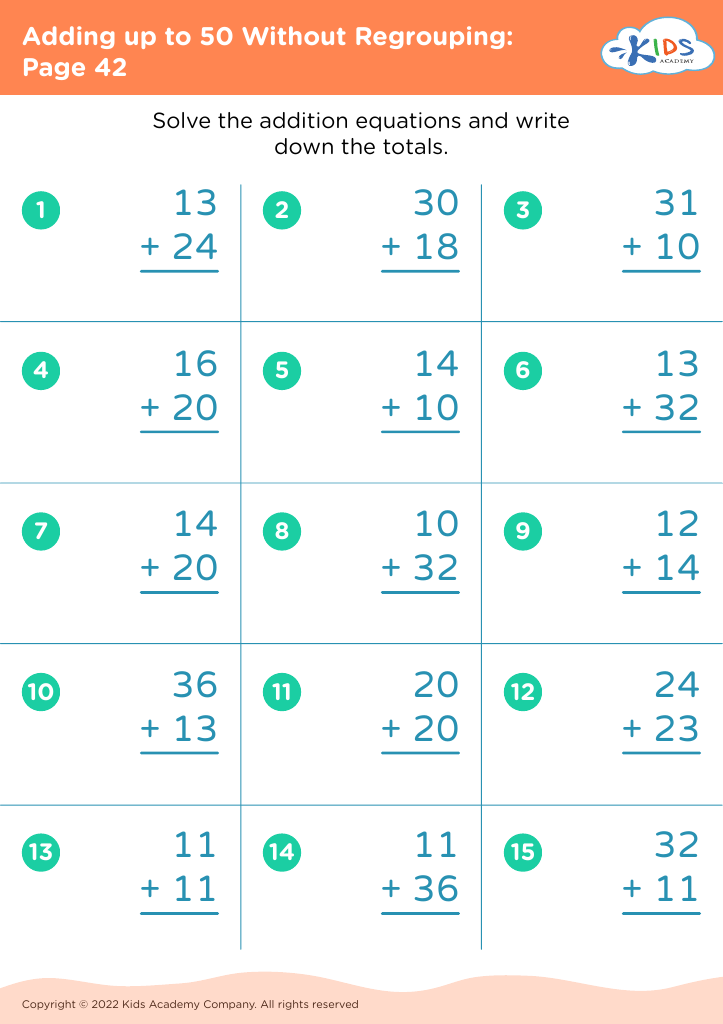
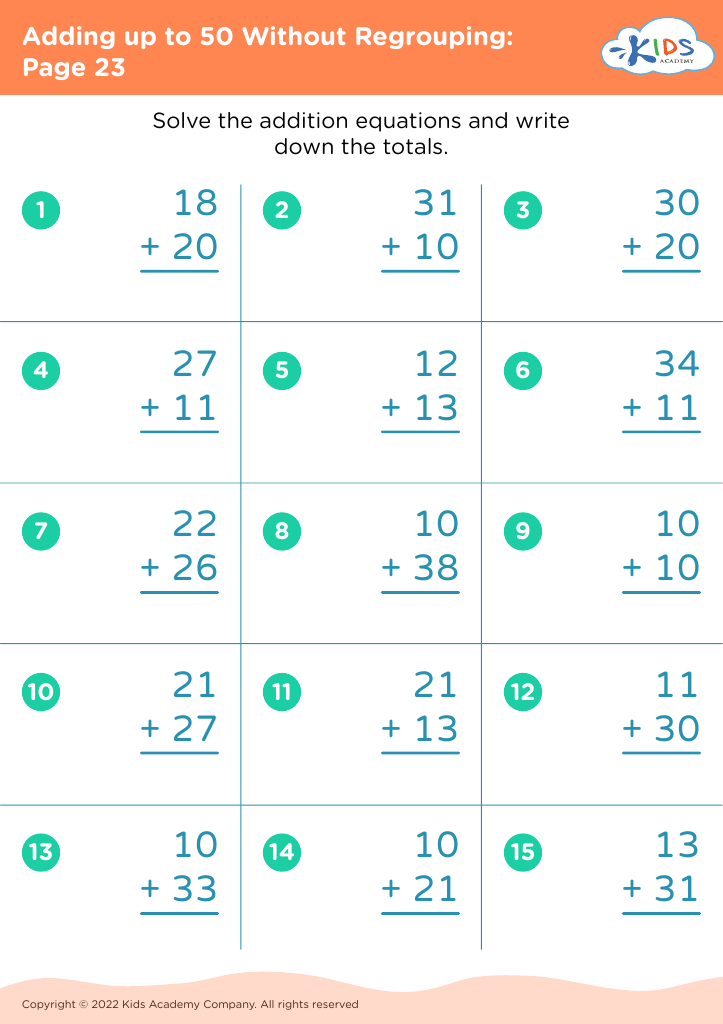
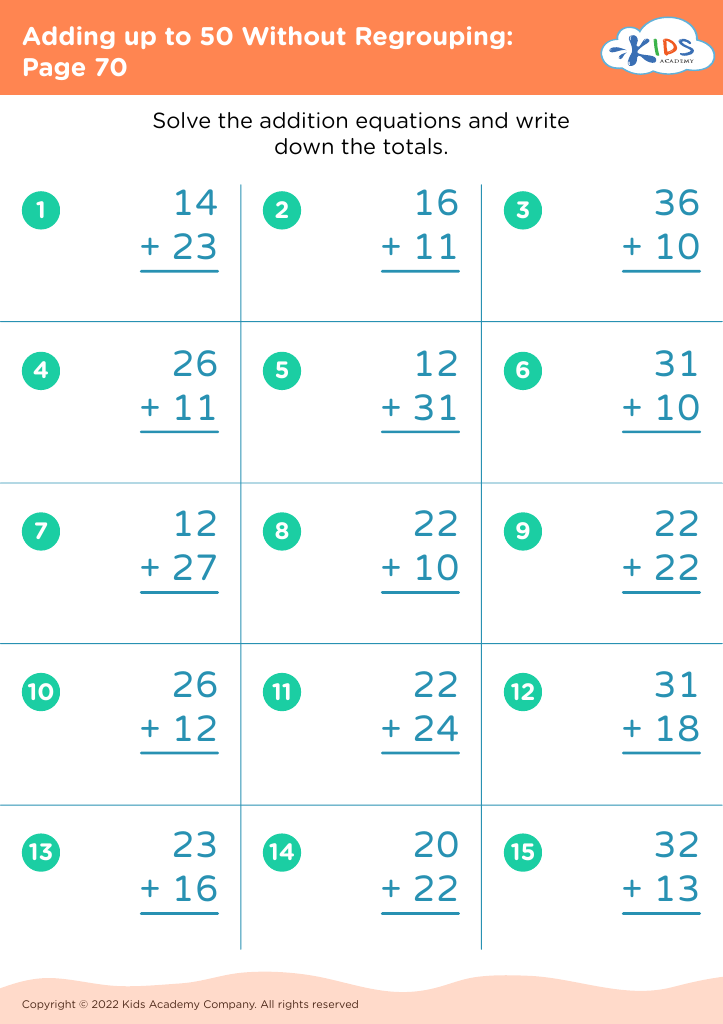


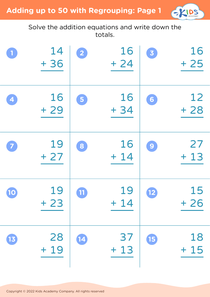
Parents and teachers should care about helping children aged 5-7 add up to 50 without regrouping because it forms a crucial foundation for future mathematical understanding. Mastering this skill early fosters number sense, which is the comprehension of numbers and their relationships. At this developmental stage, children learn best through concrete, hands-on experiences and clear, manageable tasks.
Adding numbers up to 50 without the complexity of regrouping allows children to build confidence in their arithmetic abilities. It helps them grasp basic concepts of addition and understand how numbers combine, which is essential for tackling more advanced math problems later on. This skill also helps in other areas requiring numerical fluency, such as counting money, measuring, and telling time.
Furthermore, achieving competence in addition nurtures problem-solving abilities and analytical thinking, which are applicable across subjects and in everyday life. When children are comfortable with these basic operations, it reduces math anxiety and encourages a positive attitude toward learning.
By ensuring that young learners correctively practice addition up to 50 without regrouping, parents, and teachers set the stage for a smoother progression to more difficult concepts such as regrouping, subtraction, multiplication, and division, thereby ensuring long-term academic success and practical life skills.