Filters

25 filtered results

Clear all filters
Favorites
With answer key
Interactive

25 filtered results

Difficulty Level

Grade


Enhance your child's learning experience with our Hand-eye Coordination Addition Worksheets designed specifically for ages 5-7! These engaging worksheets seamlessly blend math skills with hand-eye coordination activities, making learning fun and interactive. Children will strengthen their addition skills while improving their dexterity and visual skills through colorful illustrations and playful exercises. Perfect for at-home learning or classroom activities, these worksheets cater to different skill levels, ensuring every child can succeed. Let's boost confidence and foundational math knowledge! Explore our collection today and watch your child thrive as they master addition with joy and creativity. Make learning an exciting adventure!
Check out this FREE Trial Lesson on Addition for age 5-7!

P

Favorites
With answer key
Interactive
  • 5-7
  • Hand-eye Coordination
  • Addition
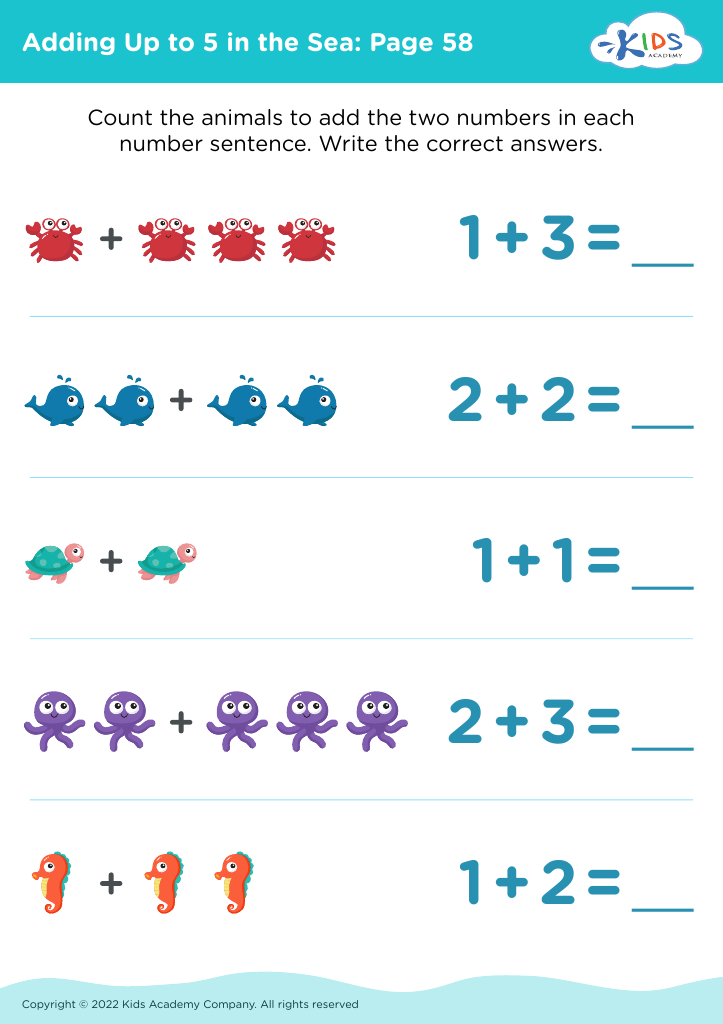
Adding Up to 5 in the Sea: Page 58
Worksheet
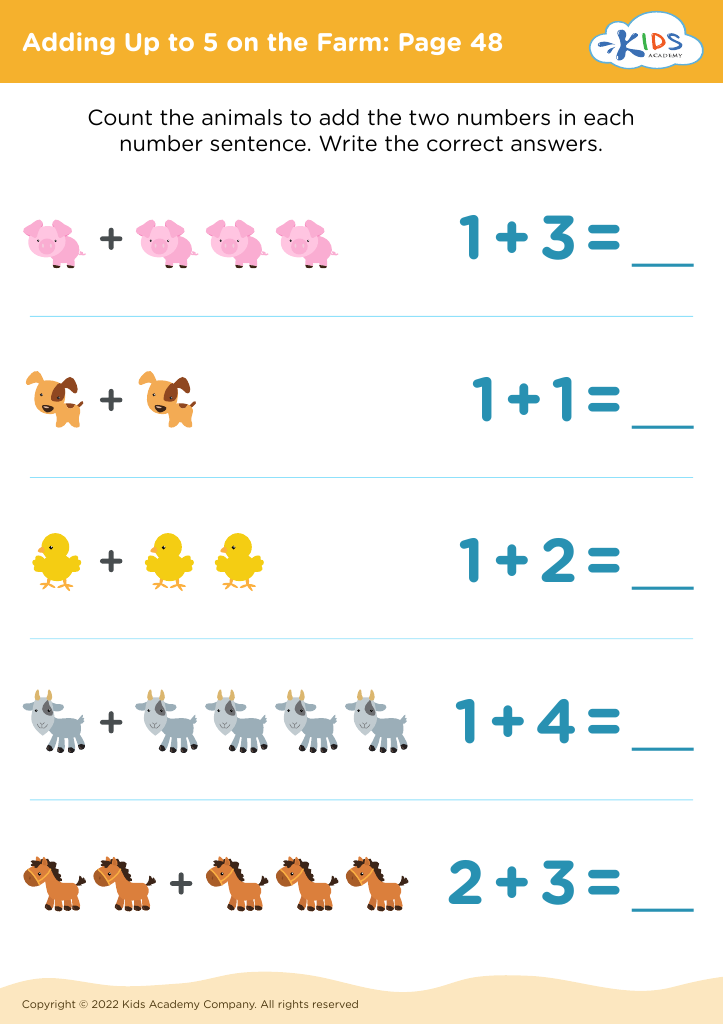
Adding Up to 5 on the Farm: Page 48
Worksheet
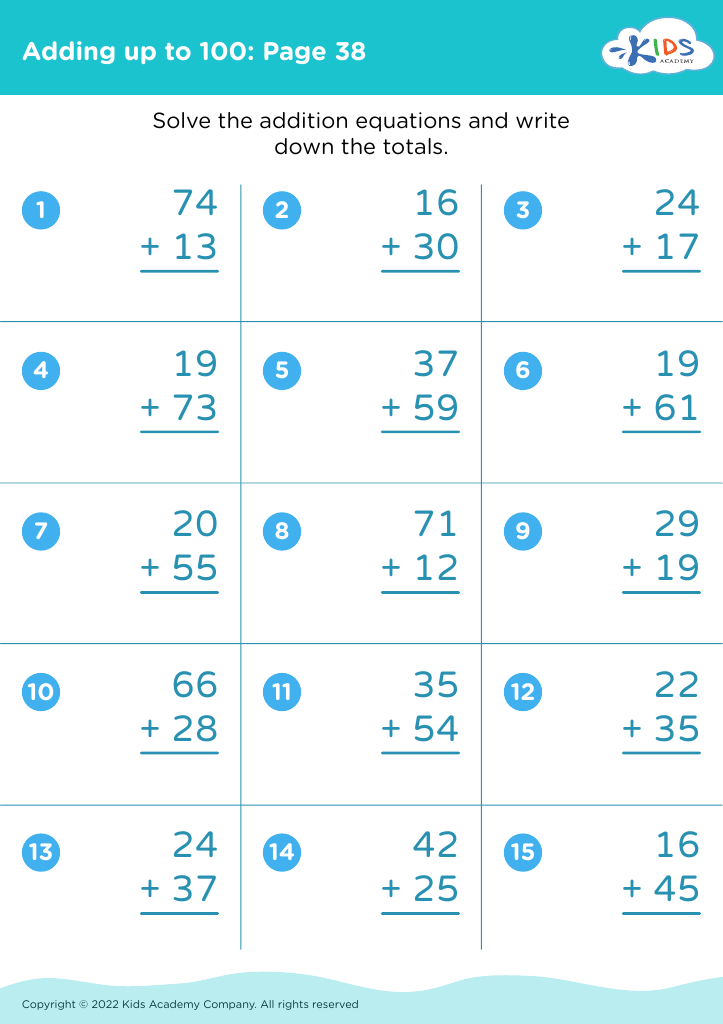
Adding up to 100: Page 38

Adding up to 100: Page 38

Adding up to 100: Page 38
Worksheet
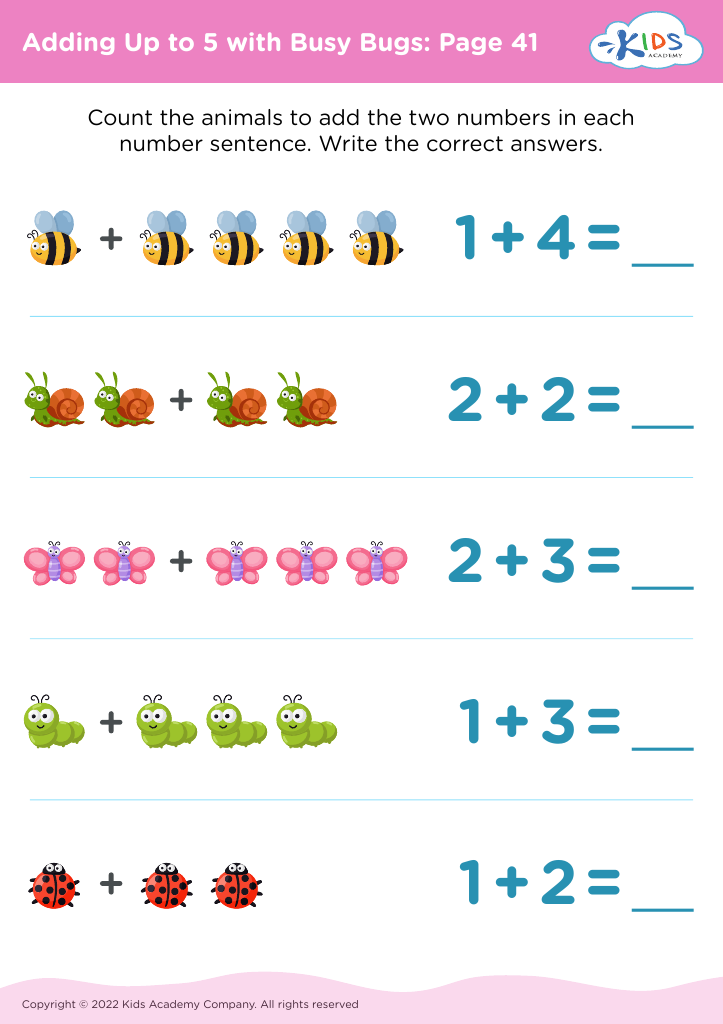
Adding Up to 5 with Busy Bugs: Page 41
Worksheet
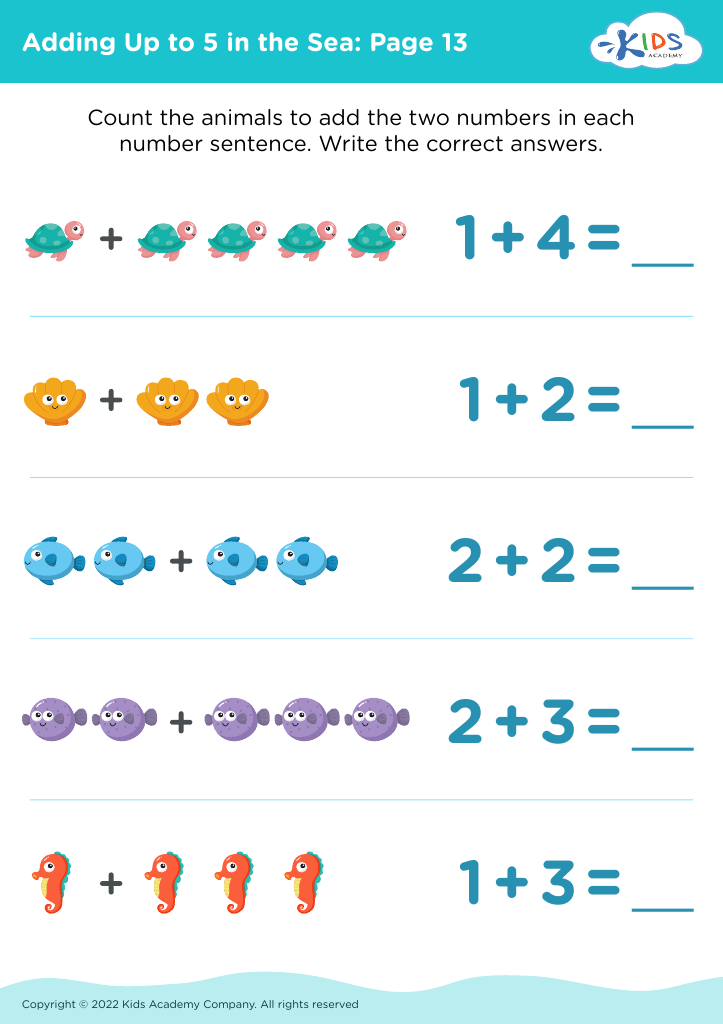
Adding Up to 5 in the Sea: Page 13
Worksheet
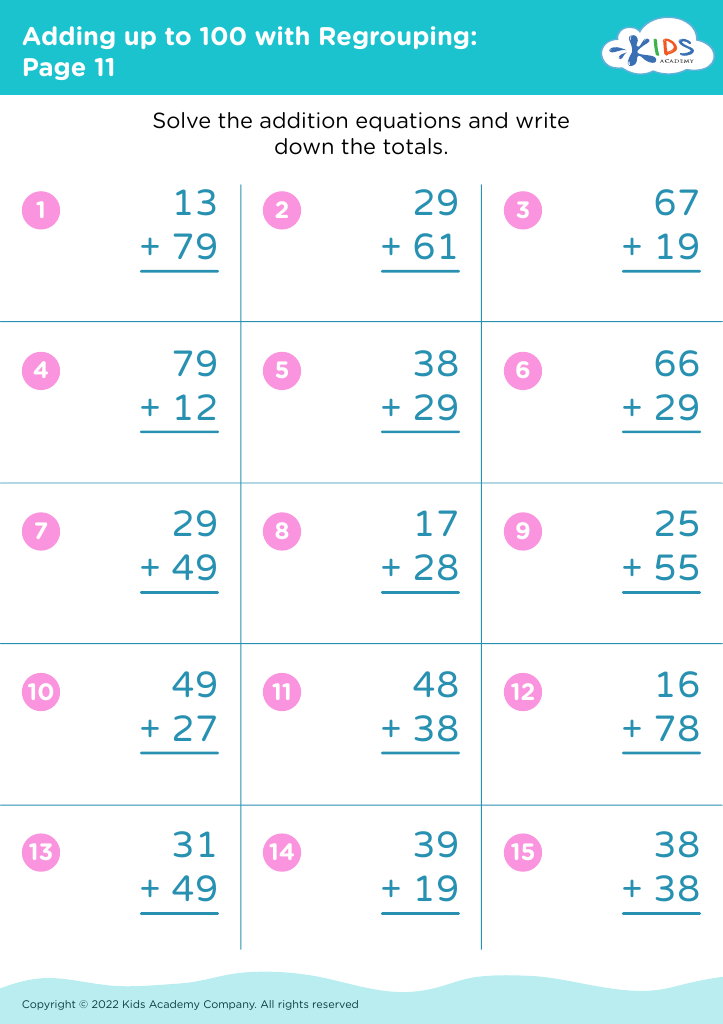
Adding up to 100 with Regrouping: Page 11
Worksheet
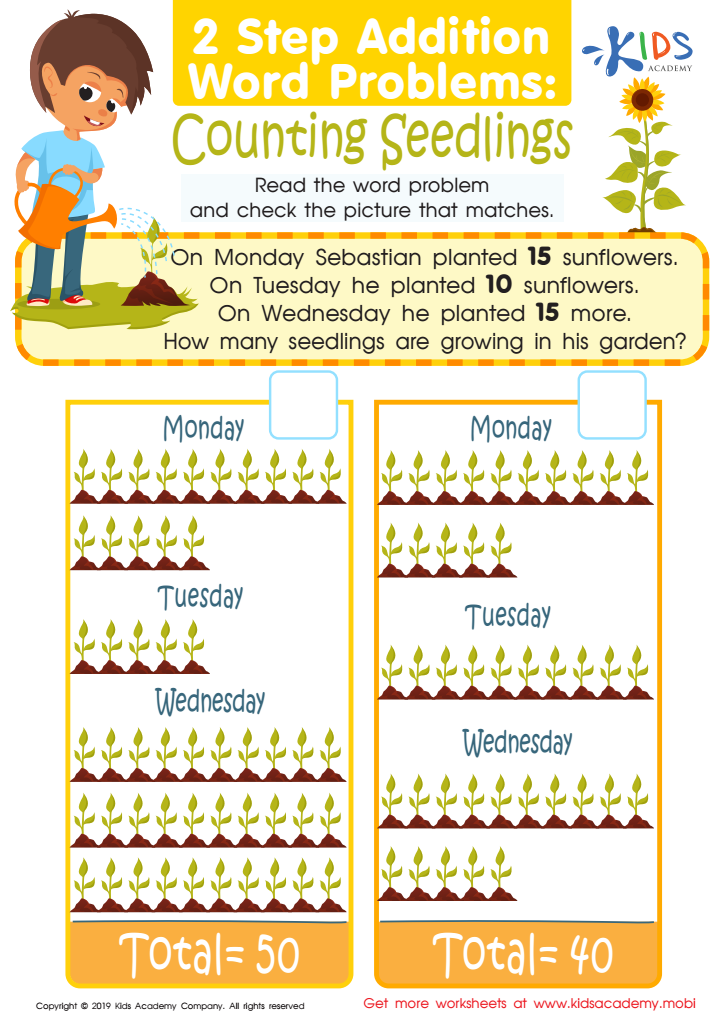
Counting Seedlings Worksheet

Counting Seedlings Worksheet

Understanding math word problems is key. Multiple steps can prove challenging - this free worksheet provides one-to-one picture representation to help kids solve multi-step addition word problems. Strengthen addition skills by choosing the matching picture to the answer.
Counting Seedlings Worksheet
Worksheet
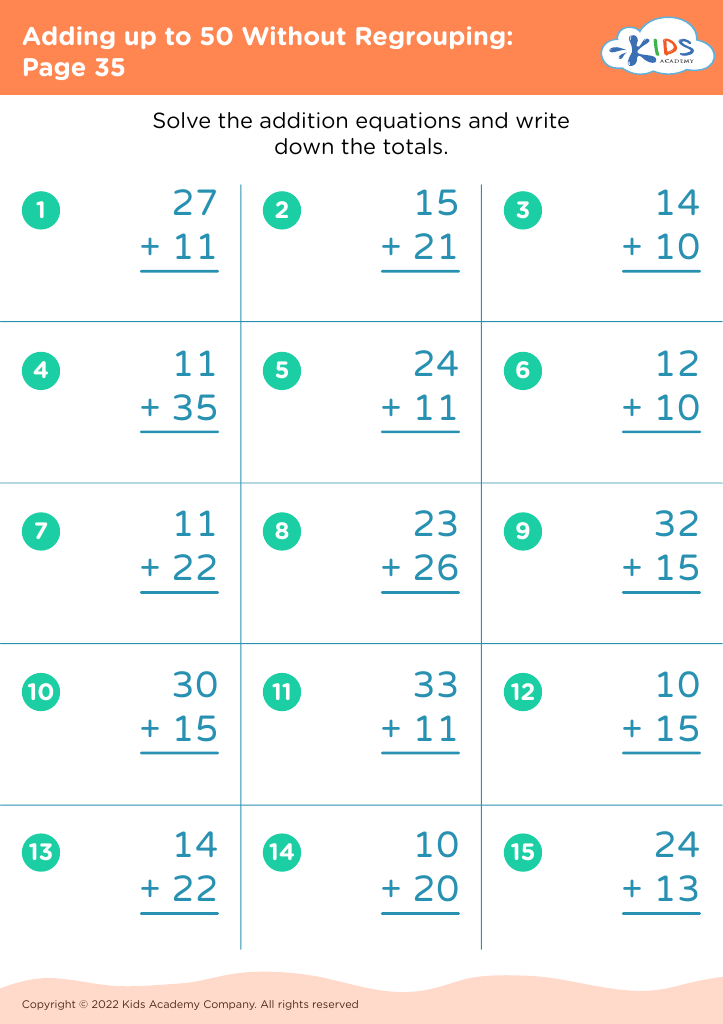
Adding up to 50 Without Regrouping: Page 35
Worksheet
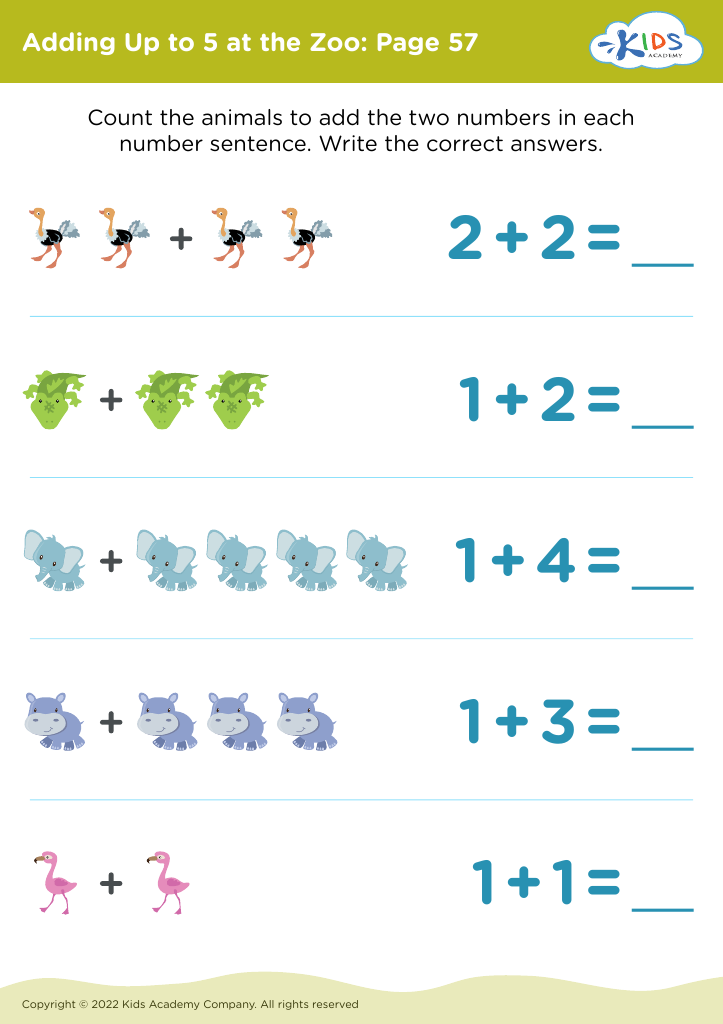
Adding Up to 5 at the Zoo: Page 57
Worksheet
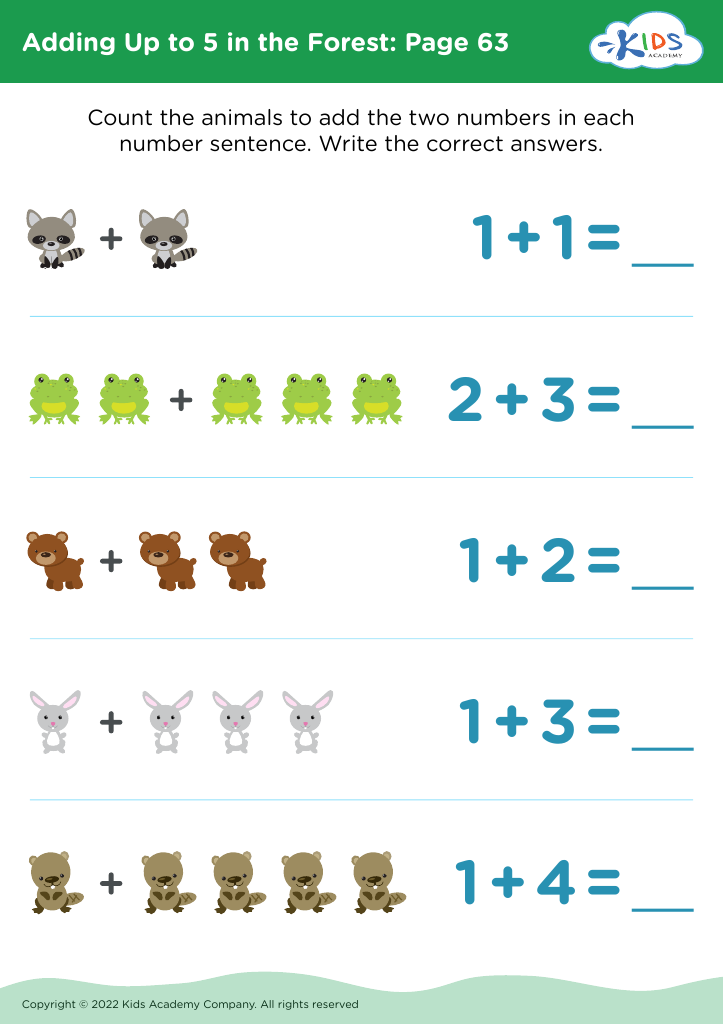
Adding Up to 5 in the Forest: Page 63
Worksheet
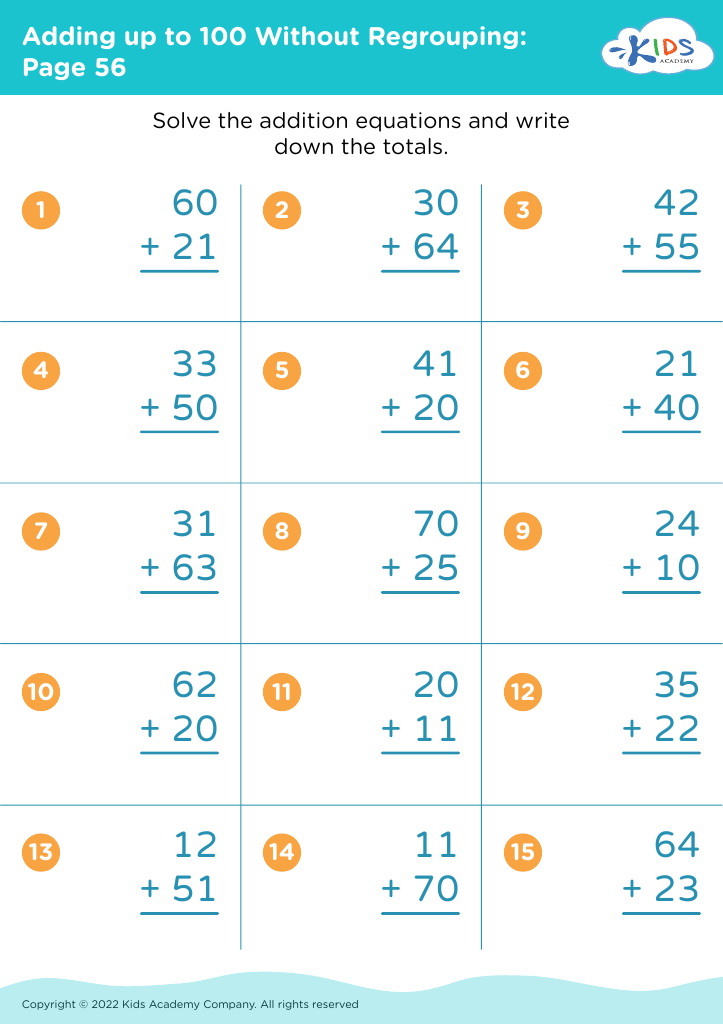
Adding up to 100 Without Regrouping: Page 56
Worksheet
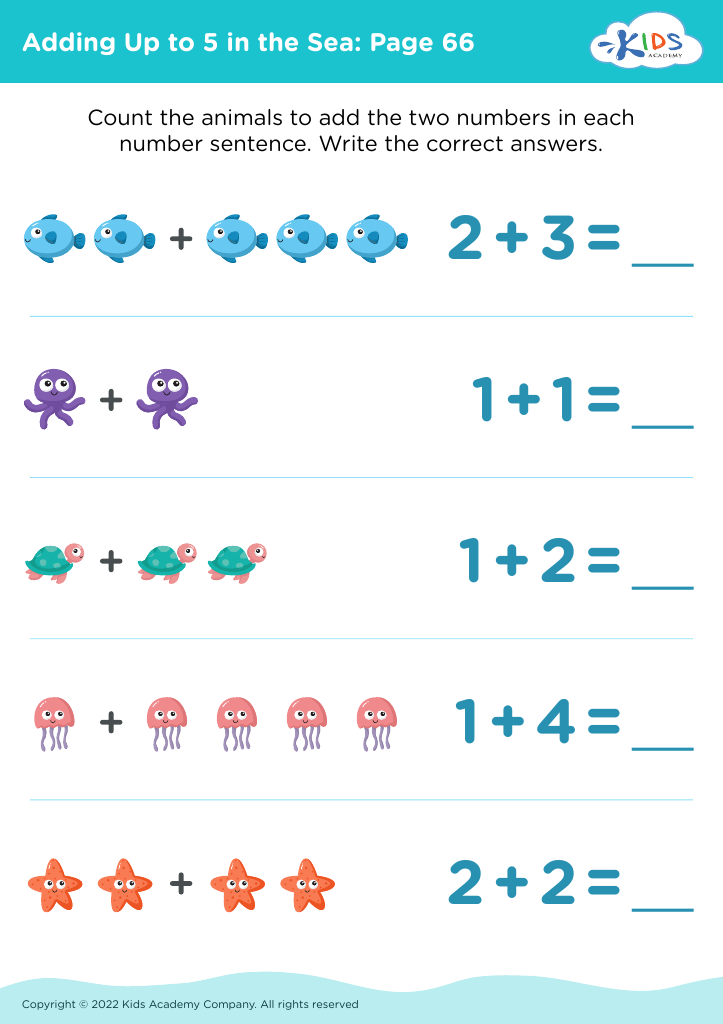
Adding Up to 5 in the Sea: Page 66
Worksheet
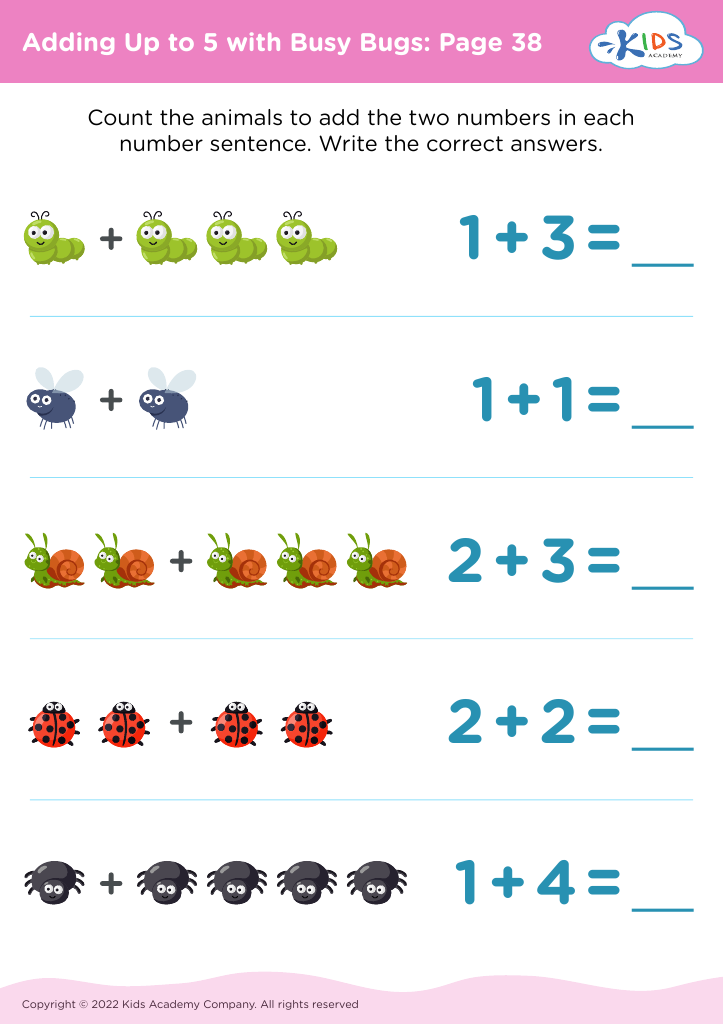
Adding Up to 5 with Busy Bugs: Page 38
Worksheet
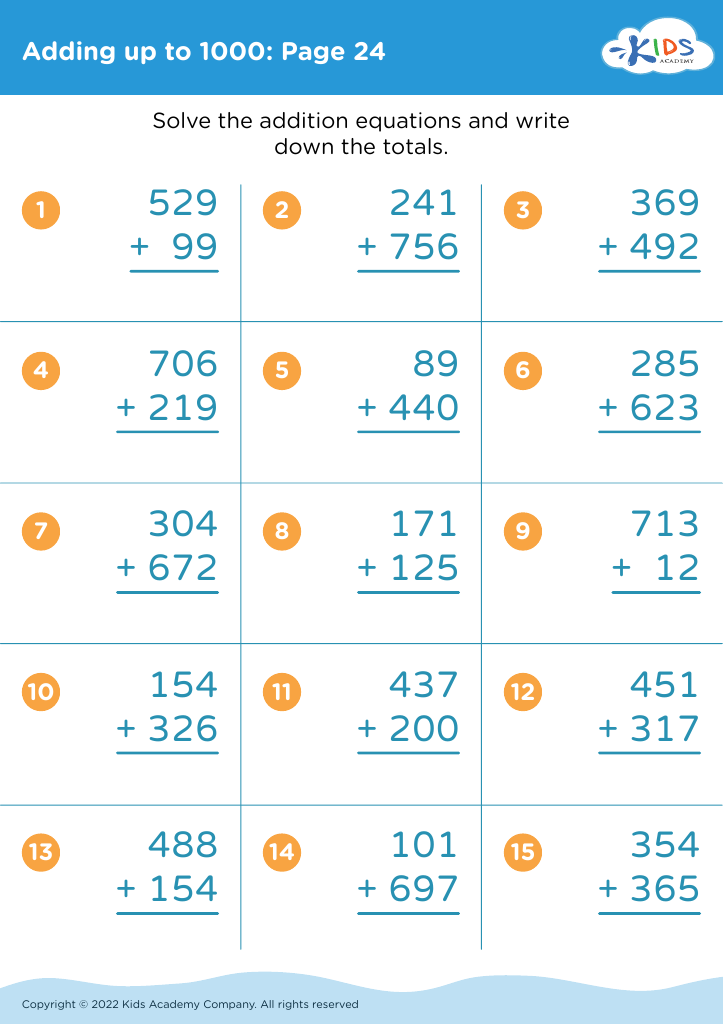
Adding up to 1000: Page 24

Adding up to 1000: Page 24

Adding up to 1000: Page 24
Worksheet
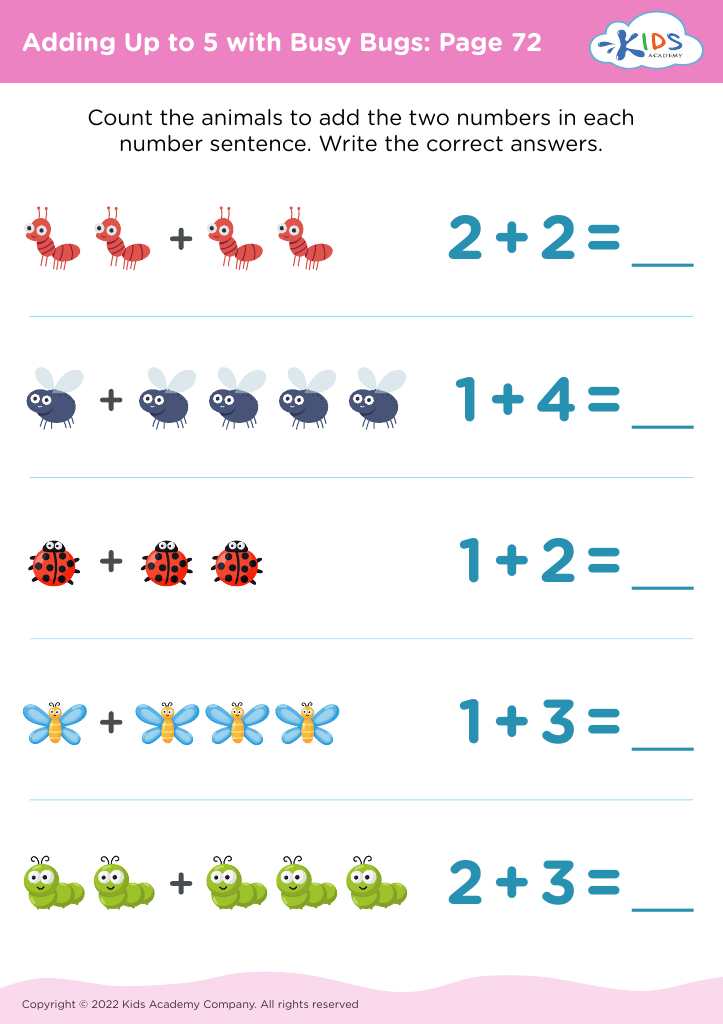
Adding Up to 5 with Busy Bugs: Page 72
Worksheet
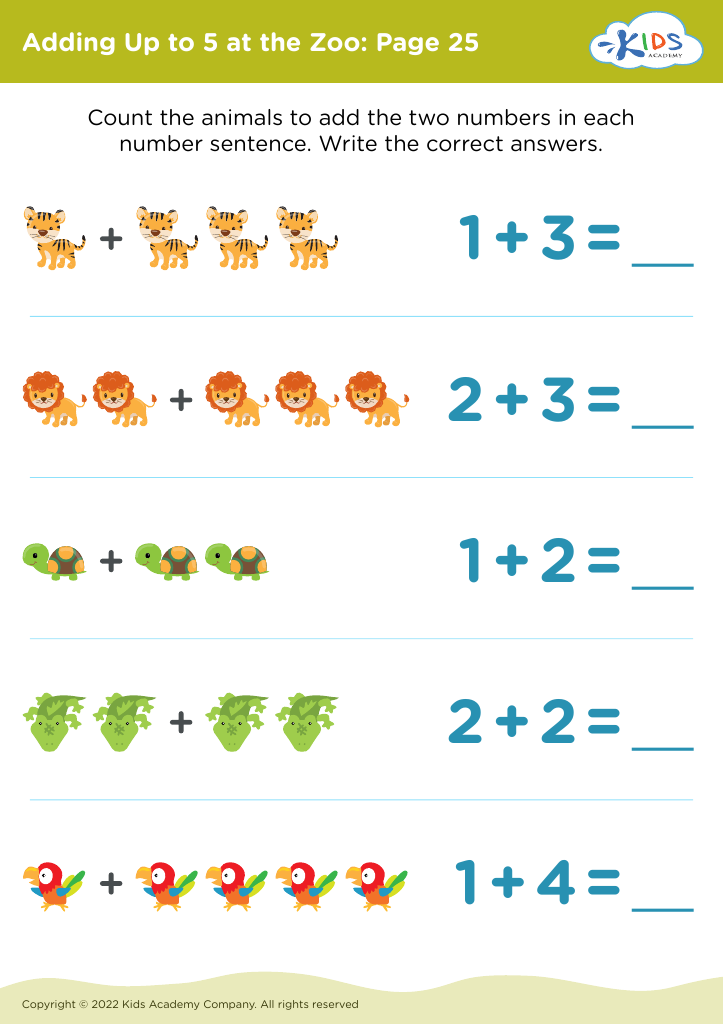
Adding Up to 5 at the Zoo: Page 25
Worksheet
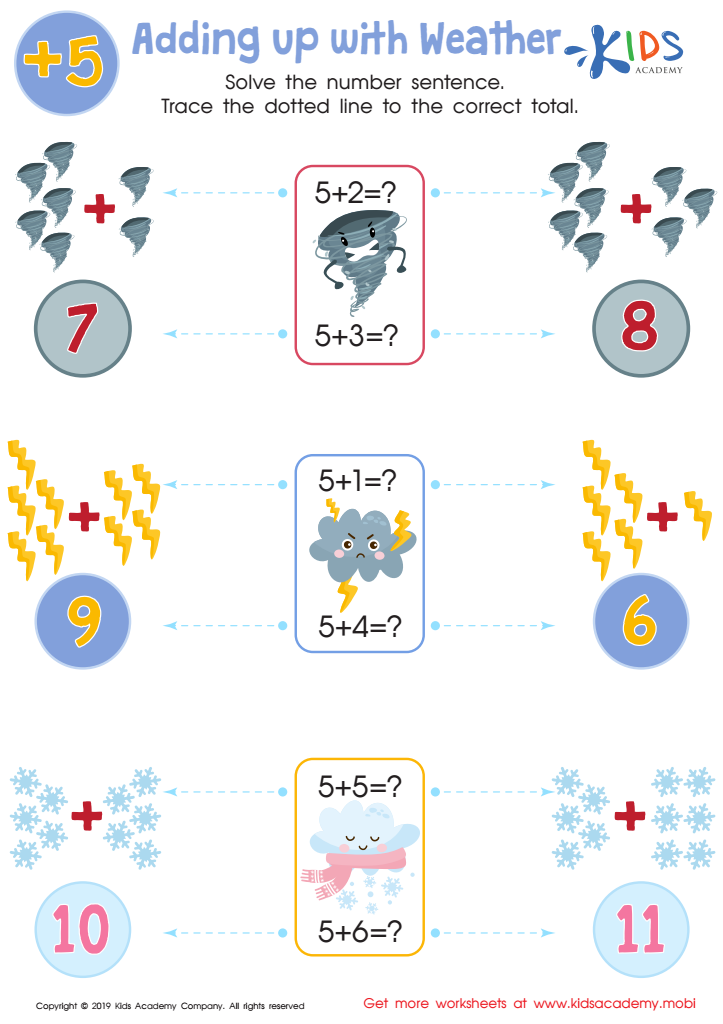
Adding up With Water Worksheet
Adding up With Water Worksheet
Ask your kids to name different kinds of weather and what it's like outside now. Then, help them solve the number sentences on the worksheet by tracing the dotted line to the correct total.
Adding up With Water Worksheet
Worksheet
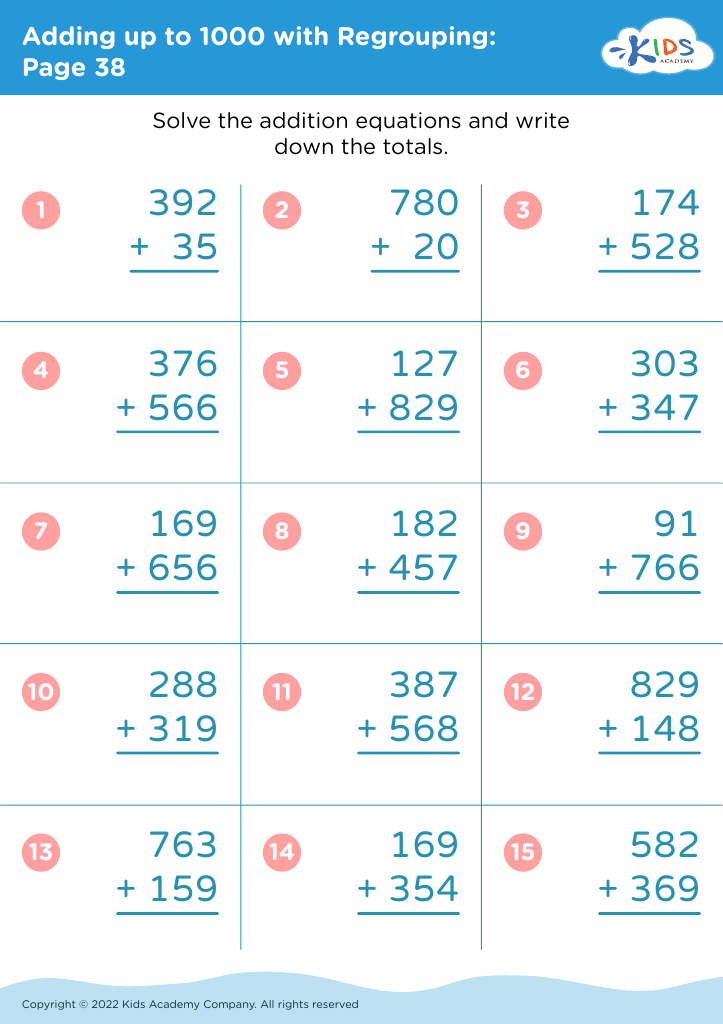
Adding up to 1000 with Regrouping: Page 38
Worksheet
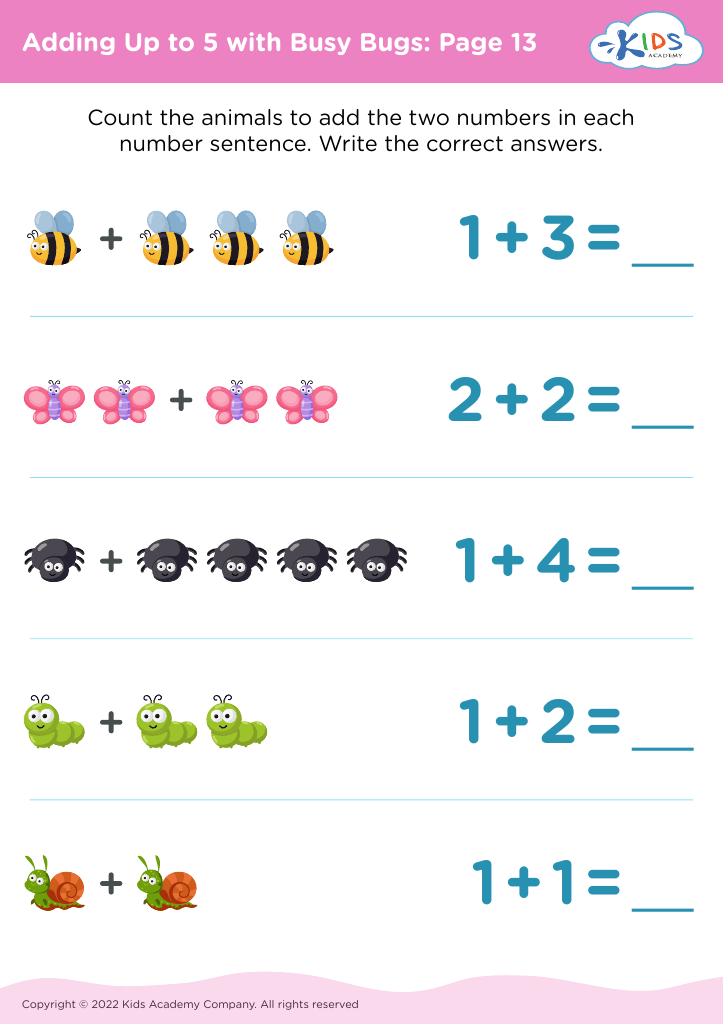
Adding Up to 5 with Busy Bugs: Page 13
Worksheet
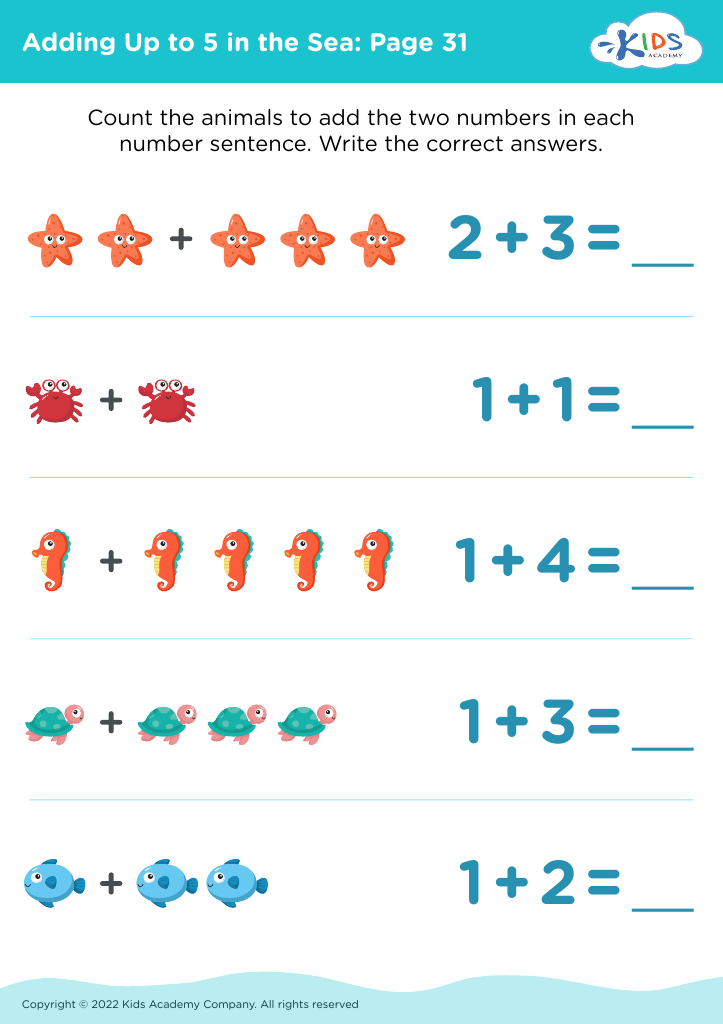
Adding Up to 5 in the Sea: Page 31
Worksheet
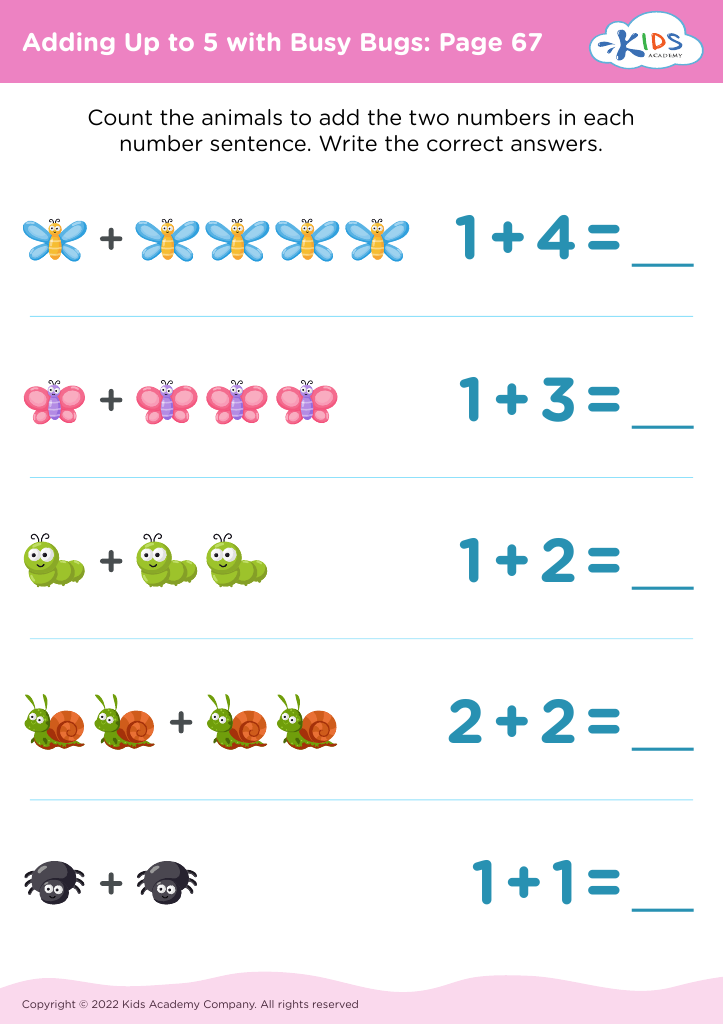
Adding Up to 5 with Busy Bugs: Page 67
Worksheet
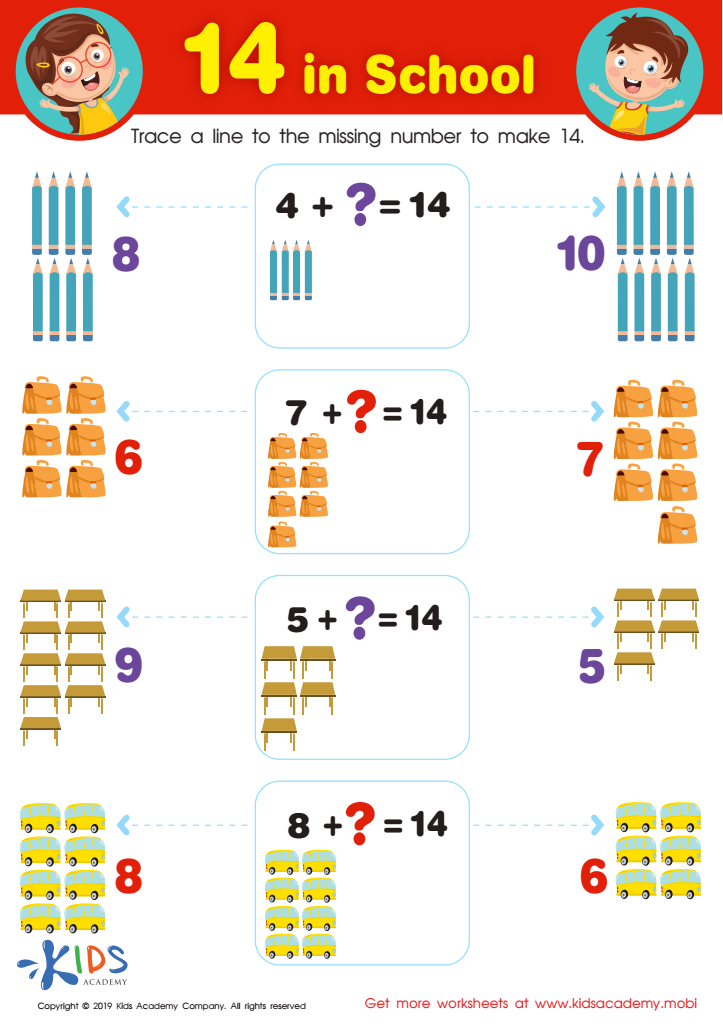
14 in School Worksheet

14 in School Worksheet

Remind your kids that adding different sets of numbers can give the same total (e.g. 2+3=5, 4+1=5). Ask them for more examples. Afterwards, work through the exercise. Help them count the objects and trace a line to the missing number that makes the total 14.
14 in School Worksheet
Worksheet
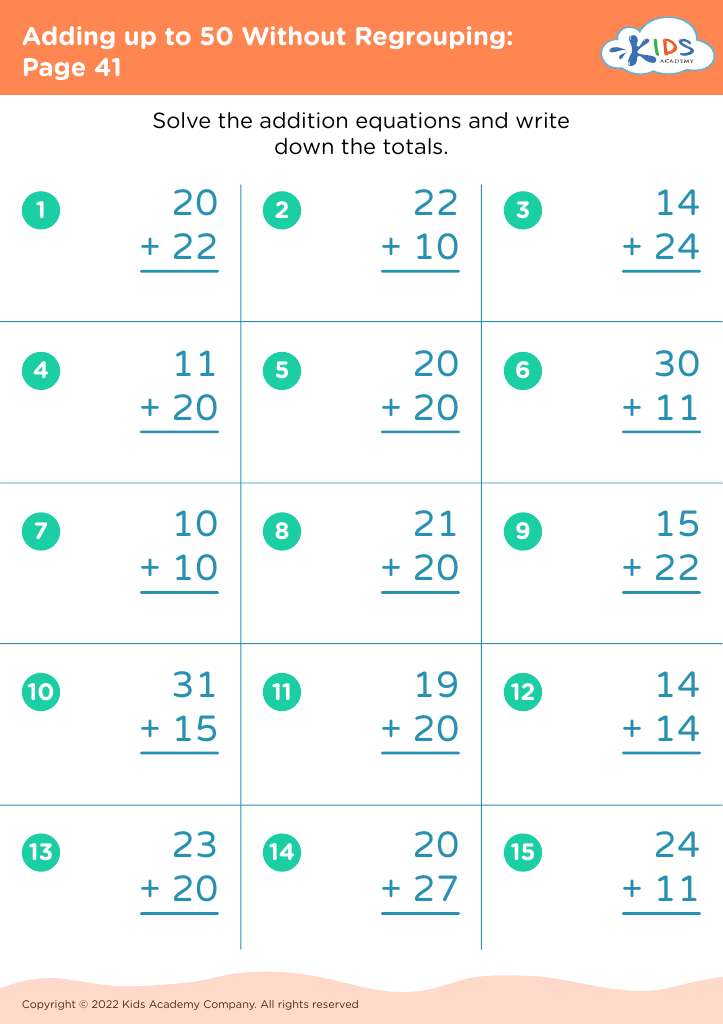
Adding up to 50 Without Regrouping: Page 41
Worksheet
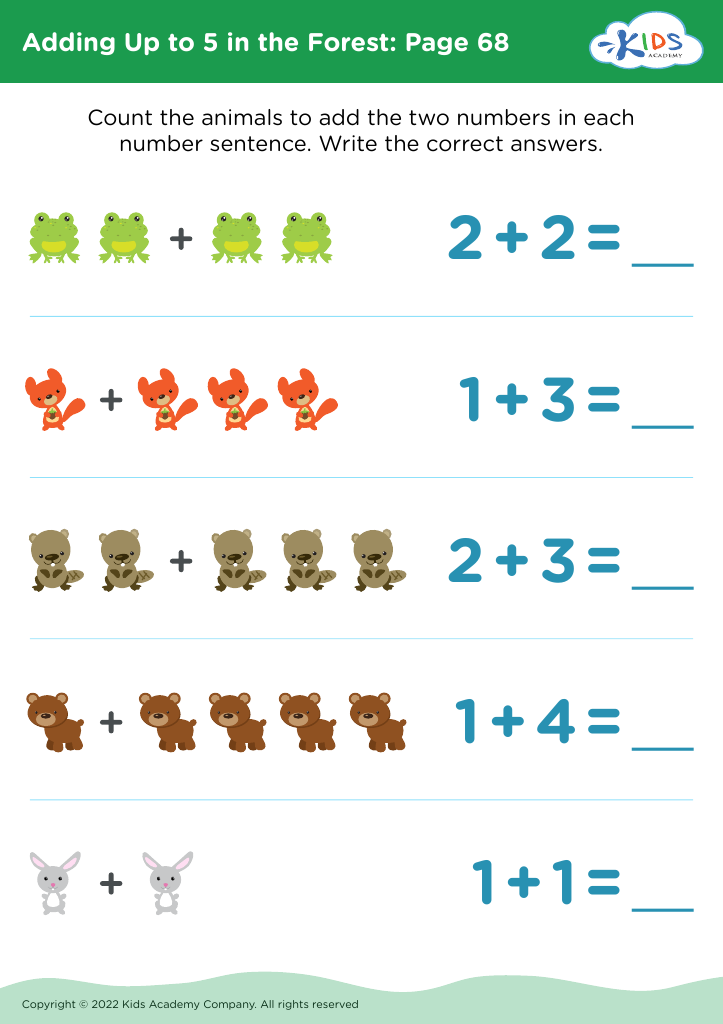
Adding Up to 5 in the Forest: Page 68
Worksheet


Hand-eye coordination is a crucial skill for children aged 5-7 as it lays the foundation for various academic and everyday activities. During this developmental stage, enhancing hand-eye coordination through engaging activities, like games and exercises, promotes not only physical abilities but also cognitive development. Improved hand-eye coordination facilitates better control over their movements, which is essential for skills such as writing, drawing, and manipulating objects.

Furthermore, encouraging activities that strengthen hand-eye coordination can nurture a child’s confidence, as they develop abilities that are fundamental to their independence and problem-solving skills. Fine motor skills gained from these exercises support learning processes in subjects like math and science, where precision and the ability to follow directions are key.

Additionally, teachers and parents should recognize that the benefits of enhancing hand-eye coordination extend beyond academic performance. These activities can foster social skills and teamwork through group games, and they can be enjoyable, making learning a fun experience. By prioritizing hand-eye coordination development, parents and teachers enable children to thrive, fostering a well-rounded skill set that will serve them throughout their educational journey and into adulthood. Investing time and resources in these areas is essential for a child’s successful growth and learning.