
Visual discrimination Geometry Worksheets for Ages 5-7
9 filtered results
Difficulty Level
Grade
Age
-
From - To
Subject
Activity
Standards
Discover our engaging Visual Discrimination Geometry Worksheets designed specifically for children aged 5-7. These worksheets foster essential skills by helping young learners identify shapes, sizes, and spatial relationships. Through fun and interactive activities, kids will refine their visual recognition and critical thinking abilities while exploring basic geometric concepts. Each worksheet is crafted to be age-appropriate, ensuring an enjoyable learning experience that supports early math development. Perfect for classroom use or at-home practice, our resources encourage curiosity and confidence in budding mathematicians. Dive into a world of shapes and visuals, and watch your child's understanding of geometry flourish!
Favorites
With answer key
Interactive
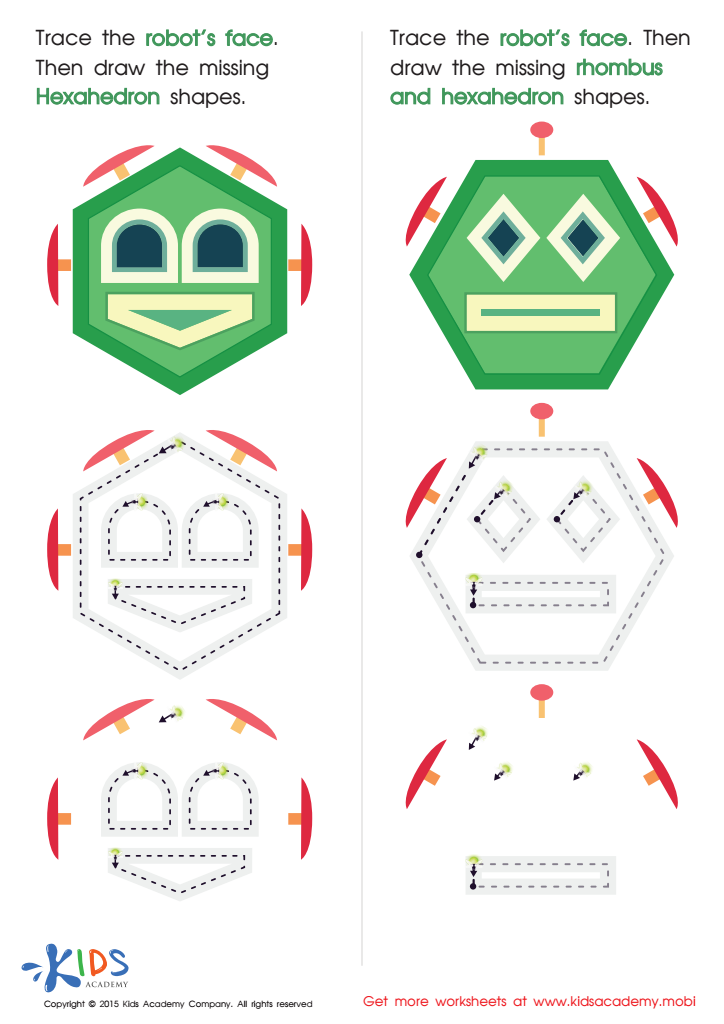
Practice Drawing Hexahedrons And a Rhombus Worksheet
Trace the Robot's face, draw hexahedron and rhombus shapes, then trace again. Our tracing shapes worksheets make it easy for kids to learn geometry. Get more materials from Kids Academy to practice all the shapes.
 Assign to My Students
Practice Drawing Hexahedrons And a Rhombus Worksheet
Worksheet











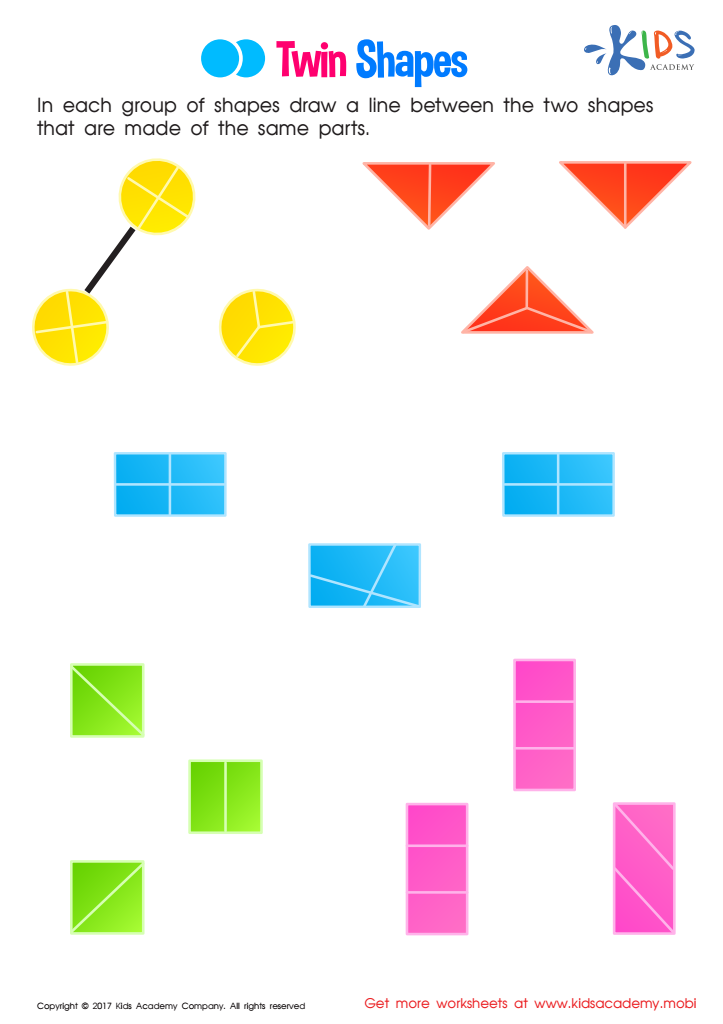
Twin Shapes Worksheet
Your students' goal in this worksheet is to find the twin shapes: drawing a line between two shapes made of the same parts. Likely, the first shapes encountered were circles, triangles, rectangles and squares - examples of which are seen frequently in everyday life. Encourage them to apply what they know and work out which is the twin shape!
Twin Shapes Worksheet
Worksheet
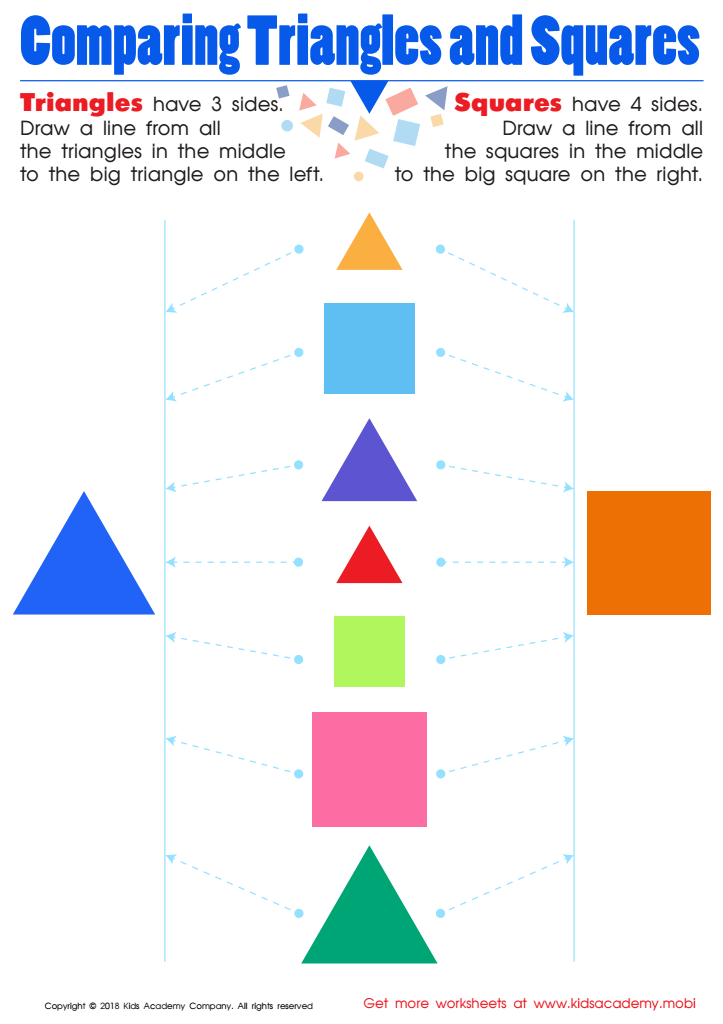
Comparing Triangles Squares Worksheet
Squares and triangles are different in the number of sides they have. Challenge kids to compare them with this fun worksheet! Read the descriptions at the top, then use the left and right shapes to match up the middle ones. Go down the page, joining the middle shapes to the side using the dotted lines!
Comparing Triangles Squares Worksheet
Worksheet
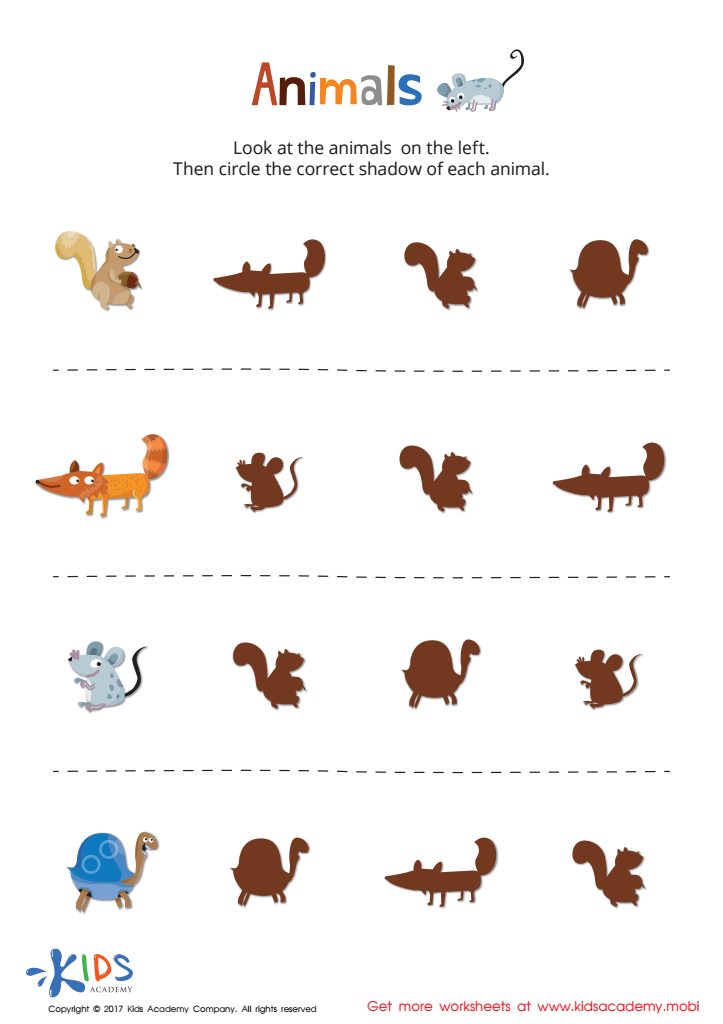
Animal Shadows Sorting Worksheet
This fun worksheet helps your child sharpen many skills. It features animals to match shapes and practice relative directions. Your child will sort animal features, practice spatial recognition, and recognize right/left. Plus, you can use it to start conversations about the animals. And try it also with fruits and veggies to boost sorting skills.
Animal Shadows Sorting Worksheet
Worksheet
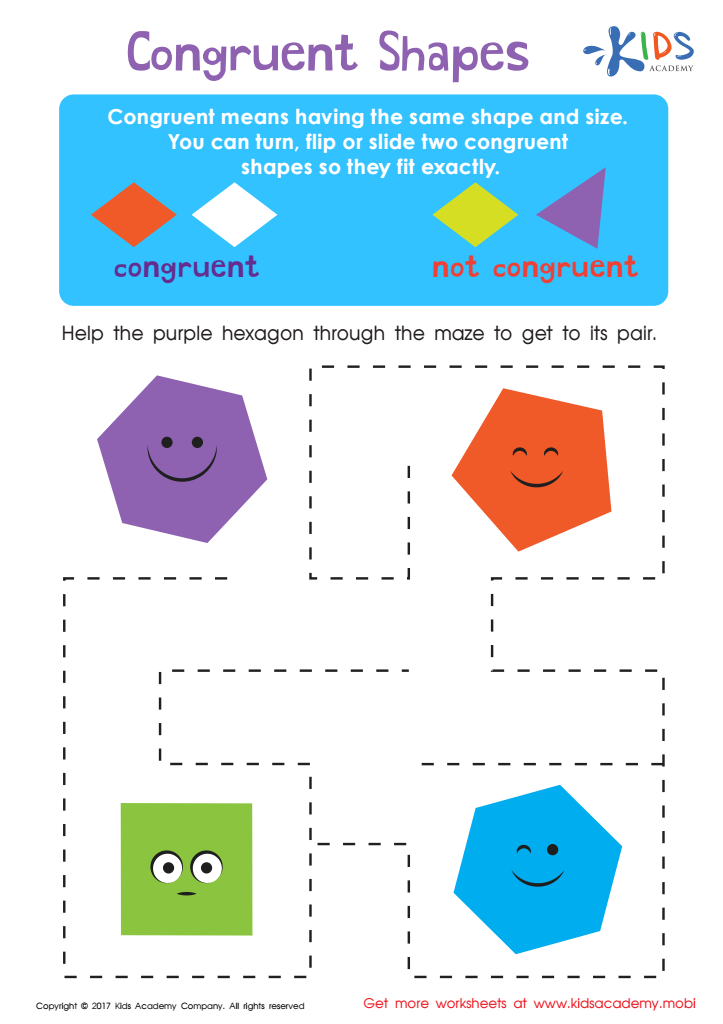
Congruent Shapes Worksheet
Help your child find the twin of the purple hexagon! This congruent shapes worksheet is great for increasing vocabulary while challenging mental rotation skills.
Congruent Shapes Worksheet
Worksheet
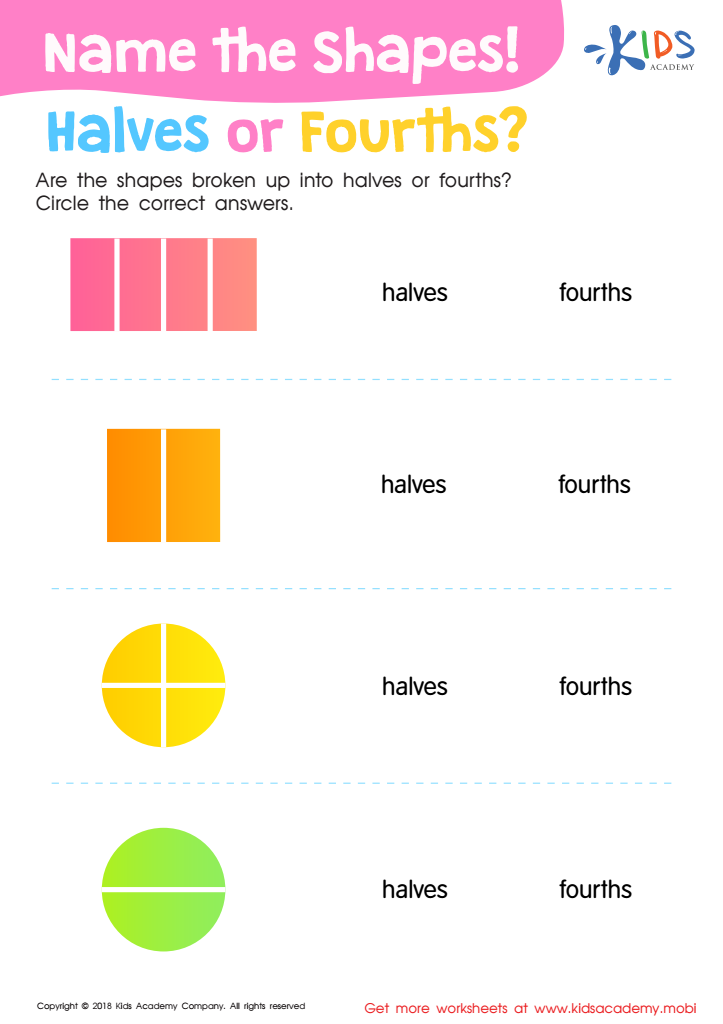
Name the Shapes Halves or Fourths? Worksheet
Before starting, ask your child if they understand what halves and fourths are. If they can answer correctly, move on with the worksheet. Help them circle the right option beside each shape, showing if it's split into halves or fourths.
Name the Shapes Halves or Fourths? Worksheet
Worksheet
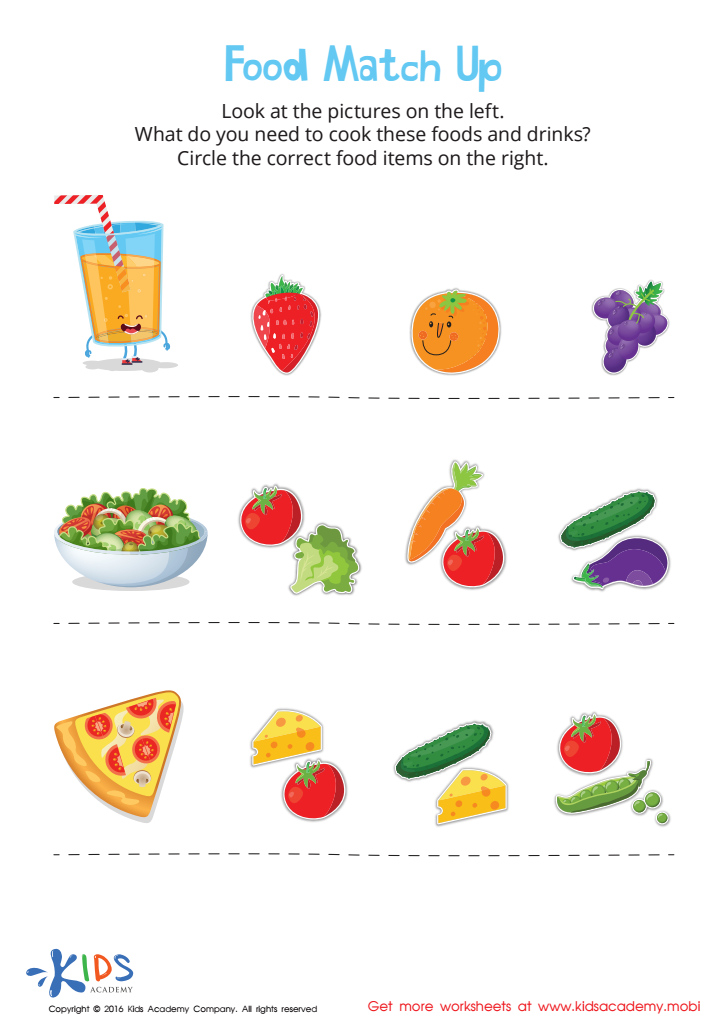
Food Match Up Worksheet
This worksheet will help your preschooler develop early math and cognitive skills. It challenges them to pay attention to details, understand how smaller parts make a whole, and increase important matching skills. Use it to give them a hands-on learning experience in the kitchen, and watch them understand how ingredients come together to make something delicious!
Food Match Up Worksheet
Worksheet
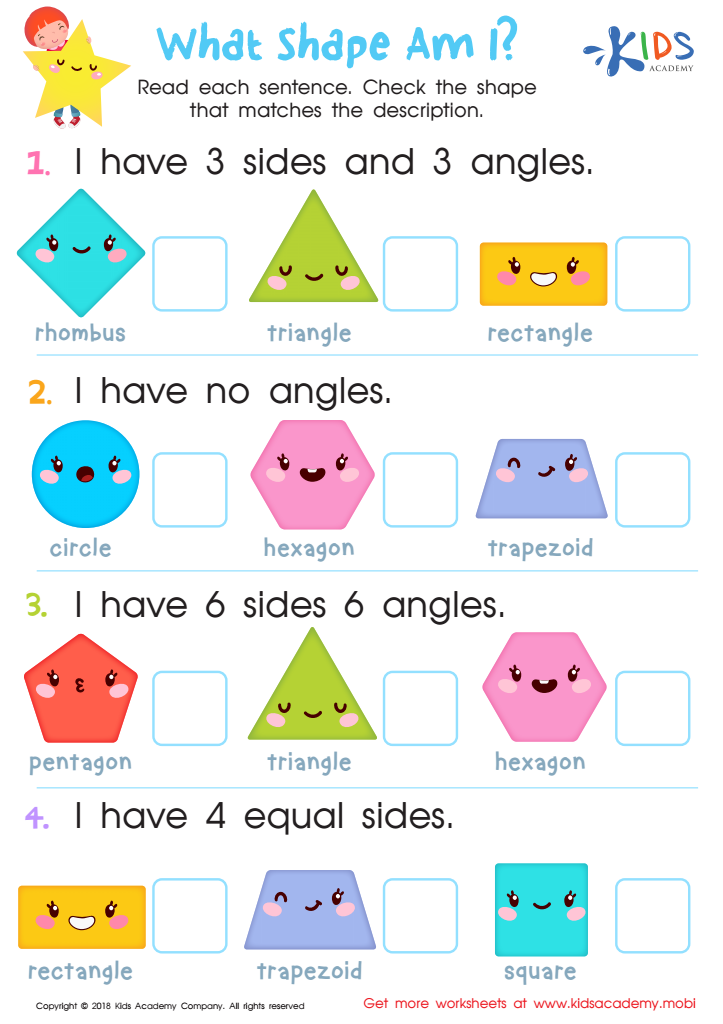
What Shape Am I? Worksheet
Help your child read each sentence in this colorful worksheet. Have them identify the shapes described and check the boxes. To prepare, ask simple questions like "How many sides does a triangle have?" and "Which shape has 4 equal sides?" Your child will become more skilled at shapes by the end of this activity.
What Shape Am I? Worksheet
Worksheet
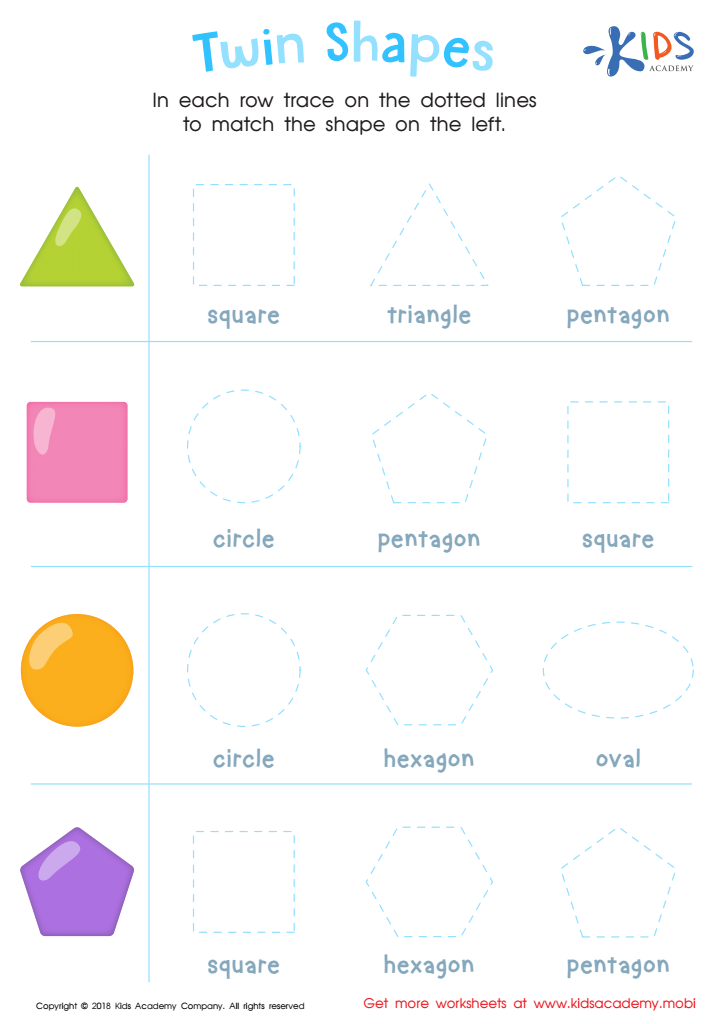
Twin Shapes Dot-to-Dot Worksheet
Test your child's ability to copy with this worksheet. Ask them to find and name the four shapes on the left. Then, they must match each with the dotted lines on the right. Help your child with all four shapes in this fun exercise.
Twin Shapes Dot-to-Dot Worksheet
Worksheet
Join Kids Academy for Free
Who is primarily going to use this learning content?








Visual discrimination in geometry is a crucial skill for children aged 5 to 7 as it lays the foundation for future learning in mathematics and critical thinking. This skill involves recognizing and interpreting different shapes, sizes, colors, and patterns. When parents and teachers focus on developing visual discrimination, they enhance children’s ability to differentiate between similar shapes, which is essential as they advance in geometric concepts.
Caring about visual discrimination means supporting children's cognitive development. It aids in their ability to visualize problems and concepts, which are vital skills not just in math, but across various subjects. As they learn to identify shapes and understand their properties, they develop spatial awareness, which contributes to stronger reasoning and problem-solving abilities.
Additionally, visual discrimination plays a role in everyday life. By honing this skill, children can improve their observational skills, which helps them navigate their environment more effectively. Engaging in geometric activities—such as sorting shapes or solving puzzles—can lead to increased motivation and enjoyment in learning.
In summary, prioritizing visual discrimination in geometry for young learners is essential for fostering foundational math skills, enhancing cognitive development, and promoting a positive attitude toward learning.








