Number Sequencing Numbers up to 100 Worksheets for Ages 5-7
6 filtered results
Difficulty Level
Grade
Age
-
From - To
Subject
Activity
Standards
Our "Number Sequencing Numbers up to 100 Worksheets for Ages 5-7" are expertly designed to develop your child's counting and number ordering skills. These engaging and interactive worksheets provide systematic practice in arranging numbers up to 100, enhancing mathematical foundations for young learners. Perfect for home or classroom use, the activities help children recognize patterns, fill in missing numbers, and gain confidence in their numerical abilities. Ideal for ages 5-7, these worksheets make learning fun while strengthening key early math skills that form the basis for future academic success. Download now to help your child excel!
Favorites
With answer key
Interactive
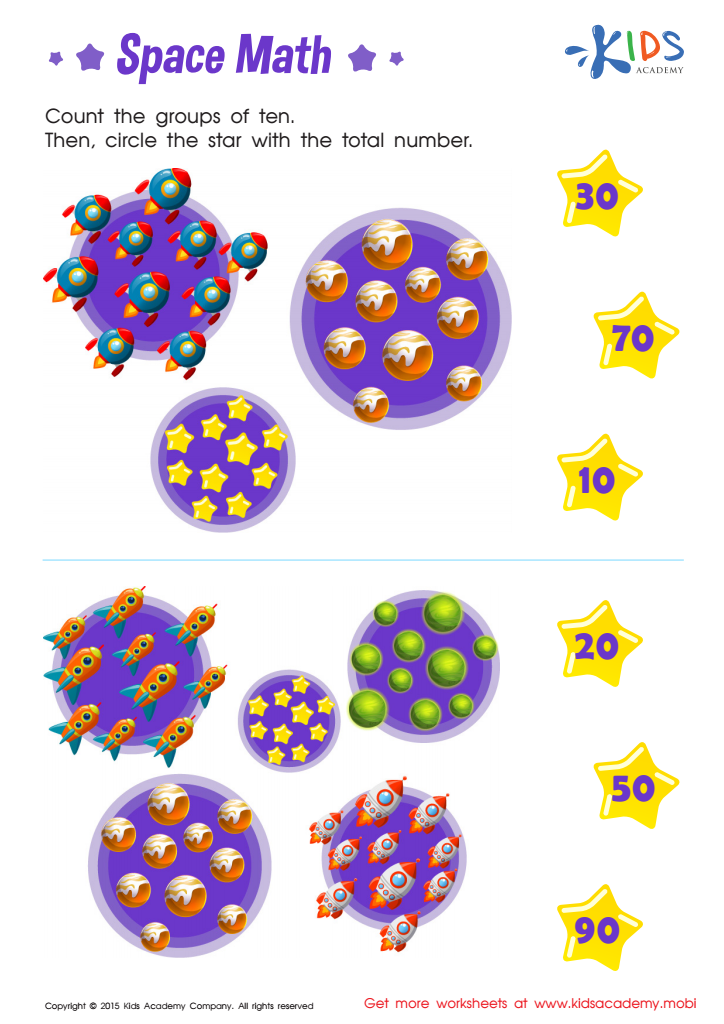
Learn dozens: Space math Worksheet
This worksheet uses Singapore Math's approach to help your child visually understand basic counting and math problems.
 Assign to My Students
Learn dozens: Space math Worksheet
Worksheet
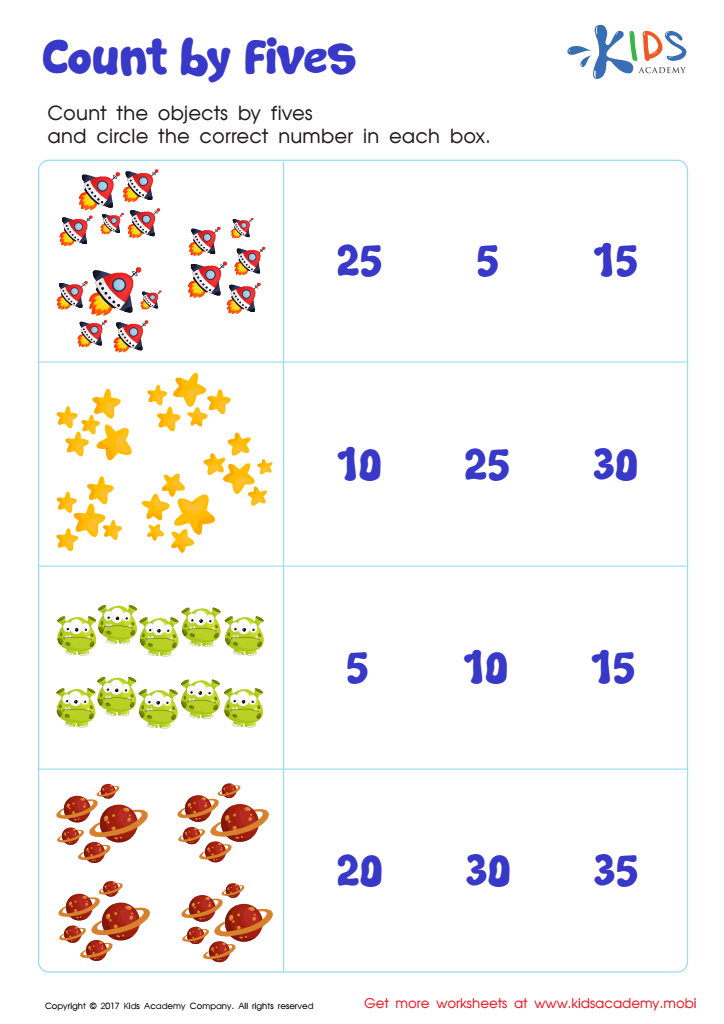
Skip Counting by 5s: Space Math Printable
This worksheet will provide your child with fun and practice counting by 5's. It'll help them visually count numbers, use problem solving skills and make connections between individual and groups of numbers. Counting money and various math concepts will become easier with this invaluable skill. Blast off with this fun and educational worksheet featuring space graphics.
Skip Counting by 5s: Space Math Printable
Worksheet
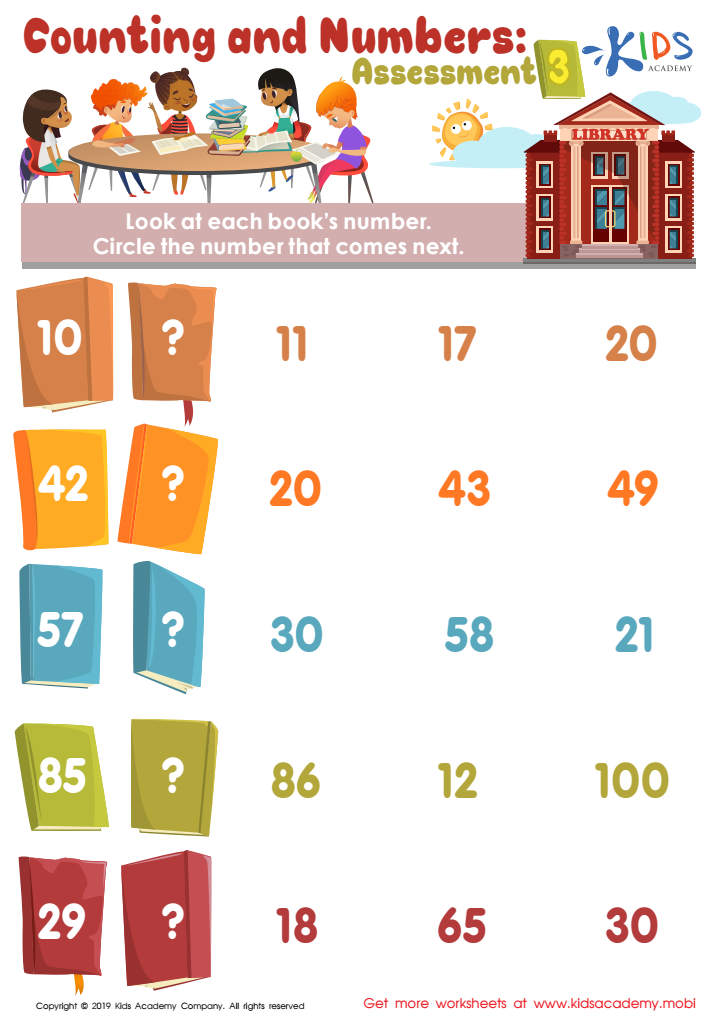
Counting and Numbers: Assessment Worksheet
Number line thinking is an essential math skill. Kids using this skill can compute math problems accurately and quickly. Our free assessment tests number line recognition; have your child pick the right number from the given options to follow the current number on the line. This assessment will give you an idea of their counting skills.
Counting and Numbers: Assessment Worksheet
Worksheet
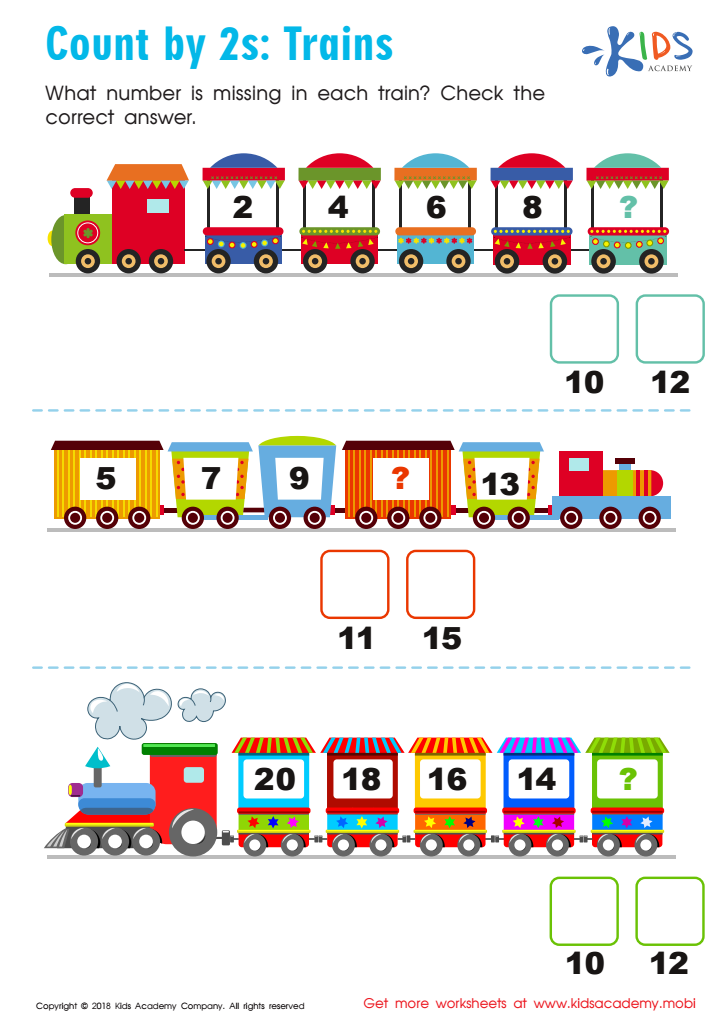
Count by 2's: Trains Worksheet
Teaching your kids quick computations? Get them skip-counting by 2s! They'll love filling in the colors of the train while counting, and it will help with 'counting up' or backward on paper or in their heads - essential for quick computations later.
Count by 2's: Trains Worksheet
Worksheet
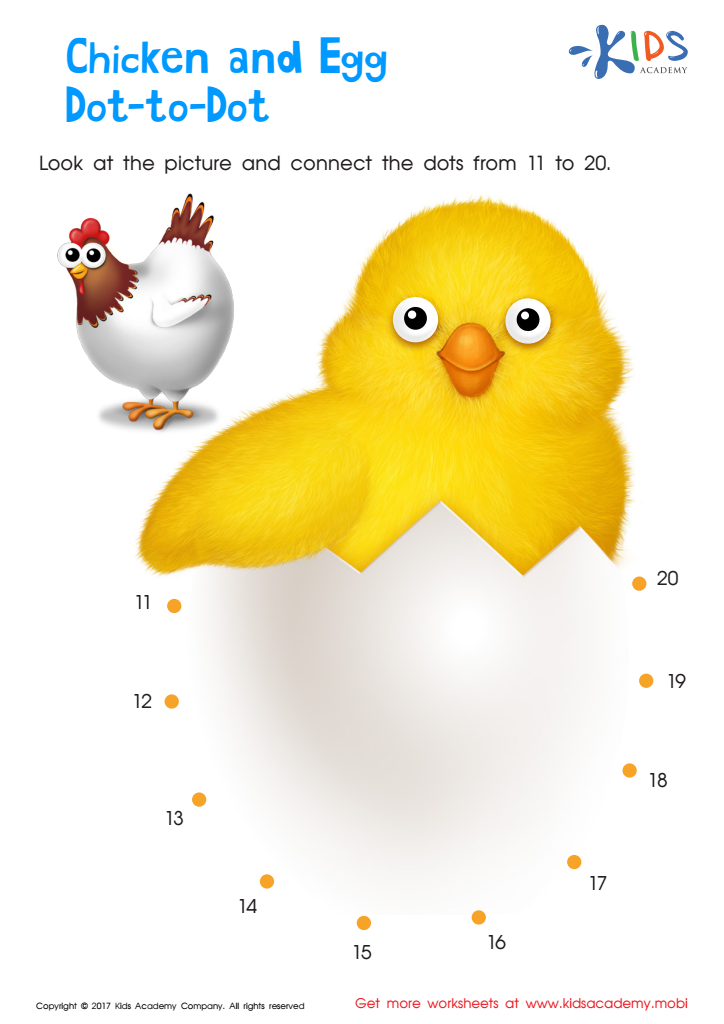
Ordering 11–20: Chicken & Egg Dot–to–dot Worksheet
Help your child hatch the chick and practice their counting skills with this dot to dot worksheet – the chicken came first! Connect the dots 11-20 to have fun and learn at the same time. Experience meaningful practice and gain confidence while drawing great pictures.
Ordering 11–20: Chicken & Egg Dot–to–dot Worksheet
Worksheet
Join Kids Academy for Free
Who is primarily going to use this learning content?



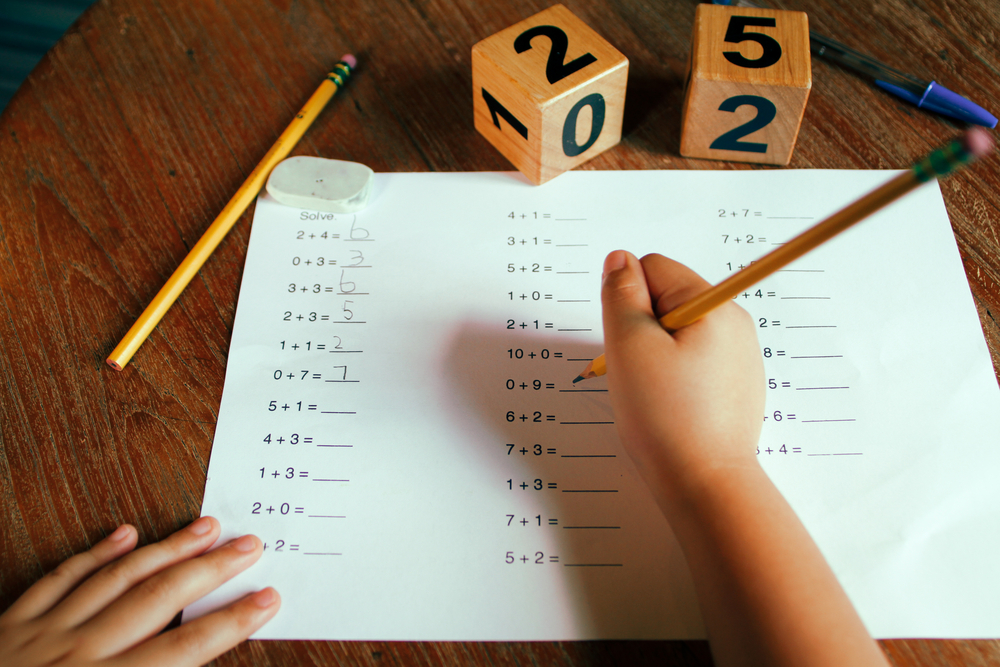




Understanding number sequencing up to 100 at ages 5-7 is crucial for developing foundational math skills. This skill impacts a child's ability to grasp more complex mathematical concepts in the future. Number sequencing helps children recognize patterns and predict number sequences, which is key to understanding arithmetic operations like addition and subtraction.
For teachers and parents, emphasizing number sequencing enhances cognitive development and fosters problem-solving skills. It aids children in understanding the logical order of numbers, which is essential for carrying out everyday tasks and learning advanced math. A strong grasp of number sequencing contributes to building effective strategies for tasks such as measuring and counting, which are used in various aspects of daily life.
Additionally, practicing number sequencing ensures children can confidently count forwards and backwards, improving numerical fluency. Being proficient in this area increases students’ confidence and willingness to engage with math activities, making learning more enjoyable and less intimidating.
Early exposure sets the stage for academic success in math, making it vital for parents and teachers to prioritize this skill. By supporting their children in mastering number sequencing up to 100, they lay down a solid foundation for all future math learning and critical thinking.