
Counting practice Reading Worksheets for Ages 5-7
13 filtered results
Difficulty Level
Grade
Age
-
From - To
Subject
Activity
Standards
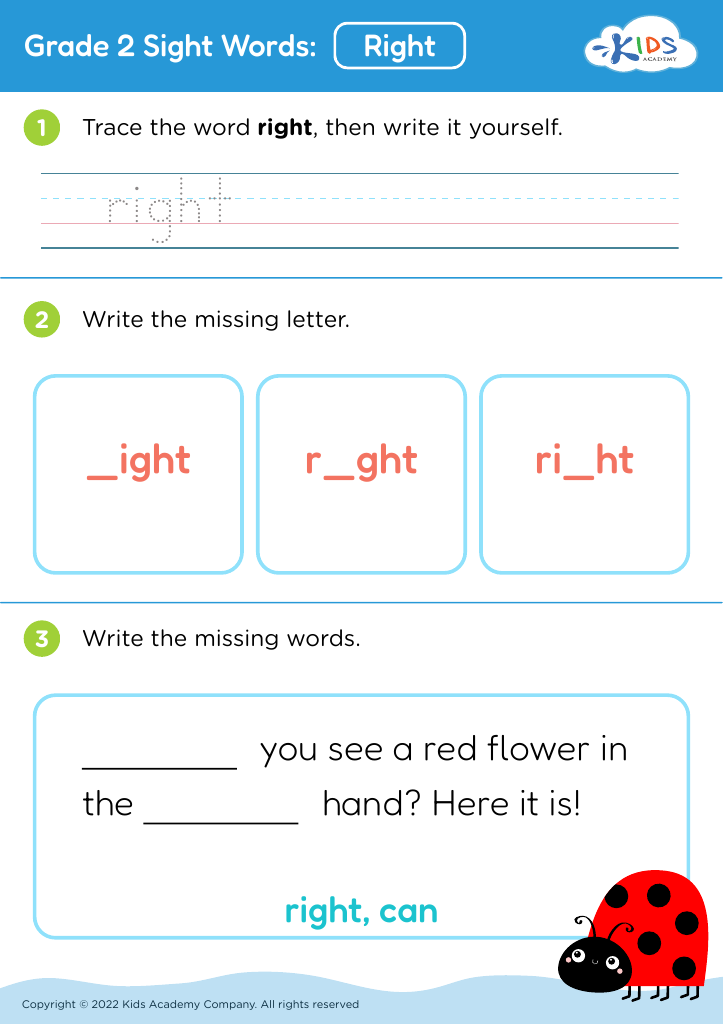
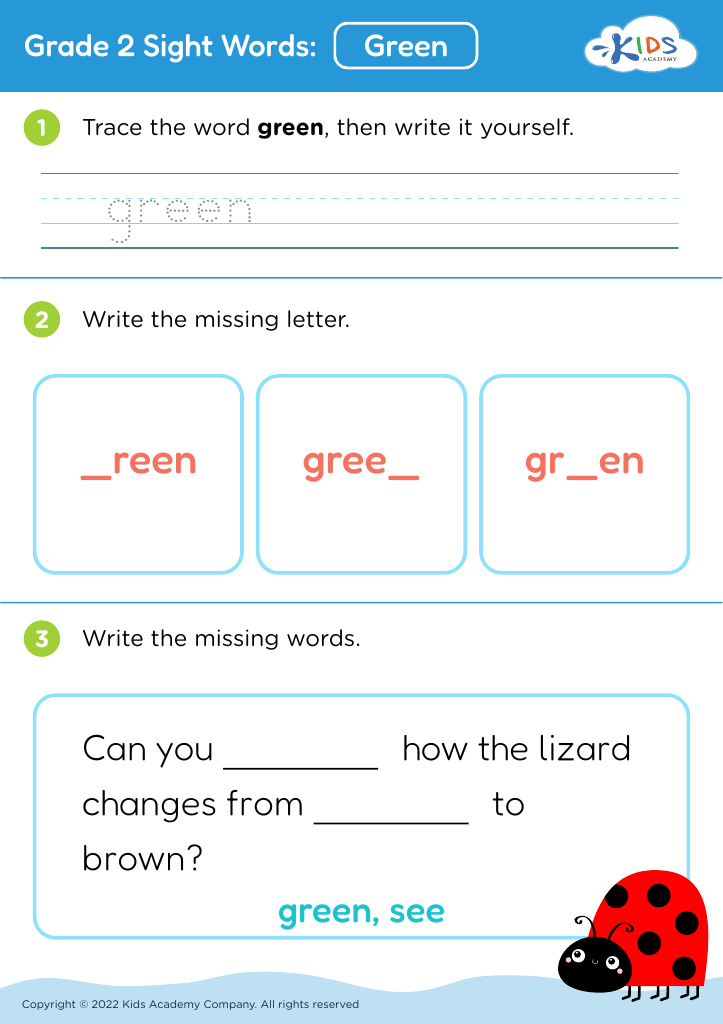
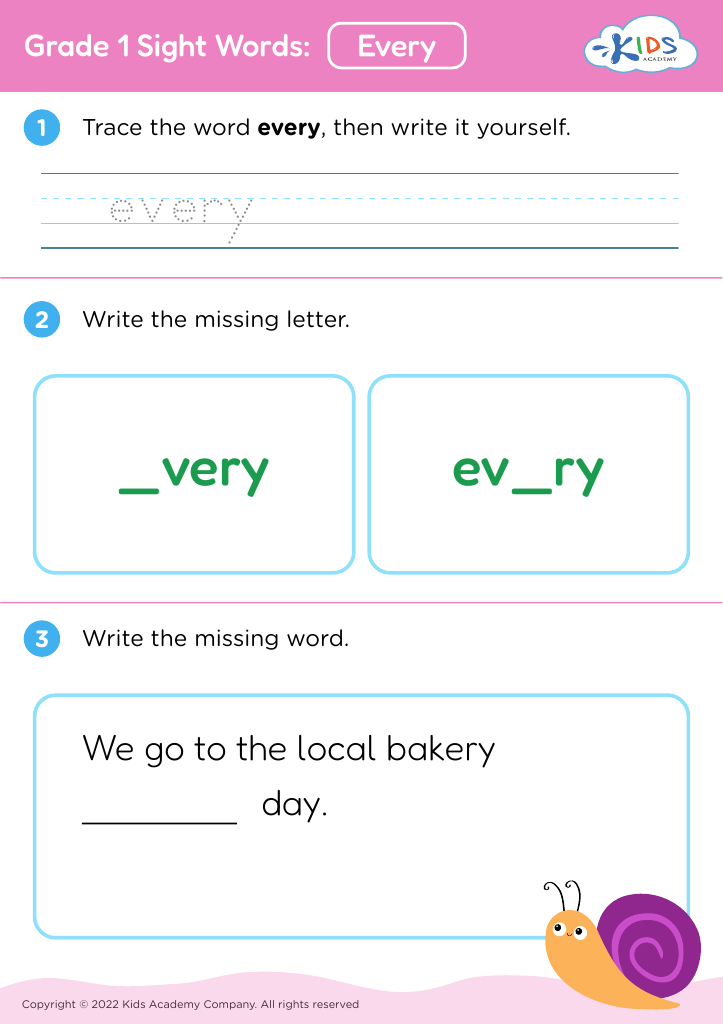
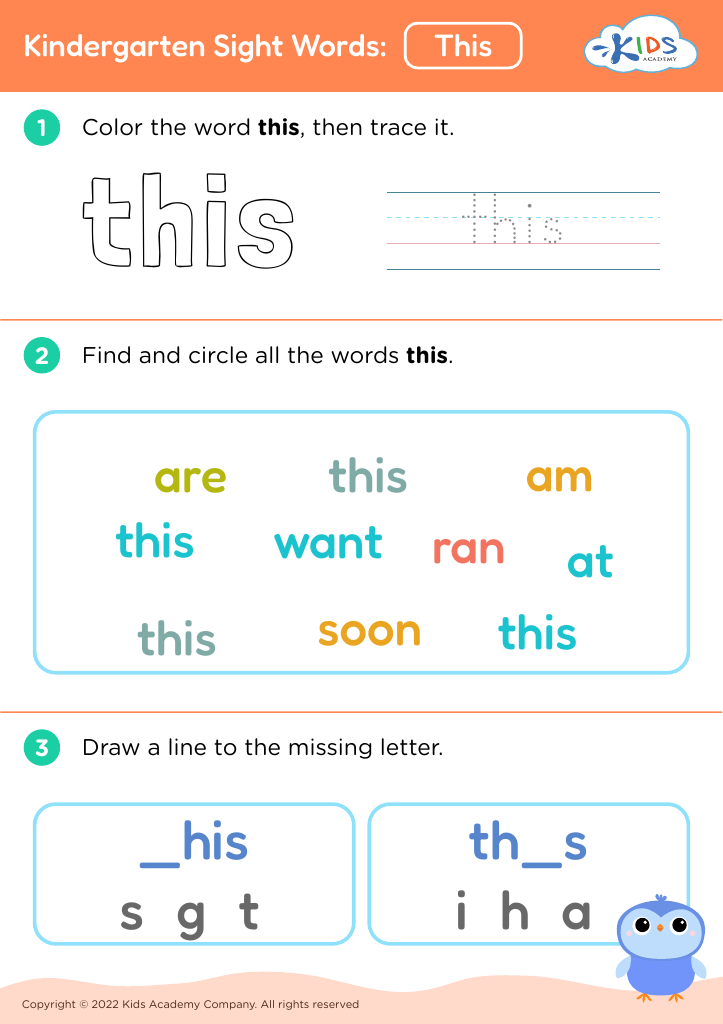
Explore our "Counting Practice Reading Worksheets for Ages 5-7" to make early math fun and engaging. These expertly designed worksheets combine counting exercises with reading activities, helping young learners enhance their numerical and literacy skills simultaneously. Children will enjoy the interactive tasks that range from number identification to simple addition, all while building a solid foundation in counting. Perfect for classroom or homeschooling, our bright and colourful worksheets are tailored to support cognitive development. Give your child the advantage they deserve with our comprehensive learning resources, designed to make counting fun and accessible for ages 5-7.
Favorites
With answer key
Interactive
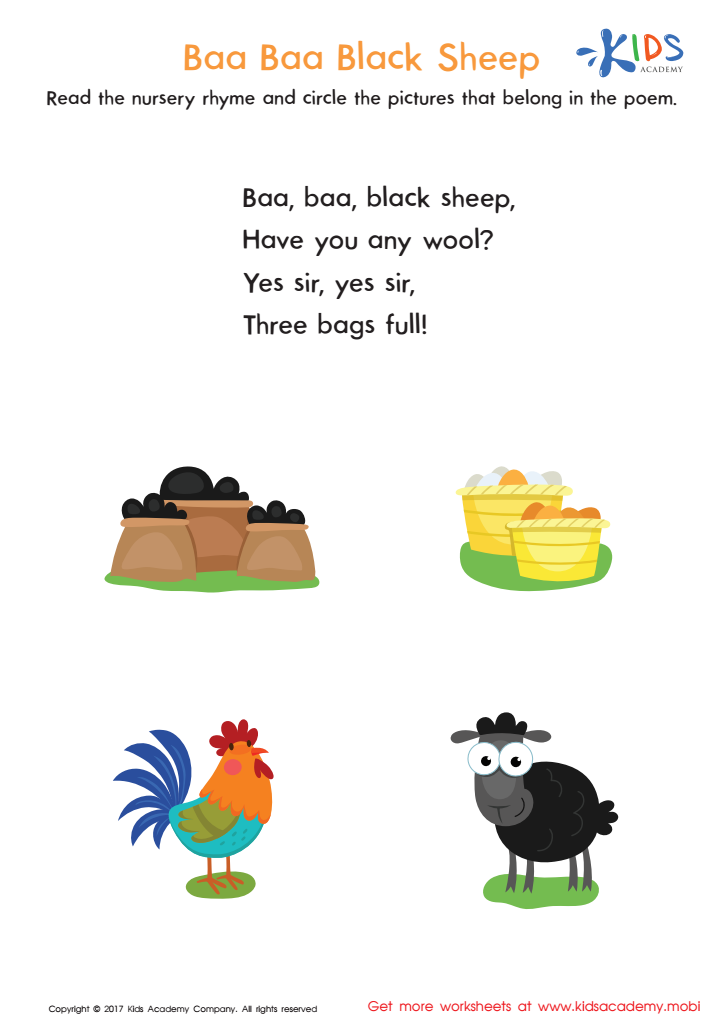
Baa Baa Black Sheep Printable
Jumpstart your child's reading skills with this printable Baa Baa Black Sheep worksheet! Recite the lines with them, then have them select the pictures associated with the poem to test comprehension. Fun and educational!
 Assign to My Students
Baa Baa Black Sheep Printable
Worksheet
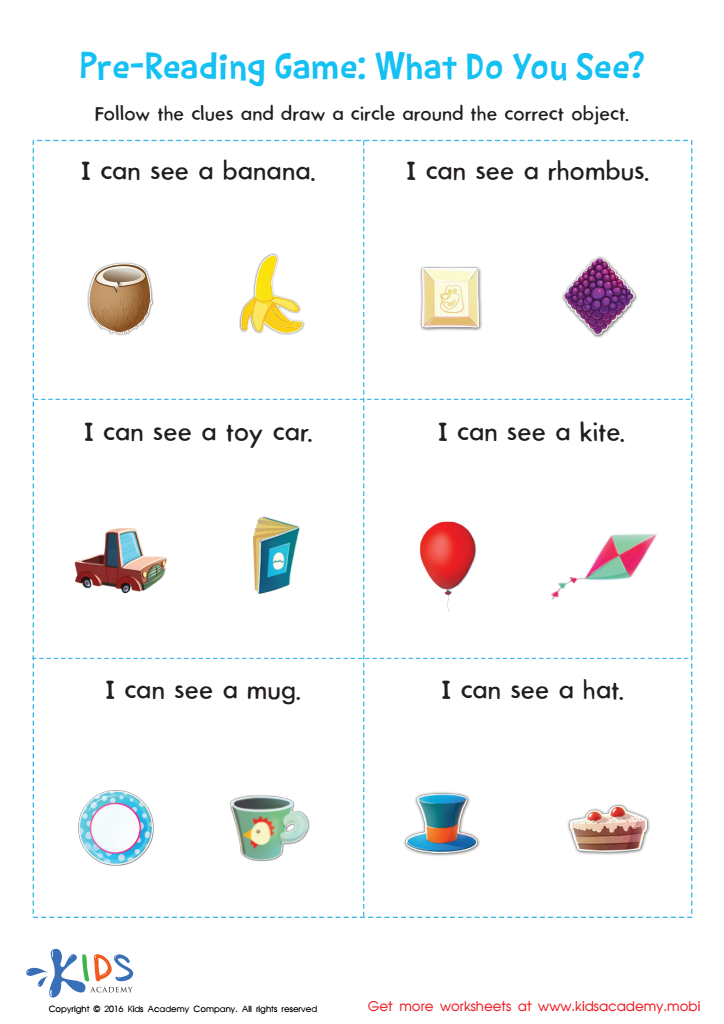
Pre–reading Worksheet: What Do You See?
Get started with this pre-reading worksheet to build your child's early literacy skills. Model, read aloud, and provide consistent repetition for successful learning.
Pre–reading Worksheet: What Do You See?
Worksheet
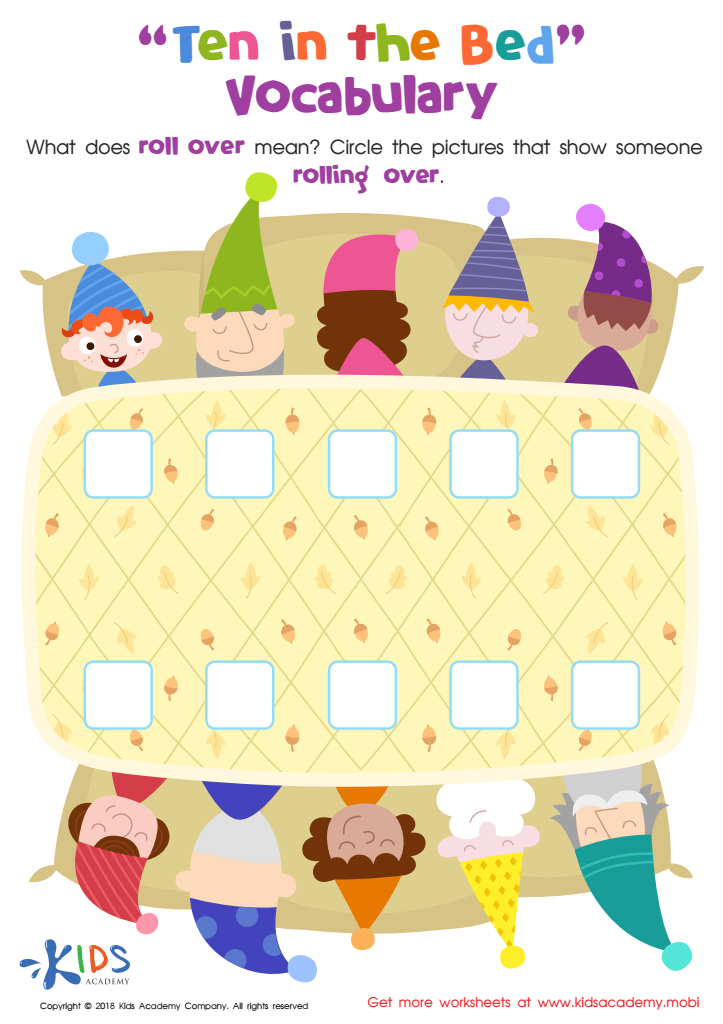
Ten in the Bed: Vocabulary Worksheet
It's essential for emerging readers to be proficient in positional and directional words. This worksheet uses cheerful faces to help students identify who has "rolled over". Knowing these words is an essential part of reading and writing for pre-K and Kindergarteners. It also helps them to follow directions and use precise language.
Ten in the Bed: Vocabulary Worksheet
Worksheet
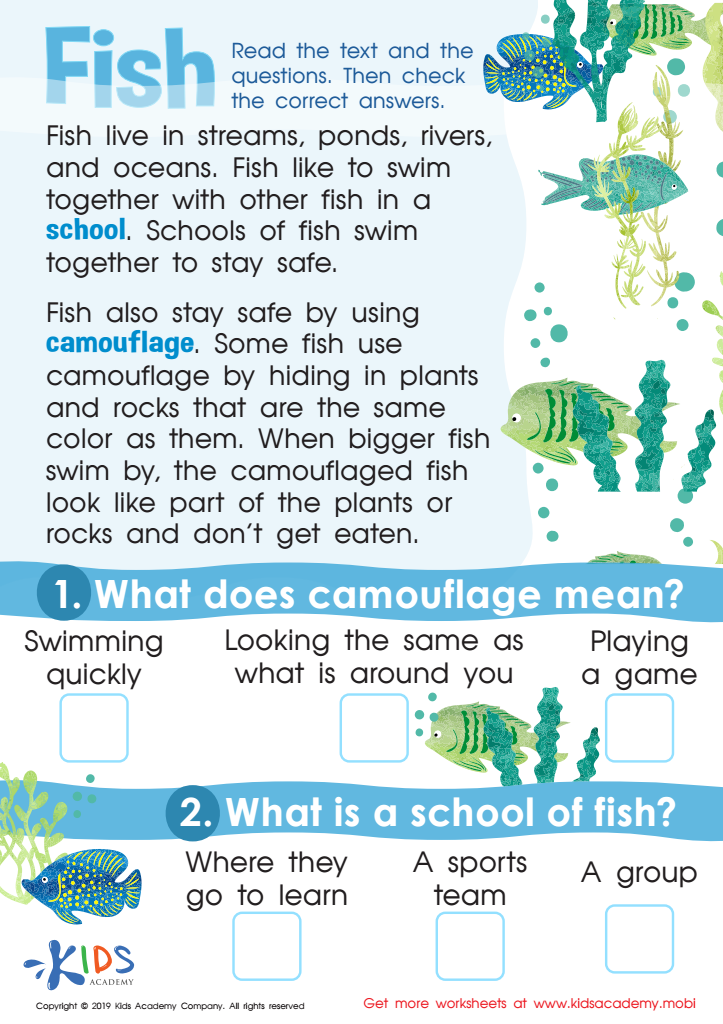
Fish Worksheet
Kids love learning about the creatures that live in water! This free PDF worksheet covers fish, teaching kids larger vocabulary and contextual reading comprehension. Questions prompt them to choose the right answer from multiple choices, just like in a classroom. It's a fun way to boost their reading skills and comprehension without them even realizing it!
Fish Worksheet
Worksheet
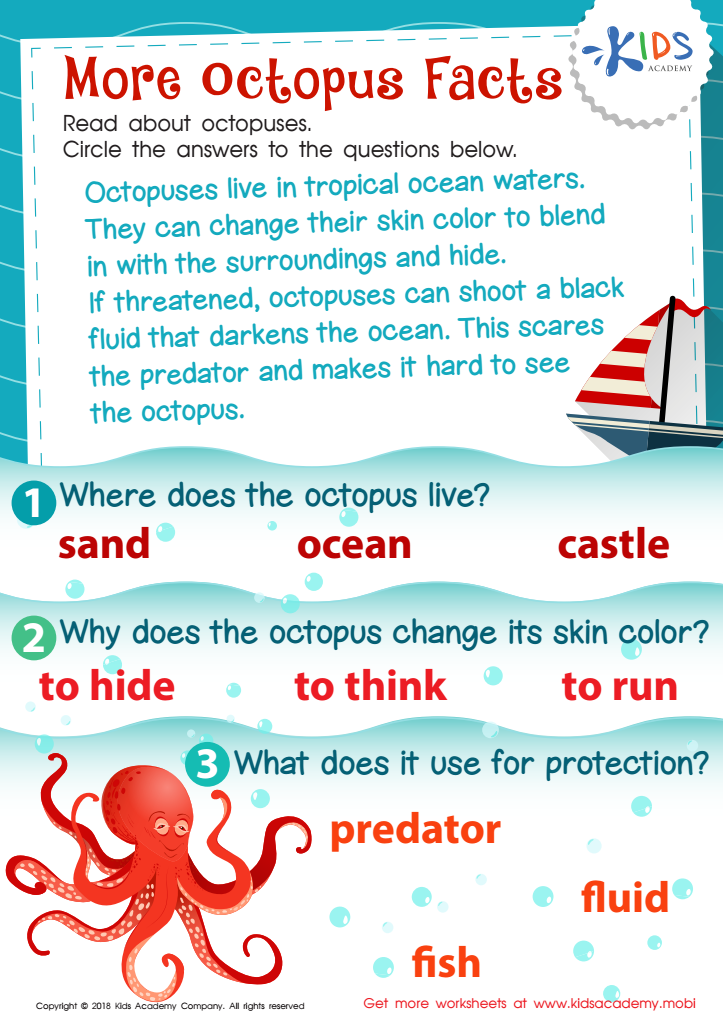
More Octopus Facts Worksheet
This worksheet will help your kids learn about the Octopus. Read the text carefully and have kids read with you. Now, ask them questions based on it and help them answer them by circling the right choices. Teaching your kids facts about animals will help them in the long run.
More Octopus Facts Worksheet
Worksheet
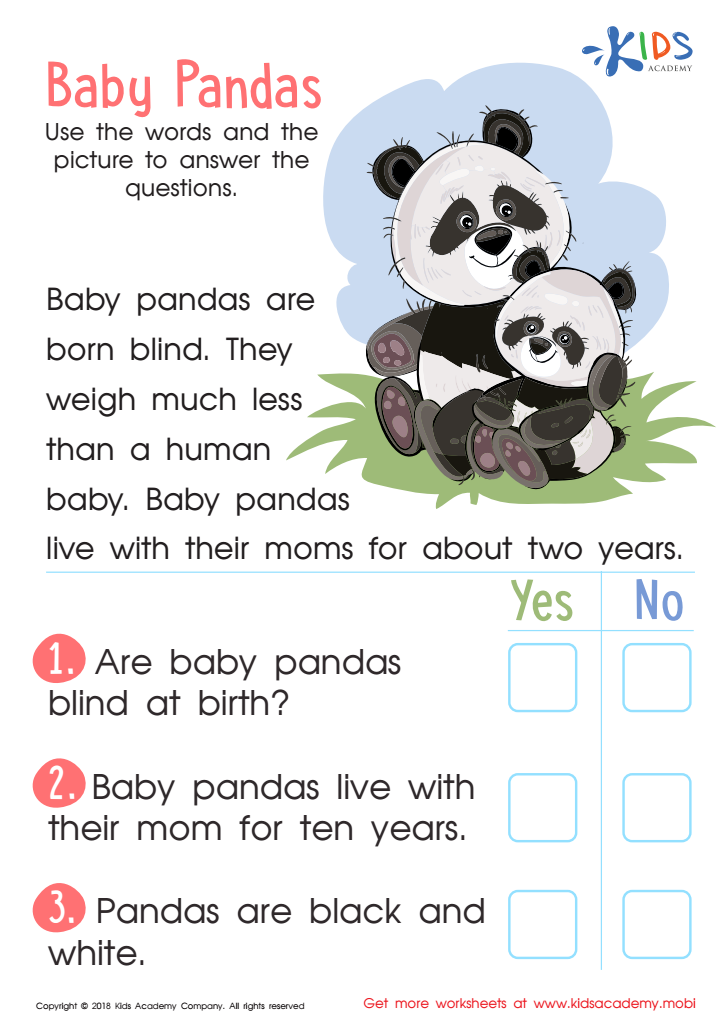
Baby Pandas Worksheet
Kids can't usually see pandas in person, but they can learn more about them with this fun worksheet! It includes a passage and picture, plus questions at the end to check kids' reading comprehension. Just ask them to read the text, check the "yes" and "no" boxes, and enjoy the fascinating facts about baby pandas!
Baby Pandas Worksheet
Worksheet
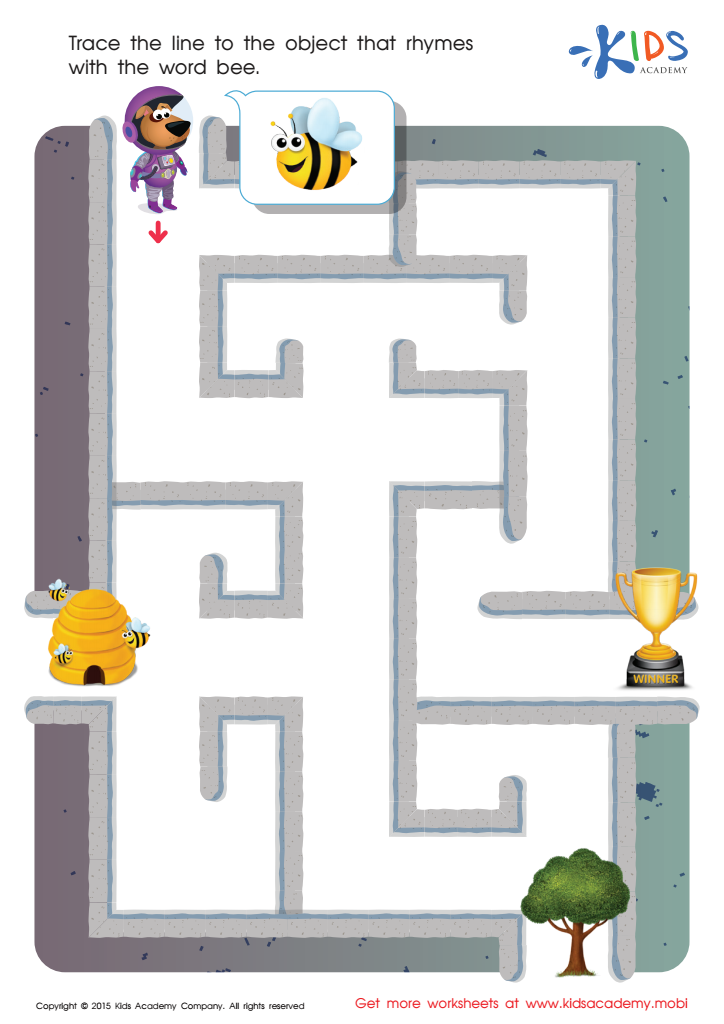
Bee Rhyming Words Worksheet
Download our new vocab builder worksheet and help our pup find rhymes. See how easy it is to trace the root between words! Make learning fun with our collection of English materials and worksheets. Get them now on our web site.
Bee Rhyming Words Worksheet
Worksheet
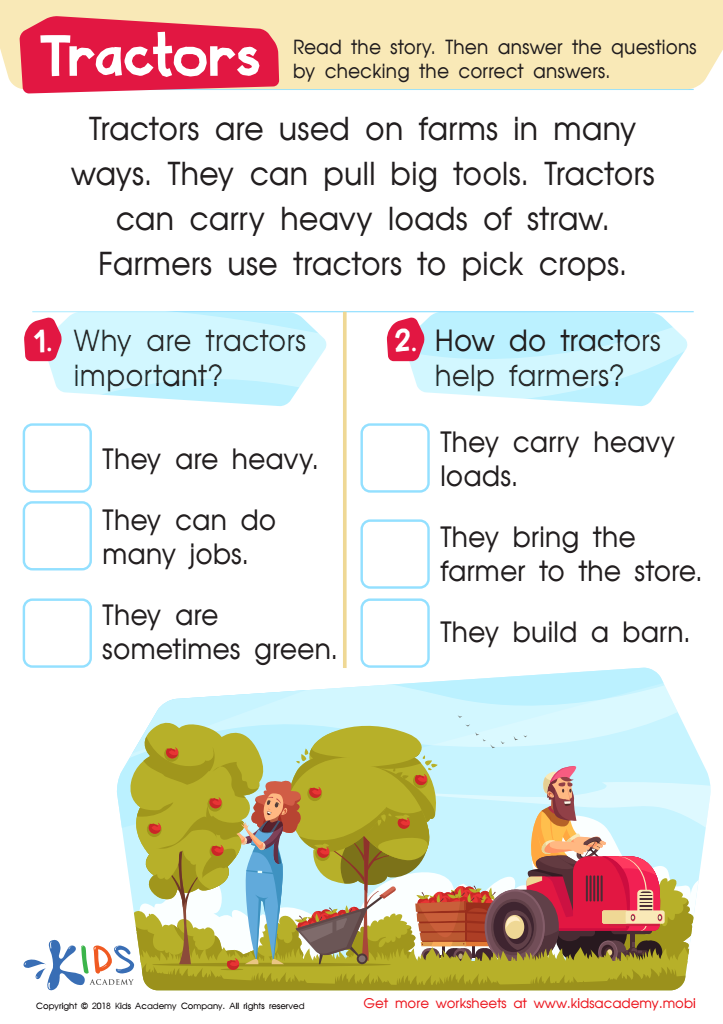
Tractors Worksheet
Kids love tractors! Let them read about what they do, what they use, and who uses them with this free worksheet. After reading, they can answer reading comprehension questions to test their knowledge; multiple choices make it easy! Little do they know, they're boosting their literacy skills along the way!
Tractors Worksheet
Worksheet
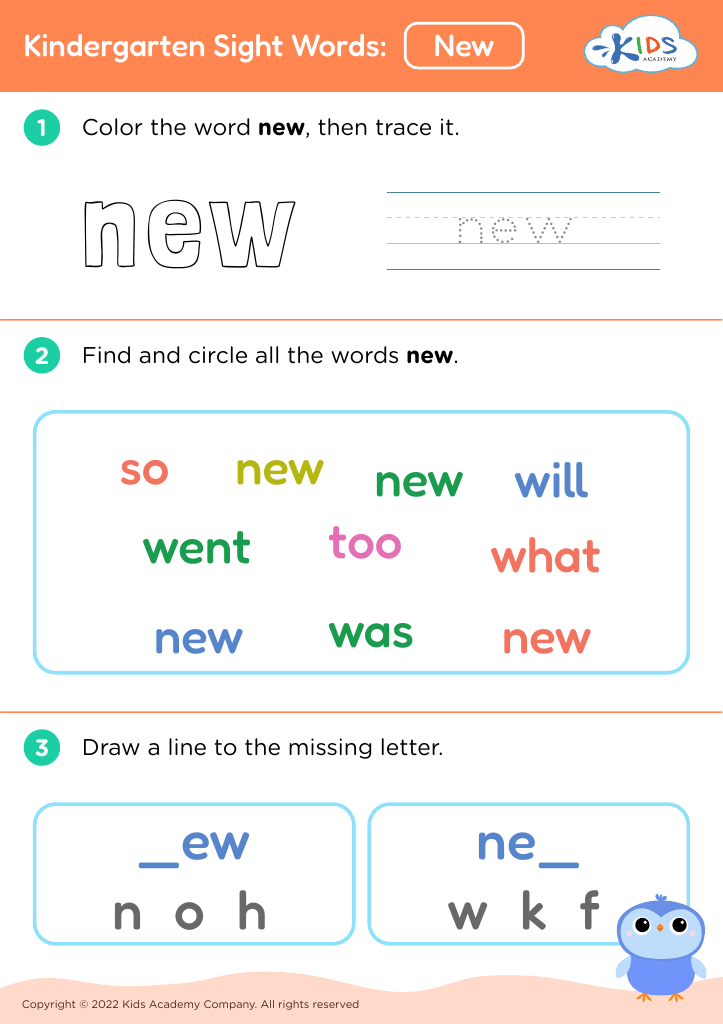
Join Kids Academy for Free
Who is primarily going to use this learning content?



.jpg)


Parents and teachers play a crucial role in fostering a child’s early development, making counting practice reading for ages 5-7 particularly important. At this stage, children are in a formative period where foundational skills are established, serving as the building blocks for future learning. Counting and reading are two critical competencies that contribute to a child's cognitive and academic growth.
Counting is essential as it helps children understand the concept of numbers and basic mathematical principles. Engaging in counting practice enhances their numerical fluency and problem-solving abilities, enabling them to easily grasp more complex mathematical concepts as they advance in their education. This early familiarity with numbers also fosters logical reasoning and analytical thinking, which are invaluable skills across various contexts.
Reading, likewise, offers multifaceted benefits. It enhances language development, expands vocabulary, and improves comprehension skills. Early reading experiences cultivate a love for books and learning, fostering curiosity and imagination. They also provide children with essential communication skills, opening gateways to effective expression and understanding of the world around them.
Parents and teachers should therefore prioritize and balance both counting and reading practices, as these skills are interdependent and reinforce each other. Together, they equip children with the necessary tools for academic success and holistic development, paving the way for a brighter future.








