Filters

52 filtered results

Clear all filters
Favorites
With answer key
Interactive

52 filtered results

Difficulty Level

Grade


Subject

    Check out this FREE Trial Lesson on Animals for age 5-7!

    Animal Habitats

    Favorites
    With answer key
    Interactive
    • 5-7
    • Animals
    Animals and Non-Living Things Worksheet
    Animals and Non-Living Things Worksheet

    Animals and Non-Living Things Worksheet

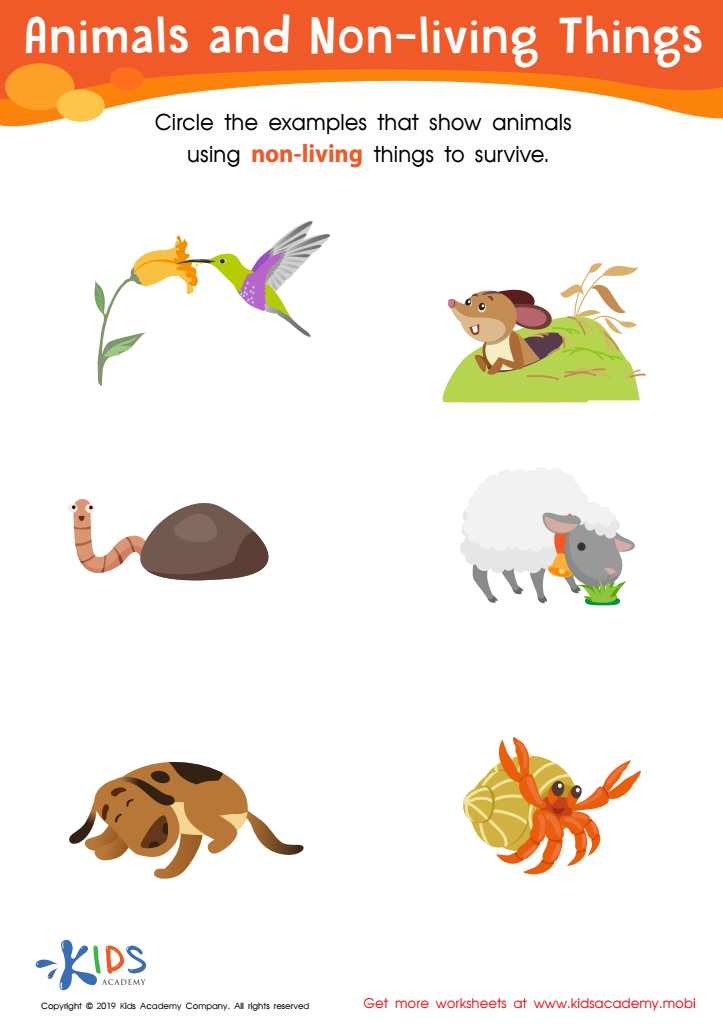
    People and animals both require more than food to survive. We need shelter, clothing and water, while animals use non-living things like rocks and trees. Ask your kids what else is necessary to survive - then have them identify the objects in the worksheet and circle the examples of animals using non-living things.
    Animals and Non-Living Things Worksheet
    Worksheet
    Polar Bear Worksheet
    Polar Bear Worksheet

    Arctic Animals: Polar Bear Worksheet

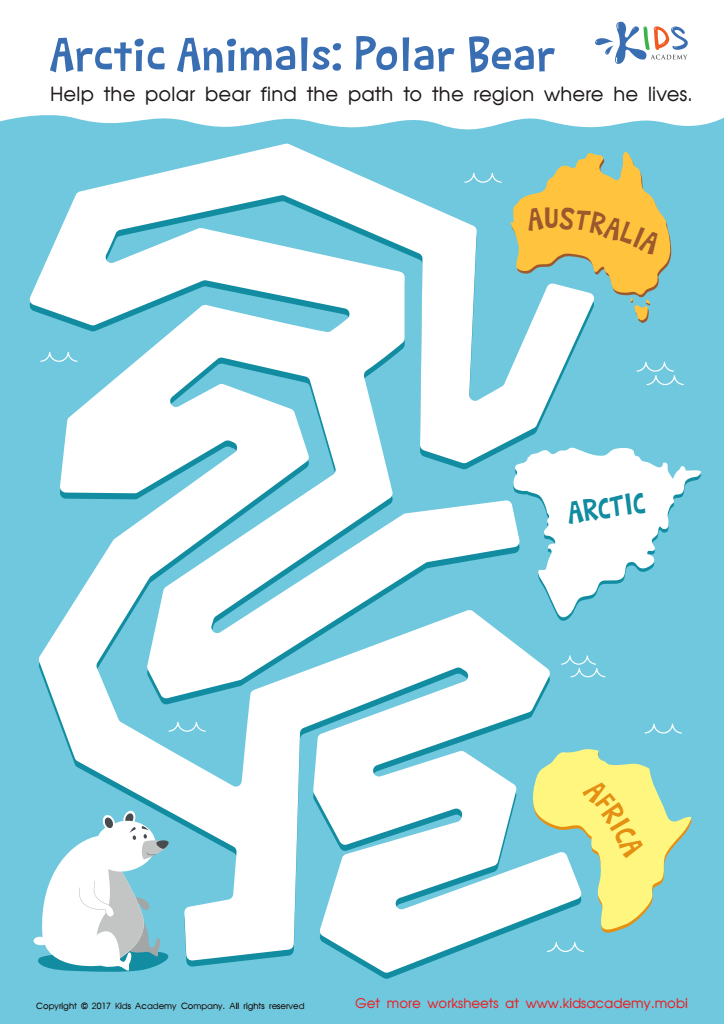
    Oh no! Our polar bear friend is lost! Let's help him find his way back to the arctic with this fun worksheet. It reinforces science and social studies and kids will learn about the climate and habitats of different continents. They'll also develop logical reasoning skills! You can enrich the experience by looking up pictures of real polar bears after the worksheet is complete.
    Arctic Animals: Polar Bear Worksheet
    Worksheet
    Marine Self-Defence Worksheet
    Marine Self-Defence Worksheet

    Marine Self-Defence Worksheet

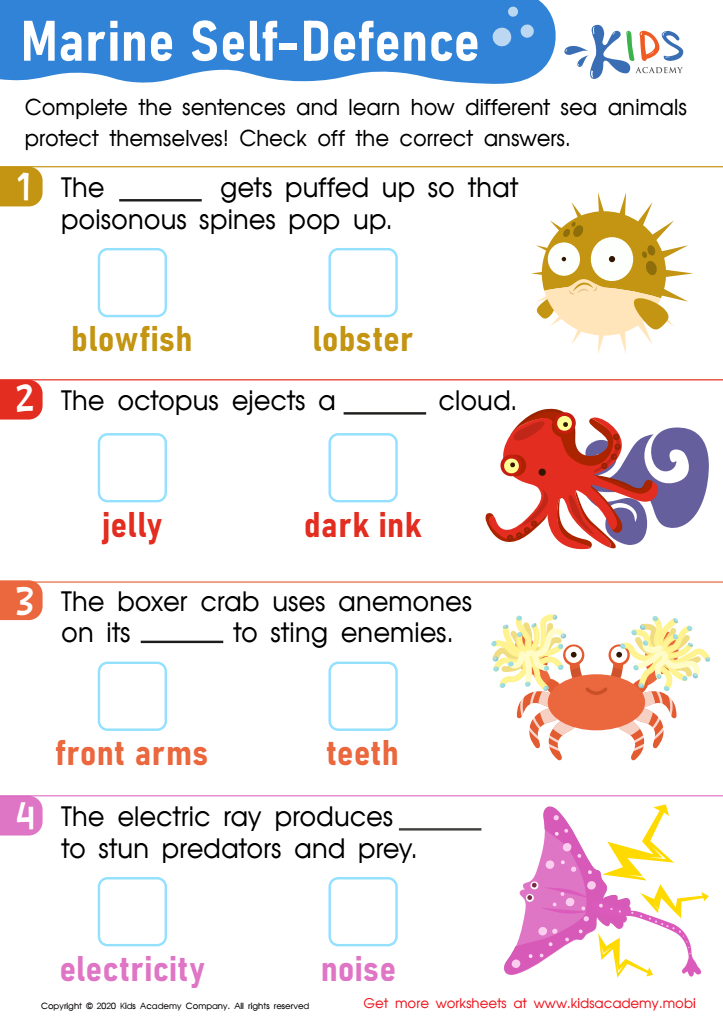
    Kids will love discovering the ingenious ways sea creatures protect themselves from predators such as sharks and whales! Let them explore the strategies with this fun science worksheet, which features vibrant illustrations. Have them fill in the blanks with each creature's defense strategy, such as shells, spikes, ink, or even electricity!
    Marine Self-Defence Worksheet
    Worksheet
    Match Them Up Worksheet
    Match Them Up Worksheet

    Match Them Up Worksheet

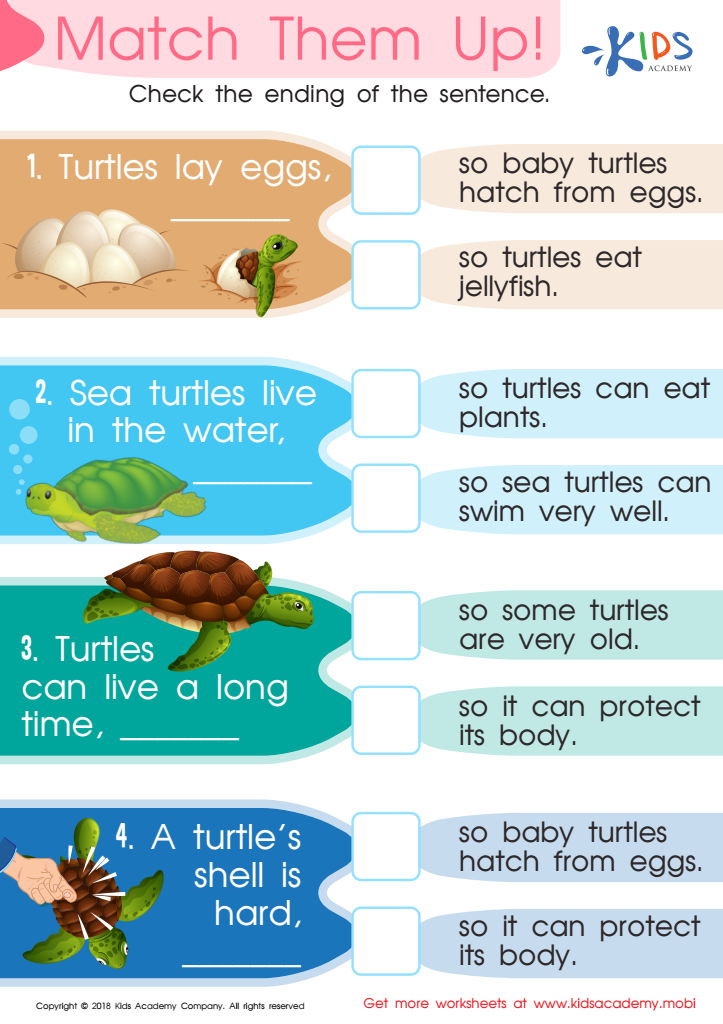
    Reading offers a wealth of knowledge, but young readers may struggle to remember info from informational texts. Help your child practice comprehension with this fun turtle-related worksheet. Just read the sentence starters and select the correct ending from the options given. Check the box to indicate the right statement!
    Match Them Up Worksheet
    Worksheet


    ... 2 3

    Parents and teachers should care about animals for children ages 5-7 because learning about animals helps develop empathy, curiosity, and responsibility in young minds. At this age, kids are naturally curious and eager to explore the world around them. Introducing them to the animal kingdom can ignite a sense of wonder and excitement, fostering a love for nature and science.

    Understanding animals teaches children about diversity and ecosystems, showing how different species interact and depend on each other. This knowledge can reinforce important values, such as compassion and respect for all living beings. Moreover, animals can be used as teachable moments, illustrating concepts like teamwork, their habitats, and the importance of conservation.

    Interactions with animals, whether through stories, visits to zoos, or nature walks, can also enhance children's emotional development. Caring for pets, for instance, can teach essential life skills like nurturing and responsibility. Additionally, embracing animals in education allows for creative expression through art, storytelling, and play, making learning more engaging.

    By supporting animal education, parents and teachers can help shape compassionate, environmentally-aware individuals who understand their role in protecting the world around them.