Filters

9 filtered results

Clear all filters
Favorites
With answer key
Interactive

9 filtered results

Difficulty Level

Grade


Enhance your child's critical thinking skills with our engaging "Plants and Animals Worksheets" designed specifically for ages 5-7! These interactive resources introduce young learners to the fascinating world of flora and fauna while encouraging analytical thinking through fun activities and challenges. Each worksheet is crafted to spark curiosity, promoting observation and problem-solving skills as children explore concepts related to ecosystems, habitats, and life cycles. With vibrant illustrations and age-appropriate content, these worksheets make learning enjoyable and effective. Perfect for at-home learning or classroom settings, our critical thinking worksheets will inspire a lifelong love of science in your little ones!

Check out this FREE Trial Lesson on Plants and Animals for age 5-7!

Sorting Objects into 3 Categories

Favorites
With answer key
Interactive
  • 5-7
  • Critical Thinking
  • Plants and Animals
Sorting Animals in 3 Groups Worksheet

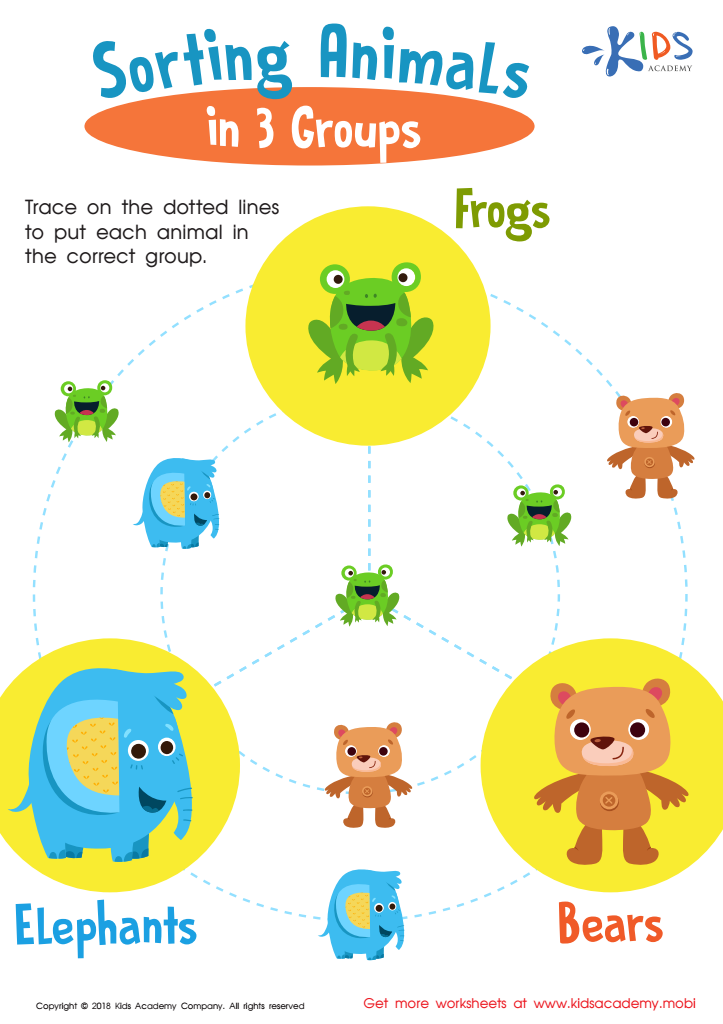
Sorting Animals in 3 Groups Worksheet

Let your kids practice and build skills for future Venn Diagrams with this PDF worksheet. They'll trace lines to match and group animals, and learn the differences and similarities of animals by categorizing with pictures and words. Plus, it's a great way to develop fine motor skills.
Sorting Animals in 3 Groups Worksheet
Worksheet
The Ant and The Grasshopper Worksheet

The Ant and The Grasshopper Worksheet

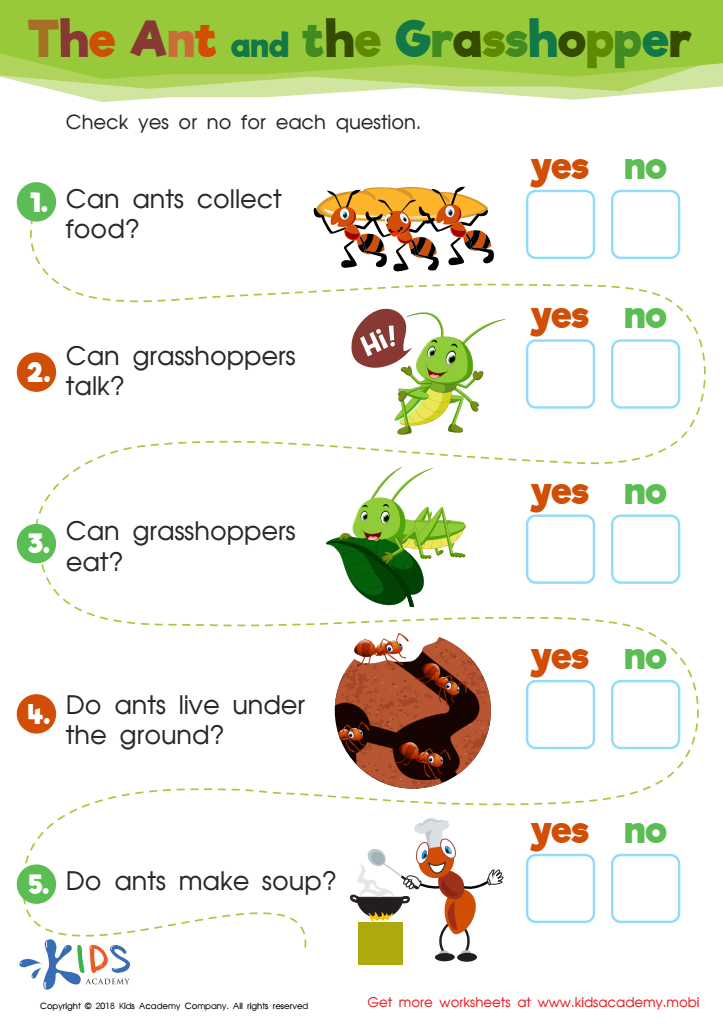
Does your child know about insects? If they're a nature lover or scared of them, use this worksheet to learn more. Read each of the questions and help them fill in the yes or no boxes. This may help them become less scared of insects.
The Ant and The Grasshopper Worksheet
Worksheet
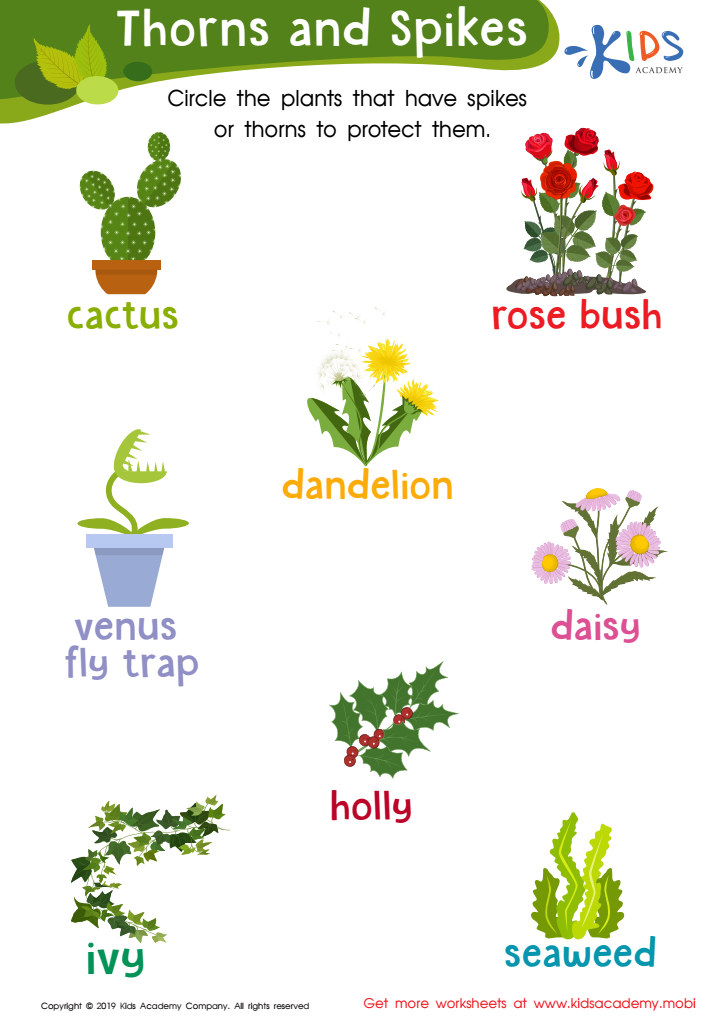
Thorns and Spikes Worksheet

Thorns and Spikes Worksheet

Can your students name and identify the plants and flowers in this worksheet? Ask them to read out the names and circle the ones with spikes or thorns. Help them appreciate nature's beauty and understand how plants protect themselves.
Thorns and Spikes Worksheet
Worksheet
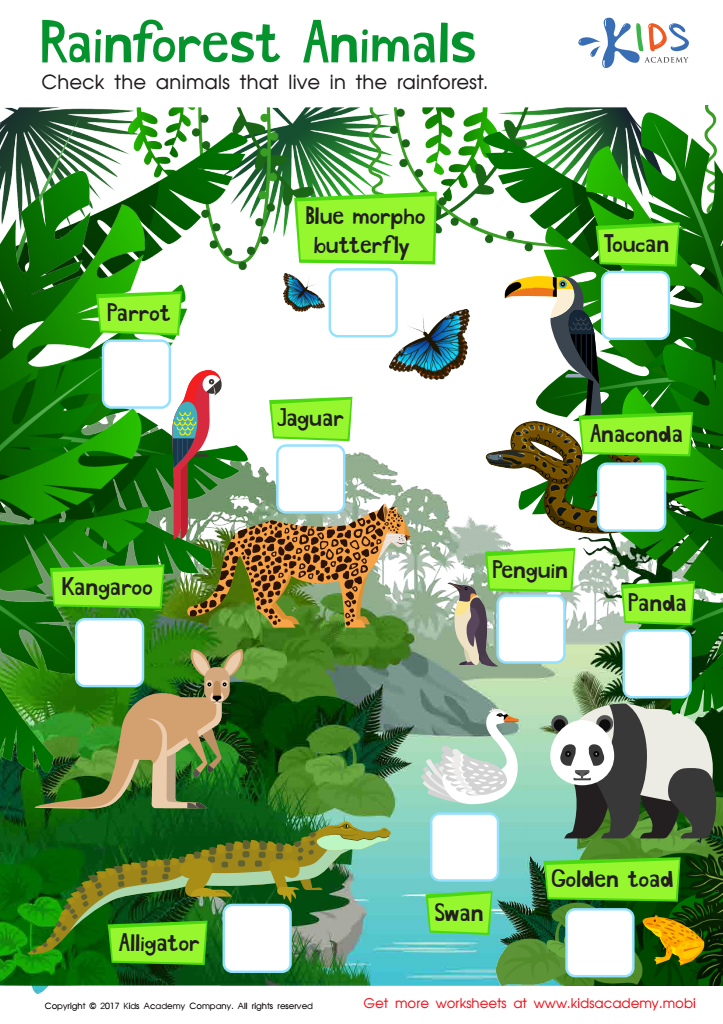
Rainforest animals worksheet

Rainforest Animals Worksheet

Kids love the bright, vivid pics of rainforest animals in this worksheet. It fuels their interest in life science and brings joy to their learning. It encourages them to study these animals in detail.
Rainforest Animals Worksheet
Worksheet
Arctic World Worksheet

Arctic World Worksheet

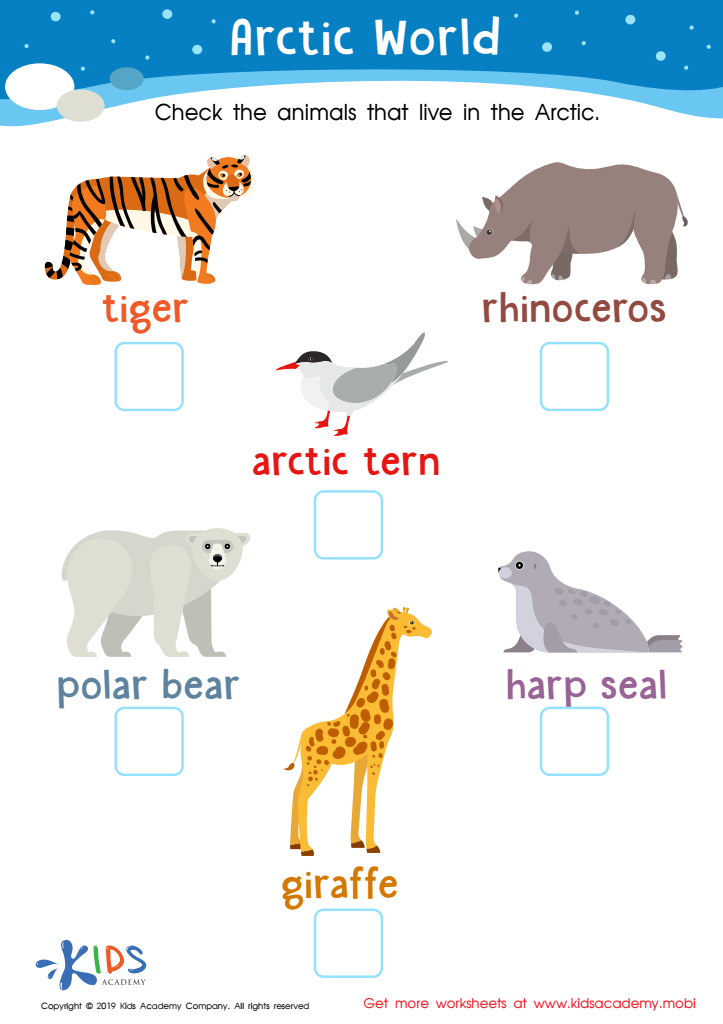
Ask your students if they know where the Arctic is located and what lives there. If not, use a world atlas to show them. The Arctic is very cold and snow-covered; native animals have adapted to survive the harsh conditions. Look at the animals in the worksheet and help your students decide which ones live in the Arctic.
Arctic World Worksheet
Worksheet
Classifying animals worksheet 2nd grade

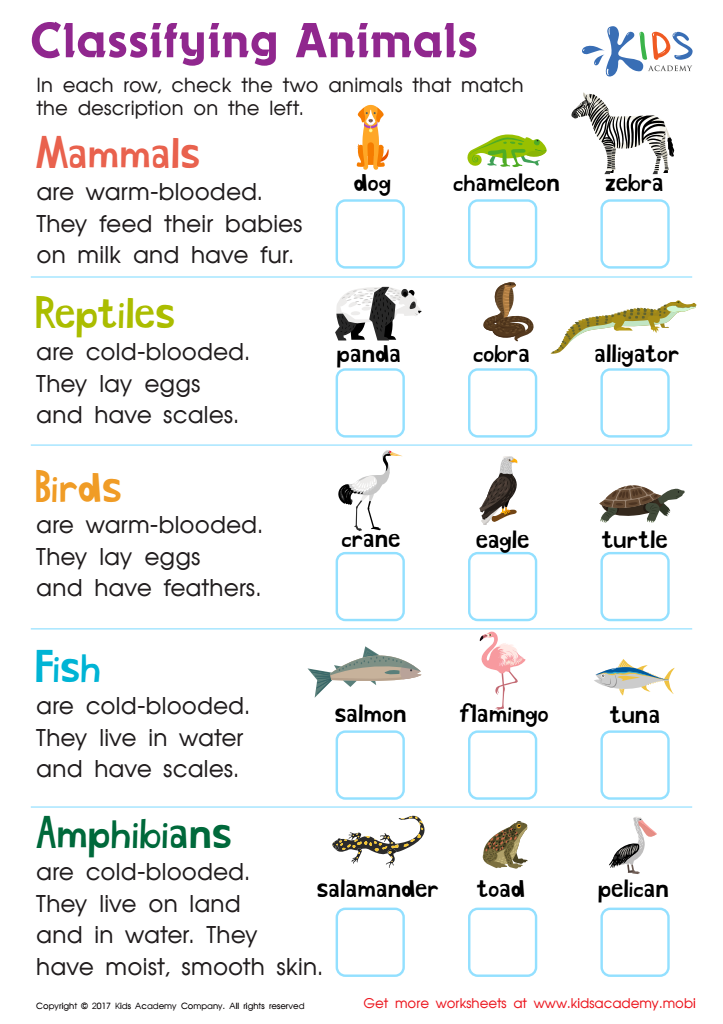
Classifying Animals Worksheet

Print the 2nd grade animal classification worksheet and help kids study the differences between mammals, reptiles, birds, fish and amphibians. Let them pick two examples from the options given.
Classifying Animals Worksheet
Worksheet
What Does It Mean? Worksheet

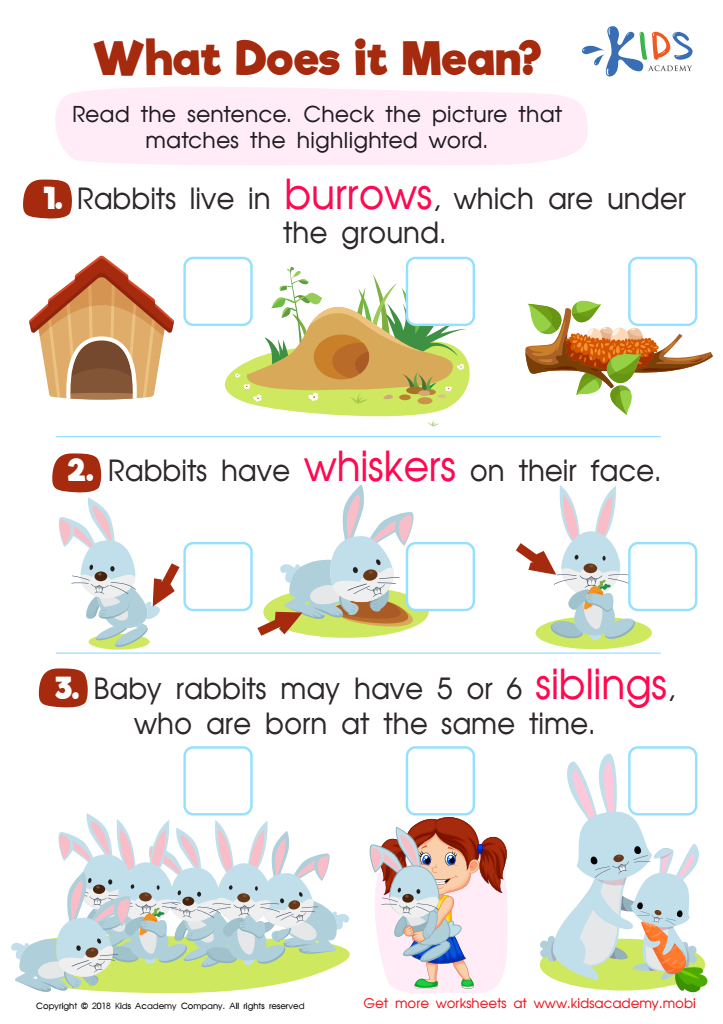
What Does It Mean? Worksheet

Teach your child to use context clues with this engaging Kids Academy worksheet. Read the sentences and find the pink-highlighted word. Use the other words in the sentence to figure out the meaning, then check the box next to the picture that represents it.
What Does It Mean? Worksheet
Worksheet
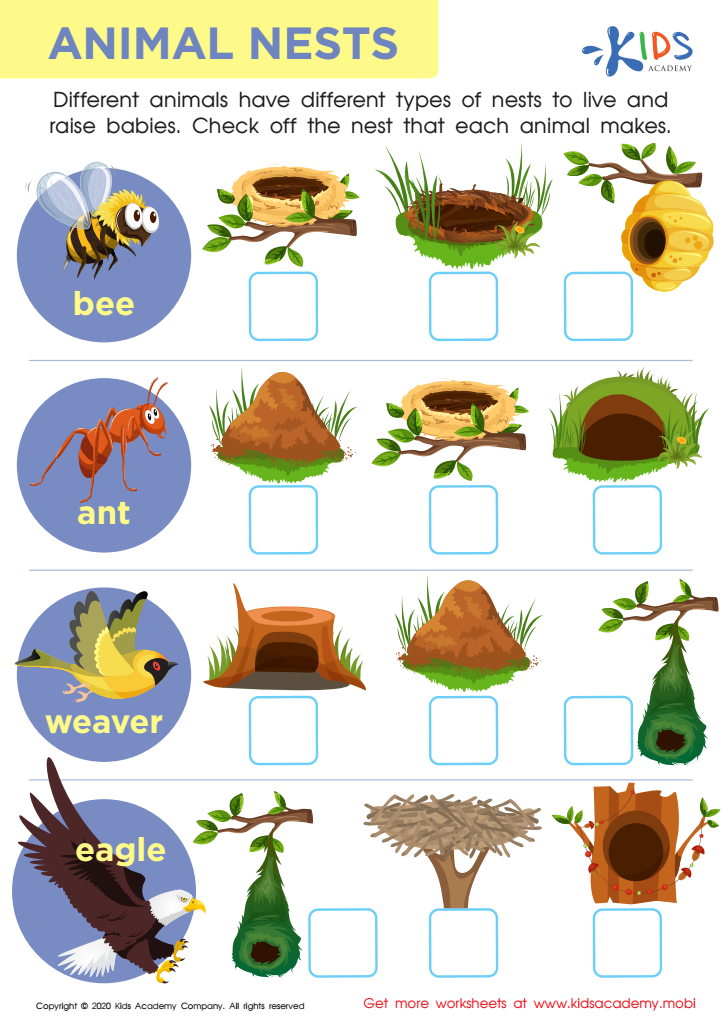
Animal Nests Worksheet

Animal Nests Worksheet

Animals need homes to sleep and stay safe. Look at the animal on the left and examine the nests and hives to the right. Check off the correct one for each animal to complete the worksheet! From birds to bees, it's a great way to show different types of homes animals make!
Animal Nests Worksheet
Worksheet
Assessment: Aquarium Sign Worksheet


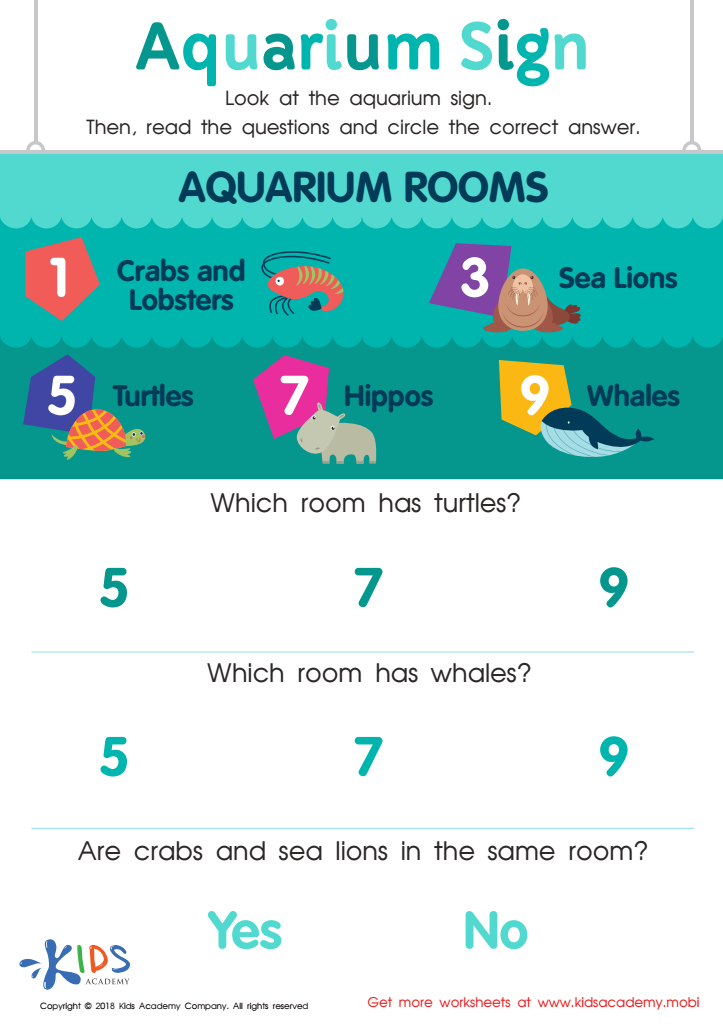
Assessment: Aquarium Sign Worksheet

Take your kids to an aquarium and marvel at the sea creatures! Help them identify the animals they see, and ask them which one is their favorite. Look at the aquarium sign and point to each creature. Ask your kids the questions and help them circle the right answer.
Assessment: Aquarium Sign Worksheet
Worksheet


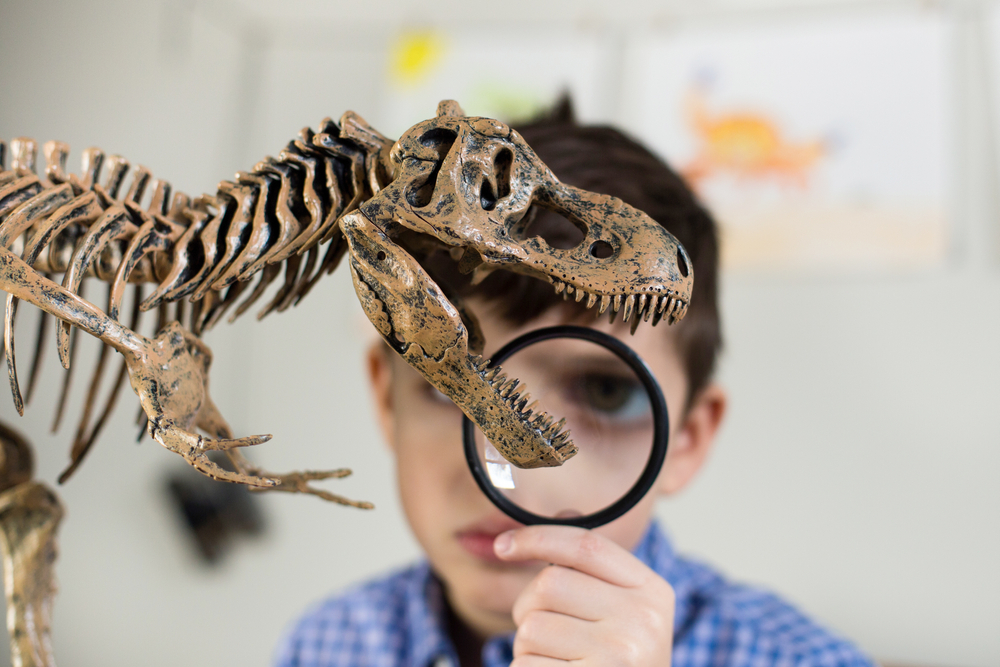
Critical thinking is essential for young learners, particularly when exploring the world of plants and animals. For children aged 5-7, engaging in critical thinking activities helps them cultivate curiosity and a deeper understanding of their natural environment. Parents and teachers should care about integrating critical thinking into lessons about plants and animals for various reasons.

First, this age group is naturally inquisitive; they ask "why" and "how," and critical thinking encourages them to seek answers through observation, experimentation, and discussion. This enhances their cognitive development and builds problem-solving skills.

Second, understanding ecosystems and the roles of various organisms fosters a sense of responsibility towards the environment. When kids analyze the interconnectedness of plants and animals—like how bees pollinate flowers—they develop a foundational knowledge that can promote advocacy for conservation and biodiversity.

Moreover, critical thinking reinforces communication skills. As students articulate their observations or hypotheses, they learn to listen, ask questions, and express their ideas confidently. Ultimately, fostering critical thinking around plants and animals equips young learners with essential skills, making them not only effective learners but also responsible citizens who appreciate and care for the world around them.