Filters

6 filtered results

Clear all filters
Favorites
With answer key
Interactive

6 filtered results

Difficulty Level

Grade


Subject

    Unlock the fascinating world of reading with our engaging Consonant Blends Worksheets designed for children aged 5 to 8! Featuring a variety of activities, these worksheets help young learners master the essential skill of blending consonants to form words. Through fun exercises that include identifying, matching, and filling in the blanks, kids will enhance their phonemic awareness and boost their literacy skills. Perfect for classroom use or at-home practice, our worksheets provide a comprehensive and interactive way to explore consonant blends. Ignite your child's passion for reading and empower them with the tools they need to succeed!

    Check out this FREE Trial Lesson on Consonant Blends for age 5-8!

    Review Blends

    Favorites
    With answer key
    Interactive
    • 5-8
    • Consonant Blends
    Find The Missing Word Worksheet
    Find The Missing Word Worksheet

    Find The Missing Word Worksheet

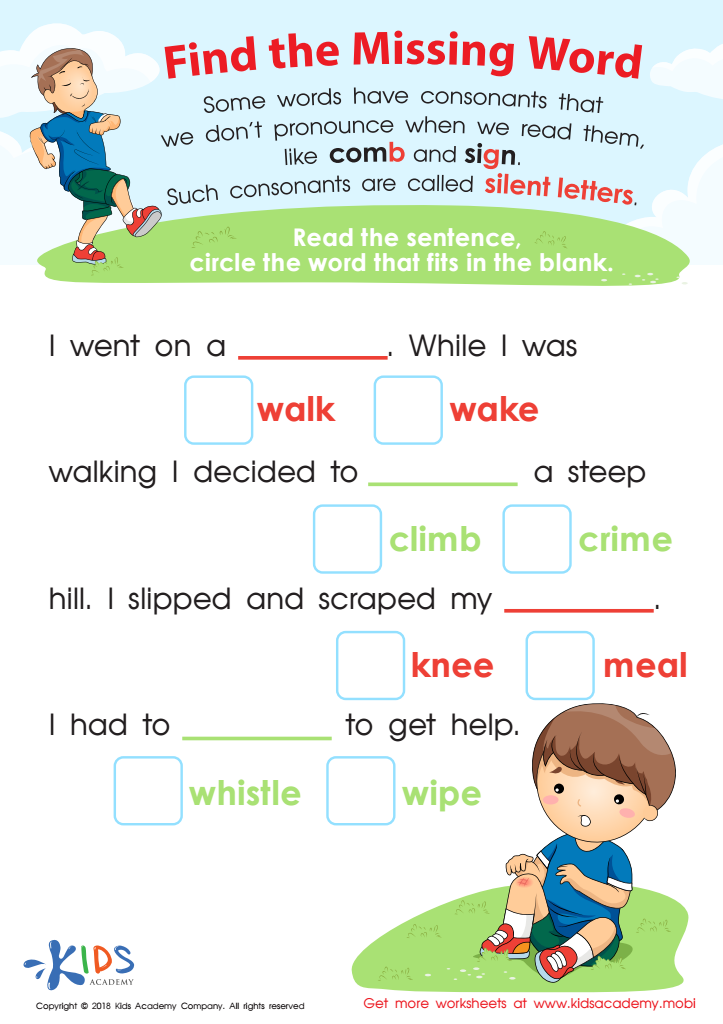
    Master silent letters like "b" and "k" with this illustrated worksheet! Read the sentences and fill in the blanks with the correct word, checking the box. Read all the way to the bottom and review words containing silent letters. A great way to help your little learner tackle a tough topic!
    Find The Missing Word Worksheet
    Worksheet
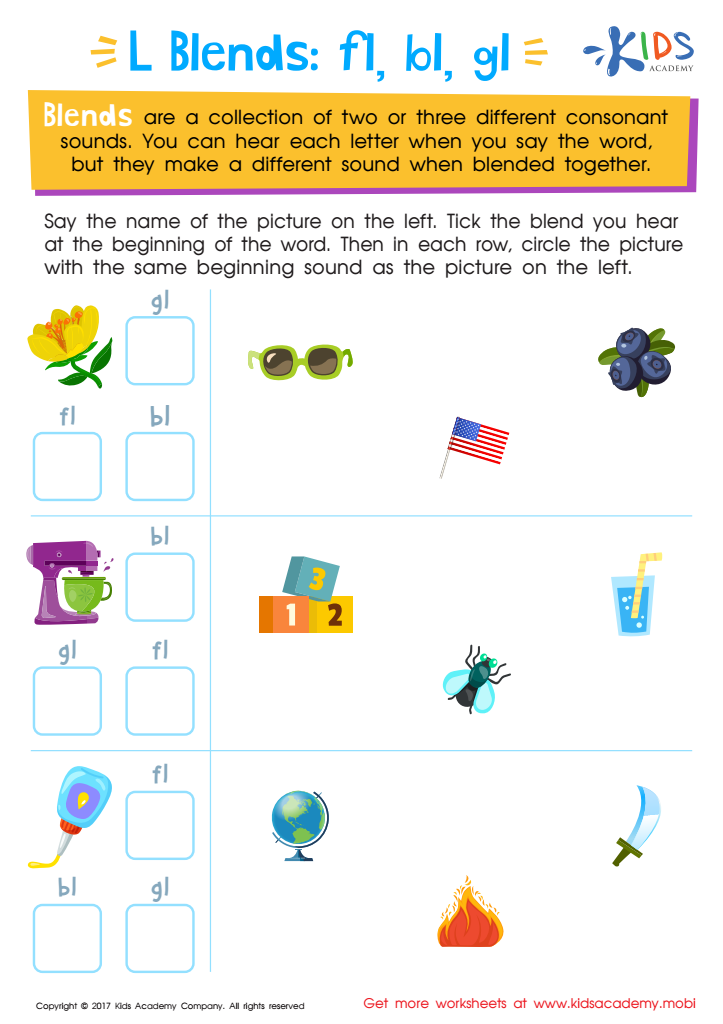
    Consonant Blend Fl, Bl, and Gl Printable Worksheet
    Consonant Blend Fl, Bl, and Gl Printable Worksheet

    Blending Consonants: "Fl", "Bl" and "Gl" Printable
    Help your child master consonant blends Fl, Bl, and Gl with this printable worksheet. Find words associated with the pictures and learn to better understand the difference between consonant blends. Vibrant images motivate and aid in learning. Download now for improved phonics success!
    Blending Consonants: "Fl", "Bl" and "Gl" Printable
    Worksheet
    Let's Look for Blends Worksheet
    Let's Look for Blends Worksheet

    Let's Look for Blends Worksheet

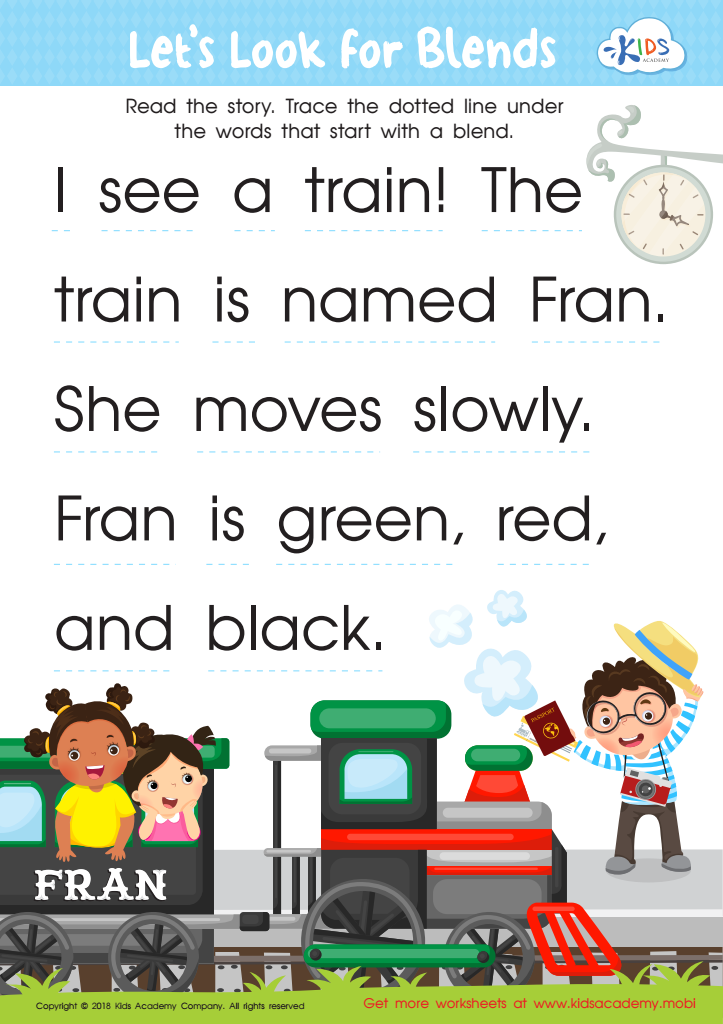
    Does your child love trains? Get them to read the story or help them read it aloud. Ask them to trace the words that start with blends on the dotted lines. This exercise will help them improve their blend-identifying skills!
    Let's Look for Blends Worksheet
    Worksheet
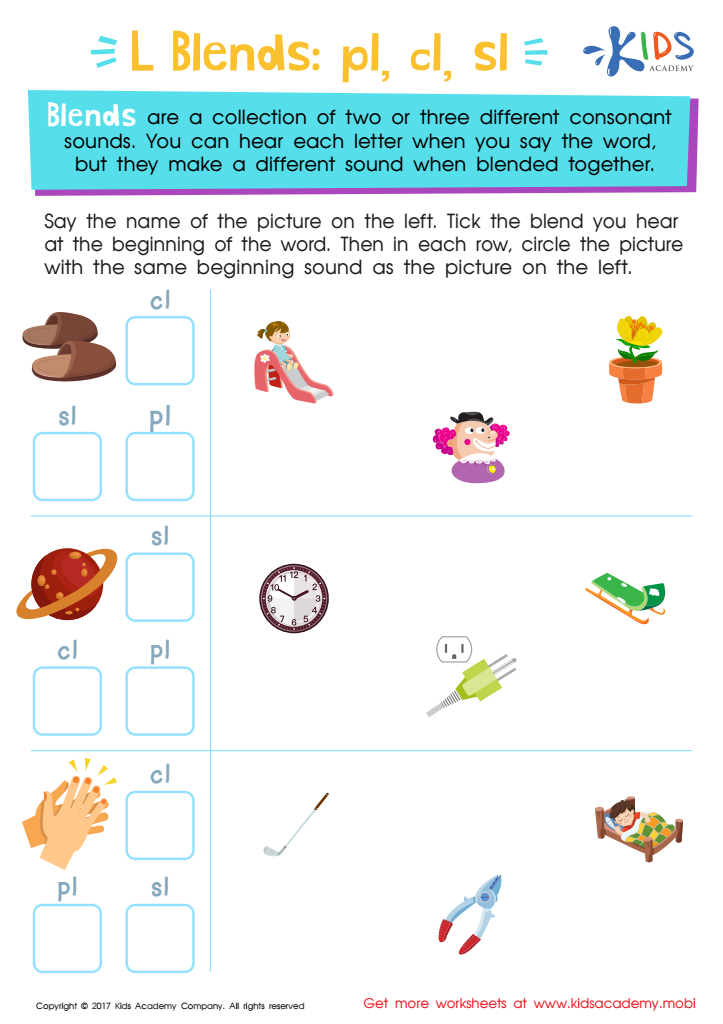
    Consonant Blends Pl, Cl, and Sl Printable Worksheet
    Consonant Blends Pl, Cl, and Sl Printable Worksheet

    L Blends: "Pl", "Cl" and "Sl" Printable
    This printable worksheet will help your child recognize and identify the Pl, Cl, and Sl consonant blends, sound them out, and identify them in print. Improve your child's reading and writing skills with fun and colorful phonics practice!
    L Blends: "Pl", "Cl" and "Sl" Printable
    Worksheet
    Consonant Blend Dr and Tr Printable Worksheet
    Consonant Blend Dr and Tr Printable Worksheet

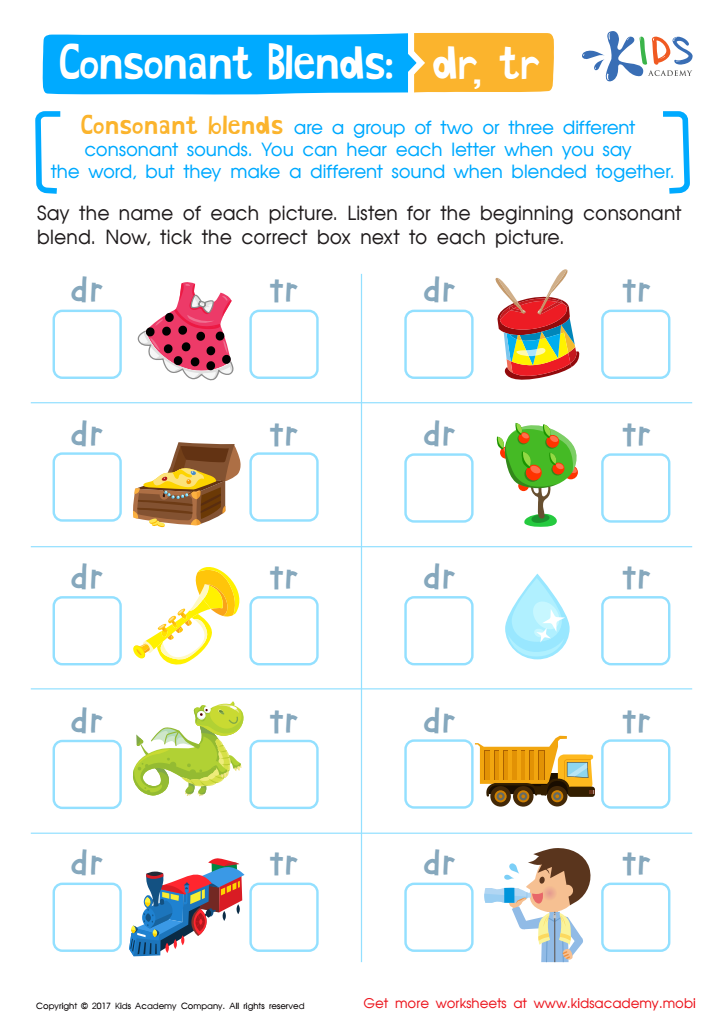
    Consonant Blends: "Dr" and "Tr" Printable
    Pictures of the words provide a visual cue, and sound-outs help with auditory cues.
    Consonant Blends: "Dr" and "Tr" Printable
    Worksheet
    Review the Blends Worksheet
    Review the Blends Worksheet

    Review the Blends Worksheet

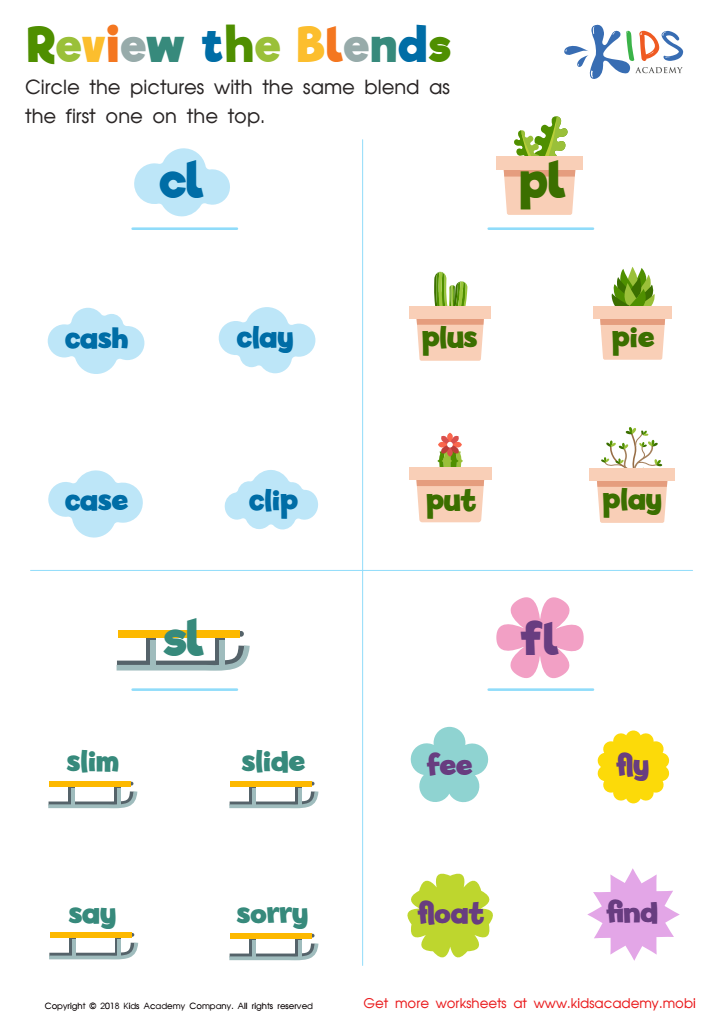
    Consonant blends are two or three consonants that make a sound when pronounced together. L-blends like cl, bl, sl, fl and 3-letter blends like str, slp are common. This phonics worksheet helps early readers identify words containing two letter L-blends. Students must circle the words then read them aloud.
    Review the Blends Worksheet
    Worksheet


    Parents and teachers should care about consonant blends for children aged 5-8 because these foundational skills play a critical role in early literacy development. Consonant blends, which involve two or more consonants appearing together in a word without losing their individual sounds—like "bl" in "black" or "str" in "street"—help children enhance their phonemic awareness. This is essential as it enables students to decode unfamiliar words, boosting their reading fluency and comprehension.

    Understanding consonant blends aids in spelling and vocabulary growth, allowing children to build more complex words as they progress. They contribute to a greater understanding of how letters and sounds interact, fostering confidence in both reading and writing. Additionally, recognizing and articulating blends supports oral language development, which is vital for communication skills.

    Moreover, early mastery of consonant blends can lead to a positive attitude toward reading, encouraging children to engage with texts independently. For educators and parents, embedding consonant blend instruction in daily activities—whether through games, rhymes, or reading together—makes learning enjoyable and effective. Ultimately, prioritizing consonant blends equips children with the tools they need to succeed academically and motivates them to become lifelong learners.