Phonological awareness Alphabet Worksheets for Ages 5-8
9 filtered results
-
From - To
Enhance your child's reading skills with our Phonological Awareness Alphabet Worksheets, specially designed for ages 5-8. These engaging worksheets focus on building essential phonological skills through fun activities, such as rhyming, sound manipulation, and letter recognition. Each worksheet provides a variety of interactive exercises that make learning enjoyable, helping children decode language effectively. Perfect for classroom use or at-home practice, our phonological awareness resources strengthen foundational reading abilities while promoting critical thinking and auditory discrimination. Empower your young learners with these thoughtfully crafted worksheets to ignite their passion for reading and language. Start their literacy journey today!
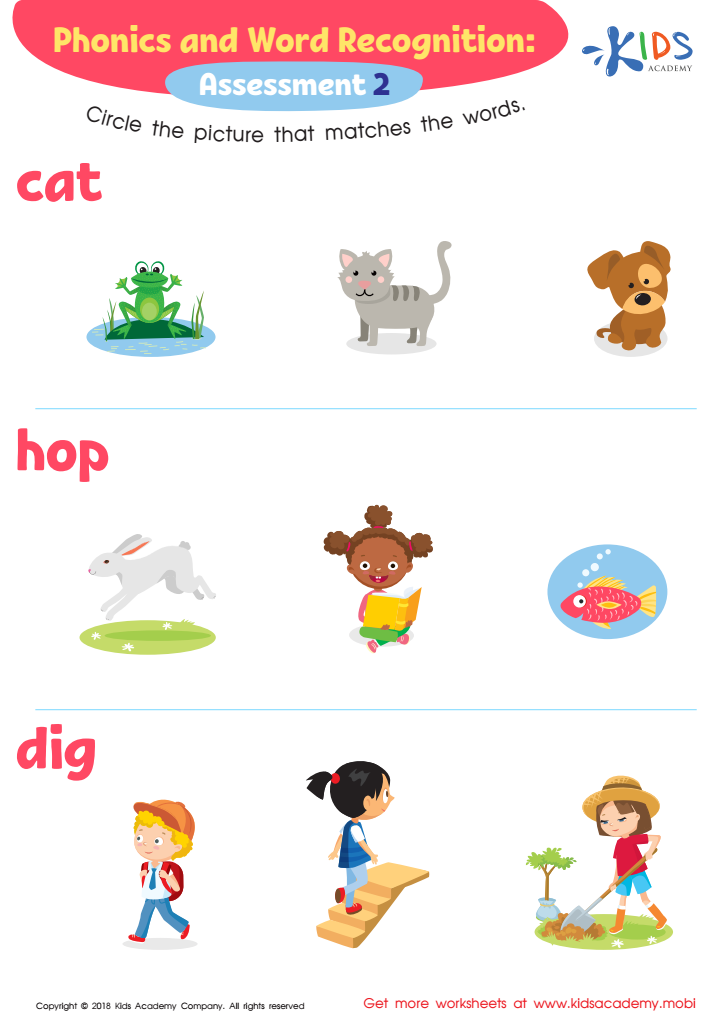
Phonological Awareness: Assessment 2 ELA Worksheet
 Assign to My Students
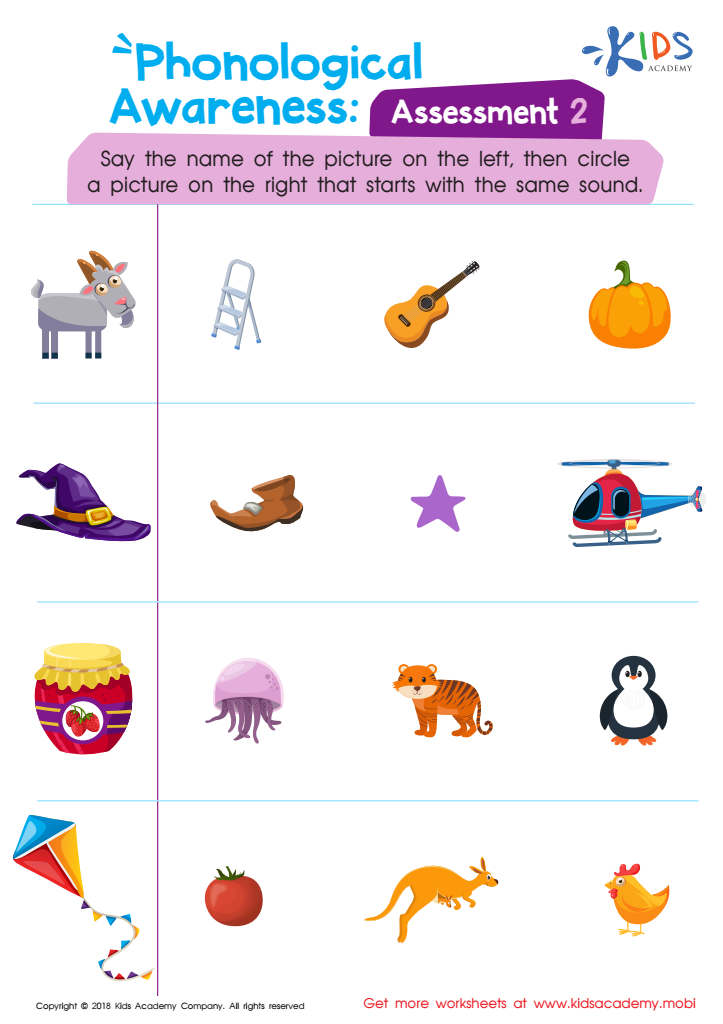
Phonological Awareness: Assessment 2 Worksheet
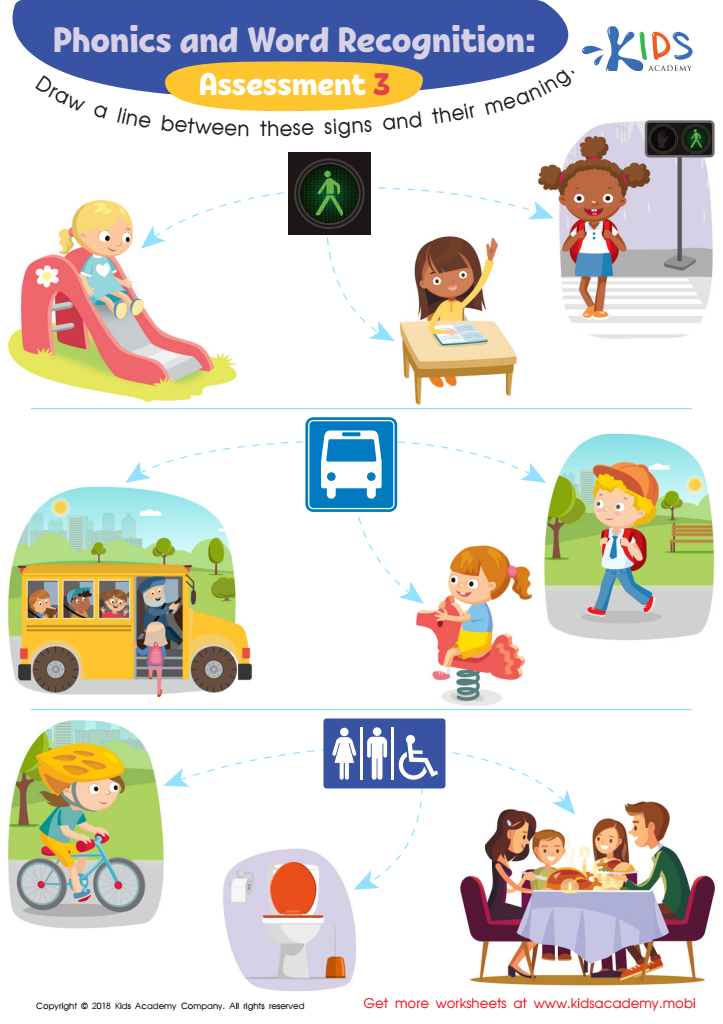
Phonological Awareness: Assessment 3 ELA Worksheet
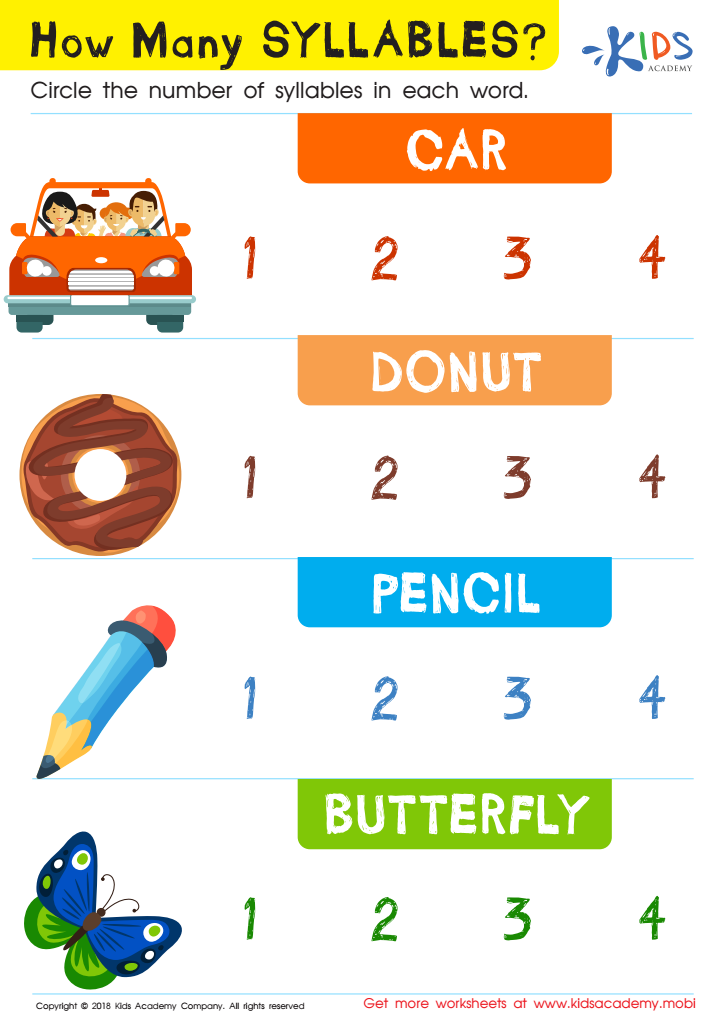
How Many Syllables? Worksheet
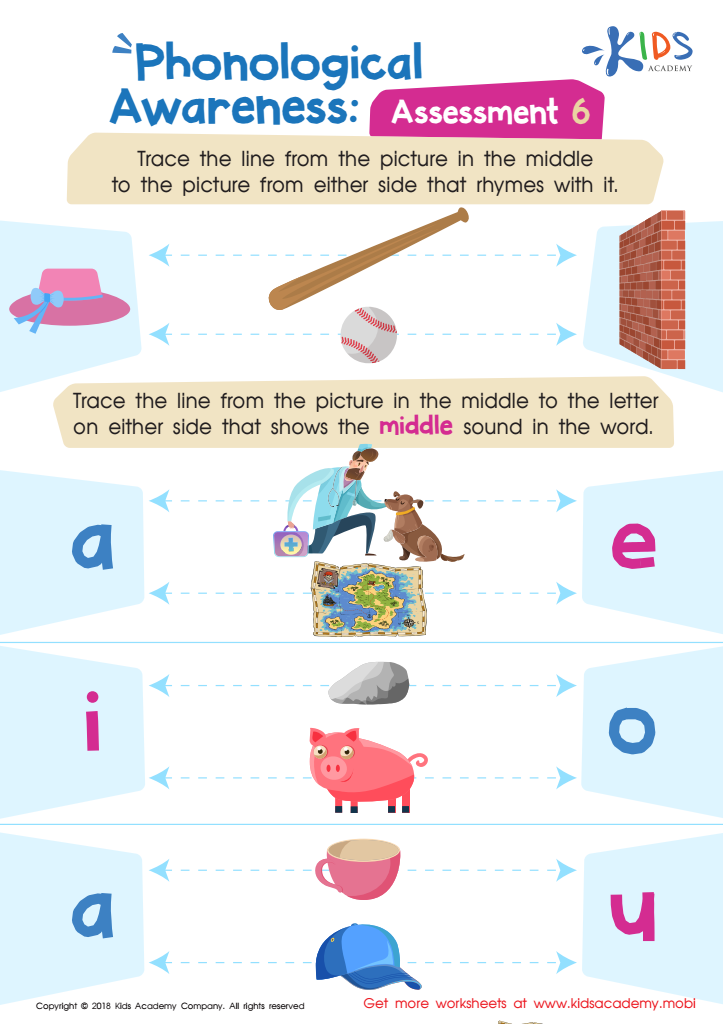
Phonological Awareness: Assessment 6 Worksheet
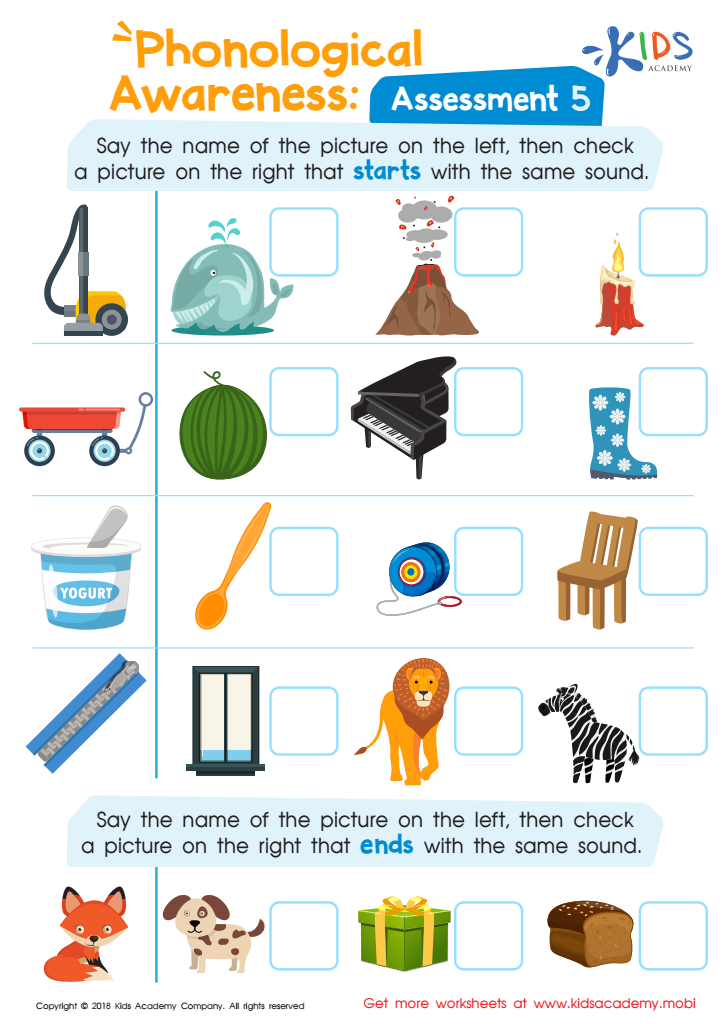
Phonological Awareness: Assessment 5 Worksheet
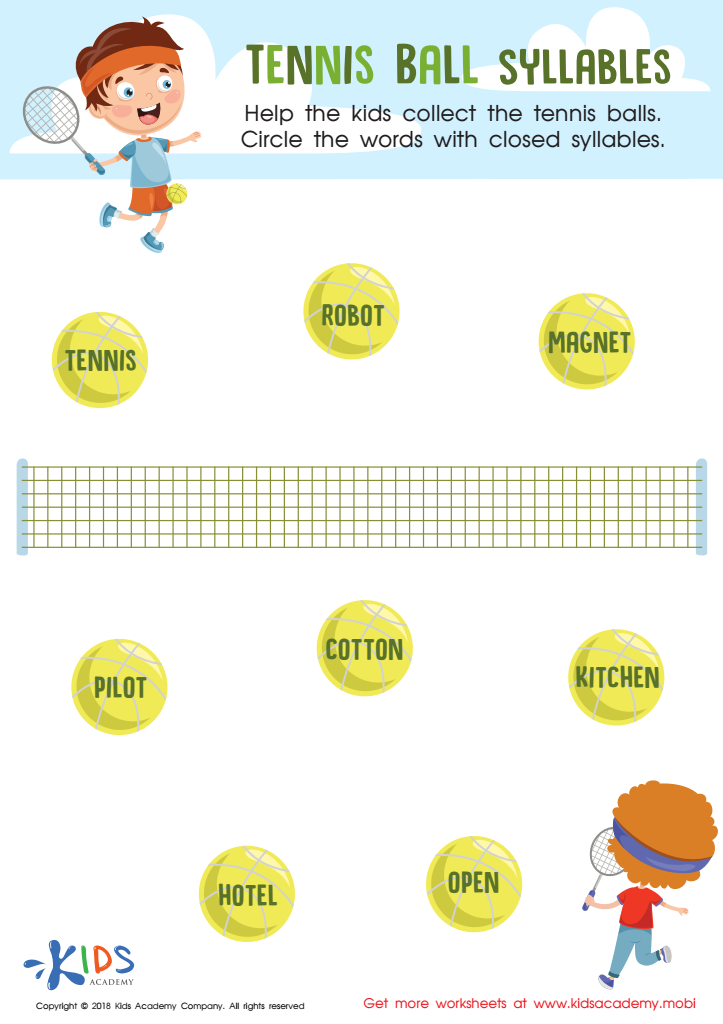
Tennis Ball Syllables Worksheet
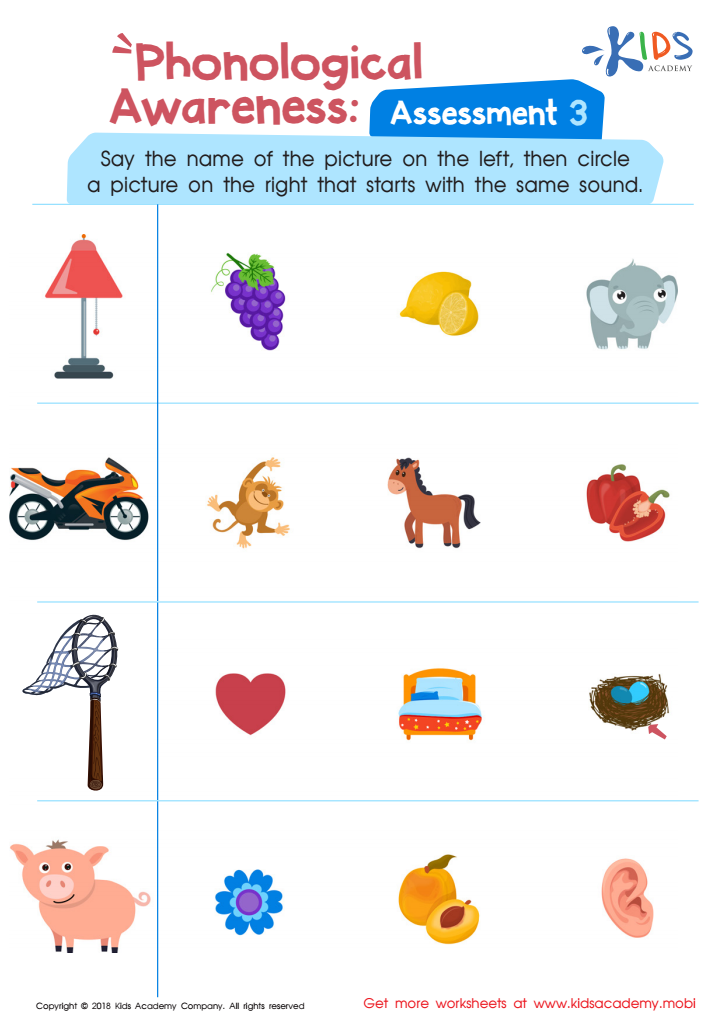
Phonological Awareness: Assessment 3 Worksheet
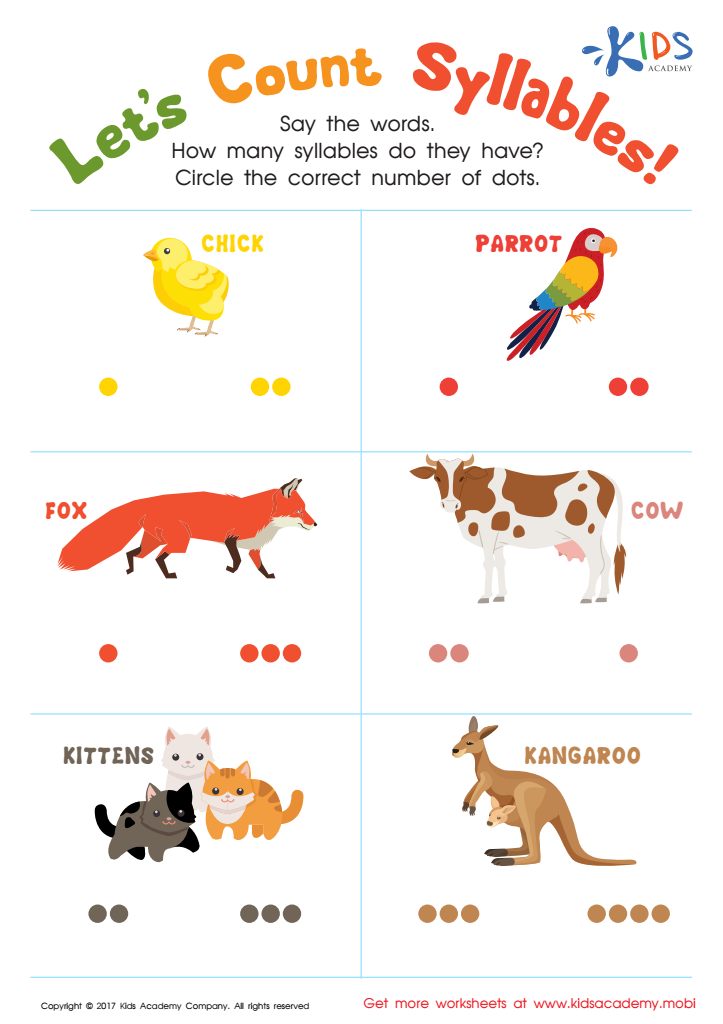
Lets Count Syllables Worksheet







Phonological awareness and the alphabet are crucial components of early literacy, especially for children aged 5-8. Developing phonological awareness—the ability to hear and manipulate sounds in words—lays the foundation for reading and writing skills. When children can recognize and manipulate sounds, they are better equipped to decode words, spell, and understand what they read. This skill fosters confidence and motivation, making the learning process more enjoyable.
Additionally, understanding the alphabet is essential for language development. For young learners, knowing letter names and sounds aids in letter-sound correspondence, which is fundamental for reading fluency. As parents and teachers engage children in activities centered around phonological awareness and the alphabet, they foster a rich language environment that enhances vocabulary and comprehension.
Moreover, early literacy skills have long-term academic and social benefits. Children who develop strong phonological awareness are more likely to succeed in school, leading to a lifetime love of reading and learning. By prioritizing these foundational skills, adults can help children become competent, confident readers, setting the stage for future educational achievements and enhancing their overall communication abilities. Emphasizing this stage of literacy is an investment in a child’s academic journey and future success.







