
Word Recognition Alphabet Worksheets for Ages 5-8
34 filtered results
Difficulty Level
Grade
Age
-
From - To
Subject
Activity
Standards
Enhance your child's reading foundation with our Word Recognition Alphabet Worksheets for Ages 5-8. Carefully designed to build essential literacy skills, these worksheets bolster letter recognition, phonemic awareness, and early reading proficiency. Each worksheet offers fun, engaging activities, guiding children through the alphabet while fostering confidence and a love for reading. With diverse exercises suited for varying skill levels, our worksheets support classroom learning and at-home practice. Empower your child to master word recognition through interactive, colorful, and educational resources perfect for young learners embarking on their reading journey! Explore our collection and watch your child's skills grow!
Favorites
With answer key
Interactive
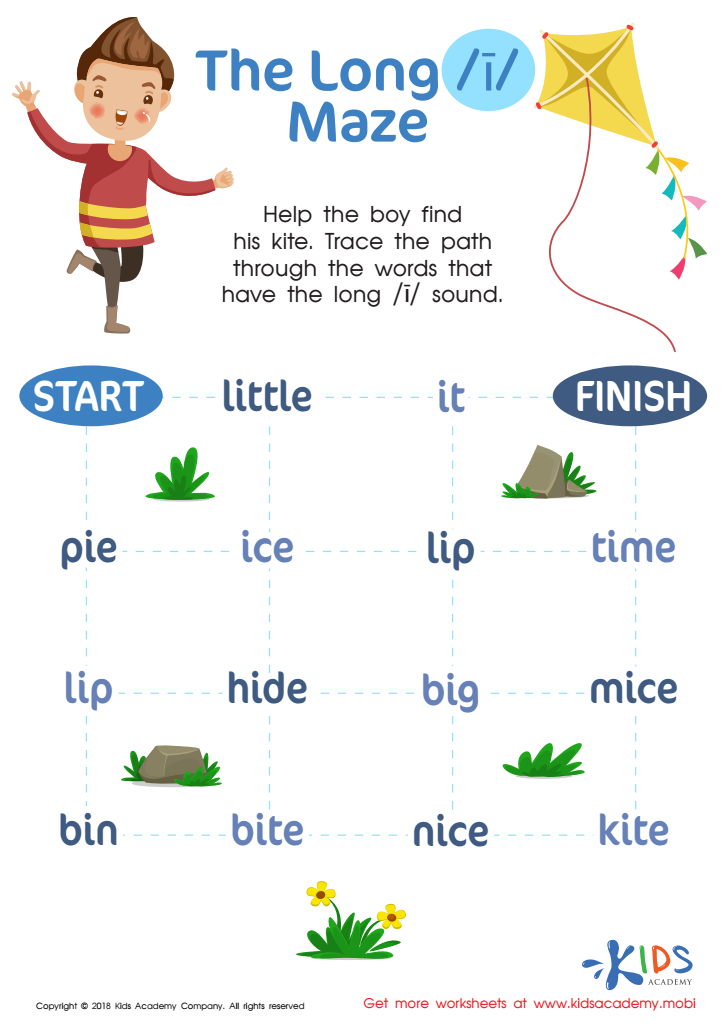
The Long I Maze Reading Worksheet
Help your child learn phonics to help them read. Show them the difference between long and short "i" sounds. Guide them as they use a pencil to trace words with the long "i:" sound in the "Help the Boy in the Picture" worksheet exercise. This will help them find the kite in the picture.
The Long I Maze Reading Worksheet
Worksheet
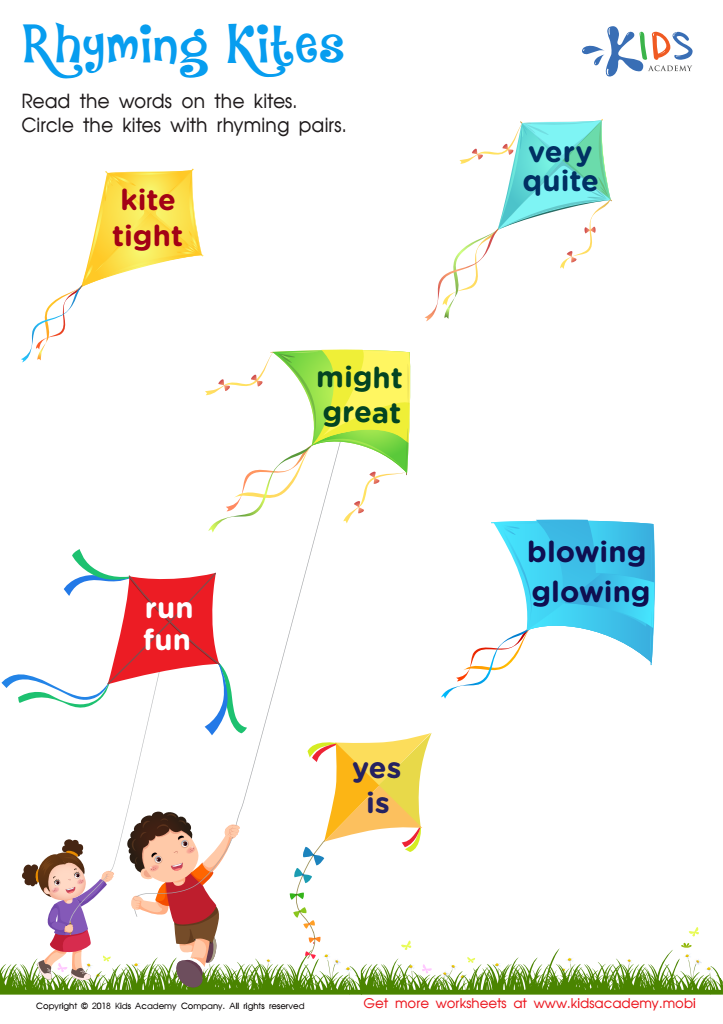
Rhyming Kites Worksheet
On a spring day, fly a kite! Kids Academy has a rhyming worksheet to boost your child's skills. Read the pairs of words aloud. Circle the kites if they rhyme, leave them blank if they don't. Listen carefully and find all the rhyming word pairs to complete this sheet!
Rhyming Kites Worksheet
Worksheet
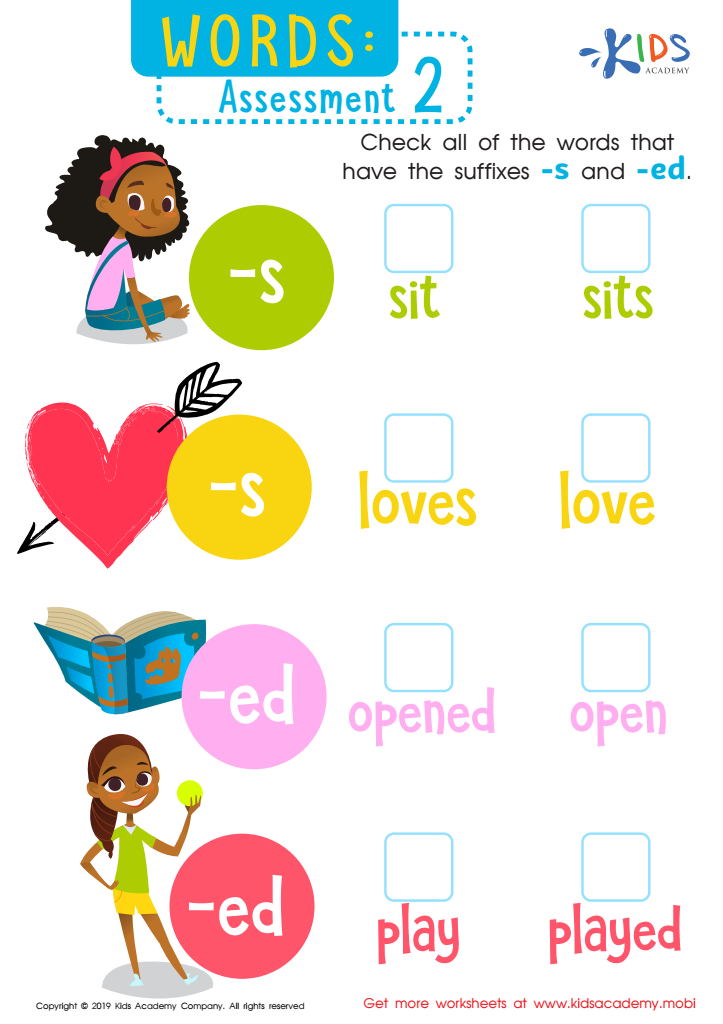
Words: Assessment 2 Worksheet
Test your child’s knowledge of -s and -ed word endings with this fun worksheet! They'll look at images and read the words, then choose the correct suffix to finish each one. Vivid illustrations make this an enjoyable learning experience!
Words: Assessment 2 Worksheet
Worksheet
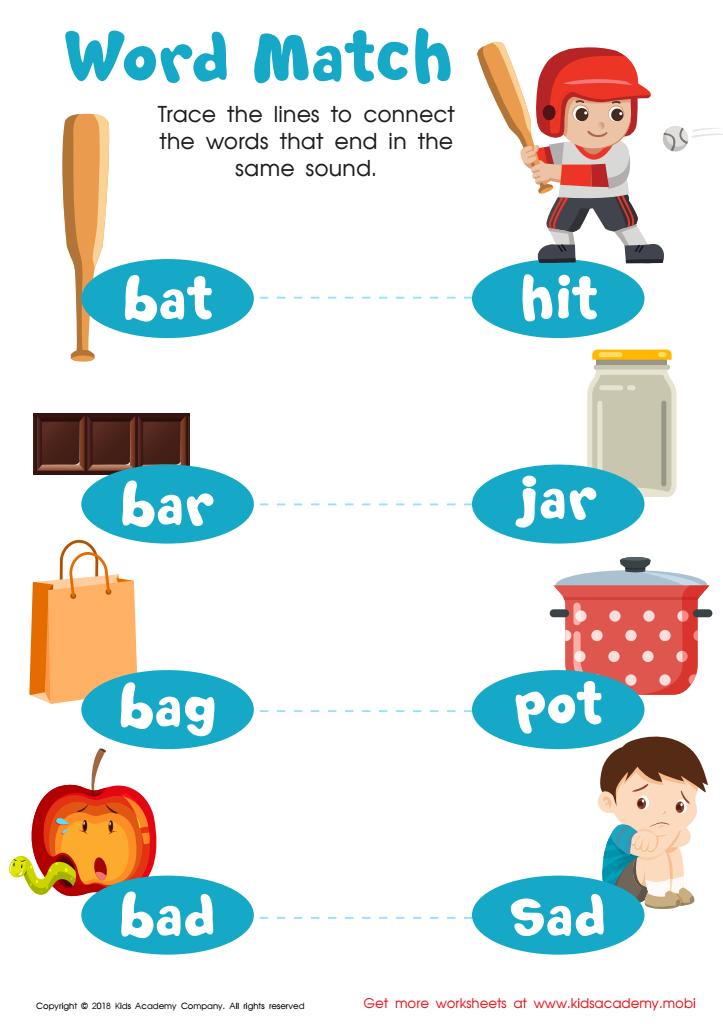
Word Match Reading Worksheet
This printout helps children learn to read fluently by connecting words with the same sound. Colorful pictures aid understanding and context for kindergarten-level students. Tracing lines, they learn to identify the sounds made by letters of the alphabet and deepen their knowledge of phonics.
Word Match Reading Worksheet
Worksheet
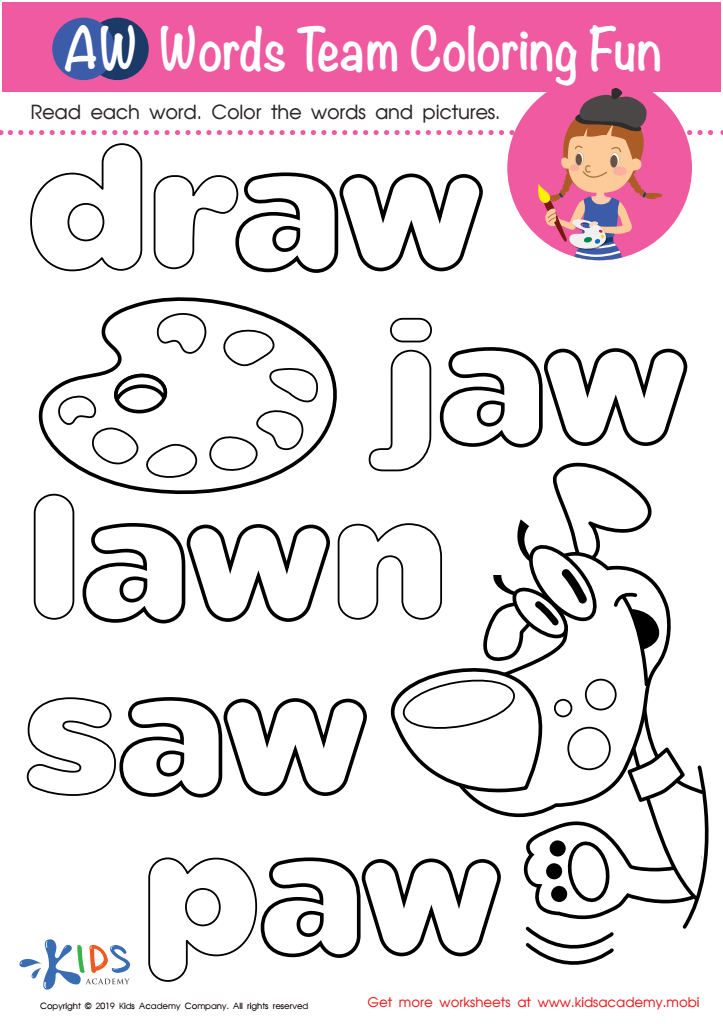
AW Words Team Coloring Fun Worksheet
Coloring words they can read is a blast for little learners! This worksheet offers emerging readers the chance to practice and gain confidence in reading words from the -aw family, while also improving fine-motor and creativity skills. Without knowing it, they'll learn about phonetic teams along the way!
Download (PDF)
 Assign to My Students
Assign to My Students
AW Words Team Coloring Fun Worksheet
Worksheet
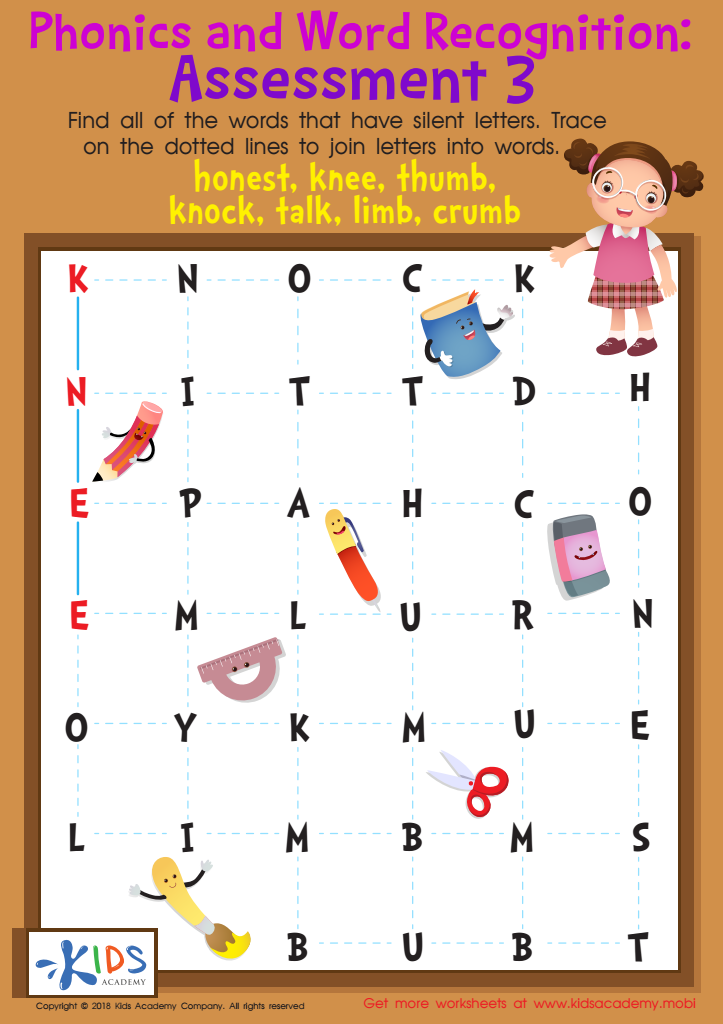
Phonics and Word Recognition: Assessment 3 Worksheet
Silent letters can be tricky for kids learning to read and write. Show them how they work with words like 'knee' and 'dumb'. Then, challenge them to come up with their own. Give them a worksheet with silent letters and trace the lines to join the letters into words.
Phonics and Word Recognition: Assessment 3 Worksheet
Worksheet
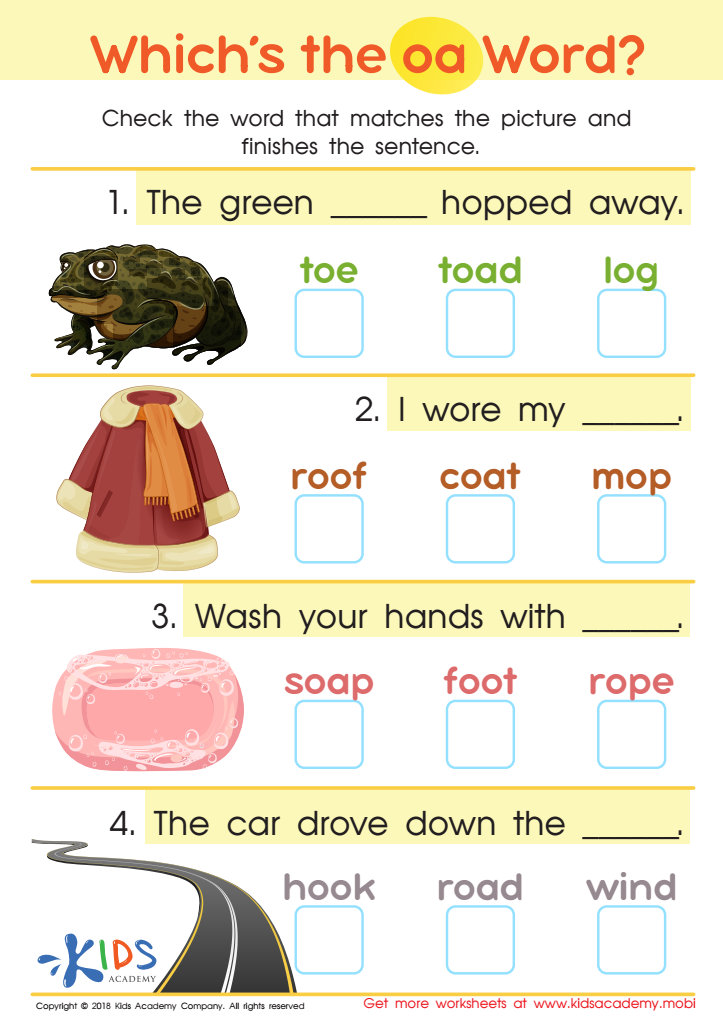
Which's the OA Word? Worksheet
Encourage your kids to complete this fun worksheet. Ask them to identify the animals and objects in the pictures. Read the incomplete sentences aloud, and then find the correct word to finish the sentence. Check their work.
Which's the OA Word? Worksheet
Worksheet
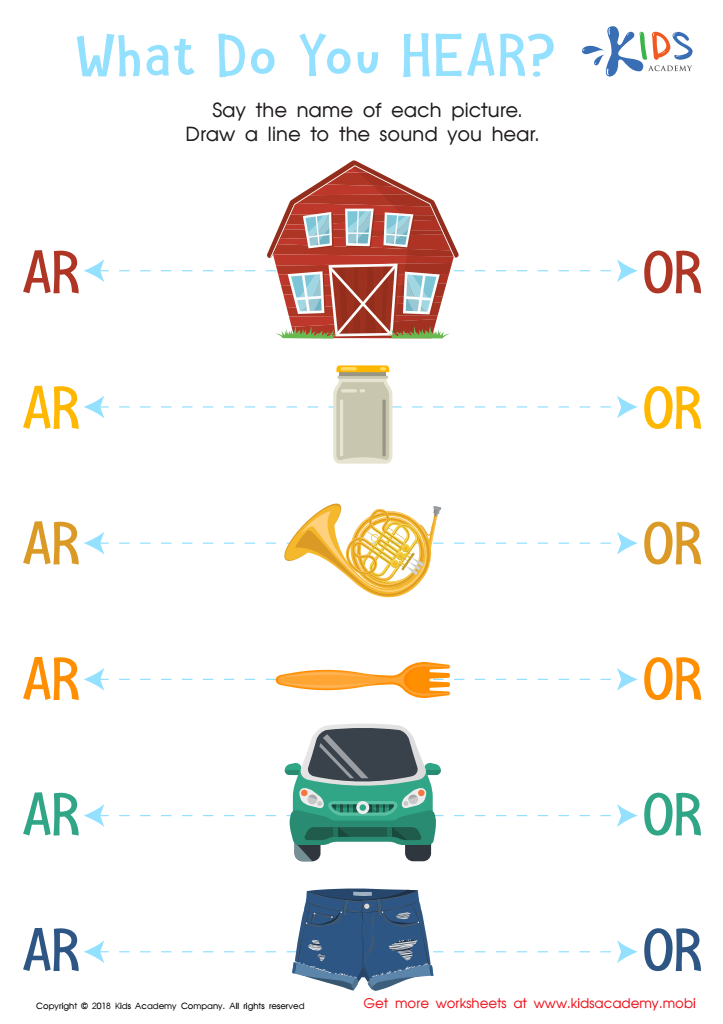
What do you hear Worksheet
Kids can practice distinguishing between r-controlled vowel teams /ar/ and /or/ with this worksheet. The pictures help identify the words and the sounds heard. Tracing a line to the correct sound supports fine motor skills development.
What do you hear Worksheet
Worksheet
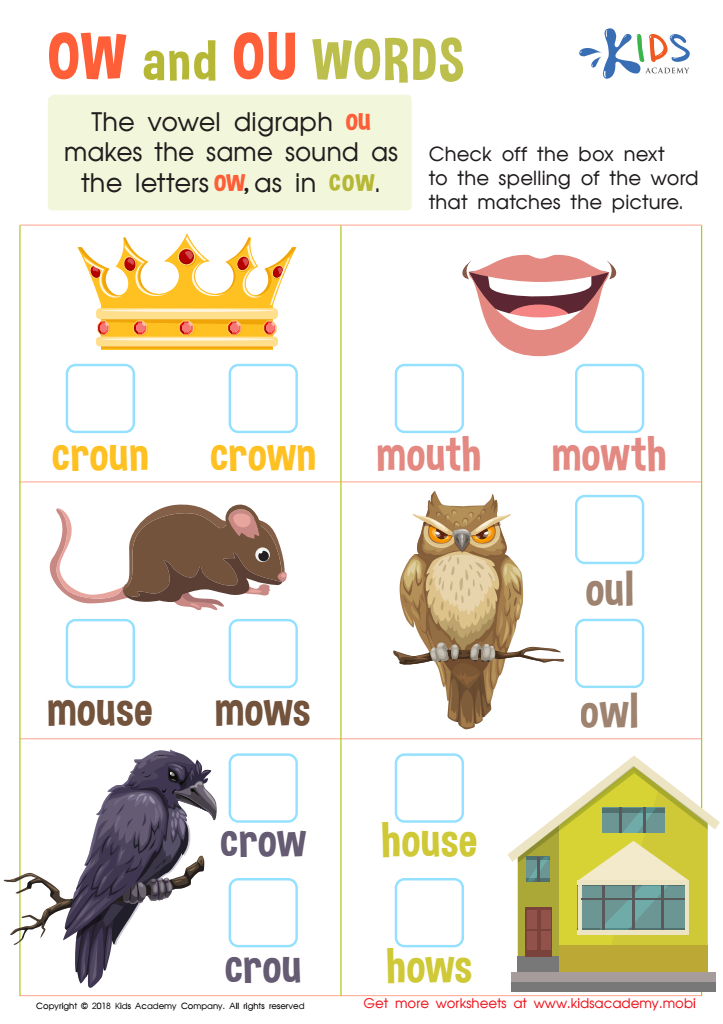
Reading: OW and OU Words Worksheet
Help your kids learn phonetics! Explain the different sounds and long/short variations. Emphasize that some vowel sounds are the same, e.g. ou = ow in cow. For practice, have them read aloud the words in the worksheet and check the box next to the spelling that matches the picture.
Reading: OW and OU Words Worksheet
Worksheet
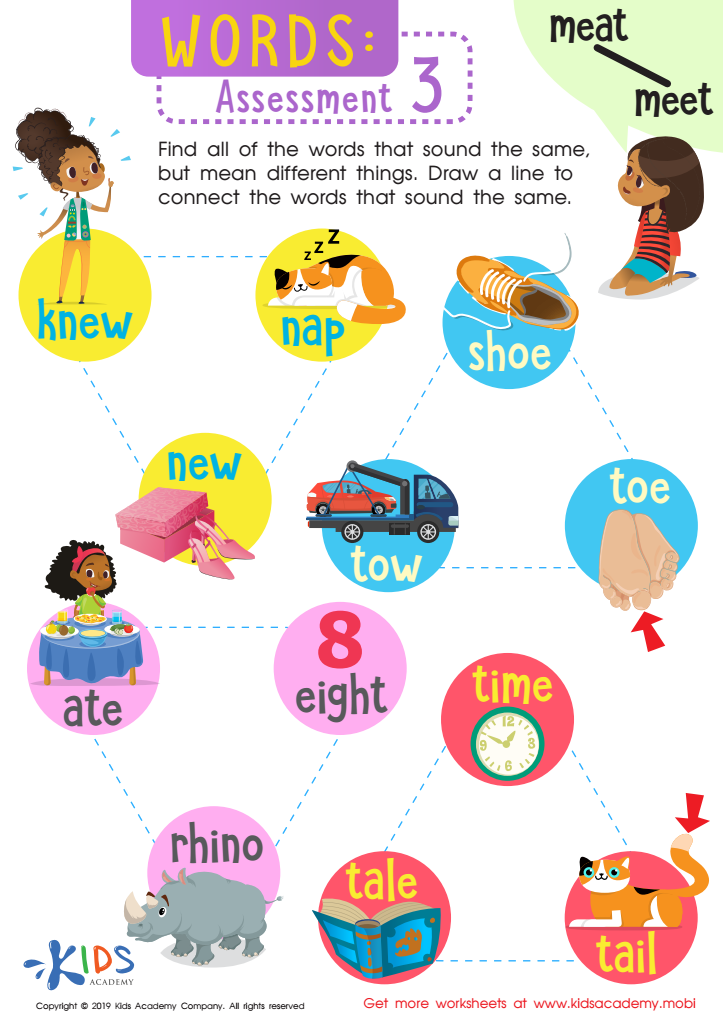
Words: Asessment 3 Worksheet
Assess your child's knowledge of homonyms with words like "toe" and "tow". This fun worksheet helps find words that sound the same but have different meanings and spellings. Use it to introduce homographs--words spelled the same with different meanings!
Words: Asessment 3 Worksheet
Worksheet
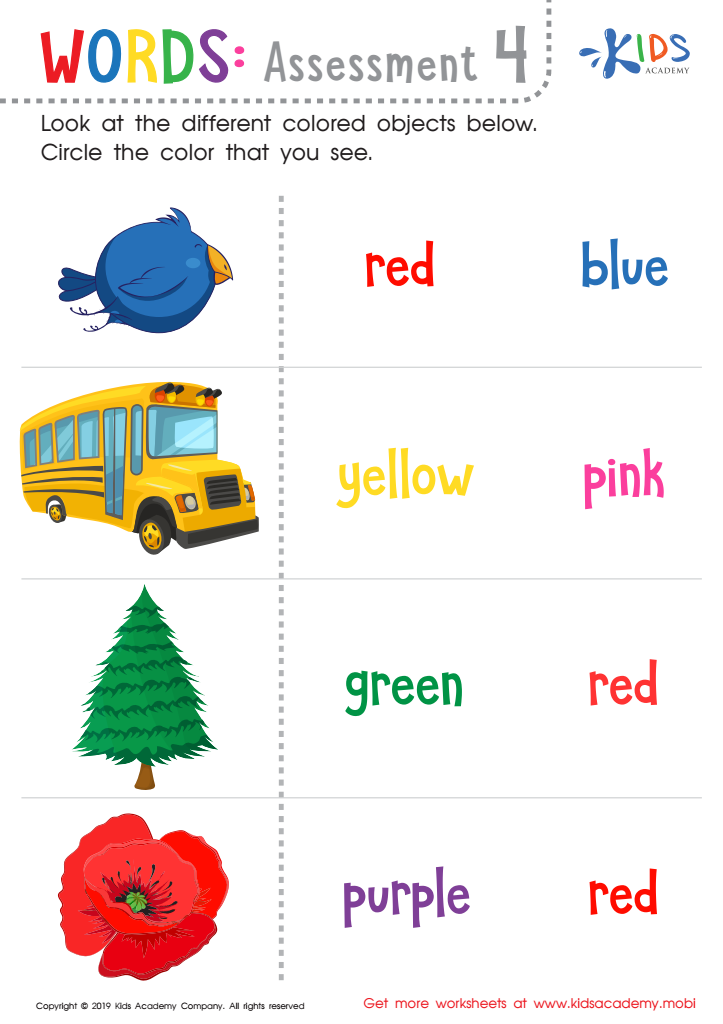
Words: Assessment 4 Worksheet
Look at the pictures and have your child circle the color they see. This free worksheet is great for assessing their knowledge of vocabulary words. It offers familiar images with words for kids to read and match with the colors. Help your child build their reading and understanding skills with this fun activity!
Words: Assessment 4 Worksheet
Worksheet
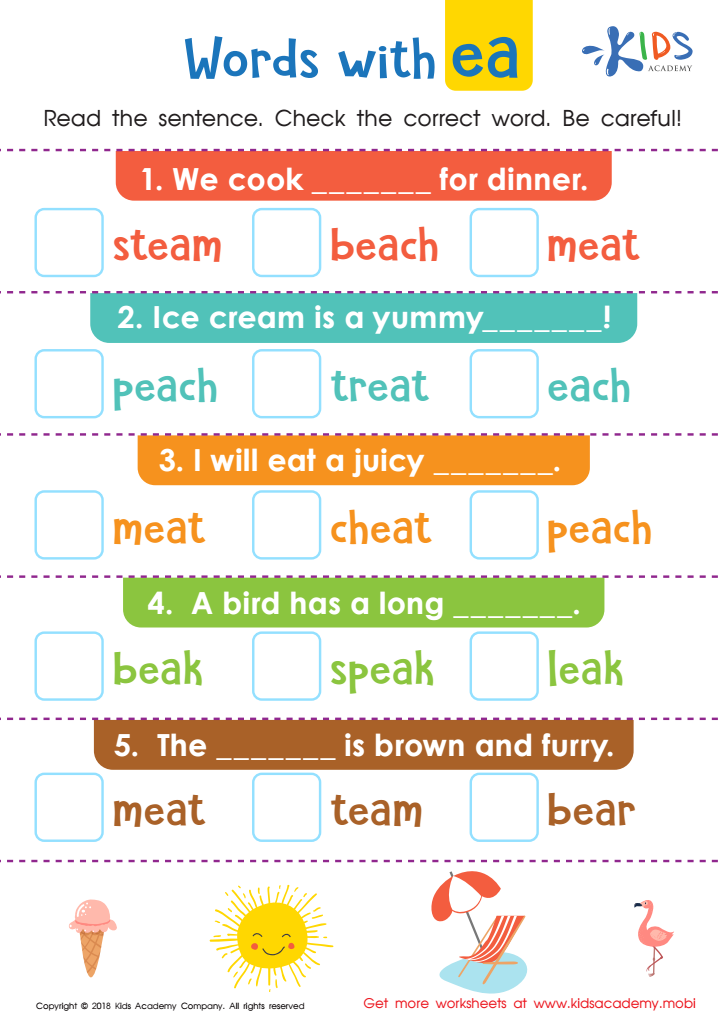
Words with ea Worksheet
Beginning readers may struggle with -ea vowel digraphs, which can have multiple sounds and be tricky to decode. This cheerful worksheet helps kids practice reading sentences with missing -ea words, using context clues to fill in the blanks. They'll also be exposed to various -ea sound examples, and build their sight word knowledge.
Words with ea Worksheet
Worksheet
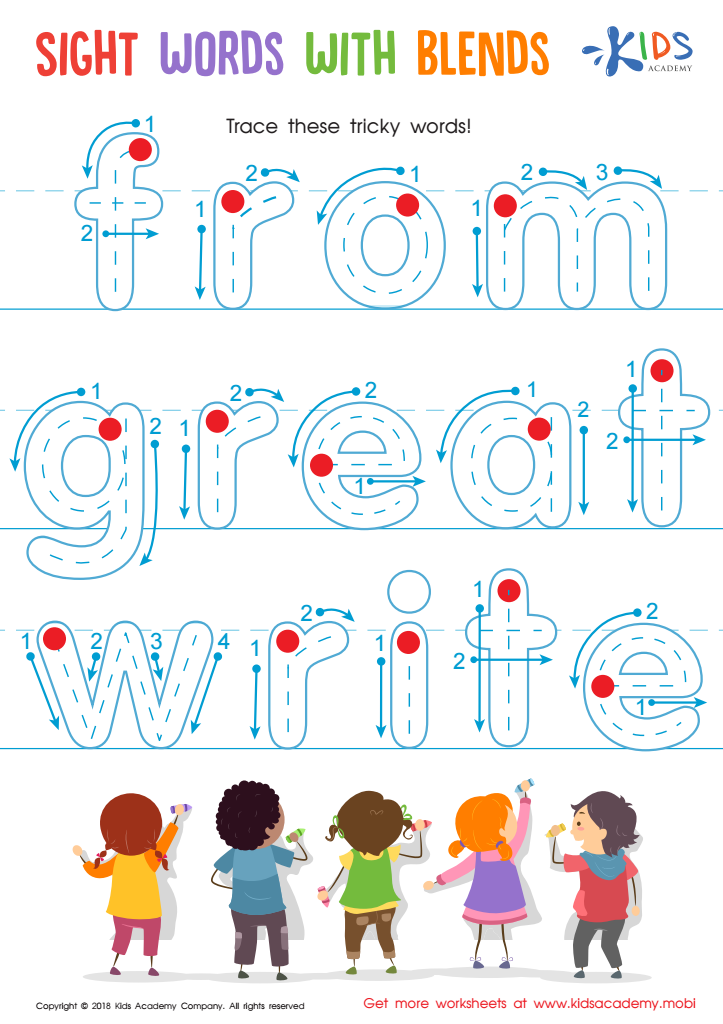
Sight Words with Blends Worksheet
This free PDF lets your children trace and write sight words with tricky blends. The guide numbers help them start from the top, building fine motor skills and enhancing sight word vocab. It's a great way to give your kids a solid foundation for reading!
Sight Words with Blends Worksheet
Worksheet
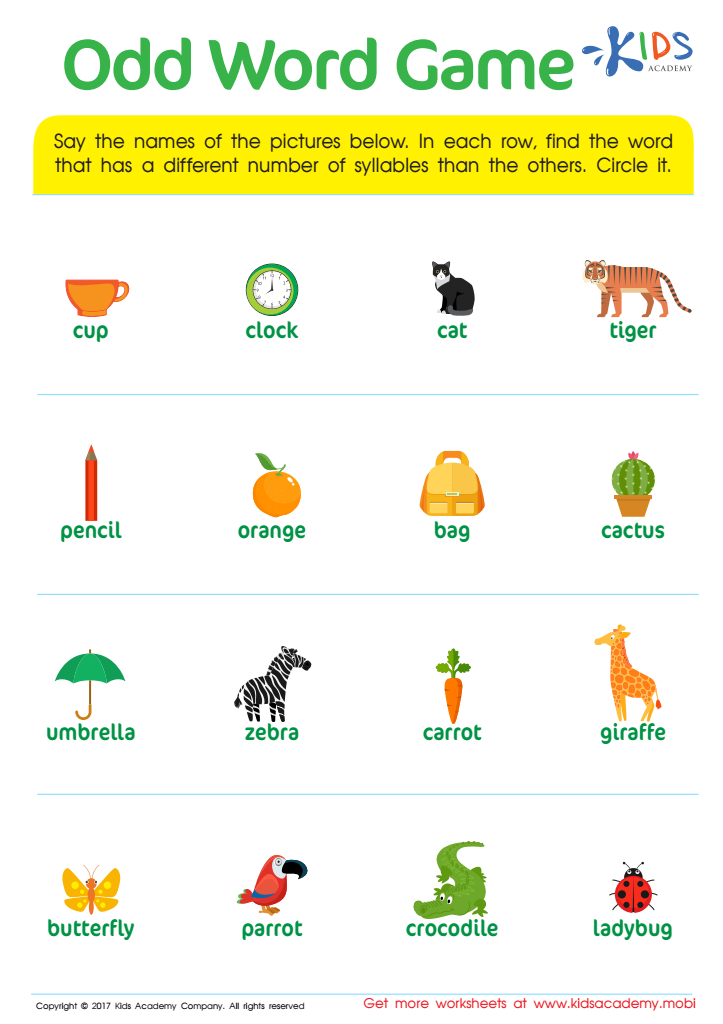
Count Syllables: Odd Word Game Worksheet
Counting syllables strengthens kids' decoding skills. This printable helps them say common item names and chunk words for fluency and accuracy. They don't even realize they're working on their reading! Bright colors make it fun, so it's a fast and easy way to practice.
Count Syllables: Odd Word Game Worksheet
Worksheet
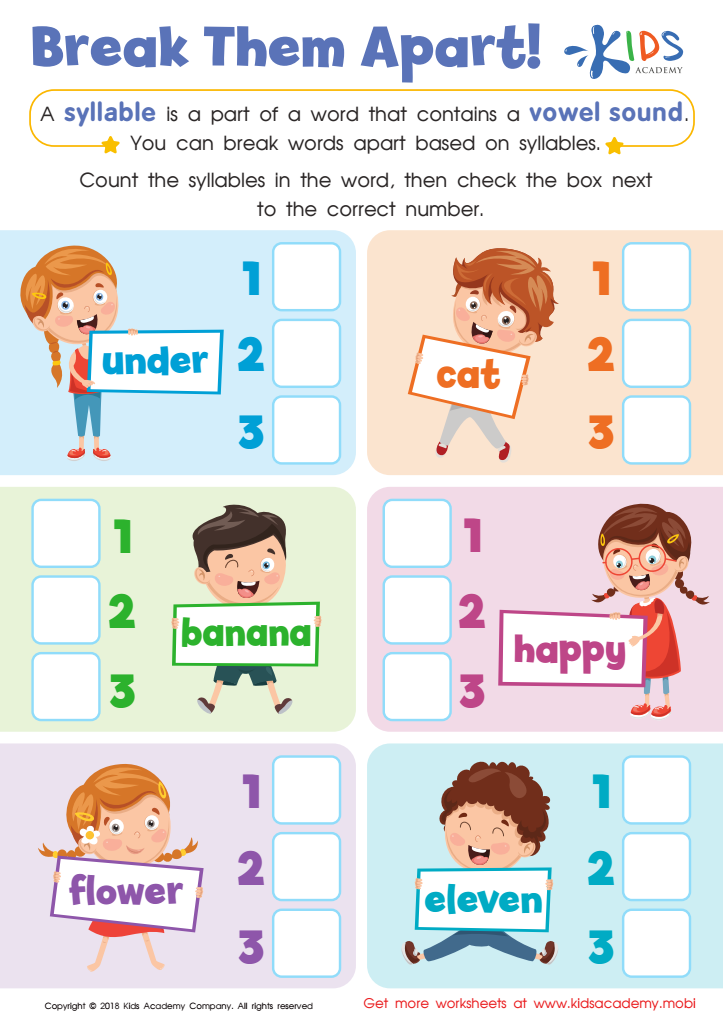
Reading: Break Them Apart Worksheet
See if students understand syllables with this fun worksheet. It teaches them that a syllable is a word part with a vowel sound. Kids read each word and choose how many parts it has. Doing this often helps them decode new words and gain confidence.
Reading: Break Them Apart Worksheet
Worksheet
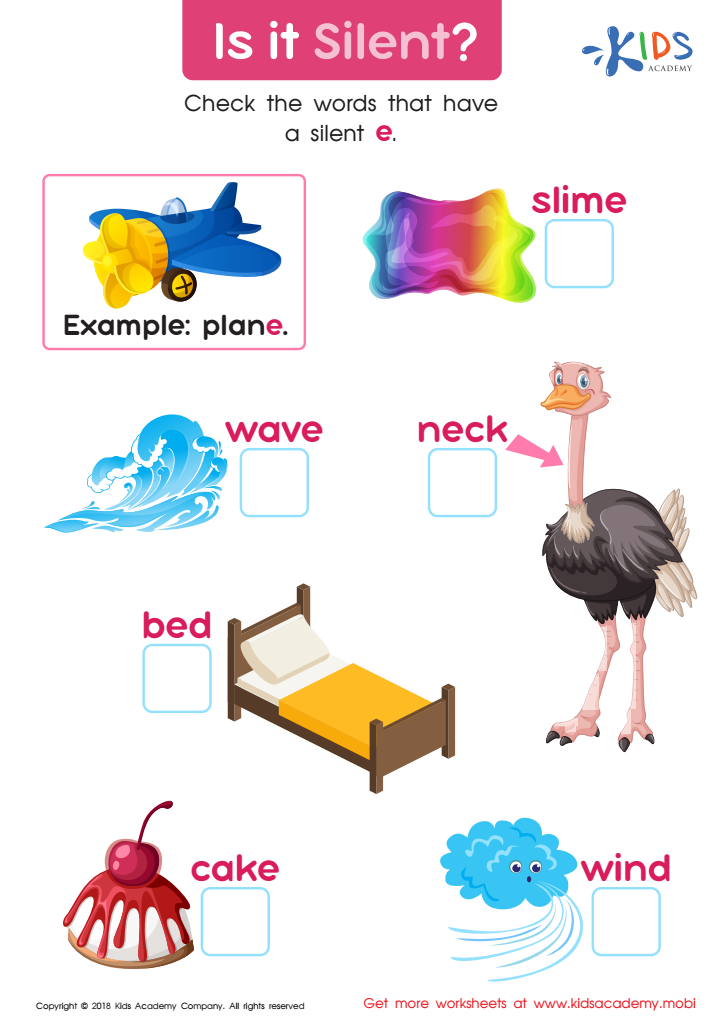
Is It Silent? Worksheet
Phonetics can be tricky, like the sound of /e/ in 'egg' vs. the silent /e/ at the end of 'slime'. Ask your students to give more examples. Read out the words in this worksheet with your kids and ask them to identify the silent /e/ ones.
Is It Silent? Worksheet
Worksheet
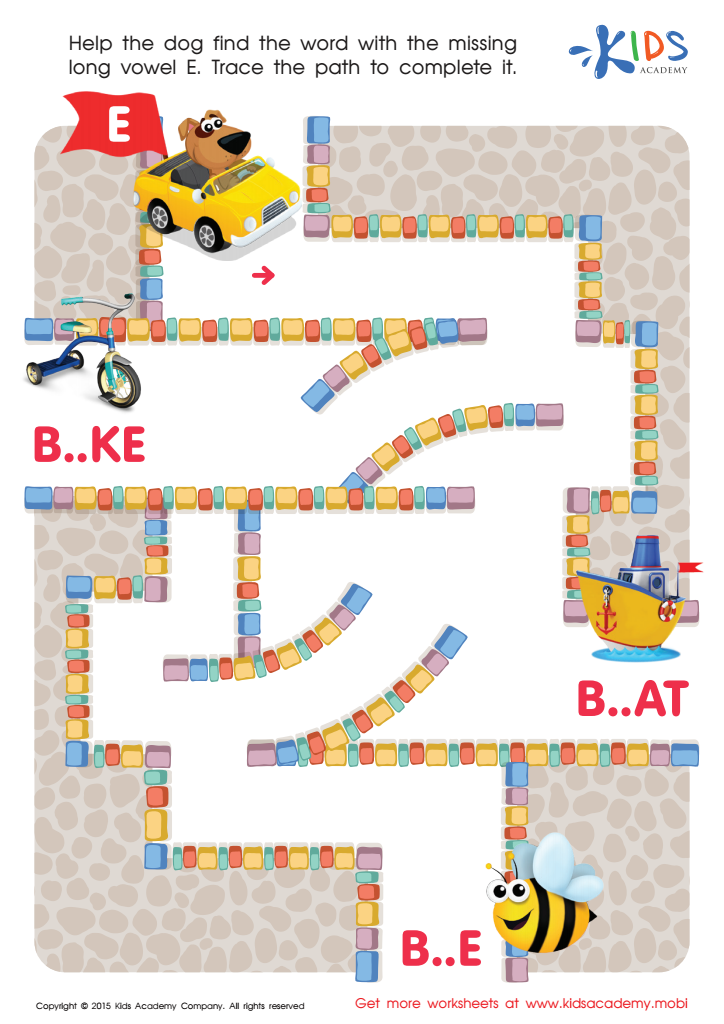
Long Vowel Sound E Worksheet
Practice distinguishing long and short vowel sound E with this free printable! Kids must complete the word “bee” by tracing the maze and adding the missing letter E. Remind them to say the word aloud to help sharpen their phonics ear. Get more phonics fun with the vowel sound E here.
Long Vowel Sound E Worksheet
Worksheet
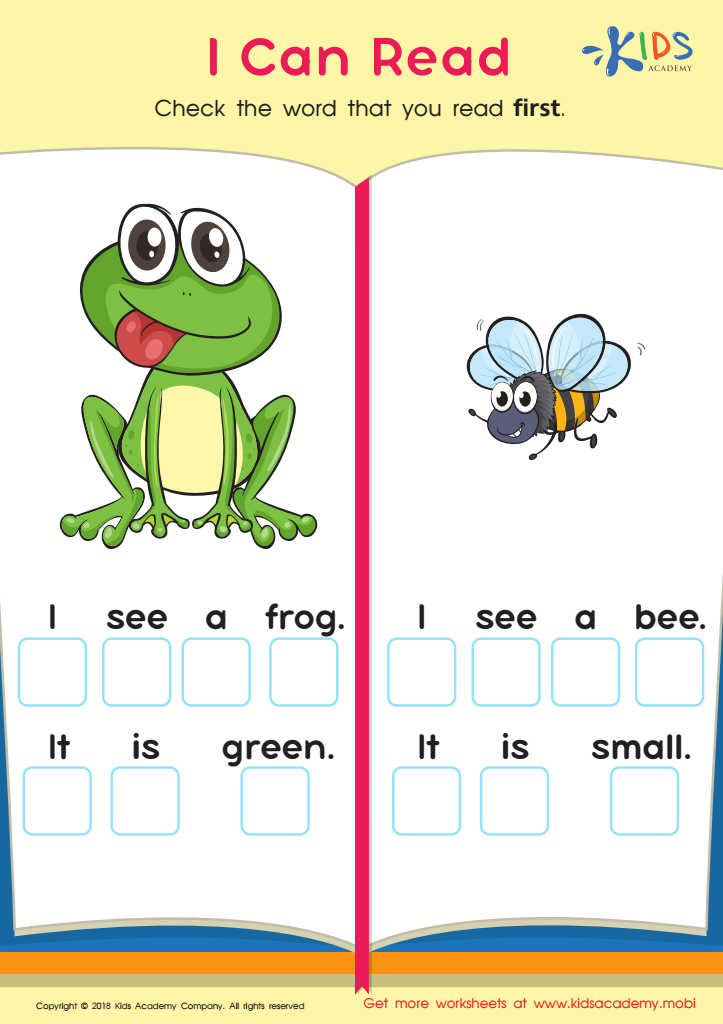
I Can Read Worksheet
Test your child's reading skills with this fun worksheet. See how well they know one-letter, two-letter, and five-letter words. Ask your little one to read the sentences and tick the word they identify first. It's a great way to track their progress and help them become more confident readers.
I Can Read Worksheet
Worksheet
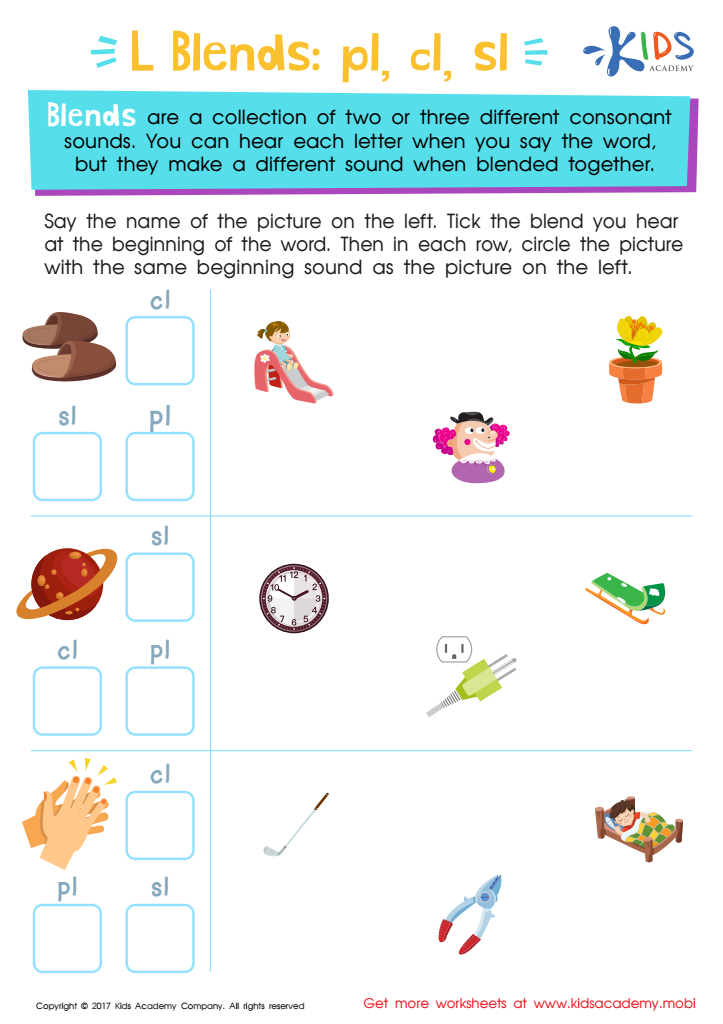
L Blends: "Pl", "Cl" and "Sl" Printable
This printable worksheet will help your child recognize and identify the Pl, Cl, and Sl consonant blends, sound them out, and identify them in print. Improve your child's reading and writing skills with fun and colorful phonics practice!
L Blends: "Pl", "Cl" and "Sl" Printable
Worksheet
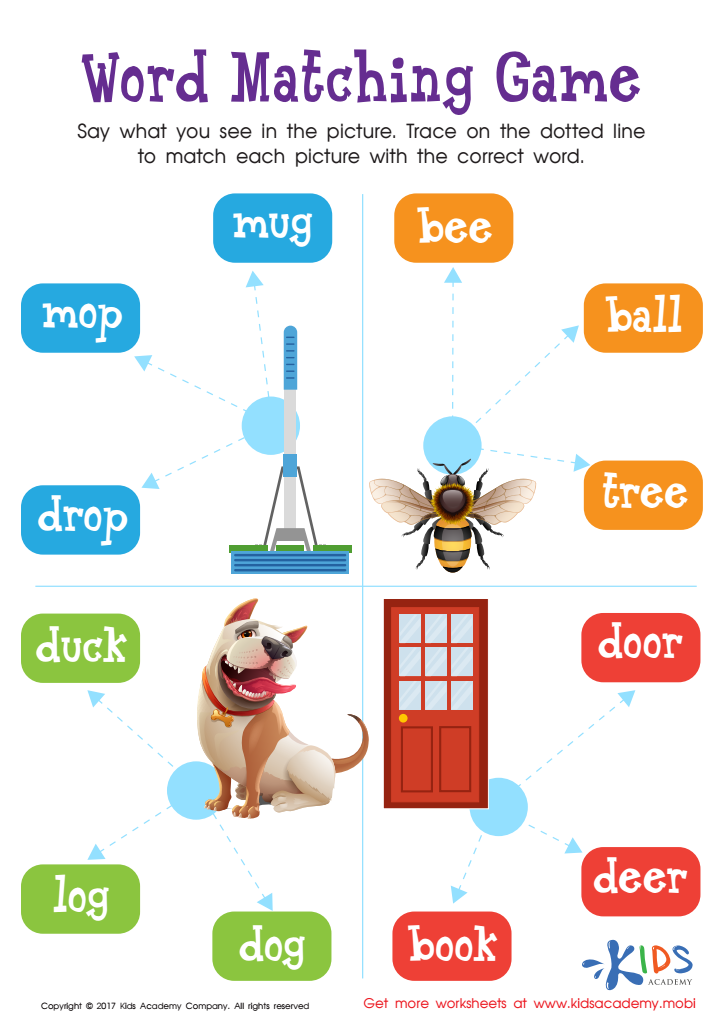
Word Matching Game Worksheet
Help your early reader develop prereading skills with this fun matching worksheet! Visual cues help them learn sight words, decode words in word families, and identify phonetic patterns. They'll practice discerning sounds past initial consonants while saying the name of the picture and finding the matching word - and reading at the same time!
Word Matching Game Worksheet
Worksheet
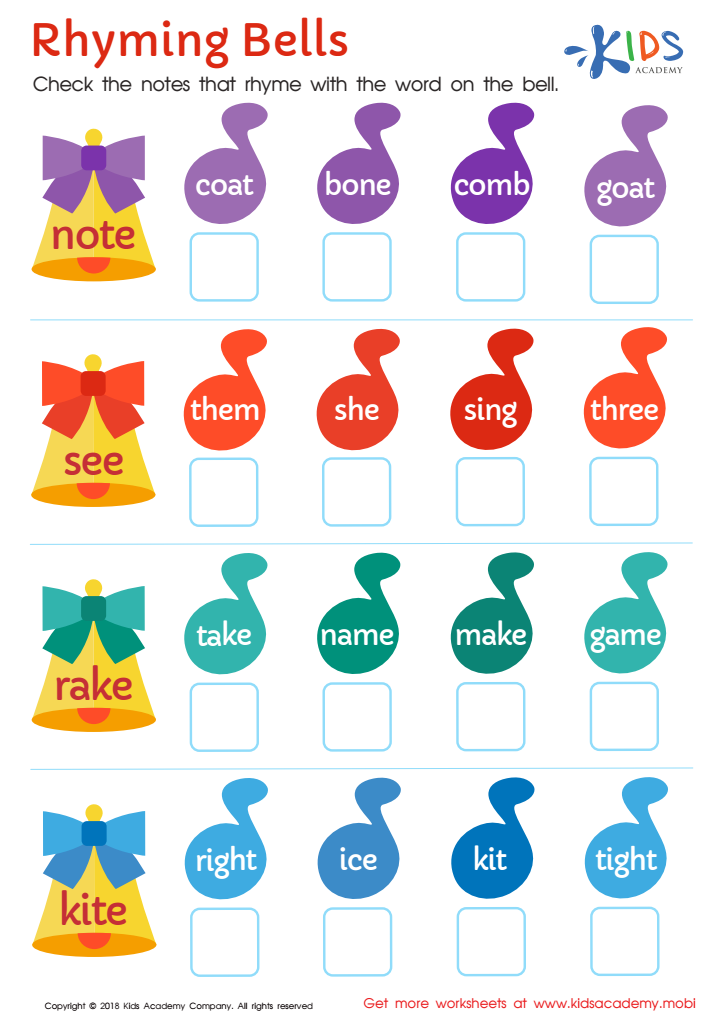
Rhyming Bells Worksheet
This printable worksheet helps students recognize rhyming words. Read a word, then pick the 4 words that rhyme. Look out for words with different spellings but same ending sound. It's a great exercise to improve understanding of rhyming words.
Rhyming Bells Worksheet
Worksheet
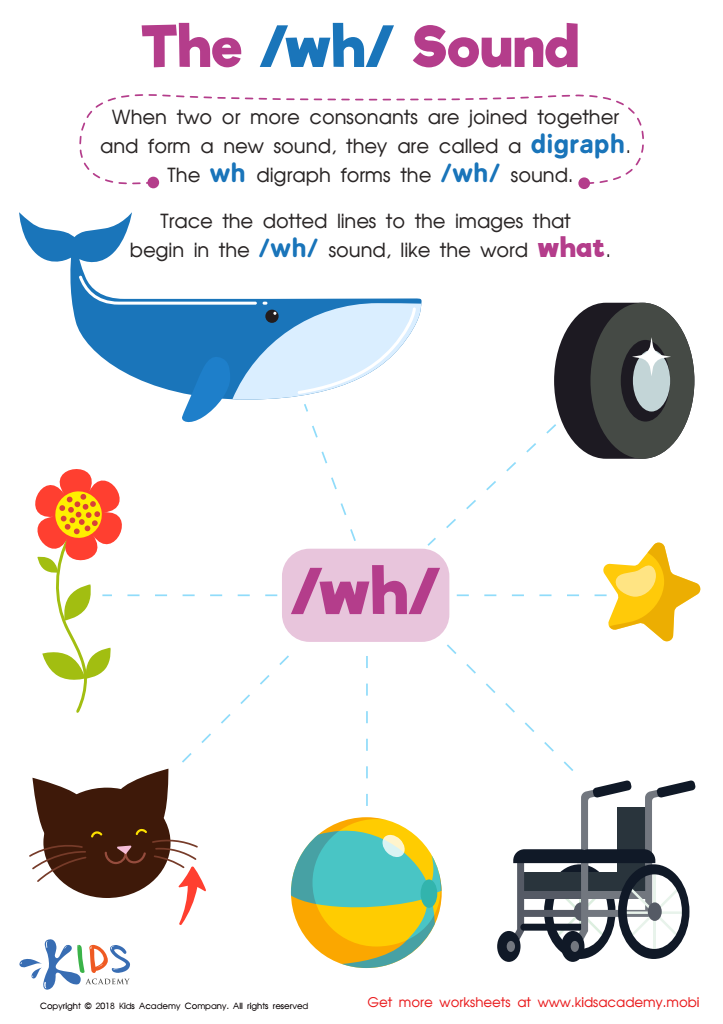
The /wh/ Sound Worksheet
Digraphs join two consonants to make a new sound, like /wh/. Give examples, like "whale", "when" and "why". Ask kids to name pictures in a worksheet and trace dotted lines to images beginning with the /wh/ sound; "what" is one example.
The /wh/ Sound Worksheet
Worksheet
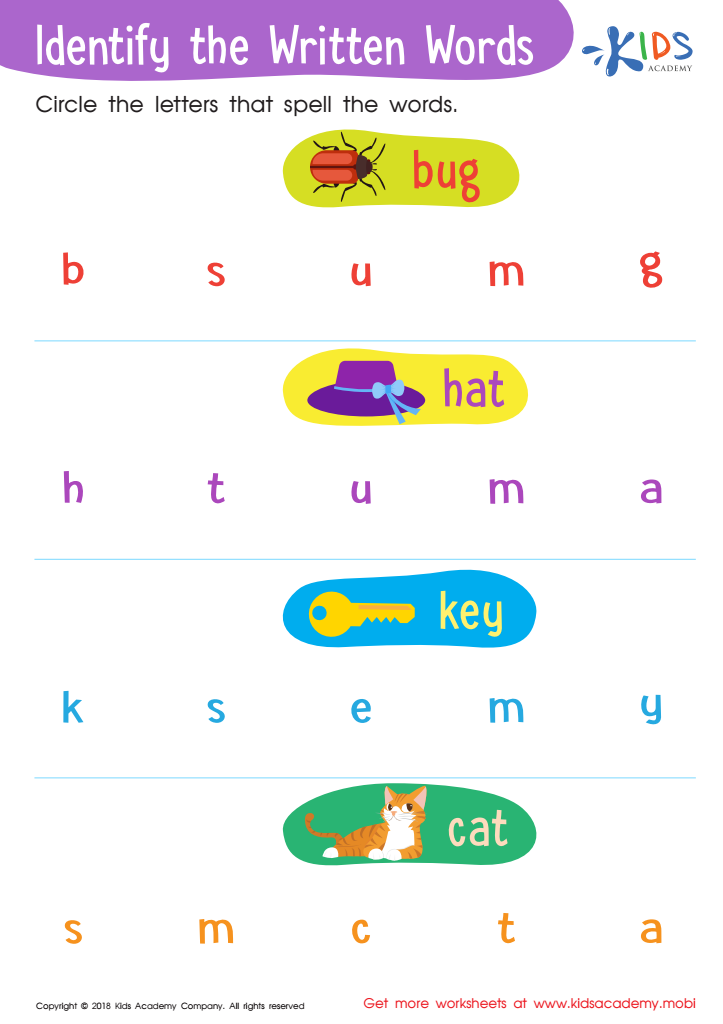
Identify the Written Words Worksheet
Have your students identify the objects on the printout, then spell the words. If they already know how to spell, this exercise should be easy. Help them circle the correct letters from the set to spell out the words. This is a great way to reinforce reading and spelling skills. Max 80 words.
Identify the Written Words Worksheet
Worksheet
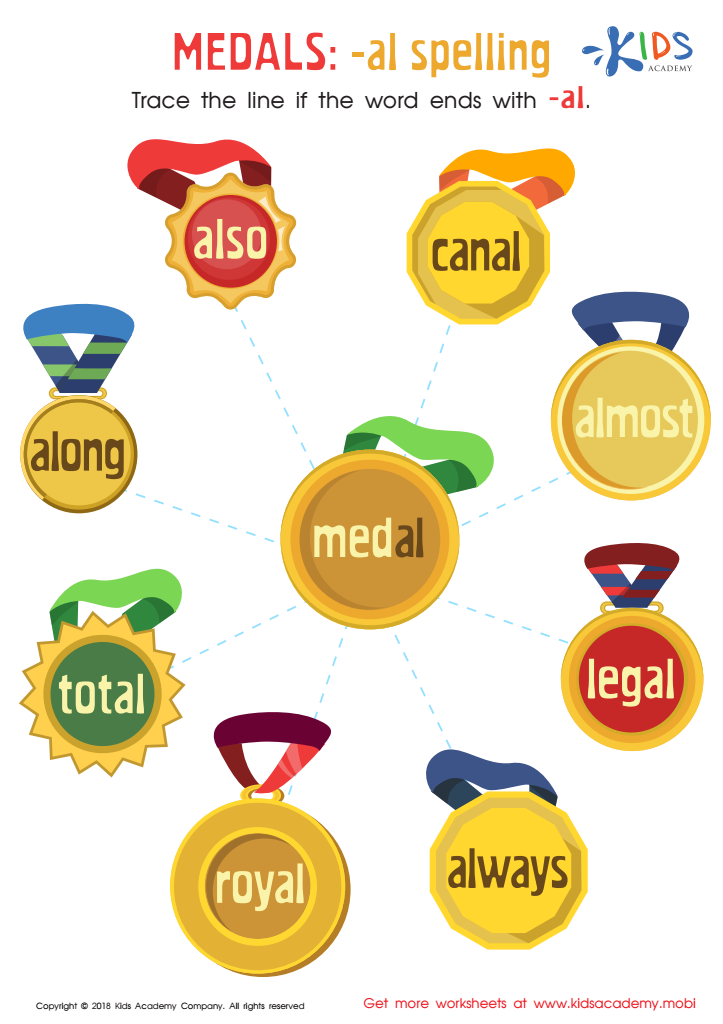
Medals: Al Spelling Worksheet
Have your students list common words ending with -al. See how many they can give and spell. Give examples of your own, assisting with spelling. Now review the words in the worksheet. Guide students to trace the line for each word ending with -al. 80 words
Medals: Al Spelling Worksheet
Worksheet
Join Kids Academy for Free
Who is primarily going to use this learning content?


.jpg)





Word Recognition Alphabet is fundamental for children aged 5-8 because it serves as the building block for literacy development. At this critical stage, children transition from recognizing letters to reading words and sentences. Mastery of word recognition alphabet skills enables them to quickly and accurately identify words, fostering early reading independence.
Firstly, recognizing letters and their corresponding sounds (phonics) is crucial for decoding words. When children can automatically recognize words, they read more fluently and with greater comprehension, which boosts their confidence and motivation to read more. If children struggle with letter and word recognition, they may find reading laborious and frustrating, potentially leading to a lifelong disinterest in reading and learning.
Moreover, early proficiency in word recognition alphabet has profound academic implications. Literacy skills are the foundation for all other learning; children who do well in reading are often successful in other subjects like math, science, and social studies, as it enables them to comprehend and engage with complex texts.
For parents and teachers, understanding the importance of word recognition is a call to action to provide resources, practice, and support tailored to this stage of development. This can include interactive reading sessions, phonics games, and visual aids that make learning engaging. Investing in these early literacy skills can set children up for enduring academic success and a love for reading.







