Adding up to 100 Without Regrouping Worksheets for Ages 5-8 - Page 2
73 filtered results
-
From - To
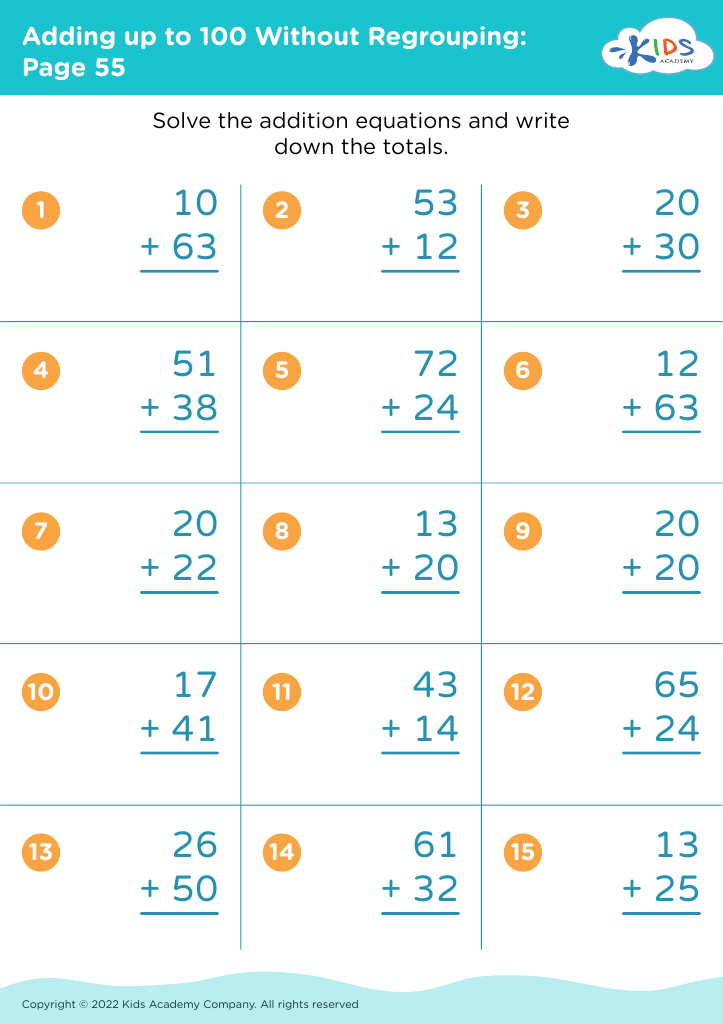
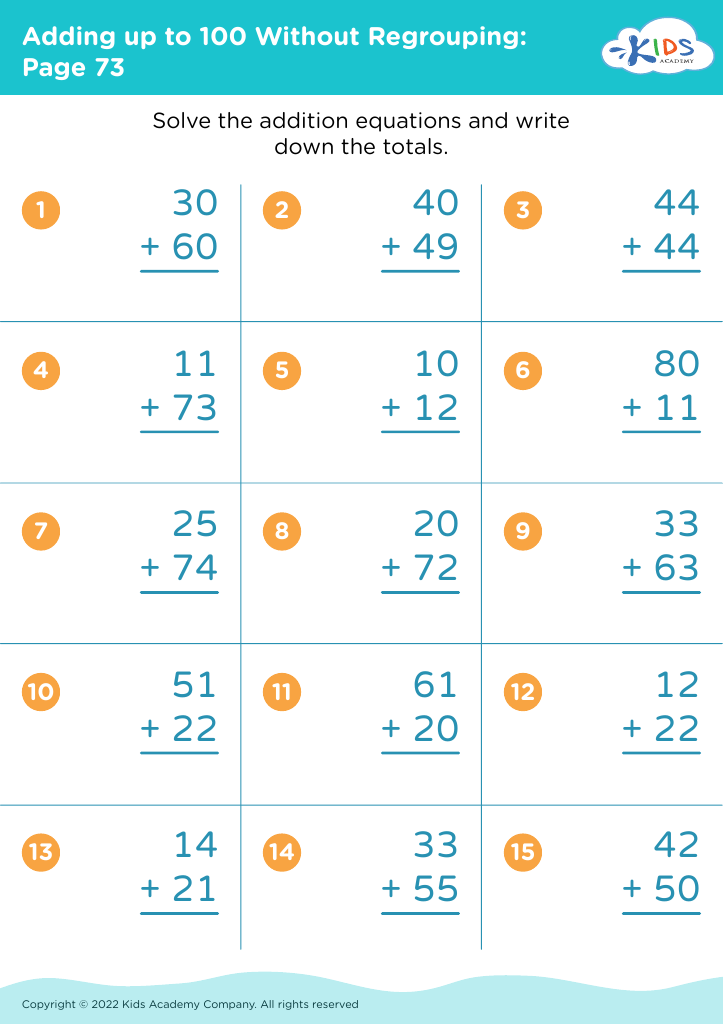
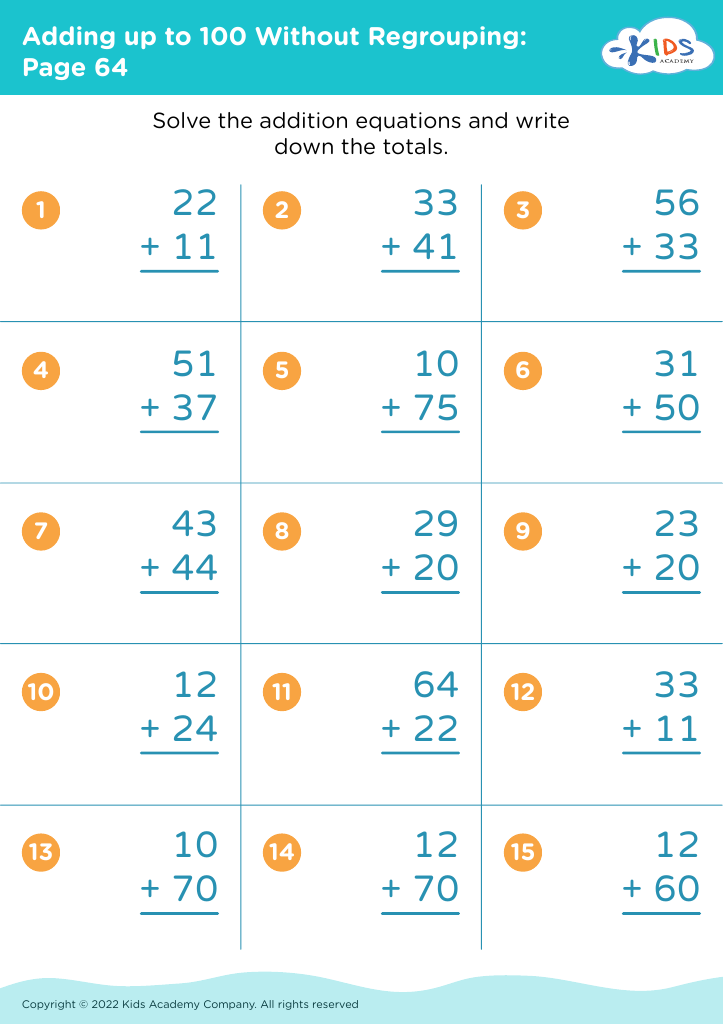
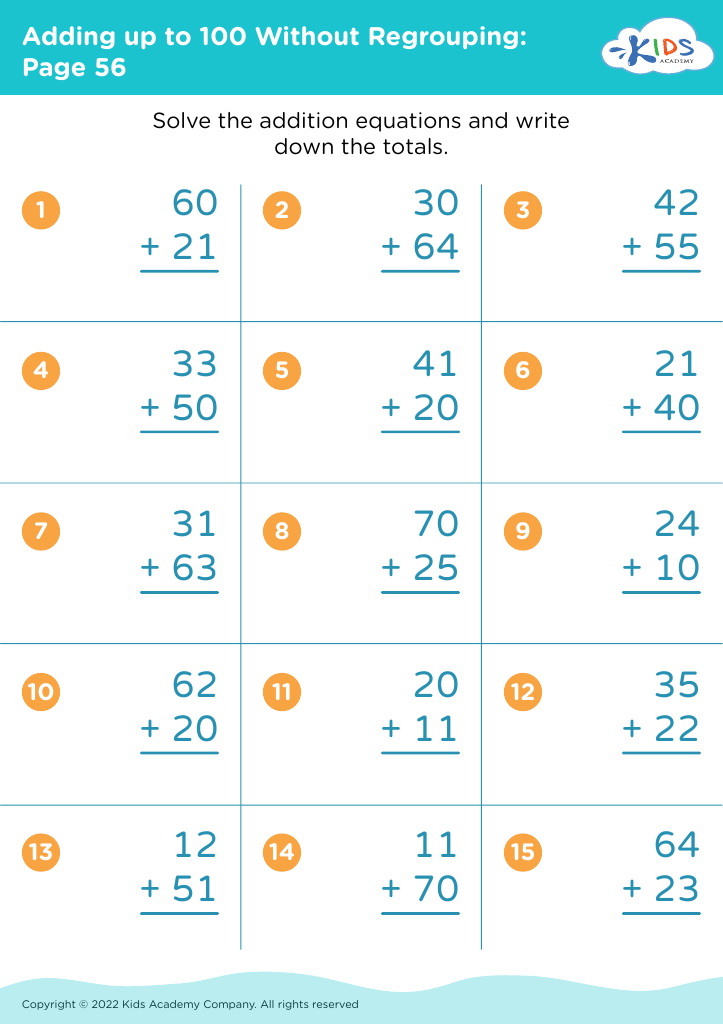
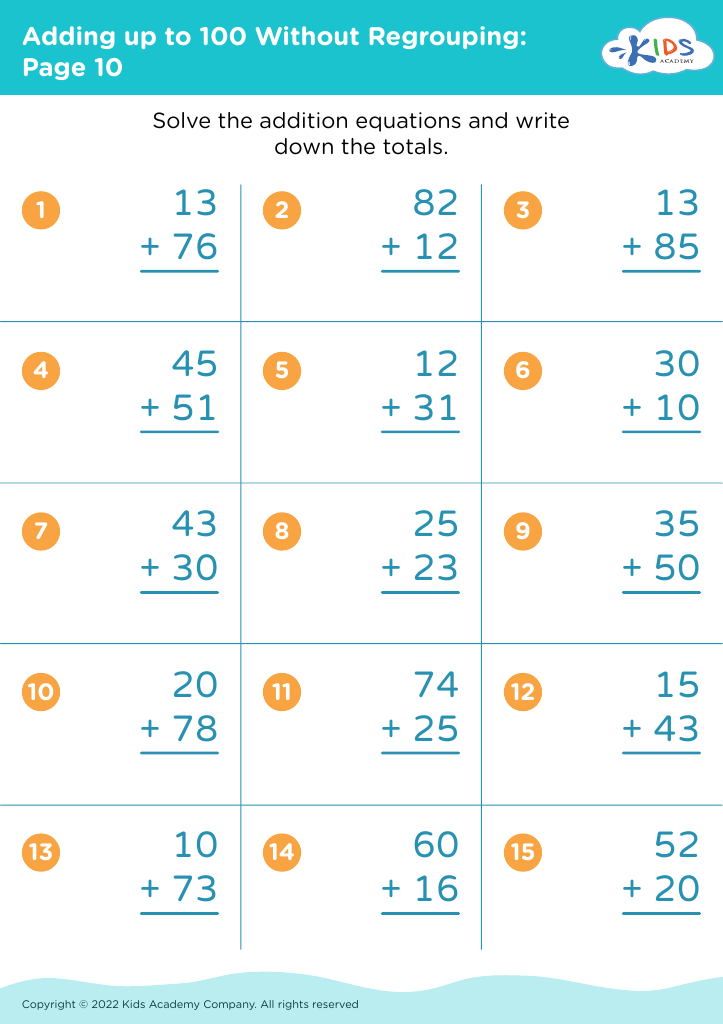
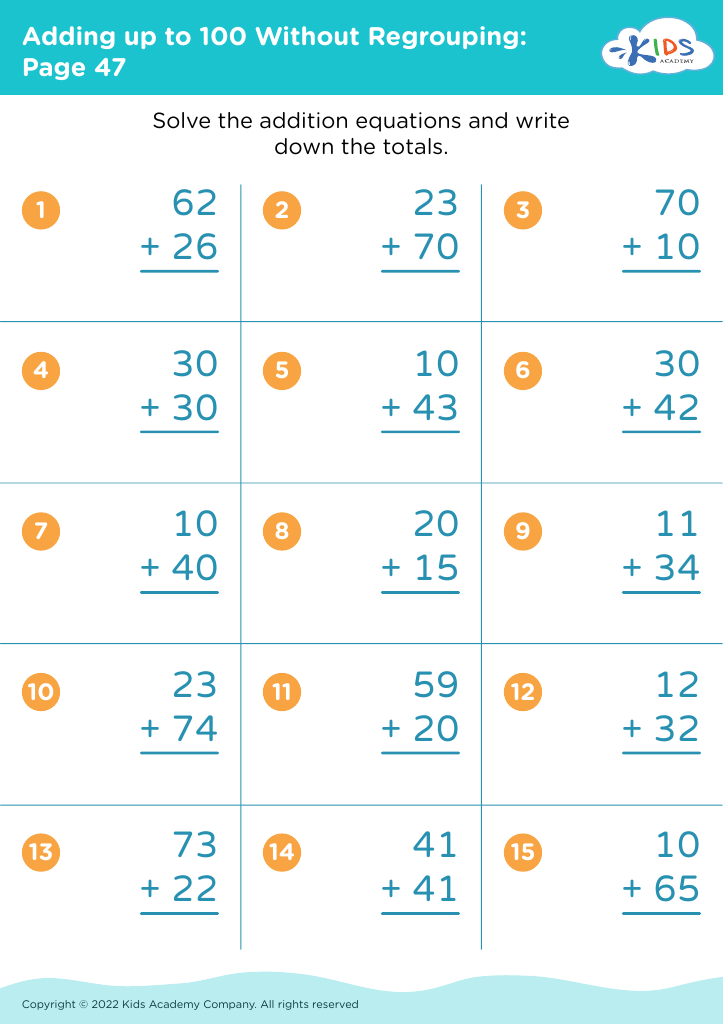
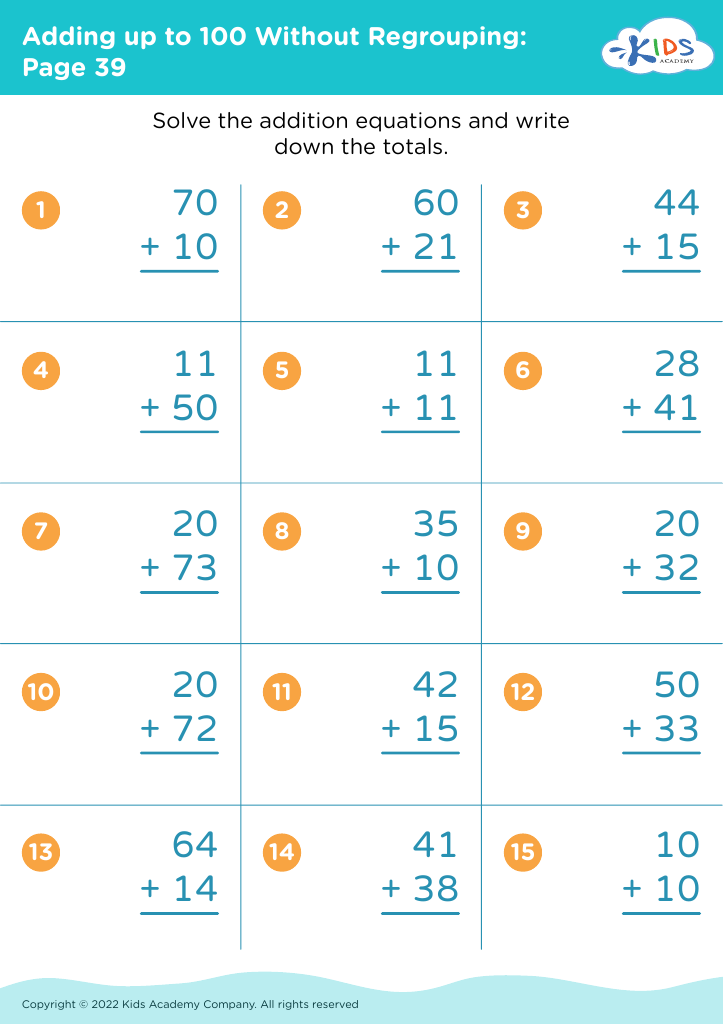
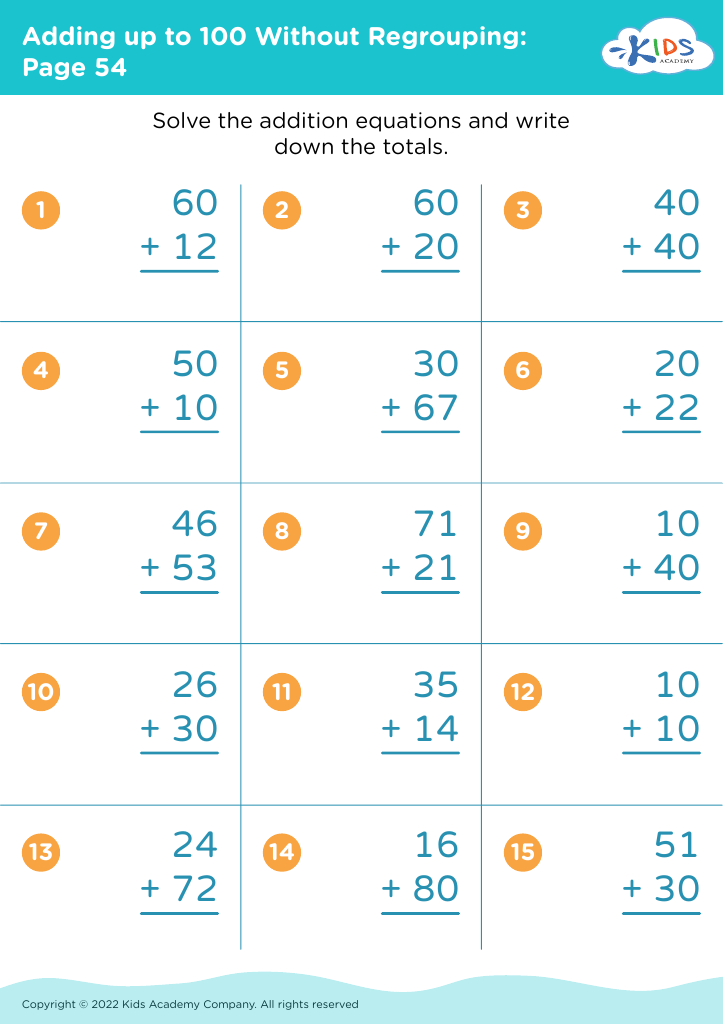
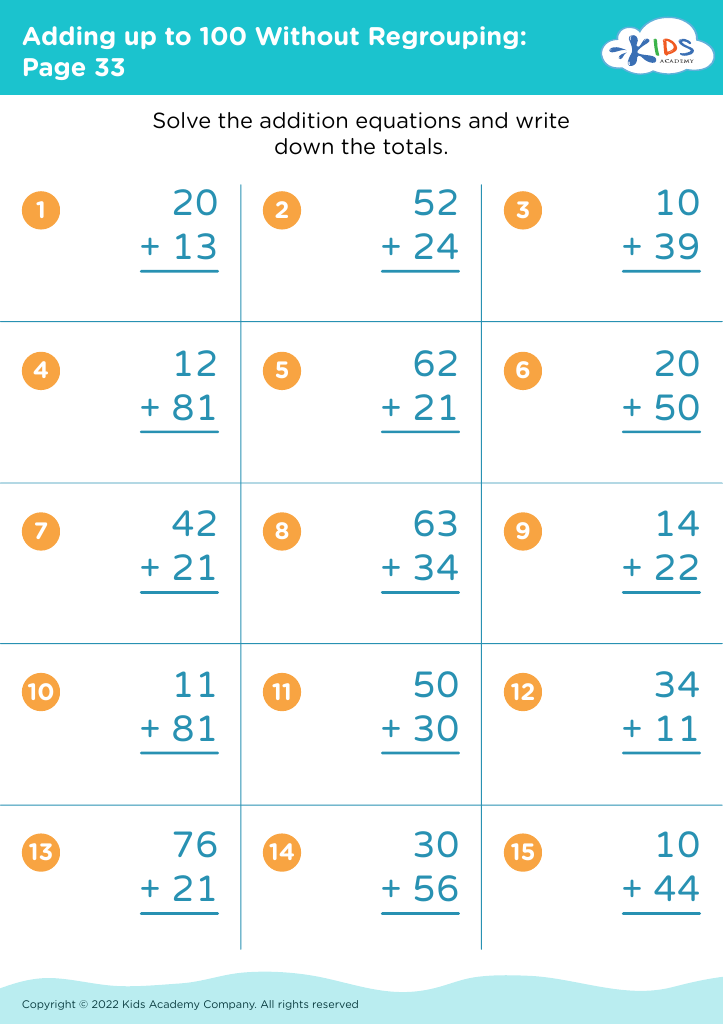
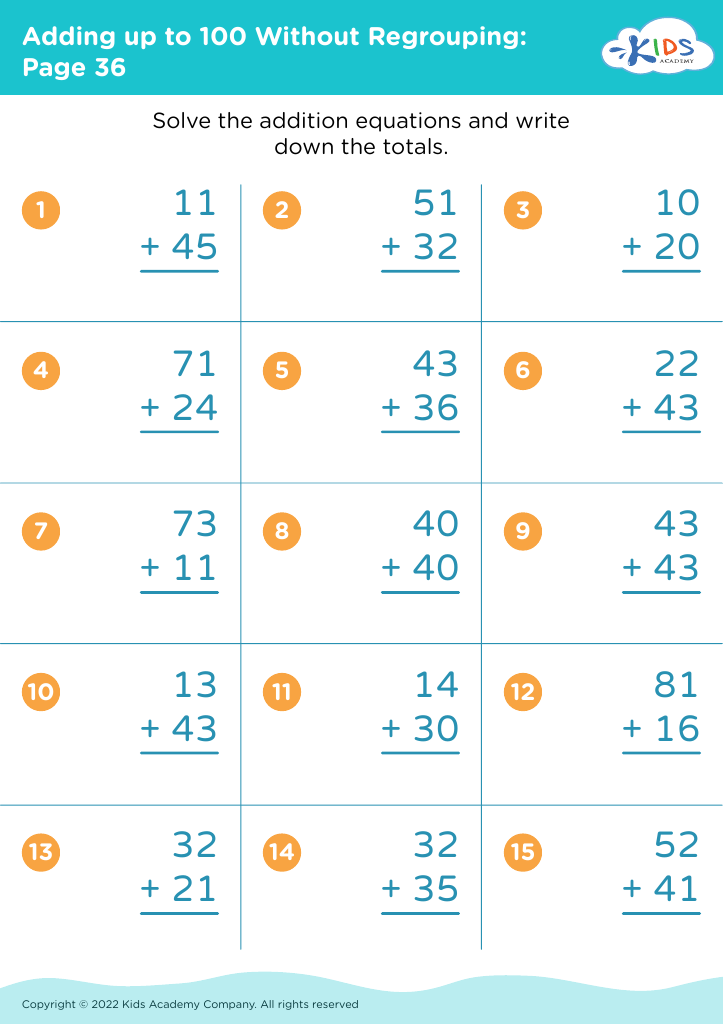
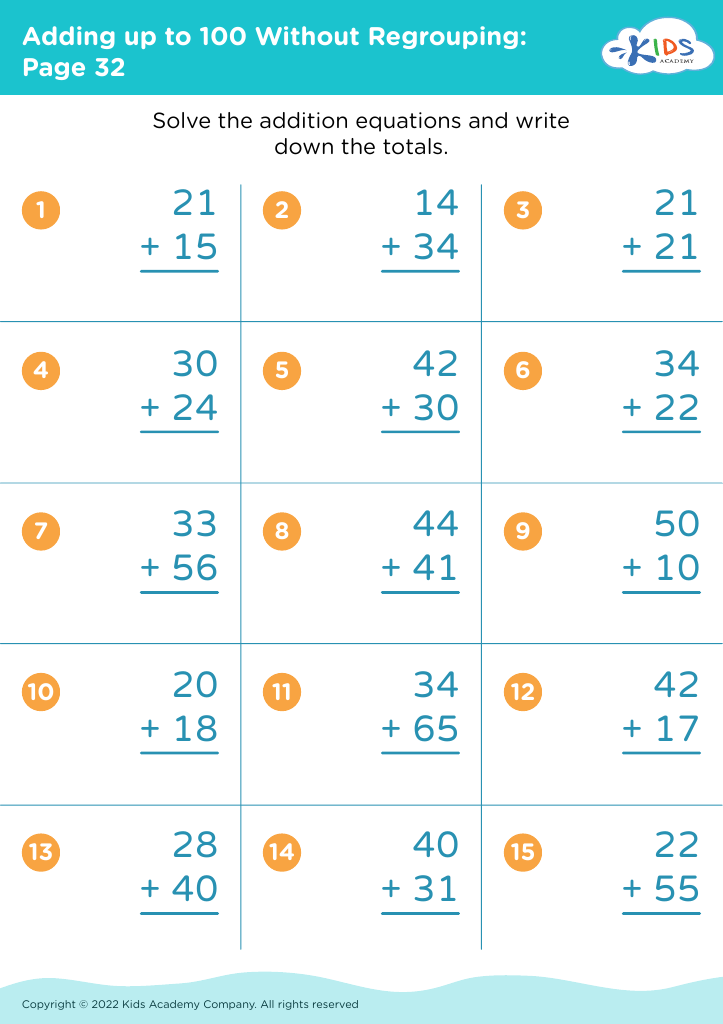
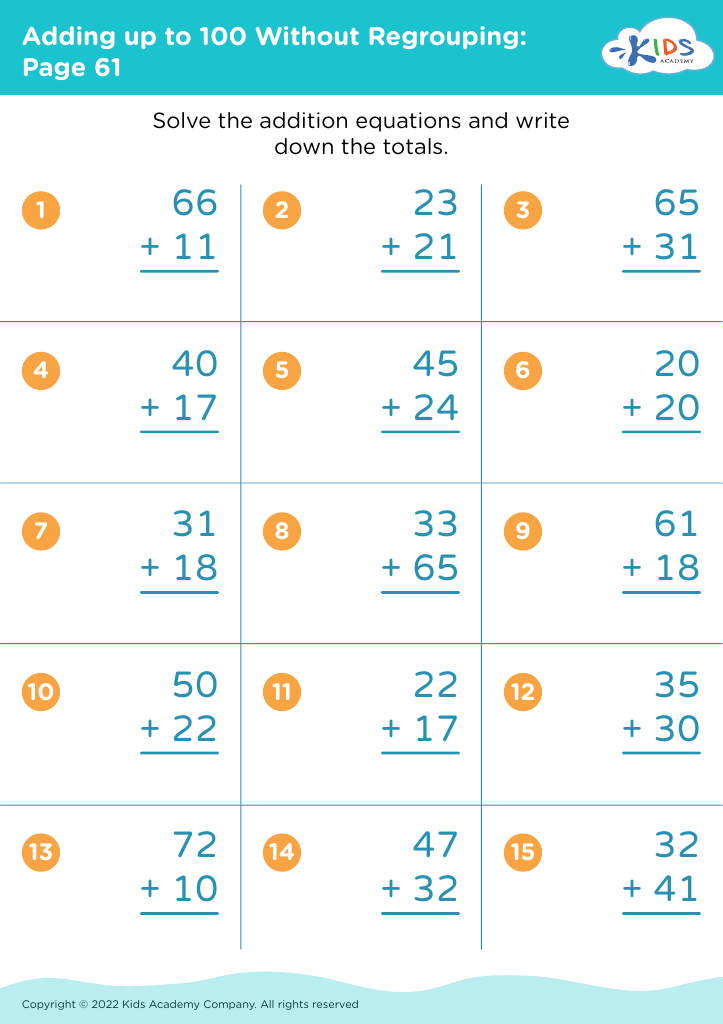
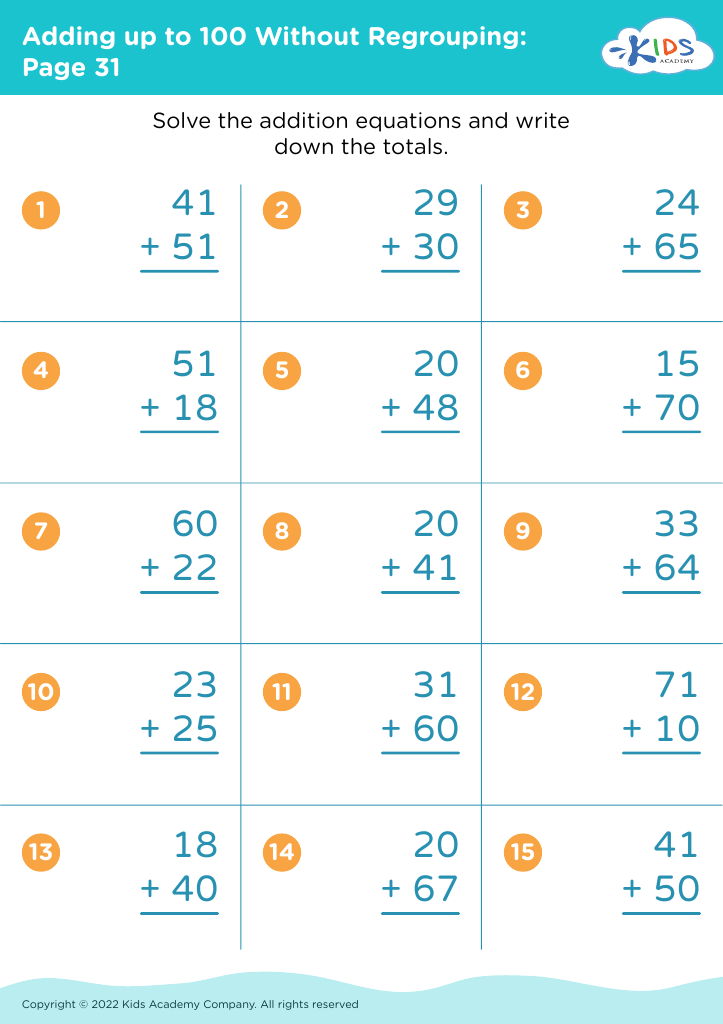
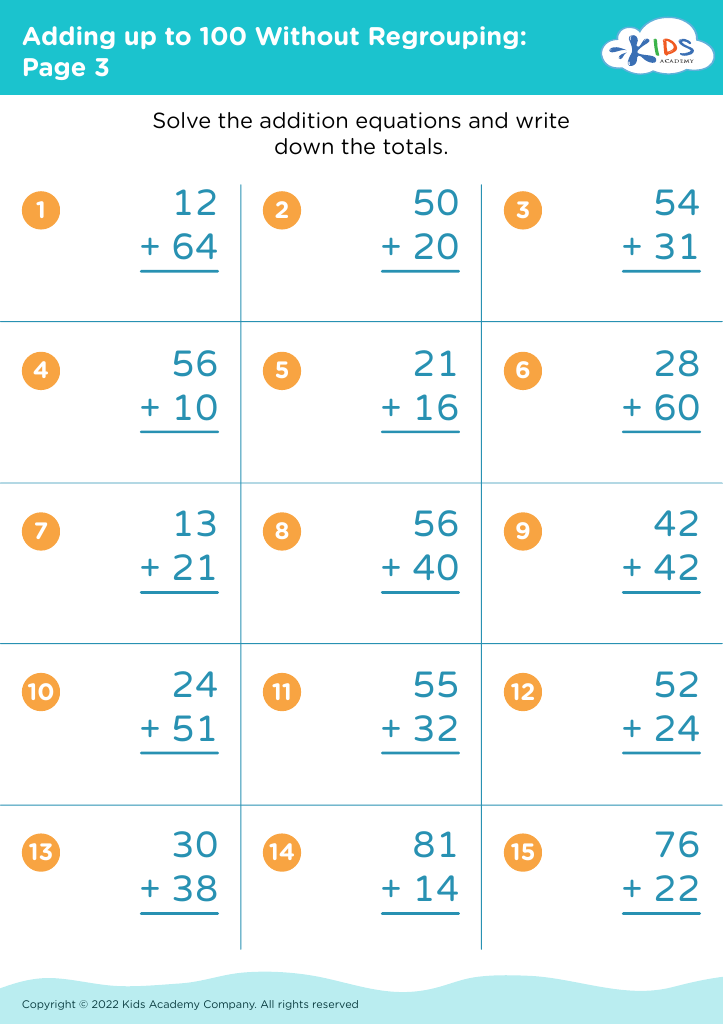
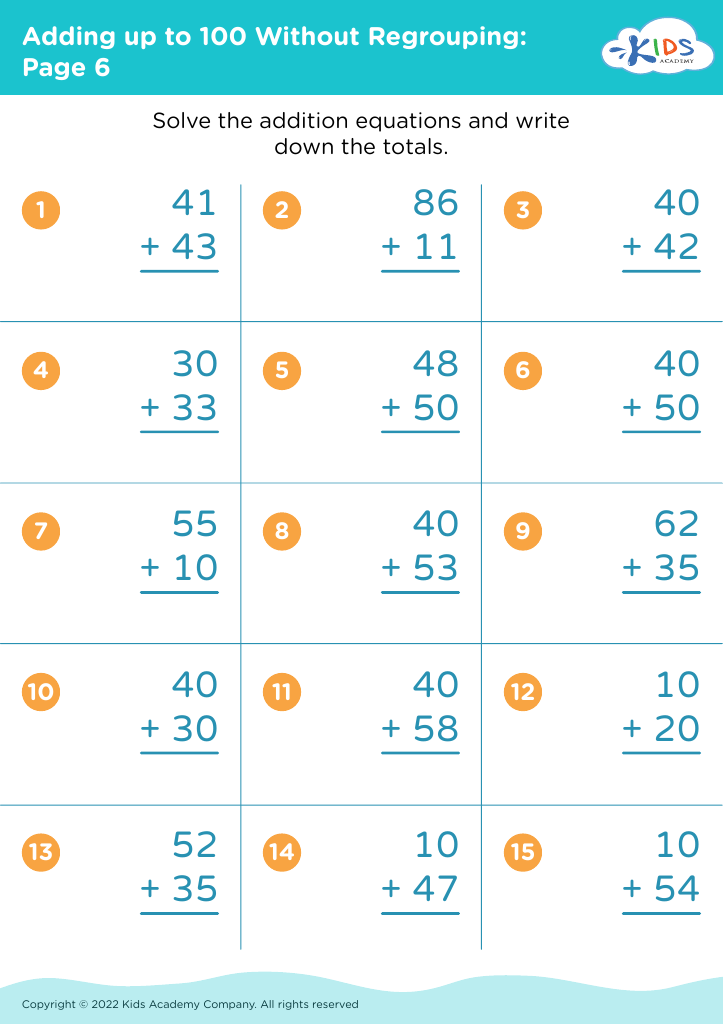
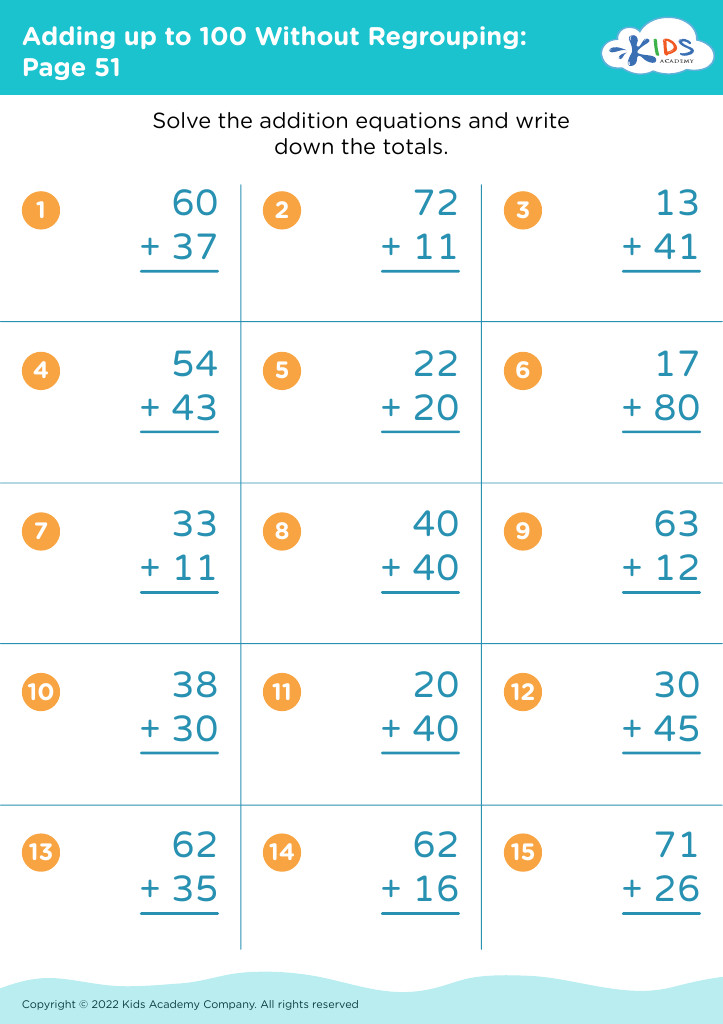
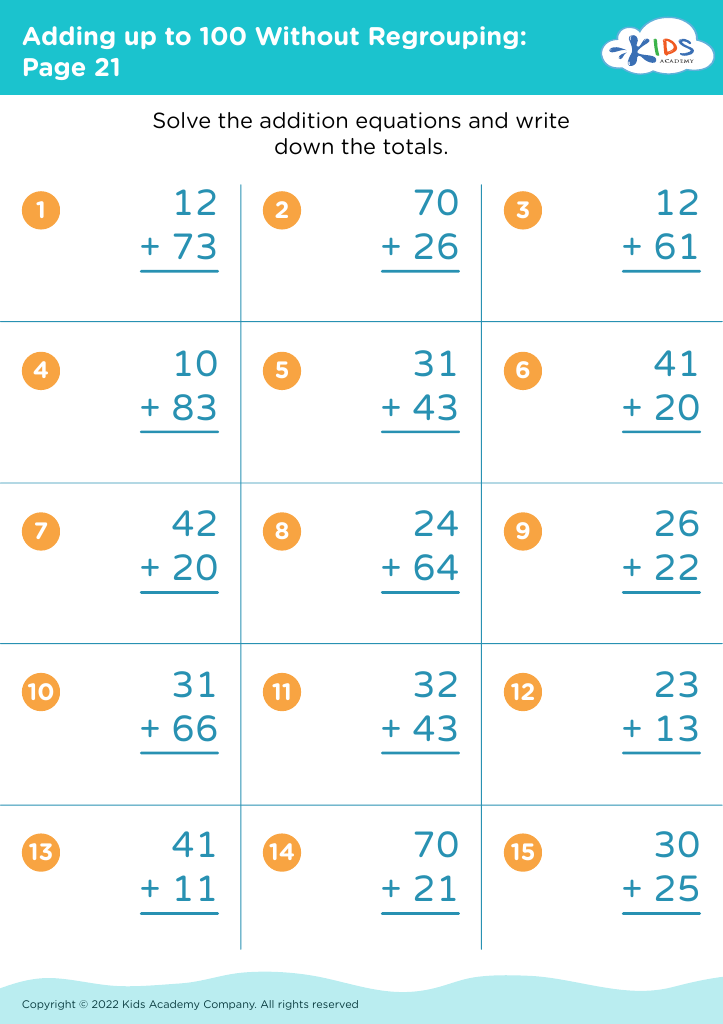
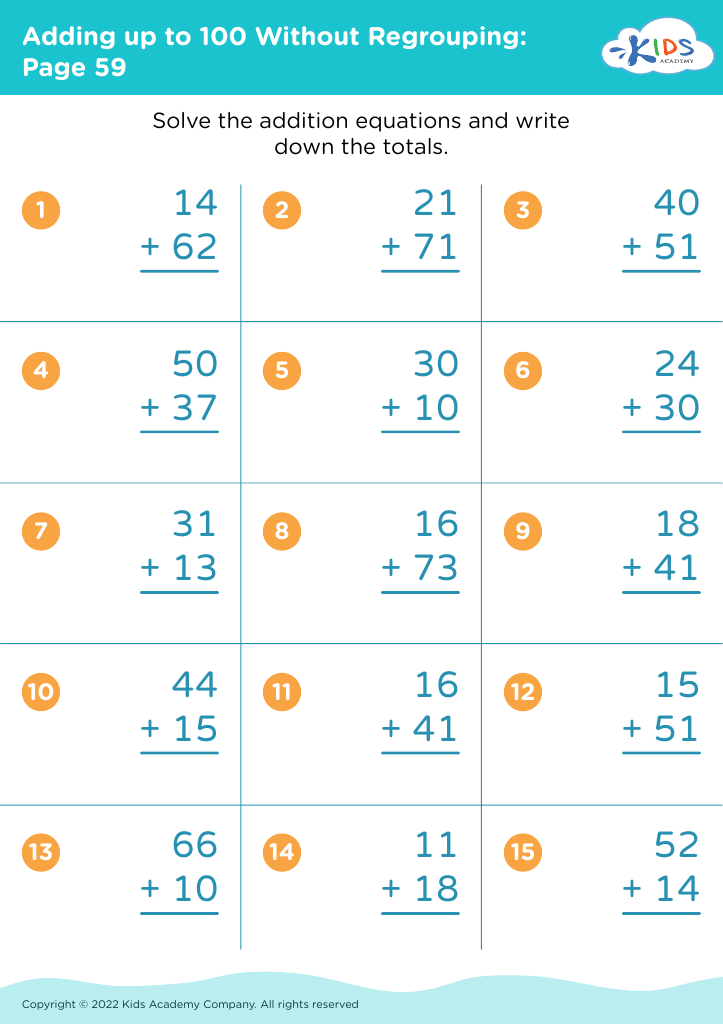
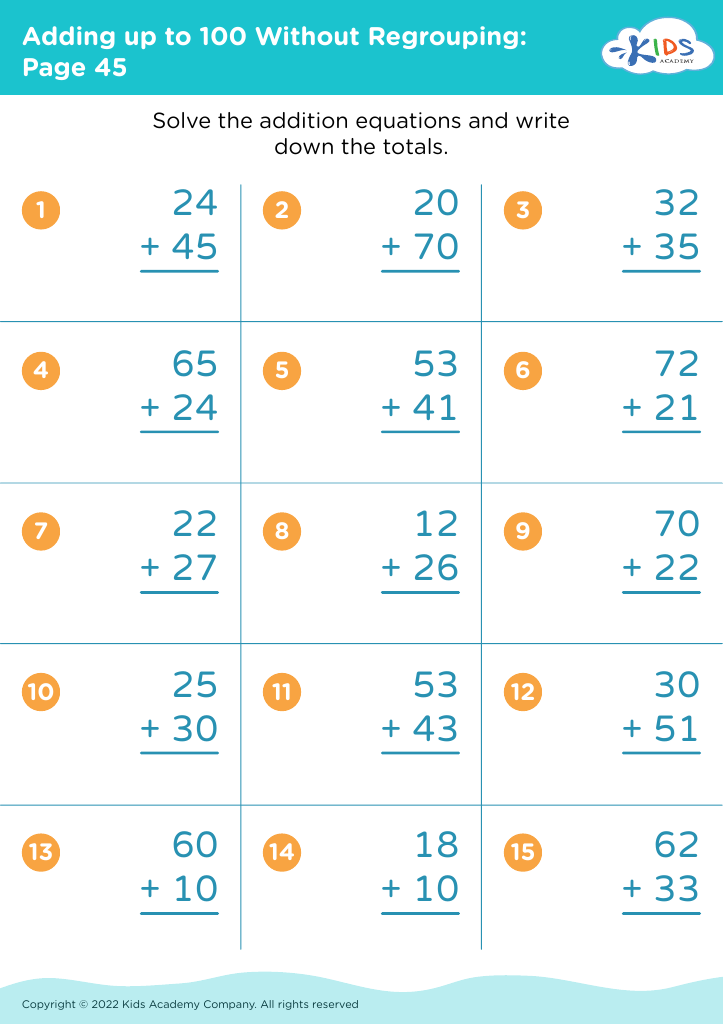
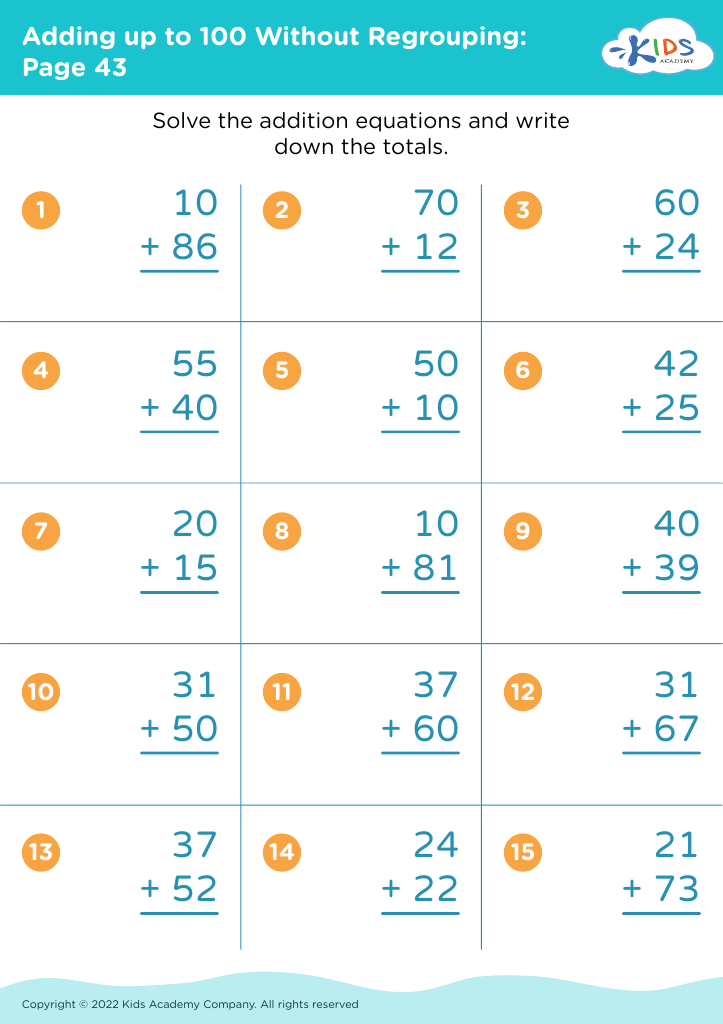
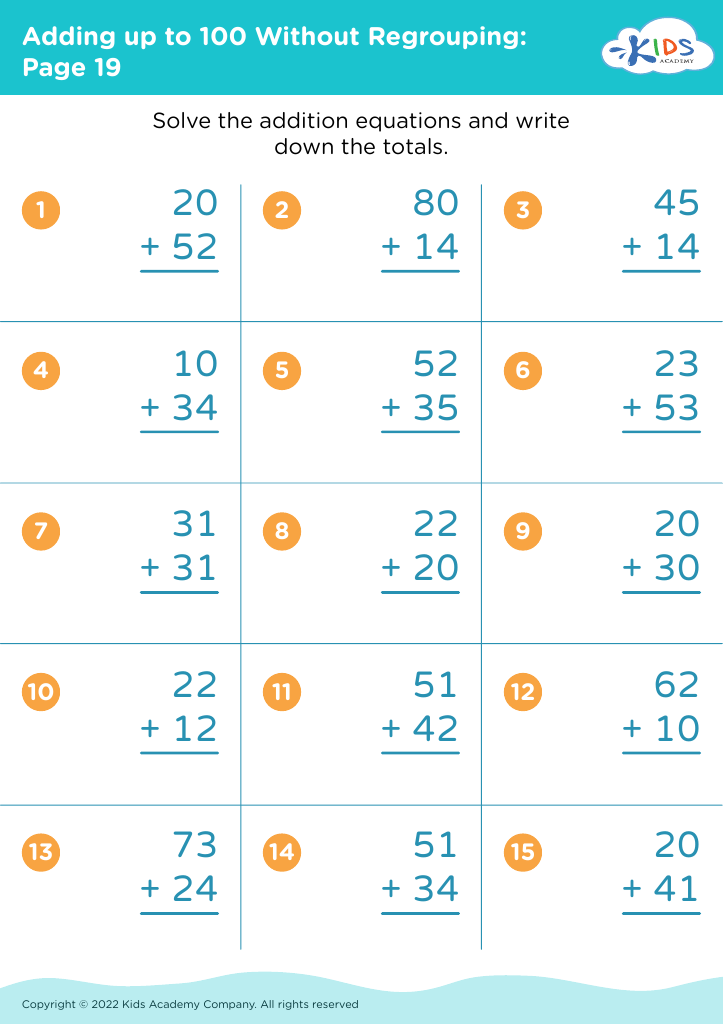
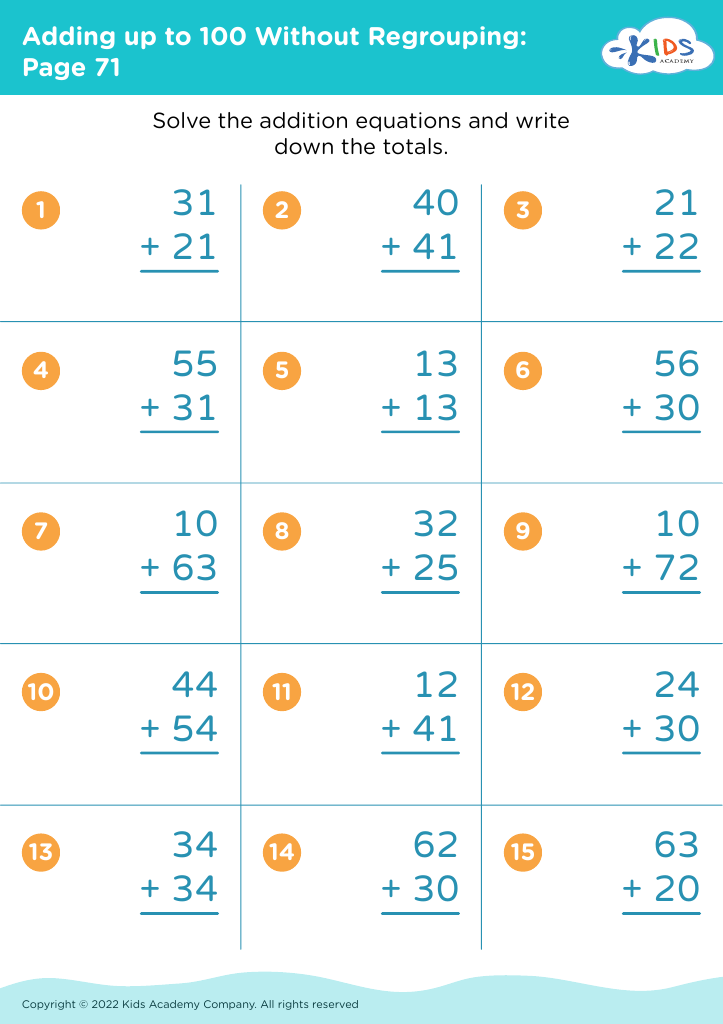
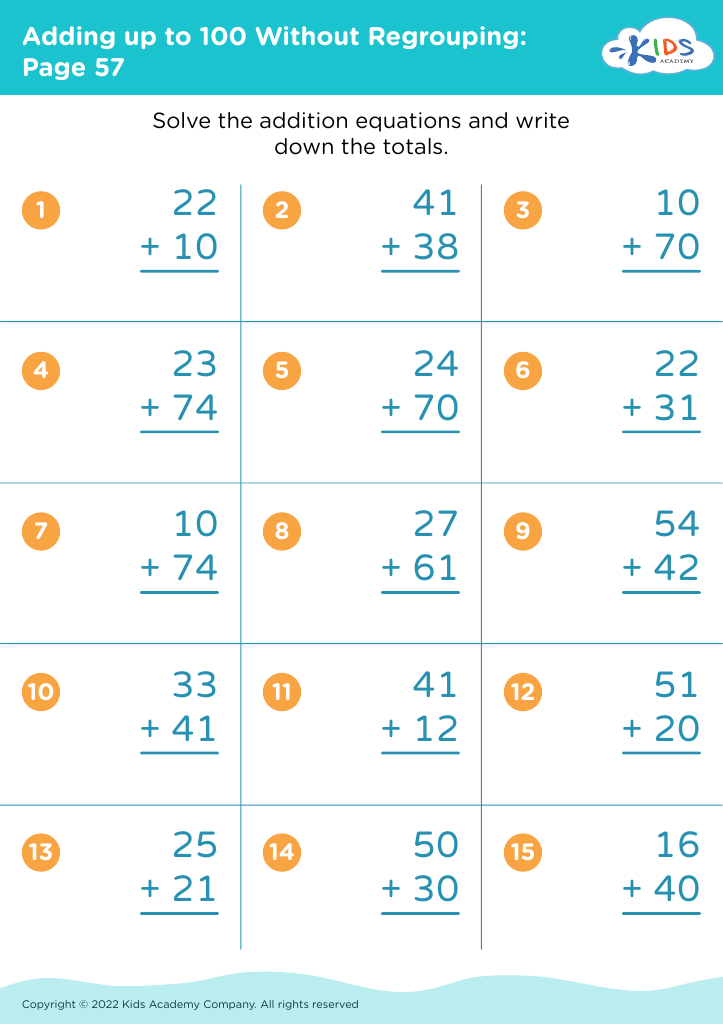
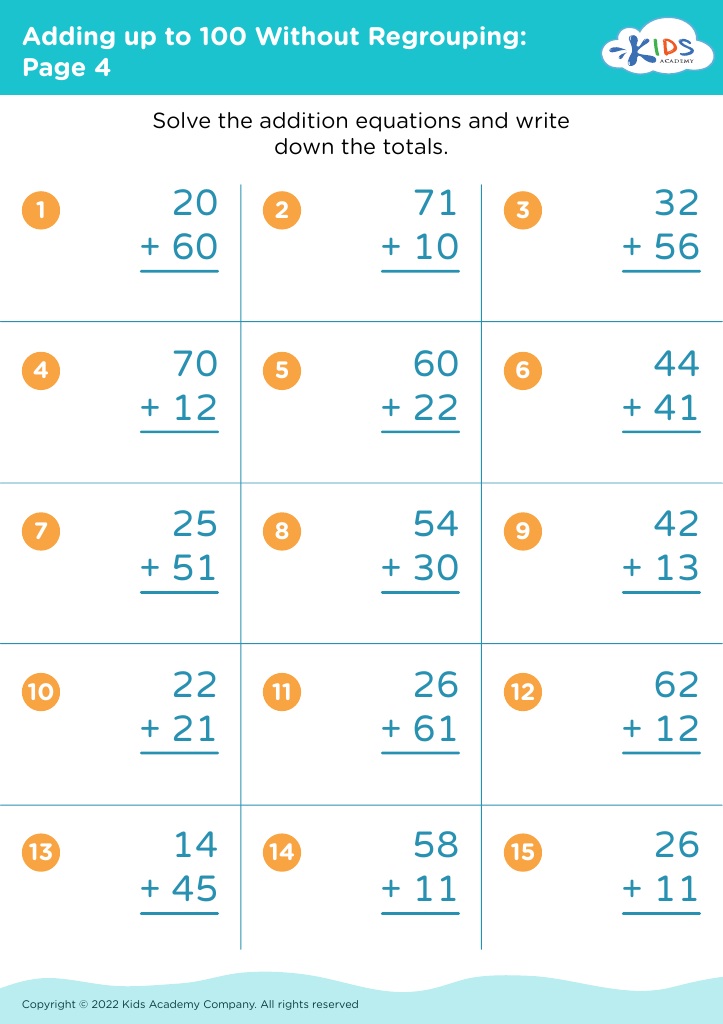





Adding up to 100 without regrouping is an essential foundational skill for children aged 5-8, setting the stage for more advanced math concepts. Parents and teachers should prioritize this because it helps build early number sense, an integral component of overall mathematical proficiency. By mastering addition without regrouping, children develop confidence in handling numbers and basic arithmetic operations, reducing potential anxieties about math.
Focusing on sums up to 100 enables kids to engage with a manageable yet significant range of numbers. This proficiency enhances their ability to perform math mentally, a critical skill that aids them in everyday situations and future academic pursuits. Without the complexity of regrouping, children can concentrate on understanding number relationships and patterns, reinforcing their comprehension and recall.
Furthermore, this practice boosts their problem-solving abilities and logical thinking. They can start making quick estimates and decisions involving numbers, a cornerstone for subjects like science, technology, and economics. Early competence in math fosters a positive attitude and curiosity towards the subject, influencing their future academic trajectory.
Overall, emphasizing addition up to 100 without regrouping during these formative years accelerates mathematical literacy, developing a robust foundation that supports future learning and everyday practical skills.