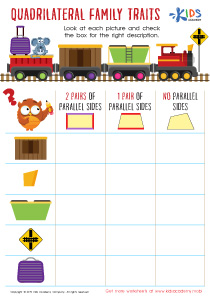
Understanding fractions Fractions of Shapes Worksheets for Ages 5-8
22 filtered results
-
From - To
Discover our "Understanding Fractions of Shapes Worksheets" tailored for children ages 5-8! These engaging worksheets help young learners grasp fundamental concepts of fractions through colorful visuals and hands-on activities. Designed to simplify complex ideas, our resources enable kids to identify and represent fractions of different shapes, fostering critical thinking and problem-solving skills. Each worksheet encourages exploration and reinforces knowledge through interactive exercises, making learning fractions fun and accessible. Whether in the classroom or at home, these worksheets are perfect for building a solid foundation in math. Start your child’s journey towards fraction mastery today!
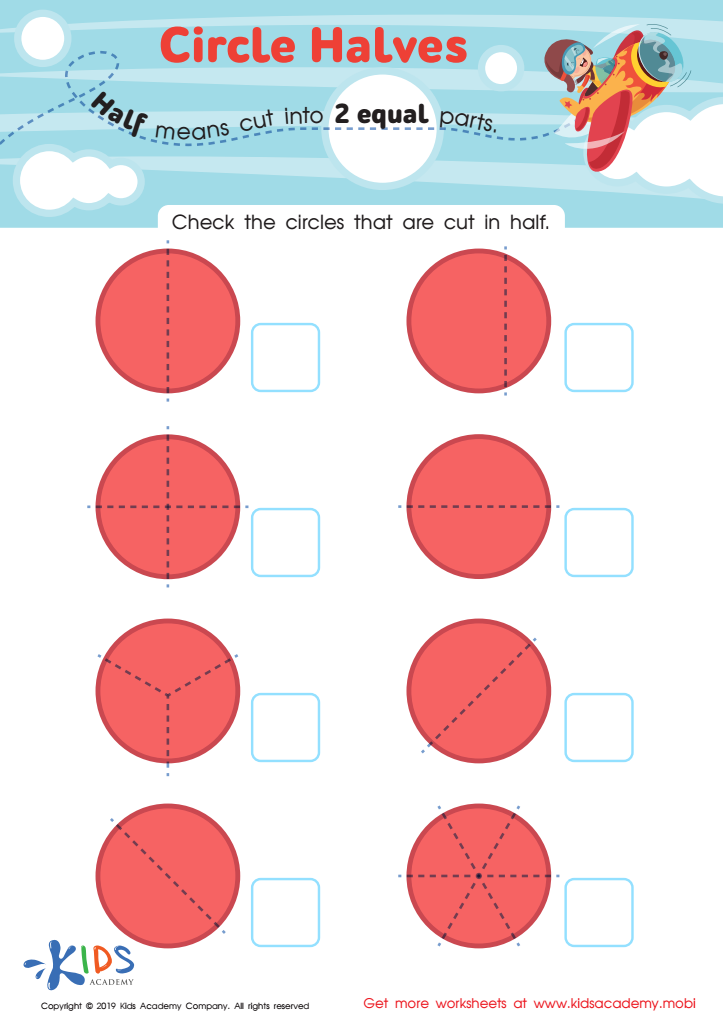
Circle Halves Worksheet
 Assign to My Students
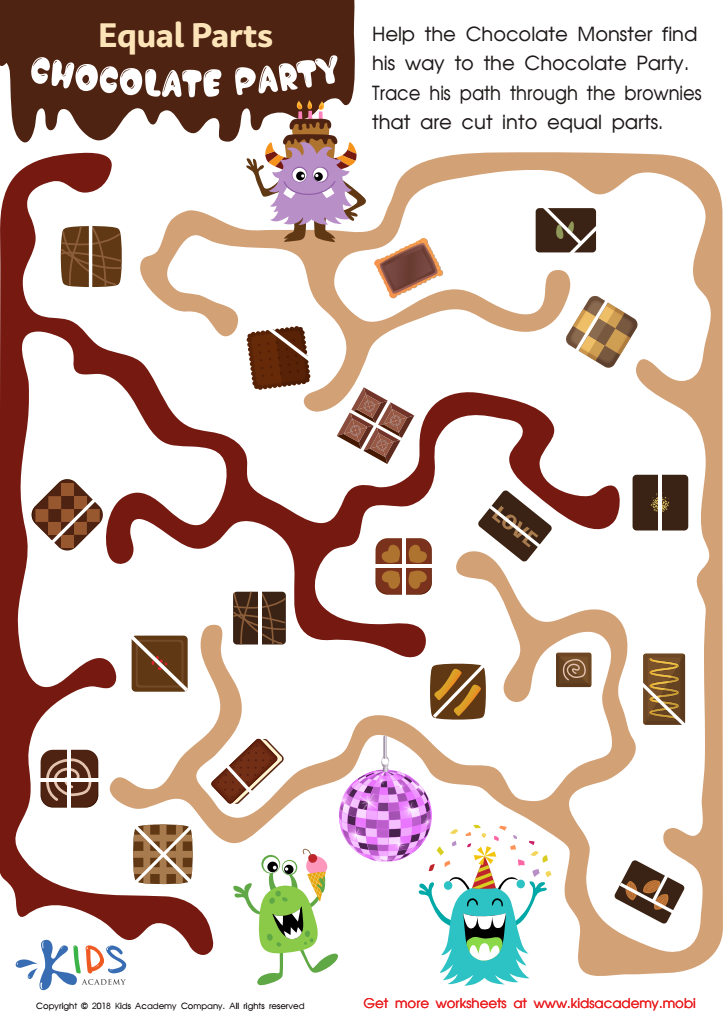
Equal Parts: Chocolate Party Worksheet
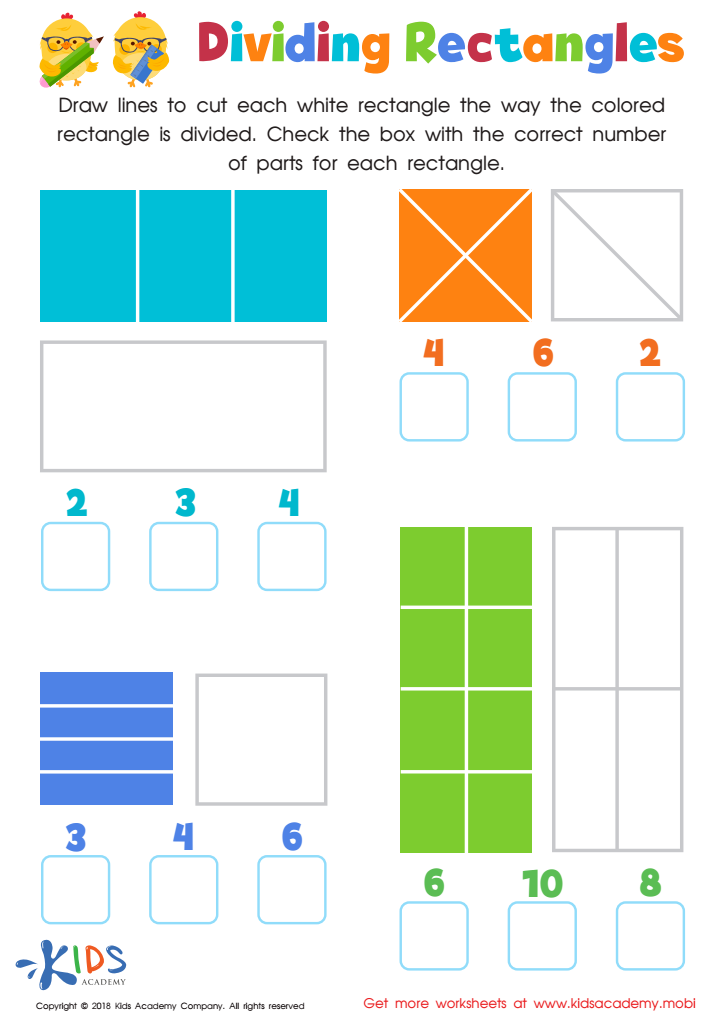
Dividing Rectangles Worksheet
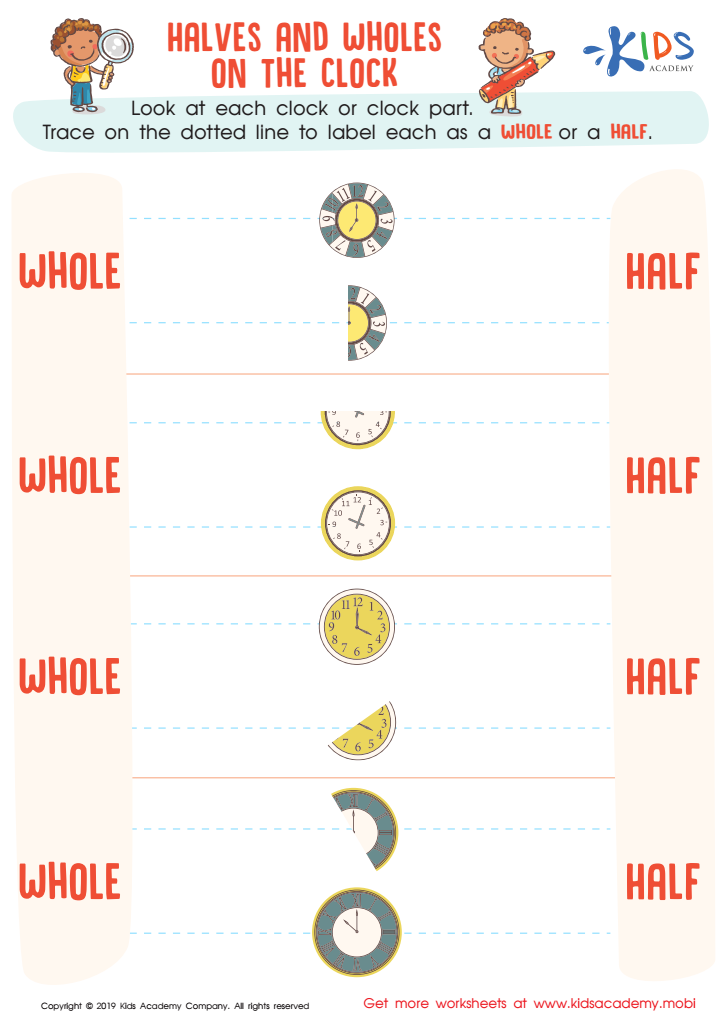
Halves and Wholes on the Clock Worksheet
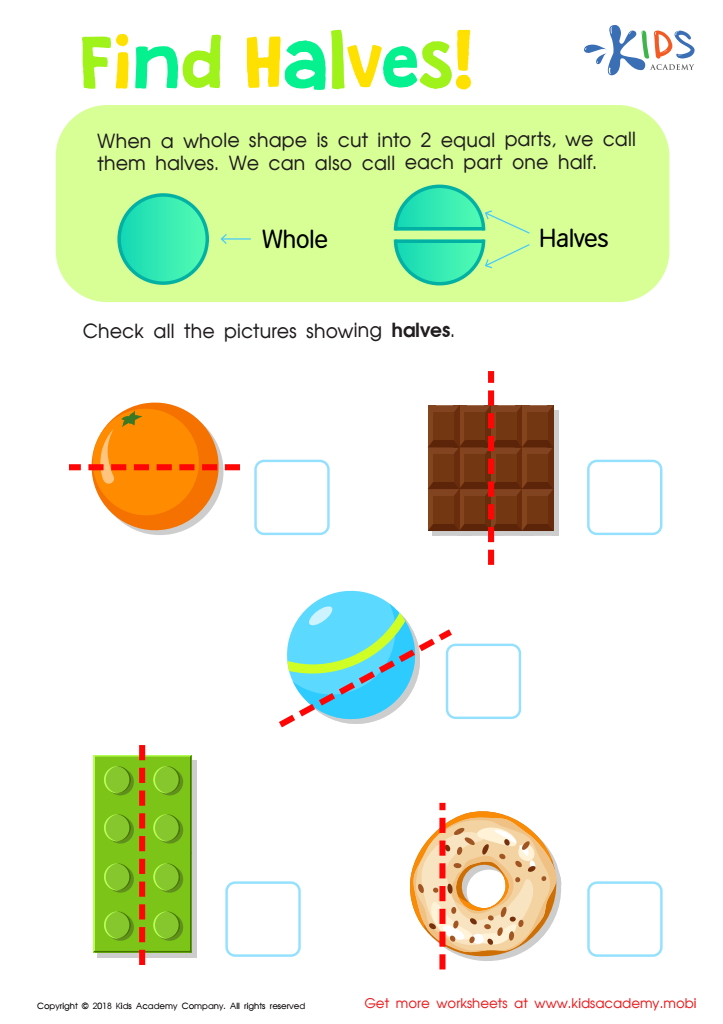
Find Halves Worksheet
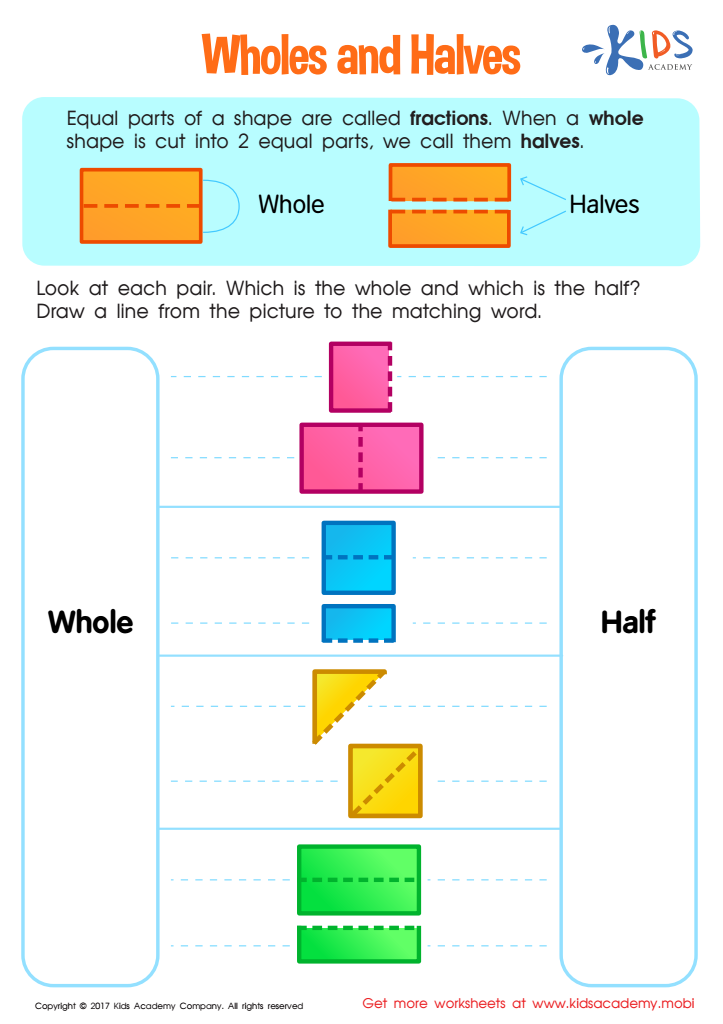
Wholes and Halves Worksheet
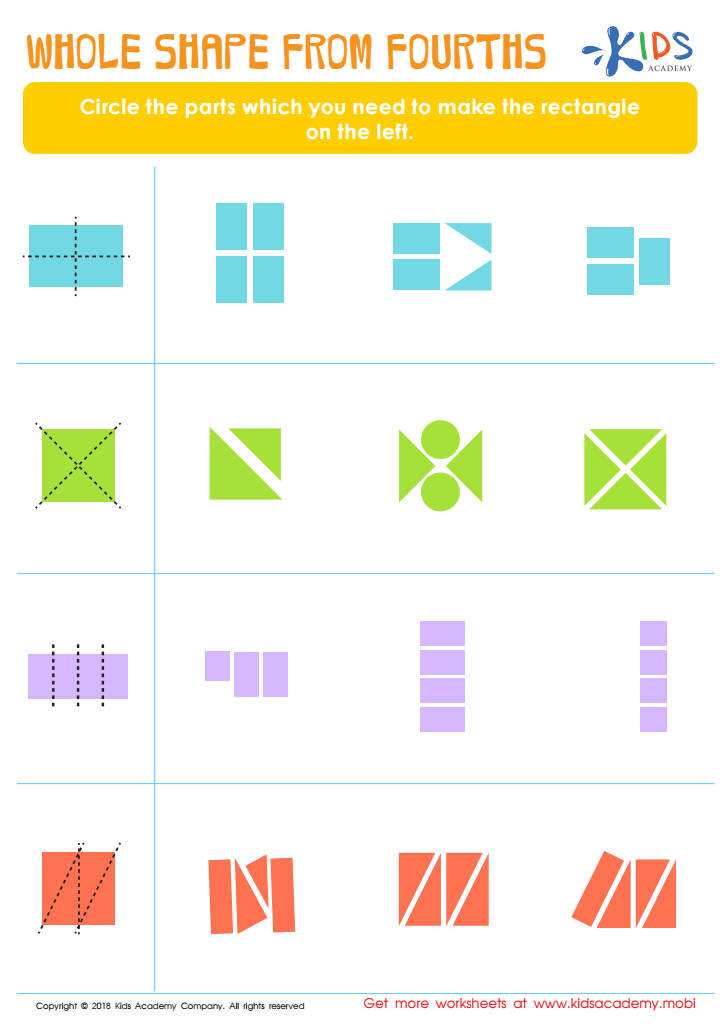
Whole Shape from Fourths Worksheet
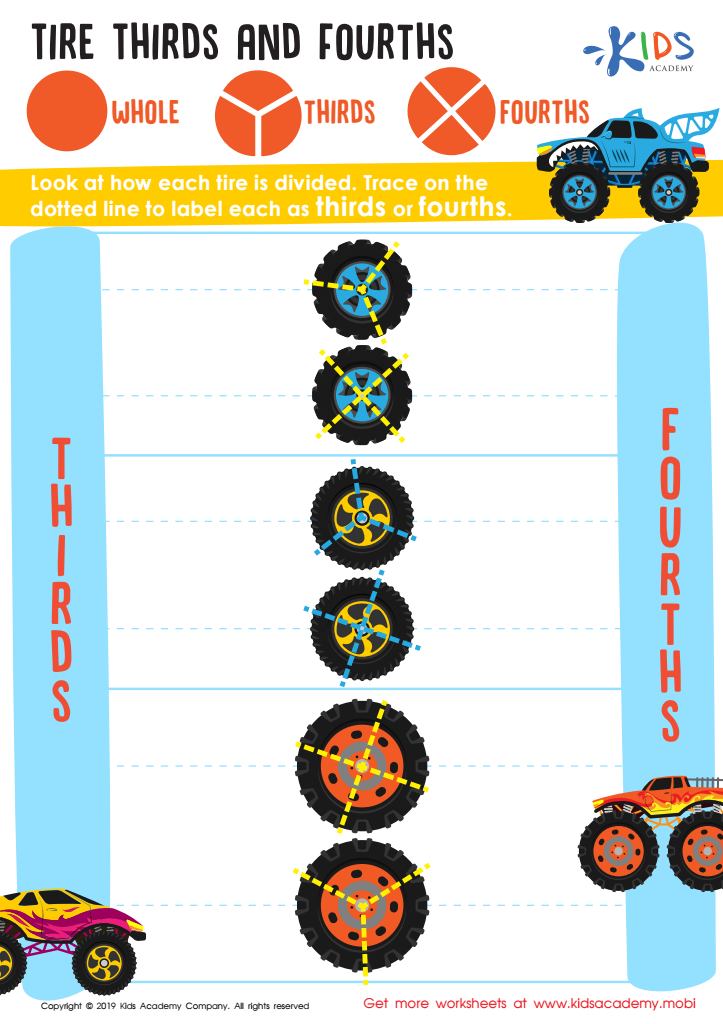
Tire Thirds and Fourths Worksheet
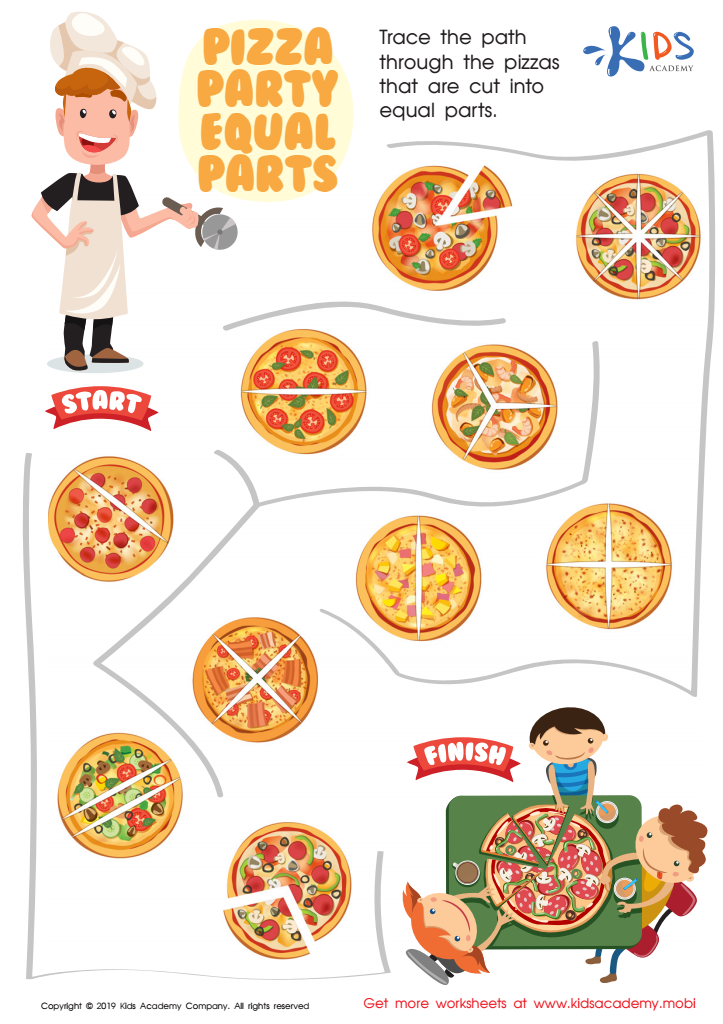
Pizza Party Equal Parts Worksheet
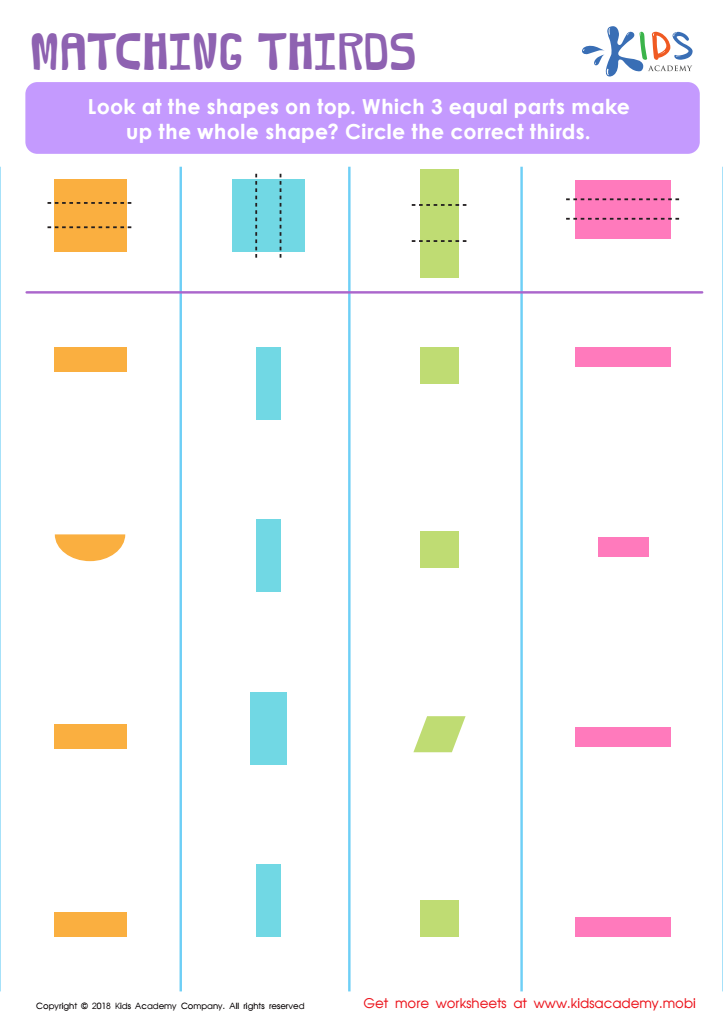
Matching Thirds Worksheet
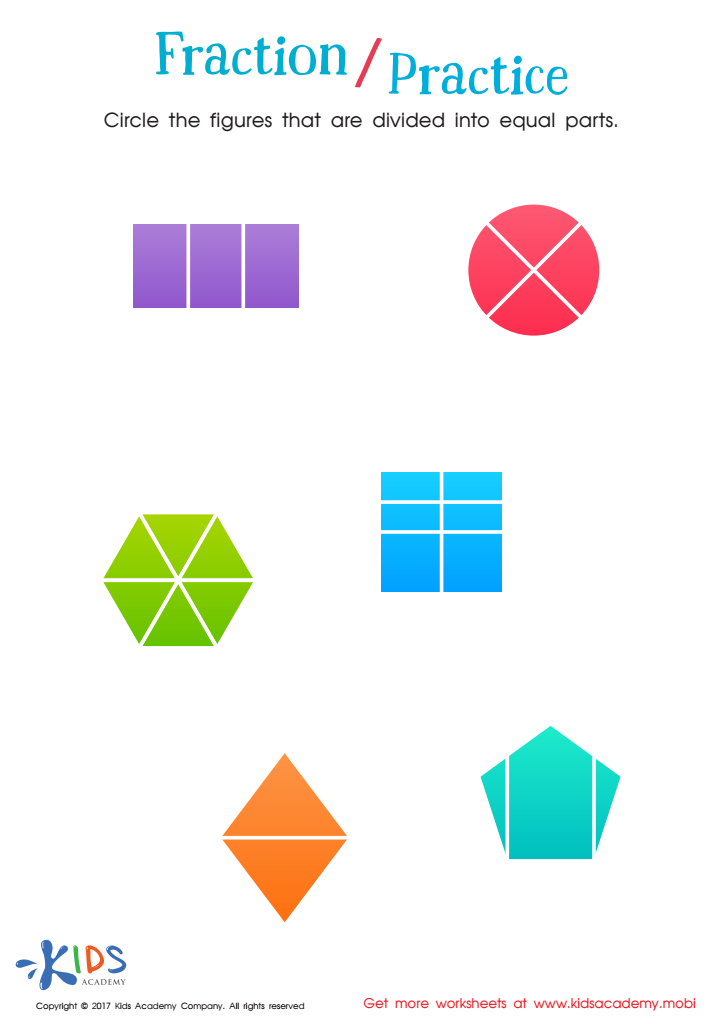
Fractions: Shapes Worksheet
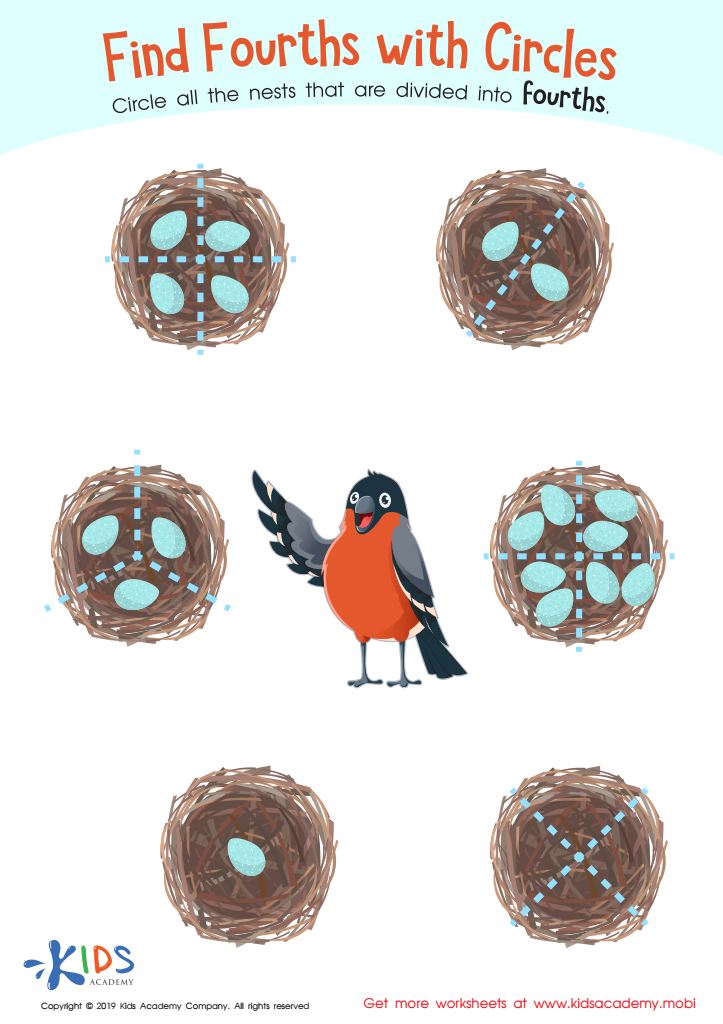
Find Fourths Circles Worksheet
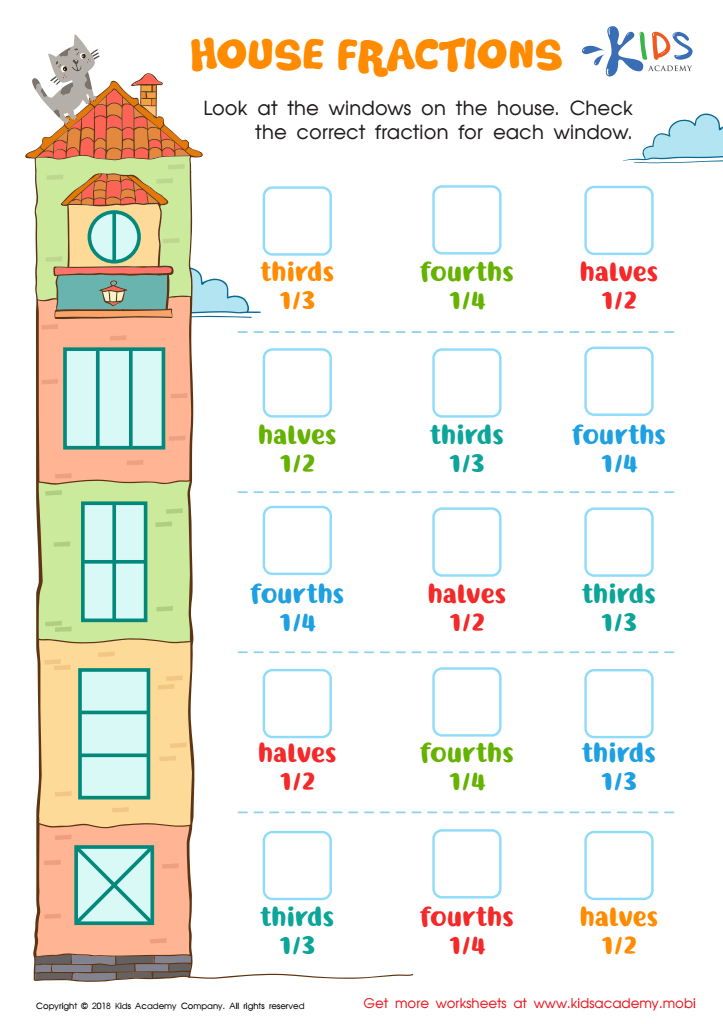
House Fractions Worksheet
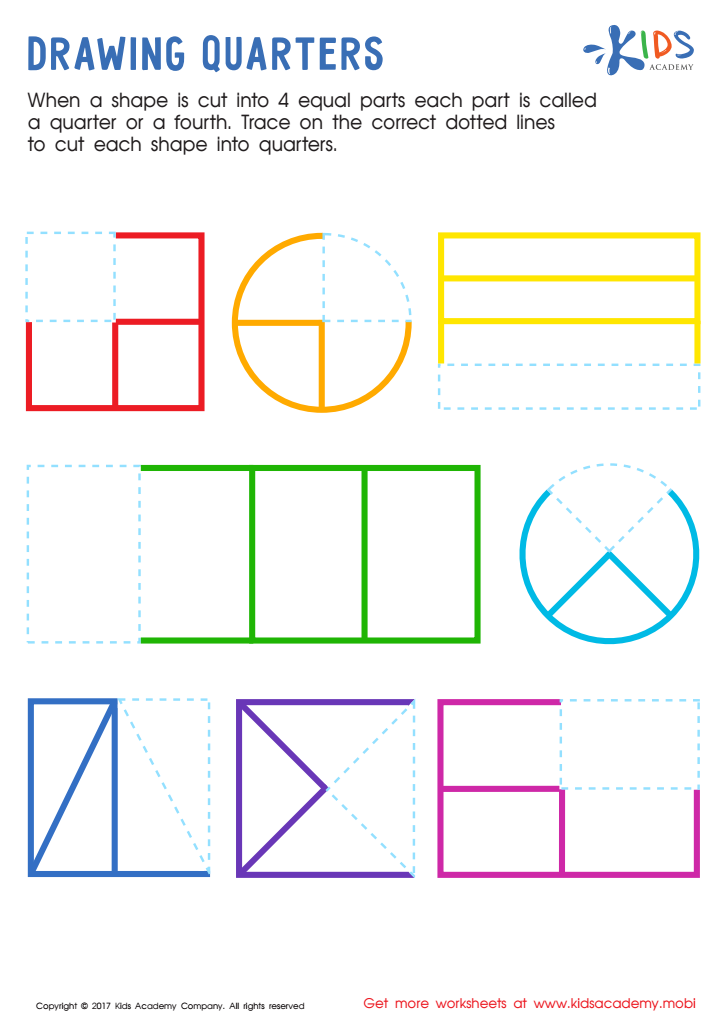
Drawing Quarters Worksheet
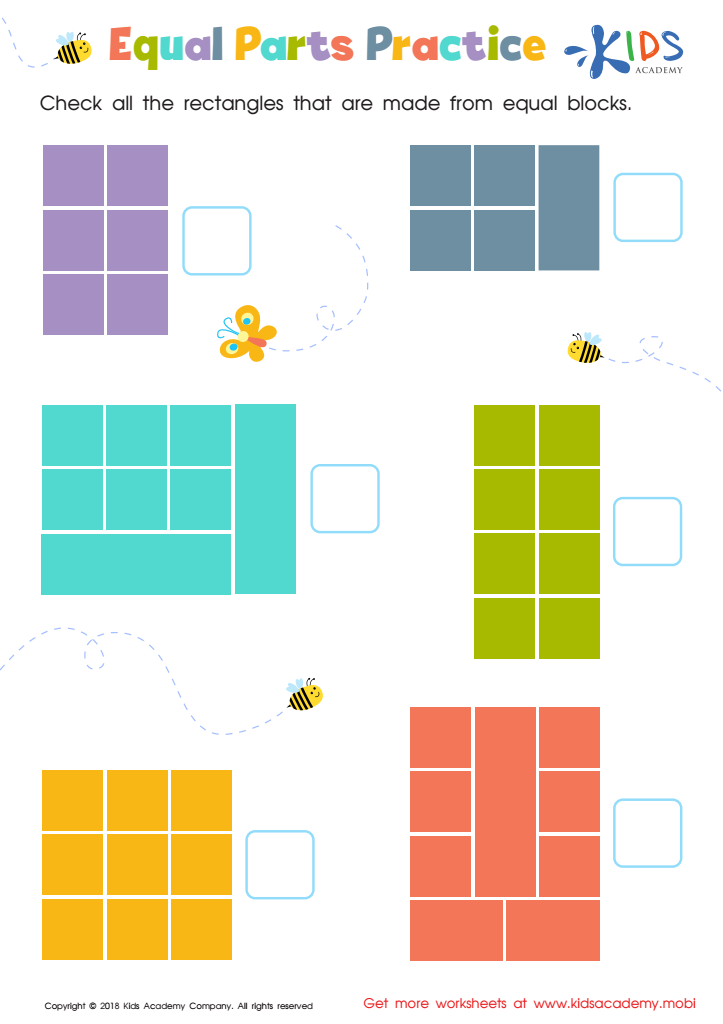
Equal Parts Practice Worksheet
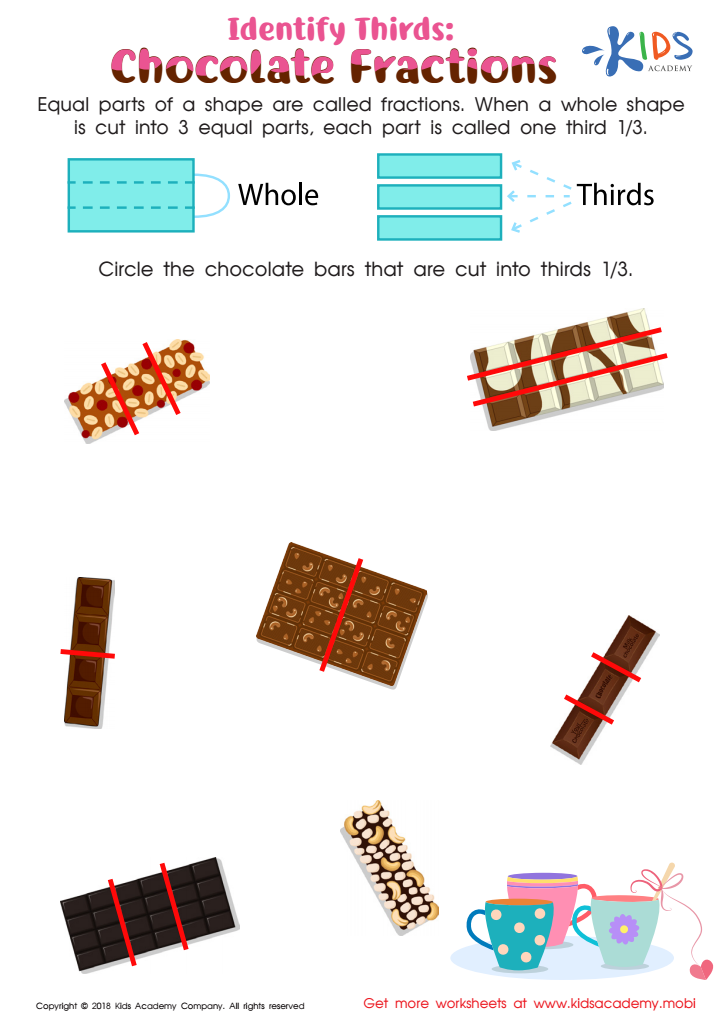
Identify Thirds: Chocolate Fractions Worksheet
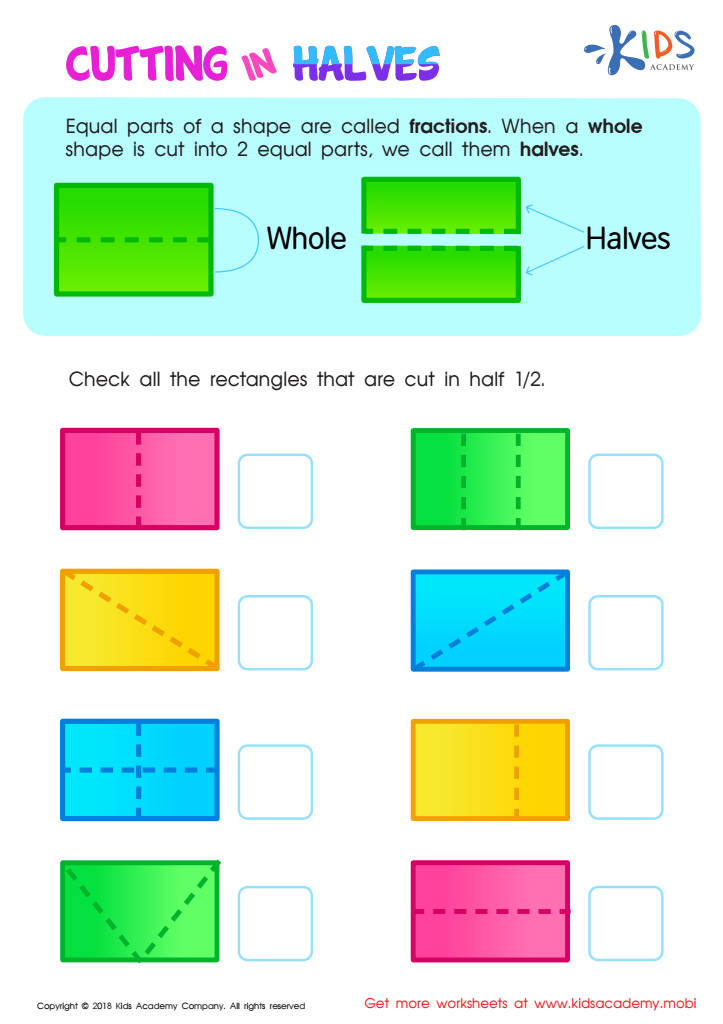
Cutting in Halves Worksheet
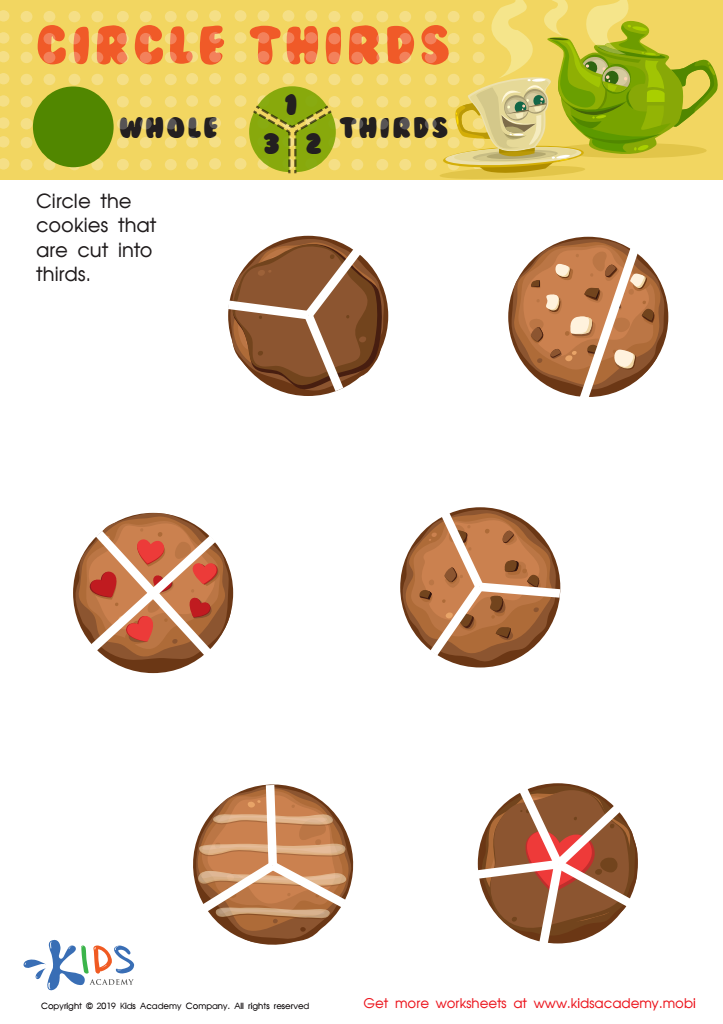
Circle Thirds Worksheet
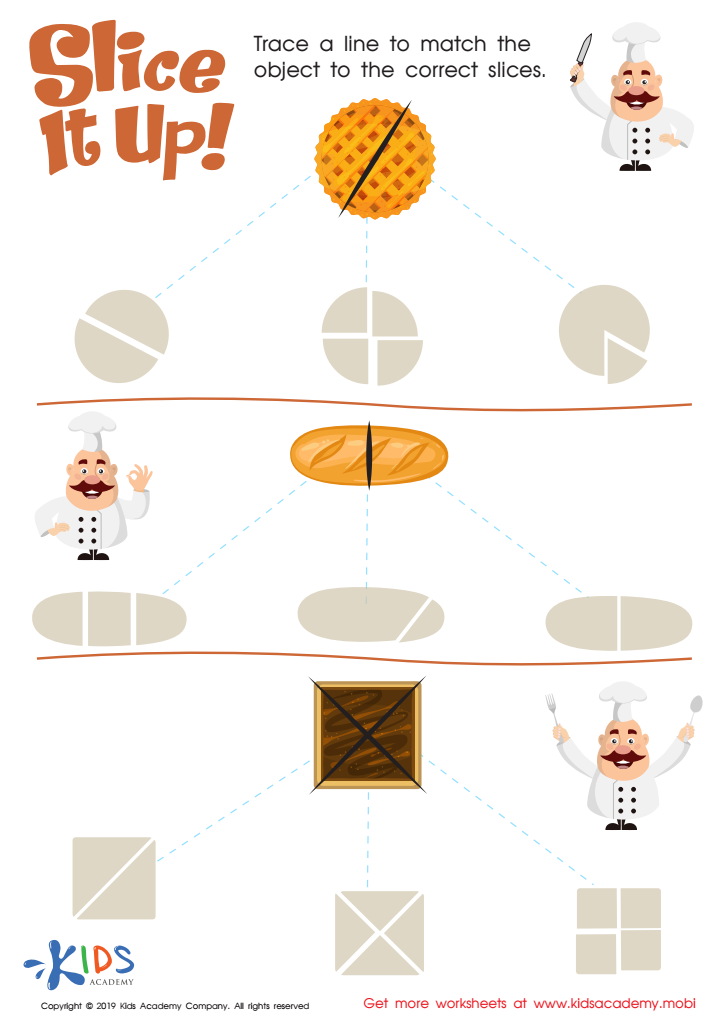
Slice It Up Worksheet
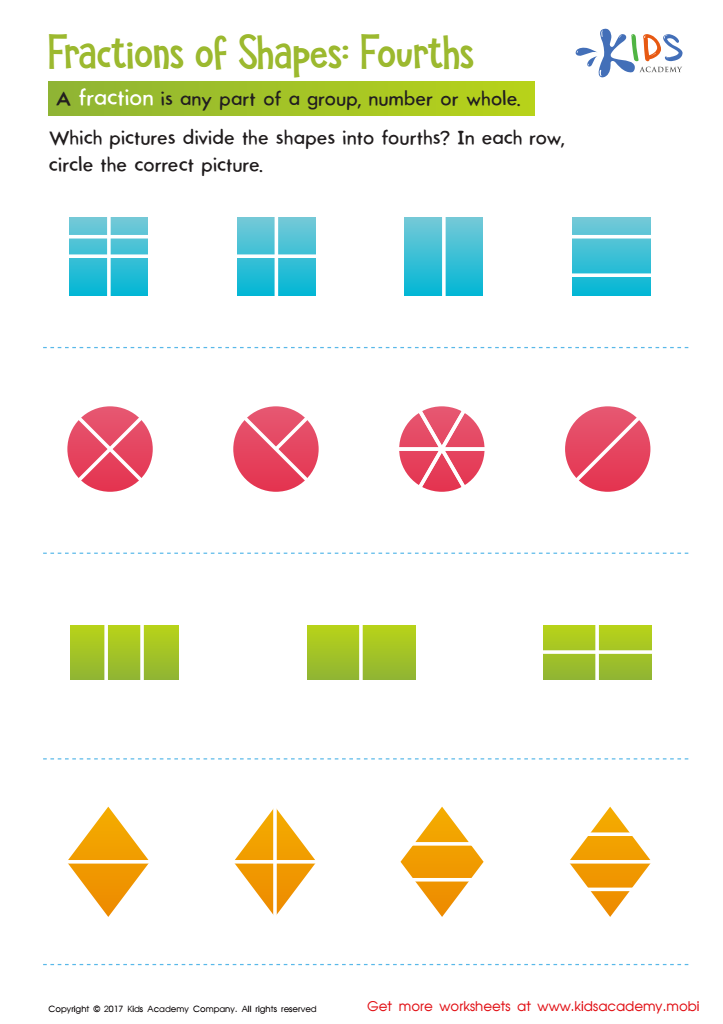
Fractions of Shapes Worksheet
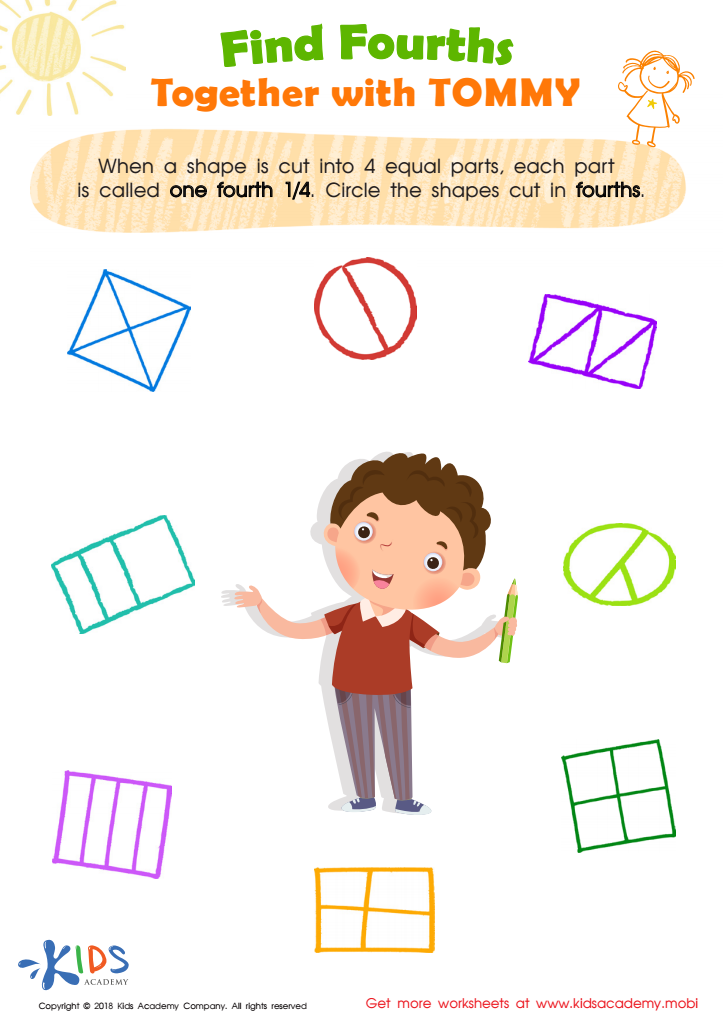
Find Fourths Together with Tommy Worksheet
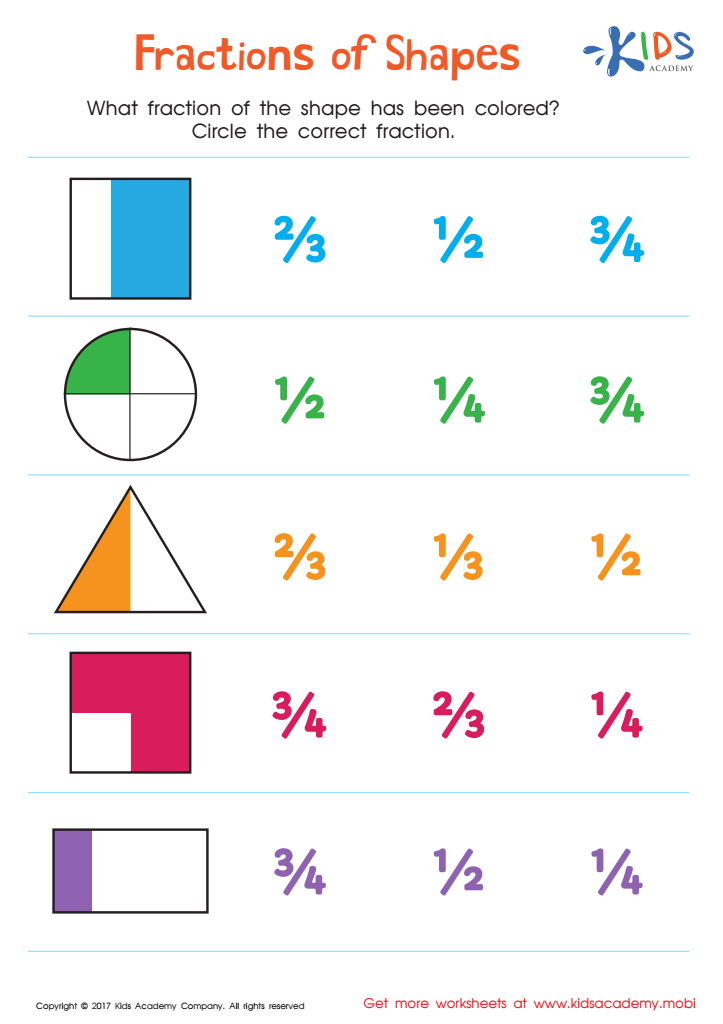
Fractions of Shapes: Math Concept Worksheet







Understanding fractions, particularly fractions of shapes, is essential for children ages 5-8 as it lays the groundwork for their mathematical comprehension and critical thinking skills. At this developmental stage, children start to explore the world around them, and teaching them fractions helps solidify their grasp of part-to-whole relationships. Recognizing that shapes can be divided into equal parts fosters spatial awareness and enhances problem-solving abilities.
Moreover, understanding fractions is not just a mathematical skill; it has real-world applications. Children often encounter fractions in everyday situations, from sharing pizza to understanding time. By grasping fractions of shapes, children can learn the importance of fairness, equivalence, and comparison.
For parents and teachers, nurturing this understanding helps develop a child's confidence in math. It is crucial for laying the foundation for later concepts such as division, ratios, and percentages. Engaging with fractions through playful activities and hands-on learning can make the experience enjoyable and memorable while ensuring that children are equipped for future academic challenges. Ultimately, fostering an early understanding of fractions contributes to well-rounded individuals with strong analytical skills, preparing them for lifelong learning and problem-solving.