Number Sequencing Numbers up to 100 Worksheets for Ages 5-8
6 filtered results
Difficulty Level
Grade
Age
-
From - To
Subject
Activity
Standards
Discover our engaging "Number Sequencing Numbers up to 100 Worksheets" designed for children aged 5-8! These worksheets are perfect for enhancing students' number recognition and sequencing skills while making math fun. Carefully crafted, they feature various activities that encourage children to arrange numbers in the correct order, strengthening their understanding of numerical patterns. Early learners will improve their counting abilities with sequences that range from simple to more complex. These worksheets are a fantastic resource for teachers and parents seeking to build foundational math skills at home or in the classroom. Start your child's journey to math mastery today!
Favorites
With answer key
Interactive
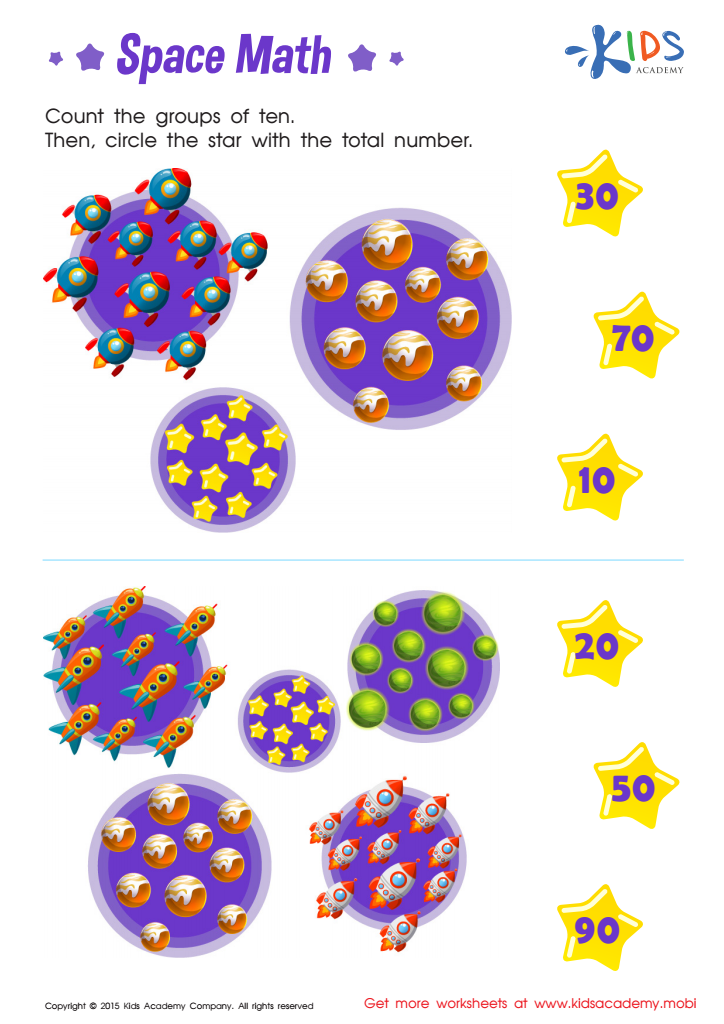
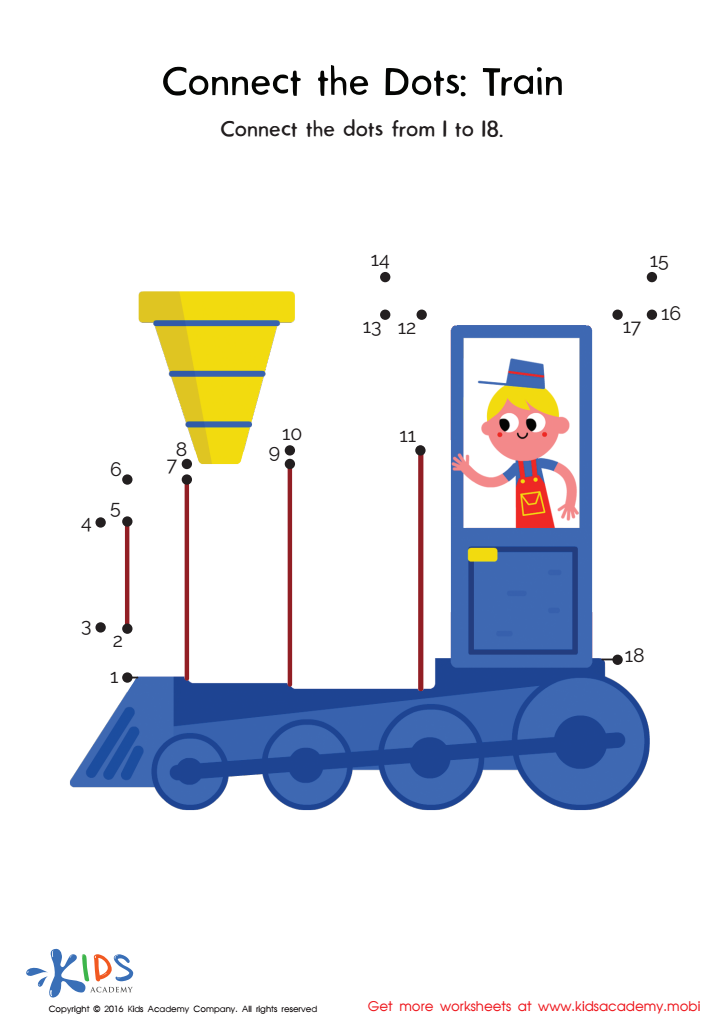
Learn dozens: Space math Worksheet
This worksheet uses Singapore Math's approach to help your child visually understand basic counting and math problems.
 Assign to My Students
Learn dozens: Space math Worksheet
Worksheet
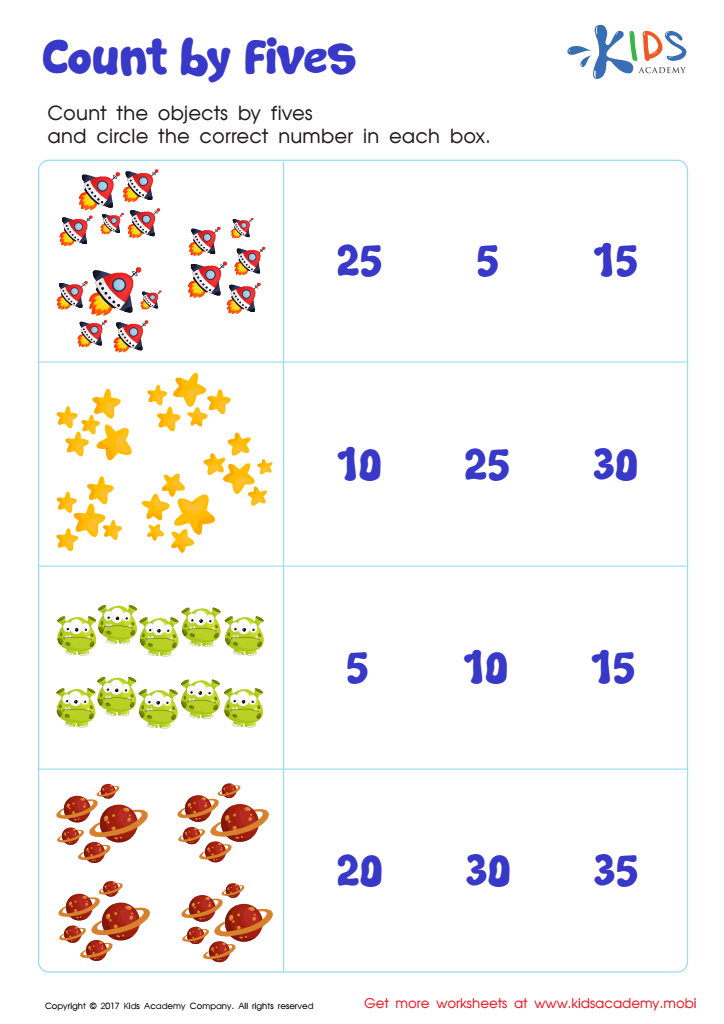
Skip Counting by 5s: Space Math Printable
This worksheet will provide your child with fun and practice counting by 5's. It'll help them visually count numbers, use problem solving skills and make connections between individual and groups of numbers. Counting money and various math concepts will become easier with this invaluable skill. Blast off with this fun and educational worksheet featuring space graphics.
Skip Counting by 5s: Space Math Printable
Worksheet
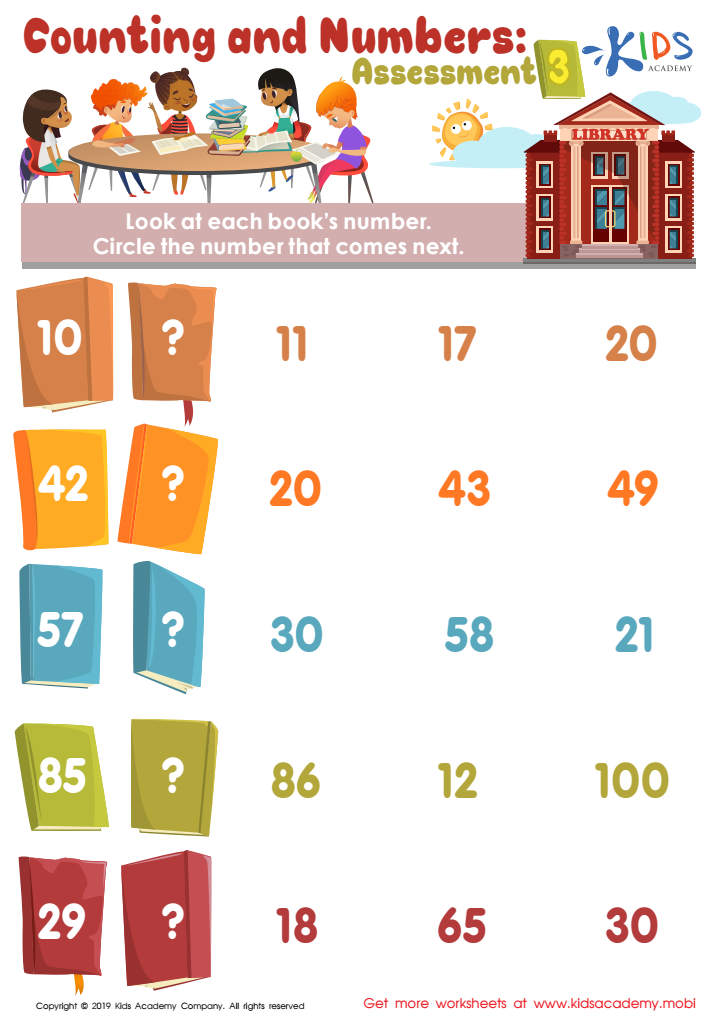
Counting and Numbers: Assessment Worksheet
Number line thinking is an essential math skill. Kids using this skill can compute math problems accurately and quickly. Our free assessment tests number line recognition; have your child pick the right number from the given options to follow the current number on the line. This assessment will give you an idea of their counting skills.
Counting and Numbers: Assessment Worksheet
Worksheet
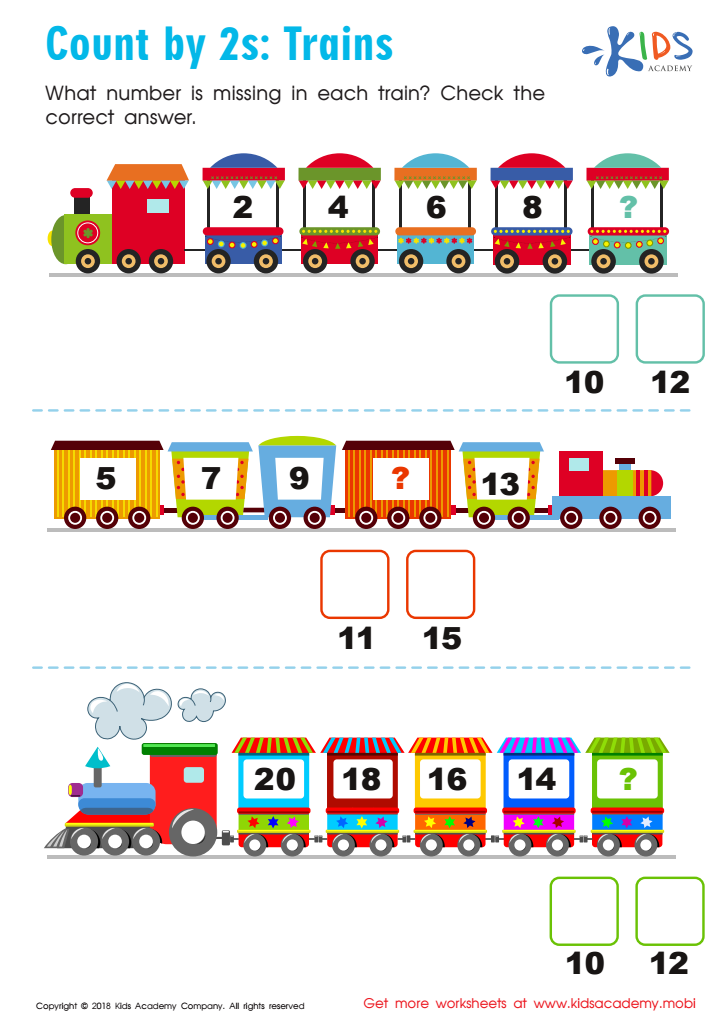
Count by 2's: Trains Worksheet
Teaching your kids quick computations? Get them skip-counting by 2s! They'll love filling in the colors of the train while counting, and it will help with 'counting up' or backward on paper or in their heads - essential for quick computations later.
Count by 2's: Trains Worksheet
Worksheet
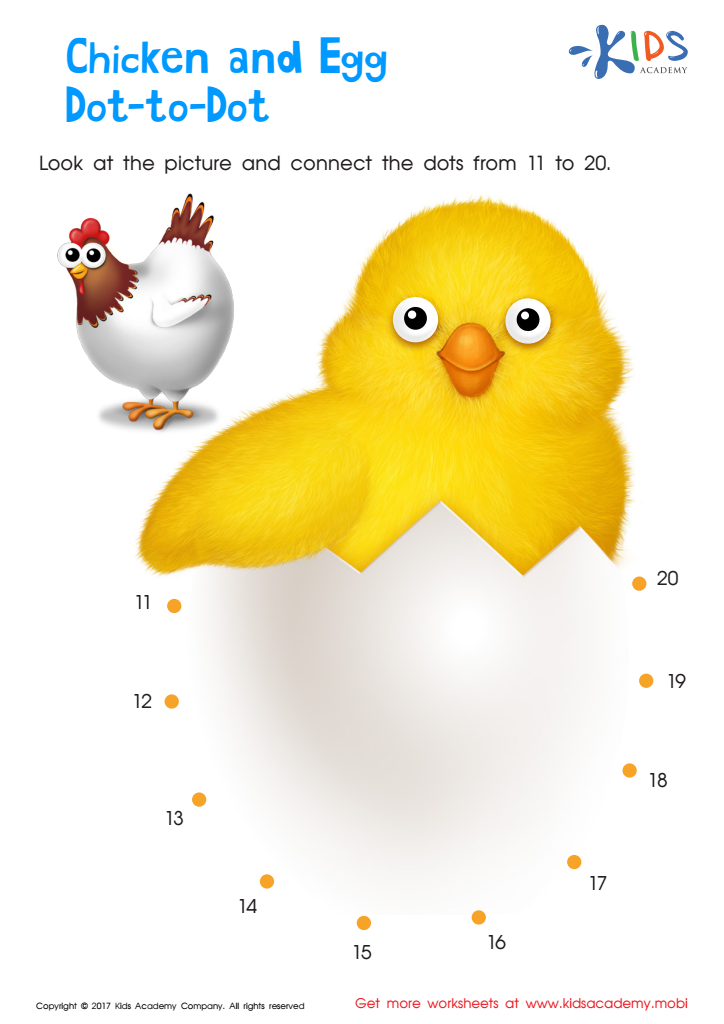
Ordering 11–20: Chicken & Egg Dot–to–dot Worksheet
Help your child hatch the chick and practice their counting skills with this dot to dot worksheet – the chicken came first! Connect the dots 11-20 to have fun and learn at the same time. Experience meaningful practice and gain confidence while drawing great pictures.
Ordering 11–20: Chicken & Egg Dot–to–dot Worksheet
Worksheet
Join Kids Academy for Free
Who is primarily going to use this learning content?






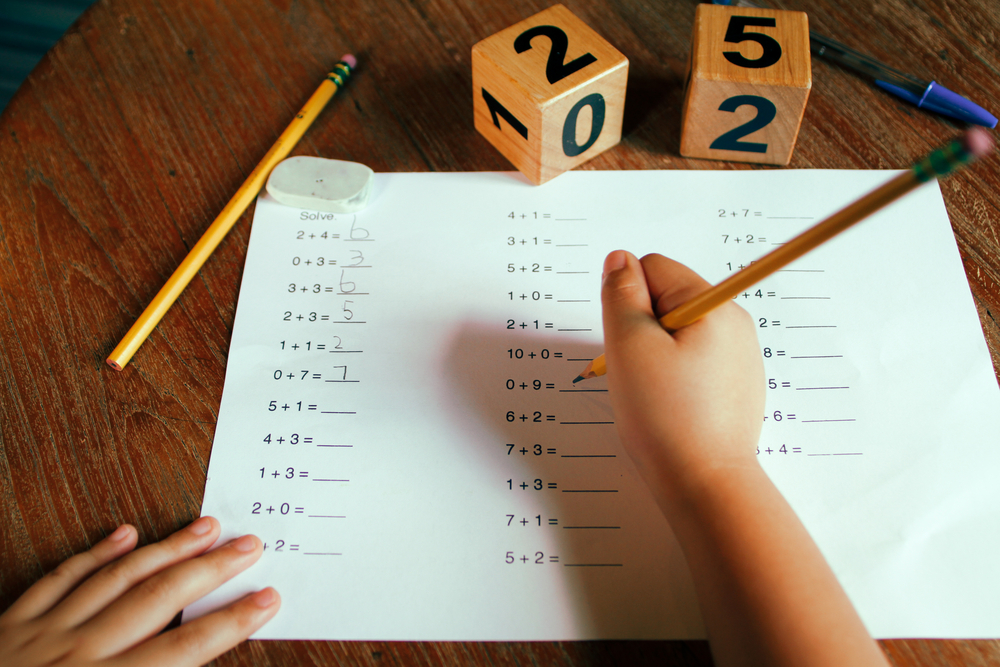
Number sequencing is an essential foundational skill for children aged 5-8. Understanding and mastering this concept helps children grasp the order and relationship between numbers, which strengthens their overall numerical intuition and reasoning. By being able to sequence numbers up to 100, children enhance their abilities in counting, data handling, and basic arithmetic operations.
Parents and teachers should care about number sequencing because it lays the groundwork for more complex mathematical concepts later on, such as skip counting, addition, and subtraction. When children can recognize patterns in numbers, they become more adept in solving math problems and discovering relationships between quantities.
Furthermore, mastering number sequences fosters critical thinking skills and improves cognitive development. It encourages children to think logically and recognize patterns in various contexts, not only in math but across different subjects.
Researchers and educators emphasize that building a strong number sense during early grades can lead to more success in mathematics in later years. Engaging parents in this process also creates a collaborative learning environment, allowing children to build confidence and motivation. Ultimately, a strong grounding in number sequencing shapes positive attitudes toward math, leading to lifelong learning and academic achievement.