Sorting Worksheets for Ages 5-8 - Page 2
27 filtered results
-
From - To
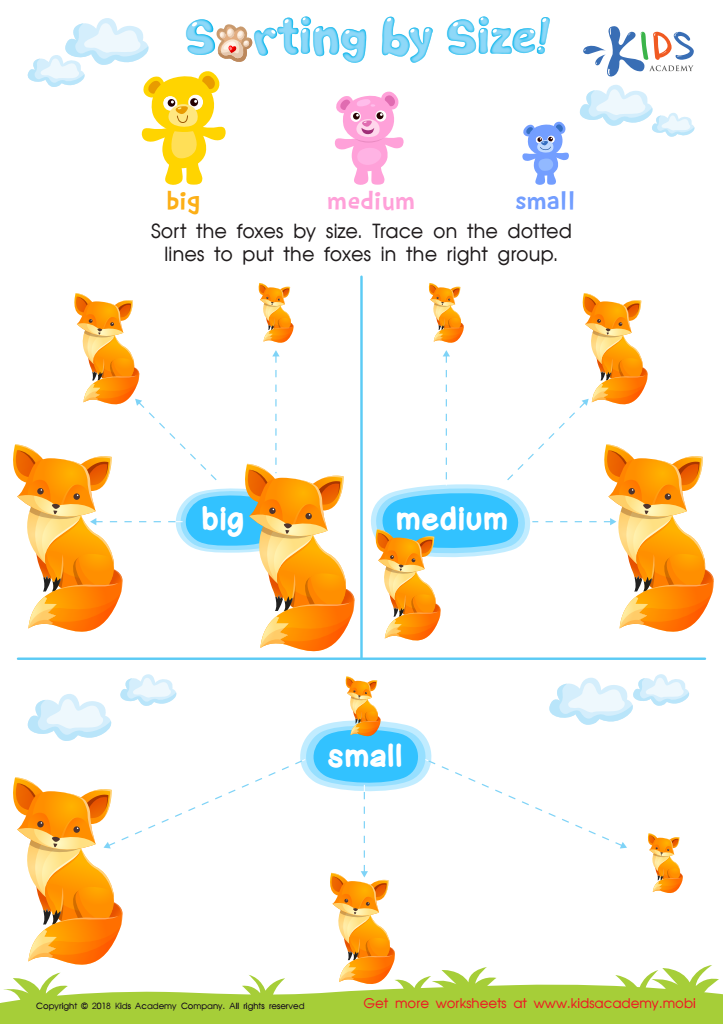
Sorting by Size Worksheet
 Assign to My Students
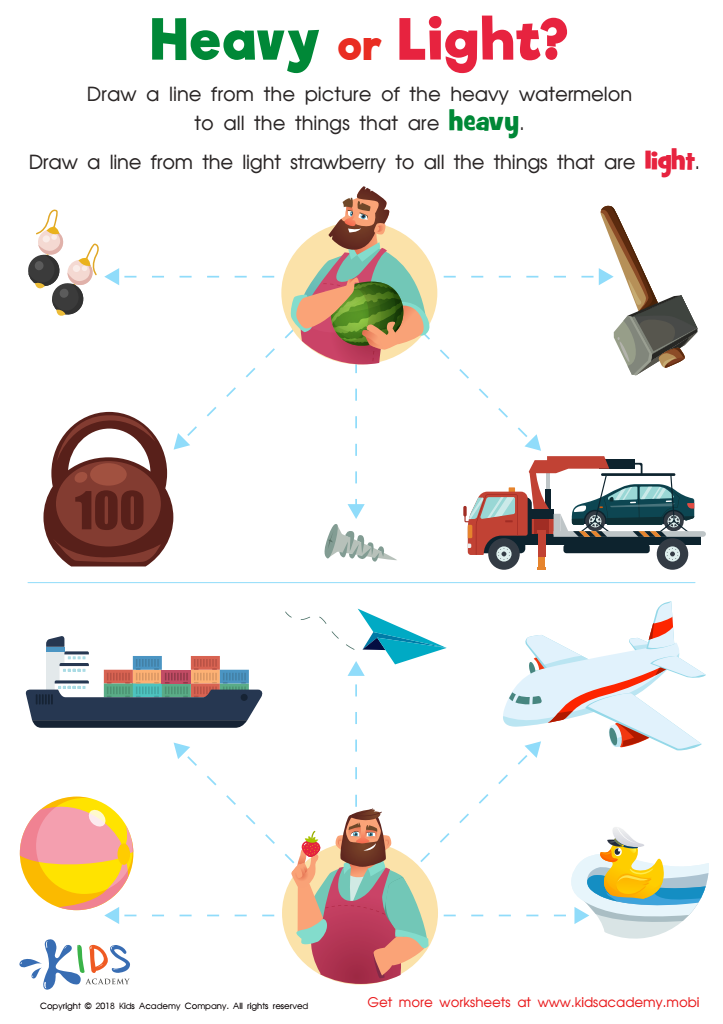
Heavy or Light? Worksheet
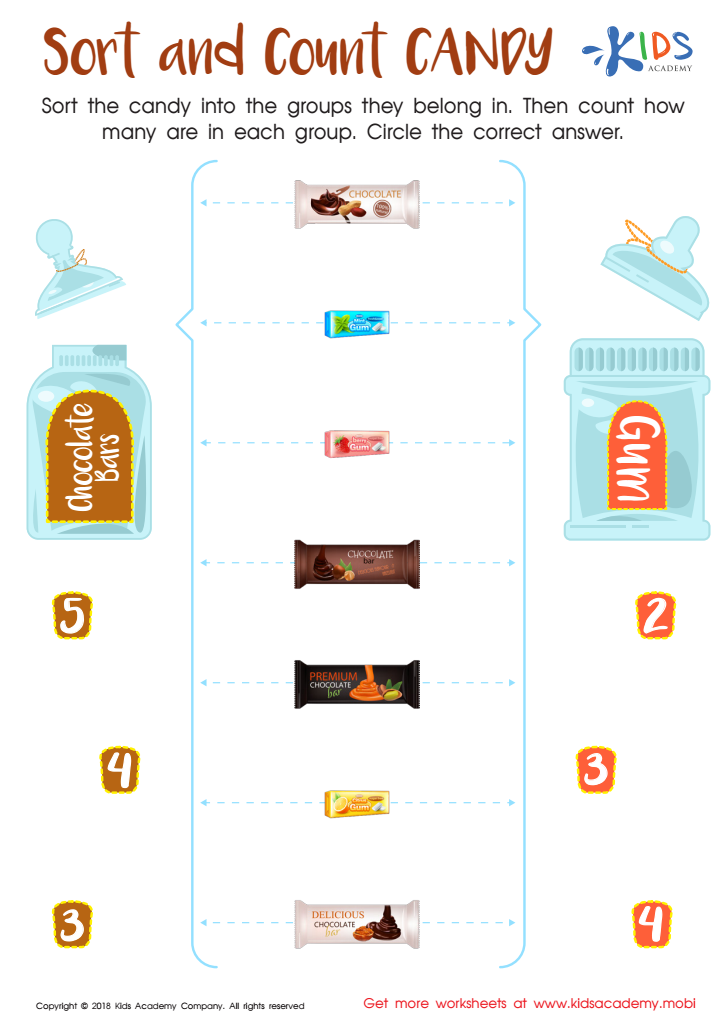
Sort and Count Candy Worksheet








Sorting is a foundational skill that plays a crucial role in early childhood development, and both parents and teachers should prioritize it for children aged 5-8. Learning to sort objects by attributes like color, shape, size, or type enhances cognitive abilities and introduces fundamental math concepts. Children begin to understand how items can be grouped based on similarities and differences, which primes them for advanced categorization and problem-solving tasks later in life.
Engaging in sorting activities strengthens critical thinking and reasoning skills. It helps children develop the ability to observe, compare, and classify information, which are vital skills not only in mathematics but also in reading and science. Additionally, sorting tasks encourage children to organize their environment systematically, aiding in their understanding of order and sequence.
While sorting, children improve their fine motor skills by handling various objects, boosting physical coordination and dexterity. The activity also supports language development as they learn and use descriptive words related to sorting criteria. Beyond cognitive and motor skills, sorting fosters a sense of responsibility and independence, as children take charge of organizing and classifying their toys and belongings.
Involving children in sorting tasks can be a fun, interactive, and meaningful way to support their holistic development. As an everyday activity, it seamlessly blends learning with play, underscoring its importance in early education.








