
Spelling Skills Reading Worksheets for Ages 5-8
4 filtered results
Difficulty Level
Grade
Age
-
From - To
Subject
Activity
Standards
Enhance your child's spelling skills with our engaging Spelling Skills Reading Worksheets designed specifically for ages 5-8. These worksheets offer a fun and interactive way for young learners to practice essential spelling concepts, building their confidence and literacy foundation. Featuring colorful illustrations and age-appropriate activities, each worksheet captures children's interest while promoting phonemic awareness and vocabulary development. Perfect for both home and classroom use, our printable resources cater to a variety of learning styles, ensuring every child can succeed. Foster a love for reading and spelling with these delightful worksheets that make learning both enjoyable and effective. Start exploring today!
Favorites
With answer key
Interactive
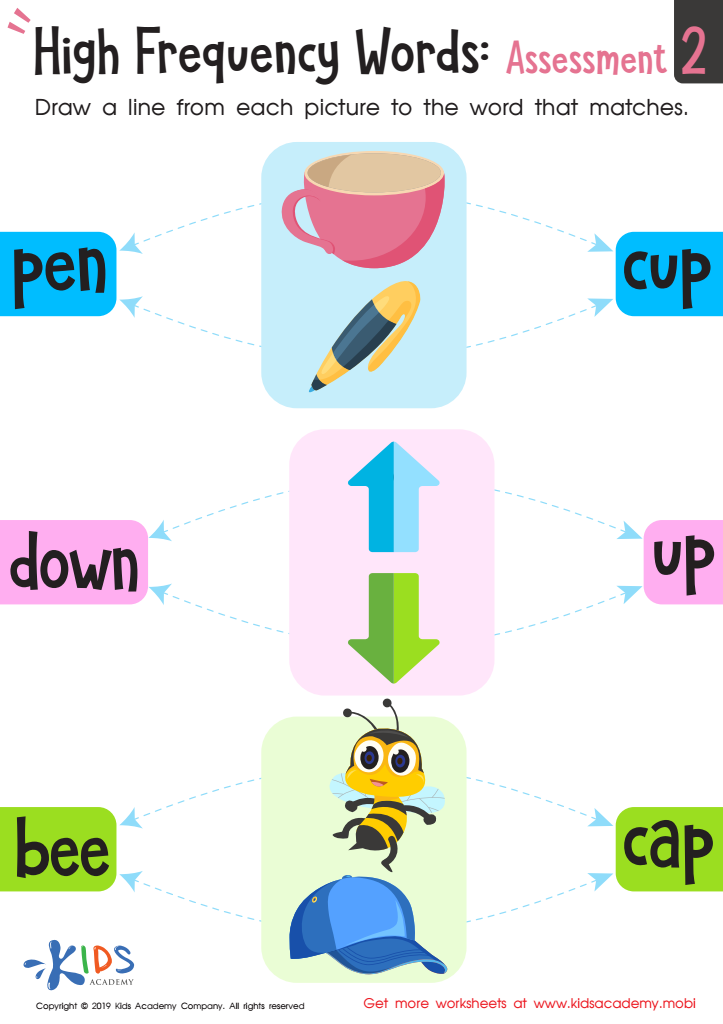
High Frequency Words: Assessment 2 Worksheet
Having knowledge of high frequency words can make emergent readers stronger and boost comprehension. This free assessment worksheet uses traceable lines to connect the picture to its corresponding words, allowing them to feel successful. It's a great way to reinforce high frequency words with familiar imagery.
 Assign to My Students
High Frequency Words: Assessment 2 Worksheet
Worksheet
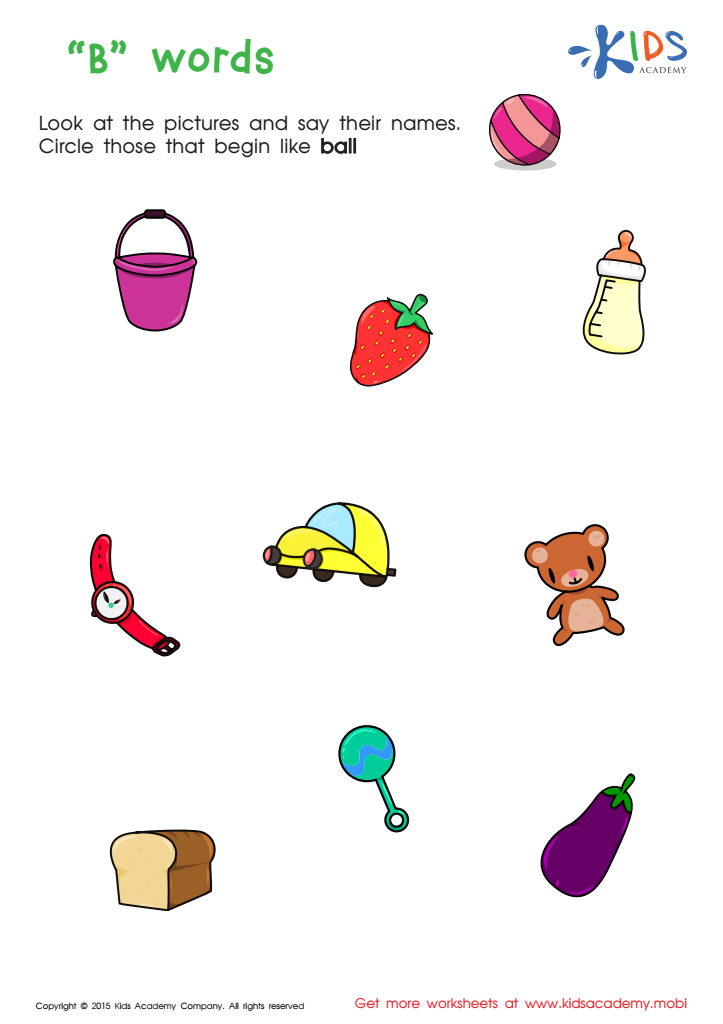
First Words Worksheet
Want to help your preschooler learn to read and write? Start with this 'B' words printable worksheet. It will help your child match pictures to the letters they know, sound out words, and build literacy. Once they understand the concept, they can start sounding out words and building reading skills.
First Words Worksheet
Worksheet
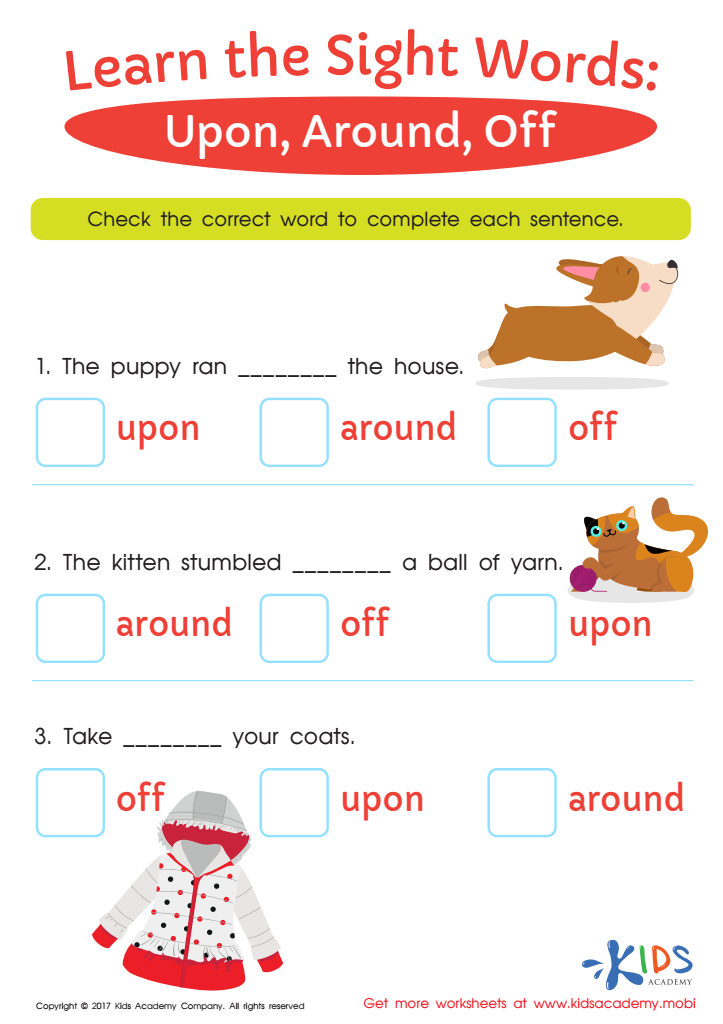
Upon, Around, Off Sight Words Worksheet
Assist your child in mastering prepositions by printing off this worksheet featuring three sight words: upon, around, off. Read the sentences aloud and use the illustrations to demonstrate the meaning of each. Your kid will soon master these words quickly.
Upon, Around, Off Sight Words Worksheet
Worksheet
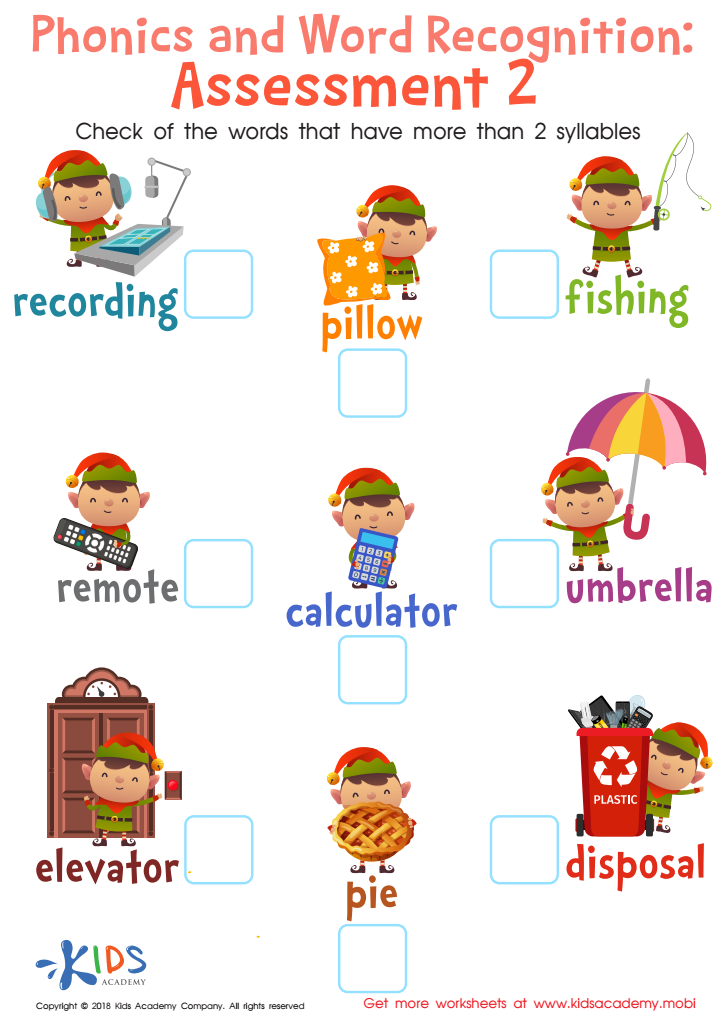
Phonics and Word Recognition: Assessment 2 Worksheet
Help your kids learn proper pronunciation by counting syllables. Most words they'll encounter have 1-3 syllables, making them simple to say. Have them repeat the words in your worksheet after you. Focus on longer words with more than two syllables.
Phonics and Word Recognition: Assessment 2 Worksheet
Worksheet
Join Kids Academy for Free
Who is primarily going to use this learning content?








Teaching spelling skills to children ages 5-8 is crucial for their overall literacy development. At this stage, children are not just learning how to recognize and sound out words; they are also beginning to write and communicate their thoughts effectively. Spelling is intricately linked to reading. When children understand spelling patterns, they can decode words more easily, boosting their reading fluency and comprehension.
Good spelling skills also reinforce phonics knowledge, helping children connect sounds to letters. This foundation enhances vocabulary acquisition, as children are more likely to remember words they can spell correctly. Furthermore, practicing spelling encourages attention to detail, improves cognitive skills, and fosters a sense of accomplishment, which positively impacts a child's self-esteem.
Additionally, consistent spelling practice engages parents and teachers in a collaborative effort toward a child’s education. Involving them helps create a supportive learning environment. Overall, fostering spelling skills not only directly supports literacy but also equips children with essential tools that they will use for years to come in every academic subject and in everyday communication. Investing in these skills now lays the groundwork for lifelong learning and confidence in language use.








