Information retention Reading Comprehension Worksheets for Ages 5-8
4 filtered results
-
From - To
Boost your child's reading skills with our Information Retention Reading Comprehension Worksheets designed for ages 5-8. These engaging worksheets help young learners develop crucial abilities to retain and recall information from texts, fostering a deeper understanding of what they read. Each worksheet features age-appropriate stories and questions that challenge students to think critically and enhance their comprehension skills. Perfect for classroom use or at-home practice, our resources support literacy development and encourage a love for reading. Equip your child with essential tools for academic success while making learning fun and interactive with our expertly crafted materials!
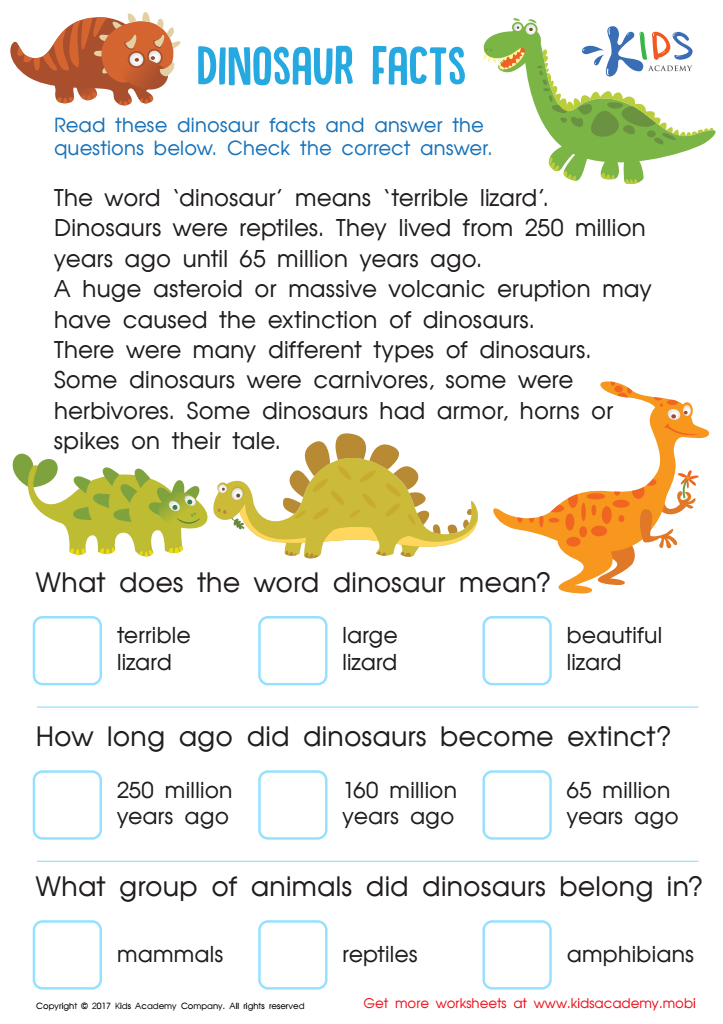
Dinosaur Facts Worksheet
 Assign to My Students
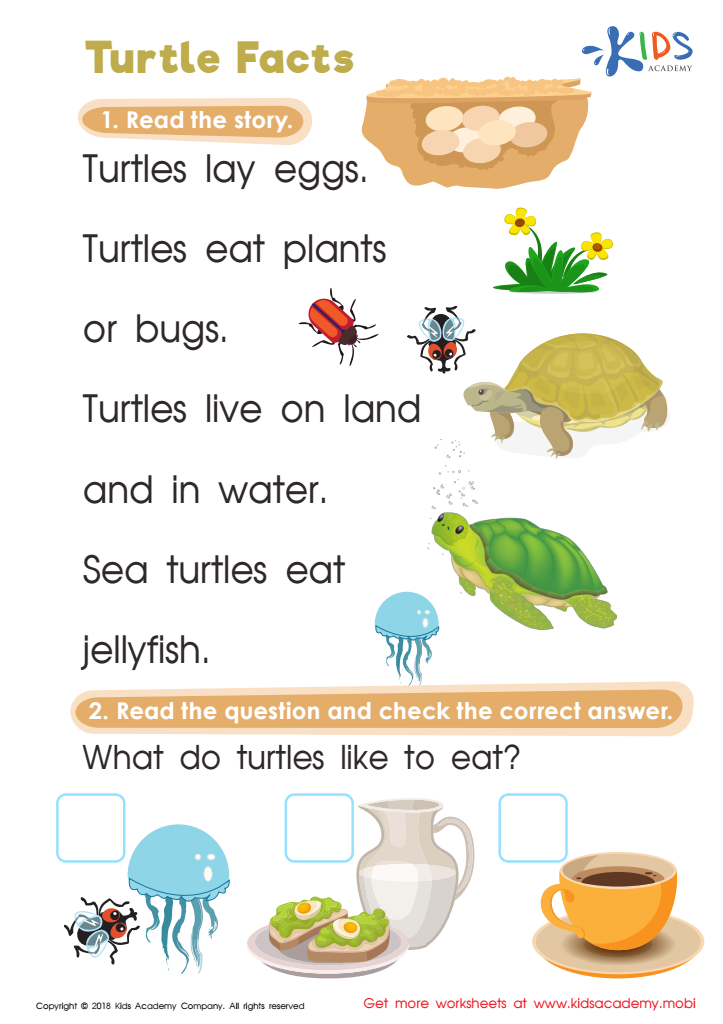
Turtle Facts Worksheet
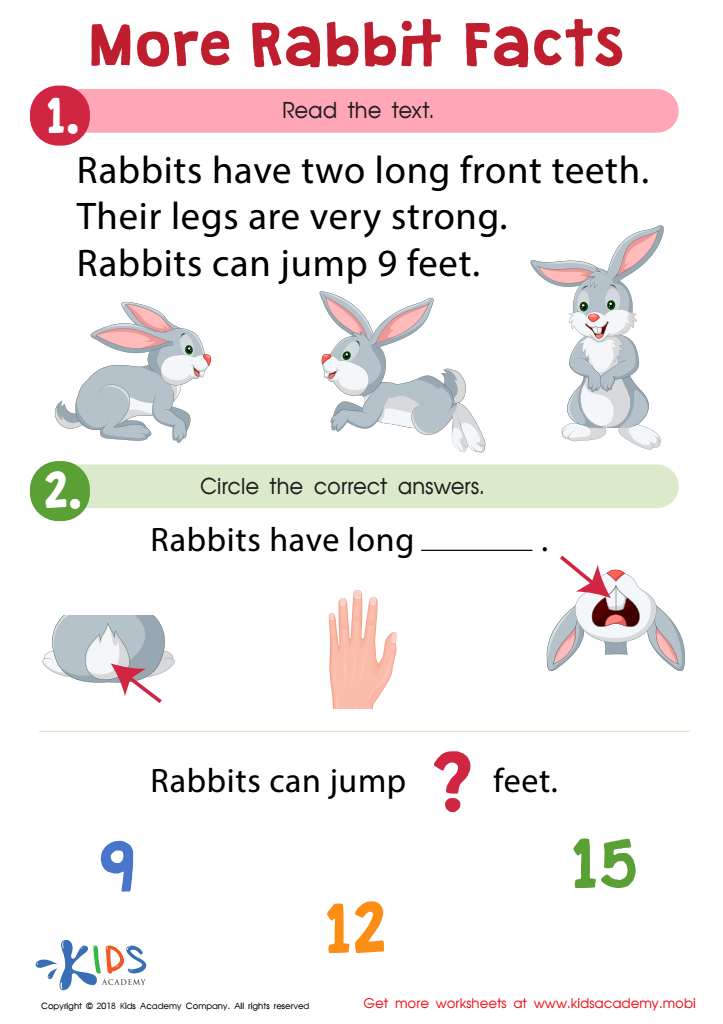
More Rabbit Facts Worksheet
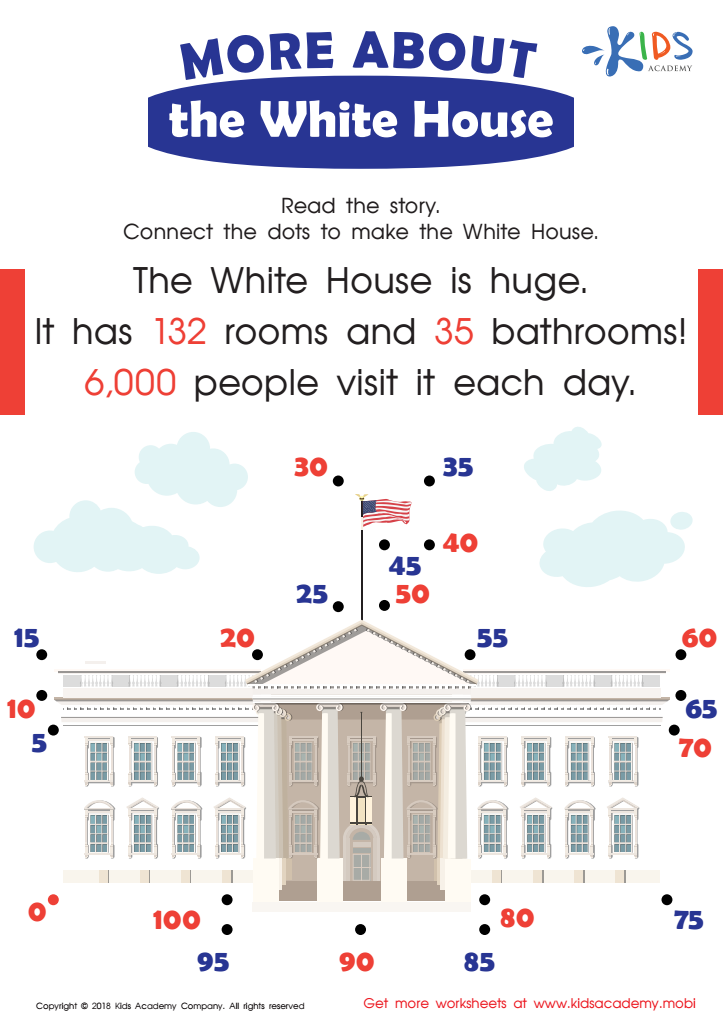
More About the White House Worksheet








Information retention and reading comprehension are vital skills for children aged 5-8, as they lay the groundwork for future academic success. Parents and teachers should care about these skills for several reasons. Firstly, during these formative years, children are developing crucial cognitive abilities that influence their learning process. Strong reading comprehension enables them to understand not only the words on the page but also to grasp concepts, make connections, and infer meaning—skills that extend beyond reading into other subjects like math and science.
Moreover, effective information retention fosters a love of learning. When children successfully comprehend what they read and can recall information later, they become more confident learners. This confidence can lead to higher motivation and engagement in school and beyond.
Additionally, fostering these skills encourages critical thinking; as students interpret and synthesize information, they learn to analyze situations and make informed decisions—a skill vital in our information-rich society.
Lastly, early interventions and support in these areas can prevent reading difficulties later on. Investing time and resources into enhancing reading comprehension and retention for young learners sets the stage for lifelong literacy and lifelong learning. Thus, prioritizing these skills contributes to a child's overall development and success.








