Categorizing objects Science Worksheets for Ages 5-8
4 filtered results
-
From - To
Explore our engaging Categorizing Objects Science Worksheets for children ages 5-8! Designed to enhance young learners' understanding of categorization, these worksheets offer fun activities that encourage critical thinking and creativity. Through vibrant illustrations and interactive tasks, children will learn how to group objects based on color, shape, size, and other characteristics. Perfect for classroom or home use, our worksheets promote hands-on learning while building foundational science skills. Foster curiosity about the natural world and enhance observational skills with our easy-to-use printables. Ideal for parents and educators looking to support learning through play. Start categorizing with your little learners today!
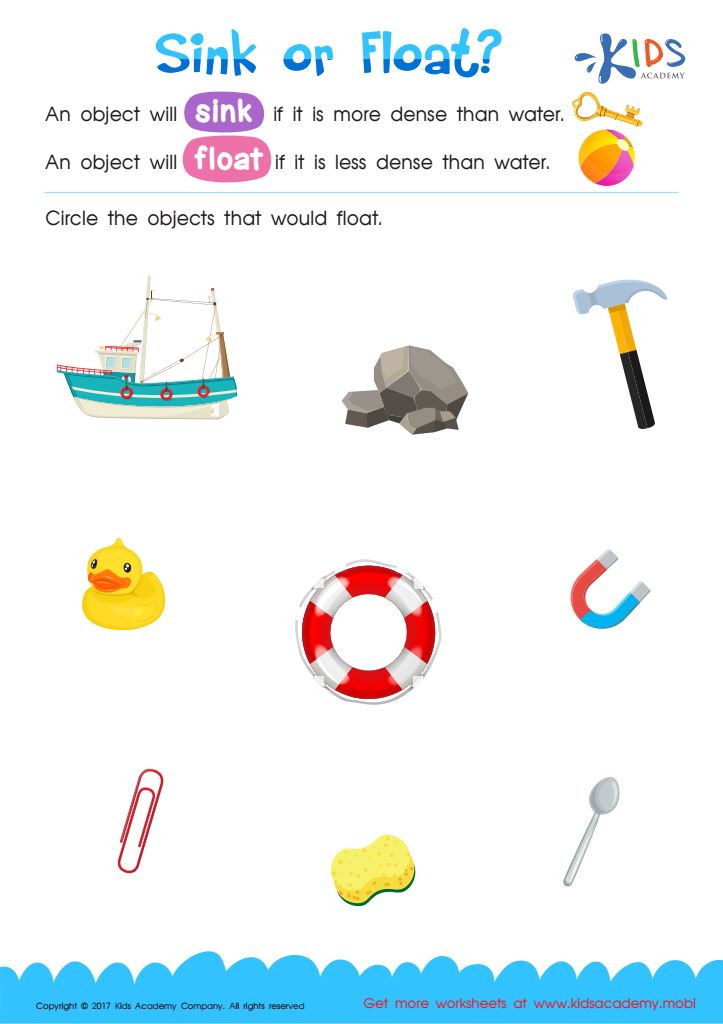
Sink or Float Printable
 Assign to My Students
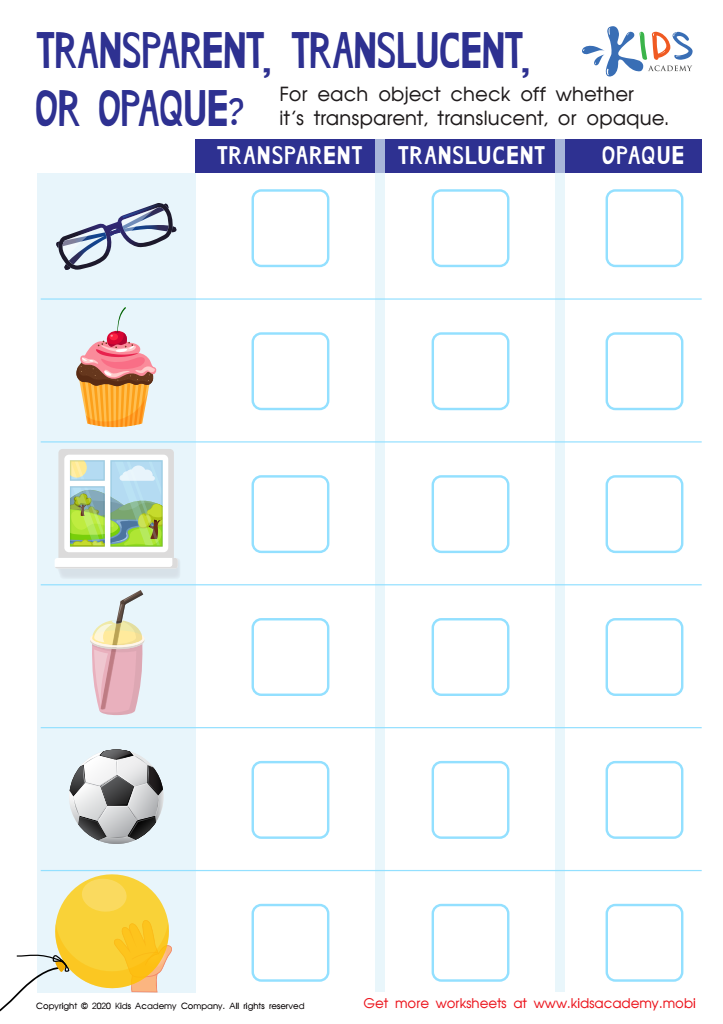
Transparent, Translucent, or Opaque Worksheet
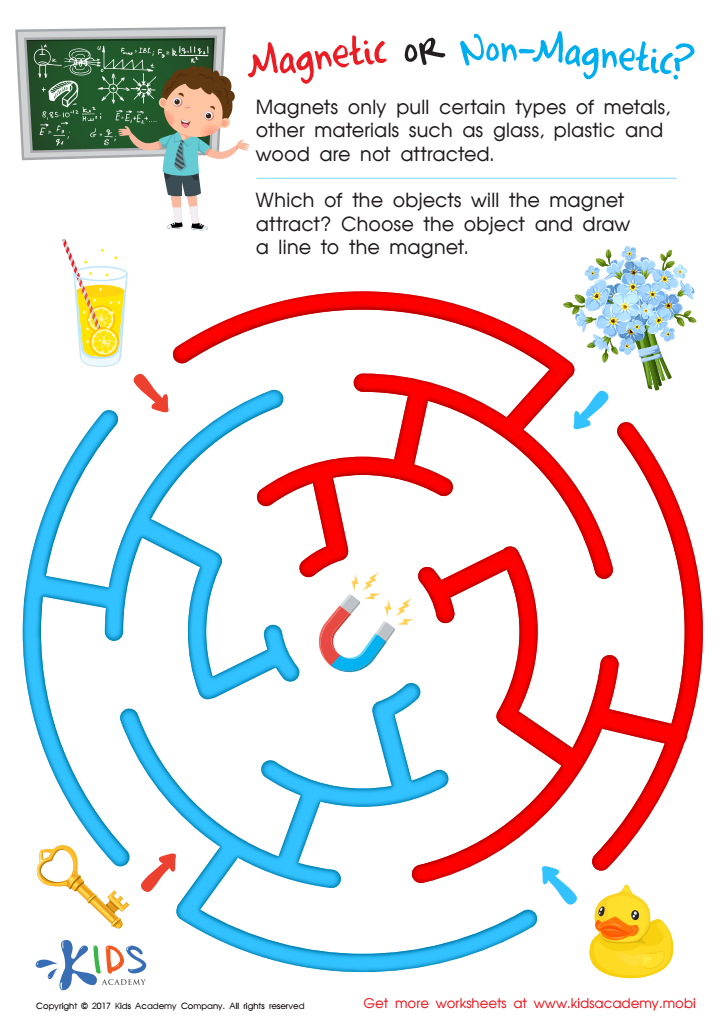
Magnetic or Non–Magnetic Worksheet
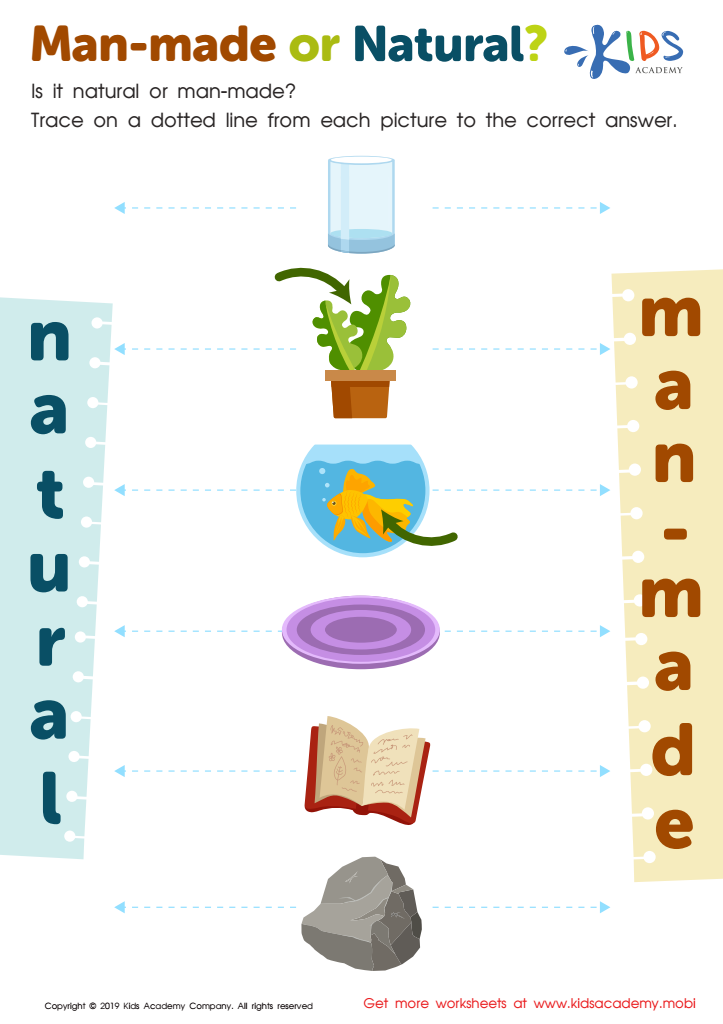
Man-Made or Natural? Worksheet







Categorizing objects is a foundational skill in early science education for children aged 5-8. Parents and teachers should care about this concept because it not only enhances critical thinking and cognitive skills but also supports a child's understanding of the world around them. Categorization helps children make sense of complex information by grouping similar objects based on shared characteristics, such as size, shape, color, or function.
When children engage in categorizing activities, they develop important skills like observation, comparison, and classification. These skills are essential for scientific inquiry and pave the way for more advanced learning as they progress in their education. Additionally, categorizing promotes language development, as children learn to describe why they grouped certain objects together, thus expanding their vocabulary and communication skills.
Moreover, categorization fosters creativity and problem-solving abilities. It encourages kids to explore connections and differences, sparking curiosity and engagement. By nurturing these skills early on, we prepare our children to think critically and approach challenges systematically, laying the groundwork for lifelong learning. Ultimately, supporting children in mastering categorization not only enriches their scientific understanding but also empowers them to navigate their environment with confidence and skill.







