
Understanding food chains Science Worksheets for Ages 5-8
3 filtered results
Difficulty Level
Grade
Age
-
From - To
Subject
Activity
Standards
Introduce young learners to the fascinating world of food chains with our expertly designed Science Worksheets for Ages 5-8. These printable worksheets are tailored to help children understand how energy flow works in an ecosystem, starting from the sun to producers, consumers, and decomposers. Through engaging activities and illustrations, kids will learn about different animals, their interdependence, and the balance of nature. These worksheets not only build foundational science skills but also encourage curiosity and environmental awareness, making complex concepts simple and fun to grasp for young minds. Ideal for classroom use or at-home learning!
Favorites
With answer key
Interactive
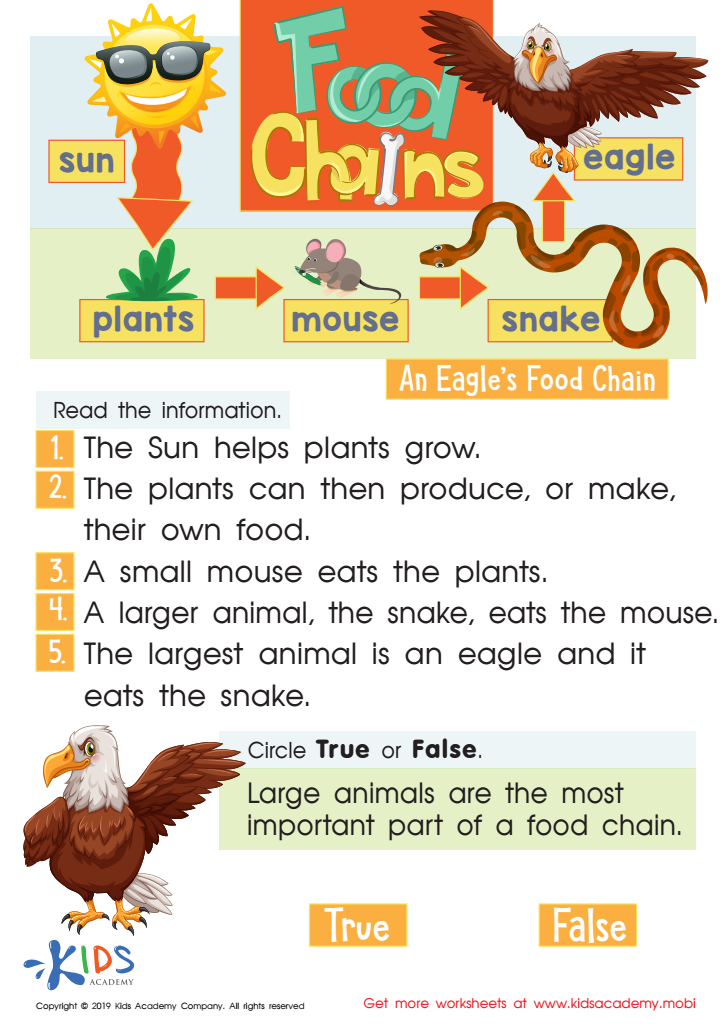
Food Chains Worksheet
This worksheet gets your child thinking about the sun's key role in the food chain. Read the info on the page, then discuss the true/false question. Are large animals the most important? Explain that without the sun, the other organisms would not exist. Have them circle the correct answer to finish.
 Assign to My Students
Food Chains Worksheet
Worksheet
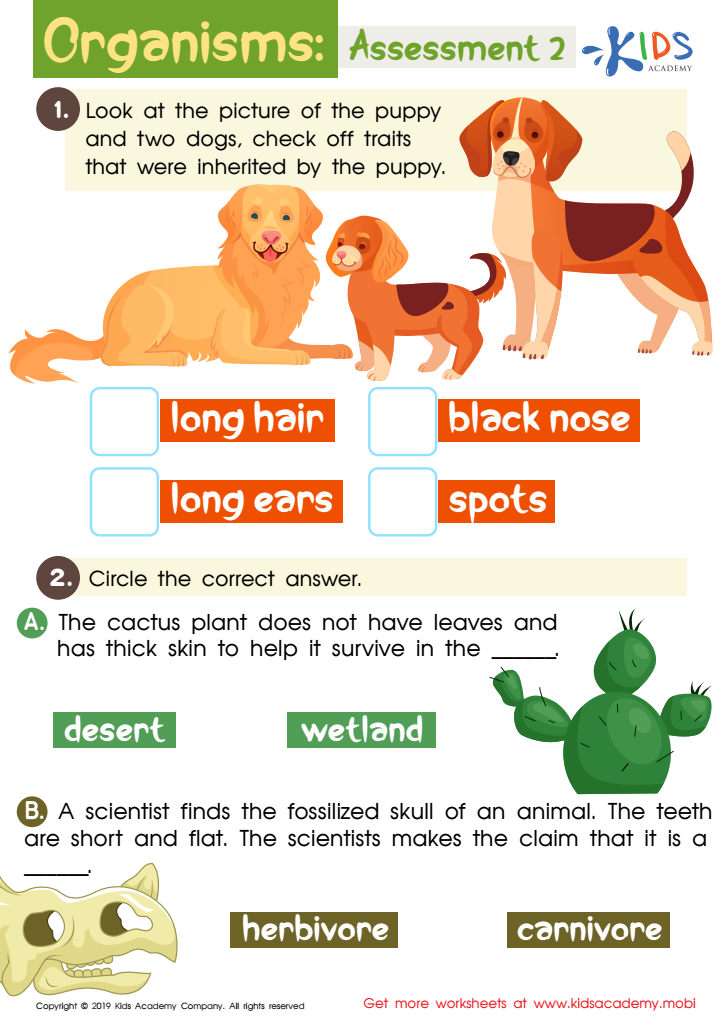
Organisms: Assessment 2 Worksheet
This free assessment helps you measure your child's science knowledge. They can check off traits a puppy inherited, identify a cactus's habitat, and review a dinosaur's diet. It's an efficient way to assess their skills.
Organisms: Assessment 2 Worksheet
Worksheet
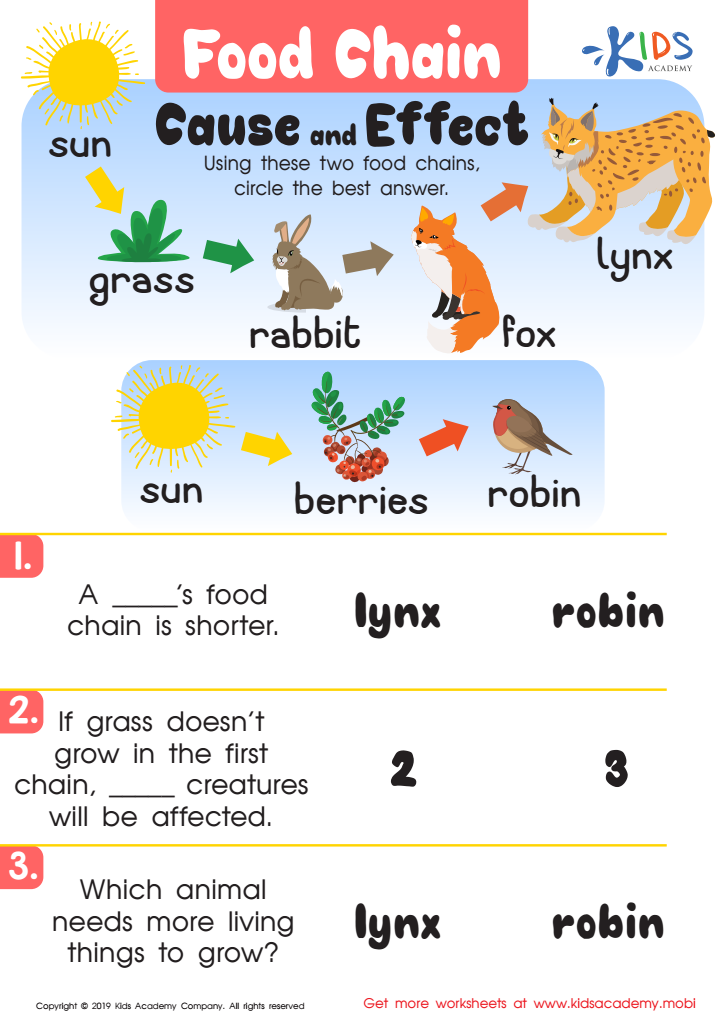
Food Chain Cause Worksheet
Help your little learner analyze ecosystems and compare food chains with this Kids Academy worksheet! Kids will compare a carnivore's and herbivore's food chain; which is longer and why? Questions at the bottom of the page will help them compare and circle the best answers. A great way to understand animal food chains!
Food Chain Cause Worksheet
Worksheet
Learning Skills
Understanding food chains
Learning about ecosystems
Comprehending energy transfer
Identifying animal diets
Recognizing predator-prey relationships
Identifying organisms
Analyzing organisms relationships
Understanding organisms interactions
Identifying cause and effect
Analyzing ecological relationships
Join Kids Academy for Free
Who is primarily going to use this learning content?



%20(1).jpg)


Understanding food chains is fundamental for young children and can profoundly benefit their development and comprehension of the natural world. For parents and teachers, this concept underpins several critical educational objectives. Firstly, it fosters a sense of curiosity and wonder about nature, encouraging kids to appreciate and explore their environment. Basic knowledge of food chains helps children grasp the interdependence between plants, animals, and humans, instilling early ecological awareness.
Secondly, introducing food chains aligns with early science education goals, building a foundation for more advanced environmental science concepts. Relating these chains to familiar settings, such as a forest or garden, helps make the learning experience tangible and relevant, enhancing retention and understanding. This connection aids in developing critical thinking and categorization skills as children learn about producers, consumers, and decomposers.
Additionally, teaching food chains can nurture empathy by illustrating the delicate balance of ecosystems. For instance, kids learn about the harmful effects of pollution or habitat destruction. This empathy can translate into conscientious behavior, influencing their habits toward more sustainable choices. Ultimately, fostering an understanding of food chains equips children with knowledge and values essential for responsible planetary stewardship, beneficial for both individual character development and the collective good.







